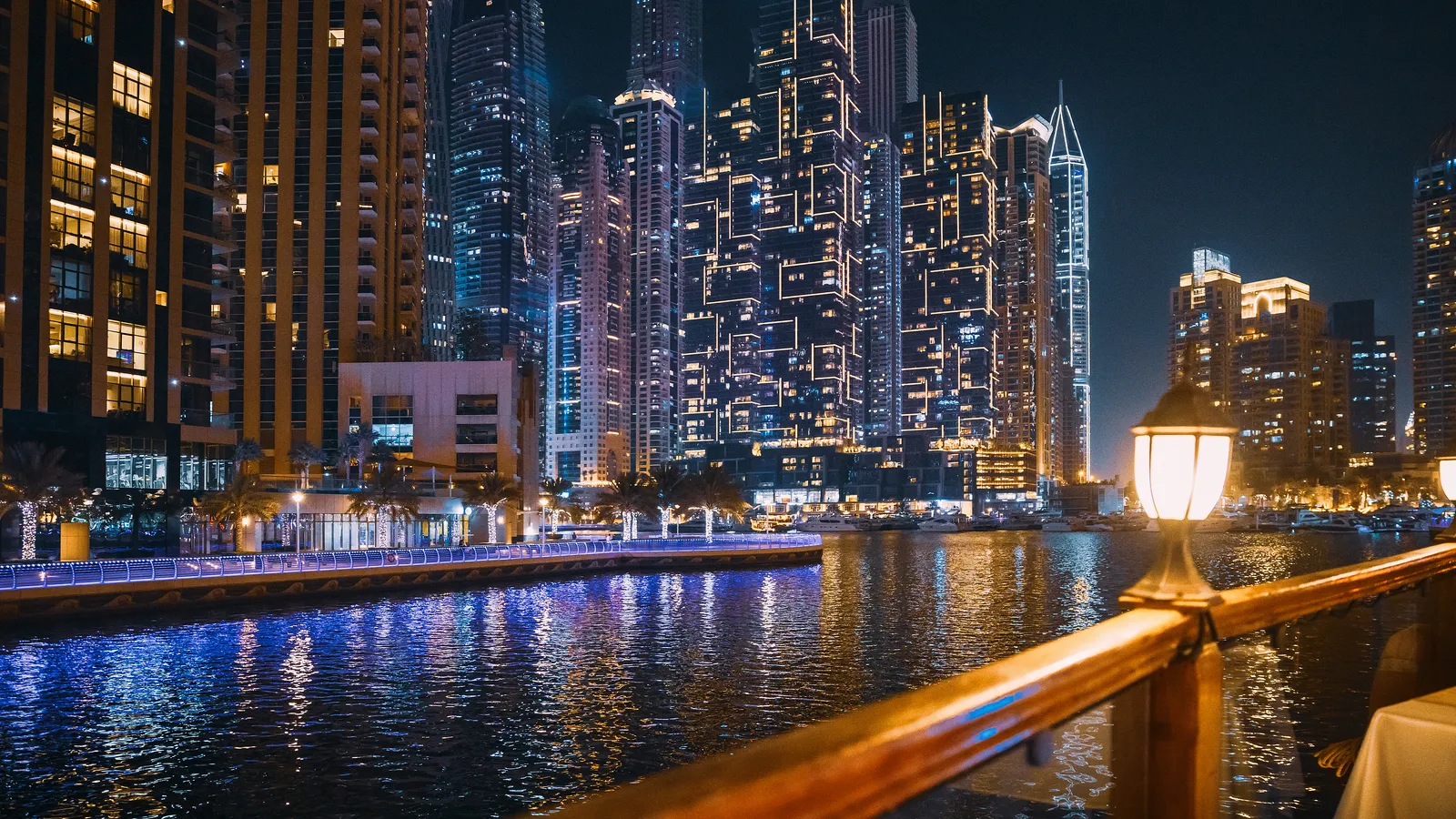
Dubai's property market did AED 917 billion across more than 270,000 transactions in 2025, and brokers took home about AED 13.73 billion in commissions, nearly double the year before [9][10]. That is the good news. The other side: there are already close to 40,000 licensed brokers, roughly 37 new ones join every day, and average agent tenure has fallen to about six months [10]. Opening a real estate brokerage in Dubai is a genuinely great business, but only if you clear three things most first-timers underestimate: the RERA broker exam and card, a mandatory physical office, and full anti-money-laundering registration you cannot skip [1][7].
Before anything else, separate two things that almost everyone blurs together. The company gets licensed, and the person gets carded. A brokerage is a licensed business with a DET trade licence, a DLD real estate activity registration, an office on Ejari and a goAML file. A broker is a named individual who has passed the Dubai Real Estate Institute course and the RERA exam and holds a broker card tied to one brokerage. You need both. Buying one does not give you the other, and the cost, the timeline and the paperwork are completely different for each. Most of the money wasted at the start of a Dubai property career comes from someone paying for the company layer when they needed the personal one, or the reverse.
There are really three ways in: work as a carded agent under an existing brokerage, open your own brokerage, or run a lighter real estate consultancy. This guide covers all three, then goes deep on the path most people mean when they say "real estate business" in Dubai: your own licensed brokerage. You will get the licence and RERA approvals, the individual broker route from eligibility through the DREI course and the exam to the card and its annual renewal, the honest all-in cost for both the company and the person, how commissions and earnings really work, corporate tax and VAT, the anti-money-laundering rules, the technology you actually need, hiring and keeping agents, and how new brokerages win business. Since 2013, our team has set up real estate and brokerage companies across Dubai, so these figures and traps come from real files, not brochures.
Why start a real estate business in Dubai?
Dubai is one of the most active property markets on earth, and the commission pool is huge and growing. Transactions hit AED 917 billion in 2025 (up about 20%), Q1 2026 alone did AED 252 billion (up 31%), and off-plan now drives roughly three-quarters of sales volume [9]. The population is heading toward 4.7 million by the end of 2026, and about 129,600 new investors entered the market in 2025 [10]. The government's Real Estate Sector Strategy 2033 targets AED 1 trillion in annual transactions.
The reasons founders start a real estate business here:
- A deep, liquid market. Hundreds of billions in deals, strong foreign demand, and the Golden Visa pulling investors in.
- Excellent commission economics. A single mid-market sale earns a five-figure commission, and top brokers clear AED 1 million a year and up [11].
- No personal income tax. Your commission income is tax free at the personal level.
- 100% foreign ownership. You can own the brokerage outright, with no Emirati partner [4].
Real Talk: The averages hide a brutal split. Roughly 20% of brokers do about 80% of the deals, and most junior agents are gone within a year [10]. Commission-only agents typically see little income for the first three to six months while they build a pipeline. A business that plans for that runway, and trains its people to survive it, wins. One that assumes every hire will produce burns cash and churns people. Go in with realistic numbers, not the AED 1 million headline.
Agent, brokerage or consultancy: which path is right for you?
"Real estate business" means three very different things in Dubai, with very different costs and commitments. Pick the one that matches your capital, appetite and goals before you spend a dirham.
| Path | What it is | Setup cost | Best for |
|---|---|---|---|
| Work as an agent | Join a licensed brokerage as an employee; they sponsor your visa and card | Low (course, exam, card ~AED 8,000; often paid by the brokerage) | Testing the market with little capital |
| Own a brokerage | Your own DET + RERA licence, office and team | AED 90,000 to 200,000 first year | Building a company and keeping the commission |
| Consultancy | Fee-based advisory, no direct transactions | From ~AED 15,000 licence | Advisers targeting investors and corporates |
Working as an agent is the cheapest way in, and the individual broker section below covers that route in full. Owning a brokerage is what most of this guide is about: you control the brand and keep the commission, but you carry the licence, office, compliance and payroll. A consultancy advises on strategy and due diligence for a fee without brokering the transaction, so it is lighter on regulation but cannot earn brokerage commission.
Pro Tip: The founders who struggle are usually chasing the image, a flashy office and a big team, before the economics work. Start lean, close deals yourself or with one or two strong agents, prove the unit economics, then scale. A brokerage is a cash-flow business first and a brand second.
What licence and approvals do you need?
You need two layers: a trade licence for the company and RERA approvals for the people. A real estate brokerage is licensed as a commercial activity by the Dubai Department of Economy and Tourism (DET), then registered with the Dubai Land Department (DLD) and its Real Estate Regulatory Agency (RERA) through the Trakheesi system, and every individual agent must hold a RERA broker card [1][3].
The layers, in plain terms:
- DET trade licence. A commercial licence carrying the real estate brokerage activity. Confirm the exact activity name and code on the Invest in Dubai portal at application, because a general "commercial brokerage" licence specifically excludes real estate, which routes through DLD/RERA [3].
- DLD/RERA real estate activity licence. Registered via Trakheesi, renewed annually, with a standard activity fee around AED 5,020 (AED 5,000 plus a AED 20 knowledge and innovation fee) [1].
- RERA broker card for each agent, including you if you will sell (covered next).
- Trakheesi advertising permits. Every property listing or ad needs its own Trakheesi permit before you publish it, at about AED 1,020 per listing (AED 5,020 for a project launch). Advertising a property without a valid permit is a RERA violation with fines starting around AED 50,000 [1].
Common Mistake: Treating the DET licence as the finish line. It is the start. Without RERA registration, broker cards and per-listing Trakheesi permits, you cannot legally market or close a single deal.
Ready to set up your real estate business in Dubai the right way? Our licensed advisors handle your DET trade licence, RERA registration, broker cards, visas and corporate bank account end to end, with transparent, fixed fees.
Get started free→And what about the person, not the company? The individual broker route
Everything above licenses a business. None of it lets anyone actually sell a flat. That takes a separate credential attached to a named human being, and this section covers it end to end: who is eligible, what the Dubai Real Estate Institute course teaches, what the RERA exam tests, what it costs the individual in year one, and what the annual renewal looks like. Read it whether you are the founder who will also sell, or the founder who will hire people who do.
Short answer: every person who brokers property in Dubai, owner or employee, must hold a valid RERA broker card, and getting one means passing through the Dubai Real Estate Institute (DREI) [1][2]. The path:
- Certified Training for Real Estate Brokers (CTRB) course at DREI or a RERA-approved provider. It runs about four to five days and costs roughly AED 2,400 to 3,500, covering UAE property law, brokerage conduct, and the sales and leasing process [2].
- RERA exam. The exam fee is tiered by your education level, which is the biggest cost swing in the whole process, plus a registration fee of about AED 700 [2]. Confirm the current format, duration and pass mark on the DLD portal before you sit it.
- Broker card issuance via Trakheesi once you pass, at about AED 500 plus a small ERES fee, issued as a digital card almost immediately [1].
Who is eligible to become a broker in Dubai?
The gate is lower than most people expect on qualifications and higher than most people expect on status. You need to be an adult with a clean record, a valid UAE residence visa, and a brokerage willing to employ you. RERA publishes the current age and document requirements on the DLD portal, so check the exact thresholds there rather than trusting a forum post [1].
What you will be asked for in practice:
- A valid UAE residence visa and Emirates ID. This is the hard one. You cannot get carded first and find a job afterwards. The brokerage sponsors the visa, and the visa underpins the card.
- Proof of employment with a licensed brokerage, plus a No Objection Certificate from that company.
- A police good-conduct certificate. Dubai Police issue this for residents. RERA takes background checks seriously, and fraud or financial-crime history is a realistic route to rejection.
- Attested educational certificates. A university degree is not required to become a broker, but if you hold one, get it attested, because it moves you into the cheapest exam-fee band and saves thousands.
Common Mistake: Arriving on a tourist visa expecting to be licensed within a fortnight. The order is fixed. Employment first, then residence visa, then course and exam, then card. Anyone selling you a shortcut around the sponsorship step is selling you an illegal arrangement, because freelance real estate agents are not permitted on the Dubai mainland and every agent must sit under a licensed brokerage.
What does the DREI course actually cover?
The course is mandatory and there is no exam without it. Treat it as the legal foundation rather than a box to tick, because the material it covers is exactly the material that produces AED 50,000 fines when people get it wrong. The curriculum works through:
- Dubai's real estate legal framework, including the escrow regime for off-plan developments under Law No. 8 of 2007 [14].
- Transaction procedure for sales, leases and off-plan, and how each is documented.
- RERA's standard forms, principally Form A, Form B, Form F and Form I, and when each one is signed [13].
- The Trakheesi system, meaning advertising permits, listing compliance and card administration [1].
- Professional ethics and conduct, client confidentiality, conflicts of interest and the RERA code.
- Anti-money-laundering duties, customer due diligence and suspicious-transaction reporting, which now sit under Federal Decree-Law No. 10 of 2025 [7].
- Market fundamentals, community geography, property types and how Dubai pricing behaves.
Real Talk: The single most valuable module is the compliance one, and it is the one candidates skim. Escrow, permits and due diligence are where individual brokers get personally exposed, not where the brokerage absorbs the problem for them. Read that section twice.
What does the RERA exam test, and how hard is it?
The exam is computer-based, multiple choice, sat at a Dubai Land Department testing centre, and drawn directly from the DREI material [2]. Questions are scenario-led rather than trivia. Expect items like who must hold the escrow account on an off-plan purchase, or which form authorises you to advertise a listing.
On the pass mark, be careful. Published figures circulating online disagree, with 75% and 85% both widely repeated, and neither is reliably documented. Assume the higher one, prepare for it, and confirm the current threshold, question count and time limit with DREI or DLD when you register. There is no published official pass rate either, so ignore anyone quoting one.
Failing is not fatal. You re-register and sit it again by paying the registration fee once more. Each attempt adds cost and time, so the cheap move is two focused weeks of study after the course rather than three retakes.
Pro Tip: Study the forms and the permit workflow hardest. Candidates who fail almost always fail on procedure, not on law. If you can recite what Form A does, when the Trakheesi permit is pulled and what triggers a suspicious-transaction report, you are most of the way there.
What does the exam cost, and why does your education level matter so much?
RERA exam fee by education level [2]:
| Educational background | Exam fee (AED) |
|---|---|
| Bachelor's degree | ~3,200 |
| High school diploma (no degree) | ~6,300 |
| No formal qualifications | ~15,750 |
That is a swing of more than AED 12,000 on the same exam. It is the single largest variable in the whole individual pathway.
Quick Math: Take a candidate with a bachelor's degree sitting in a drawer at home, unattested. Attesting it is a few hundred dirhams and a few weeks. Not attesting it can drop them from the AED 3,200 band into the AED 6,300 band, and someone with no documented qualification at all pays about AED 15,750. Chase the paperwork before you register, not after.
What does year one cost the individual broker?
Here is the personal budget, separate from any company cost. The card and its prerequisites are the licensing layer. The rest is what it actually takes to work.
| Cost item | Amount (AED) | Notes |
|---|---|---|
| DREI CTRB course | 2,400 to 3,500 | 4 to 5 days, DREI or approved provider [2] |
| RERA exam registration | ~700 | Payable again on each retake [2] |
| RERA exam fee | 3,200 to 15,750 | Tiered by education level [2] |
| Broker card issuance | ~500 | Plus a small ERES fee, via Trakheesi [1] |
| Police good-conduct certificate | Confirm with Dubai Police | Fee varies |
| Licensing subtotal | ~6,800 to 20,500 | Often part-funded by the employing brokerage |
Then the working costs the licensing tables never mention. Portal subscriptions, professional photography, paid social to generate leads, a personal CRM seat and phone line are all real line items, and they usually total more than the licence. Budget several thousand dirhams a month while you build a pipeline, and remember that commission-only agents typically see very little income for the first three to six months. The runway matters more than the exam fee.
Common Mistake: Budgeting only the licence and treating marketing as optional. A carded agent with no listings, no photography and no ad spend is a very expensive way to be unemployed. If the brokerage does not supply leads, you are funding the pipeline yourself.
How does the card renew, and how do you lose it?
The card is tied to the company licence and renews annually. You must re-register for the test before expiry, and letting it lapse can mean retaking the whole course rather than just the exam [1]. RERA operates only a short window after expiry before cancellation, and the exact grace period changes, so confirm the current one with DLD and set a calendar reminder three months out rather than relying on it.
Renewal costs are modest next to the first year. Expect an exam re-registration fee alongside licence and card renewal fees, each in the hundreds of dirhams rather than the thousands, plus CPD. Confirm the current schedule on the DLD portal, because these are small figures that get quietly revised and the widely republished totals online are unsourced.
Pro Tip: Some brokers are exempt from re-sitting the exam at renewal: those aged 55 and over, brokers who have stayed five consecutive years at the same office, and holders of a start-up licence [1]. Note the correct order too, you take the course and exam first, then the company sponsors your visa, then the card is issued.
Company or card: which do you actually need?
| Question | The individual broker | The brokerage company |
|---|---|---|
| What you obtain | RERA broker card via Trakheesi | DET trade licence plus DLD/RERA activity registration |
| Prerequisite | Employment and a sponsored residence visa | Trade name, initial approval, MOA, Ejari office |
| Training required | DREI course and RERA exam | None for the entity; every carded agent needs both |
| Typical first-year cost | ~AED 6,800 to 20,500 | AED 90,000 to 200,000 |
| Office | Provided by the employer | Mandatory physical office, no flexi-desk |
| Compliance owner | You, for your own transactions | The company, for goAML, permits and records |
| Who keeps the commission | Your split, commonly 50% to 70% | The gross, less the agent split |
| Foreign nationals | Yes, with a sponsored visa | Yes, 100% ownership permitted [4] |
Real Talk: Older guides claim only UAE nationals can own a brokerage outright. That has not been true since the Commercial Companies Law reform, and acting on it costs foreign founders money and equity for nothing. The section below sets out the actual position.
What types of real estate business can you set up?
"Real estate brokerage" is one activity among several, and you can hold more than one, but each is registered and fee'd separately with DLD [1]. The main models and specializations:
| Model | What it covers | Notes |
|---|---|---|
| Residential sales | Secondary and ready property sales | Most common; ~2% commission; average deal ~AED 3 million |
| Leasing brokerage | Rentals for landlords and tenants | 5% of annual rent typical |
| Off-plan / developer sales | Selling new projects for developers | Developer pays 3% to 7%; ~three-quarters of market volume |
| Luxury segment | Prime property above AED 37 million (~USD 10m) | Fewer competitors, higher values, white-glove service |
| Commercial real estate | Offices, retail, warehousing | 2% to 10%, negotiable; longer sales cycles |
| Property management | Managing third-party property for owners | Recurring 5% to 10% of rent; requires an AED 5,000,000 bank guarantee to DLD |
| Real estate consultancy | Advisory, valuation, research | Fee-based; often bundled as an extra activity |
Common Mistake: Adding third-party property management on a whim. It requires a AED 5 million bank guarantee lodged with DLD, which is a serious capital commitment most new brokerages should skip until they scale [1]. Decide your activities before you apply, because they drive both your fees and your obligations.
Pro Tip: Specialization beats generalist hustle. Competing as a generalist against 40,000 brokers is brutal; owning one community, one building type, or one developer relationship is how new businesses actually get traction. You also choose independent versus franchise: an independent keeps all commission and control but builds its brand from scratch, while a franchise buys instant recognition, leads and systems in exchange for fees and less freedom.
Free zone or mainland for a real estate business?
For brokering Dubai property, mainland is effectively mandatory. A DET mainland licence plus RERA registration is required to broker ready or secondary Dubai property, and a free zone licence generally cannot do this directly [1][5]. This is the single most important structural fact, and it trips up founders who assume a cheaper free zone package will work.
| Factor | Mainland (DET + RERA) | Free Zone |
|---|---|---|
| Broker ready/secondary Dubai property | Yes | No (needs a mainland branch or agent) |
| RERA registration and broker cards | Required and available | Only if it adds mainland activity |
| Physical office | Mandatory | Flexi-desk often allowed |
| 100% foreign ownership | Yes | Yes |
| Corporate tax on brokerage income | 9% above AED 375k | 9% (property brokerage is an excluded activity, not 0%) |
| Best for | Actual brokerage | Off-plan/international marketing, property management, holding/SPV |
A free zone real estate licence still has real uses: marketing off-plan or international property, property management, consultancy, or an SPV/holding structure to own real estate assets (DMCC's SPV licence is built for this, from around AED 20,000 to 30,000, but it cannot broker or trade) [5]. To reach the mainland market from a free zone, you would open a mainland branch with its own RERA licence, which usually defeats the point.
Real Talk: If a setup agent offers you a cheap "free zone real estate license" to broker Dubai property, ask them in writing how you will get RERA broker cards and Trakheesi permits on it. You will not, for mainland deals. Compare the routes honestly on our mainland company setup and free zone company setup pages, or read our free zone vs mainland vs offshore guide.
Can a foreigner own 100% of a real estate business?
Yes. A foreign national can own 100% of a real estate brokerage on the Dubai mainland, with no Emirati partner and no local service agent, since the Commercial Companies Law reform (Federal Decree-Law No. 32 of 2021) [4]. Real estate brokerage, leasing and property management are all on the list of activities open to full foreign ownership.
This is a genuine change worth knowing: before 2021, a mainland brokerage LLC needed a 51% UAE-national shareholder, which is why older guides still mention a local partner. That requirement is gone for brokerage. You own and control the company outright.
How much does it cost to start a real estate business in Dubai?
Your own compliant two-person brokerage with a real office runs AED 90,000 to 200,000 in the first year, well above a generic mainland company because of the RERA layer and the mandatory office [1][4].
The individual agent budget is set out in full in the broker-card section above. Here is the company side.
Your own brokerage (first year):
| Cost item | Typical amount (AED) | Notes |
|---|---|---|
| DET commercial trade licence | from 15,000 | Includes trade name, initial approval, MOA |
| DLD real estate activity licence | ~5,020 / year | Per activity; renews annually |
| DREI course + RERA exam + broker card (per person) | 7,000 to 8,000 | Exam fee varies by education level |
| Physical office + Ejari | 30,000 to 100,000+ / year | Mandatory; no flexi-desk for a mainland brokerage |
| Trakheesi advertising permits | ~1,020 per listing | 5,020 for a project launch |
| Investor / employee visa | 3,500 to 6,500 per person | Establishment card extra |
| Property management add-on | AED 5,000,000 bank guarantee | Only if you add third-party management |
Quick Math: DET licence and DLD registration land around AED 20,000, two brokers' cards add roughly AED 15,000, and a modest office plus fit-out is easily AED 50,000 to 80,000. That is why a "from AED 15,000" mainland headline is only the licence layer for a brokerage. Plan the whole number, and hold six to twelve months of running costs in reserve because commissions lag. For a transparent, itemised quote, our team can size it to your model.
What are the steps to start, and how long does it take?
The sequence matters because RERA and the office gate your licence. A straightforward setup takes about eight to twelve weeks end to end. Based on the files we handle:
- Decide activities and structure (sales, leasing, management; independent or franchise; solo or team) and write a short business plan.
- Reserve your trade name and get DET initial approval.
- Lease an office and register it on Ejari, required before the licence issues.
- Draft and notarise the MOA, then issue the DET commercial trade licence.
- Register the real estate activity with DLD via Trakheesi and pay the activity fee.
- Enrol your broker(s) in the DREI CTRB course and sit the RERA exam.
- Get a Dubai Police good-conduct certificate for each broker.
- Apply for each RERA broker card via Trakheesi (needs the exam pass, Emirates ID, and the brokerage NOC).
- Get the establishment card and apply for visas (investor plus agents), then medical and Emirates ID.
- Register on goAML for anti-money-laundering (covered below) and open a corporate bank account.
- Pull Trakheesi permits for each listing before you market it, then launch.
Realistic timeline: about two to four weeks for the licence and RERA registration if documents are ready, with visas and broker cards adding a couple more weeks. Our post-setup services team runs the visa, RERA and goAML steps in parallel to compress that.
What documents do you need?
For each shareholder, a passport copy with six months validity and a photo, plus UAE residence visa and Emirates ID copies if already resident, or a No Objection Certificate from a current sponsor. The broker-card documents for each individual agent are listed in the eligibility section above.
For the company:
- Trade name reservation and DET initial approval
- Notarised Memorandum of Association
- Ejari-registered office tenancy contract
- A short business plan (banks and DLD expect it)
- Bank guarantee of AED 5,000,000 (only if adding third-party property management)

What office space do you need?
A physical office is mandatory for a mainland brokerage. RERA does not allow a flexi-desk, virtual office or home-based setup, and the lease must be commercial and registered on Ejari [1]. Plan for 200 to 500 sq ft minimum, properly zoned as commercial.
Location drives the rent. Prime areas (Downtown, DIFC, Business Bay) start around AED 60,000 or more a year; secondary and emerging areas (Deira, Al Barsha and similar) can be AED 20,000 to 40,000.
| Item | Cost (AED) | Notes |
|---|---|---|
| Annual rent (prime location) | 60,000 to 100,000 | Downtown, DIFC, Business Bay |
| Annual rent (affordable location) | 20,000 to 40,000 | Secondary / emerging areas |
| Ejari registration | 250 to 500 | Mandatory tenancy registration |
| Furnishing (desks, chairs, reception) | 10,000 to 30,000 | Initial fit-out |
| Signage and branding | 3,000 to 10,000 | DLD approval required |
Real Talk: Many successful brokers start in an affordable secondary location, build a client base, then move to a prestige address once deal flow justifies it. Do not overpay for a Downtown office before you have the revenue to carry it.
What are your ongoing annual costs?
Running a compliant brokerage is a recurring cost, not a one-time setup. A typical small brokerage with three to five agents faces roughly these annual costs:
| Expense | Annual cost (AED) | Monthly equivalent |
|---|---|---|
| Office rent | 30,000 to 60,000 | 2,500 to 5,000 |
| Licence renewal + CPD | 10,000 to 20,000 | 833 to 1,667 |
| Staff salaries / retainers (3 to 5 agents) | 150,000 to 300,000 | 12,500 to 25,000 |
| Professional indemnity insurance | 5,000 to 30,000 | 417 to 2,500 |
| CRM + software | 15,000 to 55,000 | 1,250 to 4,583 |
| Marketing + advertising | 20,000 to 50,000 | 1,667 to 4,167 |
Common Mistake: Underestimating marketing. Many new brokerages allocate only AED 5,000 a year, which is invisible in this market. Plan for at least AED 20,000 for meaningful reach, and treat a CRM as a core cost, not an extra.
How do commissions and earnings work?
Dubai brokerage runs on commission, and the standard rates are market custom, not fixed law [11]. The norms:
- Residential resale: 2% of the sale price, usually paid by the buyer.
- Off-plan: 3% to 7%, paid by the developer, not the client.
- Residential rental: 5% of the annual rent, usually paid by the tenant.
- Commercial: roughly 2% to 4% on sales and 5% to 10% on leases.
Commission carries 5% VAT on top, and it is documented through RERA's standard forms: Form A (the seller-broker listing agreement, signed before you advertise), Form B (the buyer-broker agreement), Form F (the buyer-seller MOU that states the commission), and Form I (the broker-to-broker agreement that splits commission when two brokerages co-broke a deal) [13]. Only a RERA-carded agent under a licensed brokerage can legally earn commission.
Inside the brokerage, commission is split with the agent. A typical split starts around 50/50 and scales in the agent's favour with production, often to 65% after AED 500,000 in annual commission and 70% or more above AED 1,000,000 [11]. Large agencies split less (40 to 50% to the agent) but feed steadier leads; boutiques split more (60 to 70%) with less flow.
What people actually earn, by experience [10][11]:
| Experience | Typical annual income (AED) |
|---|---|
| Entry (year 1) | 100,000 to 180,000 |
| Mid (2 to 5 years) | 250,000 to 400,000 |
| Experienced (5 to 10 years) | 500,000+ |
| Senior / luxury / off-plan | 1,000,000 to 10,000,000+ |
The industry average is about AED 214,000 a year, or roughly AED 18,000 a month, but that average hides the 20% who do most of the business [10][11].
Quick Math: The average Dubai property sells for around AED 3 million; the median is closer to AED 1.55 million. A single AED 1.85 million two-bed resale at 2% is AED 37,000 in gross commission before the split and VAT. Close two or three mid-market deals a month at a 50% split and you are in the AED 20,000 to 50,000 monthly range that experienced agents report [11].
Not sure which licence, activities or free zone fit your plan? Get a free, no-obligation consultation and a clear cost breakdown tailored to your real estate business.
Get a free consultation→What financial projections should you build?
Conservative modelling keeps you honest about the runway. Here is a realistic three-year picture for a small brokerage with about three agents, assuming deal flow builds from marketing, referrals and developer relationships. All figures are in AED, and actual results vary widely by niche, location and market conditions.
| Metric | Year 1 | Year 2 | Year 3 |
|---|---|---|---|
| Initial investment | 100,000 | n/a | n/a |
| Operating costs | 200,000 | 250,000 | 300,000 |
| Staff commissions / salary | 120,000 | 200,000 | 250,000 |
| Total expenses | 320,000 | 450,000 | 550,000 |
| Transactions closed | 50 | 150 | 300+ |
| Average commission per deal | 7,500 | 8,000 | 8,500 |
| Commission revenue | 375,000 | 1,200,000 | 2,550,000 |
| Net profit / (loss) | +55,000 | +750,000 | +2,000,000 |
Quick Math: The first year is roughly break-even; the business turns meaningfully profitable in years two and three as the pipeline compounds and agents mature. That is exactly why you hold six to twelve months of runway, most of the return arrives after the slow first year.
What technology and software do you actually need?
Technology is a real competitive edge in a saturated market, and Dubai leads convert over weeks, so a CRM and disciplined follow-up matter from day one. Budget for a proper stack:
| Tool | Purpose | Annual cost (AED) | Common options |
|---|---|---|---|
| CRM system | Client management, pipeline tracking | 5,000 to 15,000 | PropSpace, PropFlo, Sell.Do |
| Listing platforms | Property advertising | 0 to 10,000 | Property Finder, Bayut, Dubizzle |
| Website | Portfolio, organic leads, SEO | 3,000 to 8,000 | Custom site, WordPress |
| Virtual tour software | 3D / 360 property tours | 2,000 to 8,000 | Matterport, CloudTours |
| Email / marketing | Campaigns, newsletters | 2,000 to 6,000 | Mailchimp, HubSpot |
| Document / e-signature | Contracts and agreements | 1,000 to 3,000 | DocuSign, Adobe Sign |
| Accounting software | Records, VAT, tax prep | 2,000 to 5,000 | Zoho Books, Xero, QuickBooks |
Two official tools sit alongside that stack and cost nothing. The Dubai REST app from the Dubai Land Department is the single sign-on for DLD services, covering Ejari tenancy registration, Oqood off-plan ownership records and direct access to Trakheesi, so every agent should have it configured before their first listing. DXBinteract publishes official transaction history and price trends by area and property type, which is how you price a listing on evidence rather than on a seller's hope [9].
Pro Tip: The single highest-return tool is a CRM used properly. Most deals in Dubai come from follow-up over weeks and referrals, not first contact, and leads without a system simply get lost. The second highest-return habit is opening DXBinteract in front of a client. Showing an owner the real comparable sales in their own building ends a pricing argument faster than any amount of persuasion.
Do real estate businesses pay corporate tax and VAT?
A real estate brokerage is a mainland business, so it pays UAE corporate tax at 9% on taxable profit above AED 375,000, and 0% below that [5]. Note this is 9%, not the 5% some older guides still quote. The free zone 0% "Qualifying Free Zone Person" route does not help here: the tax rules make owning or dealing in UAE property an excluded activity, and brokerage commission on Dubai property is mainland-sourced income taxed at the normal rate regardless of where the company is licensed [5]. Register for corporate tax with the Federal Tax Authority and file within nine months of your financial year end, even at 0%.
On VAT, the standard rate is 5% and you register once taxable turnover passes AED 375,000 [6]. The mainstream position is that a brokerage's commission is a standard-rated service charged at 5%, whatever the VAT status of the underlying property (residential sale and lease are largely exempt, commercial is standard-rated, but the agent's fee is a separate intermediary service) [6]. You can reclaim VAT paid on business costs like software, rent and marketing. Treatment of commission tied to residential leasing is debated among advisers, so confirm your invoicing with a tax specialist.
One relief worth using: Small Business Relief lets a mainland brokerage with revenue under AED 3 million be treated as having no taxable income for tax periods ending on or before 31 December 2029, and you must elect it on EmaraTax [5]. Read more in our UAE corporate tax filing guide.
What anti-money-laundering rules must you follow?
This is the section most guides get wrong, because the law changed. Real estate brokers are classed as Designated Non-Financial Businesses and Professions (DNFBPs) and are directly regulated for anti-money-laundering under the UAE's new framework: Federal Decree-Law No. 10 of 2025, effective October 2025, with executive regulations effective December 2025 [7]. This replaced the older 2018 law that many outdated articles still cite. Compliance is not optional and the Ministry of Economy supervises it.
What your brokerage must do [7]:
- Register on goAML, the Financial Intelligence Unit's reporting portal, before you operate.
- Appoint a compliance officer (MLRO) who is resident and qualified.
- Run Customer Due Diligence on clients, with enhanced checks on high-risk clients and politically exposed persons, and identify the beneficial owner behind a deal.
- File a Real Estate Activity Report (REAR) on goAML for any property deal involving a single or linked cash payment of AED 55,000 or more, and for deals settled in virtual assets [7].
- File suspicious transaction reports whenever something looks off, with no minimum amount, and never tip off the client.
- Keep records for at least five years.
Common Mistake: Skipping goAML registration to "sort it later." Administrative fines run into the millions per violation, criminal penalties for operating unregistered are far higher, and banks increasingly freeze the accounts of unregistered brokers until they show compliance [7]. Register before your first deal. Our UAE AML/CFT compliance guide goes deeper.
Pro Tip: If your business also advises on mortgages, buy-now-pay-later schemes or structured property investments, you may cross into activity regulated by the Central Bank, which carries its own authorisation requirement and steep fines for unlicensed financial activity [8]. Keep pure brokerage separate from financial advice, or get the right licence for it.
What professional indemnity insurance do you need?
Professional indemnity (or professional liability) insurance protects you and your clients if advice, a valuation or a document turns out to be wrong. It is standard for a brokerage and increasingly expected by serious clients and banks [15].
- Cost: roughly AED 5,000 to 30,000 a year depending on office size, agent headcount and transaction volume, with deductibles from about AED 2,000 per claim.
- Cover: liability for incorrect advice, negligence and document errors, often including errors-and-omissions cover for transaction mistakes.
- Individual agents are usually covered under the company policy, so this sits at the brokerage level.
Pro Tip: Rates have softened as more insurers entered the market. Get quotes from at least three brokers before committing, and make sure the cover matches your actual deal volume rather than a generic minimum.
What ongoing compliance and renewals apply?
Running a compliant brokerage is an annual cycle:
- DET trade licence, DLD activity licence and every broker card, renewed annually, with the exam re-registration window covered above.
- CPD (Continuing Professional Development), required for RERA renewal, from about AED 2,500 for 15 to 20 hours of approved training.
- Corporate tax registration and annual filing; VAT filing, usually quarterly, once registered.
- goAML kept active, with ongoing CDD, staff AML training, and timely REAR and suspicious-transaction reporting.
- UBO register maintained and updated within 15 days of any change.
- Bookkeeping and transaction records kept for at least five years, which also satisfies the AML record rule.
Pro Tip: Note the 2026 conduct rules too: DLD circulars now restrict how brokers contact owners and prohibit cold-calling, so build a compliant lead process rather than a boiler-room one [14].
What off-plan and escrow rules should you know?
Off-plan (units still under construction) drives roughly three-quarters of Dubai's sales volume, so most new brokerages touch it [9]. Two things to understand:
- Commission is developer-paid, typically 3% to 7%, and often at a fixed rate set by the developer, which reduces negotiation but means you live or die on developer allocations.
- Escrow is the developer's obligation, not yours. Under Law No. 8 of 2007, all buyer funds for off-plan go into a project escrow account with a RERA-approved trustee bank, released against verified construction milestones (broadly foundation, structure, finishing, handover), with a retention held after completion. As the broker you never handle or commingle those funds; your job is to make sure clients understand the milestone protections.
Real Talk: Do not confuse a brokerage's client-money handling with a developer escrow account. Buyers often panic during construction delays, so being clear about milestone timelines and RERA protections builds trust and heads off disputes.
How does the Smart Rental Index affect your business?
Launched by RERA, the Smart Rental Index is an AI-driven system that sets fair market rents using dozens of building-classification criteria and live transaction data. If you do any leasing, you need to know it, because rent increases above what the index allows are simply not enforceable [9].
The permitted increase depends on how far the current rent sits below the index's market rate:
| Current rent vs market rate | Maximum allowable increase |
|---|---|
| Less than 10% below market | 0% |
| 11% to 20% below market | Up to 5% |
| 21% to 30% below market | Up to 10% |
| 31% to 40% below market | Up to 15% |
| More than 40% below market | Up to 20% |
City-wide rental yields average around 6.5%, with established communities showing strong rent appreciation, which is exactly the data you use to advise investor clients [9].
Can you get a Golden Visa through a real estate business or property?
There are two routes, and it is worth separating them. As a property investor, buying Dubai property with a DLD-certified value of AED 2 million or more qualifies you for a renewable Golden Visa (widely marketed as a 10-year visa; the official portal lists property investment under a 5-year track, so confirm the current term with GDRFA) [12]. A major 2026 change removed the old cash and down-payment requirements, so a mortgaged property now qualifies as long as the DLD valuation reaches AED 2 million, with a bank NOC.
As the business owner, you have separate paths: grow the company into a genuine SME earning at least AED 1 million a year and apply on the entrepreneur track, or draw a documented salary of around AED 30,000 a month from the company and apply as a skilled professional [12]. Our property visa guide covers the investor route in detail.
How do you open a corporate bank account?
Real estate is treated as higher-risk by banks because of the anti-money-laundering exposure, so expect more scrutiny than a typical trade licence [7]. A RERA-registered brokerage with a clear, licensed activity and a demonstrable business model fares far better; banks will interview the directors about how you make money.
Practical options: Emirates NBD (around AED 50,000 minimum balance, 10 to 15 days), Mashreq (around AED 25,000, about a week), and RAKBANK or ADCB are common choices, with a AED 50,000 to 100,000 opening cushion recommended [15]. No UAE bank opens a business account fully remotely; a signatory must attend in person at least once. If you have been rejected before, our guide on overcoming bank account rejection walks through the fixes.
How do visas and hiring agents work?
Every agent needs their own RERA broker card and a UAE residence visa sponsored by your brokerage; you cannot use freelancers or visit-visa agents for mainland brokerage, which is both illegal and an AML risk [10]. Once licensed, you sponsor employee visas using your DET licence, RERA licence and company bank account, at roughly AED 4,000 to 6,500 per person including PRO services.
The compensation models you will use:
- Commission-only, the default for experienced agents, with splits from 50/50 up to 70/30 in the agent's favour as they produce.
- Small retainer plus commission, a modest AED 1,000 to 5,000 a month while an agent builds a pipeline, with a lower split.
- Hybrid base, AED 5,000 to 14,000 a month with a reduced commission share, for agents who want stability.
Pro Tip: Hiring is where brokerages live or die. The market is saturated (over 40,000 brokers, about 37 new a day, tenure down to roughly six months), and the businesses that keep people invest in structured training and lead support and report 80 to 90% retention, against a market norm of the opposite [10]. Do not out-recruit your ability to train. Five supported agents closing deals beat twenty who quit in month three. Our post-setup services team handles the agent visas and RERA card processing so you can focus on training.
How do you generate business as a new brokerage?
A licence does not bring clients. New businesses win through a deliberate lead engine, not hope. The channels that work in Dubai:
- Property portals (Property Finder, Bayut, Dubizzle) with permitted, Trakheesi-approved listings, high-quality photos and virtual tours. This is where most buyer and tenant enquiries start.
- Developer relationships for off-plan allocations, often the fastest path to volume for a new brokerage because the developer pays the commission.
- Your own website with local SEO ("apartments for sale Dubai Marina" and similar), which captures organic search and builds credibility over time.
- Social media, especially Instagram Reels showing properties and market insight, plus paid ads targeting specific communities.
- Referrals and repeat clients, the cheapest and highest-converting source; top agents report 40 to 50% of deals come from referrals, and they only compound if a CRM catches them.
- A niche. Pick one community, building type or developer and own it, rather than chasing every deal across the city.
Real Talk: Competition is described by agents themselves as cutthroat, with several brokers often chasing the same listing and no exclusivity, so the winners are the ones with a real pipeline and a niche, not the ones with the nicest office [10].
How do you stay compliant with advertising rules?
Advertising without a permit is one of the most common and expensive breaches. Every property advertisement, on any platform (Property Finder, Bayut, your website, Instagram, print, email), needs its own Trakheesi permit before it goes live [1].
- You need a signed Form A from the owner before you can even apply, because the permit request is built on that authority [13].
- Apply through the Trakheesi system; permits typically issue within one working day.
- Selling and renting the same unit needs separate permits per activity.
- The permit carries a QR code that must appear on the advertisement itself, on portals, on Instagram and in print alike, linking back to the Trakheesi record. An ad without it is treated as an unpermitted ad [1].
- Advertising without a valid permit triggers fines starting around AED 50,000, plus listing removal, warnings and possible licence suspension. RERA actively monitors social media.
Liability sits with you, not the platform. Bayut, Property Finder and Dubizzle enforce the rules because they must, but a non-compliant listing is the brokerage's violation and the individual agent's problem, wherever it was published.
Pro Tip: Make requesting the Trakheesi permit a routine step immediately after signing the client agreement (Form A), and track permit status and expiry in your CRM so nothing goes live uncovered. Build the QR code into your listing template so no one can publish without it.
What mistakes do founders make?
The predictable, expensive errors we see:
- Buying a free zone licence to broker mainland property. It cannot, and you discover it after paying.
- Treating the DET licence as the finish line. Without RERA cards, goAML registration and Trakheesi permits, you cannot legally operate.
- Confusing the company licence with the personal card. They are separate purchases with separate prerequisites, and paying for one does not advance the other.
- Under-budgeting marketing. AED 5,000 a year is invisible; plan for at least AED 20,000 and a real CRM.
- Recruiting a big team before the economics work. Agents cost visas and cards, and most churn; scale after you prove unit economics.
- Competing on price. Discounting commission to win deals quietly destroys your margin and your credibility.
- Under-funding the runway. Commissions lag three to six months; brokerages that do not hold reserves die before their first good quarter.
- Advertising without a Trakheesi permit or QR code. Each listing needs both, and the fine starts around AED 50,000.
Common Mistake: Chasing the image over the economics, a prime office and a big team before there is deal flow to pay for them. Start lean, close deals, then scale.
Real Client Stories
These are real examples from businesses we have helped set up. Names have been changed for privacy.
Rajesh took the card route first
Rajesh moved to Dubai from Bangalore with an IT background and no property experience. He did the sensible thing and got employed before he got licensed: a small Deira brokerage sponsored his residence visa, he completed the DREI course, and he passed the RERA exam on his first attempt. His degree was already attested, which put him in the cheapest exam band and saved him thousands. Year one was still hard, close to zero leads for six months while he networked, posted on Instagram and emailed relentlessly. By month seven, referrals started. Year one he closed 12 deals; by year three he had moved to a larger brokerage as a senior agent earning around AED 850,000. His tip: "My IT background was irrelevant. Willingness to work the phone and follow up for months was everything. Getting the card was the easy part, and it cost me almost nothing next to the year of no income behind it."
Faisal's boutique resale brokerage (Dubai mainland)
Faisal, a former banker, wanted a lean secondary-sales brokerage in Business Bay. We set him up as a 100%-owned mainland LLC, walked him and one partner through the DREI course and broker cards, registered the company on Trakheesi and goAML, and kept the office modest. All-in first-year cost was about AED 120,000. He focused on one community he knew well and closed his first deal in month two. His tip: "The RERA card and goAML felt like hoops, but the compliance is exactly why banks and serious clients take you seriously. Do it properly from day one."
Aisha's off-plan agency (Dubai mainland)
Aisha built an off-plan-focused agency with five agents. Because developers pay 3% to 7% on off-plan, she prioritised developer relationships over portal spend and structured agent splits to scale with production. We handled the five broker cards and visas together to launch fast. She invested heavily in training, which kept her agents past the six-month cliff. Her advice: "Off-plan pays well and the developer pays the commission, so cash flow is cleaner. But you live or die on developer allocations, so I spend more time with developers than anywhere else."
Rohit's free zone pivot (free zone to mainland)
Rohit almost bought a cheap free zone "real estate" licence to broker Dubai apartments, assuming it would work. We showed him a free zone licence cannot register RERA broker cards for mainland deals, only market off-plan or international property. He set up a mainland brokerage instead. His takeaway: "I nearly wasted money on a licence that legally could not do the one thing I wanted. Ask what a licence can actually do before you pay, not after."
Start your Dubai real estate business the right way
A real estate business in Dubai can be genuinely lucrative, but it rewards the founders who respect the foundation: a mainland licence with RERA registration, a broker card for every agent, a real office, and full anti-money-laundering compliance from the first deal. Keep the two layers straight in your head. The company is licensed by DET and registered with DLD; the person is carded by RERA after the DREI course and exam. One costs tens of thousands and needs an office; the other costs single-digit thousands and needs an employer. Deciding which one you actually need this year is the cheapest decision you will make. The commission math is excellent for the 20% who build a real pipeline and train their people. The rest churn.
Since 2013, BusinessDubai.ae has completed 700+ company registrations across the UAE, including real estate brokerages, with transparent itemised pricing and no hidden fees. We will confirm your activity, run the RERA and broker-card process, register you on goAML, sort your office, visas and bank account, and give you a clear all-in budget before you commit. Talk to a setup expert→ for a clear plan. If you are weighing the structure itself, compare the routes on our mainland company setup page and read our guide to business licence types in Dubai.
Want to skip the paperwork and approvals? Our team manages your whole real estate setup, licence, RERA, visas and bank account, so you can focus on closing deals.
Talk to a setup expert→Frequently Asked Questions
How much does it cost to start a real estate business in Dubai?
It depends on the path. An individual agent joining a brokerage can start from about AED 10,000 (course, exam and card). Your own compliant two-person brokerage with a real office runs AED 90,000 to 200,000 in the first year: DET licence from AED 15,000, DLD activity licence about AED 5,020 a year, roughly AED 7,000 to 8,000 per broker for course, exam and card, and a mandatory office from AED 30,000.
Do I need a RERA license to start a real estate business in Dubai?
Yes. You need a DET commercial trade licence for the company plus DLD/RERA registration through Trakheesi, and every agent must hold an individual RERA broker card. You cannot legally market or close a property deal without these.
How do I get a RERA broker card in Dubai?
Complete the Dubai Real Estate Institute Certified Training for Real Estate Brokers course (about four to five days), pass the RERA exam, obtain a Dubai Police good-conduct certificate, and apply through Trakheesi with your brokerage's sponsorship. The card costs about AED 500 plus fees and renews annually.
How much is the RERA exam and course?
The DREI course costs roughly AED 2,400 to 3,500. The RERA exam fee is tiered by education level: about AED 3,200 with a bachelor's degree, AED 6,300 with a high school diploma, and AED 15,750 without formal qualifications, plus a registration fee of about AED 700. The broker card issuance is about AED 500.
What is the passing score for the RERA exam?
The pass mark is commonly cited at around 75% or higher and the exam draws directly from the DREI training material, so most people who complete the course pass on the first attempt. Confirm the current format on the DLD portal before you sit it.
Can I take the RERA exam without a bachelor's degree?
Yes, but the fee is higher. It is about AED 3,200 with a bachelor's degree, AED 6,300 with a high school diploma, and AED 15,750 without formal qualifications. The exam itself is the same. If you hold a degree, get it attested before you register, because an unattested certificate can cost you the cheaper band.
Can I get a RERA broker card before I have UAE residency?
No. A valid UAE residence visa sponsored by a licensed brokerage sits underneath the card, so employment comes first, then the visa, then the DREI course and exam, then the card. You cannot get carded on a tourist visa and go job hunting afterwards, and freelance real estate agents are not permitted on the Dubai mainland.
What happens if I fail the RERA exam?
You re-register and sit it again by paying the registration fee once more. Retakes are permitted, but each attempt adds cost and delay, so two focused weeks of study straight after the DREI course is far cheaper than three attempts. Published pass marks circulating online disagree, so prepare for the higher figure and confirm the current threshold with DREI or DLD when you register.
What happens to my broker card if I change brokerage?
The card is tied to the company that sponsors you, so moving firms means transferring your visa and re-registering the card under the new brokerage. You cannot hold cards at two brokerages at once, and you cannot legally broker in the gap between the two. Agree the transfer timing with both employers before you resign.
What happens if I miss my broker card renewal?
The card renews annually alongside the company licence, and you must re-register for the test before it expires. RERA allows only a short window after expiry before the card is cancelled, and once it is cancelled you can be sent back through the full DREI course rather than just the exam. Confirm the current grace period with DLD and start renewal about three months out rather than relying on it.
Can a foreigner own 100% of a real estate business in Dubai?
Yes. Since the 2021 Commercial Companies Law reform, a foreign national can own 100% of a real estate brokerage on the Dubai mainland with no Emirati partner or local service agent. Brokerage, leasing and property management are all open to full foreign ownership.
Can a free zone company do real estate brokerage in Dubai?
Not for mainland Dubai property. Brokering ready or secondary Dubai property requires a mainland DET licence plus RERA registration. A free zone real estate licence is limited to off-plan or international property marketing, property management, consultancy, or holding structures.
Should I set up on the mainland or in a free zone?
For actually brokering Dubai property, mainland is effectively mandatory because only a mainland DET licence supports RERA registration and broker cards. Choose a free zone only if your business is off-plan or international marketing, property management, consultancy, or a property-holding structure.
How much commission do real estate brokers earn in Dubai?
The market standard is 2% of the price on residential resales (buyer usually pays), 5% of annual rent on residential leases (tenant usually pays), and 3% to 7% on off-plan (developer pays). Commission carries 5% VAT, and the brokerage splits it with the agent, typically 50/50 rising to 70/30 for top producers.
How much do real estate agents make in Dubai?
It varies widely: entry-level agents earn roughly AED 100,000 to 180,000 a year, mid-level AED 250,000 to 400,000, experienced agents AED 500,000 and up, and senior or luxury specialists well over AED 1 million. The average is about AED 214,000 a year, but roughly 20% of brokers do most of the business.
Who pays the real estate commission in Dubai?
On a secondary sale the buyer typically pays the 2% commission; on a rental the tenant typically pays 5% of the annual rent; on off-plan the developer pays the agent. These are market norms, not fixed law, and are negotiable on large deals.
Do real estate businesses pay tax in Dubai?
Yes. A brokerage pays 9% corporate tax on profit above AED 375,000 (0% below), and charges 5% VAT on its commission once registered. This is 9%, not the 5% older guides sometimes quote. The free zone 0% rate does not apply because property brokerage is a mainland-sourced, excluded activity. Small Business Relief can give 0% for a mainland brokerage under AED 3 million revenue, but only through 2029.
Do real estate brokers have to register for AML / goAML in Dubai?
Yes. Real estate brokers are Designated Non-Financial Businesses and Professions under UAE anti-money-laundering law (Federal Decree-Law No. 10 of 2025) and must register on the goAML portal, appoint a compliance officer, run customer due diligence, and file a Real Estate Activity Report for any cash payment of AED 55,000 or more. Non-registration carries heavy fines and bank-account freezes.
How long does it take to start a real estate business in Dubai?
Roughly two to four weeks for the trade licence and RERA registration if documents are ready, with broker cards and visas adding a couple more weeks. A full setup with office, visas, goAML and a bank account usually takes eight to twelve weeks.
Do I need a physical office to open a brokerage?
Yes. RERA requires a mainland brokerage to have a registered physical office (typically 200 to 500 sq ft) with a tenancy contract registered on Ejari, the Dubai Land Department's official tenancy system, which costs from about AED 250. Unlike some other mainland activities, a brokerage cannot operate on a flexi-desk or virtual office, and a broker/owner cannot run it from home.
What is Trakheesi and why does every listing need a permit?
Trakheesi is the Dubai Land Department's electronic system for real estate licences, broker cards and advertising permits. Every property listing or advertisement needs its own Trakheesi permit (about AED 1,020) before publication, and advertising without one is a RERA violation with fines starting around AED 50,000.
What are RERA Forms A, B, F and I?
Form A is the seller-broker listing agreement (signed before you advertise), Form B is the buyer-broker agreement, Form F is the buyer-seller memorandum of understanding that records the commission, and Form I is the broker-to-broker agreement that splits commission when two brokerages co-broke a deal. Form U terminates an agreement. These are mandatory, they protect your commission if a dispute reaches RERA, and only carded agents can use them to earn commission.
Do I need professional insurance for a brokerage?
Professional indemnity insurance is standard for a brokerage and often expected by serious clients and banks. It costs roughly AED 5,000 to 30,000 a year depending on size and volume, and covers liability for incorrect advice, negligence and document errors. Individual agents are usually covered under the company policy.
What is CPD and when is it required?
CPD (Continuing Professional Development) is the annual training required to renew your RERA registration. It keeps you current on regulation and market changes, costs from about AED 2,500, and covers roughly 15 to 20 hours of approved training. Apply for renewal about a month before your licence expires.
Can I hire freelance real estate agents in Dubai?
No, not for mainland brokerage. Every agent must hold a RERA broker card and a residence visa sponsored by a licensed brokerage. Freelance or visit-visa agents are not permitted and expose the brokerage to legal and anti-money-laundering risk.
What commission split should I offer agents?
Common splits run from 50/50 for new agents up to 70/30 in the agent's favour for top producers, often scaling with annual commission volume. Large agencies split less but provide more leads; boutiques split more with less lead flow. Some brokerages add a small base salary in exchange for a lower split.
What technology does a brokerage need?
At minimum a CRM (AED 5,000 to 15,000 a year), listing-portal subscriptions (Property Finder, Bayut), a website, and accounting software; virtual-tour and e-signature tools help. The CRM matters most, because Dubai deals convert over weeks and referrals, and leads without a follow-up system get lost.
Is starting a real estate business in Dubai profitable?
It can be very profitable given Dubai's transaction volumes, but the market is saturated with about 40,000 brokers and high churn. Roughly 20% of brokers do 80% of the deals. Profit comes from a clear niche, developer relationships, a disciplined lead engine, and trained agents, not from the licence alone.
Can I add property management to my licence?
Yes, but third-party property management requires a bank guarantee of AED 5,000,000 lodged with the Dubai Land Department, which is a significant capital commitment. Many new brokerages skip it until they scale and add it as a separate activity later.
What is the difference between brokerage and real estate consultancy?
A brokerage handles transactions and earns commission (and needs a physical office and RERA cards). A consultancy advises on strategy, valuation and due diligence for a fee, without brokering the deal, so it is lower-cost and lighter on regulation. Many businesses hold both on one licence with multiple activities.
Does buying property in Dubai give me a Golden Visa?
Buying property with a DLD-certified value of AED 2 million or more qualifies you for a renewable Golden Visa. A 2026 change removed the old down-payment requirement, so a mortgaged property qualifies if the valuation reaches AED 2 million. Confirm the current visa term and conditions with GDRFA, as the official track has been updated.
What is the Smart Rental Index?
It is RERA's AI-driven system that sets fair market rents from dozens of building criteria and live transaction data. It caps how much landlords can raise rent based on how far the current rent sits below market, and increases above the index are not enforceable. Anyone doing leasing must use it.
Can I get financing for startup costs?
Yes. Options include bank business loans, SME financing, government-backed support programmes (such as the Dubai D33 agenda and the Khalifa Fund), investor funding, and trade-credit facilities from suppliers. A clear business plan and a RERA-registered activity make lenders far more comfortable.
What are the ongoing and hidden costs of running a brokerage?
Expect annual renewals of the DET trade licence, the DLD activity licence (about AED 5,020) and each broker card, plus office rent, CPD, visa renewals, corporate tax and VAT filing, goAML compliance and bookkeeping. The costs new brokerages miss are professional indemnity insurance (from about AED 5,000 a year), a CRM and technology stack (AED 15,000 to 55,000), marketing (at least AED 20,000), office furnishing and signage, and per-listing Trakheesi permits. Net margin is closer to 60 to 70% of gross commission once VAT, corporate tax and these costs are counted, not 100%.
How many real estate brokers are there in Dubai?
As of early 2026 there are close to 40,000 active licensed brokers and more than 7,900 registered brokerages, with roughly 37 new agents entering the market every day. This saturation is why a clear niche and a real lead engine matter more than ever.
References
[1] Dubai Land Department (DLD) and RERA. Real estate activity licence, broker practice card, and Trakheesi advertising permits. dubailand.gov.ae
[2] Dubai Real Estate Institute (DREI). Certified Training for Real Estate Brokers course and the RERA broker exam. dubairei.ae
[3] Dubai Department of Economy and Tourism (DET) and Invest in Dubai. Commercial trade licence and real estate brokerage activity. dubaidet.gov.ae
[4] UAE Government Portal. Full foreign ownership of mainland companies (Federal Decree-Law No. 26 of 2020 and No. 32 of 2021). u.ae
[5] Federal Tax Authority and Ministry of Finance. UAE Corporate Tax (Federal Decree-Law No. 47 of 2022), immovable property as an excluded activity for Qualifying Free Zone Persons (Ministerial Decision No. 229 of 2025), and Small Business Relief (Ministerial Decision No. 73 of 2023, as amended by Ministerial Decision 131 of 2026). tax.gov.ae and mof.gov.ae
[6] Federal Tax Authority. VAT (Federal Decree-Law No. 8 of 2017) and the treatment of real estate and brokerage services. tax.gov.ae
[7] UAE Anti-Money-Laundering framework. Federal Decree-Law No. 10 of 2025 and Cabinet Resolution No. 134 of 2025; Ministry of Economy goAML registration for DNFBPs and the AED 55,000 Real Estate Activity Report threshold. moet.gov.ae and uaelegislation.gov.ae
[8] Central Bank of the UAE. Authorisation of financial activities (Federal Decree-Law No. 6 of 2025) relevant to mortgage and structured-investment advisory. centralbank.ae
[9] Dubai Land Department. Dubai real estate transaction volumes and values (AED 917 billion in 2025; Q1 2026 figures), the Smart Rental Index, and the Dubai Real Estate Sector Strategy 2033. dubailand.gov.ae
[10] The National and Khaleej Times, citing DLD data. Broker numbers (~39,776), total commissions (AED 13.73 billion in 2025), hiring growth and retention. thenationalnews.com
[11] Engel & Völkers and Dubai market salary guides. Commission rates, brokerage-agent splits, and agent earnings by experience. engelvoelkers.com
[12] UAE Government Portal, GDRFA and ICP. Golden Visa routes for property investors (AED 2 million) and for entrepreneurs and specialized talent. u.ae and icp.gov.ae
[13] Dubai Land Department. RERA Forms A, B, F and I governing listing, agency and commission. dubailand.gov.ae
[14] Dubai Land Department. Broker conduct circulars, including 2026 rules restricting owner contact and prohibiting cold-calling, and Law No. 8 of 2007 on escrow accounts for developers. dubailand.gov.ae
[15] BusinessDubai.ae. Internal data from UAE real estate brokerage registrations since 2013, including RERA and broker-card processing, costs, timelines, banking and client case studies. businessdubai.ae