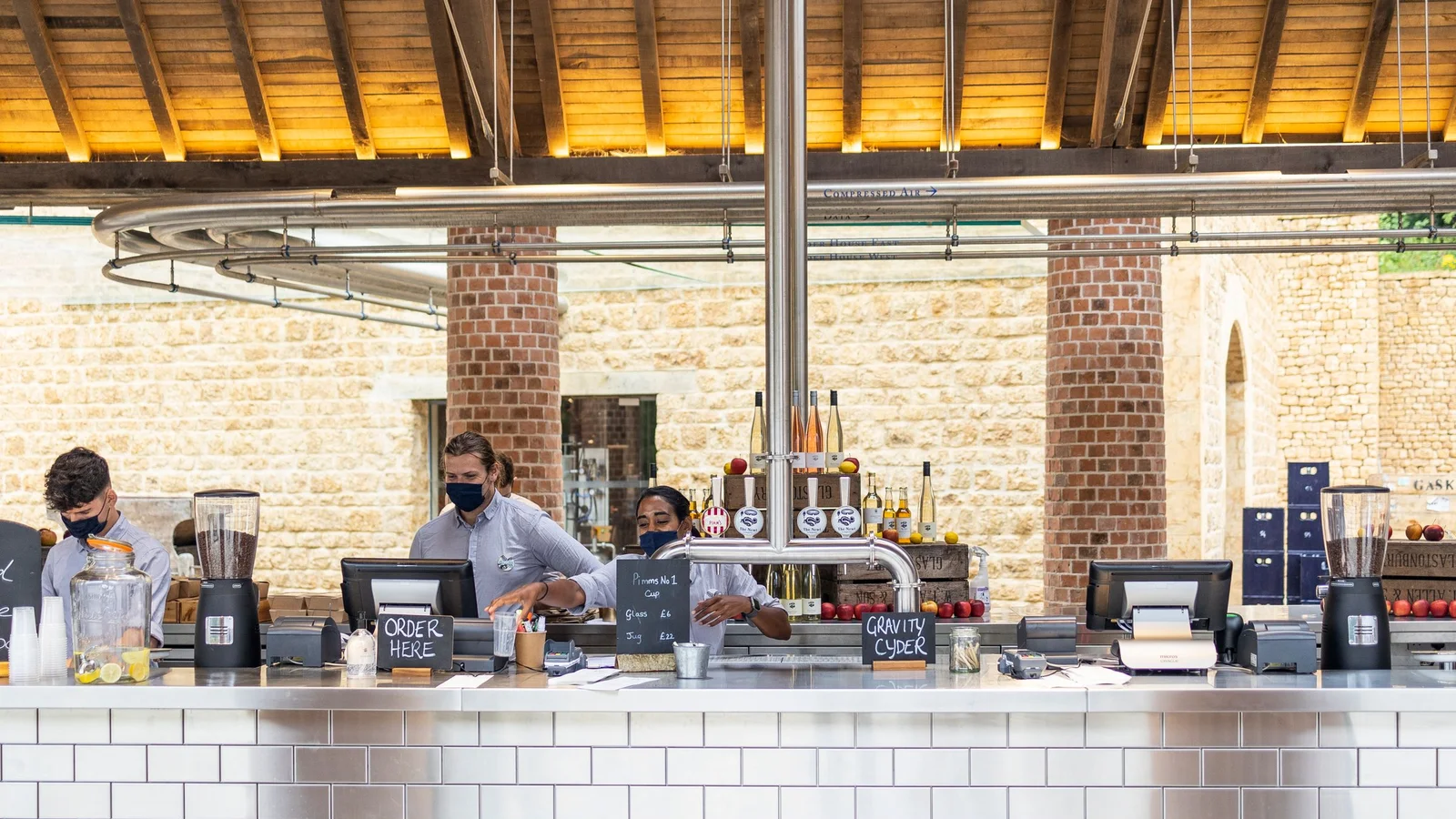
Dubai welcomed 19.59 million overnight visitors in 2025, the food-service market is worth tens of billions of dirhams, and the city has more restaurants per resident than London or New York [9][10]. That is the opportunity. Here is the part the glossy setup guides leave out: most new restaurants in Dubai do not survive their first few years, margins are thin, and delivery apps take up to a third of every order they touch [10][11]. Opening a restaurant here can be genuinely lucrative, but only if you go in with the real numbers, not the brochure ones.
This guide is built to help you decide as much as to help you file paperwork. You will get the licensing chain (a DET trade licence plus a Dubai Municipality food permit plus Civil Defence, and the order they must happen in), the Food Code and Person in Charge rules, the honest cost by format, where to locate and what rent really runs, the alcohol and shisha realities, VAT and corporate tax, how delivery commissions hit your P&L, the staffing and food-handler requirements, and a frank look at margins and why restaurants fail. Since 2013, our team has set up food and beverage companies across Dubai, so these figures and traps come from real files, not marketing pages.
Why open a restaurant in Dubai?
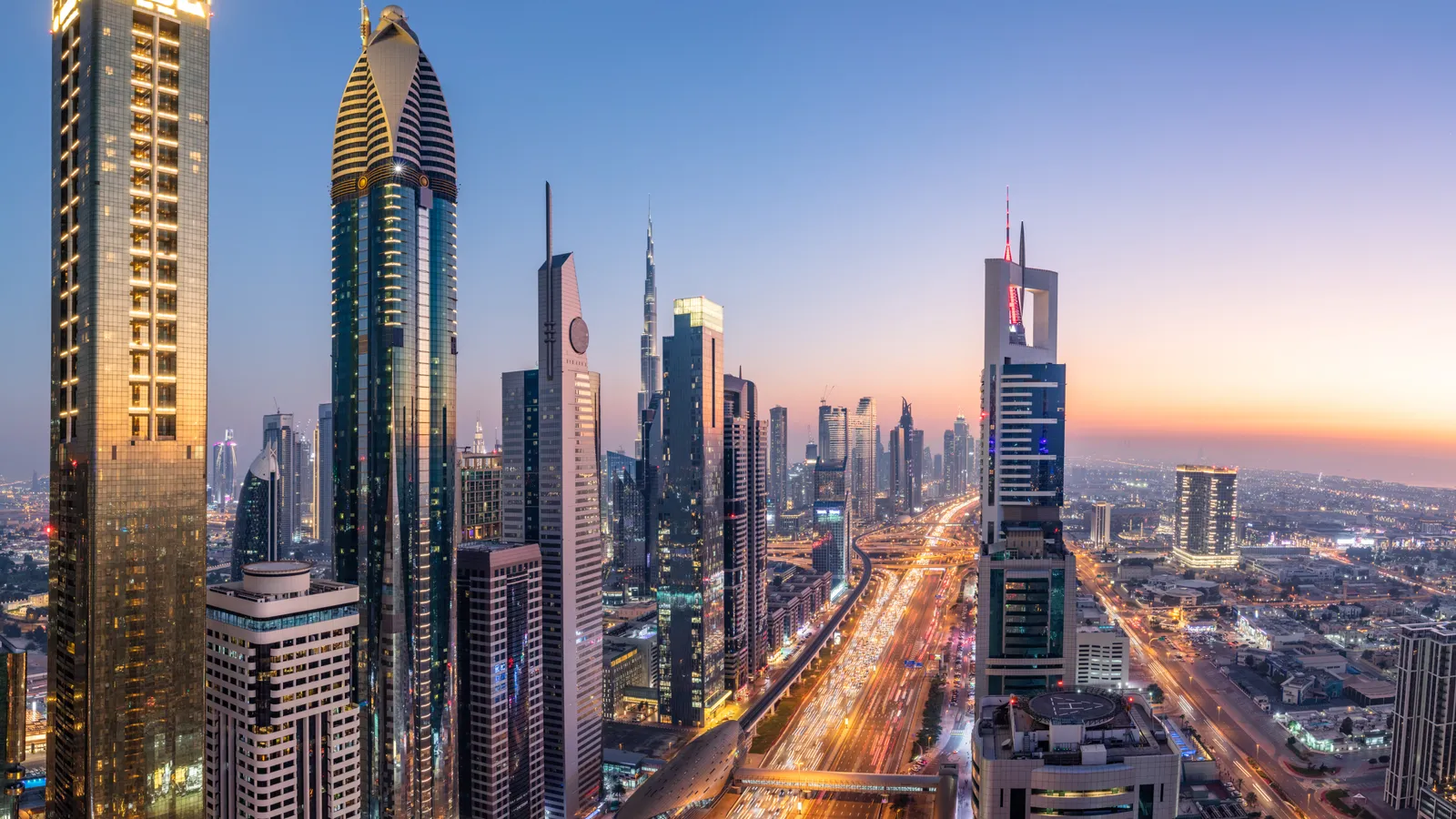
Dubai is one of the most active dining markets on earth, powered by tourism, a high-spending resident base, and a food-obsessed culture. Visitor numbers hit a record 19.59 million in 2025, up about 5% on the year, and tourism contributes a large share of the economy, which feeds a constant flow of diners [9]. The UAE food-service market is measured in the tens of billions of US dollars and growing at a double-digit annual rate, with Dubai taking roughly 40% of the national total [10].
The reasons founders open a restaurant here:
- A huge, tourist-fed demand base. Millions of visitors plus a large expatriate population that eats out often.
- No personal income tax. Your take-home profit is not taxed at the personal level.
- 100% foreign ownership. You can own the restaurant outright, with no Emirati partner [4].
- A global stage. Dubai has become a Michelin and celebrity-chef destination, so a strong concept can build a real brand fast.
Real Talk: Demand is real, but so is the competition. Dubai already has thousands of restaurants and cafes and adds more than a thousand new licences a year, and industry voices openly debate whether the market is saturated [10]. The opportunity is genuine, but it rewards a sharp concept, a disciplined budget, and the right location, not a vanity project. Go in treating it as a serious business, because the ones who treat it as a hobby are the ones who close.
Should you open a restaurant, or is the market too crowded?
Before the licence, be honest about the odds, because most setup guides will not tell you. Industry estimates commonly cited put restaurant failure high: on the order of 60% closing within the first year and around 80% within five years, with Dubai insiders citing 40% to 50% closing within two years [10]. The numbers vary by source and segment, but the direction is consistent, and it is not because the market is bad. It is because too many people open undercapitalised, in the wrong location, with a thin concept and no financial model.
Ask yourself three questions honestly:
- Do you have enough capital, including a runway? Restaurants rarely break even before 12 to 24 months. You need the build-out budget plus six to nine months of operating costs in reserve. Running out of working capital before you turn the corner is the single most common reason restaurants fail [10].
- Is your concept matched to the location and the crowd? A generic menu in the wrong catchment underperforms. The winners fit a specific area and audience.
- Can you live with thin margins? A well-run Dubai restaurant nets roughly 5% to 10% of revenue, and underperformers make far less, before delivery commissions and any downturn [10][11].
Common Mistake: Opening for the prestige. Low barriers to entry pull in people chasing the glamour of owning a restaurant without the operational discipline to survive it. If the P&L only works in a best-case spreadsheet, it does not work. The honest math below is there to help you build a concept that survives, not to talk you out of a good one.
What licences and approvals do you need?
Opening a restaurant means clearing three authorities, not one, and in a specific order: the Dubai Department of Economy and Tourism (DET) for the trade licence, Dubai Municipality (DM) for food safety, and Dubai Civil Defence (DCD) for fire safety [1][3]. Miss the sequence and you can pay for a fit-out the municipality then rejects.
The layers, in plain terms:
- DET commercial trade licence carrying the restaurant or food-and-beverage activity. DET flags at initial approval that a Dubai Municipality food-safety approval is required before the licence is finalised [3].
- Dubai Municipality food establishment permit, which starts with kitchen and layout plan approval before you fit out, then an on-site inspection (covered next) [1].
- Dubai Civil Defence approval for the kitchen fire-suppression system, alarms, and emergency exits, a prerequisite for the municipality's final sign-off [1].
- Ejari-registered tenancy for the premises, needed before DET finalises the licence and before DM accepts the food application for that address.
- Extra permits where relevant: alcohol, shisha, outdoor seating, and signage (covered below).
Common Mistake: Signing a lease and starting fit-out before Dubai Municipality has approved your kitchen layout. Fit-out is your biggest cost line, and a rejected layout forces an expensive redo. Get preliminary DM layout approval first, then build. Not sure which approvals your concept needs? Ask us→
What does Dubai Municipality require for the kitchen?
This is where most competing guides go quiet, and where inspections actually fail. Dubai Municipality regulates restaurants under the Dubai Food Code, and the rules shape your kitchen design, your costs, and your daily operations [1].
- Layout approval before fit-out. You submit kitchen and MEP drawings to DM Food Safety, which checks finishes, drainage, ventilation, lighting, and the separation of raw and ready-to-eat food flows. Build to the approved plan, not before it.
- HACCP. A documented Hazard Analysis and Critical Control Points plan is required for most establishments and must be kept current, covering temperature control, storage, and cross-contamination.
- Raw and cooked separation. Physically separating raw prep from cooked and plating areas is one of the most commonly failed inspection points. Design it in from the start.
- Grease trap and ventilation. A correctly sized grease trap is mandatory for every commercial kitchen, and mechanical exhaust must vent well above the roofline, with grease-heavy cooking needing extra filtration. These are non-negotiable line items, not upgrades.
- Hygiene stations. Dedicated handwash basins in prep areas, staff changing space away from food, and correctly located restrooms.
Pass the on-site inspection and DM issues the food establishment permit; the trade licence follows once that permit is in hand.
Pro Tip: Use a fit-out contractor and food-safety consultant who work with Dubai Municipality daily. The cost of getting the layout approved right the first time is trivial next to the cost of rebuilding a kitchen that failed inspection. This is exactly the kind of coordination our post-setup services team manages.

Do you need a Person in Charge and food handler cards?
Yes, and both are mandatory and ongoing. Dubai Municipality requires trained, certified people running your food safety, not just a clean kitchen on inspection day [1].
- Person in Charge (PIC). At least one certified PIC must be on duty during every operating shift. The PIC certification is a municipality-approved food-safety qualification, cited at roughly AED 450 to 950, with the certificate commonly valid for five years [1]. Only the PIC and designated technical staff can handle certain permit tasks for the establishment.
- Food handler cards. Every staff member who handles food needs a valid occupational health card, commonly cited at around AED 300 to 600 per person and renewed annually, including a basic food-safety module [1]. Inspectors check these, and gaps are a violation.
Based on our experience: The PIC requirement catches first-timers who assume one certificate covers the business. It does not. You need a certified PIC present on every shift, so a single-PIC restaurant cannot legally open a shift that person is not working. Plan your certified headcount around your opening hours, not just your kitchen.
Can your restaurant serve alcohol?
This is the most misunderstood area, so treat it carefully and verify before you build a business plan around bar revenue. Historically, alcohol service in Dubai has been tied to hotels, hotel-linked venues, and a limited set of licensed standalone premises, rather than freely available to any restaurant, and licensing runs through Dubai Police [1]. A serving licence (commonly referred to as a Type C category) is what a licensed restaurant or bar uses to serve alcohol on approved premises, and it is renewed annually.
Two 2026 facts to keep straight, because they are constantly confused:
- The 30% municipality tax on alcohol was reinstated on 1 January 2025. It had been suspended through 2023 and 2024, then brought back, and it remains in force in 2026. Do not plan on the suspension that ended [1].
- The personal, tourist and resident liquor purchase licence was abolished back in January 2023. Non-Muslim adults can now buy from licensed retailers on presentation of ID with no separate permit. That is a different thing from a venue's serving licence, and from the 30% tax, and the three get mixed up constantly [1].
Pro Tip: If alcohol is central to your concept, confirm your specific eligibility with Dubai Police and DET before you sign a lease, because whether a standalone (non-hotel) restaurant can obtain an independent serving licence, and on what terms, depends on the venue and location and is not guaranteed. Build the business plan on food first, and treat alcohol as an upside you have confirmed, not assumed.
Can you offer shisha?
Shisha is a separate permit layered on top of your licence, with sign-off from Dubai Municipality, Civil Defence, and Dubai Police, and it carries real location and space constraints [1]. Commonly cited rules include a minimum distance from homes, schools, and mosques, a location on a main commercial road, a sizeable minimum area, and a municipality-approved ventilation system, with shisha served only outdoors or in a dedicated, approved smoking area, never mixed with indoor dining. The exact distance and area thresholds appear mainly in secondary sources, so confirm the current rules with Dubai Municipality before committing.
Common Mistake: Assuming you can add shisha to any cafe later. The ventilation, space, and separate-area requirements often mean retrofitting is impractical. If shisha is part of the plan, design for it and confirm the permit path before you lease.
Free zone or mainland for a restaurant?
For a restaurant serving walk-in customers, mainland is required. A dine-in restaurant trades directly with the public across Dubai, which needs a DET mainland licence; a free zone company generally cannot serve the mainland public without a branch or additional structure [3][5]. Two related models work differently:
- Food trucks are more complex, needing approvals from four bodies (DET for the mobile vending activity, Dubai Municipality for food safety on the truck and a supporting commissary kitchen, the location authority for permitted spots, and Civil Defence). See our food truck business guide.
- Cloud kitchens (delivery only, no dine-in) run on a normal food-and-beverage licence with the same Dubai Municipality food-safety rules, just without a dining room, and are the lowest-cost way into the market (covered below).
Real Talk: If a setup agent offers you a cheap free zone licence for a dine-in restaurant, ask in writing how you will legally serve walk-in customers on the Dubai mainland with it. For a normal restaurant, you need a mainland DET licence. Compare the routes on our mainland company setup and free zone company setup pages, or read our free zone vs mainland vs offshore guide.
Can a foreigner own 100% of a restaurant in Dubai?
Yes. A foreign national can own 100% of a mainland restaurant in Dubai, with no Emirati partner and no local service agent, since the Commercial Companies Law reform (Federal Decree-Law No. 26 of 2020, consolidated by No. 32 of 2021) [4]. Restaurants and hospitality are not on the restricted-activities list, and "hotel and restaurant management" is cited on the positive list of activities open to full foreign ownership.
Older guides still mention a 51% local partner, which no longer applies to restaurants. You own and control the business outright.
How much does it cost to open a restaurant in Dubai?
The honest answer is that it depends heavily on format, size, and finish, and the licence is a small part of it. Fit-out and equipment dominate. Here are realistic 2026 all-in ranges by format (indicative, because Dubai Municipality and DET do not publish one consolidated schedule) [1][11]:
| Format | Footprint | Realistic all-in budget (AED) |
|---|---|---|
| Cloud kitchen (delivery only) | 150 – 800 sq ft | 60,000 – 150,000 |
| Cafe / counter-service | 400 – 1,500 sq ft | 80,000 – 200,000 |
| Full dine-in restaurant | 1,500 – 5,000 sq ft | 200,000 – 1,500,000 |
| Fine dining / flagship | Large | 1,000,000+ |
The licence and approvals themselves are a fraction of that. For a small cafe, licence plus DM and Civil Defence approvals run roughly AED 12,500 to 24,500; for a full-service restaurant, roughly AED 22,000 to 42,500 [1]. Fit-out is the big variable, running from around AED 400 per square foot for a basic cafe to AED 1,800 or more for premium and fine dining, with kitchen equipment a separate AED 100,000 to 500,000-plus line [11].
A realistic worked example, a 60-seat full-service restaurant, comes to about AED 545,000 all in: roughly AED 51,000 licence and approvals, AED 92,000 soft costs and rent during build-out, AED 294,000 fit-out and equipment, and AED 108,000 pre-opening (visas, opening inventory, marketing, and a working-capital buffer) [11].
Quick Math: Notice what dominates. The licence is under 10% of the budget; fit-out, equipment, rent, and working capital are the real spend. That is why "restaurant licence cost in Dubai" is the wrong thing to anchor on. Budget the whole number, then add six to nine months of operating runway on top. For a transparent, itemised quote sized to your concept, our team can price it exactly. Get a free setup quote→
Where should you locate, and what does rent cost?
Location decides footfall, and rent is usually the single most consequential line in a restaurant P&L. Dubai rents vary enormously by area (indicative annual figures per square foot) [11]:
| Location | Rent (AED / sq ft / year) | Notes |
|---|---|---|
| Older / secondary streets (e.g. Deira) | from ~80 | Low-cost, footfall varies |
| Emerging areas (Al Quoz, Silicon Oasis) | Lower / mid | Budget-friendly, growing catchments |
| Business Bay / community units | ~120 – 200 | Mixed resident and office demand |
| Downtown / near Dubai Mall | ~400 – 800+ | High footfall, high cost |
| DIFC / prime | ~250 – 350+ | Premium, corporate lunch trade |
| Mall food-court / prime mall unit | 800+ | Highest rate, guaranteed footfall, plus service charges |
On top of rent, prime locations often demand key money, an informal goodwill payment to secure or take over a lease, commonly AED 50,000 to 300,000, plus a security deposit and several months of rent cheques upfront [11].
Pro Tip: Aim to keep rent at roughly 15% to 20% of expected revenue, and if you are paying at the top of that band, plan to run a tighter food cost to compensate [11]. A cheaper unit in the right catchment beats a prestige address you cannot fill. And verify the shell before you sign: power capacity, a ventilation shaft, and grease-trap provision can cost more to add than the rent if they are missing.
What are the steps and how long does it take?
A straightforward mainland restaurant with clean paperwork and a ready unit can open in around three months (roughly 88 to 92 days is commonly cited), and longer if the kitchen layout is rejected, Civil Defence flags issues, or you pursue an alcohol licence [1][11]. The sequence:
- Finalise concept, location, and a real financial model, then reserve your trade name and get DET initial approval.
- Get preliminary Dubai Municipality kitchen and layout approval before you commit to a unit or fit-out.
- Lease and register the premises on Ejari.
- Fit out to the approved plan and pass Civil Defence fire-safety inspection.
- Pass the Dubai Municipality on-site inspection and receive the food establishment permit.
- DET issues the final trade licence once the DM permit is in hand.
- Apply for visas, certify your PIC and food handlers, open a corporate bank account, and set up POS and delivery-app onboarding.
- Soft-launch, then open.
Our post-setup services team runs the DM, Civil Defence, visa, and bank steps in parallel to keep the timeline tight.
What documents do you need?
For each shareholder and manager:
- Passport copy (six months validity) and passport photo
- UAE residence visa and Emirates ID copies if already resident, or a No Objection Certificate from a current sponsor
- Certified Person in Charge qualification for the designated PIC, and food handler cards for food-handling staff
For the company:
- Trade name reservation and DET initial approval
- Dubai Municipality-approved kitchen and layout drawings
- Ejari-registered tenancy contract
- Notarised Memorandum of Association
- Civil Defence approval for the kitchen fire-suppression system
- A business plan and financial model (banks and landlords expect it)
Do restaurants pay VAT and corporate tax?
Yes, and there are two points that trip up owners. On VAT, all restaurant food and beverage sales are standard-rated at 5%, whether dine-in, takeaway, or delivery [6]. There is no zero-rating for prepared restaurant food, so the "basic food items" exemption that applies to some retail groceries does not help you. You must register for VAT once taxable turnover passes AED 375,000, and you can register voluntarily from AED 187,500, which lets an early-stage restaurant recover VAT on its fit-out and equipment [6].
Now the point almost every guide gets wrong: the 7% municipality fee and the 10% service charge apply to hotel restaurants, not standalone ones [6]. The municipality fee is legally a charge on hotel establishments, and a service charge is only lawfully chargeable by a restaurant that is part of a hotel. A standalone (non-hotel) restaurant may only add 5% VAT to the bill; a mandatory "service charge" line on a standalone restaurant's bill is a consumer-protection issue, not a standard practice. The Tourism Dirham is a per-night hotel-room charge and does not apply to restaurant bills at all [6].
On corporate tax, a restaurant pays 9% on taxable profit above AED 375,000, and 0% below [5]. Importantly, a cloud kitchen or restaurant set up in a free zone does not get the free zone 0% rate: food service is not a qualifying activity and selling to consumers is an excluded activity, so a free zone food business is taxed like a mainland one [5]. Small Business Relief can treat a restaurant with revenue under AED 3 million as having no taxable income for tax periods ending on or before 31 December 2029, and you must elect it [5]. Read our UAE corporate tax filing guide for detail.
Common Mistake: Copying a hotel restaurant's bill structure. If you are a standalone restaurant adding "+7% municipality +10% service" to guests' bills, you are charging fees you are not entitled to. Charge the menu price plus 5% VAT, and if you want a service charge, make it genuinely optional.
How do delivery apps affect your economics?
Delivery is now a big share of Dubai restaurant orders, around 29% in early 2026, but it is the channel most likely to quietly wreck your margin [10][11]. The aggregators charge steep commissions:
| Platform | Typical commission |
|---|---|
| Talabat | ~20% to 30% (high-volume partners can negotiate lower) |
| Deliveroo | ~25% to 35% (fine dining at the top) |
| Careem Food | Restructured model (subscription plus per-order fees) |
| Noon Food | Lower headline rate on some plans |
Most restaurants list on two or three platforms at once, each with separate terms. The catch: at a 30% commission on a business that nets 5% to 10% overall, delivery orders are often barely break-even or loss-making on a per-order basis [10][11]. Delivery works as incremental volume and marketing reach, not as a high-margin channel. Own-delivery (your own riders or website ordering) avoids the commission but needs order density and fleet management to pay off.
Pro Tip: Model each delivery platform separately in your P&L, and price your delivery menu to protect margin (many operators run a slightly higher delivery price). If delivery is your whole model, a cloud kitchen with low rent is the format that can actually make the commission math work.
How do you staff a restaurant?
Labour is typically a quarter or more of revenue, and every food-handling hire needs a card and a sponsored visa. A 60-seat full-service restaurant runs around 12 staff [11]. Indicative 2026 salaries (AED per month; ranges are wide because they span casual to fine dining and branded groups) [11]:
| Role | Typical salary (AED/month) |
|---|---|
| Commis / line cook | 1,500 – 3,500 |
| Chef de partie | 3,000 – 5,000 |
| Sous chef | 7,000 – 12,000 |
| Executive chef | 12,000 – 25,000 |
| Waiter / server | 1,500 – 2,800 (plus service share) |
| Restaurant manager | 8,000 – 16,000 |
On top of salary, budget roughly AED 3,000 to 8,000 per employee for the visa process, mandatory health insurance for sponsored staff, food handler cards (AED 300 to 600 each, annual), and PIC certification for your certified managers [1][11]. Food and beverage salaries have risen noticeably since 2023, so use current market rates, not old ones.
Pro Tip: Certify more than one Person in Charge. Because a PIC must be on every shift, a single certified manager is a single point of failure that can stop you opening. Build a small bench of certified staff into your hiring plan.
What do the economics really look like?
Here is the P&L most setup guides will not show you. A typical Dubai restaurant cost structure looks roughly like this [10][11]:
| Line item | Typical share of revenue |
|---|---|
| Food and packaging cost | 25% to 35% |
| Labour | 25% to 35% |
| Rent | 15% to 20% |
| Utilities, marketing, maintenance, other | ~15% to 20% |
| Net profit margin | ~5% to 10% (well-run); lower for underperformers |
Coffee shops can run higher margins, fine dining and QSR often lower. Breakeven typically arrives in year two, roughly 12 to 24 months in, and you should hold six to nine months of working capital to get there [11]. The thin margin is the whole story: at 8% to 10%, a restaurant has almost no buffer, which is why a bad location, a rent that is 5 points too high, or a soft season can tip an otherwise decent concept into losses.
Quick Math: On AED 300,000 of monthly revenue, food at 30% is AED 90,000, labour at 28% is AED 84,000, rent at 18% is AED 54,000, and the rest of your overheads eat most of what is left, leaving perhaps AED 20,000 to 30,000 of profit in a good month. Now route a third of orders through a 30% delivery commission and you see how quickly the margin can vanish. Discipline on food cost, rent, and delivery pricing is not optional, it is the business.
What is the cloud kitchen alternative?
If the risk and capital of a full dine-in restaurant feel steep, a cloud kitchen is the lower-cost way to test a concept. It is delivery-only, so you skip the dining room, prime rent, and front-of-house team, but you keep the same Dubai Municipality food-safety rules [1][11]. Setup runs roughly AED 60,000 to 150,000, or from about AED 30,000 to enter a shared, managed kitchen that already holds baseline approvals [11]. There is no separate "ghost kitchen" licence; it is a food-and-beverage licence for a restaurant without dine-in.
Based on our experience: Many smart operators launch a concept as a cloud kitchen first, prove there is demand and refine the menu on low overhead, then open a dine-in location once the numbers are real. It is the closest thing to a test-the-market move in this industry, and it takes a fraction of the capital.
What ongoing compliance applies?
Running a compliant restaurant is a continuous cycle, not a one-time setup:
- Dubai Municipality food-safety inspections and grading. DM grades outlets and publishes results through its Food Watch platform, viewable by QR code, so you cannot hide an old sticker. Keep your grade high; permit renewal depends on passing inspection [1].
- Renewals. The DET trade licence, the DM food permit, and the Civil Defence approval all renew annually, the food permit contingent on valid Ejari, current staff health cards, and an active pest-control contract [1].
- Food handler cards and PIC kept current, and staff food-safety training maintained.
- Grease trap servicing on schedule by an approved contractor, with records kept for inspection [1].
- Allergen labelling. The Food Code requires disclosure of major allergens on your food. Whether full calorie labelling is mandatory for an independent restaurant is unsettled and stricter for large chains, so confirm the current rule with Dubai Municipality [1].
- Corporate tax registration and annual filing, and VAT filing (usually quarterly) once registered.
How do you open a bank account and set up POS?
Restaurants can face extra scrutiny when opening a corporate account, because banks review your activity risk, so have your trade licence, food permit, shareholder documents, and Ejari ready [11]. Minimum balances vary by tier, commonly AED 10,000 to 50,000 for SME accounts, with Mashreq and Emirates NBD often cited as more accessible; approval usually takes a few weeks, so apply in parallel with licensing rather than after fit-out [11]. If you have been rejected before, our guide on overcoming bank account rejection walks through the fixes.
For POS, budget both upfront hardware and an ongoing subscription. Options range from basic cloud systems around AED 75 a month to mid-range platforms like Foodics (roughly AED 350 to 700 a month plus AED 5,000 to 15,000 hardware, with native Talabat and Deliveroo integration) to enterprise systems for large or hotel-linked operations [11].
What mistakes do restaurant founders make?
The predictable, expensive errors we see:
- Under-capitalising. Costs commonly run over budget, and running out of working capital before breakeven is the top killer. Budget a contingency and a runway.
- Signing a lease before due diligence. Committing to a unit before checking power, ventilation, grease-trap provision, and municipality layout approval leads to costly surprises.
- Building before approval. Starting fit-out before Dubai Municipality approves the kitchen layout risks an expensive rebuild.
- Copying a hotel bill. Adding a municipality fee or mandatory service charge as a standalone restaurant.
- Assuming alcohol or shisha revenue without confirming eligibility and permits first.
- Concept-location mismatch. A menu that does not fit the catchment underperforms no matter how good the food.
- No financial model. Opening without modelled food, labour, and rent ratios and a cash-runway plan, then discovering the real numbers after the money is spent.
Common Mistake: Treating the licence fee as the budget. The licence is a small fraction of what you need; the fit-out, equipment, rent, working capital, and staffing are the real investment. Plan the whole number.
Real Client Stories
These are real examples from businesses we have helped set up. Names have been changed for privacy.
Karim's cloud-kitchen-first launch (Dubai mainland)
Karim had a strong homestyle-food concept but not the capital for a dine-in restaurant. We set him up as a cloud kitchen in a shared, pre-approved facility for about AED 90,000 all in, listed on two delivery apps, and priced the delivery menu to absorb the commission. He proved demand over a year, then opened a small dine-in location funded partly by the cloud-kitchen profit. His tip: "Starting delivery-only let me learn what actually sold before I bet real money on a dining room. I would never open blind again."
Lina's casual restaurant, right catchment (Dubai mainland)
Lina almost signed a prestige Downtown unit at over AED 700 per square foot. We ran the rent-to-revenue math and she chose a community location at a third of the rent, in a neighbourhood that fit her concept. First-year all-in cost was about AED 480,000, and she broke even in month fourteen. Her advice: "The expensive address would have looked great and quietly bankrupted me. Footfall you can actually convert beats a famous postcode."
Omar's compliance save (Dubai mainland)
Omar had signed a lease and was ready to build when we flagged that his kitchen layout would not pass Dubai Municipality, the raw and cooked areas shared a counter and the exhaust was undersized. We got the layout redrawn and approved before construction. His takeaway: "I was two weeks from building a kitchen the municipality would have rejected. Getting the layout approved first saved me a six-figure redo."
Start your Dubai restaurant the right way
A restaurant in Dubai can be a genuinely great business, but it rewards founders who respect the numbers: the right licence and municipality approvals in the right order, a Food Code-compliant kitchen, a concept matched to its location, honest margins, and enough capital to reach breakeven. The market is big and hungry, but it is unforgiving of vanity projects. The ones who plan the real budget and the real P&L are the ones still open in year three.
Since 2013, BusinessDubai.ae has completed 700+ company registrations across the UAE, including restaurants and food and beverage companies, with transparent itemised pricing and no hidden fees. We will confirm your activity, coordinate the DET licence, Dubai Municipality food approval, and Civil Defence sign-off, sort your visas, bank account, and PIC and food handler cards, and give you a clear all-in budget before you commit. Talk to a setup expert→ for a clear plan for your restaurant.
Ready to open your restaurant in Dubai the right way? Our licensed advisors handle the DET licence, Dubai Municipality food permit, Civil Defence approval, visas and bank account end to end, with transparent, fixed fees.
Get started free→Frequently Asked Questions
How much does it cost to open a restaurant in Dubai?
It depends heavily on format. A cloud kitchen runs about AED 60,000 to 150,000, a cafe AED 80,000 to 200,000, a full dine-in restaurant AED 200,000 to 1,500,000, and fine dining AED 1 million and up. The licence and approvals are a small part (roughly AED 12,500 to 42,500); fit-out, kitchen equipment, rent, and working capital are the real spend.
What licences do I need to open a restaurant in Dubai?
You need a DET commercial trade licence with the restaurant activity, a Dubai Municipality food establishment permit (starting with kitchen layout approval), and Dubai Civil Defence fire-safety approval, plus an Ejari-registered lease. Alcohol, shisha, outdoor seating, and signage are additional permits where relevant.
Do I need Dubai Municipality approval before fitting out my kitchen?
Yes. You must get preliminary kitchen and layout approval from Dubai Municipality before you build, because fit-out must follow the approved plan. Starting construction first risks an expensive rebuild if the layout is rejected, a common and costly mistake.
What is a Person in Charge (PIC)?
A Person in Charge is a food-safety-certified manager that Dubai Municipality requires every restaurant to have on duty during every operating shift. The certification costs roughly AED 450 to 950 and is commonly valid for five years. It is separate from the annual food handler cards all food-handling staff need.
Can a foreigner own 100% of a restaurant in Dubai?
Yes. Since the 2021 Commercial Companies Law reform, a foreign national can own 100% of a mainland restaurant in Dubai with no Emirati partner or local service agent. Restaurants are on the positive list for full foreign ownership.
Can a standalone restaurant serve alcohol in Dubai?
Not automatically. Alcohol service has traditionally been tied to hotels and licensed venues, with licensing through Dubai Police, and whether a standalone restaurant can get an independent serving licence depends on the venue and location. Confirm your eligibility with Dubai Police and DET before planning around alcohol revenue.
Was the alcohol tax in Dubai abolished?
No. The 30% Dubai Municipality tax on alcohol was suspended through 2023 and 2024, then reinstated on 1 January 2025, and it remains in force in 2026. What was abolished, back in January 2023, is the separate personal liquor purchase permit for individuals, which is a different thing.
Do I charge a service charge and municipality fee at my restaurant?
Only if you are a hotel restaurant. The 7% municipality fee and 10% service charge apply to hotel establishments. A standalone (non-hotel) restaurant may only add 5% VAT to the bill; a mandatory service charge on a standalone restaurant bill is a consumer-protection issue.
Do restaurants pay VAT in Dubai?
Yes. All restaurant food and beverage sales are standard-rated at 5% VAT, whether dine-in, takeaway, or delivery. There is no zero-rating for prepared restaurant food. You must register for VAT once turnover passes AED 375,000, and can register voluntarily from AED 187,500 to recover VAT on your fit-out.
Do restaurants pay corporate tax in Dubai?
Yes. A restaurant pays 9% corporate tax on profit above AED 375,000, and 0% below. A cloud kitchen or restaurant in a free zone does not get the free zone 0% rate, because food service and selling to consumers fall outside qualifying income. Small Business Relief can give 0% under AED 3 million revenue, but only through 2029.
How long does it take to open a restaurant in Dubai?
A straightforward mainland restaurant with clean paperwork and a ready unit can open in around three months (about 88 to 92 days). It takes longer if the kitchen layout is rejected, Civil Defence flags issues, or you are pursuing an alcohol licence.
How much do delivery apps charge restaurants in Dubai?
Commissions typically run 20% to 30% on Talabat and 25% to 35% on Deliveroo, with Careem and Noon on different models. Because most restaurants net only 5% to 10% overall, delivery orders are often barely break-even at these commissions, so price your delivery menu to protect margin.
What profit margin can a Dubai restaurant expect?
A well-run Dubai restaurant nets roughly 5% to 10% of revenue, with coffee shops sometimes higher and fine dining and fast food often lower. Underperformers make far less. The margin is thin, which is why disciplined control of food cost, rent, and delivery pricing is essential.
Why do so many restaurants fail in Dubai?
Common estimates put failure high, on the order of 60% within a year and 80% within five years, with Dubai insiders citing 40% to 50% within two years. The main causes are under-capitalisation, rent too high for the revenue, market saturation, concept-location mismatch, and no proper financial model, not a weak market.
Do I need a physical location, or can I run delivery only?
You can run delivery only as a cloud kitchen, which skips the dining room and prime rent but keeps the same Dubai Municipality food-safety rules. It is the lowest-cost way in, from about AED 30,000 in a shared kitchen to AED 150,000 standalone.
What are the ongoing costs of running a restaurant?
Annual renewals of the DET licence, DM food permit, and Civil Defence approval, plus rent, payroll, food cost, utilities, food handler card and PIC renewals, pest control, grease-trap servicing, marketing, corporate tax and VAT filing, and POS and delivery-app fees. Budget six to nine months of working capital for the pre-breakeven period.
How many staff do I need for a restaurant?
It depends on size and service style. A 60-seat full-service restaurant runs around 12 staff across kitchen and front of house. Casual concepts need fewer per cover than fine dining. Every food-handling hire needs a food handler card and a sponsored visa, and you need certified PICs across your shifts.
What is the Dubai Food Code?
It is Dubai Municipality's rulebook for food establishments, covering preparation, storage, hygiene, staff training, allergen labelling, and consumer protection. Your kitchen layout, HACCP plan, grease trap, ventilation, and raw-versus-cooked separation are all judged against it, and inspections and grading enforce it.
Do I need a HACCP plan?
Yes, for most restaurants. A documented Hazard Analysis and Critical Control Points plan is part of the Dubai Municipality food permit and must be kept current, covering temperature control, storage, and cross-contamination. It is checked during inspection.
Can I open a shisha cafe in Dubai?
Yes, with a separate shisha permit signed off by Dubai Municipality, Civil Defence, and Dubai Police. It carries location and space rules (distance from homes, schools, and mosques, a main-road location, a minimum area, and approved ventilation), with shisha served only outdoors or in a dedicated area. Confirm the current thresholds with the municipality.
Should I choose a mall or a street location?
Malls offer guaranteed footfall and climate control but the highest rent plus service charges and strict landlord rules. Street and community units cost less and offer signage visibility but footfall depends on the catchment. Match the location to your concept and keep rent to 15% to 20% of expected revenue.
What is key money?
Key money is an informal goodwill payment, commonly AED 50,000 to 300,000, to secure a lease in a high-demand location or take over from a previous tenant. It is separate from the security deposit and rent, and it is a real line to budget for prime spots.
Can I run a restaurant from a free zone?
Not for dine-in serving the public, which needs a mainland DET licence. Cloud kitchens can sometimes work from a free zone for delivery, but if you deliver Dubai-wide the practical route is usually mainland or a dual-licence structure. Confirm with a setup adviser for your model.
How much working capital do I need?
Plan for six to nine months of operating costs on top of your build-out budget, because restaurants rarely break even before 12 to 24 months. Underestimating this runway is the most common reason otherwise good concepts close.
Do I need insurance for a restaurant?
Yes. You are legally required to provide health insurance for sponsored staff, and you should carry public liability, property, and product-liability cover given the food-safety and footfall risks. Confirm the right cover for your size and concept.
Is opening a restaurant in Dubai worth it?
It can be very rewarding given Dubai's demand and global stage, but it is competitive and margins are thin, so it rewards a sharp concept, the right location, disciplined costs, and enough capital. Treat it as a serious business with a real financial model and it can absolutely work; treat it as a vanity project and the odds are against you.
References
[1] Dubai Municipality, Food Safety Department. The Dubai Food Code, HACCP, the Person in Charge scheme, food handler cards, the food establishment permit, grease-trap and ventilation rules, the Food Watch grading platform, and shisha permit rules. dm.gov.ae
[2] Dubai Civil Defence. Fire-safety approval for commercial kitchens, suppression systems, and alarms. dcd.gov.ae
[3] Dubai Department of Economy and Tourism (DET) and Invest in Dubai. Commercial trade licence and restaurant / food and beverage activities. dubaidet.gov.ae
[4] UAE Government Portal. Full foreign ownership of mainland companies (Federal Decree-Law No. 26 of 2020 and No. 32 of 2021). u.ae
[5] Federal Tax Authority and Ministry of Finance. UAE Corporate Tax (Federal Decree-Law No. 47 of 2022), Qualifying and Excluded Activities for Free Zone Persons (Ministerial Decision No. 229 of 2025), and Small Business Relief (Ministerial Decision No. 73 of 2023, as amended by Ministerial Decision 131 of 2026). tax.gov.ae and mof.gov.ae
[6] Federal Tax Authority and Dubai Legal Portal. VAT (Federal Decree-Law No. 8 of 2017); the municipality fee on hotel establishments (Local Order No. 6 of 2003) and the Tourism Dirham (Administrative Resolution No. 2 of 2020). tax.gov.ae and dlp.dubai.gov.ae
[7] Dubai Police and Dubai Municipality. Alcohol serving licences for venues and the 30% municipality tax on alcohol (reinstated 1 January 2025); the abolition of the individual liquor purchase permit in January 2023. dubaipolice.gov.ae
[8] Roads and Transport Authority (RTA) and Trakhees. Permits for outdoor/pavement seating for restaurants and coffee shops. rta.ae
[9] Dubai Department of Economy and Tourism. Dubai international visitor numbers (19.59 million in 2025) and tourism's contribution to the economy. dubaidet.gov.ae
[10] Mordor Intelligence, IMARC, AGBI and Dubai Municipality data. UAE and Dubai food-service market size and growth, restaurant and outlet counts, saturation analysis, delivery share, and restaurant failure and closure rates. mordorintelligence.com and agbi.com
[11] Industry fit-out, salary, delivery and P&L sources (Sarmat, Khaleej Times, Arabian Business, Caterer Middle East, and Dubai fit-out contractors). Fit-out cost per square foot, rent by area, delivery-app commissions, staffing salaries, and restaurant cost structure and margins. Figures are indicative and should be confirmed with live quotes.
[12] BusinessDubai.ae. Internal data from UAE restaurant and food and beverage company registrations since 2013, including licensing, municipality and Civil Defence approvals, costs, timelines, banking, and client case studies. businessdubai.ae