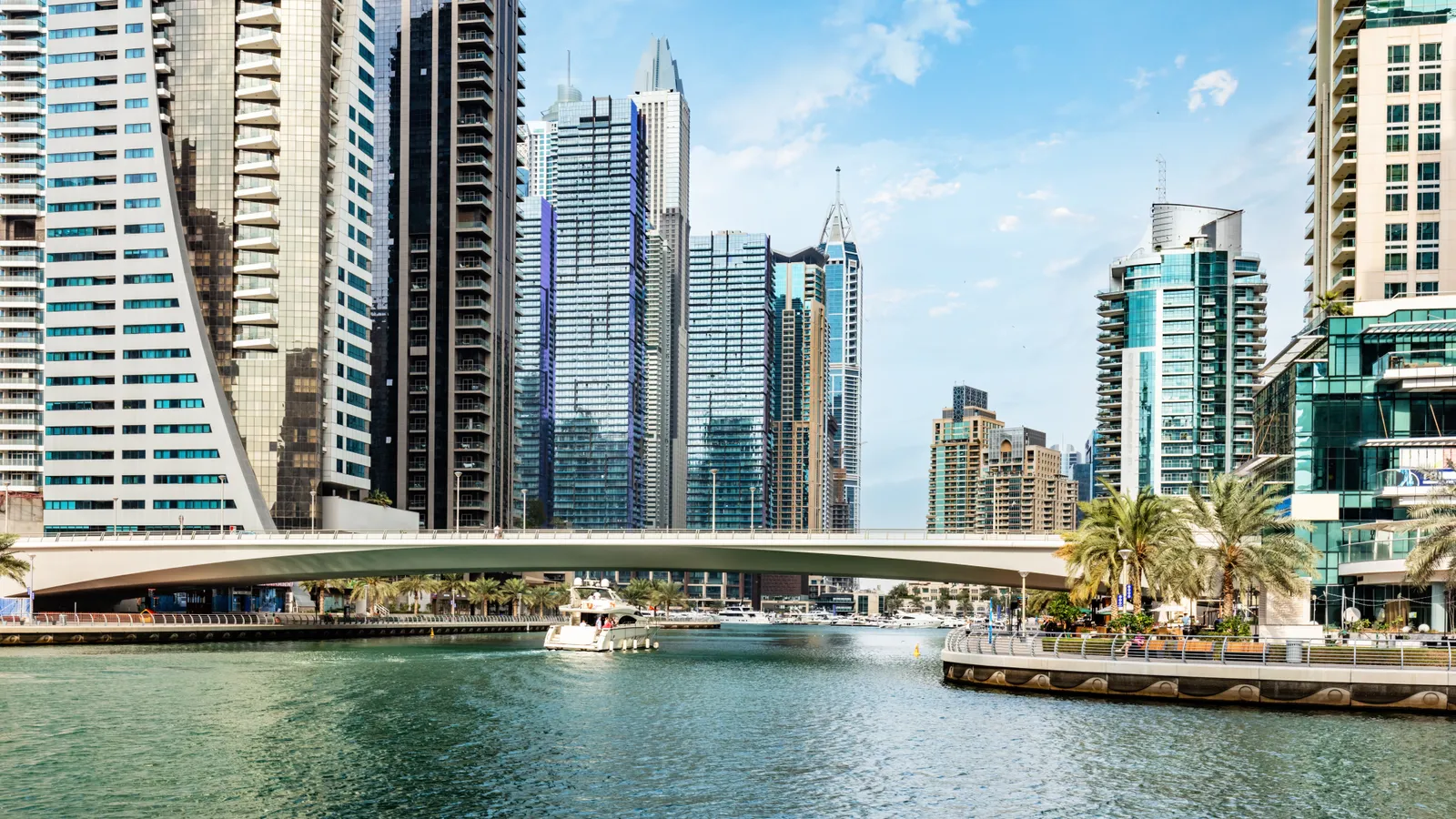
Since 2013, Dubai has positioned itself as the Middle East's premier destination for technology entrepreneurship. Today, with the UAE's ambitious AI Strategy 2031 and dedicated government programs, starting an artificial intelligence company in Dubai has become not just feasible but actively encouraged. The city offers subsidized licensing, world-class infrastructure, access to global tech giants, and non-dilutive funding, making it one of the most attractive AI startup hubs outside North America and Asia.
Why Dubai is the Right Choice for AI Startups in 2026
The UAE's commitment to AI innovation runs deep. The National AI Strategy 2031 aims to increase AI's contribution to national GDP from 9% to 45% by 2031, representing an estimated AED 335 billion in economic value [1]. This isn't just rhetoric; it's backed by tangible infrastructure and government support.
Dubai has created the largest concentration of AI and advanced technology companies in MENA through the DIFC Innovation Hub and AI Campus. Microsoft's USD 15.2 billion investment commitment through 2029 (announced in partnership with G42) demonstrates how seriously major tech companies view the emirate's potential. Google, AWS, and Oracle maintain significant operations here, creating a genuine ecosystem rather than isolated startup activity [2]. Learn more about free zone advantages over mainland alternatives.
What makes this particularly attractive for new founders is the subsidy structure. A fully compliant AI startup can launch with proper licensing for as little as USD 1,500 annually through the DIFC AI License, versus thousands of dollars elsewhere. Combined with zero corporate tax for qualifying operations and accelerated visa programs for AI talent, the financial advantage is substantial.
The DIFC AI License: The Gateway for Founders
The DIFC (Dubai International Financial Centre) AI License is specifically designed for artificial intelligence companies. At USD 1,500 per year with a 90% subsidy, it represents Dubai's most direct path for AI startups.
| Aspect | Details |
|---|---|
| Annual Cost | USD 1,500 (90% subsidized) |
| Setup Timeline | 10-12 working days |
| In-Principle Approval | 5-7 working days |
| Coworking Included | Premium flexi-desk access (USD 250-500/month market rate) |
| Visas Included | Discounted visa allocations |
| Business Activities Covered | AI/ML, AR/VR, Gaming, FinTech, InsurTech, PropTech, HealthTech, EdTech, ClimateTech, and more |
The application process is straightforward: choose your business structure (usually an LLC), register a trade name, submit documentation (passports, business plan, activity description), and wait for approval. One critical advantage is that no financial services restrictions exist within the AI License framework itself, though certain fintech sub-categories may require additional approvals.
What sets the DIFC license apart is the included ecosystem access. You're not just getting a license; you're getting coworking space, mentorship, legal support, and direct connection to investors. This is valuable for founders who need to demonstrate operational readiness to potential funders. For details on license types, see our business license guide.
Dubai Internet City: Established Tech Ecosystem
If DIFC represents the subsidized innovation route, Dubai Internet City (DIC) represents the established tech ecosystem. Home to over 4,000 companies including Google, Microsoft, Cisco, Salesforce, and others, DIC offers a different value proposition: direct access to large enterprises that may become customers, partners, or acquirers.
DIC houses in5 Tech, one of TECOM Group's specialized vertical incubators. Since 2013, in5 has nurtured over 1,100 startups, and they've collectively raised more than AED 9 billion in funding. The in5 ecosystem includes private offices, smart labs, dedicated investor relations, and regular demo days [3].
For companies focused on B2B AI solutions, particularly those selling to enterprises already in DIC, this location offers unparalleled customer proximity. Standard DIC licensing runs from AED 9,000 for the first year, comparable to other free zones but with the premium of being in the region's oldest and most established tech cluster. Review our cost breakdown guide for detailed pricing comparisons.
DTEC: Startup Intensity and Venture Capital
The Dubai Technology Entrepreneur Campus (DTEC) in Dubai Silicon Oasis is now home to over 1,000 startups from 75+ countries. Unlike DIC's multinational corporation focus, DTEC is founder-centric with heavy emphasis on mentorship, networks, and capital.
DTEC's in-house venture arm, Dtec Ventures, manages an AED 500 million fund (Oraseya Capital) dedicated to high-impact startups. The campus includes the Intel Innovation Center for MENA and the HP Garage, specialized facilities for hardware, AI, and deep tech development. For founders who need mentorship alongside funding access, DTEC is often the superior choice.
Operating costs at DTEC typically range from AED 12,000 for the first year depending on space configuration, with opportunities for equity-free or minimal-equity incubation support. The startup density also means you're surrounded by peer companies solving similar problems, creating organic networking opportunities.

Hub71 Abu Dhabi: Regional AI Powerhouse
While based in Abu Dhabi rather than Dubai, Hub71 deserves mention as a critical regional option. Operated within the Abu Dhabi Global Market (ADGM), Hub71 recorded AED 8.02 billion in cumulative startup funding as of 2024, with their most recent cohort (Cohort 17) raising USD 223 million alone.
Hub71+ AI is a specialist ecosystem dedicated to AI innovation. Recent cohorts included 26 AI startups with over 80% developing AI-driven solutions for HealthTech, FinTech, and ClimateTech. Hub71 offers AED 500,000 in direct incentives plus up to AED 1 million in follow-on support after year one, making it exceptionally attractive for well-prepared teams.
The commute between Dubai and Abu Dhabi is manageable, and many founders maintain operations in both cities. Hub71's funding track record, however, makes it worth serious consideration alongside Dubai options.
Comprehensive First-Year Cost Breakdown
Let's be concrete about what an AI startup actually costs to launch in Dubai:
| Category | Minimal Setup | Standard Setup | Premium Setup |
|---|---|---|---|
| License Fee | AED 5,500 (DIFC AI) | AED 12,000 (Free Zone) | AED 18,000 (Premium Zone) |
| Office Space | AED 5,000 (Virtual) | AED 10,000 (Flexi-Desk) | AED 30,000+ (Private Office) |
| Visas (2 people) | AED 12,000 | AED 16,000 | AED 20,000 |
| Bank Account Setup | AED 1,500 | AED 2,000 | AED 2,500 |
| Legal/Accounting Setup | AED 3,000 | AED 5,000 | AED 8,000 |
| First Year Total | AED 27,000 (~USD 7,350) | AED 45,000 (~USD 12,250) | AED 78,500+ (~USD 21,400+) |
These figures assume no marketing spend, minimal hiring, and lean operations. Most successful startups operate in the "standard setup" range, where you have professional office presence without wasteful overhead. The DIFC AI License enables the minimal setup while maintaining credibility, a strategic advantage for bootstrapped founders. For more detail, explore our free zone setup guide.
Ready to set up this business in Dubai the right way? Our licensed business-setup advisors handle your trade licence, visas, and corporate bank account end to end — with transparent, fixed fees.
Get started free→Visa Strategy for AI Talent
One of Dubai's critical advantages is the talent visa infrastructure. The UAE introduced AI-Specialist Visas in 2026, recognizing the competitive global race for machine learning engineers and data scientists.
| Visa Type | Duration | Requirements | Best For |
|---|---|---|---|
| Employment Visa (Standard) | 1-3 Years | Job offer, passport, age 18-65 | Full-time team members |
| Golden Visa (Tech Track) | 10 Years | 5+ yrs experience, AED 30K+/month salary | Senior technologists, co-founders |
| AI-Specialist Visa | 90 Days (Renewable) | AI/ML/Data Science role, sponsorship | Contract specialists, consultants |
The Golden Visa is particularly strategic. It offers 10-year residency without local sponsorship requirements and permits family sponsorship, making Dubai genuinely attractive for permanent relocation. AI job listings in Dubai have surged 60%+ in the past two years, so you're hiring into an expanding talent pool.
Visa costs run from AED 5,000 per person annually, with renewals managed straightforwardly through DIFC portals or free zone authorities. Budget conservatively for three visas (two founders, one first hire) in year one, with renewal and scaling in subsequent years. Check our VAT compliance guide for tax implications of your team structure.
Accessing Non-Dilutive Capital
One of Dubai's most underrated advantages is the abundance of non-dilutive funding, capital that doesn't require equity stakes.
Dubai Future Accelerators runs a 9-week intensive program focused on "Future of AI in Government Services." Selected companies receive mentorship, networking, and funding with 0% equity dilution. They work directly with Dubai's government entities, creating instant distribution and credibility. This is ideal for B2G (business-to-government) AI solutions.
in5 Tech Funding: Beyond coworking, in5 operates an integrated investor network with direct access to VCs and angel investors. The AED 9 billion+ raised by in5 alumni demonstrates the pipeline's strength. For companies in the DIC ecosystem, this represents a natural capital progression path with proven returns to investors.
DTEC Ventures: With an AED 500 million fund managed through Oraseya Capital, DTEC prioritizes high-impact startups. Recent investments include YallaCompare, The Luxury Closet, and other notable exits. DTEC startups receive mentorship, networking, and direct VC engagement.
Hub71 Accelerator (Abu Dhabi): Offers up to AED 500,000 in cash incentives plus up to AED 1 million in follow-on support after completing one year. For AI startups, this represents among the most generous terms in the region [4].
Tax Optimization for AI Startups
Dubai's tax framework is designed to support growth. Operating in a free zone as a "Qualifying Free Zone Person" (QFZP) allows you to benefit from 0% corporate tax on qualifying income, a substantial advantage versus the 9% federal corporate tax introduced on mainland.
Qualifying as QFZP requires three elements: maintaining adequate substance (physical office and employees in UAE), earning qualifying income (defined by tax authority), and complying with transfer pricing rules. For AI startups, this is straightforward: have an office, hire locally, and earn income from AI services. Compliance requires professional accounting support but is absolutely achievable.
Value-Added Tax (VAT) is 5% but applies selectively. Services within designated free zones are generally VAT-applicable, but certain goods and exports may qualify for exemption. If your revenue exceeds AED 375,000 annually, VAT registration becomes mandatory. Many successful startups operate below this threshold in year one, then plan tax strategy as revenue scales.
For detailed guidance, reference the DIFC's tax documentation or consult a firm specializing in UAE startups. The investment in professional tax planning pays for itself through proper structure.

Government Partnership Opportunities
Dubai's government actively partners with startups through several channels. The Artificial Intelligence Strategy 2031 specifically seeks companies addressing priority sectors: energy, logistics, tourism, healthcare, and cybersecurity.
Winning a Dubai Future Accelerators slot, even in a later cohort, provides something money can't easily buy: direct working relationships with government CIOs, procurement teams, and policy makers. A single government contract often validates an entire business model and creates reference customers for commercial sales.
The Dubai Center for Artificial Intelligence (DCAI) also identifies promising startups for partnership, collaboration, and potential funding. Maintaining visibility to DCAI through industry events, in5 Tech networks, or Hub71 connections increases your odds of recognition.
Case Study: SoluLab's Generative AI Growth
SoluLab, a Dubai-based generative AI company, exemplifies the ecosystem benefits available to founders. Starting in 2023, SoluLab built advanced AI models for enterprise use cases across the GCC region. By leveraging DIC's multinational customer base and in5 Tech's investor networks, the company grew from concept to Series A in 18 months.
The company benefited from the free zone's cost structure, which allowed them to hire talented developers before closing venture capital. Access to Google and Microsoft resources within DIC provided cloud infrastructure partnerships and technical credibility. Today, SoluLab serves major enterprises across financial services, healthcare, and logistics (sectors identified as priorities in the UAE AI Strategy 2031) [5].
Not sure which licence or free zone fits your plan? Get a free, no-obligation consultation and a clear cost breakdown tailored to your business.
Get a free consultation→Case Study: Sigli's Rapid Scaling Through Mentorship
Sigli, a boutique AI innovation studio in DIC, specializes in machine learning, predictive analytics, and chatbot development. Founded in 2022, Sigli credits its rapid growth to the intensive mentorship available in Dubai's startup ecosystem.
Sigli's flagship project, a multilingual chatbot for a major travel company, was built leveraging DIC's diverse talent pool and in5 Tech's specialized labs. The project generated revenue and case studies that attracted larger enterprise clients. Within two years, Sigli expanded to offices in both Dubai and Abu Dhabi, hired 15+ engineers, and operates at profitability. The startup attributes this success directly to the ecosystem density and mentor access available in DIC and nearby DTEC [5].
Case Study: Innovacio's Document Intelligence Solution
Innovacio, founded with roots in both India and the UAE, focused on natural language processing and computer vision for legal compliance. Their flagship product is an AI system for digital document verification and processing, addressing a genuine pain point: many organizations waste resources on manual document review.
Operating from DTEC, Innovacio benefited from the startup campus's hardware innovation resources and accessed Dtec Ventures' investment network. The company raised a seed round and expanded to serve large financial services and government entities across the GCC. Today, Innovacio's example demonstrates how niche AI applications can achieve significant scale when founded in an ecosystem supporting specialized talent and customer networks [5].
Intellectual Property Protection
One common founder mistake is delaying IP protection. Register your trademark, protect your software through registration with relevant authorities, and establish clear founder equity arrangements before significant operations begin.
The DIFC provides common law courts, which offer an additional layer of IP protection for DIFC-licensed companies compared to mainland Dubai. This is particularly valuable if your AI models, software, or data are competitive assets. For companies operating globally, DIFC's courts provide English-language and predictable legal proceedings, reducing uncertainty in IP disputes.

Understanding the Regulatory Framework
The UAE does not yet have a single comprehensive AI law. Instead, artificial intelligence is governed through horizontal frameworks and sector-specific rules. This creates both flexibility and responsibility for founders.
The UAE Charter for the Development and Use of Artificial Intelligence (issued June 2024) articulates 12 guiding principles: fairness, accountability, transparency, explainability, resilience, safety, human values, sustainability, privacy, responsibility, inclusion, and alignment with UAE values. These aren't enforced through a dedicated regulator yet, but they signal the government's expectations for ethical AI development.
Practical compliance means ensuring your models don't embed bias, maintaining data security according to the Personal Data Protection Law (PDPL), documenting decision-making processes, and being prepared to explain how your AI reaches conclusions. Companies with DIFC licenses benefit from the DIFC's established regulatory framework and access to DIFC's regulatory team for guidance on novel issues [6].
Want to skip the paperwork and approvals? Our team manages the whole setup for you, so you can focus on launching.
Talk to a setup expert→Microsoft, Google, and AWS Ecosystem Benefits
Microsoft committed USD 15.2 billion to UAE operations through 2029, with focus on AI and cloud infrastructure. Google operates one of the Middle East's largest cloud regions from Dubai. AWS maintains significant data center and customer success operations. For AI startups, this means immediate access to preferred cloud pricing, technical partnerships, joint go-to-market initiatives, and talent recruitment support through established training programs.
DIC's ecosystem includes all three providers, making it particularly valuable for cloud-dependent AI companies. DIFC also maintains partnerships with multiple cloud providers, ensuring no lock-in concerns for DIFC-licensed startups.
Building Your AI Startup Timeline
| Phase | Timeframe | Key Actions |
|---|---|---|
| Planning & Setup | Months 1-2 | Business plan, jurisdiction selection, documentation prep, visa arrangements |
| License & Operations | Months 2-3 | License application, office setup, bank account, first hiring |
| MVP & Fundraising | Months 3-6 | Build product, identify first customers, pitch to accelerators/funds |
| Traction & Growth | Months 6-12 | Customer validation, revenue generation, Scale hiring, Series A prep |
A realistic timeline from decision to operational status is 8-12 weeks. From operational status to Series A funding is typically 12-18 months, assuming traction development and ecosystem engagement. Many founders operate in parallel: setting up operations (weeks 1-4), building MVP (weeks 2-8), seeking initial funding (weeks 6-12), all while managing early sales calls.
Common Mistakes That Sabotage Startups
Misclassifying Your Business Activity: Your license must match your actual operations. If you're building AI models and your license says "software consulting," you're in violation. Work with your setup consultant to precisely classify your offering.
Underestimating Visa and Staffing Costs: Founders often budget for 2 people but need 3-4 by month 6. Visa costs (from AED 5 per person annually) plus salaries add up quickly. Plan hiring budgets conservatively.
Choosing the Wrong Free Zone: DIFC makes sense for innovation-focused startups with global ambitions. DIC makes sense if you're selling B2B to enterprises. DTEC makes sense if you need mentorship and venture capital. Don't optimize purely on license cost; optimize on ecosystem fit.
Neglecting Market Research Before Launch: Dubai's market is sophisticated and competitive. Validate product-market fit before licensing. Too many founders establish operations first and discover no market second. Reverse that sequence.
Ignoring Intellectual Property: Register your trademark immediately. If your startup name or product name isn't protected, someone else can claim it. The cost (roughly from AED 1,500) is trivial compared to rebranding later on.
Not Building Relationships with Government Early: The Dubai Future Accelerators, DCAI connections, and government partnership opportunities require relationship investment early. Attend industry events, participate in startup communities, and make yourself known to government CIOs before you need something from them [7].
Frequently Asked Questions
What's the difference between a DIFC license and a regular free zone license?
DIFC AI License is heavily subsidized (USD 1,500/year) but limited to specific tech activities and requires physical presence in DIFC. Standard free zone licenses cost more (from AED 9) but offer broader activity scope and multiple office location options. Choose DIFC for innovation focus and subsidy; choose standard zones for broader flexibility.
Can I operate my AI startup from Dubai while serving international clients?
Absolutely. Most Dubai startups operate globally. Your license permits international client acquisition and revenue. No restrictions exist on your customer geography as long as you maintain proper accounting and tax compliance in UAE.
How much capital do I need to raise before moving to Dubai?
Minimum viable capital is from AED 50K (from USD 13.6K) to cover setup costs and 3-6 months of operations. However, founders with pre-revenue or letters of intent from customers can operate with less by maintaining lean structures. Accelerators and incubators often provide office space allowances, reducing cash requirements.
Are there restrictions on free zone companies selling to mainland customers?
Free zone companies can service mainland clients, but complex arrangements apply. You may operate as a free zone company serving mainland entities, but structure your contracts carefully. Consult a local tax advisor to ensure compliance. DIFC-licensed companies enjoy clearer legal frameworks for cross-jurisdictional operations.
What's the visa sponsor situation? Do I need a local partner?
No local sponsor is required in free zones or DIFC. You (the founder/shareholder) are your company's sponsor. This is a critical advantage vs. mainland operations, which often require local UAE nationals as partners or sponsors.
Can I bootstrap an AI startup without venture capital?
Yes. Many Dubai startups bootstrap successfully by starting with B2B services, then transitioning to product. The low cost structure enables this. However, raising capital accelerates growth significantly. Dubai's accelerators and in5/DTEC investor networks make fundraising more accessible than most locations.
What if my AI startup involves financial services or crypto?
Pure financial services are prohibited under the DIFC AI License. However, if you're building AI infrastructure or tools used by fintech companies (not providing fintech services yourself), you may qualify. Similarly, AI for blockchain/Web3 applications qualify under DIFC's broader Innovation License (which covers crypto-adjacent tech). Consult DIFC directly for your specific use case.
What corporate tax rate applies to my startup?
Free zone companies earning qualifying income benefit from 0% corporate tax if they meet QFZP requirements (substance, qualifying income, transfer pricing compliance). If you don't qualify for QFZP status, 9% federal corporate tax applies. In practice, most properly-structured free zone startups achieve QFZP status without difficulty.
Can I hire remote employees outside UAE?
Yes. You can hire contractors and offshore team members. However, if you're bringing tech talent to Dubai, the visa framework supports this well. The calculation typically favors hiring at least some local talent to maximize QFZP qualification and access to mentorship networks.
How long does the DIFC AI License application take?
In-principle approval typically takes 5-7 working days. Full license issuance takes 10-12 working days. In practice, if your documentation is complete and accurate, you can be operational within 3-4 weeks from initial application.
What's included in the DIFC coworking space?
Your AI License includes flexible desk access at DIFC premises (not a private office, but a professional, shared workspace). You can upgrade to private offices or larger configurations by paying additional rent. The included space is sufficient for a 2-4 person team to maintain operational presence and conduct meetings.
Are there accelerators specifically for AI startups?
Yes. Dubai Future Accelerators' "Future of AI in Government Services" cohort is AI-specific. Hub71+ AI in Abu Dhabi is AI-dedicated. in5 Tech and DTEC both have deep AI startup cohorts. These offer mentorship, funding, and networking focused on founders solving AI-specific problems.
Can I scale to 50+ employees while maintaining my free zone license?
Yes. Free zone licenses support unlimited growth in headcount. Your visa quota and office space must scale accordingly, but operational licensing places no ceiling on team size. Many 100+ person tech companies operate from Dubai free zones.
What about intellectual property protection in Dubai?
Register trademarks through UAE authorities (similar process to most countries, costs roughly from AED 1,500). For companies operating DIFC, the center also provides access to English-law courts specializing in IP disputes, offering additional protection for patents and software. For data/AI models, rely on confidentiality agreements and employment contracts with strong IP assignments.
How do I access the mentor and investor networks?
By choosing a location with integrated networks: in5 Tech provides automatic investor access, DTEC provides integrated mentorship, Hub71 provides structured accelerator programming, and Dubai Future Accelerators requires application but offers direct government connections. Most founders connect to networks by engaging with their chosen ecosystem organically: attending events, joining community groups, requesting introductions through founders already in the system.
Can I move between free zones if my business evolves?
Relocating between free zones is possible but involves license cancellation/reactivation and operational disruption. Choose your initial location carefully. However, pivoting your business activities within the same license is straightforward: notify your zone authority of changes, maintain licensing alignment, and continue operations.
What's the process for hiring my first employee?
Get a visa approval from your free zone or DIFC (typically from AED 5 and 2-3 weeks); the candidate undergoes background checks and medical exam; then you sponsor their residence visa. Processing typically takes 4-6 weeks from visa request to work permit issuance. Plan hiring timeline accordingly when budgeting and recruiting.
Are there specific sectors or AI applications that face restrictions?
No specific AI sectors face blanket prohibition. However, weapons development, surveillance used for oppression, or applications violating UAE law obviously apply. Applications must comply with the UAE's governance principles (fairness, transparency, privacy, etc.), but these are standards most legitimate companies already follow. Consult advisors if your application is in an ambiguous gray area [8].
What's the typical timeline for scaling from MVP to Series A?
Most successful Dubai AI startups achieve Series A funding within 12-18 months of operational launch, assuming strong product progress and initial customer validation. The ecosystem's funding availability accelerates this compared to many regions, but traction is still the primary driver.
Do I need a co-founder or can I start solo?
Solo founders can launch and operate successfully in Dubai. However, most VCs prefer founding teams with complementary skills (technical plus business/operations). The ecosystem offers co-founder matching services through in5 Tech and Hub71 if you need to find a partner.
Can my AI startup serve customers in restricted countries?
No. Your operations must comply with UAE, DIFC, and international sanctions regimes. This means no serving countries under OFAC sanctions or those restricted by UAE law. Your banking and payment partners will enforce this, so maintain clear customer due diligence processes.
What happens to my free zone license if I merge or get acquired?
License ownership transfers to the acquiring company, typically with a nominal transfer fee. If you're merging into another entity, you may need to migrate to that entity's existing license or cancel and reestablish. Consult your setup advisor when negotiating acquisition terms to ensure clean license transfer.
Are there restrictions on the types of data my AI company can process?
You must comply with the UAE's Personal Data Protection Law (PDPL) and the DIFC Data Protection Regulation. This means obtaining proper consent for data processing, implementing security standards, and respecting individual rights. For sensitive data (health, financial), additional sector-specific rules apply. Standard compliance is manageable through proper data governance.
Can I operate my AI startup part-time while employed elsewhere?
Not without issues. Your visa sponsor may restrict outside employment, and your license requires demonstrated operational commitment. Most founders transition to full-time before licensing or operate as side projects without formal registration until ready to commit fully.
Your Next Step: Building Your AI Startup
Dubai's advantage isn't a single factor; it's the combination. Subsidized licensing (DIFC AI at USD 1,500/year), zero corporate tax for qualifying operations, access to global cloud providers, non-dilutive funding, government partnership pathways, accelerator networks, and growing AI talent pool create a genuinely compelling environment for founders.
Start by clarifying your specific needs: Are you seeking maximum subsidy? Choose DIFC. Do you want access to multinational enterprise customers? Choose DIC. Do you need mentorship and venture capital? Choose DTEC. Do you want regional scale with the strongest funding ecosystem? Consider Hub71 in Abu Dhabi.
Then move quickly. The cost of delaying is higher than the cost of setup. Get your business plan finalized, documentation prepared, and application submitted. Within 4-6 weeks, you can be operational with legitimate licensing, office presence, and the credibility to pursue customers and investors.
The next billion-dollar AI company in the Middle East will likely be founded in Dubai this year. Make sure you're positioning yourself to be its founder.