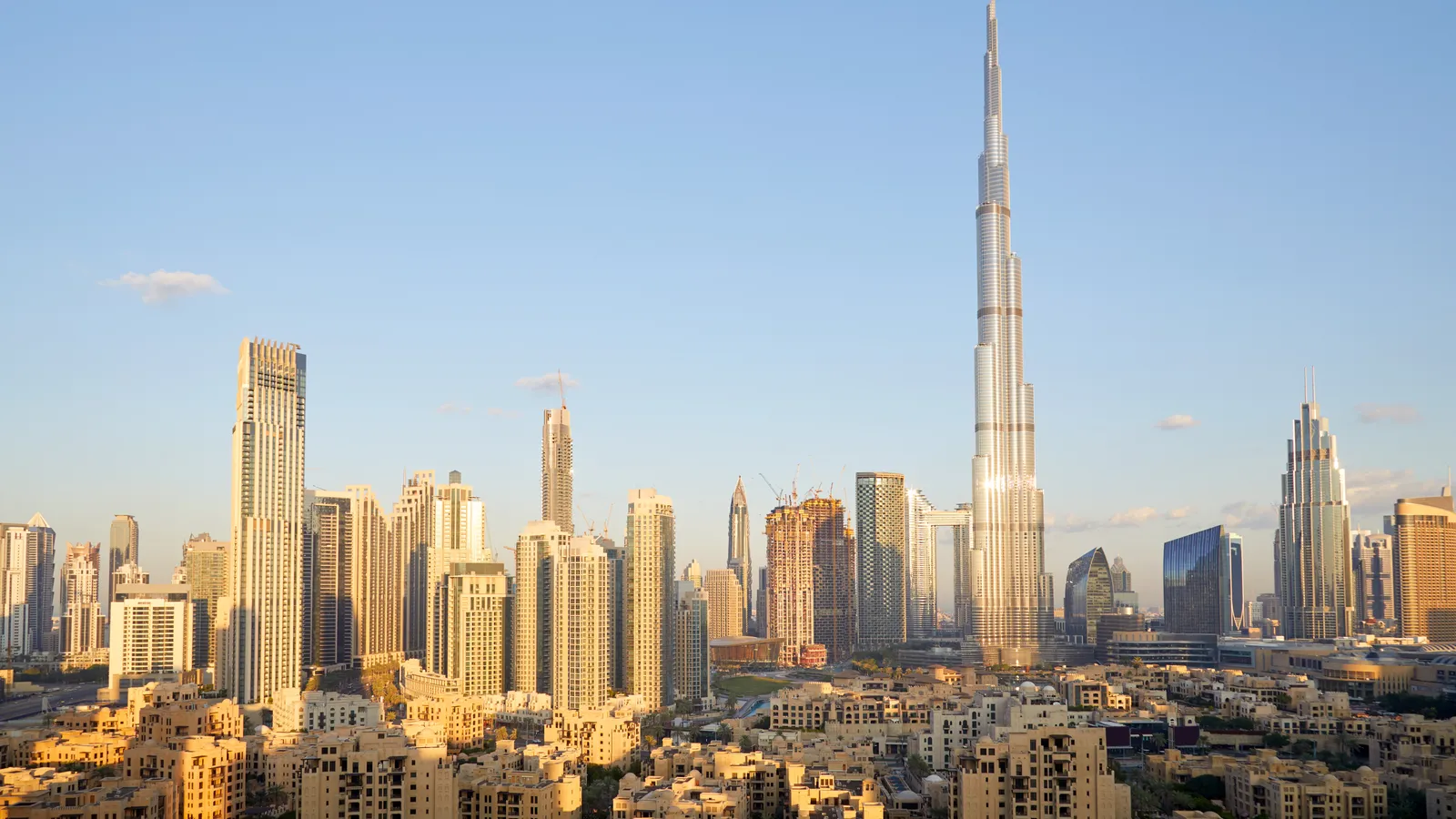
Dubai recorded 19.59 million international overnight visitors in 2025, its third consecutive record year, and the Dubai Economic Agenda D33 sets the direction of travel towards roughly 40 million a year by the early 2030s [1][2]. That is the demand side. The supply side is the part most guides skip: Dubai's Department of Economy and Tourism counted 154,264 hotel rooms across 827 establishments at the end of 2025, with thousands more in the pipeline [1]. You are entering a deep, well-served market, and the operators who win pick the right model, classification and cost base before they sign anything.
This guide covers the whole hospitality ladder, from a single holiday home permit up to a classified hotel, with hotels treated in most depth because they carry the most regulation and the most capital risk. You will get the DET classification framework, which models suit which budget, what location actually buys, real cost and staffing numbers, the franchise versus independent decision, seasonality, and a tax section that corrects the most persistent myth in this sector: the idea that a hotel can sit in a free zone and pay 0% corporate tax.
Since 2013, our advisers have set up hospitality, F&B and property businesses across the UAE, so the traps below come from real files rather than brochure copy.
What does Dubai's hospitality market actually look like in 2026?
Dubai runs high occupancy by global standards, strong winter rates and steady new supply. Demand has grown for three straight years, but so has room count, so pricing power sits with differentiated properties rather than generic ones. Figures vary by source and period measured [1][8][10].
| Indicator | Reported position | Note |
|---|---|---|
| International overnight visitors (2025) | 19.59 million | DET, third consecutive record year [1] |
| International overnight visitors (2024) | 18.72 million | DET baseline [1] |
| Long-range ambition | Around 40 million a year by the early 2030s | Dubai Economic Agenda D33 direction of travel [2] |
| Hotel rooms (end 2025) | 154,264 across 827 establishments | DET; other published counts run higher [1] |
| Market-wide occupancy | Roughly 78% to 81% | Among the highest of any major global city [1][9] |
| Market-wide ADR | Roughly AED 550 to AED 750 | Varies sharply by season and segment; sources disagree [8][10] |
| Winter versus summer occupancy | Roughly 85% to 92% versus 65% to 72% | The biggest single planning variable [9] |
Two things follow. An 80% market occupancy does not mean your property will run at 80%, because that number is dragged up by mature, branded, well-located inventory. A new independent property opens at 45% to 55% and takes two to three years to reach market level. And the ADR spread is where the money is: a property holding AED 800 in January and AED 450 in August is a different business from one holding AED 350 all year.
Real Talk: The oversupply argument is real but usually stated lazily. Dubai is not oversupplied in every segment at once. The pressure sits in generic three and four-star inventory in areas that already have thirty comparable properties. Boutique, wellness-led and extended-stay assets have held rate far better. If your only positioning statement is "clean rooms at a fair price", you are entering the most crowded part of the market.
What types of hospitality business can you start in Dubai?
Hospitality here runs from a single furnished apartment on a DET permit to a classified five-star resort. Capital, regulatory load and operational intensity all scale together, and picking the wrong rung is the most expensive mistake available at this stage.
| Model | Typical entry capital | Licensing authority | Operational intensity | Suits |
|---|---|---|---|---|
| Holiday home / short-term rental | AED 50,000 to AED 200,000 | DET permit, up to 8 units as a homeowner | Medium and constant | First-time operators testing the market |
| Hotel apartment / serviced residence | AED 5m to AED 15m | DET, classified as a hotel establishment | Medium to high | Property investors wanting hotel economics |
| Budget or midscale hotel | AED 12m to AED 30m | DET classification plus Dubai Municipality | High | Operators with a real cost advantage |
| Boutique or lifestyle hotel | AED 15m to AED 30m | DET classification plus Dubai Municipality | Very high | Veterans with a design point of view |
| Luxury hotel or resort | AED 40m upwards | DET classification, full approvals stack | Very high | Established groups, institutional capital |
| Hostel or capsule property | AED 2m to AED 5m | DET classification, budget category | High | Solo and youth travel operators |
| Hotel management or consultancy | AED 80,000 to AED 200,000 | Mainland or free zone trade licence | Low capital, high relationship-building | Experienced hospitality professionals |
| Standalone F&B | AED 250,000 to AED 1.5m | DET plus Dubai Municipality food permits | High | Operators with a concept and a chef |
The management company route deserves more attention than it gets. You take 2% to 5% of gross revenue plus an incentive without owning the asset, and the capital requirement is a trade licence and a small team. The constraint is credibility: owners hand over assets worth tens of millions and hire on track record, so expect six to twelve months of business development before your first mandate.
Adjacent activities are often the better first move. For exposure to the visitor economy without a building, look at travel agency company setup, catering company setup or facility management company setup, all of which sell into hotels rather than competing with them.
How does Dubai's hotel classification system work?
DET classifies every hotel establishment on a one to five star scale plus budget, hotel apartment and resort categories [3]. Classification is not marketing. It sets your minimum facilities, rate positioning, Tourism Dirham band and renewal conditions, and operating without the correct classification is grounds for suspension.
| Category | Core facility expectations | Typical positioning |
|---|---|---|
| Budget / 1 star | Basic rooms, limited or no F&B outlet, minimal public areas | Price-led, location-dependent |
| 2 star | Extended reception hours, at least one basic F&B outlet | Value and extended stay |
| 3 star | Full reception, restaurant, meeting space, basic leisure | Midscale corporate and leisure |
| 4 star | Minimum two restaurants, concierge, at least one retail service, pool and gym | Upper midscale, corporate |
| 5 star (Silver, Gold, Platinum) | Multiple pools, spa, gym, kids club, multiple dining concepts, 24-hour service | Luxury and resort |
| Hotel apartment (standard, superior, deluxe) | 24-hour manned reception, security, housekeeping, kitchen in unit | Extended stay, families, relocation |
Three details matter more than the star count. New hotel rooms must be at least 30 sqm excluding balconies, entrances and outdoor areas, which is why converting an older residential block rarely works for a new classification while renovating an already-classified property can, since existing stock is assessed against the standard it was built to [3]. Second, DET assesses against licensing, operating and enhancing criteria, and mandatory criteria must be met in full rather than on average. Third, hotel apartments and serviced apartments are the same thing in law, and both carry 24-hour manned reception and security obligations.
Pro Tip: Apply for classification while you are still building. DET accepts an application two to three months before opening and inspects a substantially complete property. Operators who wait for a completion certificate before opening the file routinely lose a full winter season, which in Dubai is the season that pays for the year.
Which hotel model suits your capital?
Capital does not just decide how big your property is. It decides which competitive set you land in, and some sets are far harder than others.
| Model | Entry capital | Competitive intensity | Occupancy needed to work | Main risk |
|---|---|---|---|---|
| Budget hotel (50 to 100 rooms) | AED 12m to AED 30m | Very high | High, typically mid-80s | Rate compression from identical neighbours |
| Midscale hotel (60 to 150 rooms) | AED 18m to AED 40m | High | High 70s | Squeezed between budget and branded upscale |
| Boutique hotel (30 to 60 rooms) | AED 15m to AED 30m | Moderate | Around 70% | Marketing and distribution complexity |
| Luxury hotel (100 rooms plus) | AED 40m upwards | Moderate | Around 70% | Operating complexity, long payback |
| Hotel apartments (portfolio) | AED 5m to AED 20m | Moderate | Mid-70s | Management company quality |
| Hostel / capsule | AED 2m to AED 5m | Low but thin | Very high | Market perception, repeat demand |
Real Talk: Budget hotels look accessible because the entry number is smaller, which is exactly why they are dangerous. A large share of Dubai's independent inventory sits in this band, and when a competitor 400 metres away drops rate you have no defence except dropping yours. A 40-room boutique property holding AED 800 at 70% occupancy will out-earn a 100-room budget property holding AED 320 at 85%, on less capital and with fewer staff.
What does location really mean for a hospitality asset?
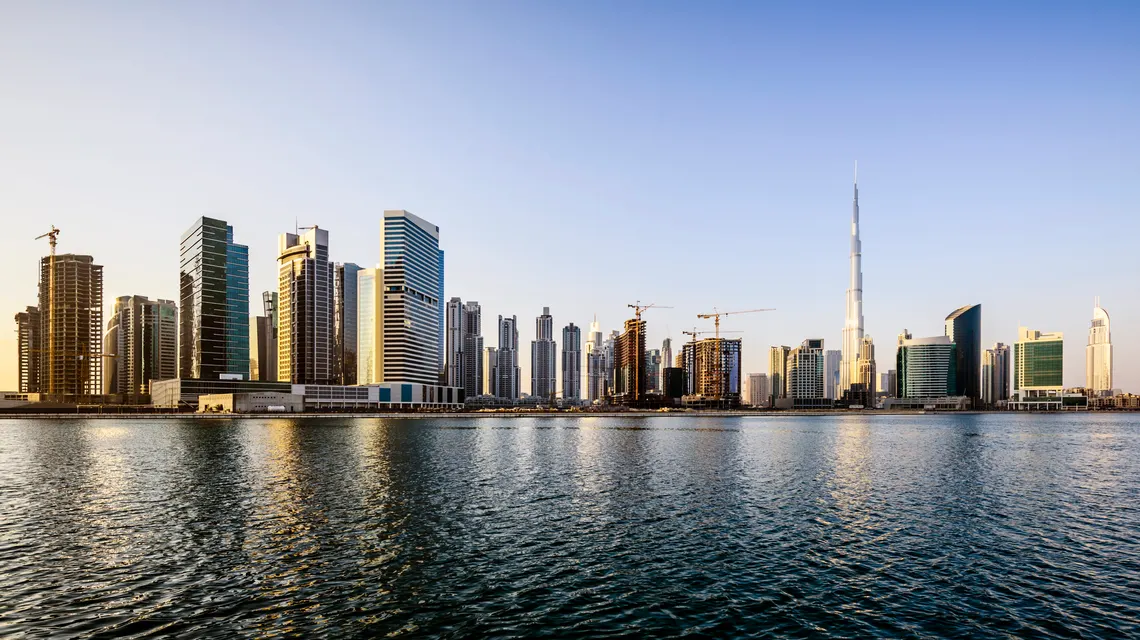
Location is not an address, it is a demand profile. What you buy is a mix of leisure and corporate demand, a seasonality curve, a competitive set and a labour catchment. Two properties three kilometres apart can run twenty points of occupancy apart because they sell to different people.
| Area | Demand profile | Occupancy pattern | Trade-off |
|---|---|---|---|
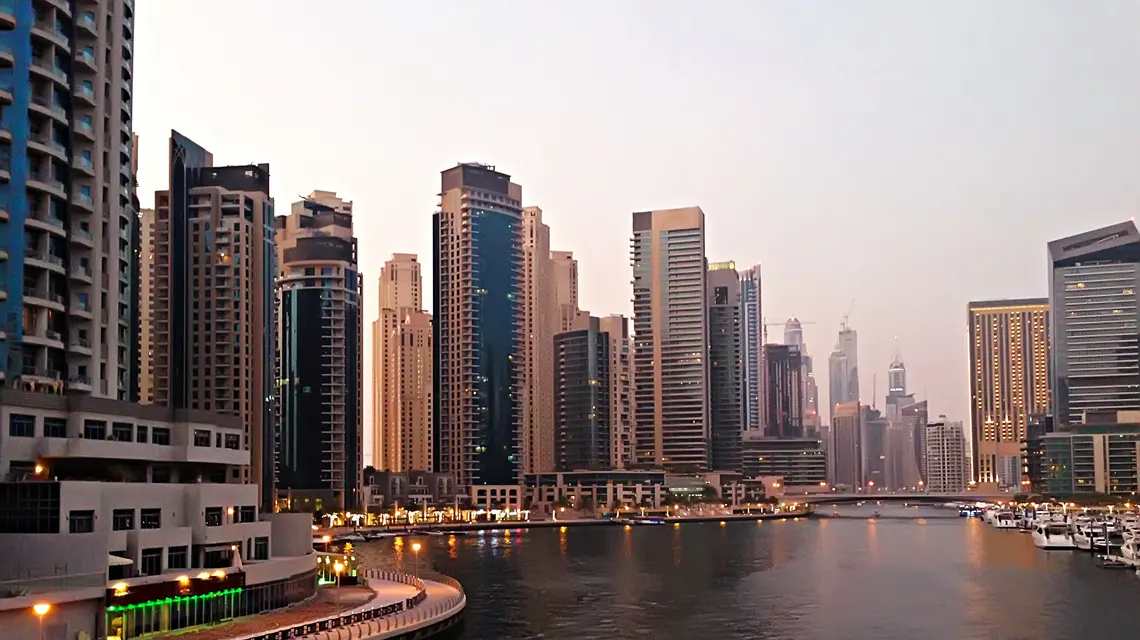
| Dubai Marina and JBR | Leisure-led, beach and dining | Strongest winter, softest summer | Highest land cost, strong branded competition |
| Downtown Dubai | Mixed leisure and corporate | Strong year round, event peaks | Deepest inventory, hardest to differentiate |
| Business Bay | Corporate and extended stay | Flatter, weekday-weighted | Weaker weekend leisure demand |
| Deira and Bur Dubai | Value leisure, regional and trade travel | Moderate, price-sensitive | Dense budget competition, rate ceiling |
| Jumeirah Village Circle | Family and value leisure, relocation | Moderate, improving | Needs deliberate family positioning |
| Al Fahidi and Creek heritage | Cultural and boutique leisure | Strong winter, weak summer | Thin all-year demand, needs a story |
| Hatta | Wellness, weekend and domestic escape | Weekend-weighted, weather-driven | Distance from the airport, niche marketing |
| Expo City and Dubai South | Events, aviation, logistics corporate | Event-driven and lumpy | Demand tied to a calendar, not to leisure |
Analyse by segment, not by postcode. What is the winter and summer split, since that sets your working capital need? What is the corporate to leisure mix, since corporate demand is flatter but rate-capped while leisure is peakier but rate-elastic? How many directly comparable properties sit within two kilometres, since that is your real competitive set? And can your staff get there, since poor transport links raise allowances permanently.
Cheap land in an emerging area is only cheap if you can bring your own demand. A boutique property in a secondary location works when the property itself is the reason people travel. If the property is ordinary, a secondary location simply means fewer guests walk past it.
How much does it really cost to start a hospitality business in Dubai?
Cost depends entirely on the rung you are on. A holiday home starts in the tens of thousands of dirhams. A classified hotel starts in the tens of millions, and property acquisition is only the first line.
Light-capital models: first-year cost
| Model | Realistic first-year cost | Main components |
|---|---|---|
| Holiday home, 1 to 2 units | AED 50,000 to AED 200,000 | Permit from AED 370 per unit, one-off registration around AED 1,840, furnishing, insurance, listing setup, working capital |
| Hotel management company | AED 80,000 to AED 200,000 | Licence AED 6,000 to AED 30,000, premises or flexi-desk, two to three staff, systems, professional indemnity, business development |
Hotel property and construction cost
| Cost component | Budget | Midscale | Luxury |
|---|---|---|---|
| Land or property (per sqm) | AED 3,000 to 6,000 | AED 6,000 to 12,000 | AED 12,000 to 20,000 |
| Construction (per sqm) | AED 2,500 to 4,000 | AED 4,000 to 8,000 | AED 8,000 to 17,000 |
| Interior fit-out (per sqm) | AED 4,000 to 7,000 | AED 7,000 to 12,000 | AED 12,000 to 15,500 |
| Furniture, fixtures and equipment (per room) | AED 3,000 to 5,000 | AED 5,000 to 10,000 | AED 15,000 to 25,000 |
| Pre-opening staff and training | AED 300,000 to 800,000 | AED 500,000 to 1.5m | AED 1.5m to 4m |
| Pre-opening marketing and soft launch | AED 250,000 to 700,000 | AED 500,000 to 2m | AED 2m upwards |
| Contingency | 10% of build cost | 10% of build cost | 10% to 15% of build cost |
Published figures for a small hotel conflict: one dataset puts a 100 to 150 room budget property at AED 15m to AED 30m, another a 50-room budget property at AED 12m to AED 20m. Per room they broadly agree, at roughly AED 150,000 to AED 350,000 per key for budget and midscale product. Compare deals on cost per key, never on the headline figure.
Licensing, permits and deposits
| Item | Cost (AED) | Timeline | Renewal |
|---|---|---|---|
| Mainland trade licence | 20,000 to 50,000 | 3 to 6 weeks | Annual |
| DET hotel classification | Varies by category and room count | 4 to 8 weeks | Annual |
| Dubai Municipality building and operating permits | 15,000 to 50,000 | 3 weeks upwards | Various |
| Fire safety certificate (Civil Defence) | 10,000 to 30,000 | Runs with the build | Annual |
| Health and food establishment permits | 5,000 to 20,000 | 2 to 3 weeks | Annual [7] |
| DEWA connection and refundable deposits | 100,000 to 500,000 | 2 to 3 weeks | Refundable |
| Bank guarantee to DET | Commonly from 500,000, varies by category | With classification | Refundable on clean exit |
| Alcohol service licence (if applicable) | From around 25,000 | 2 to 3 weeks | Annual |
| Sustainability audit and compliance works | 150,000 to 250,000 | 4 to 6 weeks | As required |
Budget at least AED 300,000 in non-refundable licences, permits and fees before a single guest arrives, plus deposits and the bank guarantee on top. Refundable amounts are still cash you cannot spend.
Annual operating cost, illustrated on a 50-room hotel
| Cost category | Monthly (AED) | Annual (AED) | Share of revenue |
|---|---|---|---|
| Staff salaries and benefits | 165,000 to 220,000 | 1,980,000 to 2,640,000 | 40% to 50% |
| Marketing and OTA commissions | 60,000 to 100,000 | 720,000 to 1,200,000 | 15% to 25% |
| Maintenance and repairs | 40,000 to 80,000 | 480,000 to 960,000 | 5% to 10% |
| General administration | 20,000 to 40,000 | 240,000 to 480,000 | 3% to 5% |
| Licence renewals and compliance | 5,000 to 10,000 | 60,000 to 120,000 | 1% to 2% |
| Utilities (DEWA and chiller) | 15,000 to 45,000 | 180,000 to 540,000 | 2% to 4% |
| Technology stack | 8,000 to 15,000 | 96,000 to 180,000 | 1% to 2% |
| Total operating cost | 313,000 to 510,000 | 3,756,000 to 6,120,000 | 65% to 90% |
Quick Math: A 50-room hotel at 75% occupancy and AED 600 ADR bills 50 × 365 × 0.75 × 600, around AED 8.2m of room revenue. Take the middle of the operating range, say AED 4.9m, and you have roughly AED 3.3m of gross operating profit before debt service, ground rent, corporate tax and renewal reserves. Drop occupancy ten points to 65% and room revenue falls to about AED 7.1m while the cost base barely moves, so gross operating profit falls by a third. That sensitivity, not the headline investment number, is the real risk.
What is the step-by-step licensing process?
Licensing runs in parallel tracks, not in a queue. Company formation, property approvals, classification and safety permits overlap, and operators who run them sequentially add months for no reason.
Step 1: Company formation (weeks 1 to 4). A public-facing hotel needs a mainland licence, because you sell to the general public rather than to a defined free zone community. Mainland registration runs AED 20,000 to AED 50,000 and takes three to six weeks. Foreign investors can hold 100% of a mainland hospitality company, so no local partner is required. Our mainland company setup page covers the mechanics.
Step 2: Property, lease and building permits (weeks 2 to 8). You need freehold ownership or a long lease, usually thirty years or more. Permits go to Dubai Municipality with architectural drawings, structural plans stamped by a licensed engineer, mechanical, electrical and plumbing plans, and fire safety plans. Review takes around three weeks.
Step 3: Construction or conversion (6 to 36 months). New builds run 18 to 36 months, conversions 6 to 12. Summer heat slows exterior works, and Civil Defence inspects at defined construction stages rather than only at the end.
Step 4: DET classification (submit 2 to 3 months before opening). File your trade licence copy, property documents, room schedules with exact dimensions, F&B and recreation facility lists, safety and security systems, staffing plan and operating procedures. DET inspects physically and approves in roughly four to eight weeks. A bank guarantee from an authorised UAE bank is required.
Step 5: Fire, health and food permits (parallel with step 4). Civil Defence issues the fire safety certificate covering alarms, sprinklers, pressurised staircases, smoke control, 24-hour monitoring and drills. Dubai Municipality issues the food establishment permit if you operate any F&B, requiring approved kitchen design, verified hygiene systems and food safety training for every handler [7]. Both are annual, and non-renewal suspends trading.
Step 6: Emiratisation planning (from week 1). Register with the workforce authorities and build Emiratisation into the hiring schedule rather than bolting it on after opening.
Step 7: Final inspection and licence issue (weeks 12 to 16 of the approvals track). DET, Municipality and Civil Defence walk the property together, then DET issues the hotel establishment licence.
For a holiday home the whole path is roughly four weeks: DET registration with title deed or tenancy contract, Emirates ID, building NOC and photos, then a safety inspection, then listing. For a management company, two to three weeks.
Common Mistake: Treating classification as a post-construction task. Start the DET file while the building is being fitted out, keep the room schedule accurate to the centimetre, and have the operating procedures manual written before the inspector arrives rather than during the week they are due.
Should a hospitality business sit in a free zone or on the mainland?
For a guest-facing hotel, hotel apartment or restaurant, the answer is mainland. Free zones suit the asset-light side of hospitality: management companies, consultancies, distribution and marketing businesses selling to other businesses. The tax argument for free zones in hospitality is the most persistent myth in this sector, and it is wrong.
| Free zone | Indicative annual licence cost | Best suited to |
|---|---|---|
| SHAMS (Sharjah Media City) | From around AED 6,885 | Solo hospitality consultants and micro-agencies |
| Ajman Free Zone | From around AED 5,555 | Cost-led management and F&B consultancy companies |
| RAKEZ | From around AED 6,010 | Budget-conscious service companies outside Dubai |
| IFZA (Dubai Silicon Oasis) | From around AED 10,000 | Hotel management companies and hospitality tech |
| Meydan Free Zone | From around AED 12,500 | Management companies wanting a Dubai address and fast banking |
| DMCC | From around AED 50,000 | Luxury brand management and premium consultancy |
| JAFZA / DAFZA | From around AED 12,500 to AED 16,500 | Supply, logistics and distribution into the hospitality trade |
The reason is practical before it is fiscal. A free zone licence permits activity within the zone and outside the UAE, not general trading with the mainland public, so it is the wrong instrument for a hotel. Where developers have built hotels inside free zone territory, the accommodation business is still licensed and classified by DET. Compare the structures on our free zone company setup page.
Based on our experience: The most common wasted spend in this sector is an entrepreneur buying a cheap free zone licence for a hotel, restaurant or holiday home operation because a package seller said it meant 0% tax, then re-registering on the mainland six months later. You pay twice, you lose the season, and the tax outcome does not change. Decide the licensing route from where your customers are, not from a fee table.
Ready to set up this business in Dubai the right way? Our licensed business-setup advisors handle your trade licence, visas, and corporate bank account end to end, with transparent, fixed fees.
Get started free→How are hospitality businesses taxed in Dubai?
There is no personal income tax, but a hospitality business faces corporate tax, VAT, the Tourism Dirham and, for hotels and alcohol-licensed venues, a municipality fee. The free zone 0% corporate tax rate is not available to a guest-facing hospitality business [4][5].
Corporate tax, and why 0% is not on the table
UAE corporate tax is 0% on taxable income up to AED 375,000 and 9% above. The 0% free zone rate is a separate regime requiring Qualifying Free Zone Person status, which depends on earning Qualifying Income from a closed list of Qualifying Activities in Ministerial Decision No. 229 of 2025 [4]. Hospitality, hotel operation and food and beverage service are not on that list. Worse for this sector, transactions with natural persons are an Excluded Activity, and a hotel's entire revenue base is transactions with natural persons. A guest-facing hospitality business therefore cannot reach 0% through a free zone, and it needs a mainland licence anyway. The mechanics are set out in our guide to qualifying free zone person and the 0% rate.
What is genuinely available is Small Business Relief. Where revenue is at or below AED 3,000,000, an eligible resident business can elect to be treated as having no taxable income, for tax periods ending on or before 31 December 2029 [4]. That covers a small holiday home portfolio or a young management company. It does not cover a hotel of any meaningful size.
VAT, the Tourism Dirham and the municipality fee
| Charge | Rate | Applies to | Who bears it |
|---|---|---|---|
| VAT | 5% | Accommodation, F&B and hospitality services | Guest, collected and remitted by you [6] |
| Municipality fee | 7% | Hotels, hotel apartments and venues licensed to serve alcohol | Guest, added to the bill |
| Service charge | 10% | Hotels, hotel apartments and alcohol-licensed venues | Guest, retained by the establishment |
| Tourism Dirham | Per room per night on a scale by classification | Hotel establishments and holiday homes, first 30 consecutive nights | Guest, remitted monthly to DET [3] |
| Corporate tax | 0% to AED 375,000, then 9% | Taxable profit of the operating company | The business [4] |
This is the point most billing guides get wrong. The 7% municipality fee and the 10% service charge belong to hotels, hotel apartments and venues licensed to serve alcohol. A standalone restaurant with no alcohol licence adds 5% VAT and nothing else, and applying a mandatory service charge there is a consumer-protection violation rather than a local custom. If you are opening a standalone venue, read our restaurant business setup guide before you design the bill.
The Tourism Dirham runs per room per night on a published scale by classification, broadly from around AED 7 at the bottom to around AED 20 for a five-star property, with hotel apartments and holiday homes banded by their own standard and deluxe classifications [3]. Confirm your band with DET before programming it into your property management system, because bands are updated periodically and a shortfall comes out of your pocket.
VAT registration is mandatory once taxable turnover exceeds AED 375,000 in a rolling twelve months, which any hotel passes immediately [6]. Short-term accommodation is standard-rated, unlike a long residential lease, so residential property VAT logic does not carry across.
What other regulations catch operators off guard?
Four areas produce most of the fines and suspensions we see: Emiratisation, guest reporting, building-level restrictions on short-term letting, and sustainability compliance attached to classification renewal.
Emiratisation. Private-sector targets apply to skilled roles and step up annually, with penalties charged monthly per unfilled position and escalating each year [9]. Hotels are labour-heavy, so the absolute number of Emirati hires rises faster here than in most sectors. The NAFIS programme offers salary support and training subsidies, so build it into payroll rather than treating it as a fine to absorb.
Guest reporting. Hotels and holiday home operators must report check-ins and check-outs through DET's systems, in some cases same-day [3]. Repeated failure escalates from warning to fine to suspension, so choose a property management system that files automatically.
Building-level restrictions. There is no blanket neighbourhood ban on short-term letting, but individual buildings, developers and owners' associations frequently restrict it, and some sale and purchase agreements contain a clause precluding holiday home use. DET will not issue a permit against such a clause and there is no appeal, so get written approval before registering anything and read the sale agreement before buying a unit you intend to let short-term.
Sustainability. DET's classification framework carries sustainability performance requirements under Dubai's Sustainable Tourism programme, covering energy efficiency, water conservation, waste segregation and reporting [3]. Budget roughly 5% to 10% of fit-out cost. These feed into classification renewal, so they are not optional goodwill spend.
Why is staffing 40% to 50% of your budget?
Hospitality is a people business with a fixed floor. Rooms must be cleaned whether they are 90% or 40% occupied, reception must be manned 24 hours for a classified property, and UAE labour law requires accommodation, transport and insurance contributions that push true cost well above headline salary.
Ratios run around 1.2 to 1.5 employees per room for full-service classified product and 0.8 to 1.0 for limited-service. A 50-room full-service hotel needs roughly 60 to 75 people, a 100-room property 120 to 150. Our two source datasets differ here, one quoting 80 to 120 staff for 100 rooms and the other 120 to 150, and that gap is precisely the full-service versus limited-service split. Use the ratio matching your classification, not the average.
| Position | Monthly salary band (AED) | Headcount (50-room full service) | Monthly cost (AED) |
|---|---|---|---|
| General manager | 20,000 to 30,000 | 1 | 20,000 to 30,000 |
| Department heads | 12,000 to 18,000 | 4 | 48,000 to 72,000 |
| Front office | 6,000 to 8,000 | 6 | 36,000 to 48,000 |
| Housekeeping | 2,500 to 4,500 | 20 | 50,000 to 90,000 |
| Food and beverage | 4,000 to 8,000 | 15 | 60,000 to 120,000 |
| Engineering and security | 3,000 to 6,000 | 8 | 24,000 to 48,000 |
| Total payroll | 54 | 238,000 to 408,000 |
Blended cost works out at roughly AED 79,000 per person per year, about AED 6,600 a month, once accommodation, food, transport and mandatory health insurance are included. Senior roles sit well above: operations managers from around AED 18,000 a month, executive chefs from around AED 20,000. Labour law also fixes a maximum standard working week, one rest day weekly, a minimum of 30 days annual leave, end-of-service gratuity from year one, and employer-provided health insurance. None are negotiable.
Real Talk: Any staffing budget you find online materially below these numbers is either from outside the UAE or from an operator not providing the mandatory benefits. Understaffing shows up in reviews within three weeks, and in Dubai your reviews are your rate. Hire the general manager first and hire well, because a strong operator earns back multiples of their salary, whereas a weak one is only visible once the season is lost.
Franchise, management contract or fully independent?
This is the decision most first-time hotel owners skip, and it changes your economics more than the building does. You are choosing between keeping all the margin and all the risk, renting a brand, or handing the operation to a professional operator.
| Model | What you pay | What you get | Control | Best suited to |
|---|---|---|---|---|
| Fully independent | Nothing beyond your own costs | Total flexibility and 100% of the profit | Total | Experienced operators, or owners hiring a strong GM |
| Franchise | 2% to 5% of revenue plus 1% to 2% marketing, and around AED 10,000 registration | Brand, central reservation system, standards, training, playbooks | High on operations, low on brand | Owners with capital but limited hospitality experience |
| Management contract | 2% to 3% base fee plus an incentive share of profit | Full professional operation, staffing, marketing, revenue management | Low | Investors wanting hotel exposure without operations |
Independent operation retains the most margin and carries the most exposure. Without a brand reservation system you depend on online travel agencies, which take 15% to 25% of the bookings they deliver, so your marketing line is higher even though your fee line is zero. It works when the property itself is the brand.
Franchising is growing in Dubai, particularly at the midscale and upscale-select end. The franchisor supplies the reservation engine, operating standards and training, and takes a percentage of revenue whether you are profitable or not. That matters in a market with a soft summer, because the fee is charged on revenue rather than profit, so it bites hardest in the months you can least afford it. Franchisors also impose minimum standards on room size, finishes and amenities before approval.
A management contract turns the asset into something closer to a financial holding. The operator runs everything for a base fee plus a share of profit above a threshold, which aligns them with you but compounds the fee load. If the operator is weak, you have no operational lever to pull.
Pro Tip: If this is your first hotel and you do not have a hospitality operating background, take the franchise or the management contract. The fee is cheaper than the occupancy you will lose learning the business on a live asset. Save independent operation for the second property.
What returns can you realistically expect?
Nobody can give you a reliable single number. Hotel returns in Dubai vary enormously by segment, location, gearing and operator quality, and there is no credible public dataset of net yields by segment for the emirate. What you can do is model the mechanism properly.
| Driver | What moves it | Sensitivity |
|---|---|---|
| RevPAR (ADR × occupancy) | Location, classification, differentiation, revenue management | Highest. A 10% RevPAR move changes gross operating profit by roughly 25% to 30% |
| Operating cost ratio | Staffing model, energy, OTA mix, maintenance | High. Staff alone is 40% to 50% of revenue |
| Capital cost per key | Land, build spec, fit-out, contingency discipline | High. Overrun permanently depresses return |
| Gearing and debt cost | Loan-to-value, rate, tenor | High. Hotel lending runs 50% to 70% LTV, so equity returns swing sharply |
Ranges circulated in the market put budget hotel net yields around 6% to 8%, midscale 8% to 10%, and boutique, luxury and hotel apartment product 10% to 15%, with break-even between two and four years. Treat those as unverified estimates rather than figures you can bank. They come from brokers with an interest in the sale, they rarely state whether they are before or after debt service, and they almost never include the capital reserve a hotel needs for renewal every seven to ten years.
What is reliably true is the shape of the curve. Year one is a loss or at best breakeven, because you are ramping occupancy from the mid-40s towards market level and carrying a full staff complement against partial revenue. Years two and three are when the number stabilises. Year four onwards shows what the asset actually is.
Common Mistake: Modelling on average annual occupancy. A property averaging 78% may bill AED 900,000 in a December week and AED 250,000 in an August week against a cost base that barely moves. Operators run out of cash in July, not because the year was bad but because they never held reserves against the shape of it. Hold three to four months of operating cost before you open.
How does seasonality change the plan?
Dubai's demand is strongly seasonal, and the swing is a planning input rather than a footnote. Winter runs high occupancy and high rate, summer runs lower occupancy and materially lower rate, and the cost base is broadly flat across both.
| Period | Typical occupancy | Rate position | Operating priority |
|---|---|---|---|
| November to December | Highest of the year, mid-to-high 80s in prime areas | Peak, well above annual average | Maximise rate, restrict discounting, hold inventory back |
| January to February | Very strong, shopping festival and events | Above average | Yield management, group and event business |
| March to April | Strong, racing and conference season | Above average | Corporate and MICE contracting |
| May to June | Softening as temperatures rise | Around or below average | Start cost tapering, plan renovations |
| July to August | Lowest, roughly 65% to 72% | Well below average, discounts of 30% to 40% | Renovation, training, staycation and regional demand |
| September to October | Recovering as corporate travel returns | Rising towards average | Rebuild rate, secure winter bookings |
Peak season delivers a disproportionate share of annual profit in a minority of days, with three consequences. You cannot afford to be closed, unclassified or badly reviewed in December. Schedule renovation, deep maintenance and staff training into July and August rather than losing peak inventory. And you need revenue management that actually moves price, because a system that cannot lift rate 30% into a demand spike leaves a six-figure sum on the table in a single month. Summer also tests the labour model: tapering contract staff protects cash but risks service quality when demand returns.
Not sure which licence or free zone fits your plan? Get a free, no-obligation consultation and a clear cost breakdown tailored to your business.
Get a free consultation→What about alcohol licensing and food and beverage?
F&B is licensed separately from your accommodation business and carries the heaviest regulatory load in hospitality. A hotel cannot open its restaurant without a food establishment permit, or serve alcohol without a separate authorisation, so sequencing errors here delay the whole opening.
The food side runs through Dubai Municipality's food control function [7]. You need approved kitchen design, verified hygiene and temperature control systems, food safety training for every handler, compliance with the Dubai food code including allergen labelling, and fire safety clearance for the kitchen. Realistic timeline is three to six months alongside the main build, and budget from around AED 15,000 for the licence plus AED 50,000 upwards for approvals, equipment certification and inspections. Foreign investors can now hold full ownership of a mainland F&B company, which removes the local partner requirement that used to complicate this route.
Alcohol service operates under the federal framework in place since 2020, applied through Dubai's own licensing process. Expect around AED 25,000 a year for the service licence, approved in two to three weeks once your trade licence is issued. A 30% municipality tax on alcohol sales applies in Dubai, reinstated from 1 January 2025 after a period of suspension [8]. On AED 2.4m of annual beverage revenue that is AED 720,000, and operators who modelled on the suspended position have been caught out.
Remember the billing rule that follows. Once you are licensed to serve alcohol, the 7% municipality fee and the 10% service charge apply to the venue. For a standalone non-alcohol restaurant or a catering company setup operation, they do not.
Are holiday homes a simpler way in?
Yes, and for most first-time operators they are the sensible starting point. A DET holiday home permit costs from around AED 370 per unit per year with a one-off registration and inspection of roughly AED 1,840, and an individual homeowner can operate up to eight units without a trade licence. Beyond eight units you must licence as an operator.
The trade-off is honest: lower capital and lower regulatory load, but lower returns and more of your own time. Net yields sit well below the pitch in property marketing once platform commission, cleaning, utilities, chiller, maintenance and voids are deducted, and the permit itself changes your corporate tax position because licensed letting is business activity rather than passive property income. The full detail, including the sale agreement clause that can block a permit outright and honest occupancy numbers, is in our holiday homes business setup guide.

What technology does a hospitality business actually need?
Less than the vendors will tell you, but more than a spreadsheet. The non-negotiable core is a property management system, a booking engine connected to the major online travel agencies, and rate and channel management. Everything else can be phased.
| System | Indicative cost | Why it matters |
|---|---|---|
| Property management system | From AED 3,000 a month | Reservations, guest records, housekeeping, DET guest reporting |
| Booking engine and channel manager | From AED 2,500 a month | Direct bookings at higher margin, live inventory, no overbooking |
| Revenue management | From AED 2,000 a month | Moves rate into demand spikes, the highest-return software you will buy |
| Contactless check-in and business-grade Wi-Fi | From AED 100,000 capital plus AED 20,000 a year | Guest expectations, and the most reviewed amenity in every segment |
Total annual technology spend for a 50 to 100 room property lands around AED 150,000 to AED 200,000 including amortised capital items. Phase it: property management system and booking engine at opening, revenue management within six months, smart-room features once you know your guest mix. Operators who install everything at once spend the first season fighting integration problems instead of selling rooms. Note that online travel agencies take 15% to 25% of the bookings they deliver, which is why direct booking share is the metric worth optimising.
What mistakes cost hospitality operators the most?
Across the 700+ business setups our team has handled, the same failures recur in hospitality, and almost all are decided before opening rather than during trading [11].
Buying the wrong licence. A free zone licence bought on a tax promise, replaced with a mainland licence six months later. Double cost, lost season, no tax benefit.
Modelling on market occupancy. Assuming a new independent property runs at the 80% the market averages, rather than the 45% to 55% a new property actually opens at.
Ignoring the shape of the year. Averaging occupancy across twelve months and running out of cash in August.
Underestimating the true cost of staff. Budgeting salary rather than salary plus accommodation, transport, insurance and gratuity accrual, then cutting headcount and watching reviews fall.
Skipping the feasibility study. Its value is negative: it tells you which sites not to buy, covering the competitive set within two to three kilometres, occupancy and rate trends and a defensible projection, for a fraction of the capital at risk.
Competing on price without a cost advantage. If your answer to "why would a guest choose you" is "we are cheaper", you are racing thirty properties that can also drop rate.
Treating compliance as paperwork. Guest reporting, food safety, fire certification, Emiratisation and sustainability all renew annually and all suspend trading if missed. Put them on a compliance calendar with named owners, or use post-setup services to run them for you.
Want to skip the paperwork and approvals? Our team manages the whole setup for you, so you can focus on launching.
Talk to a setup expert→Real Client Stories
These are real examples from businesses we have helped set up. Names and identifying details have been changed for privacy.
The operator who bought differentiation instead of location
A former hotel manager from Europe wanted a Dubai asset but could not afford prime beachfront. He took a mid-sized property in a secondary residential area and spent what he saved on land into design, a wellness offer and a good breakfast. Year one occupancy opened in the low 50s and finished in the low 70s. By year three the property held roughly double the rate of the budget hotels around it. His comment: "I could buy an ordinary hotel in a great location or a distinctive one in an average location. The second was cheaper and easier to fill, because people came for the property, not the postcode."
The investor who paid twice for the same licence
A regional investor bought a free zone licence for a serviced apartment business because a package seller told him it meant 0% corporate tax and 100% ownership. Neither benefit was real for his activity, since mainland hospitality already allows full foreign ownership and his guests are natural persons, an Excluded Activity under the free zone rules. He re-registered on the mainland and lost a winter season to the delay. His advice: "Ask what the licence lets you sell and to whom. That is the only question."
The operator who ran out of cash in a profitable year
A first-time owner of a small hotel apartment building modelled the business on annual average occupancy and a flat monthly cost base. Winter delivered above plan. July and August delivered roughly a quarter of winter revenue against nearly the same payroll, utilities and finance cost, and he raised emergency working capital in the weakest month of the year. Profitable across twelve months, nearly dead inside them. His takeaway: "I built a model with twelve identical months. Dubai does not have twelve identical months."
Frequently Asked Questions
Can a foreign investor own a hotel in Dubai outright?
Yes. A mainland limited liability company can be 100% foreign owned for hospitality activity, so no local partner is required. Free zone structures also allow full foreign ownership but are the wrong licence for a guest-facing hotel.
What is the difference between DTCM and DET?
DTCM, the Department of Tourism and Commerce Marketing, was the former authority. It is now part of the Department of Economy and Tourism. Older documents still say DTCM, but licensing and classification sit with the same body.
Can a hospitality business pay 0% corporate tax in a free zone?
No. The 0% rate requires Qualifying Free Zone Person status under a closed list of Qualifying Activities in Ministerial Decision No. 229 of 2025, and hospitality, hotels and F&B are not on it. Transactions with natural persons are also an Excluded Activity, which describes a hotel's whole revenue base [4].
So what corporate tax does a hotel actually pay?
0% on taxable income up to AED 375,000 and 9% above. Where revenue is at or below AED 3,000,000, an eligible business can elect Small Business Relief for tax periods ending on or before 31 December 2029, which removes the charge for that period [4].
Does a restaurant have to add the 7% municipality fee and 10% service charge?
Only if it sits inside a hotel or hotel apartment, or is licensed to serve alcohol. A standalone restaurant without an alcohol licence adds 5% VAT and nothing else, and a mandatory service charge there is a consumer-protection violation rather than local practice.
What is the Tourism Dirham and who pays it?
A per room, per night charge collected from the guest and remitted monthly to DET. It runs on a published scale by classification, broadly from around AED 7 to around AED 20 for a five-star property, and applies for the first 30 consecutive nights [3].
How long does the whole licensing process take?
For a classified hotel in an existing building, roughly two to four months of approvals running in parallel, and six months or more for a complex project. For a holiday home, around four weeks. For a hotel management company, two to three weeks.
What is the minimum room size for a new hotel?
30 sqm, excluding balconies, entrances and outdoor areas, and it applies to new rooms. Existing classified properties are assessed against the standard they were built to, which is why renovating older stock can work where an equivalent new build would not [3].
What separates a four-star from a five-star classification?
Four-star needs at least two restaurants, concierge service and at least one retail service. Five-star adds multiple pools, spa, fitness centre, kids club and a deeper dining offer, sub-tiered into Silver, Gold and Platinum. Classification sets your permitted positioning, not just your signage.
Are hotel apartments and serviced apartments different things?
No. DET classifies both as hotel establishments, with 24-hour manned reception, concierge and security obligations. The difference in name is commercial language used by developers and agents, not a difference in regulation.
What bank guarantee does DET require?
A guarantee from an authorised UAE bank, commonly from around AED 500,000 and varying by category and room count. It secures regulatory compliance and is refundable when you exit cleanly or renew without violations. Serious breaches can result in forfeiture.
How much staff does a hotel need?
Roughly 1.2 to 1.5 employees per room for full-service classified product and 0.8 to 1.0 for limited-service. A 50-room full-service hotel needs 60 to 75 people, a 100-room property 120 to 150. Understaffing shows up in reviews, and reviews set your rate.
What is the true cost of a hospitality employee?
Around AED 79,000 per person per year blended, roughly AED 6,600 a month, once accommodation, food, transport and mandatory health insurance are included. Executive chefs and operations managers run from around AED 18,000 to AED 20,000 a month.
What are the Emiratisation obligations for a hotel?
Private-sector targets apply to skilled roles and step up annually, with monthly penalties per unfilled position that escalate each year. Hotels employ large teams, so the absolute requirement is significant. The NAFIS programme offsets part of the cost, so model it as payroll [9].
How much should I budget for licences and permits before opening?
At least AED 300,000 in non-refundable licences, permits, certifications and audits for a classified hotel, plus refundable DEWA deposits of AED 100,000 to AED 500,000 and the DET bank guarantee. Refundable amounts still tie up cash you cannot deploy.
What does a hotel actually cost per room?
Roughly AED 150,000 to AED 350,000 per key for budget and midscale product, and materially more for luxury. Published totals for a "small hotel" range from AED 12m to AED 30m depending on room count, so compare deals on cost per key.
What occupancy will a brand new hotel achieve?
Typically 45% to 55% in the opening months, rising towards market level over two to three years if the positioning is right. Market-wide occupancy of around 78% to 81% reflects mature, branded, well-located inventory and is not a year-one assumption [1].
Should I franchise, sign a management contract, or run it myself?
Without a hospitality operating background, take a franchise or a management contract for the first property. Franchise fees run 2% to 5% of revenue plus 1% to 2% marketing. Management contracts run 2% to 3% base plus an incentive share. Both beat learning on a live asset.
Do franchise fees get charged when I am losing money?
Yes. Franchise and marketing fees are calculated on revenue, not profit, so they are charged through the soft summer as well as through peak season. Model them against your worst month, not your average one.
What return should I expect from a Dubai hotel?
There is no reliable single figure. Market-circulated ranges put budget product around 6% to 8% and boutique or luxury around 10% to 15% net yield with break-even in two to four years, but these are unsourced estimates that rarely say whether they are before or after debt service. Model your own numbers.
When does a new hotel become profitable?
Year one is normally a loss as you ramp occupancy against a full cost base. Years two and three are when the number stabilises. Year four onwards shows the true performance of the asset. Any projection showing stabilised profit within six months is marketing.
How bad is the summer in cash terms?
Occupancy falls to roughly 65% to 72% and rate falls 30% to 40% from peak, while payroll, finance cost and most overhead stay flat. Hold three to four months of operating cost in reserve and use the period for renovation, maintenance and training.
Can I finance a hotel purchase or development?
Lenders provide hospitality finance at typically 50% to 70% loan-to-value, so you need 30% to 50% equity. No lender funds a hotel at 100%. Expect to provide a feasibility study, an operating or management agreement and detailed financials.
What is RevPAR and why does it matter more than ADR?
ADR is room revenue divided by rooms sold. RevPAR is room revenue divided by rooms available, so it captures occupancy as well as rate. A hotel can post a high ADR by selling few expensive rooms. RevPAR tells you whether the building is working.
Can I open a hotel in a residential community?
Generally no. Residential zoning does not permit hotel operation, and classification requires commercially zoned premises. Short-term letting under a DET holiday home permit is a different thing, and even that requires the building and owners' association to allow it.
Is a holiday home a better starting point than a hotel?
For most first-time operators, yes. The permit costs from around AED 370 per unit annually, you can run up to eight units as a homeowner without a trade licence, and you learn guest operations at low risk. Returns are lower and it is more hands-on than the marketing suggests.
What does a hotel management company earn?
Typically 2% to 5% of gross revenue, sometimes with an incentive tied to profit. The capital requirement is a trade licence and a small team, so the barrier is credibility rather than money. Expect six to twelve months before the first mandate.
Do I need to register for VAT?
Yes, once taxable turnover exceeds AED 375,000 in a rolling twelve-month period, which any hotel passes immediately. Short-term accommodation is standard-rated at 5%, unlike a long residential lease, so residential property VAT logic does not apply [6].
What insurance does a hospitality business need?
At minimum property insurance covering building and contents, public liability, and professional indemnity for management companies. Property premiums commonly sit at 0.15% to 0.3% of asset value. Guest damage cover matters separately for holiday home and serviced apartment operators.
What is the most common reason a Dubai hotel underperforms?
No differentiation. A property identical to thirty others within two kilometres has one lever, price, and price is the lever every competitor also has. Location, design, service, food or a defined guest niche all work. "Clean and affordable" does not.
How should you move forward?
Match the model to your capital and experience honestly, then licence for where your customers are rather than for the cheapest fee.
Under AED 200,000, start with a holiday home or a hospitality services company. You learn guest operations, distribution and compliance at a survivable risk level, and both routes are live within a month.
With hospitality experience but not property capital, start a management or consultancy company. Low capital, high credibility requirement, and it puts you in the room with the owners who will one day sell you a building.
With AED 15m or more and an appetite for the asset, take a franchise or management contract for the first property, commission a real feasibility study before committing to a site, and hold three to four months of operating cost in reserve. Compare deals on cost per key and model returns on RevPAR sensitivity rather than on a broker's yield table.
Whichever rung you start on, licence correctly on day one. Set the company up through mainland company setup if you sell to the public, or free zone company setup for an asset-light services business, and keep the annual compliance calendar running through post-setup services. For a fixed-fee cost breakdown against your model, get started with BusinessDubai.ae.
References
[1] Dubai Department of Economy and Tourism and Dubai Media Office. Dubai tourism performance 2025: 19.59 million international overnight visitors, a third consecutive record year, against 18.72 million in 2024; hotel occupancy of around 80.7%; 154,264 rooms across 827 establishments. Published room counts differ between sources and periods. mediaoffice.ae and dubaidet.gov.ae
[2] Government of the UAE. Dubai Economic Agenda D33: the plan to double the size of Dubai's economy by 2033 and expand tourism, trade and investment, which frames the long-range visitor ambition of roughly 40 million a year by the early 2030s. u.ae Dubai Economic Agenda D33
[3] Government of Dubai, Dubai Legislation portal. Hotel establishment licensing and classification, holiday homes under Decree No. 41 of 2013 and Administrative Resolution No. 1 of 2020, the Tourism Dirham structure, guest reporting and sustainable tourism requirements. Detailed classification criteria and current Tourism Dirham bands are administered by DET and should be confirmed for your category. dlp.dubai.gov.ae and dubaidet.gov.ae
[4] Ministry of Finance, UAE. Corporate tax: the 0% band up to AED 375,000 and 9% above; Ministerial Decision No. 229 of 2025 on Qualifying Activities and Excluded Activities, under which hospitality and food and beverage are not Qualifying Activities and transactions with natural persons are an Excluded Activity; and Ministerial Decision No. 73 of 2023, as amended by Ministerial Decision 131 of 2026 on Small Business Relief, available where revenue is at or below AED 3,000,000 for tax periods ending on or before 31 December 2029. mof.gov.ae corporate tax
[5] Federal Tax Authority, UAE. Free Zone Persons: the conditions a Qualifying Free Zone Person must satisfy, including adequate substance, Qualifying Income, the de minimis requirement and transfer pricing compliance. tax.gov.ae Free Zone Persons
[6] Federal Tax Authority, UAE. VAT registration: the mandatory threshold of AED 375,000 of taxable supplies in a rolling twelve months, the voluntary threshold of AED 187,500, and the 5% standard rate applying to short-term accommodation and hospitality services. tax.gov.ae VAT registration
[7] Dubai Municipality. Food safety and food establishment permits: kitchen design approval, hygiene and temperature control requirements, food handler training, and the Dubai food code including labelling obligations. dm.gov.ae food safety
[8] Gulf News. Reporting on Dubai hotel performance, average daily rate and RevPAR trends, the hospitality supply pipeline, and the reinstatement of the 30% municipality tax on alcohol sales from 1 January 2025 following its earlier suspension. gulfnews.com
[9] Khaleej Times. Reporting on Dubai tourism and hotel occupancy, seasonal demand patterns, and private-sector Emiratisation targets, penalties and the NAFIS support programme. khaleejtimes.com
[10] The National. Reporting on Dubai hotel investment, room supply pipeline, average daily rate movement and operator performance. Press figures vary by period measured and by data provider. thenationalnews.com
[11] BusinessDubai.ae. Internal data from UAE hospitality, hotel, holiday home and food and beverage company registrations, including DET permits and classifications, mainland and free zone licensing outcomes, tax positions, and anonymised client case studies. businessdubai.ae