Two things decide whether a Dubai pet business works, and neither is the thing the setup guides sell you. The first is that the authority approving animal facilities is quietly changing hands. Dubai Law No. 11 of 2024 gave the new Dubai Environment and Climate Change Authority the power to permit establishments for the "acquisition, raising, care, and trade of livestock and pets", with Dubai Municipality continuing to exercise those powers until the handover completes [1]. Every consultancy page still tells you it is Dubai Municipality and stops there.
The second is money. Grooming a large dog in Dubai bills somewhere around AED 350 to 500. A groomer's salary sits somewhere between roughly AED 3,700 and 7,200 a month depending on whose data you believe. How many dogs one groomer can actually finish in a day is the number your entire business model rests on, and no published source anywhere gives it, in the UAE or globally. We looked hard. We are not going to invent one for you.
This guide covers the permit chain and who to ask today, why grooming and boarding do not need a vet on staff, why home-based grooming is out, why the free zone pitch fails twice over for this business, real Dubai pricing and salary data with its disagreements shown, and where the white space actually is. Since 2013, our team has set up service and retail businesses across Dubai, so the traps here come from real files.
Who approves a pet facility in Dubai?
Two authorities, and the answer is genuinely in transition right now.
Dubai Municipality's Veterinary Services Section has historically inspected and approved any premises where animals are handled, boarded or groomed, checking hygiene, waste disposal, welfare and disease control, before DET issues the trade licence.
But Dubai Law No. 11 of 2024, in force since 25 April 2024, established the Dubai Environment and Climate Change Authority (DECCA) and gave it, at Article 6(25), the power to "grant permits to establishments and corporations to conduct the activities of acquisition, raising, care, and trade of livestock and pets" [1]. Article 14 provides that a Steering Committee determines which Dubai Municipality functions transfer across, and that Dubai Municipality keeps exercising them until the transfer completes.
Real Talk: So the honest answer is: as things stand expect Dubai Municipality's Veterinary Services Section to be your operative approval body, but confirm at the time you apply, because this is being reassigned and some functions may already have moved. Every competitor guide we read names only Dubai Municipality, which was correct when it was written and may not be by the time you file. Ask both. It costs you a phone call and saves you a rejected application. This is the same DECCA now handling environmental authorisation in other sectors, as covered in our waste management guide.
The third body, MOCCAE at federal level, only enters the picture if you are providing clinical veterinary services. For grooming and boarding it does not.
What law actually governs animal care here?
Three layers, and the Dubai-level ones are more useful to an operator than the federal one.
Federally, the foundation is Federal Law No. 16 of 2007 concerning the Protection of Animals, as amended by Federal Law No. 18 of 2016 [2]. Penalties under it run to imprisonment up to one year and fines up to AED 20,000. We could not retrieve the full text through any accessible route, so we are not going to attribute specific space, exercise or record-keeping figures to it. Several guides do. Treat those numbers with suspicion.
In Dubai, two instruments matter more day to day:
Local Order No. 11 of 2003 on Public Health and Community Safety [3] is old but very much operative, and it is where the practical duties sit:
- Article 67: animal keepers must provide clean shelter, regular veterinary examination and testing, immunisation with an immunisation card, and immediate notification of disease
- Article 74: approval from the competent department is required to license animal supplies and animal production establishments
- Article 78: employees at animal establishments must hold professional health cards confirming they are free of communicable disease
- Article 79: dogs and cats must be registered and wear a collar with identification
- Article 80: dogs are banned from beaches and public parks, and must be leashed and collared in public
Dubai Law No. 5 of 2025 concerning Public Health [4] then establishes an Animal Permit framework, defining an "Animal-related Establishment" as one holding such a permit, and assigns disease-control duties including investigating zoonotic transmission in coordination with the Dubai Health Authority.
Common Mistake: Overlooking Article 78. Your groomers and kennel staff need professional health cards, not just work permits. It is a small thing that shows up at inspection and is easy to have ready.
Do you need a vet on staff for grooming or boarding?
No, and this is the single clearest thing we can tell you that the ranking pages muddle.
A licensed veterinarian and MOCCAE approval are required for a veterinary clinic, which is a clinical business providing diagnosis and treatment. Grooming, boarding, daycare and pet retail are not clinical services and do not require a vet on your payroll. Several competitor pages blur MOCCAE language across all pet activities in a way that reads as though boarding needs a vet on site. It does not.
We want to be precise about the limit of that statement. We could not find any published source confirming whether a vet-on-call arrangement is mandated at inspection for a boarding facility specifically. Many good facilities market vet access as a selling point rather than citing it as a legal minimum, which suggests it is commercial rather than compulsory. Confirm it at inspection rather than assuming either way.
If a clinic is what you actually want, that is a different business with a different regulator, and our veterinary clinic guide covers it.
Can you run it from home, or from a free zone?
No to both, for different reasons, and the free zone answer has a tax dimension nobody connects.
Home-based grooming is not permitted. Multiple sources state this consistently: you need approved commercial premises or an approved mobile unit. A licence intended for home businesses will not cover animal handling. Our home business ideas guide covers what genuinely can be run from home.
A free zone licence does not let you serve walk-in pet owners on the mainland. That is an operational restriction, and most guides stop there. Here is the part they miss.
Even if it did, free zone 0% corporate tax would still fail. Ministerial Decision 229 of 2025 sets a closed list of Qualifying Activities, and pet grooming, boarding, daycare and retail appear nowhere on it [5]. Separately, "transactions with natural persons" is an Excluded Activity, with narrow carve-outs only for ships, fund management, wealth and investment management, and aircraft [5]. Your customers are individual pet owners. That is transactions with natural persons in its purest form.
Real Talk: So the free zone route fails twice over, once on licensing and once on tax, and the de minimis threshold of the lower of 5% of revenue or AED 5 million cannot rescue it, because serving pet owners is not a small side activity for a grooming salon, it is the entire business. Plan on a mainland DET licence and 9% corporate tax above AED 375,000. Anyone selling you a cheap free zone package for a walk-in pet business is selling you something that does not work. Compare structures on our mainland company setup page.
What activity code do you need?
We are going to give you an unsatisfying but honest answer: nobody can tell you reliably from published sources, including us.
Across the guides we checked, five different codes are cited for essentially the same business: 9602904 and 9602.96 filed under hairdressing and beauty treatment, 960906, 9609.02 and 9609010 described as pet care services, and 7500.02 for animal health care under veterinary activities. That last one, on the free zone's own description, specifically does not cover standalone grooming or boarding.
DET's activity portal blocks automated access, so we could not resolve it. Sources also disagree on whether grooming and boarding can share one licence or need separate activities.
Pro Tip: Do not pick a code from any article, ours included. Take your actual service list to DET or a PRO and have the activity confirmed against the live list before you sign a lease. Getting this wrong is what causes rejection at the municipality approval stage, after you have committed to premises. See our business licence types guide for how activities map to licence categories.
What do the premises need to satisfy?
Commercial space, sensible separation, and an isolation area. The specifics are less published than you would expect.
Consistently cited requirements across sources, none of which we could verify against primary text: hygiene standards, ventilation, drainage and washing stations, waste disposal, noise control, and an isolation area for sick or aggressive animals. Inspectors are described as checking enclosure sizes, exercise areas, isolation space and staff-to-animal ratios.
On minimum area per animal, no primary or credible secondary source gives a figure. We are not going to print one. Ask the approving authority for the standard applying to your activity and animal capacity.
On zoning, no primary legal source we found specifies which zones permit pet facilities. What we can tell you is where real operators actually sit, which is informative without being a rule: boarding and daycare facilities cluster in Al Quoz industrial areas, while grooming and retail frontages sit in commercial districts. One established operator runs an 18,000 square foot boarding facility in Al Quoz Industrial 3 and a separate grooming and retail location in Business Bay. That split tells you something about what each use needs.
Can you run a mobile grooming van?
Yes, and in a city of high-rise apartments it is a genuinely strong model.
A mobile unit needs your DET licence plus Dubai Municipality approval of the vehicle itself, assessed against cleanliness, hygiene and equipment standards covering the grooming table, bathing tub, dryers, clippers and water tank. One source indicates mobile units are approved through the municipality's public health function rather than the fixed-premises route.
Two honest gaps. First, we found circulating figures for mobile unit dimensions, including a minimum total area and a minimum grooming area, that trace back to a search summary rather than a municipality document. We are not printing them. Second, no source addressed whether RTA vehicle modification or commercial registration rules apply on top of the municipality approval. That is a real question for a converted van and you should put it to RTA directly.
Van conversion costs are consistently cited at AED 80,000 to 180,000 across sources, all secondary.
What does it cost to set up?
Estimates triangulated across business-setup sources, not official fee schedules. They vary, and the variation is itself informative about how little hard data exists.
| Item | Indicative AED |
|---|---|
| DET trade licence, annual | 10,000-15,000 |
| Municipality animal facility approval | 5,000-10,000 |
| Mobile van, all in | 100,000-180,000 |
| Fixed grooming salon, all in | 80,000-150,000 |
| Grooming plus boarding or daycare | 150,000+ |
| Small grooming unit rent, monthly | from ~5,000 |
Timeline: the trade licence itself can be quick. The municipality animal facility approval is commonly cited at four to eight weeks, with full operational readiness at six to twelve. Budget eight weeks as a working baseline. Our setup cost breakdown covers the wider budget.
What can you actually charge?
Dubai grooming prices are reasonably well documented. Boarding prices are not.
| Service | Typical Dubai price |
|---|---|
| Small dog, basic to full groom | AED 120-280 |
| Medium dog | AED 260-350 |
| Large breed | AED 350-500+ |
| Giant breed | AED 800+ |
| Mobile grooming, from | ~AED 170 |
Sources disagree on the exact bands, so treat these as a range rather than a rate card.
On boarding we have to be straight with you. One established cattery publishes rates from around AED 80 a night. We could not find a reliable, sourced per-night dog boarding rate anywhere, because most operators put pricing behind an enquiry form. If you are modelling a boarding business, call three competitors as a customer and build your own price map. That is better research than anything published.
What are the honest economics?
Capacity-bound, staff-cost-heavy, and missing the one number that matters most.
Groomer salary is the main cost and the sources genuinely split. Job-board self-reported data puts a Dubai pet groomer at roughly AED 3,700 to 4,000 a month. Modelled salary-aggregator data puts it nearer AED 6,000 to 7,200 a month. Those are different methodologies, not different truths, and the gap is wide enough to change your model. Budget toward the higher end when hiring experienced groomers, because the cheap end of that range will not attract someone who can handle a nervous giant breed.
The number nobody publishes. How many dogs one groomer completes per day sets your revenue ceiling entirely. We searched for a UAE figure and a global figure and found neither with credible sourcing. Anyone quoting you one is guessing. Work it out empirically: time your own groomer across breed and coat types for two weeks before you sign a lease sized for volume you have assumed rather than measured.
Boarding economics, from global data and labelled as such, since no UAE figures exist: occupancy around 80% is considered a good working rate, swinging from roughly 40% off-peak to over 90% at holiday peaks. Net margins in boarding are commonly cited at 10% to 20% globally, with grooming as an add-on service running higher at 30% to 40%. US startup figures for a full kennel run USD 75,000 to 250,000, with breakeven often cited at five to seven months and durable margins not arriving until year two. None of that is Dubai data. Use it for shape, not for planning.
Quick Math: The structural insight is that occupancy beats capacity. A 25-run facility at 90% occupancy earns more than a 40-run facility at 60%, and costs far less to build and staff. Dubai boarding demand is also violently seasonal around school holidays and summer departures. Build for your realistic average, not your Eid peak, and sell daycare and grooming to fill the troughs. Get a realistic setup budget→
Why these businesses fail, from global industry sources rather than UAE data: undercharging and undervaluing skilled work, undercapitalisation, owners who do not know their own numbers, and inconsistent customer experience. The grooming-specific version is a founder who is an excellent groomer and an absent operator.
How big is the market, really?
Growing fast, and reported with far less precision than the confident figures suggest.
Estimates for the UAE pet market diverge by a factor of five to seven depending on what is being counted, from roughly USD 360 to 400 million for a narrow pet care services scope up to USD 2.2 billion for a broad definition including food, veterinary and retail. We also found a projection of USD 14.1 billion by 2033 that sits in a completely different order of magnitude to everything else, and we would not repeat it.
The two figures most directly relevant to this business are narrower and better behaved: grooming services at roughly USD 37.7 million (2024) growing around 9% a year, and boarding and sitting at roughly USD 25.5 million (2024) heading toward USD 44 million by 2030 at around 15% a year.
On ownership, roughly 1.5 million pet owners and over 2 million pets nationally are the repeated figures, with Dubai often cited at over 900,000 registered pets. That Dubai number appears across many sites but appears to trace to a single original source, so treat it as one data point echoed, not many.
The growth drivers are real and consistent: an affluent expat population, a post-pandemic ownership surge, premiumisation, and institutional money arriving. A private equity house backed by a sovereign investor acquired one of the largest UAE pet groups, which tells you more about the sector's credibility than any market projection.
Who are you competing with, and where is the gap?
The luxury end is taken. The gaps are narrower and more specific than "pet care is booming".
| Segment | Reality |
|---|---|
| Luxury boarding resorts | Well established and capital-heavy. Urban Tails, My Second Home, Posh Paws, Dubai Kennels & Cattery, Petsville all operate large purpose-built facilities |
| Mobile and home grooming | Crowded, fragmented long tail with little differentiation and largely interchangeable pricing |
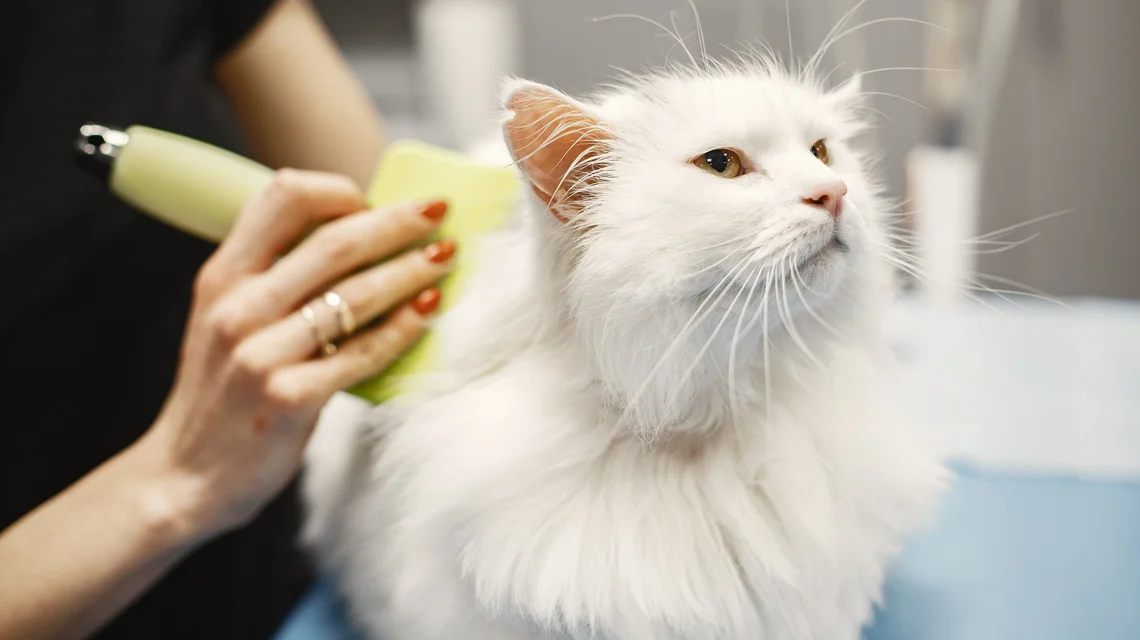
| Cat-only grooming | Repeatedly flagged as underserved. Cats are handled poorly by dog-oriented salons and few specialists exist |
| Mid-market boarding | The named competitors skew luxury. A clean, well-run, non-luxury option looks under-occupied, though we infer this from the competitor mix rather than direct evidence |
| Breed and coat specialists | Double-coated and doodle-type coats need specific skill. Not claimed as a positioning by any major operator we found |
Pro Tip: Cat-only is the most concretely evidenced gap here. It also has better unit economics than it looks, because cat grooming commands specialist pricing, needs less space than dog boarding, and generates far fewer noise and nuisance issues with neighbouring units.
What about staff, visas and Emiratisation?
Lighter than most sectors, which is genuinely good news for a small operator.
No groomer certification is legally mandated. Recognised qualifications strengthen an application and build client trust, but sources are consistent that they are not a strict legal requirement. Staff handling animals need valid work permits and the professional health cards required under Local Order 11 of 2003 [3].
Visa quota follows the standard mainland formula tied to leased area, commonly cited at roughly one visa per 9 square metres of office space, with industrial and warehouse space scaling more generously. There is no pet-industry-specific quota.
Emiratisation is threshold-gated, not universal. The fixed-number obligations begin at 20 to 49 employees, with percentage targets at 50 plus. A single salon or a small kennel sits below that initially, so it is a scaling concern rather than a launch concern. Note also that pet and personal care services are not among the higher-risk sectors named under the 2026 wage protection changes, which target construction, transport, security, cleaning and recruitment. You still run WPS from day one for any employee, just without the heightened scrutiny track. See our Emiratisation guide and hiring guide.
One reassurance worth stating plainly: audited financial statements are required above AED 50 million of revenue for a standalone company. A grooming salon is nowhere near that, so generic advice implying you need an audit from day one is not describing your business.
What tax will you pay?
5% VAT on everything you charge, and 9% corporate tax above AED 375,000.
VAT applies at the standard 5% to grooming, boarding nights, daycare and retail add-ons alike. We searched specifically for any animal, pet or pet food carve-out in the UAE zero-rated and exempt lists and found none. The UAE's zero-rating list is exhaustive and contains no such category. Register once taxable supplies pass AED 375,000 over twelve months, voluntarily from AED 187,500. See our VAT registration guide.
Corporate tax is 9% above AED 375,000, with free zone 0% unavailable for the two independent reasons set out earlier [5]. Small Business Relief is the practical lever early on: under AED 3 million of revenue you elect to be treated as having no taxable income, but Ministerial Decision 73 of 2023, as amended by Ministerial Decision 131 of 2026, limits this to tax periods ending on or before 31 December 2029 [6]. Registration for corporate tax remains mandatory regardless. See our corporate tax filing guide.
What should you require from boarding clients?
Not a legal question, but the one that protects your facility. Established Dubai operators converge on a similar intake standard, which is a reasonable baseline to adopt:
- Dogs: rabies plus DHLP or DHLPP plus Bordetella, given at least 7 days before boarding
- Cats: rabies plus a combined feline vaccine
- Boosters required where any vaccine is more than 12 months old
- External parasite treatment, often administered on arrival
- Unneutered cats over six months commonly refused
- CITES permits for protected exotic species
Owners relocating pets into the UAE deal with MOCCAE import rules, and one detail catches people badly: the microchip must be implanted before or on the same day as the first rabies vaccination, to ISO 11784/11785 standard. A rabies shot given before the chip gets rejected, forcing revaccination and a fresh waiting period. Import permits are cited at AED 200 per animal with rabies vaccination from 12 weeks of age and at least 21 days before travel. Sources conflict on whether the permit is valid 30 or 90 days, so verify that one.
On insurance, no source of any kind confirms public liability or professional indemnity cover is legally required here. It is available and we would call it essential commercial practice for a business that takes custody of animals, but we are not going to tell you the law demands it when we cannot show that it does.
What are the steps?
- Decide the model: mobile, fixed salon, boarding, or a combination. It sets your premises and capital.
- Confirm the activity code with DET directly, not from an article.
- Find commercial premises suited to the activity, and make the lease conditional on approval.
- Confirm whether Dubai Municipality or DECCA is handling animal facility approval for your activity right now.
- Submit for animal facility approval, allowing four to eight weeks.
- Fit out with isolation space, drainage, ventilation and noise control.
- Get professional health cards for every member of staff handling animals.
- Get vehicle approval separately if running a mobile unit, and check the RTA position.
- Register for VAT if over the threshold, and register for corporate tax regardless.
- Set your intake policy on vaccinations before you take your first booking.
What documents do you need?
- Passport and Emirates ID of shareholders and manager
- Trade name reservation and DET initial approval
- Ejari and premises floor plans
- Memorandum of Association
- Animal facility approval from the competent authority
- Professional health cards for animal-handling staff
- Vehicle approval documents for a mobile unit
- VAT registration certificate where applicable
Real Client Stories
The salon that picked the wrong code. A client selected a pet care activity from an online guide and signed a two-year lease on a unit in a commercial tower. The activity as filed did not align with what the municipality expected for a premises handling animals on site, and the approval stalled while she paid rent. Confirming the code with DET first would have cost an afternoon.
The boarding founder who thought he needed a vet. A client budgeted for a full-time veterinarian on salary for a boarding and daycare facility, because three separate guides had left him with the impression that MOCCAE approval and a vet were required for anything involving animals. They are required for a veterinary clinic. His business was boarding. Removing that salary from the model changed the viability of the whole plan, and he opened with a vet on call instead.
The groomer who sized the salon for guessed volume. A founder built out six grooming stations on an assumption about how many dogs a groomer could finish per day, taken from a figure she had read. In practice her groomers averaged materially fewer on large and double-coated breeds, and two stations sat empty for a year while she paid for the space. There is no published figure for this. Measure it in your own salon before you build for it.
Start your Dubai pet business the right way
Since 2013, BusinessDubai.ae has completed 700+ company registrations across the UAE, including retail and personal services businesses. We will confirm the right activity for the services you actually plan to sell, tell you honestly whether your premises will pass before you sign a lease, walk you through animal facility approval with whichever authority is handling it at the time you apply, sort your professional health cards and staff visas, and set your VAT and corporate tax up properly, with clear itemised pricing. Talk to a setup expert→ for a plan built around your model. If a clinical service is what you have in mind, our veterinary clinic guide covers that route, and post-setup services covers what comes after the licence.
Frequently Asked Questions
Who approves a pet grooming or boarding facility in Dubai?
Historically Dubai Municipality's Veterinary Services Section, but Dubai Law No. 11 of 2024 gave the new Dubai Environment and Climate Change Authority the power to permit establishments for the care and trade of pets, with Dubai Municipality continuing until the transfer completes [1]. Confirm which body is handling your activity at the time you apply.
Do I need a veterinarian on staff for a grooming salon or boarding kennel?
No. A licensed vet and MOCCAE approval are required for a veterinary clinic, which is a clinical business. Grooming, boarding, daycare and pet retail are not clinical services. Several guides blur this. We could not confirm whether a vet-on-call arrangement is expected at inspection for boarding specifically, so raise it with the approving authority.
Can I run a pet grooming business from home in Dubai?
No. Sources are consistent that home-based grooming is not permitted; you need approved commercial premises or an approved mobile unit. A home business licence will not cover animal handling.
Can I use a free zone licence for a pet grooming or boarding business?
Not for serving walk-in pet owners on the mainland, and the tax angle makes it worse. Pet services do not appear on the closed list of Qualifying Activities in Ministerial Decision 229 of 2025, and transactions with natural persons is an Excluded Activity, so free zone 0% corporate tax fails on two independent grounds [5]. Use a mainland DET licence.
What is the DET activity code for pet grooming?
We cannot give you a reliable answer and neither can the guides. Five different codes circulate for the same business across published sources, and DET's activity portal blocks automated access so we could not resolve it. Confirm the current code with DET or a PRO before committing to premises.
Can one licence cover both grooming and boarding?
Sources conflict. Some indicate activity groups can be combined under a single licence, while one activity description explicitly excludes standalone grooming and boarding. This is unresolved in published material, so confirm it with DET against your specific service list.
What is the minimum space per animal?
Not publicly documented in any primary or credible secondary source we could find. Inspectors are described as assessing enclosure sizes, exercise areas, isolation space and staff-to-animal ratios, but no figure is published. Ask the approving authority for the standard applying to your activity and capacity.
Where can a pet boarding facility be located?
No primary legal source we found specifies permitted zones. In practice, boarding and daycare facilities cluster in Al Quoz industrial areas while grooming and retail sit in commercial districts. One established operator runs boarding in Al Quoz Industrial 3 and a separate grooming and retail site in Business Bay.
Are mobile grooming vans allowed in Dubai?
Yes. You need your DET licence plus Dubai Municipality approval of the vehicle against cleanliness, hygiene and equipment standards. Note that no source we found addressed whether RTA vehicle modification or commercial registration rules apply on top, so check that with RTA directly. Van conversion is cited at AED 80,000 to 180,000.
Do my staff need a grooming qualification?
Not as a legal requirement. Recognised qualifications strengthen your application and client trust, but sources consistently describe them as not strictly mandated. Staff do need valid work permits and professional health cards confirming freedom from communicable disease under Local Order No. 11 of 2003 [3].
What health cards do pet business staff need?
Article 78 of Local Order No. 11 of 2003 requires employees at animal establishments to hold professional health cards confirming they are free of communicable disease [3]. This is separate from their work permit and is easy to overlook before an inspection.
How much does it cost to set up?
Indicative estimates, not official fees: DET licence around AED 10,000 to 15,000 a year, municipality approval around AED 5,000 to 10,000, a fixed salon all in at AED 80,000 to 150,000, a mobile van at AED 100,000 to 180,000, and grooming plus boarding from AED 150,000. Figures vary widely between sources.
How long does approval take?
The trade licence can be quick, but the animal facility approval is commonly cited at four to eight weeks, with full operational readiness at six to twelve. Budget eight weeks as a baseline and make any lease conditional on approval.
What can I charge for grooming in Dubai?
Typical ranges are AED 120 to 280 for small dogs, AED 260 to 350 for medium, AED 350 to 500 or more for large breeds and AED 800 plus for giant breeds, with mobile grooming from around AED 170. Sources disagree on exact bands, so treat these as ranges.
What do dog boarding kennels charge per night in Dubai?
We could not find a reliable sourced figure. One established cattery publishes rates from around AED 80 a night, but most dog boarding operators keep pricing behind an enquiry form. Call competitors as a customer and build your own price map rather than relying on published numbers.
What does a pet groomer earn in Dubai?
Sources split by methodology. Job-board self-reported data suggests roughly AED 3,700 to 4,000 a month, while modelled salary-aggregator data suggests AED 6,000 to 7,200. Budget toward the higher end for experienced groomers who can handle difficult breeds.
How many dogs can one groomer handle per day?
There is no published figure, in the UAE or globally, and we searched specifically for it. This is the number your revenue ceiling depends on, so measure it in your own salon across breed and coat types before sizing your premises. Treat any quoted figure as a guess.
What margin does a pet boarding business make?
No UAE-specific data exists. Global benchmarks put boarding net margins at 10% to 20%, with grooming as an add-on running 30% to 40%, and occupancy around 80% considered good against a 40% to 90% seasonal swing. Use these for shape rather than planning, and note the strong seasonality of Dubai demand.
Is VAT charged on pet grooming and boarding?
Yes, at the standard 5%, on grooming, boarding nights, daycare and retail alike. We looked specifically for an animal, pet or pet food carve-out in the UAE zero-rated and exempt lists and found none. Register once taxable supplies pass AED 375,000, voluntarily from AED 187,500.
Can I claim Small Business Relief?
If revenue is under AED 3 million, yes, by election. Ministerial Decision 73 of 2023, as amended by Ministerial Decision 131 of 2026, limits it to tax periods ending on or before 31 December 2029 [6]. Corporate tax registration is still mandatory even where relief reduces your liability to nil.
Do I need audited financial statements?
Only above AED 50 million of revenue for a standalone company. A grooming or boarding business is very unlikely to reach that, so advice implying you need an audit from day one is not describing your business. You still keep proper accounting records.
Does Emiratisation apply to a small pet business?
Not immediately. Fixed-number obligations begin at 20 to 49 employees with percentage targets at 50 plus, so a single salon or small kennel starts below the threshold. Plan for it if you scale to multiple locations. Pet services are also not among the higher-risk sectors named in the 2026 wage protection changes.
What vaccinations should I require from boarding clients?
Established Dubai operators converge on rabies plus DHLP or DHLPP plus Bordetella for dogs given at least 7 days ahead, rabies plus a combined feline vaccine for cats, boosters where any vaccine is over 12 months old, parasite treatment on arrival, and refusal of unneutered cats over six months. This is industry practice rather than a published legal minimum.
What is the microchip trap for pets imported into the UAE?
The microchip must be implanted before or on the same day as the first rabies vaccination, to ISO 11784/11785 standard. A rabies shot given before the chip is rejected, forcing revaccination and a fresh waiting period. Import permits are cited at AED 200 per animal, with rabies from 12 weeks of age and at least 21 days before travel. Sources conflict on whether the permit lasts 30 or 90 days.
Do I need insurance for a pet business in Dubai?
No source confirms it is legally required. Liability and bailee cover is readily available and we would treat it as essential commercial practice for a business taking custody of animals, but we are not going to claim the law mandates it when we cannot show that it does.
Which part of the Dubai pet market is underserved?
Cat-only grooming is the most concretely evidenced gap, since cats are poorly served by dog-oriented salons and few specialists exist. Mid-market boarding also looks thin against a competitor set that skews luxury, though we infer that from the mix rather than direct evidence. Mobile and home grooming is crowded and largely undifferentiated.
References
[1] Law No. (11) of 2024 Establishing the Dubai Environment and Climate Change Authority, Articles 6 and 14. dlp.dubai.gov.ae
[2] Federal Law No. 16 of 2007 concerning the Protection of Animals, as amended by Federal Law No. 18 of 2016. uaelegislation.gov.ae
[3] Local Order No. (11) of 2003 concerning Public Health and Community Safety, Articles 67, 74, 78, 79 and 80. dlp.dubai.gov.ae
[4] Law No. (5) of 2025 concerning Public Health in the Emirate of Dubai, Animal Permit framework and disease control duties. dlp.dubai.gov.ae
[5] Ministerial Decision No. 229 of 2025 on Qualifying Activities and Excluded Activities. mof.gov.ae
[6] Ministerial Decision No. 73 of 2023, as amended by Ministerial Decision 131 of 2026 on Small Business Relief, Article 2. mof.gov.ae
Last Updated: July 2026