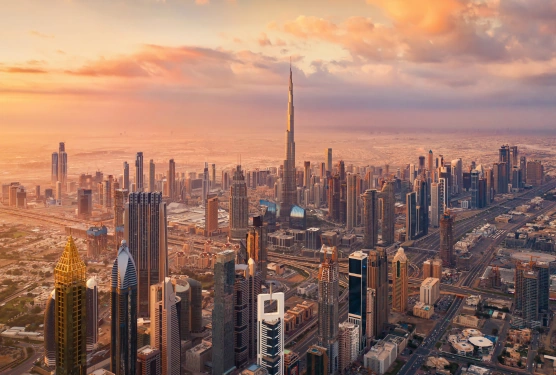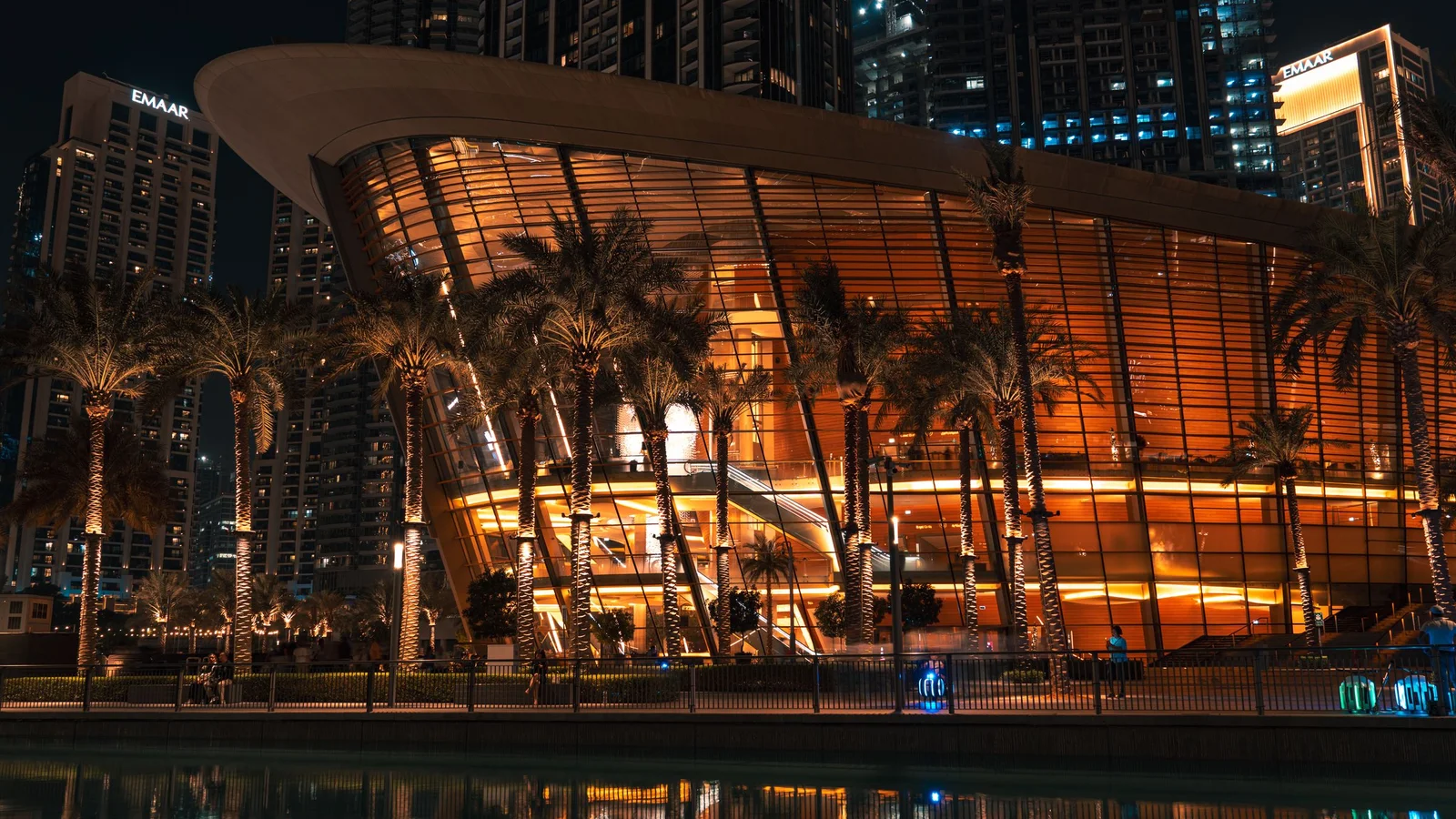
Dubai World Trade Centre hosted 401 events and 2.97 million participants in 2025, up 12%, and its large-scale shows alone generated a record AED 25.03 billion in economic output [1]. Dubai Business Events won 504 bids that year, up 15%, and Dubai ranked first in the Middle East and Africa on Cvent's 2026 destination index [2]. It is a genuinely great place to build an events business. But almost every guide you will read about starting one is written by a company that sells licences, and it shows in what they leave out.
Two things they leave out matter more than everything they include. A trade licence does not authorise you to run a single event [3]. And you charge 5% VAT on a Dubai event even when your client is a company in London that never sets foot in the UAE, because of a place-of-supply rule that closes the export route by name [4]. This guide covers both properly, along with the six-authority permit chain nobody maps, and the free-zone 0% corporate tax rate that does not exist for event companies. Since 2013, our team has set up event and media companies in Dubai, so the traps here come from real files.
The thing every guide gets wrong: licence is not permit
Start here, because it reframes everything else.
Your trade licence registers your company. It does not approve your event. The Department of Economy and Tourism (DET) puts it plainly on its own event permit page [3]:
"A permit is required for any venue or organiser who wishes to organise entertainment, sport, charity, religious or business events. Application should be submitted via the e-Permit portal."
Read that list again: entertainment, sport, charity, religious, business. That is essentially every commercial event. So the real structure of this business is one licence, then a permit for every single event you run, each with its own fees, its own lead time, and its own chain of approvals from other authorities.
Common Mistake: Budgeting for the licence and thinking you are done. The licence is a one-off that most guides quote at AED 12,000 to 20,000. The permits are per-event, forever, and they are what actually governs whether you can trade. A founder who plans twelve events a year has twelve permit cycles, not one. Reported fines for running an event without a permit start at AED 100,000 plus cancellation of the event [5]. Not sure which permits your model triggers? Ask us→
Why Dubai for events?
The market genuinely supports the hype, and the numbers are unusually well documented:
- Dubai World Trade Centre: 401 events and 2.97 million participants in 2025, up 12% year on year. Its 108 large-scale shows produced AED 25.03 billion of economic output and AED 14.66 billion in gross value added, supporting more than 94,000 jobs [1].
- Dubai Business Events: 504 bid wins in 2025, up 15% [2].
- Dubai ranked first in the Middle East and Africa on Cvent's 2026 destination rankings [2].
- The UAE MICE market is variously sized between roughly USD 5.65 billion and USD 6.69 billion depending on the research house and year. We are giving you the range rather than picking the flattering number, because the sources genuinely disagree [6].
Real Talk: Volume is not margin. As the economics section below shows, corporate events run at roughly 15% to 20% net and festivals at 5% to 10%, with the venue alone eating a quarter to two-fifths of the budget. This is a busy market with thin margins and brutal cash flow, not a licence to print money.
Which activity do you need?
DET licenses events by what you do, and the practical consensus is that one broad activity covers most of it, with separate codes where the work is genuinely different.
| Activity | Reported code | Covers |
|---|---|---|
| Events Organising and Managing | 8230.99 | Corporate events, ceremonies, conventions, and in practice weddings |
| Exhibition Organisation and Management | 8230.93 | Trade shows, exhibitor contracts, larger footfall |
| Conferences and Business Events Management | 8230.01 | Conference organising |
| Artistic Talent Contracting | 9000.86 | Artist and performer management (touches media regulation, not just logistics) |
| Tents / Furniture Rental | 7729.96 / 7729.91 | You are a supplier and lessor, not the organiser of record |
Two honest notes. First, the Invest in Dubai activity portal blocks automated checks, so these codes are cross-confirmed across setup sources rather than verified against the live register: confirm your exact code on the portal before you file [7]. Second, we could not confirm a distinct wedding-planning code; the consistent reading is that weddings sit inside Events Organising and Managing.
Pro Tip: Equipment rental is a different business from event management in licensing terms. If you plan to own staging, furniture or AV rather than subcontract it, you need the rental activity too. Founders routinely discover this when a client asks them to invoice for kit they are technically not licensed to rent.

Mainland or free zone? This is the decision that defines your business
Not a cost question. A can-you-take-the-job question.
DET's e-Permit system is mainland-tied. The Dubai Development Authority (DDA) runs a completely separate permit for the TECOM free zones (Dubai Media City, Dubai Studio City, Dubai Internet City), and its own page is explicit [8]:
"The permit authorizes events within DDA jurisdiction, specifically limited to Free Zone areas (TECOM zones only)... It does not cover mainland Dubai, which falls under different regulatory authority (DET)."
So a free-zone events company can run events inside its own free zone. To run an event on Dubai mainland, which is where most venues, hotels, roads and government clients are, it needs mainland authorisation.
| Mainland (DET) | Free zone (e.g. DDA/TECOM) | |
|---|---|---|
| Run events at mainland venues, hotels, public roads | Yes | No, not on the free-zone licence alone |
| Run events inside the free zone | Yes | Yes, under the DDA permit |
| Bid for government and semi-government work | Yes | Typically restricted |
| Access to DET e-Permit system | Yes | No |
| Setup cost | Higher | Lower |
The bridge exists. Through the Dubai Unified License route, a free-zone company can obtain a branch licence (around AED 10,000, needs a mainland office), a remote branch (around AED 10,000, no office), or, most usefully for one-off event work, a temporary permit (around AED 5,000, valid six months, renewable), typically in 5 to 10 business days. Not every free-zone activity code is pre-approved for mainland expansion, so check yours [9].
Common Mistake: Buying the cheaper free-zone licence and assuming Dubai is Dubai. It is not. If your client list is hotels, malls, government entities and mainland venues, you need mainland access, and you will pay for it either at setup or later through permits. Decide on the basis of where your events will physically happen. See our free zone vs mainland vs offshore comparison. And note: twofour54 is in Abu Dhabi, not Dubai, so it is not a route into Dubai's chain at all.
The permit chain nobody maps
Here is the section that justifies this article. Competing guides say "you may also need an event permit." In reality a public event can touch six authorities. This is our synthesis of the published positions, so treat the ordering as a sound working model rather than a regulator-published flowchart.
| Authority | What it covers | Notes |
|---|---|---|
| Venue | The NOC that starts everything | You cannot apply in isolation. Book the venue first; it issues the NOC into the system [5] |
| DET (e-Permit) | The core event authorisation | Sub-types reported: E-Permit, E-Code (only if selling tickets online, tied to an approved ticketing partner), Entertainment Permit (performers), Activity Permit (mall activations), Private Event Notification [5] |
| Dubai Civil Defence | Fire and life safety | Any stage, grandstand, platform, truss or tent is a temporary structure and triggers drawing review: exits, travel distances, firefighting equipment, LPG. Tents need flame-spread certificates and anchorage data [10] |
| Dubai Municipality | Structure, hygiene, waste, and food | Food runs through FoodWatch: the food business, the venue and the organiser must all be registered, and the food-at-events permit is filed at least 3 working days ahead [11] |
| SIRA | Event security | Not Dubai Police directly. SIRA sits under Dubai Police and licenses security. Guards must come from a SIRA-certified company; the permit is filed at least 3 working days ahead; a formal security plan is required at 100+ guards; a crowd management plan is widely cited at 500+ attendees [12] |
| RTA | Roads, closures, parking | Official service exists. Fee is "defined based on activity in the trade license", not flat. Critically, RTA receives documents only after the entertainment permit is approved, so it is sequenced, not parallel [13] |
| IACAD | Charity and fundraising | Any donation collection or fundraising promotion needs prior written approval. No fee, decisions in a few days [14] |
Quick Math: Look at the sequencing. Venue NOC gates DET. DET gates RTA. Civil Defence and Municipality run alongside. Security must be booked at least three days out and food at least three days out. A realistic public event needs the venue locked roughly three months ahead, performer documents two months ahead, security six weeks ahead, and only once the permit status reads Issued can you legally start selling tickets [5]. This is a lead-time business, and the permit chain, not your creativity, sets the calendar.
Real Talk on fees: We will not pretend to a fee table nobody has published. The DDA free-zone figures are official and citable: non-commercial event permit AED 500, commercial AED 5,000, plus AED 1,000 structural fee where applicable, plus AED 10 knowledge and AED 10 innovation dirhams, in 3 working days [8]. For the DET mainland side, no official schedule was retrievable. The most concrete figures we found are published by a hotel for its own clients: AED 520 submission, AED 810 per entertainment day, AED 750 per entertainer, 10% handling, AED 200 standard e-permit, and AED 700 for a late application inside five days with no guarantee of approval [15]. Treat those as indicative, and confirm current fees before you quote a client.
Private event or public event? They are not the same animal
This distinction decides whether you deal with DET at all, and no ranking guide explains it mechanically.
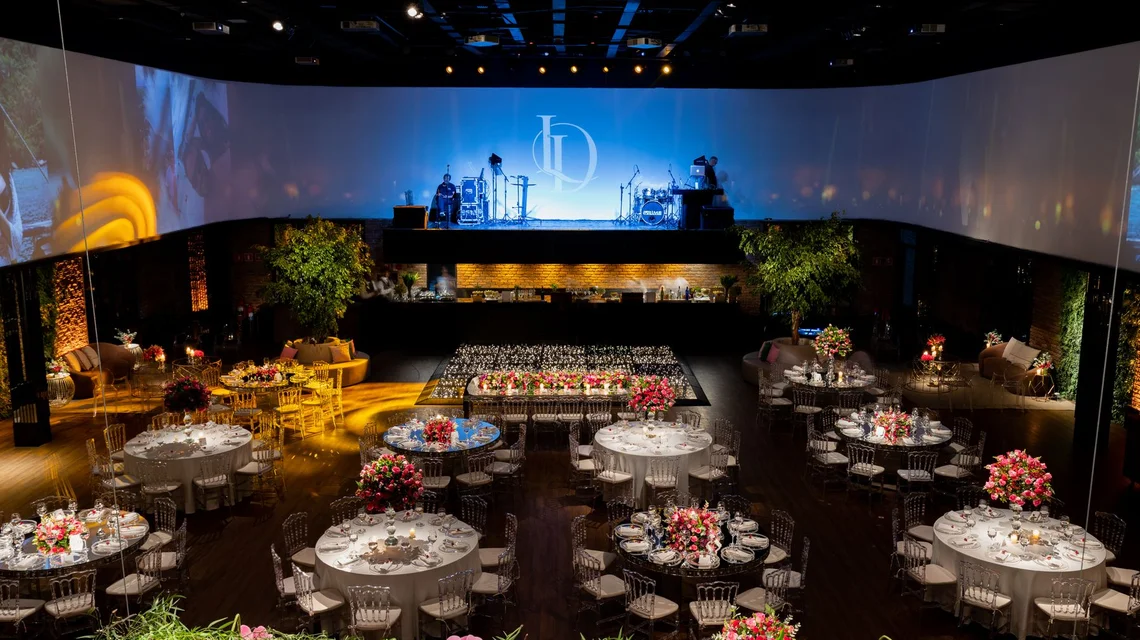
- A private social event at a licensed venue (a wedding, a birthday) generally does not need you to hold a DET event permit, provided there is no ticketing, no public advertising, and no live entertainment beyond what the venue's own licence covers.
- Add live entertainment, and it re-enters permit territory. In practice the hotel applies under its own licence and bills you the fees. This is why a wedding planner can operate for years without ever touching the e-Permit portal.
- A ticketed or public event is categorically different. You apply, not the venue. The venue only gives a no-objection letter. And the full stack applies: e-Permit, E-Code with an approved ticketing partner, and per-ticket levies reported as 10% municipality fee on face value, 5% VAT, plus knowledge, innovation and e-token fees [5].
- Corporate events, exhibitions and conferences need a permit essentially by default. The private carve-out is really only for closed, non-commercial social gatherings.
Pro Tip: If your business is weddings in hotels, your regulatory life is far simpler than a concert promoter's, and you should not let a consultancy sell you a compliance package sized for the latter. If your business is ticketed public events, the reverse: your permit function is a real job, not an afterthought.
Performers, entertainment and a regulator that changed in December 2025
Two things to get right here, one of which is a genuine freshness signal.
The regulator changed. On 18 December 2025 the UAE established a new National Media Authority, absorbing and replacing the UAE Media Council and the National Media Office, with functions, rights, obligations and legislative texts transferred [16]. Guides published in 2026 that still name the "National Media Council" for sponsorship, content or entertainment jurisdiction are already stale. We could not find clear public documentation of how Dubai-specific delegated authority sits under the new structure, so we are flagging that rather than inventing it.
Performer rules that consistently appear [15][5]:
- Passport copy and a current photograph on a white background.
- Entertainers must be 21 or older. Under 21 will not be granted permission.
- Good-conduct and background checks; prior bans can cause rejection.
- Performers are briefed against sensitive topics and foul language.
We could not verify whether a "Dubai Police Media Office" is a distinct approval body or trade-press shorthand, so we are not going to assert it exists.
Can you serve alcohol at your event?
Almost certainly not on your own licence, and this is a clean correction to make.
Dubai's framework runs on a Type C licence, which lets a hotel, restaurant or club serve alcohol at approved premises, and a Type D personal licence. We found no evidence of a separate one-off "event liquor permit" for a non-hotel venue [17]. The practical mechanism is that your event is held at, or catered through, an already-licensed venue that serves under its existing Type C licence. The venue carries the regulatory burden, not you.
Two consequences worth building into your contracts. Your alcohol strategy is really a venue selection decision. And alcohol branding is separately restricted: no advertising on public flyers, social media or outdoor billboards, and it is confined to designated 21+ areas, which now sits under the new media authority's remit [5].
Common Mistake: Promising a client alcohol service at a warehouse, garden or private villa without checking who holds the licence. We could not confirm that occasional-event licences exist for unlicensed venues, and you should confirm with a licensed caterer before you sign anything that commits you to it.
The 5% VAT you cannot escape, even when your client is abroad
This is the centrepiece, it is absent from every ranking page we reviewed, and it is expensive to get wrong.
Article 30(6) of the VAT Decree-Law sets a special place-of-supply rule [4]:
"For the supply of any cultural, artistic, sporting, educational or any similar services, the place shall be where such Services were performed."
So an event physically held in Dubai has its place of supply in the UAE. Full stop. Now watch what that does to the export route. The Executive Regulations, Article 31, zero-rate an export of services only if a set of conditions is met, and the third one is the trap-closer [4]:
"The Services are not treated as being performed in the State or in a Designated Zone under Clauses 3 to 8 of Article 30 and Article 31 of the Decree-Law."
Event services are deemed performed in the State under Article 30(6). They are therefore carved out of export zero-rating by name. It does not matter that your client is a London company that has never been to the UAE and satisfies every other condition. Cabinet Decision No. 100 of 2024, effective 15 November 2024, made this exclusion explicit [4].
The result: 5% on the entire event-organisation fee, not just on tickets.
Real Talk: This is the single most expensive misunderstanding available in this business. An agency that pitches a foreign corporate client, models the fee as a zero-rated export, wins the job and then discovers it owes 5% on the whole engagement has just given away its net margin, because as the economics section shows, net margin here is often 15% to 20%. Price the VAT in from the first proposal. Our VAT registration and compliance guide covers the mechanics.
One precision note, because it is easy to get wrong even in good faith: there are two different "Article 31s". Article 31 of the Decree-Law covers telecommunications and electronic services. Article 31 of the Executive Regulations covers export zero-rating. They live in different instruments and mean different things.
What if the event is abroad? And what about livestreams?
Event held outside the UAE. Article 30(6) fixes the place of supply at the foreign performance location, so the supply is outside the scope of UAE VAT entirely [4]. Note the wording: outside the scope, not zero-rated. Those are different things, and the distinction matters for your returns and for input tax attributable to that work.
The livestream wrinkle, which is genuinely counterintuitive and which nobody covers. If you also broadcast or livestream the event, that broadcast is an Electronic Service under Article 23(2)(g) of the Executive Regulations, which expressly includes "broadcasts of events" [4]. Electronic services run on a different place-of-supply test from the physical event. So selling an overseas audience access to a stream of a Dubai event can sit on different VAT footing from the room itself.
Pro Tip: Hybrid events are now normal and the tax treatment can split down the middle of a single job. If you are selling both a room and a stream, get the specific structure reviewed rather than assuming one rate covers the engagement.
Venue recharges: are you an agent or a principal?
The other VAT question that decides real money, governed by Article 9 of the Decree-Law [4]:
"1. The Supply of Goods and Services through an agent acting in the name of and on behalf of a principal is considered to be a supply by the principal and for his benefit. 2. The Supply of Goods and Services through an agent acting in his name is considered to be a direct supply by the agent and for his benefit."
Applied to how event companies actually work:
- Book the venue in the client's name, on their behalf, with the venue's invoice addressed to the client and the client bearing contractual liability, and the recharge is a disbursement, outside the scope of VAT on the recharge itself.
- Contract the venue in your own name and you are a principal making your own supply, so you charge 5% on the full recharged amount even if you add no markup at all.
The conditions for disbursement treatment are set out in FTA Public Clarification VATP013: the client is the true recipient, the invoice is addressed to them, you have authority to pay on their behalf, and you recover the exact amount with no markup [18].
Quick Math: Two agencies run the same AED 1,000,000 event with a AED 400,000 venue. One books the venue as a disclosed agent and charges VAT on its management fee only. The other contracts the venue in its own name and must charge 5% on the full recharge. Same event, same margin, materially different VAT position and cash requirement. Decide your contracting model before you sign your first venue.
Corporate tax: the free-zone 0% does not exist for event companies
Free zones market 0% corporate tax hard. For an events business, it is not available, and we can show you exactly why from the current text.
The baseline: 9% on taxable income above AED 375,000, 0% below [19]. Small Business Relief can deem taxable income to be nil for a business under AED 3 million of revenue, but the relief now runs to tax periods ending on or before 31 December 2029[20].
Now the free-zone question. Ministerial Decision No. 229 of 2025 sets out the Qualifying Activities for a Qualifying Free Zone Person, and the list is closed [21]: manufacturing, processing, trading of qualifying commodities, holding shares and securities, ship ownership and operation, reinsurance, fund management, wealth and investment management, headquarter services to related parties, treasury and financing to related parties, aircraft financing and leasing, distribution in or from a designated zone, logistics services, and activities ancillary to those.
Event management is not on it. There is no catch-all for services, and the ancillary limb only extends activities ancillary to one of the listed thirteen. A free-zone event management company has no route to the 0% rate; its revenue is non-qualifying income taxed at 9% above the threshold, inside a free zone or not.
For completeness, the regime would block it a second way even if events were listed: transactions with natural persons are an Excluded Activity under the same decision, with narrow carve-outs (ships, fund management, wealth and investment management, aircraft leasing) that do not cover events [21]. That matters to wedding planners in particular, whose clients are individuals.
Common Mistake: Choosing a free zone for the 0% headline. For this sector it is not a tax decision at all, because the 0% is unavailable either way. Choose your jurisdiction on the permit question in the mainland-versus-free-zone section above, which is the one that actually constrains your business. Our UAE corporate tax filing guide has the wider regime.
Two related figures worth knowing: the de minimis threshold is the lower of 5% of revenue or AED 5 million, and losing Qualifying Free Zone Person status costs you the rate for that tax period and the following four [21]. Neither will trouble an event company that never qualified, but they explain why the regime is worth understanding before you structure anything.
Do you withhold tax when you pay a foreign performer?
In practice, no. The Corporate Tax Law establishes a withholding mechanism on UAE-sourced income paid to non-residents without a permanent establishment, but the rate is currently set at 0%, so there is no cash withholding obligation on fees to international artists, speakers or talent agencies today [22]. Treat that as a policy setting rather than a permanent guarantee, since the rate can be changed without new primary legislation.
There is a subtler point that is the honest answer to "does the UAE have an artist tax." A foreign individual performing in the UAE could in principle become taxable in their own right if their business turnover crosses the AED 1,000,000 natural-person threshold [23]. A single appearance fee will normally sit far below that, so this is an edge case rather than a routine burden. But it is a different mechanism from the payer-side withholding used in the UK or US, and worth knowing if you book big international talent repeatedly.
What does it cost to set up?
Health warning first: no official DET fee schedule was retrievable, and the setup numbers published across the sector are vendor estimates that disagree with each other. These are indicative.
| Item | Indicative (AED) |
|---|---|
| Mainland trade licence (Events Organising and Managing) | 12,000 – 20,000 |
| Office and Ejari, flexi-desk | 15,000 – 25,000 per year |
| Office, serviced private room | 30,000 – 50,000 per year |
| PRO / setup service fee | 8,500 – 12,500 |
| Indicative mainland first year, 1 to 2 visas | ~30,000 – 55,000, before any event permits |
| Free zone base licence | ~8,000 – 15,000 + visas |
| Free zone to mainland: temporary permit | ~5,000 (6 months, renewable) |
Then the per-event layer, every time: the DET permit stack (indicatively AED 1,500 to 4,000+ depending on days and entertainer count), Civil Defence and Municipality approvals for structures and tents, SIRA-certified security, RTA if you touch roads, and for ticketed events the 10% municipality fee on face value.
Quick Math: The honest way to budget this business is licence plus twelve permit cycles, not licence. A consultancy quoting you "AED 15,000 and you are trading" is quoting the front door, not the building. Get a free setup quote→
What do event companies actually earn?
Thin, and the structure is worth understanding before you price your first job.
How you charge, in rough order of prevalence: a percentage of budget (commonly 10% to 20%), a flat management fee, cost-plus, or commission from suppliers [6].
What you keep [6]:
| Event type | Gross margin | Net margin |
|---|---|---|
| Corporate events | ~35% – 50% | ~15% – 20% |
| Festivals and large public events | ~20% – 30% | ~5% – 10% |
The venue alone eats 25% to 40% of the budget [6]. Add production, talent, staffing and permits and the room for error is small. We will be straight that no Dubai-specific audited margin dataset exists publicly; these are industry benchmark ranges, and we would rather label them than dress them up as researched Dubai fact.
Cash flow is what actually kills event companies. You pay venue and supplier deposits up front, your client pays on 30 to 90 day terms, and you finance the gap out of your own balance sheet. Deposit norms of 25% to 50% are standard, and one Dubai operator publishes 50% non-refundable at booking with the balance due 30 working days before the event [24]. There is no Dubai-specific cash-conversion data to quantify this precisely, so we are describing the mechanism rather than inventing a number.
Common Mistake: Winning your first big job on thin terms to build a reputation, then discovering you have to fund AED 400,000 of venue and production deposits before the client's first payment lands. Underpricing does not just cost margin in this business, it costs solvency. Take a real deposit, or do not take the job.
Insurance, staffing and Emiratisation
Insurance. Public liability is not federally mandated, but it functions as a de facto requirement: venues and authorities expect it as part of the approval chain. Cover for an events business is commonly cited at AED 3,000 to 8,000 a year [6]. Event cancellation cover is separate and worth pricing on large builds.
Staffing. Event manager salaries cluster around AED 8,000 to 20,000 a month, with wide variance across sources, and temporary event staff run from a few hundred dirhams a day to several thousand depending on the role [6]. There are three legitimate routes to engage temporary crew: a temporary work permit, a mission permit, or contracting genuine freelancers who hold their own permit [6]. Use one of them. See our hire employees in Dubai guide.
Emiratisation applies to mainland companies at 20 or more employees. We could not confirm whether events sits inside the fourteen targeted sectors, so confirm with MOHRE rather than relying on us or anyone else for that one [6]. Most new agencies sit under the threshold anyway. See our Emiratisation 2026 guide.
What are the steps and timeline?
- Decide mainland or free zone, on the basis of where your events will physically happen.
- Select your activity and reserve the trade name.
- Get initial approval and submit the licence application to DET.
- Lease premises and register Ejari (mainland).
- Pay fees and receive the trade licence.
- Open the bank account. Two to six weeks, and the usual bottleneck.
- Establishment card and visas.
- Then, for every event, run the permit chain: venue NOC, DET e-Permit, Civil Defence, Municipality and FoodWatch, SIRA, RTA, IACAD if there is a charity element.
Realistic timeline: roughly 3 to 6 weeks from decision to licence in hand, before any event permitting begins. That figure is our synthesis of the component timelines rather than a published end-to-end number. Our post-setup services team runs licensing, visas and banking in parallel.
What documents do you need?
- Passport and Emirates ID or visa copies for shareholders and managers, or a No Objection Certificate if resident
- Trade name reservation and initial approval
- Notarised Memorandum of Association and Ejari-registered tenancy (mainland)
- Per event: venue NOC, floor plans and structural drawings, performer passports and photographs with 21+ confirmation, security guard list from a SIRA-certified provider, FoodWatch registration if food is served
See our documents required for mainland business setup guide.
Why do event companies fail in Dubai?
- The cash-flow gap. Deposits out, client pays late, and you finance the difference.
- The VAT surprise on a foreign client's Dubai event, which can wipe out a job's net margin.
- Underpricing to win early work, then not being able to fund the deposits.
- Buying a free-zone licence and finding you cannot run the mainland events your clients want.
- Missing permit lead times. You cannot sell a ticket until the permit reads Issued, and a late application inside five days carries no guarantee of approval [15].
- Client concentration. One anchor client leaving takes the year with it.
- Seasonality. Dubai's season runs roughly October to May, and summer is thin.
- Subcontracting an unlicensed supplier and inheriting the liability.
Real Client Stories
These are real examples from businesses we have helped set up. Names have been changed for privacy.
Yasmin's free-zone lock-out (Dubai)
Yasmin took a cheap free-zone licence for her corporate events agency and won a pitch to run a product launch at a Downtown hotel. She then found her licence did not give her access to DET's e-Permit system for a mainland venue. We put a mainland temporary permit in place so the job could proceed and restructured her for the following year. Her advice: "The free zone was cheaper because it was a different product. Ask where your events will physically be before you pick a jurisdiction."
Marcus's zero-rating that was not (Dubai mainland)
Marcus priced a conference for a German client as a zero-rated export of services, because the client was foreign and had no UAE presence. The event was held in Dubai, so the place of supply was the UAE and the export route was closed by name. He owed 5% on the whole fee and it came out of his margin. His takeaway: "I read the export conditions and stopped at the one about the client being overseas. The condition that mattered was three lines further down."
Aisha's venue contract (Dubai mainland)
Aisha's agency contracted venues in its own name for convenience, then recharged clients at cost. Because she was contracting as principal rather than as a disclosed agent, she was making her own supply and owed 5% on the full recharge despite adding no markup. We restructured her venue contracting. Her tip: "I thought passing a cost through at cost was tax-neutral. Whose name is on the venue contract turned out to be the whole question."
Start your Dubai event management company the right way
Dubai's events market is real, well documented and genuinely large. But it rewards operators who understand that the licence is the beginning, not the end. Choose your jurisdiction on where your events will physically happen. Budget for a permit cycle per event, not a licence. Price the 5% VAT in from the first proposal, whoever your client is. Decide whether you contract venues as agent or principal before you sign one. Take a real deposit. And do not choose a free zone for a 0% rate that does not exist for this sector.
Since 2013, BusinessDubai.ae has completed 700+ company registrations across the UAE, including event, media and production companies, with transparent itemised pricing and no hidden fees. We will tell you honestly whether you need mainland access, get the right activities on the licence, sort your visas and bank account, and make sure your VAT and contracting model is right before you sign your first venue. Talk to a setup expert→ for a clear plan. If your work spans travel and events, see our travel and tourism agency guide, and for the wider sector our hospitality business guide.
Ready to set up your event management company in Dubai the right way? Our licensed advisors handle the licence, activities, mainland access, visas and bank account end to end, with transparent, fixed fees.
Get started free→Next step: Onshore access matters for this activity — our mainland company setup in Dubai service is the route.
Related guides: Set Up a Gaming & E-sports Company in Dubai, UAE: Free Zones, Content Approvals & Tax (2026)
Frequently Asked Questions
Is an event permit the same as an event management licence?
No, and this is the most important thing to understand. The licence registers your company. The permit authorises a specific event. DET states that a permit is required for anyone organising entertainment, sport, charity, religious or business events, applied for through the e-Permit portal. You need the licence once and a permit for every event you run.
Do I need a permit for every single event?
For mainland public, ticketed, corporate and business events, yes, essentially by default. Private social events at a licensed venue generally do not require you to hold one, provided there is no ticketing, no public advertising and no entertainment beyond what the venue's own licence covers. Add live entertainment and the hotel usually applies under its own licence and bills you.
What happens if I run an event without a permit?
Reported fines start at AED 100,000 plus cancellation of the event. You also cannot legally sell tickets until the permit status shows Issued rather than Under Process, so the exposure is not just financial, it is the whole event.
How much does an event management licence cost in Dubai?
Indicatively AED 12,000 to 20,000 for the mainland trade licence, or roughly AED 30,000 to 55,000 all-in for the first year with a flexi-desk and one or two visas, before any event permits. Free-zone base licences run around AED 8,000 to 15,000 plus visas. No official DET fee schedule is publicly retrievable, so treat all published figures as vendor estimates.
Can a free zone company organise an event on the mainland?
Not on the free-zone licence alone. DDA's permit is explicitly limited to TECOM free-zone areas and does not cover mainland Dubai, which falls under DET. To run a mainland event you need mainland authorisation: a branch licence, a remote branch, or a temporary permit of around AED 5,000 valid six months, typically in 5 to 10 business days.
Which is better for an event company, mainland or free zone?
Mainland, if your events will be at hotels, malls, public roads or government venues, which is most of them, and if you want government or semi-government work. Free zone only really works if your events are physically inside your own free zone, or if you plan to add mainland access via a permit. It is a market-access decision, not a tax one.
Which authorities are involved in a Dubai event?
Up to six beyond your own licence: the venue (which issues the NOC that starts everything), DET (the e-Permit), Dubai Civil Defence (fire and life safety for any temporary structure), Dubai Municipality (structure, hygiene, waste and food via FoodWatch), SIRA (event security), and RTA (roads, closures, parking). IACAD is added if there is any charity or fundraising element.
How far in advance should I apply for event permits?
Plan on the venue being locked around three months out, performer documents two months out and security six weeks out. Applications should go in at least 15 days before promotion or ticket sales begin. Standard processing is reported at 3 to 6 working days, but a late application inside five days carries a higher fee and no guarantee of approval.
Do I need security for my event?
If you need guards, they must come from a SIRA-certified company; you cannot use general staff as security. The permit is filed at least 3 working days ahead. A formal security plan is required once 100 or more guards are deployed, and a crowd management plan is widely cited for events over 500 attendees. Female security personnel are required for searches where there are female attendees.
Do I need Civil Defence approval?
If you install any stage, grandstand, platform, truss or tent, yes. Those are temporary structures and trigger a fire and life-safety drawing review covering exits, travel distances, firefighting equipment and LPG. Tents additionally need flame-spread certificates and anchorage and load data.
What about serving food at my event?
It runs through Dubai Municipality's FoodWatch platform. The food business, the event location and the event organiser all need to be registered, and the food-at-events permit must be filed at least three working days before the event.
Can I serve alcohol at an event I organise?
Almost certainly not on your own licence. Dubai's Type C licence lets a hotel, restaurant or club serve at approved premises, and we found no evidence of a separate one-off event liquor permit for unlicensed venues. In practice your event must be held at, or catered through, an already-licensed venue serving under its Type C. Alcohol branding is separately restricted from public advertising and confined to 21+ areas.
Who regulates entertainment and media content for events now?
As of 18 December 2025 the UAE established a new National Media Authority, which absorbed and replaced the UAE Media Council and the National Media Office. Guides still naming the "National Media Council" are out of date. How Dubai-specific delegated authority sits under the new structure is not yet clearly documented publicly.
Are there rules about performers?
Yes. Passport copies and a current photograph on a white background are consistently required, entertainers must be 21 or older (under 21 will not be granted permission), good-conduct and background checks are run, and performers are briefed against sensitive topics and foul language.
Do I charge VAT if my client is based abroad?
Yes, if the event is held in Dubai, and this catches out a lot of agencies. Article 30(6) of the VAT Decree-Law places the supply of cultural, artistic, sporting, educational and similar services where they are performed. The Executive Regulations then exclude services deemed performed in the State from export zero-rating by name. So a Dubai event for a London client is 5% on the whole fee.
Why can't I zero-rate an event as an export of services?
Because the export conditions include one that the services are not treated as performed in the State under Article 30's special place-of-supply rules. Events are deemed performed in the State whenever they physically happen here, so they fail that condition regardless of your client being foreign and absent. Cabinet Decision No. 100 of 2024 made the exclusion explicit from 15 November 2024.
What if I organise an event outside the UAE?
Then the place of supply follows the foreign location and the supply is outside the scope of UAE VAT entirely. Note that outside the scope is not the same as zero-rated, and the distinction matters for your returns and for input tax attributable to that work.
How is a livestream of my event treated?
Potentially differently from the event itself. A broadcast is an Electronic Service under Article 23(2)(g) of the Executive Regulations, which expressly includes broadcasts of events, and electronic services use a different place-of-supply test. So a hybrid event can have its room and its stream on different VAT footing. Get the specific structure reviewed.
Do I charge VAT on recharging the venue to my client?
It depends whose name is on the venue contract. Book it in the client's name and on their behalf, with the invoice addressed to them, and it is a disbursement outside the scope of VAT on the recharge. Contract it in your own name and you are a principal making your own supply, so you charge 5% on the full recharge even with no markup.
When do I have to register for VAT?
At AED 375,000 of taxable supplies (mandatory), with voluntary registration from AED 187,500. Note that if you contract as a principal rather than a disclosed agent, the full recharged venue and supplier costs form part of your own taxable supplies, which can push you over the threshold far faster than your fee income alone would.
Can an event management company get 0% corporate tax in a free zone?
No. Ministerial Decision No. 229 of 2025 sets out a closed list of Qualifying Activities and event management is not on it, with no catch-all for services. A free-zone event company's revenue is non-qualifying income taxed at 9% above AED 375,000. Separately, transactions with natural persons are an Excluded Activity, which would also catch a wedding business.
So does a free zone give me any tax advantage for events?
No meaningful one. Since the 0% is unavailable either way, the free-zone-versus-mainland decision for an event company is purely about market access and permits, not tax. Choose based on where your events will physically happen.
Do I withhold tax when paying a foreign performer?
In practice no. The Corporate Tax Law provides a withholding mechanism on UAE-sourced income to non-residents without a permanent establishment, but the rate is currently set at 0%, so there is no cash withholding today. Treat it as a policy setting that can change, not a permanent guarantee.
Could a foreign artist owe UAE tax themselves?
In principle, if their business turnover crosses the AED 1,000,000 natural-person threshold. A single appearance fee normally sits well below that, so it is an edge case rather than a routine burden. It is a different mechanism from the payer-side artist withholding used in the UK or US.
How do event companies charge clients in Dubai?
Commonly a percentage of budget at roughly 10% to 20%, a flat management fee, cost-plus, or commission from suppliers. Which model you pick interacts with your VAT position, because contracting as principal versus disclosed agent changes what forms part of your taxable supplies.
What margin do event companies actually make?
Thinner than the market's glamour suggests. Corporate events run roughly 35% to 50% gross and 15% to 20% net; festivals and large public events run roughly 20% to 30% gross and only 5% to 10% net. The venue alone typically eats 25% to 40% of the budget. No Dubai-specific audited dataset exists publicly, so these are industry benchmark ranges.
Why do event companies run out of money?
Because you pay venue and supplier deposits up front while clients pay on 30 to 90 day terms, and you finance the gap. Deposit norms run 25% to 50%, with 50% non-refundable at booking and the balance 30 working days out being a real published example. Underpricing early work does not just cost margin here, it costs solvency.
Do I need public liability insurance?
It is not federally mandated but it is a de facto requirement, because venues and authorities expect it as part of the approval chain. Cover for an events business is commonly cited at AED 3,000 to 8,000 a year. Event cancellation insurance is a separate product worth pricing on large builds.
How do I legally hire temporary event crew?
Through one of three routes: a temporary work permit, a mission permit, or contracting genuine freelancers who hold their own permit. Do not put uninsured, unpermitted casual staff on site, and remember that security specifically must come from a SIRA-certified company.
Does Emiratisation apply to my event company?
The regime applies to mainland companies with 20 or more employees. We could not confirm whether events falls inside the fourteen targeted sectors, so confirm with MOHRE directly. Most new agencies sit below the threshold in year one regardless.
How long does it take to set up?
Roughly 3 to 6 weeks from deciding to set up to holding the licence, with the corporate bank account (2 to 6 weeks) the usual bottleneck. That is before any event permitting. Each event then runs its own permit cycle on top.
References
[1] Dubai World Trade Centre and Dubai Media Office. DWTC hosted 401 events and 2.97 million participants in 2025, up 12% year on year; its 108 large-scale events generated a record AED 25.03 billion in economic output and AED 14.66 billion in gross value added, supporting more than 94,000 jobs. dwtc.com and mediaoffice.ae
[2] Dubai Business Events and Cvent. 504 business event bid wins in 2025, up 15% year on year, and Dubai's first-place ranking in the Middle East and Africa on Cvent's 2026 destination rankings. dubaibusinessevents.ae
[3] Government of Dubai, Department of Economy and Tourism. Apply for an event permit: "A permit is required for any venue or organiser who wishes to organise entertainment, sport, charity, religious or business events. Application should be submitted via the e-Permit portal." DET's live page blocks automated access; this text was retrieved from an archived capture. dubaidet.gov.ae
[4] Federal Tax Authority. Federal Decree-Law No. 8 of 2017 on VAT (as amended), Article 30(6) on the place of supply of cultural, artistic, sporting, educational and similar services; Article 9 on supply via agent; and the Executive Regulations (Cabinet Decision No. 52 of 2017 as amended by Cabinet Decision No. 100 of 2024, effective 15 November 2024), Article 31 on zero-rating the export of services (including the condition excluding services treated as performed in the State under Article 30) and Article 23(2)(g) on electronic services including broadcasts of events. Note that Article 31 of the Decree-Law (telecommunications and electronic services) is a different provision from Article 31 of the Executive Regulations (export zero-rating). tax.gov.ae
[5] Trade and event-production sources on the DET e-Permit process (2025-2026): permit sub-types (E-Permit, E-Code, Entertainment Permit, Activity Permit, Private Event Notification), the venue-NOC-first requirement, the rule that ticket sales may not begin until permit status is Issued, reported fines starting at AED 100,000 plus cancellation, per-ticket levies including a 10% municipality fee and 5% VAT, and performer documentation requirements. Unofficial but corroborated across independent sources; no official DET fee schedule was retrievable.
[6] Event industry market and operations sources. UAE MICE market sized between roughly USD 5.65 billion and USD 6.69 billion depending on research house and year (sources genuinely conflict; a range is more honest than a single figure); pricing models at roughly 10% to 20% of budget; corporate event margins of roughly 35% to 50% gross and 15% to 20% net, festivals roughly 20% to 30% gross and 5% to 10% net; venue costs at 25% to 40% of budget; public liability cover of roughly AED 3,000 to 8,000 per year; event manager salaries of roughly AED 8,000 to 20,000 per month; and the temporary work permit, mission permit and freelance permit routes for engaging crew. Industry benchmarks, not Dubai-specific audited data. Emiratisation applies to mainland companies at 20 or more employees; whether events sits within the fourteen targeted sectors was not confirmed.
[7] Dubai activity classification for event businesses (reported as 8230.99 Events Organising and Managing, 8230.93 Exhibition Organisation and Management, 8230.01 Conferences and Business Events Management, 9000.86 Artistic Talent Contracting, 7729.96 Tents Rental, 7729.91 Furniture Rental). Cross-confirmed across setup sources but not verified against the live Invest in Dubai register, which blocks automated access. No distinct wedding-planning code was confirmed; weddings are consistently reported as sitting within Events Organising and Managing. Confirm your code on the portal before filing. app.invest.dubai.ae
[8] Dubai Development Authority. Event permit for DDA jurisdiction: "The permit authorizes events within DDA jurisdiction, specifically limited to Free Zone areas (TECOM zones only)... It does not cover mainland Dubai, which falls under different regulatory authority (DET)." Fees: non-commercial events AED 500 plus AED 1,000 structural fee where applicable; commercial events AED 5,000 plus AED 1,000 structural fee where applicable; plus AED 10 knowledge dirham and AED 10 innovation dirham per transaction. Turnaround 3 working days. Official source, directly retrieved. dda.gov.ae
[9] Dubai Unified License routes for free-zone companies to operate on the mainland: branch licence (around AED 10,000, mainland office required), remote branch (around AED 10,000, no office), and temporary permit (around AED 5,000, valid 6 months, renewable), typically 5 to 10 business days, with not all free-zone activity codes pre-approved for mainland expansion. Fee figures are aggregated from secondary sources and are indicative.
[10] Dubai Civil Defence requirements for events. Any stage, grandstand, platform, truss or tent installed temporarily is treated as a temporary structure and triggers fire and life-safety drawing review covering exits, travel distances, firefighting equipment, electrical routing and LPG; tents require flame-spread certificates and anchorage and load data. Sourced from fire-safety and event integrators; no official DCD fee schedule was retrieved. dcd.gov.ae
[11] Dubai Municipality. Food-related permits and approvals, and the FoodWatch platform: the food business, the event location and the event organiser must all be registered, with the food-at-events permit filed at least 3 working days before the event. Official Dubai Municipality sources. dm.gov.ae and foodwatch.dm.gov.ae
[12] Security Industry Regulatory Agency (SIRA). Established under Dubai Police and operating under DET's direction; licenses private security companies and event security. Event security permits require a trade licence carrying event security and personal guarding activities plus a guard list, filed at least 3 working days before the event, with a formal security plan required at 100 or more guards. The 500-attendee crowd management plan threshold and the female-searcher requirement are consistently reported by trade sources but were not verified against SIRA's own published text. sira.gov.ae
[13] Roads and Transport Authority. Temporary Event Permit (service code 827) and Road Closure Permit for a Public Event: documents required include the organiser's trade licence, an approval letter with authorised signature and a detailed declaration; the fee is "defined based on activity in the trade license" rather than a flat amount; and documents are received only after initial approval of the entertainment permit, so RTA is sequenced after DET. Road closures additionally require a traffic and crowd management plan with drawings stamped by contractor, consultant and organiser under RTA's Work Zone Traffic Management Manual. Official RTA source, directly retrieved. rta.ae
[14] Islamic Affairs and Charitable Activities Department (IACAD). Prior written approval is required before any donation collection or fundraising promotion at an event, under Decree No. 9 of 2016 and Law No. 2 of 2011. No fee is charged and decisions typically take a few days. Official source. iacad.gov.ae
[15] Hotel-published DET/DTCM event permit guidance for clients (indicative, not an official DET schedule): submission fee AED 520; permission fee AED 810 per entertainment day; per-entertainer fee AED 750; handling at 10% of total charges; standard e-permit AED 200; late e-permit inside five days AED 700 with no guarantee of approval. Standard processing 3 to 6 working days, with extended vetting for some nationalities, and applications required at least 15 days before promotion or ticket sales.
[16] UAE Government and national press. On 18 December 2025 the UAE established the National Media Authority, absorbing and replacing the UAE Media Council and the National Media Office, with functions, rights, obligations and legislative texts transferred. References to the former "National Media Council" are out of date. How Dubai-specific delegated authority sits under the new structure is not yet clearly documented in public sources. thenationalnews.com and khaleejtimes.com
[17] Dubai alcohol licensing framework: Type C serving licences for hotels, restaurants and clubs at approved premises, and Type D personal licences. No evidence of a distinct one-off event liquor permit for unlicensed venues was found; the practical mechanism is service through an already-licensed venue or caterer under its existing Type C licence. Confirm with a licensed events caterer before committing to alcohol service at an unlicensed venue.
[18] Federal Tax Authority. Public Clarification VATP013 on disbursements and reimbursements: conditions for disbursement treatment include that the client is the true recipient of the underlying supply, the third-party invoice is addressed to the client, the payer has authority to pay on the client's behalf, and the exact amount is recovered with no markup. tax.gov.ae
[19] Federal Tax Authority and Ministry of Finance. UAE Corporate Tax (Federal Decree-Law No. 47 of 2022): 0% on taxable income up to AED 375,000 and 9% above. tax.gov.ae and mof.gov.ae
[20] Ministry of Finance. Small Business Relief (Ministerial Decision No. 73 of 2023, as amended by Ministerial Decision 131 of 2026): AED 3,000,000 revenue threshold, available only for tax periods ending on or before 31 December 2029. mof.gov.ae
[21] Ministry of Finance. Ministerial Decision No. 229 of 2025 regarding Qualifying Activities and Excluded Activities (repealing Ministerial Decision No. 265 of 2023, retroactive to 1 June 2023): the closed list of Qualifying Activities in Article 2(1), which does not include event management and has no general services category; transactions with natural persons as an Excluded Activity in Article 2(2)(a) with carve-outs limited to ships, fund management, wealth and investment management, and aircraft financing and leasing; the de minimis requirement in Article 3 (lower of 5% of revenue or AED 5,000,000); and loss of Qualifying Free Zone Person status for the relevant tax period and the subsequent four tax periods under Article 5(2). mof.gov.ae
[22] Federal Decree-Law No. 47 of 2022, Article 45, establishing a withholding tax mechanism on UAE State Sourced Income paid to non-residents without a permanent establishment. The rate is currently set at 0%, so no cash withholding applies in practice. This is a Cabinet-set policy rate that can change without new primary legislation; the specific decision number could not be confirmed. tax.gov.ae
[23] UAE Cabinet. Cabinet Decision No. 49 of 2023: the AED 1,000,000 turnover threshold above which a natural person conducting business in the UAE becomes subject to Corporate Tax. Relevant only as an edge case for high-volume foreign performers. mof.gov.ae
[24] Dubai event industry contracting practice. Client deposit norms of 25% to 50%, with a published example of 50% non-refundable at booking and the balance due 30 working days before the event. No Dubai-specific cash-conversion dataset exists publicly, so the cash-flow gap is described mechanically rather than quantified.
[25] BusinessDubai.ae. Internal data from UAE event, media and production company registrations since 2013, including licensing, activities, mainland access, VAT and contracting structures, visas, banking and client case studies. businessdubai.ae