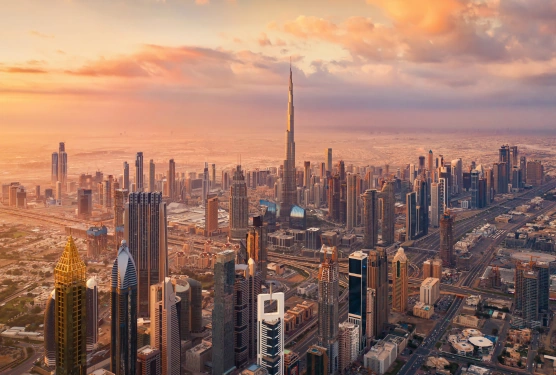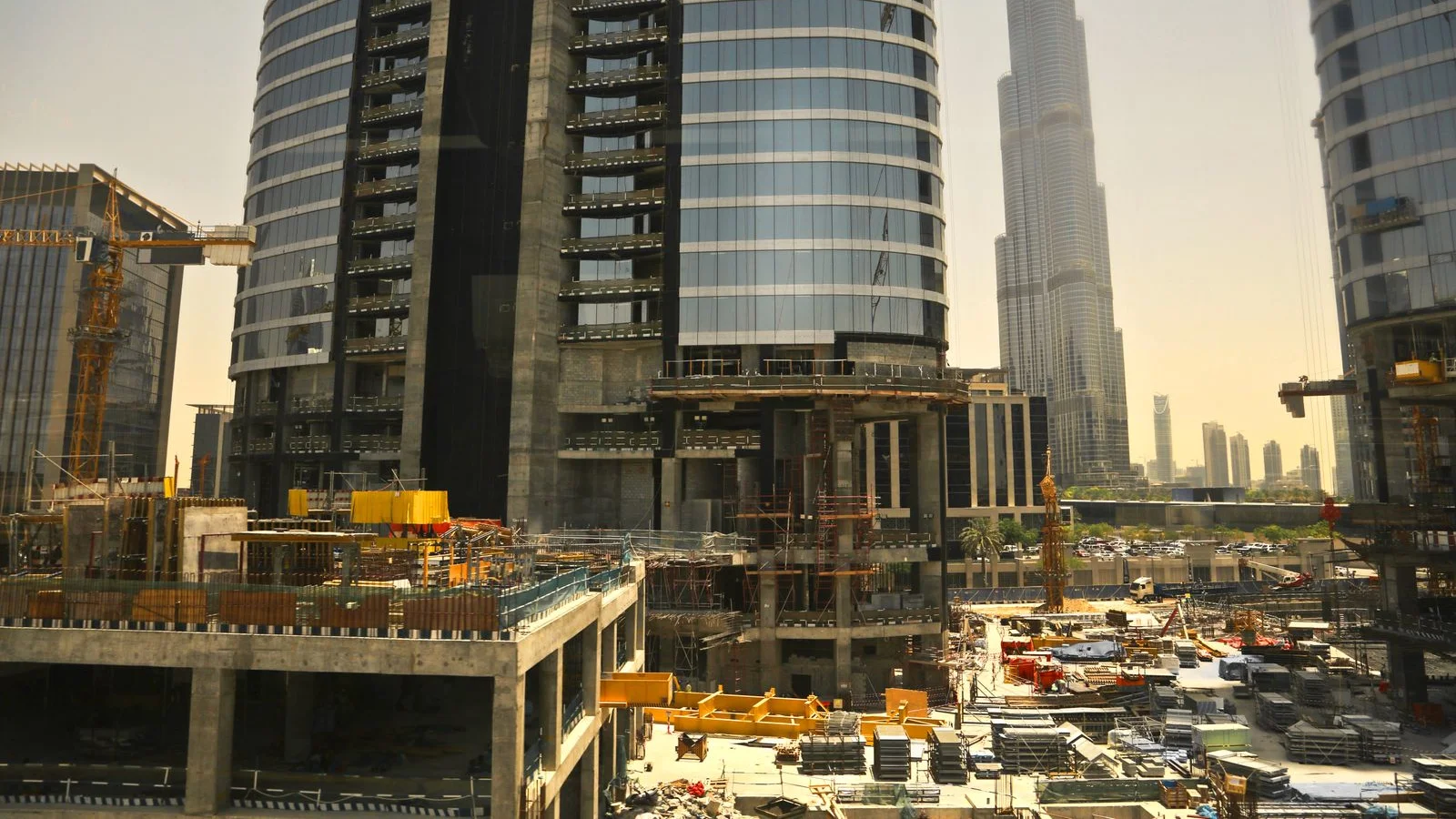
The first thing to understand about becoming a property developer in Dubai is that the licence is the cheap part. Registering the company and getting RERA developer registration might cost AED 90,000 to 350,000 in the first year. That is a rounding error next to what actually gates you: you must own the land outright, and you must lock up roughly 30% of the construction cost in an escrow account before you can take a single dirham of buyer money. For even a small project that is millions, sometimes tens of millions, of dirhams. Guides that lead with the licence fee are answering the wrong question.
The second thing is a factual trap that half the internet repeats. Countless articles cite a "Dubai Law No. 9 of 2007" as the source of the developer escrow and deposit rules. That law does not exist as cited. The escrow law is Law No. 8 of 2007, and the key amendment is Law No. 9 of 2009. The deposit thresholds come from RERA's rules, not a phantom 2007 statute. A guide that cites the wrong law is a guide that has not read the primary source, and in a DLD-regulated business that matters.
This guide covers the developer-versus-broker distinction, RERA registration, exactly how the escrow account works, the land ownership rule, the VAT treatment that most pages state wrong, why a developer never gets the free-zone 0% tax rate, and honest capital math. Since 2013, our team has set up companies across the UAE property sector, so the traps here come from real files. This is a guide, not legal, tax or investment advice on your specific project.
Developer, broker or property manager: which are you setting up?
A developer, and it is a completely different licence from the other two, so start by naming it correctly. Most competitor pages blur these together and answer the broker question when you asked the developer one.
- A developer buys or controls land, builds, and sells the units, often off-plan. It registers with DLD as a developer and operates escrow accounts. This guide.
- A broker markets and sells other people's property for commission, holding a RERA broker card. See our real estate brokerage setup guide.
- A property manager runs buildings and units for owners. See our property management setup guide.
Getting this wrong wastes time and money, because the developer route carries obligations, land ownership, project registration and escrow, that the other two never touch.
Who regulates developers, and how do you register?
The Dubai Land Department (DLD) through its regulatory arm RERA, the Real Estate Regulatory Agency established by Law No. 16 of 2007. You cannot carry on real estate development without registering, and doing so unlicensed is a criminal matter: Law No. 8 of 2007 sets imprisonment and a fine of at least AED 100,000 for unlicensed development [1][2].
The registration path, in order:
- A DET trade licence naming a real estate development activity. Development sold to the public in Dubai is a DLD-regulated onshore activity, so this is effectively a mainland licence, not a free-zone one.
- RERA developer registration via the DLD Trakheesi portal, entering you on the Register of Real Estate Developers. The developer registration fee is commonly cited around AED 25,000, though you should confirm the current figure on Trakheesi.
- Per-project registration with DLD, plus interim off-plan registration of every unit on the Oqood system before you collect payment.
Because a RERA-registered developer sells units to the public and registers every one of them with the Dubai Land Department, the entity underneath it is an onshore company, so our mainland company setup page walks through the DET route a development company actually needs, including the activity codes, the Ejari office and the shareholder documents DLD will want to see alongside the developer file.
There are two developer types worth knowing. A master developer holds and master-plans the land and sells units or plots to third parties. A sub-developer builds part of a master developer's project under agreement with it. Both are developers for escrow purposes [2].
Common Mistake: Citing "Law No. 9 of 2007" for the escrow or 20% deposit rule. It is not a real DLD law. The escrow statute is Law No. 8 of 2007; the amending law is Law No. 9 of 2009 (which amends the Law No. 13 of 2008 interim-register law); and the deposit thresholds are RERA requirements. If a consultant quotes you the 2007 number, they are copying other blogs, not the legislation [2].
How does the escrow account actually work?
This is the heart of the regime and the real barrier, so it is worth understanding properly. Under Law No. 8 of 2007, a developer selling off-plan must run a project escrow account, and the mechanics are strict [2]:
- The account is project-specific. It is opened in the name of the project and used exclusively for that project's construction. Multiple projects need multiple accounts.
- The escrow agent is a DLD-accredited bank. You sign a written escrow agreement and file a copy with DLD.
- To open escrow and register the project, you submit proof of land ownership (the title deed), the designs, financial statements and the sale contracts to DLD.
- Buyer and financier payments go into the account, and money is released to you only against construction-progress milestones certified by an approved engineer. RERA can freeze the account or suspend sales if there is a discrepancy.
- Retention: the escrow agent holds back 5% of the account value after the completion certificate, released one year after the units are registered in the buyers' names, not at handover.
The threshold to sell off-plan is where guides collapse different numbers into one wrong figure. Current RERA practice is that to register a project and open escrow you generally demonstrate 30%, either 30% of construction completed and certified, or a 30% bank guarantee, or a 30% cash deposit. A developer wanting to sell before reaching 20% construction posts an additional unconditional 20% performance guarantee. These are administrative thresholds that have shifted over time, so confirm the current figure with RERA before you plan around it.
Real Talk: The escrow account protects buyers, and it will never fund your land or your equity. You must own the land and inject your own money first, then buyer instalments flow into escrow and out against certified progress. This is why the honest capital requirement is land plus roughly 30% of construction cost tied up before any sales revenue, not the licence fee. Anyone selling you "become a developer for AED 50,000" is describing the paperwork, not the business. Get a realistic capital plan for your project→
Do you need to own the land first, and can a foreigner own it?
Yes, you need a registered title deed before project registration, and land ownership for non-nationals is restricted to designated areas. This is a hard precondition that catches people who assume they can register a project on a plot they only have under option.
Under Law No. 7 of 2006, Article 4, UAE and GCC nationals, and companies wholly owned by them, may own property anywhere in Dubai. Non-UAE and non-GCC nationals may own freehold, or take a long lease or usufruct up to 99 years, only in areas designated by the Ruler, set out in Regulation No. 3 of 2006 [3]. So a foreign-owned developer must acquire land inside a designated freehold zone, or hold it through a UAE or GCC-owned structure, and hold the registered title deed before it can register a project and open escrow.
On the company itself, 100% foreign ownership of a mainland real estate company is permitted under Federal Decree-Law No. 32 of 2021, so the old 51% national-partner rule no longer applies to setting up the development company. The land ownership rule and the company ownership rule are separate questions, and people conflate them.
Groups that expect to run more than one project usually sit the project companies under a single owner rather than holding each one personally, and our offshore company formation page covers the offshore holding vehicle that is commonly used above project SPVs for shareholder-level structuring, with the important caveat that the company which owns the land, registers the project and operates the escrow account still has to be the onshore, DLD-registered entity.
Is the sale of new property subject to VAT?
Yes, but the treatment depends entirely on what you are selling, and this is the single most misstated point in developer content. The rules [6]:
| Supply | VAT treatment | Can you recover input VAT? |
|---|---|---|
| First supply of new residential (within 3 years of completion) | 0%, zero-rated | Yes |
| Subsequent residential supplies | Exempt | No |
| Commercial property | 5% standard | Yes |
| Bare land | Exempt | No |
The trap is treating "zero-rated" and "exempt" as the same thing. They are opposites for cash. Because the first sale of a new home is zero-rated, the developer charges 0% to the buyer but still recovers the input VAT on construction costs, a real cash benefit. If it were merely exempt, that input VAT would be lost. Get this classification right at the modelling stage, because it moves millions on a real project. Our VAT registration and compliance guide covers the mechanics.
Does a developer get the free-zone 0% corporate tax rate?
No, and this defeats the usual free-zone tax pitch outright. A free zone company only gets 0% on income from a Qualifying Activity, and under Ministerial Decision No. 229 of 2025 the ownership or exploitation of immovable property is an Excluded Activity [7]. The only narrow exception is commercial property located in a free zone transacted with another free-zone person. So a property developer's development and sale profits are not qualifying income and are taxed at the standard 9%, regardless of any free-zone base.
Two related points people misread:
- The standard regime is 0% on the first AED 375,000 of profit and 9% above, with Small Business Relief while revenue stays at or below AED 3 million, for periods up to the end of December 2029.
- Cabinet Decision No. 49 of 2023 treats a natural person's personal real estate investment income as outside business taxation, but that carve-out is for personal investment and does not shelter a corporate development business. Our corporate tax filing guide covers the conditions.
None of that means a free zone has no place in a developer group, it just cannot be the entity that sells the units: a development management arm, a project advisory practice or an investment company that takes stakes in projects can sit inside a zone, which is the route our free zone company setup page covers. One local point that trips people up is that several of the master developers operate their own free zones, and those zones set their own activity lists and rules about what a company inside them may do and who it may contract with, so confirm the permitted activity with the specific zone rather than assuming a development-related licence is available off the shelf.

What does it really cost, and how much capital do you need?
Split it into the licence, which is modest, and the capital, which is the real number. Here is a realistic 2026 picture in AED.
| Item | Typical range (AED) |
|---|---|
| DET trade licence with development activity | 15,000 to 30,000 |
| RERA developer registration | ~25,000 (confirm on Trakheesi) |
| Feasibility study by a chartered auditor | 10,000 to 50,000+ |
| Commercial office lease (Ejari, mainland) | 40,000 to 200,000+ |
| Escrow account setup | Bank-specific, per project |
| Land | The dominant cost, often tens of millions |
| Escrow 30% construction guarantee or deposit | 30% of construction cost, tied up before sales |
The honest headline: getting licensed and registered runs roughly AED 90,000 to 350,000, but the binding requirement is land plus around 30% of construction cost committed before you can take buyer money. That is the real barrier, and it is why development is a well-capitalised game. Being clear about this upfront is the difference between a plan and a fantasy.
Is it a good time to become a developer in Dubai?
The market is at record levels, which is both the opportunity and the caution. Dubai real estate hit around AED 423 billion across 168,405 transactions in 2024, up sharply year on year, with off-plan making up roughly 63% of transactions [8]. 2025 set fresh records, and a wave of boutique developers has entered with small, lifestyle-led projects.
That is the case for entry. The honest counterweight is that not every small developer survives. Large players have land banks, balance sheets and buyer trust that a first project does not, and the 2025 to 2027 window is a heavy supply period. The developers who do well are the ones who respect the capital reality, register and run escrow properly, and pick a genuine niche rather than competing head-on with the master developers. Off-plan's appeal is that buyer instalments fund construction, but that only works if you have cleared the land and escrow hurdles first.
Is real estate development a profitable business in Dubai?
It can be, and the margin on a well-bought site is larger than anything else in the property chain, but development is also the most capital-hungry business in Dubai real estate. The money is made on the land you bought well and the units you priced right, not on the licence, and the escrow regime decides when you can touch any of it.
The demand side is genuinely strong, and it rests on four things rather than sentiment. Dubai's population keeps growing, and a large share of that growth is end users who intend to live in what they buy, which supports absorption of mid-market and family stock rather than only investor churn. Off-plan is the second driver, and it is a funding mechanism as much as a sales channel: buyer instalments flowing into escrow against certified progress mean construction is part-funded by the sales programme instead of entirely by debt, which is why off-plan has run at roughly 63% of transactions [8]. Third, foreign buyers can take freehold title in designated areas, so a developer in a freehold zone is selling into a global buyer pool rather than a local one [3]. Fourth, residency pulls investment in at a defined price point, because property investment of AED 2 million qualifies a buyer for a 10-year Golden Visa, which concentrates demand at and just above that ticket and explains why so many boutique projects are priced to clear it.
The counterweight is equally concrete, and any honest read has to state it. The capital requirement is very high and it is front-loaded: you own the land outright before DLD will register the project, and you commit roughly 30% of construction cost as completed work, a bank guarantee or a cash deposit before you can sell. Escrow then restricts your access to buyer money, because it is released against engineer-certified milestones and 5% is retained until a year after the units are registered to the buyers, so a project can be selling well and still be cash-tight. Cycle risk is real in a heavy delivery window, where a first-time developer competes for the same buyer as a listed master developer with a land bank and a completion record. And RERA developer registration is itself a filter, because DLD is assessing your financial and technical capability, not processing a form.
| Developer type | Land requirement | Capital intensity | RERA registration | Revenue model |
|---|---|---|---|---|
| Master developer | Owns and master-plans a large land bank with title in its own name | Highest, land plus roads, utilities and community infrastructure before a single unit completes | Registered developer with DLD, plus registration of every project and sub-development | Sells plots to sub-developers and units to buyers, and earns from the master community over time |
| Sub-developer or boutique developer | Owns one plot, usually acquired from a master developer inside a planned community | High, land plus roughly 30% of construction cost committed before sales revenue is usable | Registered developer with DLD and per-project registration, the same regime as a master developer | Sells its own units, mostly off-plan, with instalments flowing through a project escrow account |
| Development manager | None, works on land owned by the client | Lowest, professional staff and insurance rather than land and construction | Not a registered developer, operates under the owner's registration with its own DET licence | Management fee, typically a percentage of project cost, sometimes with a performance element |
That third row is the underrated entry point. A development manager carries none of the land or escrow burden and can be built on a normal licence, and plenty of experienced people run one for two or three cycles before they put their own money into a site. If you do intend to hold land and build, structure the group before the first project rather than after the third, because most developers end up with a separate company per project for financing, escrow and exit reasons, and our holding company setup guide covers the parent that sits above those project SPVs.
Based on our experience, the first-time developers who make money are the ones who buy the site right and pick a niche the master developers do not serve well, usually a specific product type in a specific community, rather than the ones who assume a rising market will cover a thin acquisition. Land is the one input you cannot re-price later.
What documents and steps does it take to start a development company?
A DET company first, then DLD developer registration, then land, design approvals, escrow and project registration, in that order. The file is heavier than an ordinary licence because DLD is approving your land, your money and your project, not only the entity, and the developer registration and the escrow account are the two long poles in the schedule.
The document checklist for a first project looks like this:
- Shareholder passports and photographs, plus Emirates ID and visa pages for any UAE-resident shareholder or manager, and attested corporate documents if a company is the shareholder.
- Reserved trade name and DET initial approval for a real estate development activity, confirmed with DET so the activity matches what DLD expects on the developer file.
- Memorandum of Association, notarised, setting out the shareholding and the manager's authority.
- Ejari-registered commercial office tenancy. A development company needs real premises, not a flexi-desk.
- DLD developer registration through the Trakheesi portal, entering the company on the Register of Real Estate Developers, at a fee commonly cited around AED 25,000 [4].
- Proof of land ownership, which means a registered title deed in the company's name, or a development agreement with the landowner or master developer if you are building on land you do not own outright.
- Bank guarantee or proof of capital, evidencing that you can fund the project to the point where escrow releases begin.
- Project escrow account opened with a DLD-accredited escrow agent under a written escrow agreement, with a copy filed with DLD [2].
- RERA project registration, plus interim registration of each off-plan unit on Oqood before you collect payment.
- Technical and financial capability evidence, typically audited financial statements, a feasibility study by a chartered auditor, and the track record of the shareholders and management.
- Contractor and consultant appointments, meaning the signed main contract, the appointed design consultant and the approved engineer who will certify construction progress for escrow releases.
One of those appointments is a business in its own right, and a number of developers build or buy their own contracting arm instead of tendering every package, which changes the margin and the risk profile of the whole project. Our construction company guide covers the licence and the Dubai Municipality contractor classification that route needs.
The sequence and the realistic elapsed time matter more than the list, because the licence is fast and everything that actually lets you sell is not.
| Step | Realistic timeline |
|---|---|
| DET trade licence with the development activity | 1 to 3 weeks |
| DLD developer registration on Trakheesi | Long pole, weeks to several months depending on the capability file |
| Land acquisition and title transfer | Deal-dependent, commonly 2 to 6 months including the 4% DLD transfer |
| Design, consultant appointment and authority approvals | 3 to 9 months, longer for a master-community plot with two layers of approval |
| Project escrow account opening with an accredited escrow agent | Long pole, weeks to a few months, and gated by the project documents |
| RERA project registration and Oqood setup | Runs alongside escrow, once land, designs and the escrow agreement are in place |
| Off-plan sales launch | Only after the project is registered and the 30% evidence is accepted |
Treat the developer registration and the escrow account as the critical path and start both early, because a company with land and designs but no accepted escrow arrangement cannot legally take a buyer deposit. Talk to a setup expert→ and we will map the sequence around your specific plot and funding structure.
Pro Tip: Appoint the approved engineer who will certify construction progress before you open escrow, not after the contractor mobilises. Every release from the escrow account depends on that certification, and developers who leave the appointment late find their first milestone drawdown sitting idle while the certifier catches up on work already built.
What are the ongoing costs and compliance for a development company?
Development compliance does not end at handover, it runs for years after it, and the running obligations are heavier than almost any other real estate licence. Budget for them from year one rather than discovering them in month fourteen.
The renewal layer is the predictable part. The DET trade licence and the Ejari tenancy renew annually, the DLD developer registration carries its own renewal cycle rather than being a one-time entry on the register, and the establishment card, visas and payroll under the Wages Protection System run on the usual mainland schedule. On top of that sits the escrow layer, which is specific to developers. The escrow agent charges account administration and transaction fees for the life of the project, the account is audited, and the developer is expected to keep project accounts that reconcile to it, because DLD and RERA can inspect and can freeze the account or suspend sales where figures do not agree [2].
Then comes the project reporting that most first-time developers underestimate. RERA expects progress reporting on the registered project, and each release from escrow depends on construction milestones certified by an approved engineer, which is a recurring professional cost paid at every drawdown rather than a single sign-off. At the end of the project the obligations continue: 5% of the account value is retained after the completion certificate and released only one year after the units are registered in the buyers' names, so the developer carries that retention across the defects period [2]. Handover brings its own workload, including registering units to buyers, forming the owners association arrangements and setting the service charge budget that RERA approves, and if you intend to keep managing the completed building rather than hand it to a third party, our property management guide covers the separate licence that requires.
On tax, the position has two moving parts. VAT registration is effectively unavoidable at development scale, and the returns need the classification right every period, because the first supply of new residential within three years of completion is zero-rated with input VAT recoverable on construction, subsequent residential is exempt, commercial is standard-rated at 5% and bare land is exempt [6]. A mixed-use project therefore has a mixed VAT profile and a partial-recovery calculation, which is exactly where developers lose money they were entitled to recover. Corporate tax is 0% on the first AED 375,000 of taxable income and 9% above it, filed annually, with no free-zone escape because immovable property exploitation is an Excluded Activity [7]. Alongside those sits the Ultimate Beneficial Owner filing, the Economic Substance Notification having been cancelled for financial years ending after 31 December 2022. The UBO register in particular has to be kept current when project SPVs are added or shareholdings change. These annual renewals, filings and registers are exactly the recurring work our post-setup services handle, so the licence, the UBO record and the tax returns stay current while your team runs the site.
Common Mistake: Modelling a mixed-use project as if the whole thing carries one VAT treatment. The residential first supply is zero-rated with full input recovery, the retail and office component is standard-rated, and any bare land sale is exempt, so input VAT on shared construction costs has to be apportioned. Getting this wrong at the modelling stage moves real money on a project of any size.
Can you open a corporate bank account for a development company?
Yes, and a licensed, DLD-registered developer is a business UAE banks understand, but expect a slow and document-heavy onboarding rather than an instant account. UAE banks do not open fully-remote corporate accounts, and there is no exception for property developers. At least one authorised signatory attends in person for know-your-customer, with original passports, the trade licence, the Memorandum of Association, the Ejari and proof of the shareholders' background.
The structural point specific to development is that you need two different things, and they are not interchangeable. The operating account is the ordinary corporate account that pays salaries, consultants, DLD fees and overheads. The project escrow account is separate, is opened in the name of the project with a DLD-accredited escrow agent under a written escrow agreement filed with DLD, and holds buyer and financier money that is released only against certified construction progress [2]. Each project needs its own escrow account, and the escrow agent is chosen from DLD's accredited list rather than from wherever you happen to bank, so a developer commonly runs relationships with more than one institution.
Source-of-funds scrutiny is the part that delays files. Because a developer arrives at the bank with land money and equity that is large relative to a new company's history, compliance will ask where the capital came from and will want it evidenced: sale proceeds, audited accounts from an existing business, a financing commitment, or documented personal wealth. Vague answers stall the account. Come with the title deed or the land contract, the feasibility study, the funding plan showing how the project is financed to first escrow release, and clean documentation of the shareholders' source of wealth. Allow several weeks, and open the operating account early, because the escrow arrangement depends on project documents that take longer to assemble than the company file.
Real Client Stories
The developer who registered a project on land he did not own. A founder lined up buyers and tried to register a project on a plot he held only under a purchase option, not a title deed. DLD cannot register a project without proof of land ownership, so nothing could proceed. He had to close the land purchase and take the registered title first. The title deed is a precondition, not a formality to sort out later.
The escrow money that could not buy the land. A client assumed early buyer deposits into escrow would help fund the land acquisition. Escrow is project-specific and released only against certified construction progress; it can never buy the land or cover the developer's equity. He had to bring the full land cost and the 30% himself before sales revenue was usable. Understanding what escrow is for reshaped his whole funding plan.
The free-zone tax assumption. A developer set up expecting a free-zone base to give him 0% corporate tax on development profits. Because immovable property exploitation is an Excluded Activity, the profits were taxable at 9% regardless. He planned his tax correctly once he understood the activity, not the address, decides the rate.
Set up your Dubai development company with the capital reality mapped
Property development rewards operators who plan for land and escrow, and it punishes those who treat it as a cheap licence. Since 2013, BusinessDubai.ae has completed 700+ company registrations across the UAE, including real estate sector companies. We will help you license the development activity correctly, complete RERA developer registration and project registration, plan the escrow account and the land and construction capital honestly, get the VAT classification right so you recover what you are entitled to, and structure the corporate tax properly, all with clear itemised pricing. We work alongside your project financiers, auditors and lawyers. Talk to a setup expert→ for a plan built around your project. Your design and supervision partner is covered in our engineering consultancy setup guide, and post-setup services covers ongoing compliance.
Frequently Asked Questions
How do I become a property developer in Dubai?
Set up a company with a development activity from DET, register with DLD/RERA as a developer, own the land with a registered title deed, register each project, and open a project escrow account before selling off-plan. The licence is the easy part; land and escrow capital are the real barrier [2].
What is the difference between a real estate developer and a broker in Dubai?
A developer builds and sells its own property and runs escrow accounts, registered with DLD as a developer. A broker markets and sells other people's property for commission on a RERA broker card. They are different licences with very different obligations [2].
Which law governs developer escrow accounts in Dubai?
Law No. 8 of 2007 on escrow accounts for real estate development, with the amending Law No. 9 of 2009 (which amends the Law No. 13 of 2008 interim register). The often-cited "Law No. 9 of 2007" does not exist as a real estate law [2].
Do I need to own the land before registering as a developer?
Yes. A registered title deed in the developer's name is a precondition to registering a project and opening escrow. Escrow money can never be used to buy the land [2][3].
Can a foreigner own a real estate development company in Dubai?
Yes, 100% foreign ownership of the mainland company is allowed under Federal Decree-Law No. 32 of 2021. However, land ownership by non-UAE and non-GCC nationals is limited to designated freehold areas under Law No. 7 of 2006 and Regulation No. 3 of 2006 [3].
How does a project escrow account work?
It is a project-specific account with a DLD-accredited bank. Buyer payments go in, and money is released to the developer only against construction milestones certified by an approved engineer. RERA can freeze it on discrepancy [2].
What is the 30% requirement to sell off-plan?
To register a project and open escrow, a developer generally shows 30%, either 30% construction completed and certified, a 30% bank guarantee, or a 30% cash deposit. Selling before 20% construction requires an additional 20% performance guarantee. Confirm current figures with RERA [2].
What is Oqood?
Oqood is the DLD interim real estate register for off-plan sales under Law No. 13 of 2008. Every off-plan unit must be registered on Oqood before the developer collects payment [2].
How much does it cost to set up a real estate development company in Dubai?
Getting licensed and RERA-registered runs roughly AED 90,000 to 350,000 in the first year, including the DET licence, RERA registration around AED 25,000, a feasibility study and office. The real capital is the land plus around 30% of construction cost [8].
How much capital do I need to develop property in Dubai?
Beyond the licence, you need to own the land outright and lock up around 30% of construction cost before selling off-plan. For even a small project that is millions of dirhams. This, not the licence, is the barrier to entry [8].
Is real estate development subject to VAT?
Yes, and treatment varies. The first supply of new residential within 3 years of completion is zero-rated at 0% with input VAT recoverable. Subsequent residential is exempt, commercial is 5%, and bare land is exempt [6].
Why does zero-rated matter more than exempt for a developer?
Because zero-rated lets the developer charge 0% to the buyer and still recover input VAT on construction. Exempt means no VAT charged but no input recovery. The first-supply zero-rating on new homes is a real cash benefit worth modelling carefully [6].
Does a property developer get the free-zone 0% corporate tax rate?
No. Ownership or exploitation of immovable property is an Excluded Activity under Ministerial Decision No. 229 of 2025, so development profits are taxed at the standard 9% regardless of a free-zone base, with a narrow exception for free-zone commercial property [7].
Is real estate development a mainland or free-zone activity?
Effectively mainland. Selling to the public and registering with DLD/RERA requires an onshore DET licence and DLD developer registration. A free-zone licence does not give you developer registration for public off-plan sales.
What is the retention held in escrow after completion?
The escrow agent retains 5% of the account value after the completion certificate is issued, released one year after the units are registered in the buyers' names, not at handover [2].
What are the penalties for breaking Dubai's escrow law?
Carrying on development without registration carries imprisonment and a fine of at least AED 100,000 under Law No. 8 of 2007. RERA can also freeze escrow accounts and suspend sales for non-compliance [2].
What is the DLD transfer fee?
DLD charges a 4% transfer fee on property value, legally split 2% seller and 2% buyer but often paid in full by the buyer in practice. It applies again on a pre-handover assignment or resale.
What is a master developer versus a sub-developer?
A master developer holds and master-plans the land and sells units or plots to third parties. A sub-developer builds part of a master developer's project under agreement with it. Both are developers for escrow purposes [2].
How long does RERA developer registration take?
It varies with the completeness of your submission, including the trade licence, proof of land ownership, financials and project documents. Plan for the project registration and escrow setup as separate steps after the developer registration.
Is now a good time to become a developer in Dubai?
The market is at record levels with off-plan around 63% of transactions, which is the opportunity. The caution is that not all small developers survive a heavy 2025 to 2027 supply period, so respecting the capital reality and picking a niche matter [8].
Can I develop property through a free-zone company?
Not for public off-plan sales registered with DLD, which require an onshore licence and developer registration. Real estate development is treated as an onshore, DLD-regulated activity.
What is the minimum capital to register as a developer in Dubai?
There is no single headline share-capital figure that means anything here. What DLD actually tests is capability: a registered title deed for the land, evidence you can fund construction, and roughly 30% of construction cost as certified work, a bank guarantee or a cash deposit before you sell. That is the real minimum, and on most projects it runs to millions [2].
When can a developer draw money out of the escrow account?
Only against construction progress certified by an approved engineer, milestone by milestone. Buyer and financier payments go into the project account and the escrow agent releases funds as certified work is completed, never in advance. RERA can freeze the account on a discrepancy, and 5% of the account value is retained after the completion certificate and released one year after the units are registered to the buyers [2].
What do I need in place before I can sell an off-plan unit in Dubai?
Four things: DLD developer registration, a registered title deed for the plot, a registered project with an open escrow account at an accredited escrow agent, and interim registration of the unit on Oqood before you take payment. On top of that you generally show 30%, either certified construction, a bank guarantee or a cash deposit, with an extra 20% performance guarantee to sell below 20% construction. Confirm current thresholds with RERA [2].
Can a foreigner buy land in Dubai to develop, and where?
Yes, but only in the areas designated for non-national ownership. Under Law No. 7 of 2006 and Regulation No. 3 of 2006, non-UAE and non-GCC nationals may hold freehold, or a lease or usufruct up to 99 years, in designated areas only, while UAE and GCC nationals and companies wholly owned by them may own anywhere in Dubai. Check the plot's designation before you sign [3].
Should I use a separate SPV for each project?
Usually yes, and it is close to standard practice. Escrow is project-specific anyway, so a company per project keeps the land, the finance, the contracts and the escrow account of one development ring-fenced from another, which is what project lenders and joint-venture partners expect and what makes a clean exit possible. Each SPV that owns land and registers a project must be the onshore DLD-registered entity; the parent above them is a structuring choice.
How do I register a project with RERA, and where does Oqood fit?
Project registration comes after developer registration. You submit the title deed, the approved designs, the financials and the sale contract form to DLD, sign the escrow agreement with an accredited escrow agent and file it, and the project is entered on the register. Oqood is the separate interim register under Law No. 13 of 2008 where each individual off-plan unit is recorded before the developer collects payment for it [2].
What happens if a Dubai development project is delayed or cancelled?
RERA has powers over the project rather than leaving it to the parties. It can suspend sales, freeze the escrow account and, where a project is not proceeding, refer it for cancellation with the escrow balance applied to settle buyer claims under the escrow law's protections. Contractually, off-plan sale agreements carry completion dates and buyer remedies, so delays create refund and compensation exposure as well as regulatory risk [2].
Can I develop land I do not own through a joint venture with the landowner?
Yes, and it is a common route for a first project, but the paperwork has to satisfy DLD. Typically the landowner contributes the plot, the developer brings capital and delivery, and the arrangement is documented as a development agreement or a jointly owned SPV, with DLD needing clear evidence of the right to develop and of who registers the project and operates the escrow account. Structure and agree the profit split, security and default terms before the project is registered, not after.
References
[1] Law No. 16 of 2007 establishing the Real Estate Regulatory Agency (RERA) as the regulatory arm of the Dubai Land Department. Dubai Land Department and Dubai legislation
[2] Law No. 8 of 2007 on Guarantee Accounts (Escrow) for Real Estate Development in Dubai, including project-specific escrow, milestone-certified release, 5% retention (Article 14), the unlicensed-development penalty (Article 16), and the Law No. 13 of 2008 interim register (Oqood) with amending Law No. 9 of 2009. Dubai legislation
[3] Law No. 7 of 2006 on Real Property Registration (Article 4 ownership rules) and Regulation No. 3 of 2006 designating freehold areas for ownership by non-nationals. u.ae and Dubai legislation
[4] DLD Real Estate Activity License and developer registration via the Trakheesi portal. Dubai Land Department
[5] Federal Decree-Law No. 32 of 2021 on Commercial Companies allowing 100% foreign ownership of most mainland activities. u.ae
[6] VAT treatment of real estate under Federal Decree-Law No. 8 of 2017 and the Executive Regulations: first supply of new residential zero-rated, subsequent residential exempt, commercial 5%, bare land exempt. FTA real estate VAT guidance
[7] Ministerial Decision No. 229 of 2025 on Qualifying and Excluded Activities: ownership or exploitation of immovable property is an Excluded Activity for Qualifying Free Zone Persons, and Cabinet Decision No. 49 of 2023 on natural persons and real estate. Ministry of Finance
[8] Dubai real estate transaction volumes and off-plan share (2024 to 2025) and the boutique-developer trend. fam Properties and Zawya