A customs clearance company in Dubai files customs declarations and clears goods on behalf of importers and exporters, and the trade licence is only the starting point. The operative gate is a separate Business Registration with Dubai Customs as a Broker, done on the Dubai Trade portal, which is what actually lets you transact through Mirsal 2, the electronic customs system [1][2]. A DET trade licence alone does not let you clear a single shipment.
There is a second layer most guides skip: the people who file declarations are individually gated. A broker representative who submits declarations must meet Dubai Customs' profession and certification criteria and hold a digital certificate, not just be an employee [1][2]. And there is a genuine ownership question worth verifying rather than asserting, because customs brokerage has historically been treated as a restricted activity, so whether it is now fully open to foreign ownership needs confirming with DET.
This guide covers the Dubai Customs broker registration, the certified broker requirement, why a logistics licence does not cover it, ownership, and how the tax works. Since 2013, our team has set up trading and logistics-linked companies across the UAE, so the traps here come from real files. This is a guide, not legal or tax advice on your specific licence.
Why is Dubai Customs registration the real gate?
Because clearing customs is a Dubai Customs-registered activity, and the trade licence does not confer it. The operative gate is a Business Registration on the Dubai Trade portal as a Broker, which requires the company first to hold a DET licence carrying a customs-broker or customs-clearing activity, at least one owner and one authorised person on the registration, and, on approval within a few business days, unlocks an Agent Code and a Mirsal 2 Business Code and activates the Dubai Trade login [1][2]. Without a valid Mirsal 2 Business Code, you cannot transact.
The broker's function is specific: to act on behalf of importers and exporters to lodge customs declarations, pay or guarantee duties, and clear goods through Mirsal 2 and at the customs offices [1][2]. So the DET licence incorporates the company and lists the activity, and the Dubai Customs registration is what makes it a working broker. On the financial side, sources indicate Dubai Customs no longer requires a cash deposit purely to register, though a financial guarantee may be required as part of the process, and a bank guarantee, historically cited around AED 50,000, has been tied to the DET customs-broker activity, so treat that as the working assumption and confirm the current figure and whether it sits at DET or Dubai Customs.
Common Mistake: Assuming a DET trade licence, or a logistics licence, lets you clear customs. Clearance requires a separate Dubai Customs Broker Business Registration on the Dubai Trade portal, on top of a DET customs-broker activity, and a valid Mirsal 2 Business Code. The trade licence alone does not let you file a declaration.
Why doesn't a logistics licence cover it?
Because customs brokerage is a distinct registered activity, not part of freight forwarding. A freight or logistics forwarder moves goods, but filing customs declarations and clearing goods is a separate function that requires the Dubai Customs broker registration and a customs-broker DET activity, and while many logistics firms hold a broker registration as an add-on, the two are not the same thing [1][2]. A logistics licence on its own does not authorise customs clearance.
The distinction matters because it is a common assumption. A logistics company that starts filing declarations without the broker registration and certified representatives is transacting an activity it is not registered for. If you want to clear customs, whether as a standalone broker or as an add-on to logistics, you need the specific customs-broker registration and the certified people. Our logistics guide covers freight and warehousing, and our import and export guide covers the trading side, both of which are adjacent but distinct.
Who can actually file a customs declaration?
Only a certified, registered broker representative, and this is the second gate. The company registration is not enough; inside Mirsal 2, the authorised person creates users under a broker-representative role, and any user who submits customs declarations must hold a digital certificate [2]. The people, not just the company, are gated.
On qualification, a customs-broker applicant or representative must pass Dubai Customs' profession test and meet personal criteria, including being at least twenty-one, holding a valid UAE residence visa under the clearing entity, and proving Arabic or English fluency, and Dubai Customs also issues a no-objection certificate for a customs broker [1][3][4]. Dubai Trade runs a Certified Customs Expert training programme covering the GCC unified customs law, UAE procedures, tariffs and classification and customs e-services, so confirm with Dubai Customs whether that certification is mandatory for the broker card or a recognised credential, and the exact name and format of the individual broker qualification. At minimum you need one certified broker representative to operate, scaling headcount with declaration volume. Confirm any minimum-count rule with Dubai Customs.
What is the ownership question?
The one genuine uncertainty, and worth verifying rather than asserting. Since the 2021 reforms, most Dubai mainland activities allow 100% foreign ownership without an Emirati partner. But customs brokerage has historically been treated as a restricted or strategic activity, with UAE-national shareholding conditions in some periods, and it is not confirmed from primary sources that the specific customs-broker activity currently sits on the unconditional full-ownership list [5].
So this is the single biggest item to verify: confirm with DET whether the customs-broker activity currently permits 100% foreign ownership or still carries a UAE-national or local-agent condition, before assuming full ownership [5]. We tell clients what is confirmed, that Dubai Customs registration and certified representatives are the operative gates, and flag the ownership as a point to check rather than state it as settled. On structure, mainland is effectively required for general onshore clearance, because the Dubai Customs broker registration is keyed to a DET licence, so the mainland company setup route is the one a customs broker needs. Free-zone entities handle free-zone declarations, and a free zone company setup does not substitute for the mainland broker registration when clearing goods into the local market. Confirm the mainland-versus-free-zone boundary with Dubai Customs for your intended scope.
Pro Tip: Verify the ownership rule for the customs-broker activity with DET before you fix your shareholding, because unlike most trading activities, customs brokerage may still carry a UAE-national condition. Building the structure on an assumption of full foreign ownership, then discovering a national-participation requirement, means restructuring. Confirm it first. Get your customs brokerage setup scoped properly→
How is a customs clearance company taxed?
Standard corporate tax, and the service fee is standard-rated while the duty is a pass-through. On corporate tax, the company pays 0% on taxable income up to AED 375,000 and 9% above, with Small Business Relief for revenue up to AED 3 million for tax periods ending on or before 31 December 2029 [6]. Our corporate tax filing guide covers the mechanics.
VAT has an important distinction. The customs clearing or brokerage service fee is standard-rated at 5%, while the customs duty itself is a separate pass-through paid to Dubai Customs on the client's goods, which is not the broker's revenue and not VAT [8]. Services that are part of an international-transport supply can be zero-rated, but a standalone customs-clearance fee is standard-rated, so structure and invoicing determine the treatment. Separately, a VAT-registered clearing company can register with the FTA to import on behalf of non-registered clients and suspend import VAT up to a guaranteed amount, which requires a financial guarantee to the FTA [7]. So the broker's own fee is 5%, the duty is a pass-through, and the VAT-suspension registration is a distinct, optional facility. Our VAT registration and compliance guide covers the mechanics.
What does it cost, and is it worth it?
This is a light-to-moderate capital business, dominated by the guarantee and the office. Here is a realistic 2026 picture in AED, all figures approximate and worth confirming with Dubai Trade and DET.
| Item | Typical range (AED) |
|---|---|
| DET mainland customs-broker trade licence | 15,000 to 30,000 per year |
| Dubai Customs Business Registration fee | ~120 |
| Bank guarantee (broker activity; verify current) | ~50,000, a refundable-type guarantee |
| Certified Customs Expert training, per person | ~1,500 to 21,000+ by programme |
| Office and Ejari (mandatory) plus visas | Market-dependent |
A realistic all-in first year, covering the licence, the customs registration, one certified broker, the guarantee and an office, is broadly AED 60,000 to 120,000, dominated by the guarantee and the office. The demand case is structural.
Quick Math: Dubai is a global trade and re-export hub, anchored by Jebel Ali and DP World and by Dubai's airports, and effectively every import, export, transit and re-export shipment requires a customs declaration and clearance. Importers routinely outsource that to registered brokers, which makes it a recurring, volume-driven service market rather than a discretionary purchase. The barrier, the Dubai Customs registration and the certified people, is exactly what makes it a defensible service rather than a commodity.
Is a customs clearance business a good business in Dubai?
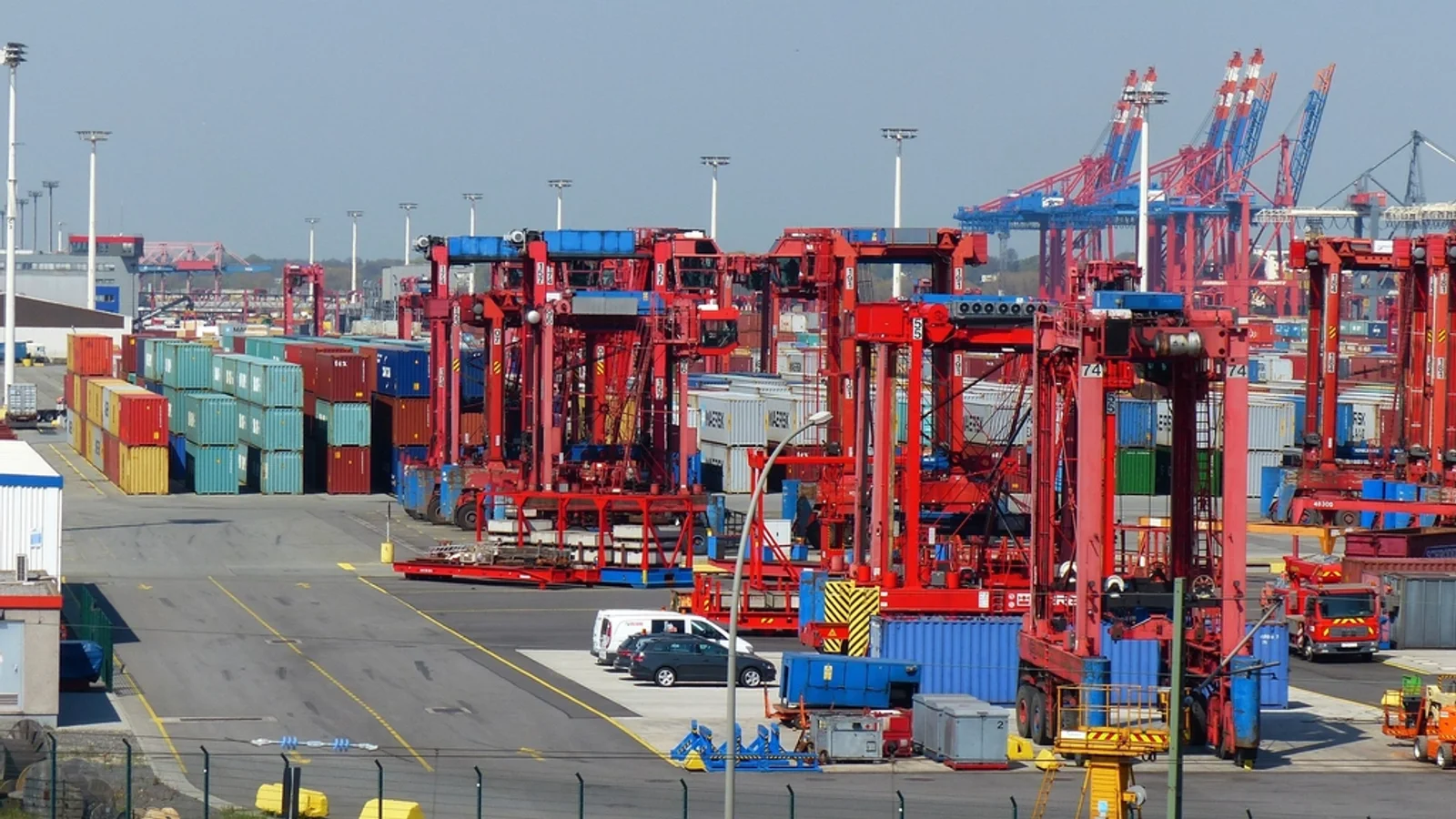
Yes, and the reason is structural rather than seasonal. Dubai is a global trade and re-export hub, anchored by Jebel Ali Port and DP World, the Jebel Ali Free Zone and the emirate's two airports, and effectively every import, export, transit and re-export shipment that moves through it needs a customs declaration lodged and cleared [1]. Importers and exporters rarely file those declarations themselves, because the work is technical, the classification rules are unforgiving and the Mirsal 2 access is gated, so they outsource it to registered brokers. That turns clearance into a recurring, volume-driven service rather than a one-off sale.
The demand does not switch off. A trading company clears goods on every shipment it brings in, week after week, so a broker that wins a handful of steady importer accounts has a predictable stream of declarations rather than a pipeline it has to refill from scratch each month. Re-export volumes add to it, because goods that pass through Dubai to onward markets also generate declarations. The barrier that makes the business harder to enter, the Dubai Customs registration and the certified representatives, is the same barrier that keeps it from becoming a commodity, because a client cannot simply file its own declarations without clearing the exact hurdles you cleared.
It helps to be precise about where a customs broker sits, because the roles around it look similar and are routinely confused. The table below sets the broker against the two businesses it is most often mistaken for.
| Role | Core function | Registration it needs |
|---|---|---|
| Customs broker | Files customs declarations and clears goods on behalf of others for a fee | DET customs-broker activity plus Dubai Customs Broker Business Registration and a Mirsal 2 Business Code |
| Freight forwarder | Arranges the physical movement, shipping and warehousing of goods | DET logistics or freight activity; a broker registration only if it also clears |
| Importer or trader | Buys and brings in goods on its own account to sell | DET trading activity and its own importer code, not a broker of others' goods |
The practical point is that only the first row can lawfully clear a third party's shipment for a fee, and getting into that row is what the setup is about. If you are weighing the standalone broker route against a broader trading or logistics structure, our mainland company setup page walks through the DET licence the broker registration is keyed to.
Real Talk: The money in this business is not glamorous, and it is not made on a single large deal. It is made on volume and reliability, filing accurate declarations quickly, avoiding the penalties and holds that come from misclassification, and holding onto importer accounts that clear goods every week. Operators who treat it as a steady, high-throughput service win. Operators chasing a quick, low-effort licence miss what the barrier is actually protecting.
What documents and steps does it take to start a customs brokerage?
More than a trade licence, because you are stacking a Dubai Customs registration and certified people on top of the company. The documents fall into three groups: the company itself, the customs registration, and the certified representatives.
- Company documents: shareholder passport copies and photos, the reserved trade name, DET initial approval, the Memorandum of Association, and an Ejari tenancy for the mandatory physical office.
- Licence activity: a DET licence carrying a customs-broker or customs-clearing activity, which is what the Dubai Customs registration is keyed to, not a generic trading or logistics activity.
- Customs registration: the Business Registration on the Dubai Trade portal under the business type Broker, listing at least one owner and one authorised person, which on approval unlocks the Agent Code and the Mirsal 2 Business Code [1][2].
- Financial guarantee: the bank guarantee tied to the customs-broker activity, historically cited around AED 50,000, to confirm as current with DET or Dubai Customs [1].
- Certified representatives: at least one broker representative who has passed Dubai Customs' profession test, is at least twenty-one, holds a UAE residence visa under the company, proves Arabic or English fluency, holds a digital certificate, and where required has completed the Dubai Trade Certified Customs Expert training [1][2][3][4].
The order matters, because several steps gate the ones after them. You cannot register with Dubai Customs until the DET customs-broker licence exists, and you cannot file a declaration until both the Mirsal 2 Business Code and a certified representative with a digital certificate are in place. A realistic sequence and timeline looks like this.
| Step | What happens | Typical timeline |
|---|---|---|
| Reserve trade name and DET initial approval | Company name and customs-broker activity approved | Days |
| Office and Ejari, then DET licence issued | Physical office secured, mainland licence granted | 1 to 2 weeks |
| Bank guarantee arranged | Guarantee tied to the broker activity put in place | Days to weeks, bank-dependent |
| Dubai Customs Broker Business Registration on Dubai Trade | Business type Broker submitted; on approval, Agent Code and Mirsal 2 Business Code issued | A few business days once documents clear |
| Broker representatives certified | Profession test, digital certificate and CCE training as required | Alongside, weeks depending on schedules |
| Mirsal 2 users created and go live | Authorised person creates broker-representative users; first declarations filed | On completion |
Plan the customs registration and the certification in parallel with the licence rather than after it, because the licence is the quick part and the certified people are the slow part. Get your customs brokerage setup and timeline mapped→
What are the ongoing costs and compliance for a customs brokerage?
The business is light on setup capital but carries a real recurring compliance load, and most of it repeats every year. The DET trade licence and the Ejari tenancy renew annually, the Dubai Customs registration carries its own renewal cycle, and the bank guarantee has to be kept in place and maintained for as long as you hold the broker registration, not just posted once at the start [1]. Let the guarantee lapse and the registration is at risk.
The people are a running obligation too. Broker representatives hold certifications and digital certificates that renew, and any representative who leaves has to be replaced with a certified one before that person can file a declaration, so your certified headcount is something you maintain rather than hire once. If you scale declaration volume, you add certified representatives to match, which is a recurring staffing cost rather than a fixed one.
On tax, the company registers for corporate tax and files annually at 0% up to AED 375,000 of taxable income and 9% above, and registers for VAT once taxable supplies pass the threshold [6]. The VAT handling here needs care, because the brokerage service fee is standard-rated at 5% while the customs duty you pay to Dubai Customs on the client's goods is a pass-through that is neither your revenue nor VAT, so the two must be invoiced and recorded separately [8]. If you take up the optional FTA facility to import on behalf of non-registered clients and suspend import VAT, that TINCO or TINCE registration adds its own financial guarantee and reporting on top [7]. These renewals, filings and the VAT split are exactly the kind of continuing work our post-setup services handle, so the brokerage stays compliant while you focus on clearing shipments. Budget for the renewals and the guarantee maintenance from year one rather than treating them as an afterthought.
Can you open a corporate bank account for a customs brokerage?
Yes, and it is generally more straightforward than for higher-risk activities, but expect standard UAE onboarding rather than an instant or fully remote account. A mainland customs-broker company opens a corporate account with a local bank once the DET licence and, ideally, the Dubai Customs registration are in place, and the bank runs full know-your-customer checks on the shareholders, the activity and the expected turnover, usually requiring an in-person meeting and the licence and tenancy in hand [1]. There is no fully remote account opening for a licensed activity like this.
A clearance broker is a recognised, transparent trade-services activity, which banks tend to view comfortably, so a clear file helps. Bring the trade licence, the Dubai Customs registration showing the Agent Code and Mirsal 2 Business Code, the office tenancy, and a short business plan showing the importer and exporter accounts you expect to serve and the projected clearing volumes. Because the duty pass-through means large third-party payments can flow across the account, being able to explain that flow to the bank, duty collected from clients and paid on to Dubai Customs, avoids questions later. A maintained minimum balance is normal, and getting the banking set up early keeps the clearing cash flow clean once declarations start.
Real Client Stories
The logistics licence that could not clear. A logistics client started filing customs declarations for customers, assuming its freight licence covered it. Customs clearance needs a separate Dubai Customs broker registration and certified representatives. We added the broker registration. Moving goods and clearing them are different registered activities.
The declarations filed by an uncertified clerk. A broker had an untrained clerk submitting declarations. Filers must be registered broker representatives with a digital certificate, meeting Dubai Customs' profession criteria. We got the staff certified. The people are gated, not just the company.
The ownership assumed to be 100% foreign. A foreign investor structured the brokerage as wholly foreign-owned, as with ordinary trading, then found customs brokerage may still carry a UAE-national condition. We verified the rule with DET and structured accordingly. The full-foreign-ownership default does not automatically apply here.
Set up your Dubai customs clearance company the right way
Customs clearance rewards operators who treat the Dubai Customs registration and the certified broker requirement as the real business, and it traps those who assume a trade or logistics licence is enough. Since 2013, BusinessDubai.ae has completed 700+ company registrations across the UAE, including trading and logistics-linked companies. We will help you verify the ownership rule and structure the company, license the customs-broker activity, complete the Dubai Customs Business Registration and Mirsal 2 setup, get your broker representatives certified, and set up the corporate tax and the standard-rated-service VAT position correctly, all with clear itemised pricing. Talk to a setup expert→ for a plan built around your brokerage. Our logistics guide covers the adjacent freight business, and post-setup services covers ongoing renewals.
Frequently Asked Questions
How do I start a customs clearance company in Dubai?
Register a DET trade licence with a customs-broker activity, complete the Business Registration with Dubai Customs as a Broker on the Dubai Trade portal to obtain an Agent Code and Mirsal 2 Business Code, and have at least one certified broker representative with a digital certificate. The trade licence alone does not let you clear customs [1][2].
Do I need Dubai Customs registration to clear customs?
Yes. A DET trade licence does not confer clearance rights; you need a separate Business Registration with Dubai Customs as a Broker on the Dubai Trade portal, which unlocks the Agent Code and Mirsal 2 Business Code needed to transact. Without a valid Mirsal 2 code you cannot file declarations [1][2].
Does a logistics licence let me clear customs in Dubai?
No. Freight forwarding moves goods, while customs clearance is a separate registered activity needing the Dubai Customs broker registration and a customs-broker DET activity. Many logistics firms hold a broker registration as an add-on, but the logistics licence alone does not authorise clearance [1][2].
Who can file a customs declaration in Dubai?
Only a registered broker representative with a digital certificate, meeting Dubai Customs' profession criteria, including being at least twenty-one, holding a UAE residence visa under the clearing entity, and proving Arabic or English fluency. The people who file are individually gated, not just the company [1][2].
What is Mirsal 2?
Dubai Customs' electronic customs declaration and clearance system, accessed through the Dubai Trade single-window portal. Every transacting party needs a valid Mirsal 2 Business Code, and the broker additionally holds an Agent Code, with declaration submitters holding a digital certificate under a broker-representative role [2].
Do customs brokers need certification in Dubai?
Yes. Broker representatives must meet Dubai Customs' profession-test and eligibility criteria and hold a digital certificate, and Dubai Trade runs a Certified Customs Expert training programme. Confirm with Dubai Customs whether the certification is mandatory for the broker card and the exact qualification format [1][3].
Can a foreigner own a customs clearance company in Dubai?
This is the item to verify. Most mainland activities allow 100% foreign ownership, but customs brokerage has historically been restricted, and it is not confirmed that it currently sits on the unconditional full-ownership list. Confirm with DET whether it permits full foreign ownership or carries a UAE-national condition [5].
Is customs duty the same as the broker's fee for VAT?
No. The customs duty is a pass-through paid to Dubai Customs on the client's goods, not the broker's revenue and not VAT. The broker's clearing or brokerage service fee is standard-rated at 5%. Services that are part of an international-transport supply can be zero-rated, but a standalone clearance fee is 5% [8].
How much does it cost to start a customs clearance company in Dubai?
A realistic all-in first year, covering the DET licence, the Dubai Customs registration, one certified broker, the guarantee and an office, is broadly AED 60,000 to 120,000, dominated by the guarantee and the office. The Dubai Customs registration fee itself is small. Figures are approximate.
Is there a bank guarantee for a customs broker in Dubai?
A bank guarantee, historically cited around AED 50,000, has been tied to the DET customs-broker activity, and Dubai Customs may require a financial guarantee as part of the process. Treat the AED 50,000 as a working assumption and confirm the current figure and whether it sits at DET or Dubai Customs [1].
Can I clear customs from a free zone in Dubai?
Free-zone entities handle free-zone declarations, but a free-zone licence does not substitute for the Dubai Customs mainland broker registration when clearing goods into the local market. Mainland is effectively required for general onshore clearance, since the broker registration is keyed to a DET licence. Confirm the boundary with Dubai Customs [1].
What is the Certified Customs Expert programme?
A Dubai Trade training programme covering the GCC unified customs law, UAE customs procedures, tariffs and classification, import-export documentation and customs e-services. Confirm with Dubai Customs whether it is mandatory for the broker qualification or a recognised and preferred credential [3].
How is a customs clearance company taxed in Dubai?
Corporate tax is 0% up to AED 375,000 of taxable income and 9% above, with Small Business Relief for revenue up to AED 3 million for tax periods ending on or before 31 December 2029. VAT on the brokerage service fee is 5%, with the duty a separate pass-through [6][8].
What is the TINCO registration for customs clearance companies?
An FTA facility under which a VAT-registered clearing company can import on behalf of non-registered clients and suspend import VAT up to a guaranteed amount, requiring a financial guarantee to the FTA. It is a distinct, optional registration separate from the broker's own 5% service-fee VAT [8].
How long does it take to set up a customs clearance company in Dubai?
The DET trade licence can be issued in days to a couple of weeks, and the Dubai Customs Business Registration typically approves within a few business days once documents clear, with the certified-broker training and the guarantee adding time. Plan the customs registration and certification alongside the licence.
What is the difference between a customs broker and an importer?
An importer buys and brings goods in on its own account, while a customs broker files declarations and clears goods on behalf of importers and exporters for a fee. The broker acts as agent in the clearance chain and needs the Dubai Customs broker registration and certified representatives, distinct from a trading importer [1].
Do I need an office for a customs clearance company in Dubai?
Yes. An Ejari tenancy and physical office are required, part of the licensing, and one of the main setup costs alongside the guarantee. It is a mandatory recurring expense for a mainland customs-broker company [1].
Why is customs clearance a steady business in Dubai?
Because Dubai is a global trade and re-export hub, and effectively every import, export, transit and re-export shipment needs a customs declaration and clearance, which importers routinely outsource to registered brokers. That makes it a recurring, volume-driven service rather than a discretionary purchase [1].
Can international-transport services be zero-rated for VAT?
Yes, services that are part of an international-transport supply can be zero-rated, but a standalone customs-clearance or brokerage fee is standard-rated at 5%. The structure and invoicing of the service determine the treatment, so a clearing company should confirm its VAT position with a tax adviser [8].
How many certified brokers do I need?
At minimum one certified broker representative to operate, scaling headcount with declaration volume. A busy brokerage handling many declarations will need more certified representatives. Confirm any minimum-count rule with Dubai Customs for your intended scope [1].
What happens if I clear customs without registration?
It is not permitted, because clearance requires a Dubai Customs broker registration and a valid Mirsal 2 Business Code, and declarations must be filed by certified broker representatives. Operating without the registration, or with uncertified filers, exposes the company to penalties [1][2].
What documents do I need to start a customs brokerage in Dubai?
Shareholder passports and photos, the reserved trade name and DET initial approval, the Memorandum of Association, an Ejari for the mandatory office, a DET customs-broker activity, the Dubai Customs Broker Business Registration on Dubai Trade, the bank guarantee, and at least one certified broker representative with a digital certificate. The customs registration and certified people are the gating items [1][2].
What are the ongoing costs of a customs brokerage in Dubai?
Annual DET licence and Ejari renewals, the Dubai Customs registration renewal, broker-representative certifications and digital certificates that renew, maintaining the bank guarantee for the life of the registration, and corporate tax and VAT filings once registered. The guarantee maintenance and the certified headcount are the recurring items founders most often forget [1].
Can I open a corporate bank account for a customs brokerage in Dubai?
Yes, with a local bank once the DET licence and ideally the Dubai Customs registration are in place. Expect full know-your-customer checks, an in-person meeting, and the licence and tenancy in hand. A clear file showing the Agent Code, Mirsal 2 Business Code and expected clearing volumes helps, and there is no fully remote account opening.
Does a customs brokerage need a UAE national partner in Dubai?
This is the item to confirm, not assume. Most mainland activities allow full foreign ownership since 2021, but customs brokerage has historically been treated as a restricted activity that may carry a UAE-national participation condition. Verify the current rule for the customs-broker activity with DET before fixing your shareholding [5].
What are the requirements to become a certified broker representative in Dubai?
A representative must pass Dubai Customs' profession test, be at least twenty-one, hold a valid UAE residence visa under the clearing company, prove Arabic or English fluency, and hold a digital certificate to file in Mirsal 2, with the Dubai Trade Certified Customs Expert training required or recognised. Confirm the exact qualification format with Dubai Customs [1][2][3].
Do I have to maintain the bank guarantee for a customs brokerage every year?
Yes. The bank guarantee, historically cited around AED 50,000, is not a one-off payment; it has to stay in place and be maintained for as long as you hold the broker registration, and letting it lapse puts the registration at risk. Confirm the current amount and whether it sits at DET or Dubai Customs [1].
Should a customs brokerage be mainland or free zone in Dubai?
For general onshore clearance, mainland, because the Dubai Customs broker registration is keyed to a DET licence. Free-zone entities handle free-zone declarations, but a free-zone licence does not substitute for the mainland broker registration when clearing goods into the local market. Confirm the boundary with Dubai Customs for your intended scope [1].
Is a customs clearance business profitable in Dubai?
It can be a steady earner, because Dubai's role as a trade and re-export hub means shipments need clearing continuously and importers outsource that to brokers, giving recurring, volume-driven revenue. Margins come from volume, accuracy and retained importer accounts rather than single large deals, and the registration barrier keeps it from becoming a commodity [1].
References
[1] Dubai Trade, clearing agent: the customs broker registration overview, the business type Broker, and registrant requirements. Dubai Trade clearing agent
[2] Dubai Trade, how to register and apply for a Dubai Customs code: the Business Registration steps, Mirsal 2 Business Code, Agent Code and broker-representative role. Dubai Trade customs code registration
[3] Dubai Trade, Certified Customs Expert training programme. Dubai Trade CCE
[4] Dubai Customs, eServices, no objection for a customs broker certificate. Dubai Customs broker NOC
[5] UAE Government portal, doing business on the mainland and full foreign ownership context, with customs brokerage historically restricted, to verify with DET. u.ae mainland business
[6] Federal Tax Authority, corporate tax and Small Business Relief: 0% to AED 375,000 then 9%, and relief through tax periods ending 31 December 2029. FTA corporate tax
[7] Federal Tax Authority, registration of customs clearance companies: the TINCO and TINCE facility to suspend import VAT. FTA customs clearance registration
[8] Federal Tax Authority, VAT: the 5% standard rate on services and the zero-rating of international transport and related services. FTA VAT