An EV charging business in Dubai is not the electricity-arbitrage play many founders imagine, and the reason is two facts most guides skip. First, the real gate is not a trade licence but DEWA, which since October 2024 licenses independent Charge Point Operators under a formal framework [1][2][3]. Second, and decisively, the government has fixed the price you can charge: public EV charging tariffs are set nationally by Cabinet Resolution No. 81 of 2024, so you cannot buy electricity cheap and resell it at a margin of your choosing [4]. This is charging-as-a-service, and you compete on location, uptime and utilisation, not on price.
That reframes the whole business. DEWA is the sole supplier of electricity, and a private operator runs charging equipment connected to DEWA's grid under DEWA's rules, using DEWA-approved installers and approved equipment, connected to DEWA's network and billing [1][5]. The market genuinely opened to private operators, with the first independent Charge Point Operator licences issued in late 2024, but it opened into a more regulated space, not a free-for-all.
This guide covers the DEWA Charge Point Operator licence, the fixed tariffs, the equipment and installation rules, the site permissions, ownership, and how the tax works. Since 2013, our team has set up regulated and infrastructure-linked companies across the UAE, so the traps here come from real files. This is a guide, not legal or tax advice on your specific project.
Why is DEWA the real gate?
Because DEWA regulates EV charging in Dubai and is the sole supplier of electricity, so a private operator works within its framework rather than around it. In October 2024, DEWA launched a regulatory and licensing framework for EV charging infrastructure, governed by the EV Charging Infrastructure Regulation for Dubai, under which independent private-sector Charge Point Operators can operate public charging, but only with a mandatory CPO licence from DEWA [1][2]. The first two independent CPO licences were issued in late 2024, confirming the market is genuinely open to private operators through DEWA licensing.
The framework sets more than a licence. Charging equipment must connect to DEWA's grid and integrate with DEWA's network and billing, with support expected for open protocols, and anyone already operating public charging at the regulation's effective date had to comply within a set window [1][2]. To start, DEWA directs applicants to initiate a CPO application, with licence categories distinguishing operators offering free charging from those collecting payment [1][3]. Confirm the current application channel and category conditions with DEWA. The point is that the CPO licence, not the trade licence, is what authorises you to operate public charging.
Common Mistake: Treating an EV charging business as a normal trade you can start on a DET licence. Operating public charging requires a mandatory DEWA Charge Point Operator licence, connection to DEWA's grid and network, and approved equipment and installers. The trade licence incorporates the company; the DEWA CPO licence lets you operate.
Why does the fixed tariff change the business?
Because it removes price as a lever, and that reshapes the entire model. The UAE Cabinet standardised public EV charging tariffs nationally under Cabinet Resolution No. 81 of 2024, effective September 2024, with slow AC charging and fast DC charging each set at a fixed per-kilowatt-hour rate plus VAT, and reporting indicates discounting is restricted to prevent price wars [4]. So a Charge Point Operator's revenue per kilowatt-hour is effectively set by the state.
This kills the naive idea of buying electricity from DEWA and reselling it at a chosen markup. The business is charging-as-a-service, where you compete on location, uptime, charging speed and utilisation, not on price [1][4]. That has a direct consequence for economics: with the tariff fixed, payback depends entirely on how busy your chargers are and how well-sited they are, not on margin per unit. A well-placed, reliable fast charger at a high-footfall site is the whole game. Confirm whether the tariff acts as a fixed price, floor or cap, and the current rate, with DEWA, since fees are periodically adjusted.
Real Talk: The fixed tariff is the single most important fact in this sector, and it is the one most business plans get wrong. You are not arbitraging the electricity price; you are operating an availability-and-utilisation business under a state-set price. The winners secure the best sites, keep chargers online, and pick the right mix of cheaper AC and capital-heavy DC for the traffic. Model the business around utilisation, not margin per kilowatt-hour. Get your EV charging setup scoped properly→
What are the equipment and installation rules?
Approved equipment, approved installers, and DEWA connection approval before you energise. Chargers must meet DEWA technical standards aligned to international IEC and ISO norms, with connectivity via open protocols, and DEWA publishes separate EV charging technical regulations [1][5]. You cannot install any charger you like.
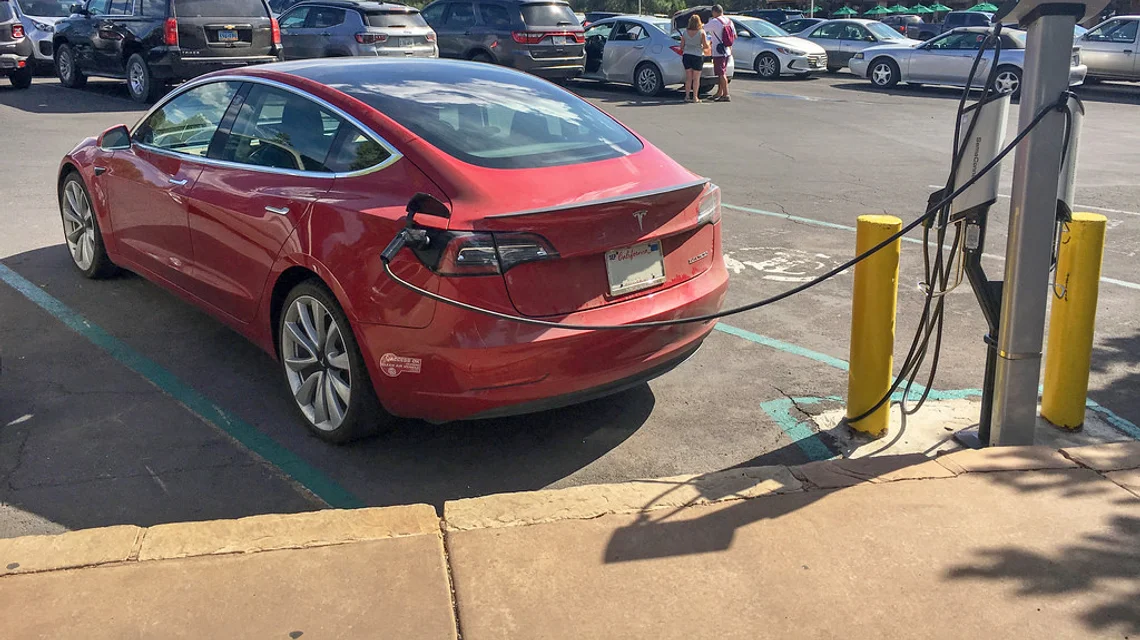
Installation is equally controlled. Only DEWA-approved electrical contractors may install equipment that connects to the DEWA grid, alters distribution boards or affects life-safety circuits, and the contractor submits load calculations, equipment specifications and installation plans for DEWA connection approval and an inspection before commissioning [5]. Chargers must connect to DEWA's grid, so off-grid charging is not permitted without explicit approval, and for stations in buildings, malls and parking structures, Dubai Civil Defence approval of the electrical and fire-safety design applies. So the equipment and the installer are both gated, and energising a charger is a DEWA-approved event, not a private one.
What site and other approvals do you need?
A site owner's no-objection certificate, and road and municipality approvals depending on location. The first practical bottleneck is usually the site owner's NOC, the landlord, developer or master-community consent for the mall, community, parking structure, office building or forecourt where the chargers go [5]. Without the site, there is no station.
Beyond DEWA and the site, expect RTA approval for anything touching a public road reserve, on-street bays or public parking, Dubai Municipality for building and site permits, civil works and signage, and, on petrol-station forecourts, additional operator and safety approvals [5]. There is also a policy tailwind: UAE rules already call for a share of parking spaces to be reserved for green and low-emission vehicles in new developments, which supports siting chargers. Confirm the RTA and Civil Defence scope for your specific site type. The location determines which of these authorities you deal with, so scoping the site early scopes the approvals.
Can a foreigner own it, and does a free zone work?
You can own it fully on the mainland, and the operating entity is mainland. On ownership, 100% foreign ownership is available on the mainland since the 2021 reforms, and EV charging is a commercial service generally expected to qualify, though you should confirm the specific activity code's status with DET [7]. Ownership is not the obstacle.
The licensing has two parts that both must be held. You need a DET trade licence with the right activity, noting that installing chargers, operating a charging network and EV maintenance are separate activity codes, and this must be paired with the DEWA CPO licence to actually operate [1][3]. Mainland is the natural home for a public-facing operator serving sites across Dubai, so the operating company sits on a DET licence, and our mainland company setup page walks through the route a Charge Point Operator needs. A free zone can host a corporate or holding entity but does not by itself authorise operating public charging infrastructure on the mainland, which still needs the DEWA CPO licence and a mainland footing, and our free zone company setup page explains why a free-zone licence suits the holding layer rather than the on-ground operator. Confirm the free-zone-to-mainland route with DET and DEWA. Our free zone versus mainland guide covers the structure, and our green business licence guide covers the wider sustainability sector.
How is an EV charging business taxed?
Standard rates. On corporate tax, the operator pays 0% on taxable income up to AED 375,000 and 9% above, with Small Business Relief for revenue up to AED 3 million for tax periods ending on or before 31 December 2029 [8]. Our corporate tax filing guide covers the mechanics.
On VAT, EV charging supplied as a service is standard-rated at 5%, and the national tariffs are quoted plus VAT, so the customer pays the fixed rate plus 5% [4][8]. There is a technical question of whether a charging session is a supply of electricity as goods or a service, but either way it lands at the standard 5%, not zero-rated or exempt, so confirm the precise characterisation for invoicing and input-tax recovery with a tax adviser. The tax position is straightforward; the economics are driven by the fixed tariff and utilisation, not by the VAT treatment.
What does it cost, and is it worth it?
AC charging is cheap; DC fast charging is a heavy capital play. Here is a realistic 2026 picture in AED, all figures approximate and worth confirming with vendors and DEWA.
| Item | Typical range (AED) |
|---|---|
| AC charger, 7 to 22 kW (hardware) | 1,500 to 7,000 |
| AC installation, per unit | 2,500 to 8,000 |
| DC fast charger, 50 kW (hardware) | 50,000 to 80,000 |
| DC ultra-fast, 150 kW and above (hardware) | 150,000 to 330,000+ |
| DEWA connection, grid upgrade and civil works | Site-dependent, confirm per project |
The key point is that AC is affordable and DC fast charging is capital-heavy, combining hardware, a grid upgrade and civil works, and with tariffs capped, payback depends entirely on utilisation and site footfall, not margin per unit. The demand case, though, is strong and government-backed.
Quick Math: The UAE's national EV policy targets half of all vehicles being electric by 2050, and Dubai's green-mobility and net-zero strategies drive government fleet electrification and a fully eco-friendly taxi fleet, while the EV base and the public charging network have grown rapidly. That is a structural, policy-backed demand tailwind. The honest caveat is the fixed tariff: because you cannot compete on price, returns come from securing high-utilisation sites and keeping chargers reliably online, which is an operations game more than a pricing one.
Is an EV charging business profitable in Dubai?
It can be, but only as an operations business, not a pricing one, and the fixed tariff is the reason. The demand side is genuinely strong: the UAE national EV policy targets half of all vehicles being electric by 2050, Dubai's green-mobility and net-zero plans are electrifying government fleets and the taxi fleet, and both the EV base and the public charging network have grown quickly [1][6]. More electric cars on the road means more charging sessions, and a well-sited charger captures that recurring throughput.
The honest limit is that you cannot turn rising demand into a bigger margin per unit. Public charging tariffs are fixed nationally under Cabinet Resolution No. 81 of 2024, so a Charge Point Operator earns the same state-set rate per kilowatt-hour as everyone else, and reporting indicates discounting is restricted to stop price wars [4]. The resale-margin model, buying electricity cheap and selling it dear, simply does not exist here. Returns come from utilisation: how many sessions a charger completes, how reliably it stays online, and how well the site draws traffic.
That makes the AC-versus-DC decision an investment call about matching hardware to traffic, not a race on price. This table frames the two.
| AC charging | DC fast charging | |
|---|---|---|
| Hardware cost | Low (roughly 1,500 to 7,000 AED per unit) | High (roughly 50,000 to 330,000+ AED per unit) |
| Best use-case | Destination sites where cars park for hours (malls, offices, hotels, residential) | High-turnover, high-footfall sites (highways, forecourts, transit hubs) |
| Session pattern | Fewer sessions, long dwell | Many sessions, short dwell |
| Payback driver | Cheap to deploy at scale | Needs high utilisation to justify the capital |
Real Talk: With the tariff fixed, a cheap AC charger sitting idle and an expensive DC charger sitting idle both lose money the same way. The winners pick sites first and hardware second, and they treat uptime as the product. Model the business on sessions per charger per day, not on fils per kilowatt-hour. Because the operator has to be a mainland entity, it is worth reading our mainland company setup page alongside the DEWA route before you commit capital.
What documents and steps does it take to start an EV charging business?
Two licences, approved kit, and a chain of approvals, in a set order. Because DEWA approves the operator, the equipment, the installer and the connection, the paperwork is heavier than an ordinary trade licence. A realistic document checklist looks like this.
- Company documents: shareholder passports and photos, the reserved trade name, DET initial approval, the Memorandum of Association, and an Ejari tenancy for the office.
- Activity: the correct DET activity code, noting that installing chargers, operating a charging network and EV maintenance are separate codes, so the licence must carry the operating activity.
- DEWA CPO application: the Charge Point Operator licence application, with the licence category matching whether you charge for sessions or offer them free.
- Equipment and installer: DEWA-approved, IEC-compliant chargers and a DEWA-approved electrical contractor, with load calculations, equipment specifications and installation plans.
- Site: the site owner's no-objection certificate from the landlord, developer or master community.
- Connection and other approvals: DEWA connection approval and a pre-commissioning inspection, plus RTA, Dubai Municipality and Civil Defence approvals where the site type requires them.
The timeline is where founders underestimate the project, because the trade licence is quick and the DEWA chain is not.
| Step | Typical timeline |
|---|---|
| DET trade licence with the EV charging activity | 1 to 3 weeks |
| DEWA Charge Point Operator licence application | The main gating step, confirm with DEWA |
| Site owner NOC | Often the first real bottleneck |
| Approved-installer works and equipment supply | Weeks, site-dependent |
| DEWA connection approval and inspection | Before you energise |
| RTA, Municipality and Civil Defence approvals | Site-type dependent, alongside the above |
Plan the DEWA CPO licence and the site NOC first, because a trade licence with no site and no CPO approval cannot switch on a single charger. Get your EV charging setup and timeline mapped→
What are the ongoing costs and compliance for an EV charging business?
Recurring DEWA obligations, hardware upkeep, and the standard filings, all continuing for the life of the business. The running costs are not dominated by any resale spread, because there is none. They are dominated by keeping chargers online and integrated.
The main ongoing items are:
- DEWA network and billing integration: charging sessions settle through DEWA's network and billing ecosystem, so you carry the integration, roaming and settlement obligations that come with operating inside the framework [1].
- Charger maintenance and uptime: hardware, connectors, software and payment terminals need maintenance, and because you compete on availability, downtime is lost revenue, not just a repair bill.
- Electricity cost: you buy power from DEWA and sell charging at the fixed national tariff plus VAT, so your energy spread is set by the state, and efficiency and utilisation, not pricing, protect it [4].
- Licence renewals: the DET trade licence and Ejari renew annually, and the DEWA CPO licence carries its own renewal and compliance cycle, so budget for both.
- Tax: corporate tax at 0% up to AED 375,000 of taxable income and 9% above, and VAT at the standard 5% on charging, filed on the normal cycle [8].
Based on our experience, operators underprice the uptime obligation. A charger that is offline at a busy site during peak hours loses the exact utilisation the whole model depends on, so a maintenance and monitoring contract is a core cost, not an optional one. These recurring renewals, filings and approvals are the kind of ongoing work our post-setup services handle, so the company stays compliant while you focus on utilisation.
Can you open a corporate bank account for an EV charging business?
Yes, with the standard UAE onboarding, not an instant or fully remote account. A mainland EV charging company opens a corporate account with a local bank once the DET licence and, ideally, the DEWA CPO licence are in place, and the bank runs full know-your-customer checks on the shareholders, the activity and the expected turnover, usually requiring an in-person meeting and the tenancy and licence in hand. There is no fully-remote account opening for a physical, infrastructure-linked operation like this.
A clear plan helps the account move faster: showing the DEWA CPO route, the sites and their NOCs, the charger mix and the projected utilisation gives the bank a concrete activity to underwrite rather than a vague energy idea. Because the business earns a high volume of small charging payments settled through DEWA's billing, a proper merchant and reconciliation setup matters from day one, and a maintained minimum balance is normal. Getting the banking and payment flow right early avoids friction once the chargers are live and sessions start settling.
Real Client Stories
The resale-margin plan that could not exist. A client planned to buy DEWA electricity and resell it to drivers at a markup. Only DEWA supplies electricity, and public charging prices are fixed nationally, so the business is charging-as-a-service, not arbitrage. We rebuilt the model around utilisation and site quality. The margin-on-electricity idea simply is not available.
The chargers installed by an ordinary electrician. A founder had chargers installed by a general electrician and could not energise them, because grid-connected installs must be done by a DEWA-approved contractor with DEWA connection approval and inspection. We routed the works through an approved installer. Energising a charger is a DEWA-approved event.
The licence that could not operate. A client set up a DET trade licence expecting to run public charging, unaware the DEWA CPO licence is mandatory to operate. We took the company through the CPO licensing. Two approvals are needed, and the DET licence alone does not authorise operating public charging.
Set up your Dubai EV charging business the right way
EV charging rewards operators who accept the fixed-tariff, charging-as-a-service reality and build around DEWA licensing and site quality, and it frustrates those who plan to arbitrage electricity. Since 2013, BusinessDubai.ae has completed 700+ company registrations across the UAE, including regulated and infrastructure-linked companies. We will help you structure the mainland company, plan the DEWA Charge Point Operator licence, the approved equipment and installer, the site NOCs and RTA, Municipality and Civil Defence approvals, and set up the corporate tax and VAT position correctly, all with clear itemised pricing. Talk to a setup expert→ for a plan built around your sites. Our green business licence guide covers the sustainability sector, and post-setup services covers ongoing approvals and renewals.
Related reading: Set Up a Signage & Outdoor Advertising Company in Dubai, UAE: Mada Media Permits, the OOH Manual & Tax (2026), Set Up a Solar Energy Company in Dubai, UAE: DEWA Shams Dubai Enrolment, Equipment Approval & Tax (2026)
Frequently Asked Questions
How do I start an EV charging business in Dubai?
Register a DET trade licence with the right EV charging activity, obtain the mandatory DEWA Charge Point Operator licence, use DEWA-approved equipment and installers with DEWA connection approval, secure the site owner's NOC and any RTA, Municipality and Civil Defence approvals, and operate under the fixed national tariffs. The DEWA CPO licence, not the trade licence, authorises operation [1][3].
Do I need a DEWA licence for EV charging in Dubai?
Yes. Since October 2024 DEWA licenses independent Charge Point Operators, and the CPO licence is mandatory to operate public charging. It sits on top of the DET trade licence, and charging equipment must connect to DEWA's grid and network. The first independent CPO licences were issued in late 2024 [1][2].
Can I buy electricity from DEWA and resell it at a markup?
No. Only DEWA supplies electricity, and public EV charging prices are fixed nationally under Cabinet Resolution No. 81 of 2024. The business is charging-as-a-service competing on location, uptime and utilisation, not on price, so the resale-margin model does not exist [1][4].
How much can I charge for EV charging in Dubai?
Public charging tariffs are set nationally, with slow AC charging and fast DC charging each at a fixed per-kilowatt-hour rate plus VAT, and discounting is restricted. You cannot set your own price, so revenue per unit is effectively state-set and returns come from utilisation. Confirm the current rate with DEWA [4].
Who can install EV chargers in Dubai?
Only DEWA-approved electrical contractors may install grid-connected equipment, with DEWA-approved IEC-compliant chargers, and DEWA connection approval and an inspection before commissioning. An ordinary electrician cannot energise a grid-connected charger [5].
What is a Charge Point Operator licence?
The DEWA licence that authorises an independent private operator to run public EV charging in Dubai, under the October 2024 regulatory framework. Licence categories distinguish operators offering free charging from those collecting payment, and it is mandatory to operate public charging [1][3].
Do I need site approval for EV chargers in Dubai?
Yes. You need the site owner's no-objection certificate, the landlord, developer or community consent, usually the first bottleneck, plus RTA approval for public road reserves or parking, Dubai Municipality for permits and civil works, and Civil Defence for stations in buildings and parking structures [5].
Can a foreigner own an EV charging business in Dubai?
Yes, on the mainland, since the 2021 reforms, with EV charging generally expected to qualify for 100% foreign ownership. Confirm the specific activity code's status with DET. The operating entity is mainland, paired with the DEWA CPO licence [7].
Is EV charging taxed for VAT in Dubai?
Yes, at the standard 5%, and the national tariffs are quoted plus VAT, so the customer pays the fixed rate plus 5%. Whether a session is a supply of goods or a service, it lands at 5%, not zero-rated or exempt. Confirm the characterisation for invoicing with a tax adviser [4][8].
How much does an EV charging station cost in Dubai?
AC chargers are affordable, with hardware from a few thousand dirhams, while DC fast chargers are capital-heavy, from around AED 50,000 for 50 kW to AED 150,000 to 330,000 or more for ultra-fast units, plus the DEWA connection, grid upgrade and civil works. With tariffs capped, payback depends on utilisation.
What is the difference between AC and DC charging for the business?
AC charging is cheap to install and suits destination sites where cars park for hours, while DC fast charging is expensive but serves high-turnover, high-footfall sites. With the tariff fixed, the choice is about matching charger type to site traffic to maximise utilisation, not about price [4].
Can I run an EV charging business from a free zone in Dubai?
A free zone can host a corporate or holding entity, but operating public charging infrastructure on the mainland needs the DEWA CPO licence and a mainland footing. A free-zone licence does not by itself authorise operating public charging on the mainland. Confirm the route with DET and DEWA [1][3].
Is EV charging a good business in Dubai?
The demand case is strong and government-backed, with the national EV policy targeting half of vehicles electric by 2050 and rapidly growing EV and charger numbers. The caveat is the fixed tariff: you compete on site quality and uptime, not price, so it is an operations and location business.
What standards do EV chargers have to meet in Dubai?
DEWA technical standards aligned to international IEC and ISO norms, with connectivity via open protocols, set out in DEWA's EV charging technical regulations. Equipment must be approved, and installation must go through a DEWA-approved contractor with connection approval and inspection [1][5].
Do I need corporate tax registration for an EV charging business?
Yes. Corporate tax is 0% up to AED 375,000 of taxable income and 9% above, with Small Business Relief for revenue up to AED 3 million for tax periods ending on or before 31 December 2029. Registration and filing are required regardless of the relief [8].
How does DEWA billing work for a Charge Point Operator?
Charging must integrate with DEWA's network and billing ecosystem, which operators plug into, with settlement handled through DEWA's system. Confirm the exact integration, roaming and settlement obligations with DEWA, as these are part of operating under the framework [1].
Do petrol stations need extra approvals for EV chargers?
Yes. Chargers on petrol-station forecourts carry additional operator and safety approvals from the forecourt operator, on top of the DEWA CPO licence, the approved installer and Civil Defence requirements. Confirm the specific approvals per operator and site [5].
How long does it take to set up an EV charging business in Dubai?
The DET trade licence can be issued in weeks, but the DEWA CPO licence, the site NOCs, the approved-installer works and the DEWA connection approval and inspection take longer and are the real timeline. Plan the DEWA licensing and the site approvals alongside the licence.
What is the National EV Policy in Dubai?
The UAE national policy targeting half of all vehicles on the roads being electric by 2050 and reducing transport energy consumption, supported by Dubai's green-mobility and net-zero strategies. It is the structural, policy-backed demand driver behind the charging market [6].
Are there subsidies for EV charging in Dubai?
Treat any specific subsidy or rebate claim cautiously and verify it against a DEWA or government source before relying on it, as unverified figures circulate. The confirmed drivers are the fixed tariff framework, the CPO licensing and the national EV targets, not unconfirmed incentives [4][6].
What happens if I operate public charging without a DEWA licence?
It is outside the framework and exposes the operator to penalties, because operating public charging requires the mandatory DEWA Charge Point Operator licence, approved equipment and installers, and grid connection. Anyone already operating at the framework's effective date had to comply within a set window [1].
What documents do I need to start an EV charging business in Dubai?
Shareholder passports and photos, the reserved trade name and DET initial approval, the Memorandum of Association, an Ejari tenancy, the correct DET activity code, the DEWA Charge Point Operator licence application, DEWA-approved IEC-compliant equipment and a DEWA-approved installer, the site owner's NOC, and DEWA connection approval plus any RTA, Municipality and Civil Defence approvals. The DEWA CPO licence and the site NOC are the gating items [1][5].
What are the ongoing costs of running an EV charging business in Dubai?
DEWA network and billing integration, charger maintenance and uptime, the electricity you buy from DEWA sold at the fixed national tariff, annual DET licence and Ejari renewals, the DEWA CPO licence renewal cycle, and corporate tax and VAT filings. Because you compete on availability, charger downtime is lost revenue and monitoring is a core running cost [1][4].
Can I open a corporate bank account for an EV charging business in Dubai?
Yes, with a local bank once the DET licence and ideally the DEWA CPO licence are in place. Expect full know-your-customer checks on the shareholders and activity, an in-person meeting, the tenancy and licence in hand, and a maintained minimum balance. There is no fully-remote account opening for a physical, infrastructure-linked operation.
Does the fixed EV charging tariff make the business unprofitable in Dubai?
No, but it changes where the profit comes from. Because the national tariff is fixed under Cabinet Resolution No. 81 of 2024, you cannot earn a bigger margin per kilowatt-hour, so returns depend on utilisation, siting and uptime rather than price. A busy, reliable charger at a strong site can do well, while an idle one loses money whatever the tariff [4].
How do I apply for a DEWA Charge Point Operator licence?
DEWA directs applicants to initiate a Charge Point Operator application under its October 2024 framework, choosing the licence category that matches whether you charge for sessions or offer them free. The licence sits on top of the DET trade licence and requires grid connection, approved equipment and approved installers. Confirm the current application channel with DEWA [1][3].
Why does DEWA require an approved installer for EV chargers in Dubai?
Because grid-connected equipment affects DEWA's distribution network and life-safety circuits, only DEWA-approved electrical contractors may install it, and they submit load calculations, equipment specifications and installation plans for DEWA connection approval and an inspection before commissioning. An ordinary electrician cannot energise a grid-connected charger [5].
Should an EV charging business be mainland or free zone in Dubai?
Mainland for the operating company, because a public-facing Charge Point Operator serving sites across Dubai needs a DET licence and the DEWA CPO licence. A free zone can host a corporate or holding entity but does not by itself authorise operating public charging on the mainland. Confirm the structure with DET and DEWA [1][3].
Which is a better investment, AC or DC EV chargers in Dubai?
Neither by default, because it depends on the site. AC chargers are cheap and suit destination sites where cars park for hours, while DC fast chargers are expensive but earn on high-turnover, high-footfall locations. With the tariff fixed, the right choice is the one that maximises utilisation for that specific site's traffic [4].
References
[1] DEWA, Electric Vehicles Charging Infrastructure Regulation for the Emirate of Dubai: the CPO framework, licence categories, network integration and compliance window. DEWA EV charging regulation
[2] DEWA, regulatory framework for EV charging infrastructure: the Charge Point Operator licensing landing page. DEWA EV framework
[3] Dubai Media Office, DEWA grants the first independent EV Charge Point Operator licences in Dubai, October 2024. Dubai Media Office CPO licences
[4] UAE Legislation, Cabinet Resolution No. 81 of 2024 on the fee for electric vehicle charging: the fixed national AC and DC tariffs. Cabinet Resolution 81 of 2024
[5] DEWA, EV charging technical regulations: technical specifications, approved contractors and connection approval. DEWA EV technical regulations
[6] UAE Government portal, national electric vehicles policy: the 2050 EV targets and transport-energy goals. u.ae national EV policy
[7] UAE Government portal, full foreign ownership of commercial companies. u.ae foreign ownership
[8] DEWA VAT overview and Federal Tax Authority corporate tax: the 5% standard rate on charging and the corporate tax framework. DEWA VAT