Dubai Internet City is one of the few addresses in the UAE that a technology buyer, an enterprise procurement team or a government client recognises on sight. Oracle, SAP, Dell, HP, Amazon, Google, LinkedIn, Snapchat, Sony, Tencent, Huawei, Motorola, Mastercard, Visa and Stripe are all named in the zone's own material, alongside research and development centres for 3M, IBM, HP, Ericsson and Cisco, and Microsoft's AED 5.5 billion investment announced in April 2024 [1]. The prestige is real and it is earned.
Two things about it are almost never said out loud. The first is that Dubai Internet City publishes no licence prices at all. Not a package rate, not a licence fee, not a registration fee, not a desk rate. Its own FAQ says only that pricing "is designed to be competitive and in alignment with prevailing market rates" [2]. Every confident "DIC from AED 15,020" figure circulating online is a consultancy's estimate, and the zone never issued it. The second is more expensive. The tenant DIC attracts most, the software house, the SaaS product company, the IT services firm, is precisely the tenant that cannot reach the free zone 0% corporate tax rate, because software development, SaaS and general IT services appear nowhere on the closed Qualifying Activities list in Ministerial Decision No. 229 of 2025 [6].
This guide covers what DIC actually is at scale, why nobody can honestly quote you a package, what its own site does confirm on capital and timelines, the GoFreelance route and its published fees, how the visa quota really works, the VAT position, the honest corporate tax answer with worked numbers, who is overpaying, and what changes in 2026. Since 2013, our team has set up technology companies across Dubai's free zones including the TECOM districts, so the traps below come from real client files. Our free zone company setup page maps how a licence, establishment card and visa allocation fit together before you compare zones. This is a guide, not legal or tax advice on your specific company.
If you want an itemised DIC number for your activity and headcount before you commit to anything, talk to a setup expert→
What is Dubai Internet City, and how big is it really?
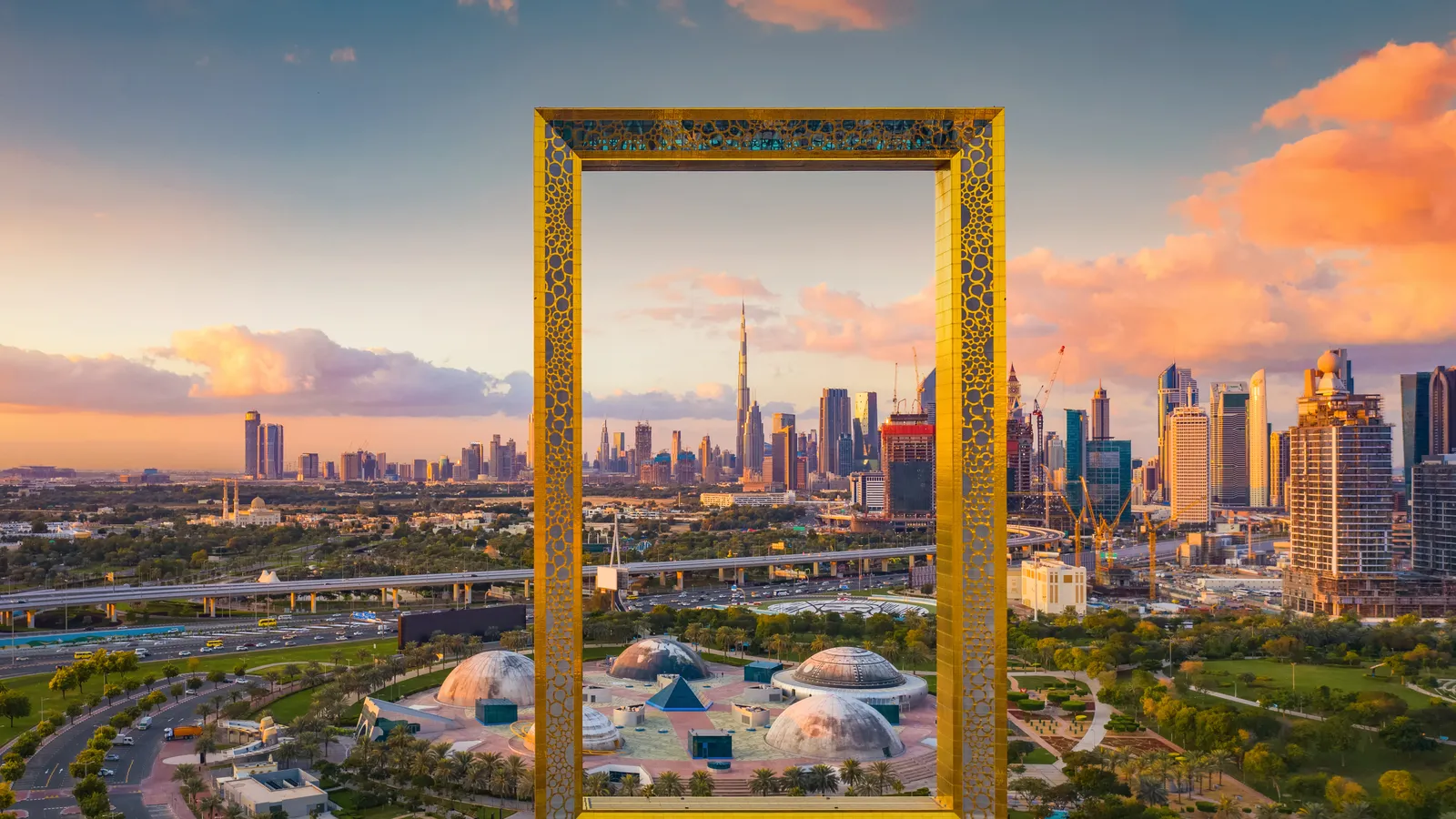
Dubai Internet City is a technology and innovation district operated by TECOM Group PJSC, part of Dubai Holding. It was unveiled on 29 October 1999 and began operations in 2000, making it the region's original technology free zone. It licenses technology, telecom, software and digital companies and leases them commercial offices, co-working space, retail, warehouses and light industrial units [1].
The scale figures below come from TECOM's own twenty-fifth anniversary release in September and October 2024, which is the most recent first-party dataset the zone has put out [1].
| Headline figure | Latest published number |
|---|---|
| Businesses in the district | 4,000+ [1] |
| Growth in the first nine months of 2024 | 17.5%+ [1] |
| Professionals working in the district | 31,000+ [1] |
| Innovation and R&D centres | 19, including 3M, IBM, HP, Ericsson and Cisco [1] |
| Contribution to Dubai's GDP over 15 years | AED 100 billion [1] |
| Infrastructure investment over the prior two years | AED 1.9 billion [1] |
| Microsoft investment announced April 2024 | AED 5.5 billion [1] |
| Startups supported by in5 | 940+ [4] |
Real Talk: If you read that Dubai Internet City hosts "1,600 companies", you are reading a figure that has not been updated in years. DIC's own 2024 release says 4,000-plus [1]. That single stale number appears on dozens of setup pages, and it is a useful test: a page that still prints 1,600 has not checked its DIC facts recently, so treat its price figures with the same suspicion.
One structural point that most guides get wrong. TECOM Group operates ten business districts, not seven: Dubai Internet City, Dubai Outsource City, Dubai Media City, Dubai Production City, Dubai Studio City, Dubai Knowledge Park, Dubai International Academic City, Dubai Science Park, Dubai Design District and Dubai Industrial City [5]. That matters practically, because several benefits people attribute to DIC are actually TECOM-wide and available from a sister district, and because your correct home may be Dubai Outsource City or Dubai Design District rather than DIC itself.
What does a Dubai Internet City licence cost?
Nobody outside DIC's sales team can answer that, and this is the most useful sentence in the article. Neither dic.ae nor tecomgroup.ae publishes a licence fee, a registration fee, a package price or a facility rate [1][2][5]. DIC's own FAQ addresses pricing only in general terms, saying it is designed to be competitive and in line with prevailing market rates [2]. The "Find Your Fit" tool on the site is a routing mechanism into a sales conversation, not a price list.
That leaves a gap, and consultancy pages have filled it with numbers that look official. They are not. The licence, registration, business plan approval, workstation and virtual office figures you will find quoted are third-party estimates, they cluster in a broad band, and they disagree with one another. We are not going to reprint them here dressed up as DIC prices, because doing that is exactly how a founder ends up building a budget on a number the zone never issued.
| Cost component | What DIC publishes | What it does not publish |
|---|---|---|
| Trade licence fee | Nothing. Pricing described only as market-aligned [2] | Any licence price, by activity or tier |
| Registration fee | Nothing [2] | Any one-off registration figure |
| Office or co-working rate | Facility types only [1] | Any rate per square foot, desk or month |
| Warehouse or light industrial rate | Facility types only [1] | Any lease rate |
| Visa cost per person | Quota rule only [2] | Any per-visa fee |
| Establishment card | Not published for the corporate route | Any fee, outside GoFreelance [3] |
| GoFreelance package | Published in full [3] | Nothing material |
| Renewal cost | Licence validity and lease term only [2] | Any renewal price |
Notice the one row that breaks the pattern. GoFreelance is the only DIC product with fully published pricing [3], which is covered in detail below. Everything on the corporate side is quote-on-enquiry.
Common Mistake: Treating a consultancy's DIC estimate as a budget and then discovering the real quote at signature. The honest process here is the reverse of shopping for a cheap desk licence. Specify the activity, the facility type and square footage, and the headcount you need visas for, then ask DIC or an agent for a written, itemised quotation against that specification, with government fees separated from service fees. Anyone who gives you a total before knowing your square footage is guessing, because square footage is what drives both the rent and your visa quota.
Based on our experience, the founders who are unhappy with DIC almost always arrived with a budget built from a blog figure and a mental image of a cheap free zone licence. The ones who are happy priced the office first, understood that the address is a premium product, and decided the ecosystem was worth it. DIC is not hiding its prices to trick you; it is a landlord and a licensor selling into an enterprise market where deals are specified, not shelved.

What does dic.ae actually confirm?
Quite a lot, once you stop looking for prices. DIC's own FAQ page states the share capital requirement, the licence issuance commitment, the end-to-end registration timeline, the licence validity period and the minimum lease term [2]. These are first-party facts you can plan around, and most competitor articles skip them in favour of invented pricing.
| Item | Confirmed position on dic.ae |
|---|---|
| Minimum paid-up share capital, FZ-LLC | AED 10,000 [2] |
| Minimum share capital, branch of a foreign or UAE company | None [2] |
| Licence issuance after payment and documents | Within 48 hours [2] |
| Total registration time | About 7 working days, being 4 days for approval plus 3 days for issuance [2] |
| Licence validity | 1 year, renewable [2] |
| Minimum lease term | 1 year [2] |
| Visa quota rule | 1 employee visa per 60 square feet of leased space [2] |
Read the capital line carefully, because it separates two routes. An FZ-LLC needs AED 10,000 in paid-up capital, while a branch of an existing foreign or UAE company has no minimum at all [2]. For an established software company placing a Dubai arm inside DIC, the branch route removes a capital step entirely, at the cost of the branch being confined to the parent's activities and carrying the parent's name.
The timeline is genuinely fast on paper: about seven working days end to end, with the licence itself issued within 48 hours of payment and complete documents [2]. In practice, the licence is rarely the slow part. The lease negotiation comes first, because there is a minimum one-year term and your visa quota is calculated from the space, and the corporate bank account comes after, usually taking several weeks. A company that is licensed in seven working days and banked in seven weeks has been licensed quickly, not launched quickly.
Pro Tip: Settle the office specification before you touch the licence application. At DIC the lease is not an afterthought bolted onto a package, it is the input that determines your rent, your visa headroom and your renewal cycle. Founders who apply first and lease second end up either paying for space they do not need or discovering their headcount plan does not fit the floor they signed for.
Is GoFreelance right for you, and which districts does it cover?
GoFreelance is TECOM's freelance permit product, and it is the one place where DIC publishes real, checkable numbers. The base package is AED 7,520 excluding visa, with a one-year visa at AED 4,600, a two-year visa at AED 5,042, and an establishment card at AED 2,000 which is required if you want a visa at all. DIC's page notes that the visa and establishment card fees are subject to change, and the permit renews annually [3].
| GoFreelance line item | Published fee (AED) | Notes |
|---|---|---|
| Base package, excluding visa | 7,520 | The permit itself, renewable annually [3] |
| Establishment card | 2,000 | Required before any visa [3] |
| Residence visa, 1 year | 4,600 | Subject to change per DIC [3] |
| Residence visa, 2 years | 5,042 | Subject to change per DIC [3] |
| Permit only, no visa | 7,520 | If you already hold UAE residency another way |
| Permit plus establishment card plus 2-year visa | 14,562 | The realistic all-in for a new resident |
Quick Math: The number most competitor pages print is a flat "AED 7,500", which is the permit alone. If you are not already a UAE resident, the figure that matters is 7,520 plus 2,000 for the establishment card plus 5,042 for a two-year visa, which is AED 14,562. Taking the one-year visa instead gives AED 14,120 in year one but puts you back in the queue twelve months sooner, so the two-year option is usually the better value. Budget from 14,562, not 7,520.
The second thing competitors get wrong is scope. GoFreelance is TECOM-wide, not DIC-only, and it covers exactly four districts [3]. It is not available across all ten TECOM districts, so a freelancer who assumes their sector is covered because TECOM runs the district may find it is not.
| TECOM district | GoFreelance available? |
|---|---|
| Dubai Internet City | Yes [3] |
| Dubai Media City | Yes [3] |
| Dubai Knowledge Park | Yes [3] |
| Dubai Design District | Yes [3] |
| Dubai Studio City | No |
| Dubai Production City | No |
| Dubai Science Park | No |
| Dubai Industrial City | No |
| Dubai Outsource City | No |
| Dubai International Academic City | No |
Eligibility runs by sector rather than by district alone. The Tech stream covers roles such as web and mobile development, software architecture, database administration, data science and customer service. Media covers more than thirty roles. Education covers training, coaching and e-learning advisory. Design covers fashion, interior, graphic and jewellery design [3].
Real Talk: For a solo developer, designer or technical consultant, GoFreelance under the Dubai Internet City banner is one of the best value propositions in the UAE, and it is genuinely first-party priced. You get a recognised tech address, a residence visa and a legitimate permit for well under half what a small corporate licence in a premium zone typically runs. What it does not give you is a limited-liability company, corporate shareholders, employee visas or the ability to build a team. The moment you need to hire, you need a company, and the economics change completely.
How does the DIC visa quota really work?
By floor area, on a published formula. DIC's own FAQ states one employee visa per 60 square feet of leased space, and for commercial space that is the rule to plan around [2]. There is no package tier, no flat "up to six visas" allowance and no negotiation shortcut. If you want more people, you lease more space.
| Leased commercial space | Employee visas at 1 per 60 sq ft [2] |
|---|---|
| 300 sq ft | 5 |
| 600 sq ft | 10 |
| 1,000 sq ft | 16 |
| 1,500 sq ft | 25 |
| 2,400 sq ft | 40 |
| 3,000 sq ft | 50 |
Two claims circulating online conflict with that rule, and both should be discarded. The first is that a DIC company gets "2 to 5 visas", which is a desk-zone concept imported into a zone that does not work that way. The second is the widely repeated "about 9 square metres per visa" ratio. Sixty square feet is roughly 5.6 square metres, so the 9 sqm figure does not match DIC's own published rule and would understate your quota by around a third. On a 1,000 square foot floor, DIC's rule supports 16 visas while the 9 sqm claim implies about 10. That is a six-person difference in a hiring plan, which is not a rounding error.
Common Mistake: Leasing for the team you have rather than the team you will have in two years, then discovering that adding three developers means renegotiating a lease with a one-year minimum term [2]. Quota follows space, so headcount planning is a real estate decision at DIC. Work out your year-two headcount, multiply by 60 square feet, and lease against that number rather than against today's payroll.
Also remember that a quota is only the right to apply. Every applicant still goes through standard UAE immigration processing, and refusals happen for reasons unconnected to your floor area. Our guide to how free zone visa quotas work compares the mechanics across zones.
What facilities does Dubai Internet City actually offer?
More than the "tech office park" label suggests. DIC leases commercial offices, co-working space through D/Quarters, retail units, warehouses and light industrial units, which means a hardware or device company is not automatically excluded the way it would be from a pure desk zone [1].
| Facility type | What it is for |
|---|---|
| Commercial offices | The main product, and the basis of your visa quota at 60 sq ft per visa [2] |
| D/Quarters co-working | Flexible workspace for small teams and early-stage companies [1] |
| Retail units | Customer-facing space within the district [1] |
| Warehouses | Storage for companies with a physical goods element [1] |
| Light industrial units | Assembly, hardware and device work [1] |
| in5 Tech | The district's incubator for startups and entrepreneurs [4] |
in5 Tech is DIC's incubator, and it is a genuine part of the offer rather than marketing. What most articles miss is that in5 is not DIC-exclusive. There are sister centres at Dubai Design District (in5 Design), Dubai Production City (in5 Media) and Dubai Science Park (in5 Science), and in5 reports having supported 940-plus startups [4]. If you are an early-stage founder drawn to DIC mainly for in5, check whether a sister centre in a different district fits your sector better, because the incubator support is not a reason on its own to choose the most expensive address.
One figure to avoid: the "AED 8 billion raised since 2013" statistic attached to in5 in various articles does not appear on dic.ae, so we are not publishing it as fact [4]. The 940-plus startups figure does.
The ecosystem argument for DIC is stronger than the facilities argument. Nineteen innovation and R&D centres, plus more than 31,000 professionals working inside the district, produce a hiring pool, a partner network and a client-meeting density that a cheaper zone in another emirate does not [1]. If you sell to enterprise procurement teams and regional headquarters, being inside that fence has commercial value. If your customers are overseas and found you through a search engine, it does not.
Want a DIC quote with the lease, licence, establishment card and visa quota specified and priced separately?
Get a free consultation→Is Dubai Internet City a Designated Zone for VAT?
No. Dubai Internet City is not on the Federal Tax Authority's list of VAT Designated Zones, and neither is any other TECOM district [8]. The Dubai entries on that list are Jebel Ali Free Zone, the Dubai Cars and Automotive Zone, Dubai Textile City (removed on 4 April 2021), the Free Zone Area in Al Quoz, the Free Zone Area in Al Qusais, Dubai Aviation City, Dubai Airport Free Zone, Dubai CommerCity and International Humanitarian City. DIC does not appear among them.
For most DIC tenants this changes nothing, because Designated Zone status is a goods relief and a software company does not move goods. But it matters for two groups: hardware and device companies drawn to DIC's light industrial units, and anyone who was told that a free zone means favourable VAT treatment.
| Assumption | Reality for a DIC company |
|---|---|
| "Free zone means no VAT" | Wrong. Standard UAE VAT at 5% applies in full [8] |
| "My stock sits outside the State for VAT" | Only inside a listed Designated Zone, which DIC is not [8] |
| "Services in a free zone are relieved" | No. Services are standard-rated wherever the zone sits [8] |
| "Registration is optional for a free zone company" | Mandatory above AED 375,000 of taxable supplies, voluntary from AED 187,500 [8] |
| "The zone handles my VAT filings" | You register and file, yourself or through an adviser |
So a DIC company charges, collects, files and pays VAT on the ordinary rules, on the ordinary thresholds, with no zone-specific carve-out [8]. We are deliberately not publishing a total count of Designated Zones, because the FTA's consolidated list is dated and zones are added and removed by Cabinet Decision, so any circulating count may be stale. Check the current list rather than trusting a number in an article. Our guide to Designated Zones and VAT explains exactly which movements the treatment covers and which it does not.
The practical consequence is a recurring load once you cross the threshold: registration, periodic returns, tax invoices and record-keeping. Those filings, alongside corporate tax registration and licence renewals, are the running work our post-setup services team carries so nothing lapses while you build product.
Can a Dubai Internet City company reach the 0% corporate tax rate?
For a typical DIC tenant, no, and the zone is not the reason. A DIC company can be a Qualifying Free Zone Person in principle; DIC is a Free Zone for corporate tax purposes and does not disqualify anyone by itself. What disqualifies the typical tenant is the activity, because the Qualifying Activities list in Ministerial Decision No. 229 of 2025 is a closed list with no technology or services catch-all [6].
That decision was issued on 28 August 2025, took effect retroactively from 1 June 2023, and repealed Ministerial Decision No. 265 of 2023 [6]. Here is the list in full, with the honest column that competitor articles leave out.
| Qualifying Activity under MD 229/2025 | Typical DIC tech tenant? |
|---|---|
| Manufacturing of goods or materials | Only a hardware manufacturer |
| Processing of goods or materials | No |
| Trading of Qualifying Commodities | No |
| Holding of shares and other securities for investment (12-month minimum holding) | Only a holding structure |
| Ownership, management and operation of Ships | No |
| Reinsurance | No |
| Fund management | Only if regulated by a Competent Authority |
| Wealth and investment management | Only if regulated by a Competent Authority |
| Headquarter services to Related Parties | Only within a group |
| Treasury and financing services to Related Parties or for its own account | Only within a group |
| Financing and leasing of Aircraft | No |
| Distribution of goods or materials in or from a Designated Zone | Impossible at DIC, which is not a Designated Zone [8] |
| Logistics services | Only a genuine logistics business |
| Activities ancillary to the above | Only if you already qualify |
Read it again and note what is absent. Software development, SaaS, general IT services, systems integration, digital agency work, app development and general consultancy appear nowhere on that list [6]. There is no residual "technology" or "professional services" line to fall into. So the single largest population of Dubai Internet City tenants, software and IT companies, cannot reach 0% through the Qualifying Free Zone Person route at all, no matter how prestigious the address.
Common Mistake: Choosing Dubai Internet City because an agent said a free zone licence means 0% corporate tax. It does not, and for a software business the answer is no before you have even looked at substance requirements, audited accounts or transfer pricing. The rate follows the activity, not the postcode. If 0% is the reason you are paying a premium for a DIC address, you are paying a premium for something you will not get. Our guide to the qualifying free zone person and the 0% rate works through the full conditions.
Two further mechanics matter if you do think you qualify. De minimis: non-qualifying revenue must not exceed 5% of total revenue or AED 5,000,000, whichever is lower, and breaching it costs Qualifying Free Zone Person status for that tax period and the following four. And the fund management and wealth management categories are open only to entities under the oversight of a Competent Authority, so calling an unregulated advisory business "wealth management" does not create a Qualifying Activity [6].

What does a DIC software company actually pay?
As an ordinary taxable person, which is what most DIC tenants are, the position is 0% on taxable income up to AED 375,000 and 9% above it. On top of that, Small Business Relief under Ministerial Decision No. 73 of 2023, as amended by Ministerial Decision 131 of 2026 treats a business as having no taxable income where revenue is at or below AED 3,000,000, for tax periods ending on or before 31 December 2029 [7].
Attribution matters here, because plenty of articles credit Small Business Relief to the 2025 Qualifying Activities decision. It comes from MD 73/2023, a separate instrument with its own threshold and sunset date [7].
Work it through on three realistic DIC software companies.
| Company | Revenue | Taxable income | Corporate tax | Why |
|---|---|---|---|---|
| Small SaaS team, relief elected | AED 2,400,000 | AED 700,000 | AED 0 | Revenue under AED 3m, period ending on or before 31 Dec 2026 [7] |
| Same team, after relief lapses | AED 2,400,000 | AED 700,000 | AED 29,250 | 0% on first 375,000, 9% on remaining 325,000 |
| Scaling software house | AED 4,200,000 | AED 1,200,000 | AED 74,250 | Over the AED 3m relief threshold, 9% above 375,000 |
| Hypothetical QFZP, income non-qualifying | AED 4,200,000 | AED 1,200,000 | AED 108,000 | 9% on the full amount, no nil-rate band, no Small Business Relief [6][7] |
Quick Math: The scaling software house pays AED 74,250 on AED 1.2 million of taxable income, an effective rate of about 6.2%. That is the ordinary regime working as designed, and it is the number to plan against. Notice the bottom row: a company that achieved Qualifying Free Zone Person status but whose income turned out to be non-qualifying pays AED 108,000 on the same income, because a QFZP gets neither the AED 375,000 nil-rate band nor Small Business Relief. Failing the QFZP test is not the disaster it sounds like for a company this size. It is what gives you access to two reliefs a QFZP is denied.
The planning implication for a DIC software company is straightforward. Under roughly AED 3 million of revenue and through tax periods ending on or before 31 December 2029, elect Small Business Relief and get on with building. Beyond that, budget for 9% above AED 375,000 and stop treating the free zone licence as a tax instrument. Register for corporate tax either way, because registration and annual filing are obligations regardless of the rate, and Small Business Relief is an election made on a return, not an automatic status [7].
Real Talk: Once you accept that the 0% route is closed for software, the free zone versus mainland comparison gets much more open. A Dubai software company on a mainland licence and the same company in DIC are in a broadly similar corporate tax position, so the decision turns on cost, client access, whether you need to invoice UAE government and mainland entities directly, and whether the DIC address earns its premium in your sales process. Some technology founders genuinely belong on a mainland licence, and it is worth pricing that properly on our mainland company setup page. Our guide to free zone vs mainland for a software company runs the comparison in detail.
Who is Dubai Internet City right for, and who is overpaying?
DIC is genuinely right for a specific profile and a genuinely poor use of money for another. Being direct about both is more useful than another list of benefits.
| DIC is right for | DIC is the wrong spend for |
|---|---|
| Mid-size and large technology, telecom and software companies | Solo founders and freelance developers |
| Companies selling into enterprise and government procurement | Small SaaS teams staying well under AED 3m revenue |
| Businesses that need the district's hiring pool of 31,000+ professionals [1] | Anyone choosing DIC to reach 0% corporate tax [6] |
| Regional headquarters and R&D operations | Founders shopping on headline licence price |
| Startups that will genuinely use in5 Tech support [4] | Goods traders needing Designated Zone VAT treatment [8] |
| Companies whose revenue will exceed AED 3m, so Small Business Relief will not apply anyway [7] | Anyone who cannot commit to a one-year minimum lease [2] |
The right-hand column is arithmetic, not snobbery. A solo founder or a four-person SaaS team gets three things from DIC: a prestigious address, an ecosystem they mostly will not use at that size, and a bill. They do not get the 0% rate, because their activity is not on the list [6]. They do not get better VAT treatment, because DIC is not a Designated Zone [8]. And their corporate tax outcome, Small Business Relief while you are under the threshold and then 9% above AED 375,000, is identical to what they would get from a licence costing a fraction as much in a value zone. Our ranking of the cheapest free zones in the UAE ranked sets out those alternatives with their published prices.
If you are solo, the honest answer is usually GoFreelance rather than a company at all. AED 7,520 for the permit plus AED 2,000 for the establishment card plus AED 5,042 for a two-year visa gives you a legitimate Dubai Internet City freelance permit and residency for AED 14,562, published on DIC's own site [3]. That is the same address at a fraction of the corporate cost, and for one person it is almost always the better structure.
Pro Tip: Ask yourself one question before paying a DIC premium: will a client, a partner or a hire ever ask where you are registered, and will the answer change their decision? For an enterprise software vendor selling to a regional bank or a government entity, yes, often. For a product company selling self-serve subscriptions to customers in Europe and North America, almost never. Pay for the address when it appears in your sales cycle, not when it appears in your self-image.
How does DIC compare with the cheaper zones?
At a high level, Dubai Internet City is the premium technology address with an ecosystem you pay for and cannot price in advance, while the value zones sell a published, commoditised licence. On tax, they are the same. That last point is the one nobody says.
| Factor | Dubai Internet City | A typical value free zone |
|---|---|---|
| Published prices | None on the corporate side [1][2] | Usually a published licence price |
| Address and ecosystem | Enterprise-grade, 4,000+ businesses, 19 R&D centres [1] | Little to no ecosystem value |
| Facility requirement | Real lease, one-year minimum [2] | Often a flexi-desk included |
| Visa quota | 1 per 60 sq ft of leased space [2] | Usually a fixed package allowance |
| Freelance route | GoFreelance, published fees [3] | Varies, often no equivalent |
| VAT position | Not a Designated Zone, standard 5% [8] | Mostly the same, check the FTA list |
| 0% corporate tax for software | Not available, activity not on the list [6] | Not available, same reason [6] |
| Small Business Relief under AED 3m | Available, MD 73/2023 [7] | Available, MD 73/2023 [7] |
The bottom three rows are the ones that decide most cases. A software company gets the same VAT treatment, the same corporate tax treatment and the same access to Small Business Relief whether it sits in Dubai Internet City or in a value zone in another emirate. What differs is the address, the ecosystem, the hiring pool and the client credibility. Those are real commercial goods and some businesses should buy them. They are simply not tax goods, and paying a premium expecting a tax outcome is the single most common mistake we see on DIC files.
If you are weighing zones rather than committed to one, our free zone company setup page maps the options against activity, headcount and budget, and our guides to software development company setup and AI and technology business setup cover the licensing detail for technology activities specifically.
What is changing at Dubai Internet City in 2026?
Supply is expanding, which is the most relevant change for anyone about to lease. TECOM announced Innovation Hub Phase 4 in December 2025: an investment of about AED 615 million adding roughly 263,000 square feet of Grade A office space, targeting completion in 2028 and taking total Innovation Hub investment to around AED 2 billion. Phases 2 and 3 were reported fully leased ahead of schedule.
That last detail is the tell. A landlord that leases two phases early and commits AED 615 million to a fourth is not under pressure to discount, so do not plan on hard negotiation. It also means the Grade A relief arrives in 2028, so if you need a large floor in 2026 or 2027 you are competing for existing stock.
At group level, TECOM Group reported nine-month 2025 revenue up about 20% to over AED 2.1 billion, with net profit up about 18% to roughly AED 1.1 billion. Those are group-wide figures across all ten districts rather than DIC-specific numbers [5], and we present them as context rather than as evidence about DIC's own pricing.
| Development | Detail |
|---|---|
| Innovation Hub Phase 4 announced | December 2025 |
| Investment | About AED 615 million |
| Grade A space added | About 263,000 sq ft |
| Target completion | 2028 |
| Total Innovation Hub investment | About AED 2 billion |
| Earlier phases | Phases 2 and 3 reported fully leased ahead of schedule |
None of this changes the two structural facts in this guide. DIC still publishes no corporate pricing [1][2], and Ministerial Decision No. 229 of 2025 still excludes software and IT services from the Qualifying Activities list [6]. More Grade A space does not create a tax benefit.
Not sure whether Dubai Internet City, a value free zone or the mainland fits your technology business?
Talk to an expert→Real Client Stories
These are real examples from businesses we have helped, with names and details changed for privacy.
The enterprise software vendor for whom DIC was exactly right. A European vendor selling core systems to Gulf banks needed a regional office, twelve staff in year one and roughly twenty by year three. Their buyers were procurement teams at institutions that ask where a supplier is registered. We sized the lease against a year-three headcount using DIC's 60 square feet per visa rule, which meant leasing for twenty visas rather than twelve, and set expectations that no package price existed [2]. They signed, hired from within the district, and closed two contracts in the first year where the address came up in diligence. Their regional director: "We did not buy a tax structure. We bought a room full of people who already knew our category."
The SaaS founder who was paying for a badge. A three-person analytics product company had been quoted a DIC setup on the strength of an online figure and an agent's promise of 0% corporate tax. Their customers were subscription users in Europe, none of whom had ever asked about their registration. Software is not a Qualifying Activity, so the 0% was never available [6], and at around AED 2.1 million of revenue they were inside Small Business Relief anyway, paying nothing under MD 73/2023 [7]. The premium address bought them precisely nothing that a value zone would not. Their founder: "I was about to spend real money to get the same tax bill and an address my customers will never read."
The freelance developer who took the fourth district by accident. A senior back-end developer wanted a TECOM freelance permit and had been told by a peer that GoFreelance covered "all the TECOM zones". It does not; it covers Dubai Internet City, Dubai Media City, Dubai Knowledge Park and Dubai Design District only [3]. His work was squarely in the Tech stream, so DIC was the correct district, and we priced the whole thing from DIC's own published schedule: AED 7,520 for the permit, AED 2,000 for the establishment card and AED 5,042 for a two-year visa. His comment: "Every page I read said seven and a half thousand. Nobody mentioned the card or the visa until I saw the actual page."
Set up in Dubai Internet City with the right expectations
Dubai Internet City is a serious address with a serious ecosystem: 4,000-plus businesses, 31,000-plus professionals, 19 R&D centres, and anchor tenants that make a procurement team take your call [1]. If you sell technology into enterprise or government buyers in this region, that is worth paying for, and the recent Innovation Hub investment says the operator intends to keep it that way.
What it is not is a tax structure or a published price list. DIC publishes no licence, registration or facility pricing at all, so any figure you have read is somebody's estimate [1][2]. And because software, SaaS and IT services sit outside the closed Qualifying Activities list, a typical DIC tenant cannot reach the free zone 0% corporate tax rate, landing instead on Small Business Relief while you are under the threshold and then 9% above AED 375,000 [6][7]. DIC is also not a VAT Designated Zone, so standard 5% VAT applies in full [8]. Plan for all three and DIC can be an excellent commercial decision. Plan for a mythical 0% and a AED 15,000 licence and you will be unhappy twice.
Since 2013, BusinessDubai.ae has completed 700+ company registrations across the UAE, including technology companies in the TECOM districts, and we will tell you when a premium zone is the wrong spend rather than sell you the most impressive address on the shelf. We will specify the lease and visa quota first, get an itemised written quotation with government fees separated from service fees, check your activity against the Qualifying Activities list before you commit, set the VAT and corporate tax positions correctly, and carry the renewals afterwards through our post-setup services team. If a mainland company setup suits your client base better, we will say so. Talk to a setup expert→
Related guides:
- Qualifying Free Zone Person and the 0% rate
- Designated Zones and VAT in the UAE
- Free zone vs mainland for a software company
- Software development company setup in Dubai
- AI and technology business setup in Dubai
- Cheapest free zones in the UAE ranked
Worth reading next: Dubai Media City Setup: Why the Trade Licence Is Not Permission to Broadcast, What the National Media Authority Actually Regulates, and the Costs TECOM Will Not Publish (2026), Dubai Silicon Oasis Setup: Why DIEZ Does Not Make It a Designated Zone, Why Nobody Can Quote You a Price, and Why a Manufacturer There Reaches 0% When a Software Company Cannot (2026)
Frequently Asked Questions
How much does a Dubai Internet City licence cost?
Nobody can tell you honestly, because DIC publishes no licence price. Its own FAQ says only that pricing is designed to be competitive and aligned with prevailing market rates [2]. Every specific figure circulating online is a consultancy estimate, not a DIC-issued price.
Is the AED 15,020 DIC licence fee real?
It is not a DIC-published figure. Neither dic.ae nor tecomgroup.ae publishes any licence, registration, business plan approval, workstation or virtual office price [1][2][5]. Treat those numbers as one consultancy's quote, and get your own written, itemised quotation before budgeting.
Why does Dubai Internet City not publish prices?
Because it sells specified leases into an enterprise market rather than shelf packages. Your rent depends on the space, and your visa quota depends on the space too, so there is no single package figure to publish [2]. The "Find Your Fit" tool routes you to sales, not to a price list.
What is the minimum share capital for a DIC company?
AED 10,000 in paid-up capital for an FZ-LLC. A branch of a foreign or UAE company has no minimum share capital requirement at all [2]. For an established company placing a Dubai arm inside DIC, the branch route removes the capital step entirely.
How long does it take to set up in Dubai Internet City?
About seven working days in total, being roughly four days for approval and three days for issuance, with the licence itself issued within 48 hours of payment and complete documents [2]. The lease negotiation before that and the bank account after it take considerably longer.
How long is a DIC licence valid?
One year, renewable annually [2]. The minimum lease term is also one year, so the licence and the lease run on aligned cycles, and letting the lease lapse will strand the licence renewal.
Who operates Dubai Internet City?
TECOM Group PJSC, part of Dubai Holding. TECOM operates ten business districts in total, including Dubai Media City, Dubai Design District, Dubai Knowledge Park, Dubai Outsource City, Dubai Science Park and Dubai Industrial City alongside DIC [5].
When was Dubai Internet City established?
It was unveiled on 29 October 1999 and began operations in 2000, making it the region's original technology free zone and one of the oldest specialist technology districts in the Middle East [1].
How many companies are in Dubai Internet City?
More than 4,000, per TECOM's own twenty-fifth anniversary release in late 2024, with growth of over 17.5% in the first nine months of that year [1]. The "1,600 companies" figure still repeated on many setup pages is stale.
Which major companies are based in Dubai Internet City?
DIC's own material names Oracle, SAP, Dell, HP, Amazon, Google, LinkedIn, Snapchat, Sony, Tencent, Huawei, Motorola, Mastercard, Visa and Stripe, alongside R&D centres for 3M, IBM, HP, Ericsson and Cisco, and Microsoft's AED 5.5 billion investment announced in April 2024 [1].
How many people work in Dubai Internet City?
More than 31,000 professionals, across a district that also hosts 19 innovation and R&D centres [1]. That density is the main practical argument for the address, because it gives you a hiring pool and a partner network a remote zone cannot.
What is GoFreelance and how much does it cost?
GoFreelance is TECOM's freelance permit. The published fees on dic.ae are AED 7,520 for the base package excluding visa, AED 2,000 for the establishment card, and either AED 4,600 for a one-year visa or AED 5,042 for a two-year visa [3].
Is GoFreelance only available in Dubai Internet City?
No. It is TECOM-wide but covers exactly four districts: Dubai Internet City, Dubai Media City, Dubai Knowledge Park and Dubai Design District [3]. It does not cover Studio City, Production City, Science Park, Industrial City, Outsource City or International Academic City.
What is the real all-in cost of a GoFreelance permit?
For a new UAE resident, AED 7,520 for the permit plus AED 2,000 for the establishment card plus AED 5,042 for a two-year visa, which is AED 14,562 [3]. Pages quoting a flat AED 7,500 are giving you the permit only, without the card or visa.
Which activities are eligible for GoFreelance?
Four streams. Tech covers web and mobile development, software architecture, database administration, data science and customer service. Media covers 30-plus roles. Education covers training, coaching and e-learning advisory. Design covers fashion, interior, graphic and jewellery design [3].
Do GoFreelance fees change?
DIC's own page states that the visa and establishment card fees are subject to change, and the permit renews annually [3]. Confirm the current schedule on dic.ae before budgeting, and treat any third-party page quoting these fees as potentially out of date.
How many visas can a Dubai Internet City company get?
The published rule is one employee visa per 60 square feet of leased space [2]. There is no fixed package allowance, so a 600 square foot office supports ten visas and a 1,500 square foot office supports twenty-five. More headcount means more space.
Is the "9 square metres per visa" figure correct for DIC?
No. Sixty square feet is roughly 5.6 square metres, so a 9 square metre ratio does not match DIC's own published rule and would understate your quota by around a third [2]. On 1,000 square feet, DIC's rule supports 16 visas rather than about 10.
Can a DIC company get only 2 to 5 visas?
That claim comes from desk-zone packages and does not describe DIC, which allocates by floor area at one visa per 60 square feet [2]. A company leasing enough space can hold far more than five visas; a company leasing very little will hold fewer.
What facilities does Dubai Internet City offer?
Commercial offices, co-working through D/Quarters, retail units, warehouses and light industrial units, plus the in5 Tech incubator [1][4]. The warehouse and light industrial options mean a hardware or device company is not automatically excluded as it would be from a pure desk zone.
What is in5 Tech?
DIC's incubator for startups and entrepreneurs. It is not DIC-exclusive: sister centres run at Dubai Design District, Dubai Production City and Dubai Science Park, and in5 reports supporting 940-plus startups [4]. Check whether a sister centre fits your sector before choosing the most expensive address.
Is Dubai Internet City a VAT Designated Zone?
No, and no TECOM district appears on the Federal Tax Authority's list [8]. The Dubai entries are zones such as Jebel Ali Free Zone, Dubai Aviation City, Dubai Airport Free Zone, Dubai CommerCity and International Humanitarian City. DIC is not among them.
Does a DIC company have to charge VAT?
Yes, standard 5% UAE VAT on goods and services, with no zone-specific treatment [8]. Registration is mandatory once taxable supplies pass AED 375,000, with voluntary registration available from AED 187,500, exactly as for any other UAE business.
Can a Dubai Internet City company get 0% corporate tax?
In principle a DIC company can be a Qualifying Free Zone Person, but in practice a typical tech tenant cannot, because software development, SaaS and general IT services appear nowhere on the closed Qualifying Activities list in Ministerial Decision No. 229 of 2025 [6].
Is software development a Qualifying Activity for the free zone 0% rate?
No. The list in MD 229/2025 covers manufacturing, processing, qualifying commodities trading, investment share holding, shipping, reinsurance, fund and wealth management, headquarter and treasury services, aircraft financing and leasing, Designated Zone distribution, logistics and ancillary activities. Software is not on it [6].
What corporate tax does a DIC software company actually pay?
As an ordinary taxable person, 0% on taxable income up to AED 375,000 and 9% above it. On AED 1.2 million of taxable income that is AED 74,250, an effective rate of about 6.2%. Under AED 3 million of revenue, Small Business Relief may reduce it to nil [7].
Can a DIC company claim Small Business Relief?
Yes, where revenue is at or below AED 3,000,000 and the tax period ends on or before 31 December 2029, under Ministerial Decision No. 73 of 2023, as amended by Ministerial Decision 131 of 2026 [7]. It is an election made on your return, not automatic, and it is not available to a Qualifying Free Zone Person.
What is the de minimis threshold for a Qualifying Free Zone Person?
Non-qualifying revenue must not exceed 5% of total revenue or AED 5,000,000, whichever is lower [6]. Breaching it costs Qualifying Free Zone Person status for that tax period and the following four, so one bad year carries a five-year consequence.
Who should not set up in Dubai Internet City?
Solo founders, freelance developers and small SaaS teams likely to stay under AED 3 million of revenue. They cannot reach 0% regardless of address, they get identical tax treatment from a far cheaper zone, and GoFreelance at AED 7,520 plus card and visa is a better fit if they are working alone [3][6][7].
What is being built at Dubai Internet City in 2026?
Innovation Hub Phase 4, announced in December 2025 at about AED 615 million, adding roughly 263,000 square feet of Grade A office space and targeting completion in 2028. That takes total Innovation Hub investment to around AED 2 billion, with Phases 2 and 3 reported fully leased ahead of schedule.
References
[1] Dubai Internet City. District overview, anchor tenants, facilities, and the twenty-fifth anniversary figures published in September and October 2024, including 4,000-plus businesses, 17.5%-plus growth in the first nine months of 2024, 31,000-plus professionals, 19 innovation and R&D centres, AED 100 billion added to Dubai's GDP over 15 years, AED 1.9 billion of infrastructure investment and Microsoft's AED 5.5 billion investment announced in April 2024. Dubai Internet City
[2] Dubai Internet City. Frequently asked questions: AED 10,000 minimum paid-up capital for an FZ-LLC with no minimum for branches, licence issued within 48 hours of payment and documents, total registration of about 7 working days, one-year licence validity, one-year minimum lease term, one employee visa per 60 square feet of leased space, and pricing described only as aligned with prevailing market rates. Dubai Internet City FAQs
[3] Dubai Internet City. GoFreelance: base package AED 7,520 excluding visa, one-year visa AED 4,600, two-year visa AED 5,042, establishment card AED 2,000, annual renewal, fees subject to change, four-district scope covering Dubai Internet City, Dubai Media City, Dubai Knowledge Park and Dubai Design District, and the Tech, Media, Education and Design eligibility streams. Dubai Internet City GoFreelance
[4] Dubai Internet City. in5 centres: in5 Tech at Dubai Internet City, with sister centres in5 Design at Dubai Design District, in5 Media at Dubai Production City and in5 Science at Dubai Science Park, and 940-plus startups supported. Dubai Internet City in5 centres
[5] TECOM Group. Business districts: the ten districts operated by TECOM Group PJSC, being Dubai Internet City, Dubai Outsource City, Dubai Media City, Dubai Production City, Dubai Studio City, Dubai Knowledge Park, Dubai International Academic City, Dubai Science Park, Dubai Design District and Dubai Industrial City. TECOM Group business districts
[6] Ministry of Finance. Ministerial Decision No. 229 of 2025 regarding Qualifying Activities and Excluded Activities, issued 28 August 2025, effective retroactively from 1 June 2023 and repealing Ministerial Decision No. 265 of 2023: the closed Qualifying Activities list, the Competent Authority condition on fund, wealth and investment management, and the de minimis threshold. Ministerial Decision No. 229 of 2025
[7] Ministry of Finance. Ministerial Decision No. 73 of 2023, as amended by Ministerial Decision 131 of 2026 on Small Business Relief: the AED 3,000,000 revenue threshold, availability for tax periods ending on or before 31 December 2029, the election mechanism and the exclusion of Qualifying Free Zone Persons. Ministerial Decision No. 73 of 2023, as amended by Ministerial Decision 131 of 2026
[8] Federal Tax Authority. Designated Zones VAT Guide (VATGDZ1): which zones hold Designated Zone status, what the treatment covers for goods and services, and the standard VAT registration thresholds of AED 375,000 mandatory and AED 187,500 voluntary. No TECOM district appears on the Designated Zones list. FTA Designated Zones VAT Guide