A Dubai Media City trade licence is a commercial registration. It is not permission to publish, broadcast or sell advertising. Federal media activity in the UAE is licensed separately by the National Media Authority, and the NMA's own description of its office roles says the point plainly: it proposes and applies the legislation, regulations, standards and frameworks that regulate and license media outlets and media activities, including digital media and electronic publishing, and that authority explicitly extends to those operating in free zones [4]. Being inside a free zone is not an exemption. It is a place, not a permission.
The second thing most guides get wrong is the regulator's name. The federal media body has been renamed twice in the last three years, so any page published in 2026 that still says "National Media Council" is not one rename behind, it is two. That body was dissolved in a restructuring effective around June 2021. The UAE Media Council that eventually replaced its successor was itself replaced by the National Media Authority under Federal Decree-Law No. 11 of 2025, reported on 18 December 2025 and coming into force around 1 January 2026 [4]. If a guide cannot name the regulator correctly, it has not checked anything else either.
This guide covers what Dubai Media City is and who is in it, the licence versus permit distinction, the renaming chain, which activities need a separate NMA permit and which run on the DMC licence alone, why nobody publishes a price, the one first-party fee in the ecosystem, the facilities, the visa quota question, the VAT position, the honest corporate tax answer with worked numbers, and how DMC differs from Studio City and Production City. Since 2013, our team has licensed media, agency and production companies across Dubai's free zones and the mainland, so the warnings here come from client files rather than other people's blog posts. This is a guide, not legal or regulatory advice on your specific company.
If you want the licence layer and the media permit layer mapped against your actual activity before you commit to a zone, talk to a setup expert→
What is Dubai Media City and who is actually there?
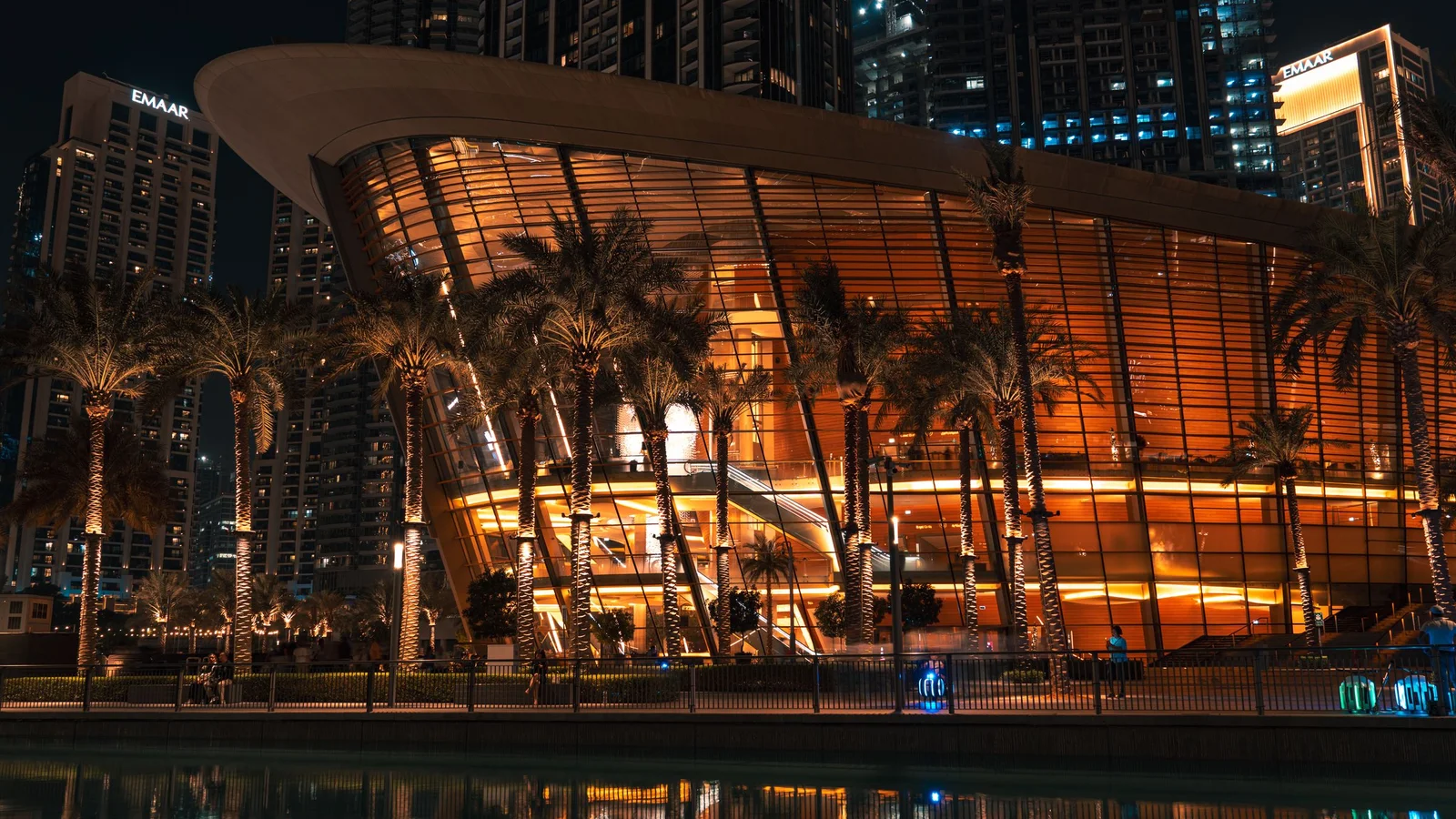
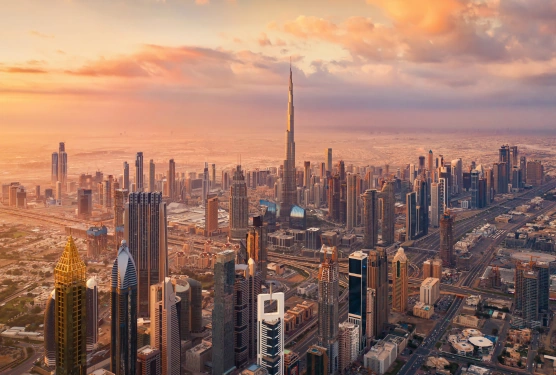
Dubai Media City is a TECOM Group PJSC business district built as the corporate and headquarters home of the region's media industry. It launched in January 2001 according to TECOM's own 25th anniversary release published around 27 January 2026, and it houses broadcasters, news agencies, advertising groups and publishers [1][3]. It is an office and address cluster, not a studio lot.
Start with what TECOM itself publishes, and with one inconsistency worth flagging rather than hiding.
| Measure | What TECOM publishes | Note |
|---|---|---|
| Launch year | January 2001 in the 25th anniversary release; "Dubai Media City (2000)" on TECOM's own district list page | A one-year discrepancy inside the operator's own material [3] |
| Media and creative professionals | over 40,000 across the Media Cluster | Cluster-wide, not DMC alone [3] |
| Fortune 500 media companies represented | more than 60% | TECOM's own claim [3] |
| Companies licensed at DMC | not published | TECOM publishes no company-count figure for DMC [1][3] |
| Named tenants in TECOM's release | CNN, Discovery Networks, WPP, Publicis Groupe, ITP Media Group, OSN | First-party naming [3] |
| TECOM business districts | 10 | Listed on TECOM's districts page [3] |
Real Talk: You will see "over 1,600 companies at Dubai Media City" repeated across setup sites as though it were official. We are not publishing it. It traces to undated consultancy content, not to TECOM, which publishes no company count for DMC at all [1][3]. The same applies to the launch year: the operator says 2001 in its anniversary announcement and 2000 on its own district list, and we would rather tell you the two disagree than pick the one that reads better.
Two names that come up constantly deserve honest labelling. Reuters and MBC are both widely associated with the district and each is reported to have a building named for it. That association is well established in the market and the press, but it does not appear in the TECOM material we could read directly, so treat it as well established rather than primary-sourced. The tenants in the table, by contrast, TECOM names itself [3].
The commercial point behind the roll call is simple: DMC sells proximity. If your clients are regional broadcasters, agency holding groups or publishers, a DMC address puts you inside the cluster where they hold their own licences. That is a real asset, and it is also most of what you are paying for. Before you compare zones at all, our free zone company setup page sets out how a free zone trade licence, establishment card and visa allocation fit together.
Does a Dubai Media City licence let you publish or broadcast?
No, not by itself, and this is the single most consequential fact in this guide. A DMC trade licence gives your company the right to exist and trade in a licensed activity. The right to publish, broadcast or carry paid media content is a separate federal approval from the National Media Authority, whose licensing remit expressly covers media activities conducted in free zones [4].
The NMA's own statement of its office roles is the cleanest primary evidence on this point. It describes the authority as proposing legislation, regulations, standards and frameworks to regulate and license media outlets and media activities, covering digital media and electronic publishing among the rest, and says that authority encompasses those operating in free zones [4]. Read the last clause slowly, because a great deal of bad advice dies on it. A free zone licence does not create a regulatory island. It creates a company. The substantive licensing rules themselves sit in Federal Decree-Law No. 55 of 2023 on Regulating Media; open uaelegislation.gov.ae in a browser rather than relying on a summary, because the portal blocks automated access and the aggregator copies circulating online are inconsistent.
Common Mistake: Treating the trade licence as the finish line because the free zone salesperson never mentioned a second layer. Free zone commercial teams sell registrations. They are not the media regulator and they do not decide what you may broadcast. We have seen companies invoice for a full quarter of media activity before discovering they held a commercial registration and no media approval, which is an expensive way to learn the difference between a place of business and a permission to operate.
A second, narrower layer catches individuals rather than companies. The NMA publishes a standalone service, a "Permit for an Individual to Provide Advertising or Media Content on Social Media and Other Digital Platforms", which sits on top of any commercial licence you hold [5]. If your model involves named individuals selling promotional content on their own channels, that is a separate application, not something absorbed into a company licence. If your work is production-heavy rather than publishing-heavy, our guide to media and production company setup covers the filming permit chain and content standards that sit alongside all of this.
Who regulates media in the UAE now, and what happened to the old names?
The federal media regulator today is the National Media Authority, established by Federal Decree-Law No. 11 of 2025, publicly announced in reporting dated 18 December 2025 and coming into force around 1 January 2026 [4]. It replaced three bodies at once. Before it, the chain ran through the UAE Media Council, a Media Regulatory Office, and originally the National Media Council.
Here is the chain in order, because getting it right is how you tell a researched guide from a copied one.
| Period | Body | What happened |
|---|---|---|
| From 2006 | National Media Council (NMC) | Established 2006. Dissolved in a federal restructuring approved July 2020, effective around June 2021 |
| From around 2021 | Media Regulatory Office | Took over the regulatory functions. Superseded |
| From February 2023 | UAE Media Council | Established February 2023. Replaced |
| From around 1 January 2026 | National Media Authority (NMA) | Established by Federal Decree-Law No. 11 of 2025, announcement reported 18 December 2025 [4] |
The NMA did not simply inherit one predecessor. It replaces three bodies: the UAE Media Council, the National Media Office, and the Emirates News Agency (WAM) [4]. That is a consolidation, not a rebrand, and it changes where several functions now sit.
Pro Tip: There is a live discrepancy on the founding date and we are not papering over it. Some sources give a signing date of 30 September 2025 for the decree-law, while the public announcement was reported on 18 December 2025 with the authority in force around 1 January 2026. We present the December announcement and January commencement as the reliable frame and flag the September signing date as reported rather than asserted [4]. If a date matters to a filing, confirm it against the gazette rather than any article, including this one.
Named correction, plainly stated: any guide dated 2026 telling you the "National Media Council" regulates your media licence is describing a body that ceased to exist around June 2021 and has been succeeded twice since. That is not pedantry about naming. It is a reliable signal that the page was assembled from older pages rather than current sources.
Which activities need a separate NMA permit, and which run on the DMC licence alone?
Broadly, anything that publishes, broadcasts, advertises or represents clients in media needs a separate NMA approval on top of the DMC trade licence. Support and back-office media services that do not themselves publish or broadcast generally run on the trade licence alone. The first half of that sentence is regulator-sourced; the second half is professional consensus, and we label it as such.
| Activity | DMC trade licence | Separate NMA approval |
|---|---|---|
| Print and publishing | Required | Yes, print and publishing permit |
| Television, radio or streaming channel | Required | Yes, broadcast licence per channel, plus telecom approvals |
| Advertising agency practice | Required | Yes |
| Public relations agency practice | Required | Yes |
| Individual selling advertising or media content on social and digital platforms | Required if trading through a company | Yes, individual permit as a standalone NMA service [5] |
| Production support and crew services (not publishing or broadcasting) | Required | Generally not, on professional consensus |
| Equipment rental | Required | Generally not, on professional consensus |
| Non-broadcasting creative and design work | Required | Generally not, on professional consensus |
Two things to hold onto. First, the broadcast layer is not one permit. A channel is licensed per channel, and the transmission side brings telecom approvals in for television, radio and streaming alike, which makes launching a channel a multi-authority project rather than a single application. Second, the lower half of the table is our reading of how the regime is applied, drawn from files rather than a published NMA sentence. The NMA does not publish a neat "these activities are exempt" list, and anyone who tells you otherwise is inventing tidiness.
Based on our experience, the cleanest way to work out which side of the line you sit on is one question: does your company put content in front of the public in its own name, or does it help someone else do that? A crew agency supplying a camera operator to a broadcaster is helping. A studio pushing a branded series onto its own channels is publishing. The moment the answer flips, so does your approval requirement, and it flips more often than founders expect, usually the first time someone decides the company should have its own channel with sponsored segments.
If that is your model, individual-led content with brand deals attached, our guide to content creator and YouTuber setup covers the permit stack for that shape, and our digital marketing agency setup guide covers the agency side.
What does Dubai Media City cost, and why can nobody quote you a price?
Because neither DMC nor TECOM publishes one. There is no licence fee, no package price and no rate card on dmc.ae or tecomgroup.ae. Both the DMC homepage and its "Set up your business" page route you to an enquiry form instead of a schedule of charges [1][2]. Every "DMC costs X" figure you have read online is a third party's reconstruction.
That is an unusual thing for a guide to say, so be precise about what we checked. The DMC homepage carries an enquiry form and no pricing [1]. The dedicated "Set up your business" offerings page, the natural place for a rate card, also carries an enquiry form and no pricing [2]. TECOM's business districts page describes the ten districts without prices [3]. There is no published number to report, so we are not reporting one.
The consequence is that the range circulating online is not a range at all, it is noise. Figures presented elsewhere as DMC prices include roughly AED 15,000 to 25,000 for a licence, about AED 13,000 for a zero-visa option, AED 25,000 and AED 35,000 for a free zone LLC, AED 12,500 for a renewal, AED 1,750 for a six-month freelancer renewal, and visa costs anywhere from AED 3,300 to AED 5,100. We are not publishing any of those as DMC prices. They vary by nearly threefold, none states a methodology, and none is traceable to the operator.
| What you will read | What we can verify |
|---|---|
| A specific DMC licence price | Nothing. No price is published on dmc.ae or tecomgroup.ae [1][2] |
| A DMC "package" including visas | Nothing published [1][2] |
| A DMC renewal figure | Nothing published [1][2] |
| Consultancy quotes spanning roughly threefold | Real, and that spread is itself the finding |
| A first-party price anywhere in the TECOM ecosystem | Yes, one. GoFreelance, covered in the next section [6] |
Real Talk: The threefold spread is more useful than any single number inside it. When intermediaries quoting the same product land between AED 13,000 and AED 35,000, they are not quoting the same product. They are quoting different activity groups, visa counts, facility products and service margins, collapsed into one headline. Treat any DMC figure as a quote for a specific configuration, insist it separates the zone's own charges from the intermediary's fee, and get it in writing before you build a budget on it.
This changes how you should shop. At a zone that publishes prices you can build a budget alone and then negotiate. At DMC you cannot, so the diligence moves to the quote itself: which activities are included, how many visa allocations, which facility product, what is excluded, and what recurs annually. To sanity-check a DMC quote against a published-price zone, start with our free zone company setup page, and see our Dubai Internet City setup guide for the neighbouring TECOM district that many media-adjacent tech businesses end up in instead.
What is GoFreelance, and why is it the only published price here?
GoFreelance is TECOM's freelance permit programme, and it publishes a real first-party figure: AED 7,500 per year for the permit, with employment visa add-ons quoted at AED 4,600 for one year and AED 5,042 for two years [6]. It is the only place in the DMC ecosystem where you can read a price before speaking to anyone.
| Item | Published price (AED) | Note |
|---|---|---|
| GoFreelance permit | 7,500 per year | First-party published figure [6] |
| Employment visa add-on, one year | 4,600 | Quoted as an add-on [6] |
| Employment visa add-on, two years | 5,042 | Quoted as an add-on [6] |
Now the part that catches people out. GoFreelance does not cover all of TECOM's districts. It covers exactly four, and Dubai Media City is one of them.
| TECOM district | Covered by GoFreelance |
|---|---|
| Dubai Media City | Yes |
| Dubai Internet City | Yes |
| Dubai Knowledge Park | Yes |
| Dubai Design District | Yes |
| Dubai Studio City | No |
| Dubai Production City | No |
| Dubai Science Park | No |
| Dubai Industrial City | No |
| Dubai Outsource City | No |
| Dubai International Academic City | No |
Quick Math: A freelancer taking the GoFreelance permit at DMC with a one-year employment visa is looking at AED 7,500 plus AED 4,600, so AED 12,100, before medical, Emirates ID and any establishment-card or service charges that fall outside the published figures [6]. That is the only end-to-end number in this entire article that comes from a published first-party source, which tells you something about how much of the rest of the market runs on estimates.
Two cautions before you treat GoFreelance as the cheap way into Media City. First, a freelance permit lets you work as an individual professional; it is not a company, it gives you no corporate identity for larger client contracts, and it does not scale to a team. Second, and more importantly, it changes nothing about the media approval layer. A freelance permit is still a commercial registration, and if you intend to publish, broadcast or sell advertising content, the NMA layer applies on exactly the same logic that applies to a licensed company [4][5].
Pro Tip: If your work is genuinely solo, service-based and sold to business clients, GoFreelance at a published AED 7,500 is a rational entry point into a district where nothing else is priced publicly [6]. If you are building an agency with staff, client contracts and a media output of your own, do not let the one visible price pull you into the wrong structure.
What facilities and studios does Dubai Media City actually have?
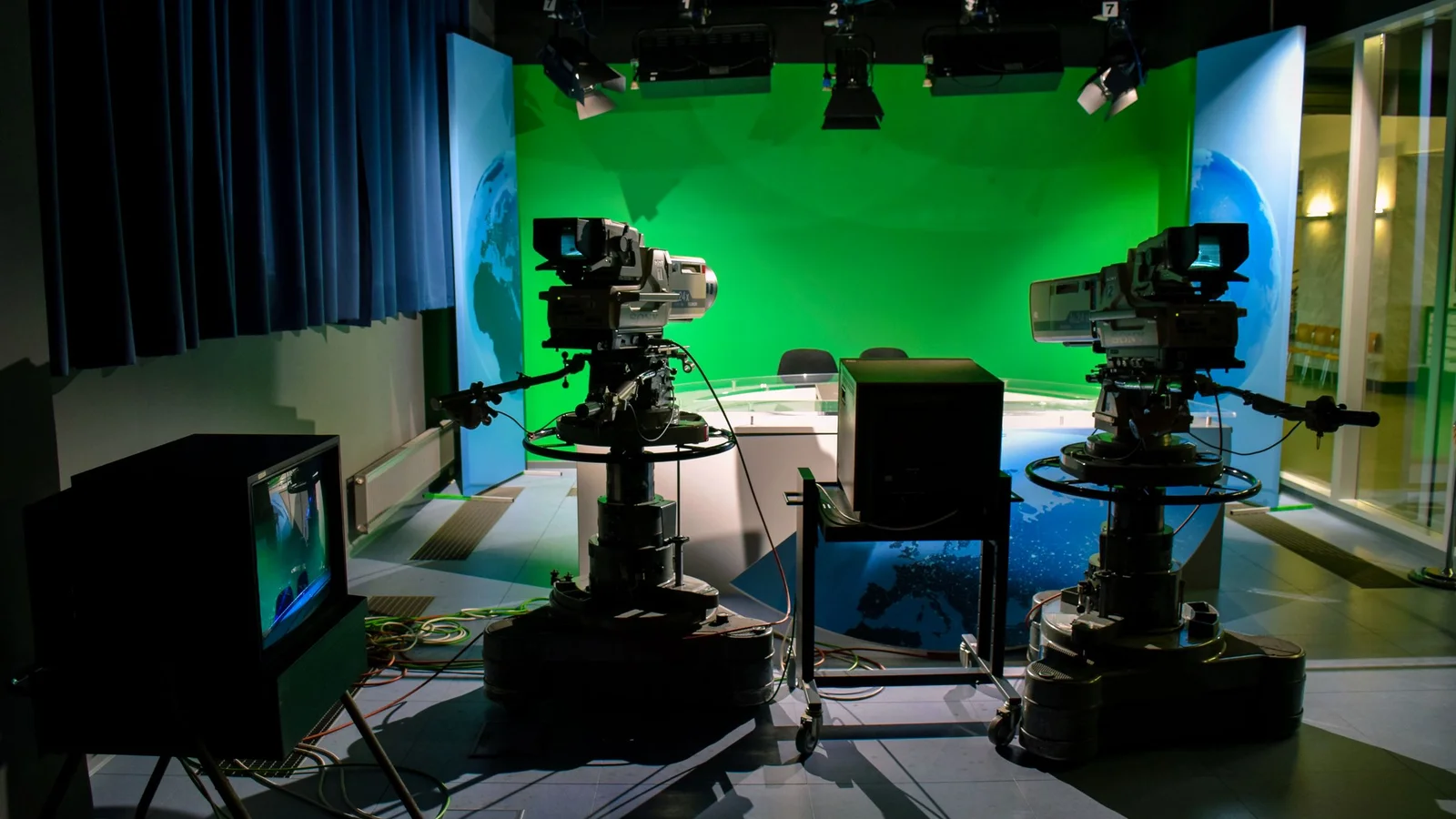
DMC is built around offices and client-facing space rather than around production infrastructure, though the wider TECOM cluster carries the heavier facilities. The published offering spans commercial offices, boutique studios, sound stages, backlots, sets and water tanks, recording studios, retail, warehousing, light industrial units and event venues, with D/Quarters as TECOM's co-working platform operating at DMC [1][3].
| Facility type | What it suits |
|---|---|
| Commercial offices | Broadcaster bureaux, agency teams, publisher operations, headquarters functions |
| D/Quarters co-working | Small teams and early-stage operations wanting a district address without a fitted office |
| Boutique studios and recording studios | Podcasts, voice work, small-format shoots and audio post |
| Sound stages, backlots, sets and water tanks | Physical production, at the scale the cluster provides |
| Retail and event venues | Client-facing formats, launches, screenings and activations |
| Warehousing and light industrial units | Equipment storage, kit rooms, technical operations |
The honest read is that DMC's centre of gravity is the office product and the address. A media business that meets clients, sells campaigns, edits at a desk and holds an audio booth fits DMC naturally. A business whose economics are driven by stage days and standing sets is better served by the production-focused districts, and in practice leases that capacity there while keeping its licence and address at DMC.
The facility decision also drives more of your real cost than the licence line does, and it is the one intermediaries are least specific about in early quotes. A co-working desk and a fitted office differ by an order of magnitude in annual cost and carry different visa implications. Settle the facility before you get attached to a licence figure, because the facility is what recurs.
How does the visa quota work at Dubai Media City?
There is no published formula. Neither tecomgroup.ae nor dmc.ae publishes a visa-quota rule, and the "1 visa per 8 square metres" ratio that circulates widely is consultancy-sourced rather than operator-published [1][3]. Treat it as indicative background, plan conservatively, and get your actual allocation confirmed in writing before you hire.
Across Dubai's free zones generally, visa capacity is a function of the facility product you take: a co-working or flexi arrangement carries a small allocation, a fitted office an allocation scaled to its area, and larger premises more. That much is uncontroversial. What is not established is the specific ratio DMC applies, because DMC does not publish one.
| Question | Answer |
|---|---|
| Is a DMC visa quota formula published? | No, not on tecomgroup.ae or dmc.ae [1][3] |
| Is "1 visa per 8 sqm" official? | No. Consultancy-sourced, indicative only |
| Does the facility product affect the allocation? | Yes, this is the normal free zone mechanism |
| Does an allocation guarantee a visa? | No. Each applicant still clears immigration review, medical and security clearance |
| What should you do? | Get the allocation stated in writing in your quote, tied to the facility you are actually taking |
The avoidable failure here is planning headcount from a ratio found in a blog post, then discovering at the establishment-card stage that the facility you signed supports fewer people than the offers you have already made. Ask for the allocation number in the written quote, tied to the named facility product, before you sign the facility. A zone that will not put the number in writing is telling you something.
Remember also what an allocation is not. It is the right to apply, not the visa. Every applicant still clears immigration review, medical and security clearance, and refusals happen for reasons that have nothing to do with your quota. Once the company is running, the recurring establishment-card, visa and renewal cycle is exactly the sort of work our post-setup services team carries so nothing lapses while you are chasing campaigns.
Want your DMC quote broken into zone charges, facility, visa allocation and the media approval layer, itemised?
Get a free consultation→Is Dubai Media City a VAT Designated Zone?
No. Dubai Media City has never appeared on any version of the Federal Tax Authority's Designated Zones list, and neither has any other TECOM district. That means standard 5% UAE VAT applies to your supplies in the ordinary way, with the usual registration thresholds, and there is no free zone carve-out to plan around.
The Dubai entries that have appeared on that list are a specific, short set: Jebel Ali Free Zone, the Dubai Cars and Automotive Zone, Dubai Textile City (removed on 4 April 2021), the Free Zone Area in Al Quoz, the Free Zone Area in Al Qusais, Dubai Aviation City, Dubai Airport Free Zone, Dubai CommerCity and International Humanitarian City. Read that list again and note what is not on it: not Media City, not Internet City, not Studio City, not Production City, not any TECOM district.
| Assumption | Reality for a DMC company |
|---|---|
| "Free zone means no VAT" | Wrong. Standard 5% UAE VAT applies in full |
| "My zone is a Designated Zone" | DMC has never appeared on any version of the list |
| "Registration is optional for me" | Mandatory above AED 375,000 of taxable supplies; voluntary from AED 187,500 |
| "The zone files my VAT" | You register and file, yourself or through an adviser |
For a media business this matters less than for a goods trader, because Designated Zone treatment is about goods movements rather than services, and most DMC tenants sell services. But it matters enormously to the quality of your advice: if anyone has told you a DMC licence changes your VAT position, they are wrong, and you should discount whatever else they told you. We are also not publishing a total count of Designated Zones, because the consolidated list is periodically revised and any circulating count may already be stale. Check the current list. Our guide to Designated Zones and VAT explains what the treatment covers and which transactions it reaches.
Budget for VAT registration once you cross the threshold, then for periodic returns, tax invoices and record-keeping as a permanent running cost. Those filings sit alongside licence renewals and visa cycles, and they are the part small agencies most often let slip in a busy year.
Can a Dubai Media City company reach the 0% corporate tax rate?
Almost certainly not, and the zone is not the reason. The gate is the activity. Ministerial Decision No. 229 of 2025, issued 28 August 2025, effective retroactively from 1 June 2023 and repealing MD 265/2023, sets a closed list of Qualifying Activities with no services catch-all [7]. Media production, advertising, public relations, publishing and consultancy appear nowhere on it.
Here is the list with the column competitor articles leave off.
| Qualifying Activity under MD 229/2025 | Typical DMC tenant? |
|---|---|
| Manufacturing of goods or materials | No |
| Processing of goods or materials | No |
| Trading of Qualifying Commodities | No |
| Holding of shares and securities for investment | Only a holding structure |
| Ownership, management and operation of Ships | No |
| Reinsurance | No |
| Fund management | Only if regulated by a Competent Authority |
| Wealth and investment management | Only if regulated by a Competent Authority |
| Headquarter services to Related Parties | Only within a group |
| Treasury and financing services to Related Parties or own account | Only within a group |
| Financing and leasing of Aircraft | No |
| Distribution in or from a Designated Zone | Impossible at DMC, which is not a Designated Zone |
| Logistics services | Only a genuine logistics business |
| Activities ancillary to the above | Only if you already qualify |
So a broadcaster, an agency, a PR firm, a publisher or a production house licensed at DMC is, on the law as written, an ordinary taxable person: 0% on taxable income up to AED 375,000 and 9% above it [7]. That is the honest answer, and it is the same answer whether the licence sits in a free zone or on the mainland.
Common Mistake: Choosing Dubai Media City for a 0% corporate tax rate that your activity cannot reach. The free zone determines whether you can be assessed as a Free Zone Person at all; the closed activity list determines whether you qualify, and media, advertising and agency work do not appear on it [7]. Choose DMC for the cluster, the address and the facilities. Do not choose it for a rate that was never available to your business. Our guide to the qualifying free zone person and the 0% rate works through the full conditions and what losing the status costs.

What does a DMC agency actually pay in corporate tax?
As an ordinary taxable person, 0% up to AED 375,000 of taxable income and 9% above [7]. On top of that, Small Business Relief under Ministerial Decision No. 73 of 2023, as amended by Ministerial Decision 131 of 2026 treats you as having no taxable income where revenue is at or below AED 3,000,000, for tax periods ending on or before 31 December 2029 [8].
What is rarely explained properly is that failing the Qualifying Free Zone Person test is not the loss it sounds like for a small agency. Small Business Relief is not available to a QFZP, and neither is the AED 375,000 nil-rate band, because a QFZP is taxed at 0% on Qualifying Income and 9% on Non-Qualifying Income with no threshold beneath it [7][8]. Work it through on an agency with AED 900,000 of revenue and AED 600,000 of taxable income.
| Position | Tax on AED 600,000 | Why |
|---|---|---|
| DMC agency, ordinary taxable person, Small Business Relief elected | AED 0 | Revenue under AED 3m, period ending on or before 31 December 2029 [8] |
| DMC agency, ordinary taxable person, after the relief window closes | AED 20,250 | 0% on the first 375,000, 9% on the remaining 225,000 [7] |
| Hypothetical QFZP whose income is Non-Qualifying | AED 54,000 | 9% on the full 600,000, no nil-rate band, no Small Business Relief [7][8] |
Quick Math: The middle row is the planning number. A DMC agency with AED 600,000 of taxable income pays AED 20,250 a year once Small Business Relief lapses, an effective rate of about 3.4%. Compare that with the AED 54,000 a QFZP would pay on the same income if it turned out to be Non-Qualifying, and the instinct to chase QFZP status starts to look backwards at this size. Note also that Small Business Relief belongs to MD 73/2023, not to MD 229/2025; guides that attribute it to the newer decision are mixing up two separate instruments [7][8].
The plan for most DMC tenants is straightforward. Register for corporate tax regardless of the rate you expect to pay, elect Small Business Relief on the return while revenue stays under AED 3m and the window is open, and budget for 9% above AED 375,000 from the period after that. If revenue is heading well past AED 3m, model the 9% now rather than discovering it at your first substantive filing.
Once the 0% rate is off the table, the free zone versus mainland comparison becomes a commercial question rather than a tax one. A DMC agency and a Dubai agency on a mainland professional licence sit in broadly similar corporate tax positions, so the decision turns on client access, contracting with mainland and government entities, cost and the address. Run that properly on our mainland company setup page rather than assuming the free zone wins.
Dubai Media City versus Studio City versus Production City
They are three different products for three different jobs, and choosing by name rather than by function is a common and expensive error. DMC is the corporate and headquarters hub. Dubai Studio City (2005) is filming and broadcast production. Dubai Production City (2003, formerly International Media Production Zone) is print, publishing and packaging on a larger footprint, now mixed residential and commercial [3].
| District | Built for | Typical occupant |
|---|---|---|
| Dubai Media City | Corporate presence, headquarters, client-facing operations | Broadcasters, news agencies, advertising and PR firms holding their licence and address |
| Dubai Studio City | Physical production | Production companies using sound stages, backlots and production support |
| Dubai Production City | Print, publishing and packaging | Publishers, printers and packaging operations needing larger footprints |
In practice the boundary is porous, and this is the useful operational point. A DMC-licensed company will frequently lease stage capacity at Studio City or warehousing at Production City while keeping its licence and registered address at DMC. The address stays where the clients are; the physical capacity gets bought where it is cheapest and most suitable. That is normal, not a workaround.
One caveat on the table above: this delineation is inferred rather than official. TECOM publishes no comparison page setting out which district suits which business, so the split is drawn from each district's own description of itself [3]. It matches what we see on files, but if your decision hinges on a fine distinction, ask TECOM for the activity list attached to each district rather than trusting any table, including ours.
A short note on recent activity, since 2025 and 2026 were busy at the district. The 25th anniversary was marked around January 2026 [3]. InstaBlock Lab, a Ministry of Economy and Tourism partnership with LaLiga, launched in 2025 hosted at DMC. D/Quarters is operational. And OSN, a DMC tenant, took a Warner Bros Discovery investment in 2025. What we will not do is attribute the AED 615 million Innovation Hub Phase 4 to Media City, because that project is at Dubai Internet City, and several summaries have quietly moved it across the road.
Who is Dubai Media City right for, and who is paying for the address?
DMC is right for companies whose business depends on being inside the media cluster and being seen to be. It is the wrong choice for a business that needs stage capacity, warehousing or the lowest possible licence cost, and it is a poor choice for anyone who picked it expecting a tax outcome.
| DMC works well for | DMC is the wrong choice for |
|---|---|
| Broadcasters, news bureaux and their regional operations | Businesses whose economics are driven by stage days |
| Agency and PR firms selling to regional brands and holding groups | Print and packaging operations needing large footprints |
| Publishers and content businesses wanting the cluster address | Founders optimising purely for the cheapest licence |
| Media businesses that need proximity to clients and talent | Anyone expecting a 0% corporate tax outcome from a media activity [7] |
| Solo professionals using the published GoFreelance route [6] | Goods traders wanting Designated Zone VAT treatment |
| Companies that will hold NMA approvals and want the credible address [4] | Anyone who will not get the visa allocation confirmed in writing |
The honest framing is that a large part of what DMC sells is the address, and that is not a criticism. In media, address is a genuine commercial asset. Being licensed where CNN, Discovery Networks, WPP, Publicis Groupe, ITP Media Group and OSN hold their own presence is a credential you can put on a pitch deck, and in a relationship-driven sector it opens doors a cheaper licence somewhere quiet does not [3].
What you should not do is pay for it by accident. If your clients are overseas, your team is remote, your output is delivered digitally and nobody will ever visit your office, you are paying a cluster premium for a benefit you will never use. A cheaper Dubai licence, or a mainland professional licence if you need direct mainland and government contracting, may serve you better, and our mainland company setup page sets out that alternative. Talk to a setup expert→
Real Client Stories
These are real examples from businesses we have helped, with names and details changed for privacy.
The company that thought its licence covered broadcasting. A regional content business took a Dubai free zone media licence and launched a streaming channel four months later, assuming a media trade licence was permission to broadcast. It is not. The trade licence establishes the company; the federal media approval covers the activity, and the NMA's remit expressly reaches media activities conducted in free zones [4]. We paused the launch, mapped the approvals the channel actually needed including the per-channel and transmission side, and restarted the timeline. The founder's summary: "I confused where I was registered with what I was allowed to do. Nobody at the zone told me, because that was never their job."
The agency budgeting from three incompatible quotes. An advertising agency came to us with three DMC quotes ranging from roughly AED 13,000 to AED 35,000 and asked which was the real price. None of them, because there is no published DMC price to be right about [1][2]. The quotes covered different activity counts, visa allocations and facility products, all reported as a single headline. We rebuilt the comparison line by line, separating zone charges from intermediary fees, and the decision became obvious once the products were comparable. Her advice: "Three numbers for the same thing means it is not the same thing. Make them itemise it."
The producer who assumed the address came with a stage. A production company licensed at Media City assuming the district's studio infrastructure came with the licence. It does not work that way: the corporate address and the production capacity are separate purchases, and the heavier facilities sit in the production-focused districts [3]. He kept the DMC licence for client credibility and leased stage capacity separately, which was the right answer, just not the one he had budgeted for. His takeaway: "I bought a postcode and thought I had bought a studio. Price the space and the licence as two decisions."
Set up in Dubai Media City with the right expectations
Dubai Media City is a strong product for a specific buyer. It is the corporate home of the region's media industry, operated by TECOM Group, hosting more than 40,000 media and creative professionals across the cluster and more than 60% of Fortune 500 media companies, with CNN, Discovery Networks, WPP, Publicis Groupe, ITP Media Group and OSN among the names TECOM puts forward itself [3]. If you sell into that market, the address does real work.
What it is not is a permission or a tax structure. The trade licence does not by itself let you publish, broadcast or run paid advertising, and the National Media Authority's licensing remit explicitly reaches free zones [4]. The regulator has been renamed twice, so treat any guide still saying "National Media Council" as unchecked. DMC has never been a VAT Designated Zone, so standard 5% VAT applies. Media, advertising, PR, publishing and consultancy are absent from the closed Qualifying Activities list, so the realistic corporate tax position is Small Business Relief while you are under the threshold, then 0% up to AED 375,000 and 9% above [7][8]. And nobody publishes a price, so every figure you have read is somebody's estimate. Demand an itemised written quote rather than trusting a number.
Since 2013, BusinessDubai.ae has completed 700+ company registrations across the UAE, including media, agency and production businesses, and we will tell you when a district is wrong for your activity rather than selling you the most prestigious address on the shelf. We will map the trade licence layer against the media approval layer, get the activity wording right, confirm the visa allocation in writing, set the VAT and corporate tax position honestly, and run the renewals afterwards through our post-setup services team. Talk to a setup expert→
Related guides:
- Media and production company setup
- Dubai Internet City setup
- Qualifying free zone person and the 0% rate
- Designated Zones and VAT
- Content creator and YouTuber setup
- Digital marketing agency setup
Frequently Asked Questions
Does a Dubai Media City licence let me broadcast or publish?
No. A DMC trade licence registers your company to trade. Publishing, broadcasting and carrying paid media content require separate federal approval from the National Media Authority, whose own description of its office roles says its licensing authority covers media activities including digital media and electronic publishing, and expressly encompasses those operating in free zones [4].
Who regulates media in the UAE in 2026?
The National Media Authority, established by Federal Decree-Law No. 11 of 2025, announced in reporting dated 18 December 2025 and coming into force around 1 January 2026 [4]. It replaced three bodies at once: the UAE Media Council, the National Media Office and the Emirates News Agency (WAM).
Is the National Media Council still the regulator?
No, and any 2026 guide saying so is two renames out of date. The National Media Council was established in 2006 and dissolved in a restructuring approved July 2020, effective around June 2021. A Media Regulatory Office took over, the UAE Media Council followed in February 2023, and the National Media Authority replaced it [4].
Does being in a free zone exempt me from federal media regulation?
No. The National Media Authority's own statement of its office roles says its authority to regulate and license media outlets and media activities explicitly encompasses those operating in free zones [4]. That is the clearest primary evidence available that a free zone licence is a place of registration, not a regulatory exemption.
Which activities need a separate NMA permit?
Print and publishing permits, broadcast licences (per channel, plus telecom approvals for television, radio and streaming), advertising agency practice, public relations agency practice, and individual permits for people selling advertising or media content on social and digital platforms [4][5]. Each sits on top of the DMC trade licence, not instead of it.
Which media activities run on the DMC trade licence alone?
Broadly, back-office and support-style media businesses that do not themselves publish or broadcast: production support and crew services, equipment rental, and non-broadcasting creative work. Label that as professional consensus rather than a rule the NMA states in a single published line, because it does not publish an exemption list.
Is there a permit for individual social media advertising?
Yes. The National Media Authority publishes a standalone service, a permit for an individual to provide advertising or media content on social media and other digital platforms [5]. It layers on top of any commercial licence, so a company licence does not absorb it if named individuals are selling content on their own channels.
What law governs UAE media licensing?
Federal Decree-Law No. 55 of 2023 on Regulating Media sets the substantive framework, with the National Media Authority established later under Federal Decree-Law No. 11 of 2025 [4]. The uaelegislation.gov.ae portal blocks automated access, so open the text in a browser rather than relying on aggregator copies, which are inconsistent.
Who operates Dubai Media City?
TECOM Group PJSC, which runs ten business districts: Dubai Internet City, Dubai Outsource City, Dubai Media City, Dubai Production City, Dubai Studio City, Dubai Knowledge Park, Dubai International Academic City, Dubai Science Park, Dubai Design District and Dubai Industrial City [3].
When did Dubai Media City launch?
TECOM's own 25th anniversary release, published around 27 January 2026, gives January 2001. TECOM's district list page shows "Dubai Media City (2000)" [3]. That is a one-year discrepancy inside the operator's own material, and we are flagging it rather than silently picking whichever reads better.
How many companies are in Dubai Media City?
TECOM publishes no company-count figure for Dubai Media City [1][3]. The "over 1,600 companies" number repeated across setup sites is an undated consultancy claim, not an operator statistic, and we are not publishing it as fact. What TECOM does publish is cluster-level scale, not a DMC company count.
How big is the Dubai Media City cluster?
TECOM's 25th anniversary release cites more than 40,000 media and creative professionals across the Media Cluster, and more than 60% of Fortune 500 media companies represented [3]. Those are cluster-wide figures rather than DMC-only counts, which is an important distinction when you see them quoted as DMC statistics.
Which companies are based in Dubai Media City?
TECOM's own release names CNN, Discovery Networks, WPP, Publicis Groupe, ITP Media Group and OSN [3]. Reuters and MBC are widely associated with the district and each is reported to have a building named for it, which is well established in the market rather than something we could confirm in TECOM's own material.
How much does a Dubai Media City licence cost?
Nobody can tell you from published sources, because neither dmc.ae nor tecomgroup.ae publishes a price. Both the DMC homepage and its "Set up your business" page carry enquiry forms rather than a rate card [1][2]. Every DMC figure circulating online is a third party's reconstruction, not an operator price.
Why do DMC quotes vary so much?
Because consultancy quotes for DMC span roughly threefold, from around AED 13,000 to around AED 35,000, with no published methodology behind any of them. That spread is evidence that the quotes cover different activity counts, visa allocations, facility products and service margins collapsed into one headline, not that one of them is the real price.
Is there any published price in the TECOM ecosystem?
Yes, one. GoFreelance publishes AED 7,500 per year for the freelance permit, with employment visa add-ons quoted at AED 4,600 for one year and AED 5,042 for two years [6]. It is the only first-party figure available, which tells you how much of the rest of the market runs on estimates.
Which districts does GoFreelance cover?
Exactly four: Dubai Media City, Dubai Internet City, Dubai Knowledge Park and Dubai Design District [6]. It does not cover Dubai Studio City, Dubai Production City, Dubai Science Park, Dubai Industrial City, Dubai Outsource City or Dubai International Academic City, which is a common and costly assumption.
Does a GoFreelance permit let me publish or advertise?
No. A freelance permit is a commercial registration like any other. If you intend to publish, broadcast or sell advertising content, the National Media Authority layer applies on exactly the same logic that applies to a licensed company, including the individual social media advertising permit where relevant [4][5].
What facilities does Dubai Media City have?
Commercial offices, boutique studios, sound stages, backlots, sets and water tanks, recording studios, retail, warehousing, light industrial units and event venues, with D/Quarters as TECOM's co-working platform operating at DMC [1][3]. In practice DMC's centre of gravity is the office product and the address rather than heavy production infrastructure.
How many visas can a Dubai Media City company get?
There is no published formula. Neither tecomgroup.ae nor dmc.ae publishes a visa-quota rule [1][3]. The widely circulated "1 visa per 8 square metres" ratio is consultancy-sourced and should be treated as indicative only. Get your allocation stated in writing, tied to the specific facility you are taking, before you sign anything.
Is Dubai Media City a VAT Designated Zone?
No. Dubai Media City has never appeared on any version of the Designated Zones list, and no TECOM district has. The Dubai entries are Jebel Ali Free Zone, DUCAMZ, Dubai Textile City (removed 4 April 2021), the Free Zone Areas in Al Quoz and Al Qusais, Dubai Aviation City, Dubai Airport Free Zone, Dubai CommerCity and International Humanitarian City.
Does a DMC company pay VAT?
Yes, standard 5% UAE VAT applies in the ordinary way. Registration is mandatory once taxable supplies pass AED 375,000, with voluntary registration available from AED 187,500. Because DMC is not a Designated Zone, there is no free zone carve-out, and anyone telling you otherwise has misunderstood what the list does.
Can a Dubai Media City company get 0% corporate tax?
Realistically no, and the zone is not the reason. Ministerial Decision No. 229 of 2025 sets a closed list of Qualifying Activities with no services catch-all, and media production, advertising, public relations, publishing and consultancy appear nowhere on it [7]. The typical DMC tenant is an ordinary taxable person instead.
What is Ministerial Decision No. 229 of 2025?
The decision issued 28 August 2025, effective retroactively from 1 June 2023, repealing MD 265/2023, that defines Qualifying and Excluded Activities for a Qualifying Free Zone Person [7]. Its Qualifying Activities list is closed, running from manufacturing and processing through to logistics services and ancillary activities, with no general services category.
What corporate tax does a DMC agency actually pay?
As an ordinary taxable person, 0% on taxable income up to AED 375,000 and 9% above [7]. On AED 600,000 of taxable income that is AED 20,250 a year, an effective rate of about 3.4%, once Small Business Relief no longer applies. Register for corporate tax regardless of the rate you expect.
Can a DMC company claim Small Business Relief?
Yes, if revenue is at or below AED 3,000,000 and the tax period ends on or before 31 December 2029, under Ministerial Decision No. 73 of 2023, as amended by Ministerial Decision 131 of 2026 [8]. Note the attribution: Small Business Relief comes from MD 73/2023, not MD 229/2025, and guides that conflate the two are mixing separate instruments.
Why can failing the QFZP test actually help a small agency?
Because a Qualifying Free Zone Person is denied both the AED 375,000 nil-rate band and Small Business Relief, and pays 9% on all Non-Qualifying Income [7][8]. On AED 600,000 of income, an ordinary taxable person pays AED 20,250 while a QFZP with Non-Qualifying Income pays AED 54,000.
What is the difference between Media City, Studio City and Production City?
Dubai Media City is the corporate and headquarters hub where broadcasters, agencies and PR firms hold their licence and address. Dubai Studio City (2005) is filming and broadcast production. Dubai Production City (2003, formerly International Media Production Zone) is print, publishing and packaging on a larger, now mixed-use footprint [3].
Can I keep my licence at DMC and use Studio City stages?
In practice yes, and it is common. DMC tenants frequently lease stage capacity at Studio City or warehousing at Production City while keeping the licence and registered address at DMC. Note that this delineation is inferred from each district's own descriptions, because TECOM publishes no comparison page [3].
References
[1] Dubai Media City. District overview, offerings and facilities, including commercial offices, studios, recording facilities, retail, warehousing, light industrial units, event venues and the D/Quarters co-working platform. The homepage carries an enquiry form and publishes no licence fees or package prices. Dubai Media City
[2] Dubai Media City. "Set up your business" offerings page. This is the natural location for a rate card and it carries an enquiry form rather than any published licence fee, package price, renewal figure or visa-quota formula. Dubai Media City, set up your business
[3] TECOM Group PJSC. Business districts listing covering all ten districts (Dubai Internet City, Dubai Outsource City, Dubai Media City, Dubai Production City, Dubai Studio City, Dubai Knowledge Park, Dubai International Academic City, Dubai Science Park, Dubai Design District, Dubai Industrial City), including the "Dubai Media City (2000)" founding-year entry that differs from the January 2001 date given in TECOM's 25th anniversary release published around 27 January 2026. That release is also the source for more than 40,000 media and creative professionals across the Media Cluster, more than 60% of Fortune 500 media companies represented, and the named tenants CNN, Discovery Networks, WPP, Publicis Groupe, ITP Media Group and OSN. TECOM publishes no company count for Dubai Media City and no comparison page setting out which district suits which activity. TECOM Group business districts
[4] National Media Authority. Office roles, describing the authority's function of proposing legislation, regulations, standards and frameworks to regulate and license media outlets and media activities including digital media and electronic publishing, with that authority expressly encompassing those operating in free zones. Also the basis for the current regulator's identity: the National Media Authority established by Federal Decree-Law No. 11 of 2025, publicly announced in reporting dated 18 December 2025 and coming into force around 1 January 2026, replacing the UAE Media Council, the National Media Office and the Emirates News Agency (WAM). Some sources give a signing date of 30 September 2025, which we flag as reported rather than assert. The preceding chain: National Media Council (established 2006, dissolved in a restructuring approved July 2020 and effective around June 2021) to a Media Regulatory Office, then the UAE Media Council from February 2023. Substantive media licensing rules sit in Federal Decree-Law No. 55 of 2023 on Regulating Media; uaelegislation.gov.ae blocks automated access, so open it in a browser. National Media Authority, office roles
[5] National Media Authority. Standalone permit service for an individual to provide advertising or media content on social media and other digital platforms, evidencing that the NMA issues permits layered on top of any commercial trade licence rather than in place of it. NMA permit for an individual to provide advertising or media content on social media and other digital platforms
[6] GoFreelance. TECOM's freelance permit programme, publishing AED 7,500 per year for the permit with employment visa add-ons quoted at AED 4,600 for one year and AED 5,042 for two years, and covering exactly four TECOM districts: Dubai Media City, Dubai Internet City, Dubai Knowledge Park and Dubai Design District. This is the only first-party published price in the Dubai Media City ecosystem. GoFreelance
[7] Ministry of Finance. Ministerial Decision No. 229 of 2025 regarding Qualifying Activities and Excluded Activities, issued 28 August 2025, effective retroactively from 1 June 2023 and repealing Ministerial Decision No. 265 of 2023. Sets the closed Qualifying Activities list: manufacturing, processing, trading of Qualifying Commodities, holding of shares and securities for investment, ownership, management and operation of Ships, reinsurance, fund management, wealth and investment management, headquarter services to Related Parties, treasury and financing services to Related Parties or own account, financing and leasing of Aircraft, distribution in or from a Designated Zone, logistics services, and ancillary activities. Media production, advertising, public relations, publishing and consultancy do not appear on it. Ministerial Decision No. 229 of 2025
[8] Ministry of Finance. Ministerial Decision No. 73 of 2023, as amended by Ministerial Decision 131 of 2026 on Small Business Relief: revenue at or below AED 3,000,000, available for tax periods ending on or before 31 December 2029, elected on the return, and not available to Qualifying Free Zone Persons. Ministerial Decision No. 73 of 2023, as amended by Ministerial Decision 131 of 2026 on Small Business Relief