Across every business we have written up, free-zone 0% corporate tax has been a mirage: not available for services, retail, trading of finished goods, healthcare, events, training, real estate or construction, because none of them are on the list of Qualifying Activities. Manufacturing is the exception. "Manufacturing of goods or materials" is on that list, by name. A free-zone manufacturer that meets the conditions can genuinely pay 0% corporate tax on its production income. This is the rare case where the free-zone tax pitch is true, not marketing.
But there is a catch that decides whether you get it, and a set of gates competitors treat as footnotes: the mandatory federal MOIAT licence layered on top of your trade licence, industrial land that a virtual office cannot substitute, and a multi-authority approval chain nobody sequences properly. This guide covers all of it, plus the incentive stack that makes UAE manufacturing genuinely attractive (ICV procurement preference, Make it in the Emirates financing, duty exemption on your inputs) and honest numbers on the capex and margins that decide whether a factory survives. Since 2013, our team has set up industrial and trading companies in Dubai, so the traps here come from real files.
The tax story that is actually true
Start with the reason manufacturing is different, because it changes the whole setup decision.
The baseline is 9% corporate tax above AED 375,000, 0% below [1]. The 0% Qualifying Free Zone Person rate requires a Qualifying Activity under Ministerial Decision No. 229 of 2025, and here is the operative text, confirmed from the primary decision [2]:
- "Manufacturing of goods or materials" is a Qualifying Activity, defined as "the production, improvement or assembly of products and materials from raw materials or components."
- "Processing of goods or materials" is also one, defined as "the preparation, treatment, transformation or conversion of goods or materials into another form."
So a free-zone factory in Dubai Industrial City, JAFZA or KEZAD that meets the conditions pays 0% on its manufacturing income. Not a mirage. Real.
But there is a trap, and it is the natural-persons rule. MD 229 makes "any transactions with natural persons" an Excluded Activity, with carve-outs only for ships, fund management, wealth management and aircraft leasing [2]. Manufacturing is not carved out. So:
| Who you sell to | Rate |
|---|---|
| Businesses, wholesalers, exporters (B2B) | 0% (qualifying) |
| Direct to individual consumers (B2C) | 9% (excluded) |
Real Talk: A free-zone manufacturer selling wholesale and export keeps the 0%. The moment you sell direct to consumers, that revenue is taxed at 9%, and if it breaches the de minimis limit (the lower of 5% of revenue or AED 5 million) you can lose Qualifying Free Zone Person status entirely for that year and the next four [2]. Build a B2B or export model to protect the rate, or run a separate mainland entity for any direct-to-consumer line. Not sure which structure fits your sales model? Ask us→
And the free-zone-versus-mainland choice is a real tax decision here, unlike for services. A mainland manufacturer pays the standard 9% above AED 375,000 with no QFZP route, but can sell freely to anyone, including consumers [2]. A free-zone manufacturer can reach 0% but must watch who it sells to. That trade-off is the article's central decision, and our UAE corporate tax filing guide has the wider regime.
One caveat we will flag honestly: QFZP status requires adequate substance in the zone (real operations, staff, assets) and audited financials (mandatory under MD 84/2025) [2]. There is no paper-only version of this.
Two licences, not one
The structural fact competitors bury. A manufacturer needs two licences [3]:
- A local industrial licence from DET (mainland) or your free-zone authority. This is your trade registration, restricted to manufacturing activity codes, and it requires physical industrial premises, no virtual office.
- A federal MOIAT Industrial Production Licence, layered on top, and mandatory.
The MOIAT licence has real eligibility thresholds [3]:
- Minimum capital: AED 250,000
- Minimum 10 employees
- You must already hold the local industrial licence first
- Application fee AED 0, inspection fee AED 100 (official), processing 5 to 15 working days
Common Mistake: Assuming the DET or free-zone licence is the whole job. It is not. The federal MOIAT layer is what unlocks customs duty exemption and ICV eligibility, and it is legally required for anyone in ISIC Category C manufacturing, in a free zone or on the mainland [3]. Federal Decree-Law No. 25 of 2022 (which replaced the old 1979 industry law) explicitly extends to free, economic and specialised zones, so a free-zone factory is not exempt from MOIAT.
And there is a third, recurring MOIAT touchpoint people miss: the Industrial Registry. Every manufacturing facility must file an annual registry entry updating production inputs, manufactured products, energy consumption and financials [3]. It is not a one-time step; it is an annual obligation, and no competitor guide mentions it.
Industrial land is the real gate
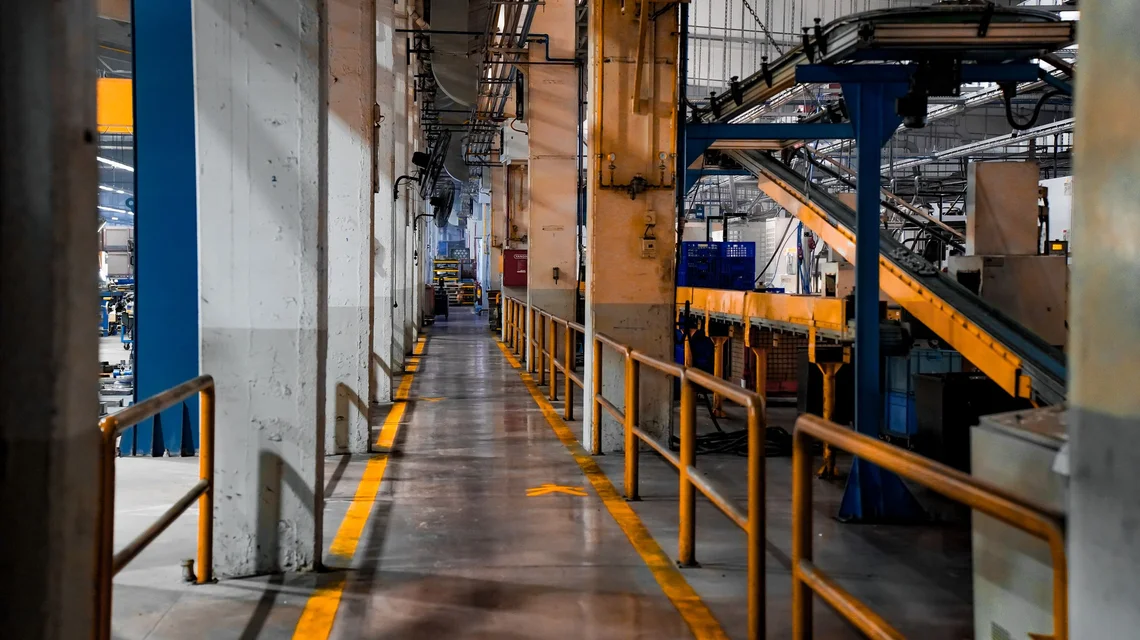
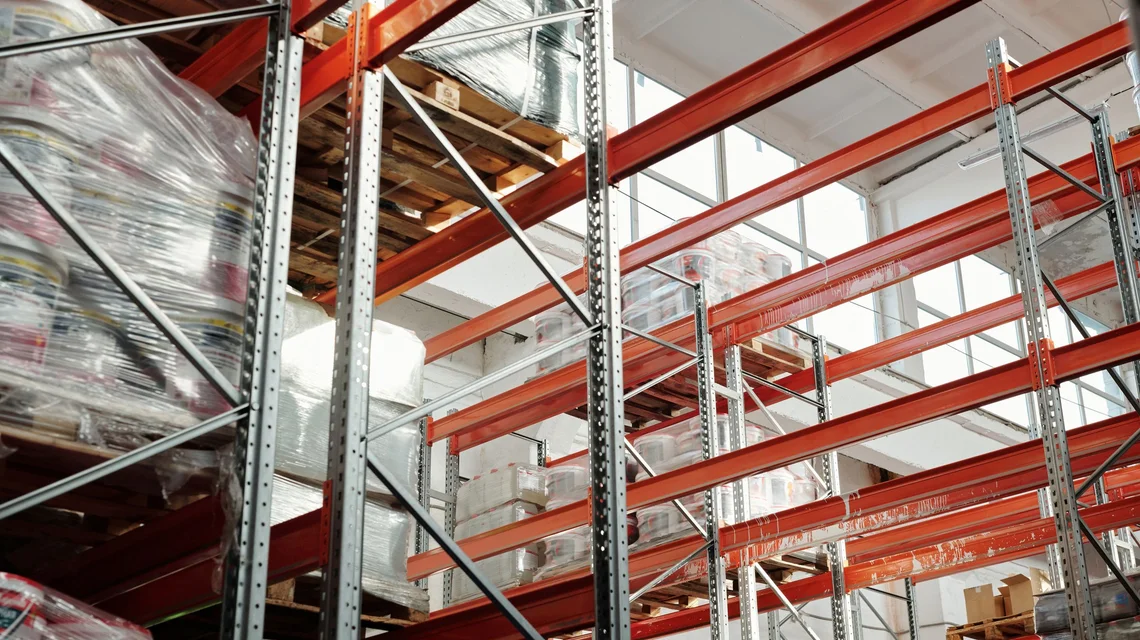
A factory needs zoned industrial land or a warehouse, not an office, and this is the binding constraint on your timeline and budget, not the paperwork [3].
Where manufacturers set up:
| Zone | Note |
|---|---|
| Dubai Industrial City (TECOM) | Six sector zones; warehouse units 5,000 to 11,000 sq ft; plots with up to 4MW power; long-term land lease |
| JAFZA / National Industries Park | Broadest activity range including heavy and hazardous, thanks to port access |
| Dubai South | Industrial and logistics near Al Maktoum Airport |
| KEZAD / KIZAD (Abu Dhabi) | Serviced plots on long-term lease plus pre-built warehouses |
On land cost, we will be honest: no operator publishes a standard rate card. The only public figures are deal-level and not representative of small-factory leasing. Indicative market snapshots put warehouse rents roughly at AED 28 to 60 per square foot per year depending on zone and size, with older mainland areas like Al Quoz higher (AED 65 to 120) [4]. Treat these as directional only and request a direct quote from Dubai Industrial City, JAFZA or KEZAD, because the published ranges you see elsewhere are guesses.
Quick Math: A 5,000 to 11,000 sq ft unit at AED 28 to 60 a foot is roughly AED 140,000 to 650,000 a year in rent alone, before fit-out and machinery. That is why land, not the licence, is the number that decides your setup budget. Compare zones on our KEZAD guide and KIZAD guide.
The approval chain nobody sequences
Beyond the two licences, a factory runs an approval chain that competitors compress into "get approvals." Here it is as a dependency sequence [3]:
- Choose activity and jurisdiction, reserve the trade name, get initial approval.
- Secure industrial premises and register the lease (Ejari on mainland).
- Submit the factory layout (machinery placement, workflow, ventilation, fire systems) for review.
- Run three approvals in parallel (this is what compresses the timeline):
- Dubai Municipality for environmental clearance, health and hygiene, land use and waste management. Higher-risk processes (chemicals, food, metal casting) trigger extra environmental assessment.
- Dubai Civil Defence for fire and life-safety, a two-stage drawing review then inspection.
- DEWA for utility-capacity confirmation.
- File the local industrial licence once approvals are in hand.
- Apply for the MOIAT Industrial Production Licence; MOIAT inspection follows, 5 to 15 working days.
- Post-licence: staff visas, WPS, bank account, tax registration, customs-exemption registration, optional ICV, product certification.
Realistic timeline: measured in months, not weeks. Competitor guides quoting "7 to 15 business days" are quoting one step (the MOIAT review) and ignoring premises fit-out, Civil Defence and Municipality NOCs, which realistically make the whole thing a 2-to-4 month exercise for a genuine build [3]. Our post-setup services team runs the approvals in parallel.
ICV: the certificate that wins contracts
This is the single biggest reason to hold the federal MOIAT registration, and it is absent from almost every competitor page.
In-Country Value (ICV) is a government programme that redirects procurement spend toward UAE-based capacity, scored per company. Suppliers with a higher ICV score get preference in tender awards from 31-plus federal and semi-government entities plus the major nationals, ADNOC, Mubadala, Aldar, Etisalat, EDGE, Etihad Rail and others named explicitly by MOIAT [5].
Why it matters: with ADNOC alone reported to be committing very large multi-year capex, ICV increasingly determines access to the tender pipeline, not just your score within it [5]. For a manufacturer targeting government or large-national supply chains, it is close to essential.
The mechanics [5]:
- Requires audited IFRS financials (or up to 9 months of management accounts if you are under 10 months old).
- Certified by MOIAT-authorised bodies (the Big Four and specialist local firms).
- Certificate validity commonly cited as 14 months from the financial-statement date (widely repeated but not confirmed on an official MOIAT page, so verify).
- Cost is not published officially; secondary estimates run from a reduced fee of around AED 500 for registered SMEs up to AED 15,000-plus, with certifying-body audit fees on top [5].
Pro Tip: ICV is worth it if you sell to government, ADNOC, Mubadala or the big nationals. It is largely irrelevant if you sell purely B2C or export to overseas buyers. Do not pay for it before you know your buyer profile needs it.
Make it in the Emirates, and the money behind it
The incentive stack that makes UAE manufacturing more than a tax play, and that competitors ignore entirely.
Operation 300bn is the national industrial strategy: grow industrial GDP from an AED 133 billion baseline to AED 300 billion by 2031 [6]. It is not a slogan; there is real money and procurement behind it.
- Make it in the Emirates is the campaign and accelerator, with a localisation push targeting 2,000 in-demand products across pharma, aerospace, electronics, agri-tech and food [6]. If you can make something currently imported on that list, that is genuine white space with government demand behind it.
- Emirates Development Bank financing is large and accessible: EDB has disbursed billions since 2021, with an AED 30 billion commitment across priority sectors including manufacturing, and further multi-billion allocations announced at the 2026 forum [6]. Most competitor articles never mention EDB exists.
- Customs duty exemption on inputs (below).
Real Talk: These incentives are real and material, but they reward genuine operators, not paper companies. EDB lends against a real business plan and substance; ICV scores real local value; the duty exemption applies to real registered inputs. The stack is strong precisely because it is aimed at people actually manufacturing.
Customs duty exemption on your inputs
A concrete industrial incentive, and one competitors mention vaguely if at all. An MOIAT-registered manufacturer can claim exemption from the 5% customs duty on imported machinery, equipment, spare parts and raw materials used in production [7].
The mechanics matter [7]:
- It is phase-gated: during construction and fit-out, exemption covers machinery and equipment; once in production, it extends to raw materials and spare parts too.
- It is not automatic. You must register each industrial input with MOIAT and file a specific exemption request tied to the customs declaration.
- Inputs must be directly related to the product you are licensed to make.
Pro Tip: We will flag one uncertainty rather than overstate it. Sources describe this as exempting the 5% duty on registered inputs, but the exact scope (full versus partial) was not confirmable on a primary page, so treat it as "the 5% duty is waived on properly registered inputs" and confirm the specifics for your product with MOIAT [7]. Either way, for an import-heavy operation the saving is material; for one sourcing locally, marginal.
VAT for a manufacturer
Standard mechanics, with the export upside [8]:
- 5% VAT on domestic sales.
- Exports outside the GCC are zero-rated (Executive Regulation Article 30), with a 90-day export window and documentary evidence. For a manufacturer selling into Africa, the CIS or wider MEA, this is the norm.
- Import VAT is reverse-charged on your return rather than paid at the border.
- Input VAT on machinery, materials and utilities is recoverable, so you reclaim the 5% you pay on inputs and charge 5% on domestic output.
On Designated Zones (a VAT concept distinct from "free zone"), goods entering can be treated as outside UAE VAT territory. JAFZA and KEZAD are confirmed Designated Zones; we could not confirm Dubai Industrial City on the list, so verify with the FTA before relying on Designated Zone VAT treatment there [8]. See our VAT registration and compliance guide.
Small Business Relief (MD 73/2023) exists (revenue under AED 3 million, available to tax periods ending on or before 31 December 2029), but a serious manufacturer crosses that fast, so the QFZP 0% route matters more here than the relief [1].
The honest economics
No competitor page tells you this, so we will. Manufacturing is capital-intensive, and the licence is the cheap part.
Capex dwarfs licensing. Licensing and registration might be AED 20,000 to 57,000. Machinery for a real production line is routinely ten to fifty times that [9]. Generic industry benchmarks (not UAE-specific, so treat as illustrative): a food-processing line can run to hundreds of thousands of dollars; a full plastics facility including land and working capital, USD 400,000 to 1.3 million-plus, with machinery only 40 to 50% of it [9]. Budget for the machine, not the paperwork.
Margins vary sharply by sector, and this is the number to internalise [9]:
| Sector | Typical net margin (global benchmark) |
|---|---|
| Food processing | thin, roughly 3 to 4% |
| Generic pharma / contract manufacturing | 5 to 30% |
| Specialty pharma | fat, 10 to 30%+ |
These are global benchmarks, not UAE-audited figures (no UAE sector-margin data is publicly available), and UAE conditions (imported input costs, energy, a small domestic market, duty-free import competition) tend to push margins toward the lower end [9]. Pick your sector with the margin in mind.
Utilisation is the killer mechanic. High fixed capex means profitability is acutely sensitive to how much of your capacity you actually use. A plant running at 40 to 50% utilisation can lose money even with healthy per-unit margins [9]. No competitor mentions this, and it is why factories fail.
The other failure drivers [9]: undercapitalisation (the machine costs more than founders plan); competition from cheap imports (a real, named structural threat that the UAE's anti-dumping law was passed to address); and energy cost for intensive processes (Dubai's DEWA industrial tariff runs about 23 fils/kWh up to 10,000 kWh, then 38 fils, plus a fuel surcharge, municipality fee and VAT).
On market size, we disclose rather than pick: UAE industrial GDP for 2024 is reported at AED 190 billion by one official source and AED 210 billion by another [6]. We will not pretend to a single figure; both point to a large, growing sector on a genuine upward trajectory toward the AED 300 billion 2031 target.
Positioning: where a new entrant actually wins
You cannot out-scale EGA in aluminium or Ducab in cables. The realistic niches [9]:
- Import substitution. Make something on the 2,000-product localisation list that the UAE currently imports. Government demand is behind it.
- Export and re-export. Use Jebel Ali and the free-zone structure to serve MEA, Africa, the CIS and South Asia rather than competing only for the small domestic market. UAE industrial exports are large and growing.
- Contract manufacturing and private label. A lower-capital entry point: supply capacity to existing brands rather than building your own distribution. The MEA private-label market is sizeable and growing.
Specialised, mid-scale and contract manufacturing (food, packaging, light electronics assembly, building-material components) is where a new or foreign entrant competes, not heavy base industry.
Emiratisation
Manufacturing is one of the 14 targeted sectors [10]. A company with 20 to 49 employees must employ at least one Emirati in a qualifying skilled role (minimum AED 4,000 basic), rising to two by end-2025. Companies with 50+ face the 2%-a-year skilled-role target reaching 10% by end-2026. Non-compliance runs AED 108,000 rising to AED 120,000 per unfilled position per year [10]. On a factory headcount this is a real budget line. See our Emiratisation 2026 guide and hiring employees in Dubai.
What does it cost?
Indicative, and only the MOIAT fees are officially confirmed. Everything else is a planning range, not a rate card [11].
| Item | Indicative (AED) |
|---|---|
| DET mainland industrial licence | 14,000 – 30,000 |
| or free-zone industrial licence | 5,000 – 28,000+ by zone |
| MOIAT Industrial Production Licence | 0 application + 100 inspection (official) |
| Trade name + MOA notarisation | 2,100 – 4,200 |
| Factory/warehouse lease (5,000–11,000 sq ft) | ~140,000 – 650,000/yr |
| Factory layout / engineering drawings | 5,000 – 20,000 |
| Civil Defence approval | 2,000 – 15,000+ |
| Machinery | activity-dependent; often the largest line by far |
| Visa, per employee | 3,500 – 6,000 |
| ICV certification (if pursuing govt contracts) | ~500 – 18,000 |
Illustrative all-in first-year ranges from setup advisers: light industrial around AED 80,000 to 200,000-plus, medium industrial AED 150,000 to 500,000-plus, before machinery [11]. We present these as planning bands, not quotes, because they come from consultancies rather than DET or MOIAT rate cards, and machinery is the wild card that dwarfs them.
What are the steps?
- Decide free zone (0% possible, watch B2C) or mainland (9%, sell to anyone). This is your central decision.
- Choose your zone and industrial premises, and confirm activity codes with a licensing agent (DET's portal blocks public checks, so we will not publish unverified codes).
- Reserve the trade name, get initial approval.
- Lease the factory or warehouse, register the lease, commission the layout drawings.
- Run Municipality, Civil Defence and DEWA approvals in parallel.
- File the local industrial licence.
- Apply for the MOIAT Industrial Production Licence; pass inspection.
- Register for customs duty exemption on your machinery and inputs.
- Post-launch: visas, WPS, tax and VAT registration, the annual Industrial Registry filing, and ICV and product certification if your buyers need them.
What documents do you need?
- Passport and Emirates ID or visa copies for shareholders and managers, or a No Objection Certificate if resident
- Trade name reservation and initial approval
- Notarised Memorandum of Association and Ejari (mainland)
- Factory layout and engineering drawings
- Evidence of minimum capital (AED 250,000) for the MOIAT licence
- Municipality, Civil Defence and DEWA approvals
- Audited financials (for QFZP status and ICV)
See our documents required for mainland business setup guide.
Real Client Stories
These are real examples from businesses we have helped set up. Names have been changed for privacy.
Yusuf's 0% that held (Dubai Industrial City)
Yusuf set up a packaging factory in a free zone specifically for the 0% corporate tax, and unlike most of our clients chasing that rate, his qualified: manufacturing is a Qualifying Activity, and he sold B2B to other manufacturers. His only real risk was a side line selling direct to small consumers, which we moved into a separate mainland entity so it could not breach his de minimis limit and cost him the whole 0%. His advice: "For once the free-zone tax pitch was real. But it is real only if you keep your consumer sales out of the qualifying entity."
Meera's licence that wasn't finished (Dubai mainland)
Meera got her DET industrial licence and thought she was done, then discovered she could not import her machinery duty-free or bid for the government contract she wanted, because she had never obtained the federal MOIAT Industrial Production Licence or an ICV certificate. The DET licence was one of three MOIAT-related steps, not the finish line. Her tip: "The trade licence lets you exist. MOIAT is what lets you actually operate as a factory and win contracts."
Ravi's empty capacity (Dubai)
Ravi built a food-processing line sized for a big contract that then slipped. Running at 40% utilisation, his healthy per-unit margin could not cover the fixed cost of the machine and the rent, and food processing is a thin-margin sector to begin with. He survived by taking contract-manufacturing work to fill the line. His takeaway: "A factory is a fixed-cost machine. Empty capacity is the thing that kills you, not the tax rate."
Start your Dubai manufacturing company the right way
This is the one sector where the free-zone 0% tax is genuinely on the table, and where a real incentive stack (ICV, Make it in the Emirates, EDB financing, duty exemption) rewards genuine operators. But it demands the federal MOIAT layer on top of your trade licence, industrial land a virtual office cannot replace, and a multi-authority approval chain. Choose free zone or mainland by your sales model. Protect the 0% by keeping consumer sales out of the qualifying entity. Budget for the machine, not the paperwork. And pick a sector knowing its margin and your utilisation risk.
Since 2013, BusinessDubai.ae has completed 700+ company registrations across the UAE, including industrial and manufacturing companies, with transparent itemised pricing and no hidden fees. We will structure your entity for the tax outcome you want, handle the DET and MOIAT licences, sequence the Municipality, Civil Defence and DEWA approvals, and sort your visas and bank account, with a clear budget before you commit. Talk to a setup expert→ for a clear plan. If you are importing rather than making, see our import-export business guide.
Ready to set up your manufacturing company in Dubai the right way? Our licensed advisors handle the industrial licence, MOIAT registration, approval chain, visas and bank account end to end, with transparent, fixed fees.
Get started free→Next step: Our mainland trade licence service covers the DET filing, external approvals and tenancy paperwork.
Frequently Asked Questions
Does a manufacturing company really get 0% corporate tax in a free zone?
Yes, and this is genuinely different from most sectors. Manufacturing of goods or materials is an explicit Qualifying Activity under Ministerial Decision No. 229 of 2025, so a Qualifying Free Zone Person meeting the conditions pays 0% on its manufacturing income. Unlike services, retail or trading of finished goods, where the free-zone 0% is unreachable, for manufacturing it is real, subject to the natural-persons trap below.
What is the natural-persons trap?
MD 229 makes transactions with natural persons an Excluded Activity, and manufacturing is not carved out. So selling B2B to businesses, wholesalers and exporters keeps the 0% rate, but selling direct to individual consumers is taxed at 9%. If those consumer sales breach the de minimis limit (the lower of 5% of revenue or AED 5 million), you can lose Qualifying Free Zone Person status entirely for that year and the following four. Build a B2B or export model, or run consumer sales through a separate mainland entity.
Free zone or mainland for manufacturing?
This is a real tax decision here, unlike for services. A free-zone manufacturer can reach 0% but must watch who it sells to and maintain substance and audited accounts. A mainland manufacturer pays the standard 9% above AED 375,000 but can sell freely to anyone, including consumers. Choose by your sales model: export and B2B favour the free zone; a consumer-facing domestic model may favour the mainland.
Do I need one licence or two?
Two. A local industrial licence from DET or your free-zone authority, restricted to manufacturing activities and requiring physical premises, plus a federal MOIAT Industrial Production Licence layered on top, which is mandatory. You get the local licence first, then apply for the MOIAT one. There is also a third recurring MOIAT obligation, the annual Industrial Registry filing.
What are the MOIAT licence requirements?
Minimum capital of AED 250,000, a minimum of 10 employees, and you must already hold the local industrial licence. The application fee is AED 0 and the inspection fee AED 100 officially, with processing in 5 to 15 working days. The MOIAT licence is what unlocks customs duty exemption and ICV eligibility, and it is required in a free zone as well as on the mainland.
What is the Industrial Registry?
A separate, annually recurring MOIAT obligation. Every manufacturing facility must file a registry entry updating its production inputs, manufactured products, energy consumption and financials each year. It is not a one-time step, and no competitor guide mentions it, but it is a real compliance requirement under the federal industry law.
Can I run a factory from an office or flexi-desk?
No. An industrial licence requires physical industrial premises, a factory or warehouse in an approved industrial zone. A virtual office or flexi-desk is not permitted. Securing zoned industrial land or a warehouse is the real gate on your timeline and budget, not the paperwork.
Where should I locate my factory?
The main options are Dubai Industrial City (six sector zones, warehouse units, plots with power), JAFZA and the National Industries Park (broadest range including heavy and hazardous, thanks to port access), Dubai South (industrial and logistics near Al Maktoum Airport), and KEZAD or KIZAD in Abu Dhabi (serviced plots and pre-built warehouses). Choose by your activity, power needs and export logistics.
How much does industrial land cost?
Honestly, no operator publishes a standard rate card, and the ranges you see quoted elsewhere are guesses. Indicative market snapshots put warehouse rents roughly at AED 28 to 60 per square foot per year depending on zone and size, with older mainland areas like Al Quoz higher. Request a direct quote from Dubai Industrial City, JAFZA or KEZAD rather than relying on any published figure, including ours.
What approvals do I need beyond the licences?
A multi-authority chain: Dubai Municipality for environmental clearance, health, land use and waste (with extra assessment for chemicals, food or metal casting); Dubai Civil Defence for fire and life-safety, a two-stage drawing review then inspection; and DEWA for utility-capacity confirmation. Run these in parallel to compress the timeline, then file the local licence and apply for the MOIAT licence and its inspection.
How long does it take to set up a factory?
Realistically months, not weeks. Competitor guides quoting 7 to 15 business days are quoting only the MOIAT review step. Once you add premises fit-out, Civil Defence and Municipality NOCs and the layout approvals, a genuine build is a 2-to-4 month exercise. Running the approvals in parallel is what keeps it toward the lower end.
What is ICV and do I need it?
In-Country Value is a government programme scoring each company on its local value, and a higher score gives preference in tenders from 31-plus federal and semi-government entities plus the big nationals like ADNOC, Mubadala and Aldar. It increasingly determines access to those tender pipelines, so it is close to essential if you sell to government or the large nationals, and largely irrelevant if you sell purely B2C or export. Do not pay for it before you know your buyers need it.
How does ICV certification work?
It requires audited IFRS financials (or up to 9 months of management accounts if you are very new), and certification is done by MOIAT-authorised bodies including the Big Four and specialist local firms. The certificate validity is commonly cited as 14 months from the financial-statement date, though that is not confirmed on an official page. Cost is not officially published; secondary estimates range from a reduced fee around AED 500 for registered SMEs up to AED 15,000-plus, plus audit fees.
What is Make it in the Emirates?
It is the public campaign and accelerator under Operation 300bn, the national strategy to grow industrial GDP from AED 133 billion to AED 300 billion by 2031. It includes a localisation push targeting 2,000 in-demand products across pharma, aerospace, electronics, agri-tech and food. If you can make something currently imported on that list, there is genuine government demand behind it.
Is there financing available for manufacturers?
Yes, and it is substantial and under-publicised. Emirates Development Bank has committed AED 30 billion across priority sectors including manufacturing and has disbursed billions since 2021, with further multi-billion allocations announced at the 2026 industrial forum. Most competitor articles never mention EDB. It lends against a real business plan and substance, not a paper company.
Can I import machinery and raw materials duty-free?
Yes, an MOIAT-registered manufacturer can claim exemption from the 5% customs duty on machinery, equipment, spare parts and raw materials used in production. It is phase-gated (machinery during construction, raw materials and spares once in production) and not automatic: you must register each input with MOIAT and file a specific exemption request. Inputs must be directly related to your licensed product. We flag that the exact scope was not confirmable on a primary page, so verify the specifics for your product.
What VAT applies to a manufacturer?
Standard 5% on domestic sales, with exports outside the GCC zero-rated (subject to a 90-day window and evidence), which matters for a manufacturer serving Africa or the CIS. Import VAT is reverse-charged on your return, and input VAT on machinery, materials and utilities is recoverable. Note that JAFZA and KEZAD are confirmed VAT Designated Zones but Dubai Industrial City could not be confirmed on that list, so verify before relying on Designated Zone treatment there.
What does a factory actually cost to set up?
The licence is the cheap part. Licensing and registration might be AED 20,000 to 57,000, but machinery for a real production line is routinely ten to fifty times that, and rent for a 5,000 to 11,000 sq ft unit runs roughly AED 140,000 to 650,000 a year. Setup advisers cite illustrative all-in first-year ranges of AED 80,000 to 200,000-plus for light industrial and AED 150,000 to 500,000-plus for medium, before machinery. Budget for the machine, not the paperwork.
What margins can I expect?
It depends sharply on sector. Global benchmarks put food processing at a thin 3 to 4% net, generic pharma and contract manufacturing at 5 to 30%, and specialty pharma at 10 to 30%-plus. These are global figures, not UAE-audited data, and UAE conditions (imported input costs, energy, a small domestic market and duty-free import competition) tend to push margins toward the lower end. Pick your sector with the margin in mind.
Why do factories fail?
Undercapitalisation, because the machine costs more than founders plan. Utilisation risk, because high fixed capex means a plant running at 40 to 50% capacity can lose money even with healthy per-unit margins. Competition from cheap imports, a real structural threat the UAE's anti-dumping law addresses. And energy cost for intensive processes. Utilisation is the mechanic no competitor mentions, and it is often the decisive one.
How big is the UAE manufacturing sector?
Large and growing, though the figures vary by source. UAE industrial GDP for 2024 is reported at AED 190 billion by one official source and AED 210 billion by another, and we will not pretend to a single number. Both point to a sector on a genuine upward trajectory toward the AED 300 billion target set for 2031, backed by real procurement and financing.
Where does a new manufacturer actually compete?
Not against giants like EGA in aluminium or Ducab in cables. The realistic niches are import substitution (making something on the 2,000-product localisation list the UAE currently imports), export and re-export (using Jebel Ali to serve MEA, Africa and the CIS rather than the small domestic market), and contract manufacturing or private label (a lower-capital entry point supplying existing brands). Specialised and mid-scale production is where new entrants win.
Does Emiratisation apply to a factory?
Yes, manufacturing is one of the 14 targeted sectors. A company with 20 to 49 employees must employ at least one Emirati in a qualifying skilled role, rising to two by end-2025, and those with 50-plus face a 2%-a-year target reaching 10% by end-2026. Non-compliance runs AED 108,000 rising to AED 120,000 per unfilled position per year, which on a factory headcount is a real budget line.
Do I need product certification?
Often, depending on what you make. ESMA's ECAS scheme is mandatory for many regulated categories, including cosmetics, electricals, machinery, building materials and consumer food, and the voluntary Emirates Quality Mark is available to local manufacturers with a documented quality system. Food and cosmetics may also need halal certification. Confirm the requirements for your specific product category before you plan your launch.
References
[1] Federal Tax Authority and Ministry of Finance. UAE Corporate Tax (Federal Decree-Law No. 47 of 2022): 0% up to AED 375,000 of taxable income and 9% above. Small Business Relief (Ministerial Decision No. 73 of 2023, as amended by Ministerial Decision 131 of 2026): AED 3,000,000 revenue threshold, must be elected, available only for tax periods ending on or before 31 December 2029, and not available to Qualifying Free Zone Persons. tax.gov.ae and mof.gov.ae
[2] Ministry of Finance. Ministerial Decision No. 229 of 2025 regarding Qualifying Activities and Excluded Activities (effective retroactively from 1 June 2023, replacing MD 265/2023), text extracted from the primary MOF PDF: Article 2 lists "Manufacturing of goods or materials" and "Processing of goods or materials" as Qualifying Activities; Article 3 defines Manufacturing as "the production, improvement or assembly of products and materials from raw materials or components" and Processing as "the preparation, treatment, transformation or conversion of goods or materials into another form of good or material for commercial or industrial use or sale"; Article 2(2)(a) makes "any transactions with natural persons" an Excluded Activity, with exceptions only for qualifying ship operation, fund management, wealth and investment management and aircraft financing and leasing (manufacturing not among them); the de minimis threshold in Article 3 (lower of 5% of total revenue or AED 5,000,000); and the loss of Qualifying Free Zone Person status for the relevant tax period and the subsequent four on breach. QFZP status also requires adequate substance and, under Ministerial Decision No. 84 of 2025, audited financial statements. A mainland manufacturer pays the standard 9% above AED 375,000 with no QFZP option. mof.gov.ae
[3] Ministry of Industry and Advanced Technology (MOIAT) and industrial licensing framework. Federal Decree-Law No. 25 of 2022 on the Regulation and Development of Industry (effective January 2023, replacing the 1979 industry law), applying to mainland, free, economic and specialised zones. The two-licence structure: a local industrial licence from DET or the free-zone authority (requiring physical industrial premises, no virtual office) plus the mandatory federal MOIAT Industrial Production Licence (minimum AED 250,000 capital, minimum 10 employees, local licence as prerequisite, AED 0 application fee and AED 100 inspection fee, 5 to 15 working days processing). The separate annual Industrial Registry obligation (updating production inputs, manufactured products, energy consumption and financials) for all ISIC Category C entities. The approval chain (Dubai Municipality environmental, health and land-use clearance; Dubai Civil Defence two-stage fire and life-safety review and inspection; DEWA utility-capacity confirmation) run in parallel before local licence issuance and the MOIAT application and inspection. Realistic end-to-end timeline of 2 to 4 months for a genuine build. DET activity codes could not be independently verified (portal blocked automated access); no specific codes are stated. moiat.gov.ae and uaelegislation.gov.ae
[4] Industrial land and warehouse costs (indicative, from real-estate listing aggregators, not official free-zone rate cards): warehouse rents roughly AED 28 to 60 per square foot per year depending on zone and size (Dubai Industrial City, JAFZA, KIZAD listings), with older mainland industrial areas such as Al Quoz higher at AED 65 to 120 per square foot. No operator publishes a standard rate card; these are market snapshots to be confirmed by direct quote from Dubai Industrial City, JAFZA or KEZAD. Dubai Industrial City warehouse units of 5,000 to 11,000 sq ft with up to 4MW power access per the official site (no public per-sq-ft rate). dubaiindustrialcity.ae, cushwake.ae and bayut.com
[5] MOIAT In-Country Value (ICV) programme: a government procurement-localisation initiative scoring each company, giving certified suppliers preference in tenders from 31-plus federal and semi-government entities plus major nationals (ADNOC, Mubadala, Aldar, Etisalat, EDGE, Etihad Rail named by MOIAT); increasingly determining access to tender pipelines rather than only scoring within them. Mechanics: audited IFRS financials required (or up to 9 months of management accounts if under 10 months old); certification by MOIAT-authorised bodies (Big Four and specialist local firms); commonly cited 14-month certificate validity from the financial-statement date (not confirmed on an official MOIAT page); cost not officially published, with secondary estimates from a reduced fee around AED 500 for registered SMEs up to AED 15,000-plus plus certifying-body audit fees. moiat.gov.ae/en/programs/icv
[6] National industrial strategy and incentives. Operation 300bn: growing industrial GDP from an AED 133 billion baseline to AED 300 billion by 2031 (u.ae, moiat.gov.ae). Make it in the Emirates campaign and accelerator, with a localisation target of 2,000 in-demand products across pharma, aerospace, electronics, agri-tech and food, and multi-billion-dirham industrial financing announced at the 2026 forum. Emirates Development Bank AED 30 billion commitment across priority sectors including manufacturing, with billions disbursed since 2021 and further 2026 allocations (edb.gov.ae). UAE industrial GDP for 2024 reported at AED 190 billion (Gulf News, citing MOIAT) and AED 210 billion (separate report), a discrepancy disclosed rather than resolved; the long-term aspiration to raise manufacturing's GDP share toward 25% is a policy target, not a near-term forecast. u.ae, moiat.gov.ae and edb.gov.ae
[7] MOIAT customs duty exemption for industrial inputs: exemption from the 5% customs duty on imported machinery, equipment, spare parts, raw materials and intermediate goods for MOIAT-registered industrial establishments, phase-gated (machinery during the construction phase; raw materials and spare parts added in the production phase), requiring separate registration of each industrial input and a specific exemption request tied to the customs declaration, with inputs required to be directly related to the licensed product. The exact scope (full versus partial) was not confirmable on a primary page and should be verified with MOIAT for the specific product. moiat.gov.ae/en/services/request-customs-duty-exemption-for-industrial-inputs
[8] Federal Tax Authority. VAT for manufacturers: 5% standard rate on domestic supplies; export of goods outside the GCC zero-rated under Executive Regulation Article 30 (90-day export window and documentary evidence); import VAT accounted for by reverse charge; input VAT on machinery, materials and utilities recoverable. Designated Zones (a VAT concept distinct from free zones) treat qualifying goods as outside UAE VAT territory; JAFZA and KEZAD/KIZAD are confirmed Designated Zones, but Dubai Industrial City was not found on the Designated Zone list and should be confirmed with the FTA. tax.gov.ae
[9] Manufacturing economics. Capex intensity: licensing and registration (approximately AED 20,000 to 57,000) is dwarfed by machinery capex, routinely 10 to 50 times licensing cost; illustrative global (non-UAE) benchmarks include hundreds of thousands of dollars for a food-processing line and USD 400,000 to 1.3 million-plus for a full plastics facility including land and working capital (machinery 40 to 50% of total). Sector net margins (global benchmarks, not UAE-audited): food processing roughly 3 to 4%; generic pharma and contract manufacturing 5 to 30%; specialty pharma 10 to 30%-plus, with UAE conditions (imported input costs, energy, small domestic market, duty-free import competition) pushing toward the lower end. Utilisation risk (a plant at 40 to 50% capacity can be unprofitable despite healthy per-unit margins); competition from cheap imports (the UAE's anti-dumping law addresses this); and energy cost (Dubai DEWA industrial tariff approximately 23 fils/kWh up to 10,000 kWh then 38 fils/kWh, plus fuel surcharge, municipality fee and VAT) as failure drivers. Positioning niches: import substitution (2,000-product localisation list), export and re-export via Jebel Ali to MEA, Africa and the CIS, and contract manufacturing or private label as a lower-capital entry point. Margin and capex figures are global-benchmark estimates flagged as not UAE-specific; no UAE-audited sector-margin data is publicly available. csimarket.com, statista.com and industry sources
[10] UAE Ministry of Human Resources and Emiratisation. Manufacturing as one of the 14 targeted private-sector Emiratisation sectors: companies with 20 to 49 employees must employ at least one Emirati in a qualifying skilled role (minimum AED 4,000 basic salary), rising to two by end-2025; companies with 50-plus employees face the 2%-per-year skilled-role target reaching 10% by 31 December 2026; non-compliance penalties of AED 108,000 (2025) rising to AED 120,000 (2026) per unfilled position per year. mohre.gov.ae
[11] Indicative setup costs. DET mainland industrial licence approximately AED 14,000 to 30,000; free-zone industrial licence approximately AED 5,000 to 28,000-plus by zone; MOIAT Industrial Production Licence AED 0 application plus AED 100 inspection (official); trade name and MOA notarisation approximately AED 2,100 to 4,200; factory or warehouse lease approximately AED 140,000 to 650,000 per year for 5,000 to 11,000 sq ft; factory layout and engineering drawings AED 5,000 to 20,000; Civil Defence approval AED 2,000 to 15,000-plus; visa AED 3,500 to 6,000 per employee; ICV certification approximately AED 500 to 18,000. Illustrative all-in first-year ranges from setup advisers: light industrial AED 80,000 to 200,000-plus, medium industrial AED 150,000 to 500,000-plus, before machinery (often the largest single line). Only the MOIAT fees are officially confirmed; all other figures are secondary-source planning ranges, not rate cards, and should be confirmed with a licensing agent and direct zone quotes. moiat.gov.ae and consultancy sources
[12] BusinessDubai.ae. Internal data from UAE industrial and manufacturing company registrations since 2013, including DET and MOIAT industrial licensing, industrial land selection, the Municipality, Civil Defence and DEWA approval chain, ICV certification, QFZP corporate tax structuring, VAT and customs positions, visas, banking and client case studies. businessdubai.ae