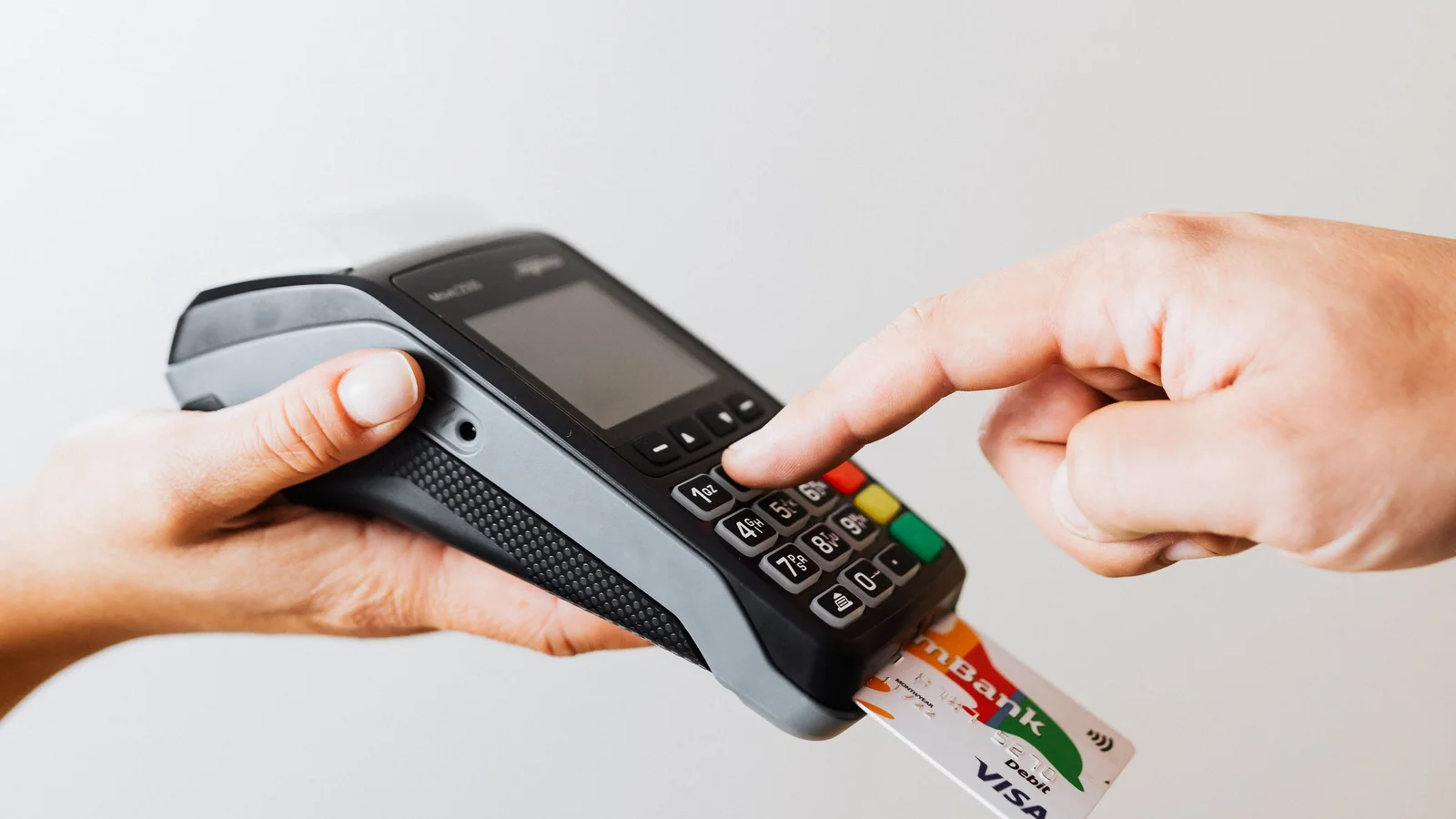
Choosing a payment gateway in Dubai is not a pricing decision, it is an approval decision, and almost every article on the subject gets that backwards. Listicles rank providers by headline percentage, then send a founder with a two-week-old trade licence to acquirers that will not open an account for a company at that stage. The percentage is irrelevant if the answer is no.
The hardest truth up front: a brand-new UAE company can realistically self-serve onto a small number of providers, and the rest are quote-only, sales-led and built for merchants who already have turnover. Network International's own FAQ confirms a fall-below fee applying when a merchant's prior-month sales are under AED 20,000, which tells you who that product is for [4]. Checkout.com holds a UAE Central Bank acquiring licence and sells custom Interchange++ pricing at scale [5]. Neither suits a pre-revenue store.
This guide covers who will approve you, who publishes pricing at all, the documents and website rules that decide the outcome, rolling reserves and settlement as cash-flow costs, the honest cash-on-delivery numbers, chargebacks, VAT on gateway fees, and the corporate tax split that punishes free zone companies selling direct to consumers. Since 2013, our team has taken UAE e-commerce companies from trade licence to live checkout, so the friction here comes from real files. This is a guide, not legal, tax or financial advice, and pricing moves constantly, so every rate below was checked in 2026 and must be re-confirmed before you budget.
Which payment gateways will actually approve a brand-new Dubai company?
Only a handful. Telr, Ziina, Stripe, Amazon Payment Services and Magnati's new SME product publish self-serve or near-instant application paths. Network International, Checkout.com and Magnati's legacy enterprise product are sales-led and effectively closed to a company with no trading history. That split matters far more than a decimal point on a rate card.
Read a provider by how it sells, not by its fee. A published rate card and a public sign-up form mean it priced its risk in advance and wants merchants of any size. A contact form and a sales manager mean it underwrites each merchant individually, and an entity with zero processing history is the hardest file to underwrite.
| Provider | Route to an account | Odds for a brand-new company | What the route tells you |
|---|---|---|---|
| Telr | Self-serve, published tiers [2] | Good | Priced for SMEs, including a low-volume entry tier |
| Ziina | Self-serve business account [3] | Good | Wallet-first, built for small and new merchants |
| Stripe | Self-serve, full document verification [1] | Good, if documents are perfect | Automated verification, not sales-led |
| Amazon Payment Services | Self-serve application | Moderate | SME-facing but pricing partly undisclosed |
| Magnati (new SME platform) | Same-day self-service onboarding | Moderate | Deliberate push into SME and micro-SME |
| Tap Payments | Application, no public pricing | Uncertain | Licensed across the GCC, terms per merchant |
| PayTabs | Application, no UAE rate card | Uncertain | Regional presence, UAE pricing not published |
| Network International (N-Genius) | Contact centre or sales manager [4] | Poor | Fall-below fee under AED 20,000 monthly sales |
| Checkout.com | Enterprise sales, custom quote [5] | Poor | Interchange++ at scale, no SME rate card |
Real Talk: Quote-only pricing is not a gap in the research, it is the finding. A provider that will not publish a rate is telling you the rate depends on who you are. If you are pre-revenue, assume a polite decline or an unattractive quote, and launch on a provider that has already published what it will charge you.
Common Mistake: Building a launch around a single gateway. New merchants get declined, get an unworkable reserve, or get approved then suspended after an unusual first month. Apply to two providers in parallel. Our guide on how to start an ecommerce business covers the wider launch sequence.
What does each provider actually charge, and who publishes pricing at all?
Three providers publish usable public pricing: Stripe, Telr and Ziina. Everyone else quotes privately, publishes an incomplete figure, or shows rates for another country. Any article giving you a precise fee for all nine is repeating numbers the providers do not publish.
| Provider | Published pricing | Fixed costs | Notes |
|---|---|---|---|
| Stripe [1] | 2.9% plus AED 1.00 per domestic UAE card, plus 1% international cards, plus 1% conversion | None | Dispute fee AED 60, 135+ currencies, settlement timing not published |
| Telr, Entry [2] | 0% transaction fee | AED 349 per month | AED 0 to 20,000 monthly volume, plus 5% VAT |
| Telr, Small [2] | 2.69% plus AED 1 | AED 149 per month | AED 20,000 to 50,000 monthly volume, plus 5% VAT |
| Telr, Medium [2] | 2.49% plus AED 0.50 | AED 99 per month | Above AED 50,000 monthly volume, plus 5% VAT |
| Ziina, Business [3] | Free to receive across all payment methods | None stated | 5% VAT applies, cash-outs free until 2 September 2026, then AED 1 |
| Ziina, Personal [3] | 2.9% plus AED 1 on cards | None stated | Non-AED spend 0% up to AED 3,000 monthly on Lite or AED 20,000 on Violet, then 0.5% |
Telr does not disclose settlement time, its currency list or free zone eligibility on the pricing page, so treat those as open questions [2]. Stripe publishes its rate card in full but no UAE settlement schedule, which is why you will not find a T plus N figure for it here [1]. Ziina is best read as its own category rather than a like-for-like Telr or PayTabs replacement, being wallet-first and peer-to-peer first with a separate website gateway attached [3].
Now the providers that publish nothing comparable, and what is actually confirmable about each.
| Provider | Public pricing position | What is confirmed |
|---|---|---|
| Network International (N-Genius) | None, quote-based via contact centre or sales manager | Fall-below fee applies when prior-month merchant sales are under AED 20,000 [4] |
| Checkout.com | None, custom quotes, Interchange++ at scale | First global payments platform to secure a UAE Central Bank acquiring licence [5] |
| Amazon Payment Services | Partial, a 2.40% headline rate plus an unspecified fixed fee | Undisclosed monthly account management fee, 100+ currencies, mada and Meeza |
| Tap Payments | None disclosed on its own site | Licensed across the GCC including the UAE |
| PayTabs | No UAE rate card, pricing page loads Saudi figures | Regional operator, UAE terms are quote-based |
| Magnati (a FAB subsidiary) | No credible public pricing | Launched same-day, minimal-documentation onboarding for SMEs and micro-SMEs |
Based on our experience, the precise Tap and Magnati fee tables in comparison listicles match nothing either company publishes, and several of those pages carry the hallmarks of programmatic content produced at scale. Do not budget from them. If a provider will not put a number on its own website, the only reliable number is the one in your signed quote.

What trade licence do you need before a gateway will look at you?
A UAE trade licence carrying an activity that genuinely covers what you sell, plus a UAE corporate bank account. Both mainland and free zone licences work in principle, and Stripe explicitly accepts mainland DET licences and free zone authorities including DMCC, DIFC and ADGM [1]. The activity wording matters more than the jurisdiction.
Mainland e-commerce runs on a DET commercial trade licence with an e-commerce appropriate activity, the route to take if you also want physical retail or unrestricted UAE trading, and our mainland company setup page covers it. A free zone e-commerce licence is a valid alternative most gateways formally accept and the more common choice for online-only sellers, which our free zone company setup page walks through. Read the tax section below first, because the two routes are not tax-equivalent for direct-to-consumer selling.
One caveat catches people every year. The DET E-Trader licence does not allow selling physical products for most residents. It is services-focused and aimed mainly at UAE and GCC nationals, so it is not a general e-commerce licence, and a physical-goods store built on it leaves you with a licence a gateway can reasonably reject. Our guide to the Dubai online store licence covers the options.
What do you need to get a merchant account approved?
Four things, and the fourth is the one founders skip. A trade licence with the correct e-commerce activity, a UAE corporate bank account, valid identity documents for every significant owner and signatory, and a website that meets the acquirer's compliance rules. Expired documents cause automatic rejection, and an incomplete website causes a delay that feels like silence.
Stripe publishes its requirements clearly, and they are a fair proxy for the market: a valid UAE trade licence, the memorandum of association, an active bank account, and Emirates ID, passport and visa for every owner holding 25% or more [1]. Others ask for the same file, sometimes adding a board resolution and bank statements.
The website review is where most first applications stall, because merchants treat the site as marketing rather than as a compliance document.
| Website requirement | What reviewers look for |
|---|---|
| Refund and return policy | Published, findable, specific on timeframes and conditions |
| Terms and conditions | Present, matching the actual business and entity name |
| Delivery policy | Stated timeframes, geographies and charges |
| Contact details | Working email, phone and a real business address |
| Pricing in AED | Prominent, including delivery charges, before checkout |
| Products actually listed | A live catalogue, not a placeholder or coming-soon page |
Pro Tip: Publish the four policy pages before you apply, not after the reviewer asks. A reviewer who opens a site with no refund policy does not send a friendly note, the file simply sits. Half the delayed applications we see are waiting on pages that take an afternoon to write. Talk to a setup expert→
The most cited rejection cause remains a missing or mismatched trade-licence activity. A licence saying general trading while the site sells supplements, or a services licence behind a physical-goods store, gets declined. Acquirers reportedly prefer the licence jurisdiction to match the settlement bank's, though that is not confirmed as a UAE-specific rule, so treat it as sensible alignment, not regulation. Scrutinised categories follow the global pattern, adult content and gambling at the top, and chargeback history follows a merchant across providers. Timelines quoted online, Telr at 5 to 10 business days and PayTabs at 3 to 5, are estimates we could not verify. Plan for weeks.
What is a rolling reserve, and what does it do to your cash flow?
A rolling reserve is a percentage of your revenue the acquirer holds back for a fixed period to cover chargebacks and refunds. It is applied to merchants viewed as higher risk, which often includes new companies with no processing history. It is not a fee, it is your money delayed, and for a growing store it is the most punishing term in the contract.
The commonly cited standard for high-risk merchants is 5% to 15% of revenue held for 90 to 180 days. Be careful with that range: it comes from global industry norms and non-UAE sources, and we found no UAE-specific published figure, so treat it as the shape of what to expect and confirm the terms in your own merchant agreement. Some UAE merchants get no reserve. Others discover theirs when the first settlement lands short.
Quick Math: A store doing AED 200,000 a month with a 10% rolling reserve held for 180 days has AED 20,000 withheld each month, so by month six AED 120,000 sits with the acquirer. That is roughly the working capital many founders earmarked for inventory. Nothing has gone wrong, the business is healthy, and it is still cash-starved. If you hold stock, model the reserve before the fee, because 0.4% on a rate is noise next to a six-figure hold.
Ask three questions before signing any merchant agreement: is there a reserve, at what percentage, and for how long. Get the answers in writing, because a reserve imposed at the acquirer's discretion in month four is a different business from one you priced in at launch.
How long does settlement take, and why is that a working-capital decision?
Settlement is the gap between a customer paying and the money reaching your bank, and it works as an interest-free loan you make to your acquirer. Most UAE providers do not publish their settlement schedule, including Stripe and Telr, so the timing must be confirmed in your quote rather than assumed from a comparison table [1][2].
The figures circulating online, typically T plus 1 to T plus 3 extending to T plus 7 for higher-risk merchants, are vendor and blog estimates we could not verify. Treat settlement as a line in your cash-flow model, alongside the reserve that shrinks each settlement, the cash-on-delivery lag while couriers remit after delivery, refunds paid ahead of the original settlement, and peak-season stock buys furthest from incoming cash. Stack those and a store can be profitable on paper and unable to pay a supplier the same week. This is where new e-commerce companies fail far more often than on gateway percentages.
Can a free zone company get a merchant account?
Yes. Free zone companies are eligible on paper with the major providers, and Stripe explicitly names free zone authorities such as DMCC, DIFC and ADGM alongside mainland DET licences [1]. The friction is not the free zone, it is a new entity, a pending bank account and an activity list the reviewer must interpret.
One structural point is misread constantly. The UAE Central Bank's Retail Payment Services and Card Schemes Regulation requires payment service providers and acquirers to hold a Central Bank licence regardless of any free zone presence, including DIFC and ADGM [6]. That governs the providers, not you as a merchant, and it is why free zone-based payment companies still route through Central Bank licensed rails.
The sequence is licence first, bank account second, gateway third, and applying before the bank account exists is what produces the pause. Free zone founders wanting the fastest path should read our guide to the Dubai CommerCity ecommerce free zone, and our free zone company setup page for how the licence is structured.
Do you even need a gateway, or is cash on delivery still viable?
You need a gateway, and the cash-on-delivery numbers you have read are almost certainly wrong. The disagreement between sources is not noise, it is a methodology problem worth understanding before you plan your checkout.
The FIS Global Payments Report, via The National, put cash on delivery at just 7% of UAE e-commerce transactions in 2023, with credit cards at 41% of transaction value. Other sources claim 30% to 40% of volume, and another repeated statistic is that 71% of retailers offer it. Those are three different questions, and a market where most retailers offer cash on delivery while few customers choose it looks exactly like these numbers.
| Metric | Reported figure | What it actually measures |
|---|---|---|
| Cash on delivery, transaction share | 7% in 2023 (FIS via The National) | Transactions paid in cash at the door |
| Cash on delivery, claimed volume share | 30% to 40% (various sources) | Definition and sample not disclosed |
| Retailers offering cash on delivery | 71% (various sources) | Merchant availability, not customer usage |
| Credit cards, value share | 41% in 2023 (FIS via The National) | Share of spend value, not transaction count |
| Digital wallets, payment share | About 44% in 2025 | Wallet share of payments |
Read practically, cash on delivery is a fallback, not a strategy to build on. Buy-now-pay-later is the fastest growing category at a 13.27% CAGR, mobile share of transactions is reported from 53% to about 79% depending on definition, and fashion and apparel led categories at about 21.6% share in 2025. Market size is contested the same way: Mordor Intelligence gives USD 12.28bn in 2025 rising to USD 21.18bn by 2030 at an 11.52% CAGR, while a separate estimate cites USD 8.13bn in 2025 growing 10% to 15% a year. Average order value reportedly moved from about USD 89 in 2023 to USD 102 in 2024 and roughly USD 97 to 111 in the first half of 2025.
Real Talk: Cash on delivery does not remove the need for a gateway, it moves your cash-flow problem to the courier. You still wait for remittance, you still absorb failed deliveries and refused parcels, and you carry the handling fee. A store running cash on delivery to avoid gateway approval is not saving 2.9%, it is paying for the same delay in a less predictable currency.
How does corporate tax treat a free zone company selling to consumers?
This is the section no competitor writes, and it is worth more than any fee comparison here. Under Ministerial Decision No. 229 of 2025, issued on 28 August 2025 and applying retroactively to 1 June 2023 in place of Ministerial Decision 265 of 2023, transactions with natural persons are an Excluded Activity for Qualifying Free Zone Person purposes [7]. Selling direct to consumers, the definition of B2C e-commerce, therefore generates non-qualifying income.
The consequence is direct. A free zone company selling to individual shoppers does not get the 0% Qualifying Free Zone Person rate on that revenue. It is taxed under the standard regime, 0% up to AED 375,000 of taxable income and 9% above. Founders who chose a free zone for the 0% rate and sell to consumers bought a benefit their model cannot use.
The mirror image matters as much. Distribution of goods in or from a Designated Zone is a Qualifying Activity where the buyer is a business that will resell or process the goods, or a public benefit entity [7]. Wholesale and B2B distribution through a Designated Zone can retain 0%, direct-to-consumer selling cannot.
| Selling model | Free zone treatment | Practical effect |
|---|---|---|
| Direct to individual consumers (B2C) | Excluded Activity, transactions with natural persons [7] | Non-qualifying income, 9% above AED 375,000 |
| Wholesale to businesses that resell or process | Qualifying Activity in or from a Designated Zone [7] | Can retain 0% on that income |
| Sales to public benefit entities | Qualifying Activity in or from a Designated Zone [7] | Can retain 0% on that income |
| Mixed B2C and B2B | De minimis rule may preserve 0% on the rest | Only if non-qualifying revenue stays under the threshold |
| Mainland company, any customer | Standard regime | 0% to AED 375,000, 9% above, no qualifying test to fail |
The de minimis rule is the pressure valve. A free zone company keeps qualifying status on the rest of its income if non-qualifying revenue stays below the lower of 5% of total revenue or AED 5 million. That works for a B2B distributor with a small consumer side. For a consumer brand, 5% is nothing, and qualifying status is lost in the first busy month.
Pro Tip: Decide the tax structure before you pick the free zone, not after the first filing. If you sell to consumers, the honest comparison is a free zone at 9% against mainland company setup at the same 9%, judged on market access, cost and banking rather than an imagined 0%. Small Business Relief also applies where revenue is at or below AED 3,000,000, but it must be actively elected, it removes loss carry-forward, and it runs only for tax periods ending on or before 31 December 2029. Get your structure and gateway plan scoped together→

Does VAT apply to your sales, and to the gateway fees themselves?
Yes to both, and the second is the cost almost nobody budgets. VAT is 5% and registration is mandatory once taxable supplies pass AED 375,000. Less obviously, the gateway's own fees carry 5% VAT, confirmed directly on both Telr's and Ziina's published fee pages [2][3]. Your processing cost is the quoted rate plus VAT.
Quick Math: A store processing AED 500,000 a month on Telr's Medium tier pays 2.49% plus AED 0.50 per transaction, plus AED 99 a month, and 5% VAT on all of it [2]. The percentage component alone is AED 12,450, and VAT on that is about AED 623 a month before the per-transaction and monthly components are counted. That is roughly AED 7,500 a year of VAT on fees no comparison table shows you. If you are VAT-registered you recover it as input tax, and if not, you absorb it.
On the sales side, exports of goods outside the GCC are zero-rated provided the goods leave the UAE within 90 days of supply and you retain export evidence, and export of services outside the GCC is likewise zero-rated with input VAT still recoverable [8]. That is a real advantage and also an evidence obligation, since zero-rating without documentation is a filing problem waiting to happen.
How do chargebacks work, and how should you handle them?
A chargeback is a customer disputing a card payment with their issuing bank, which pulls the funds back from you and adds a fee. Stripe publishes a dispute fee of AED 60 per case [1]. Most other UAE providers do not publish theirs, so ask for the figure in writing before signing.
The commercial damage runs deeper than the fee. Chargeback ratios feed the acquirer's risk assessment, and a rising ratio is what triggers a reserve being imposed, increased or extended, and at worst a termination. That history follows you to the next provider.
| Chargeback control | What it prevents |
|---|---|
| 3D Secure authentication on card payments | Fraud and unauthorised-transaction disputes |
| A recognisable descriptor on the card statement | "I do not recognise this charge" disputes |
| Delivery confirmation and signature records | "Item never arrived" disputes |
| Accurate product photos and descriptions | "Not as described" disputes |
| A generous, visible refund policy | Customers refunding instead of disputing |
| Responsive support within 24 hours | Disputes raised out of frustration |
Real Talk: Almost every chargeback we see traces back to a customer who could not reach anyone. A refund costs you the order. A chargeback costs the order, the fee, a mark on your ratio and possibly your reserve terms. Refund the difficult customer quickly and protect the ratio, because the ratio is what the acquirer watches.
Which gateway should you actually pick?
Match the provider to your stage and model, not the lowest headline percentage. Volume changes the answer, because Telr's tiers invert the usual logic: low volume means a higher monthly fee and no transaction fee, high volume a low monthly fee and a percentage [2].
| Your situation | Sensible starting point | Why |
|---|---|---|
| Pre-launch, no trading history | Telr or Ziina | Published pricing, self-serve, built for small merchants [2][3] |
| Very low monthly volume, under AED 20,000 | Telr Entry, AED 349 a month, 0% transaction fee [2] | A fixed cost beats a percentage when volume is small |
| Steady AED 50,000 plus per month | Telr Medium, 2.49% plus AED 0.50, AED 99 a month [2] | Percentage tiers improve as volume rises |
| Selling internationally, or building a custom checkout | Stripe [1] | 135+ currencies, documented APIs, no monthly fee while building |
| Small service business or freelancer | Ziina Business account [3] | Free to receive across payment methods, wallet-first |
| Selling into Saudi Arabia and Egypt | Amazon Payment Services | mada and Meeza support, 100+ currencies, request the full quote |
| Established merchant above AED 20,000 monthly sales | Network International or Magnati | Sales-led pricing opens up once you have turnover [4] |
| Large-scale, negotiating on interchange | Checkout.com [5] | Interchange++ at scale, UAE Central Bank acquiring licence |
Start with a provider that publishes its price and will approve you, build three to six months of clean processing history, then take that history to a sales-led acquirer and negotiate. Processing history is the asset that unlocks better pricing, and you cannot buy it at launch. If you sell on marketplaces too, our guide to running an Amazon FBA business covers how those payouts sit alongside it.
Can you open the corporate bank account you need first?
Yes, and you have to, because a gateway application without a UAE corporate account in the company's name is incomplete before it starts. Digital business banks can open an account in days while traditional banks realistically take weeks, and the deciding factor is the clarity of your business model rather than the size of your balance.
The bank asks the same questions the gateway will: what you sell, who buys it, and how the money moves. One answer set serves both, so apply the week your licence is issued and prepare the merchant file in parallel. Our guide to opening a corporate bank account covers the documents and bank choice, and if you have been declined, overcoming bank account rejection covers the recovery path.
What ongoing compliance does an online store carry?
More than the setup, and it repeats every year. The trade licence and tenancy renew annually, corporate tax filing applies from the first tax period, VAT returns are due once registered, and visas, establishment cards and payroll under the Wages Protection System run on their own cycles. The payments layer adds merchant-agreement reviews, chargeback monitoring and periodic KYC refreshes from both bank and acquirer.
The tax position deserves an annual look rather than a one-off decision, particularly for free zone companies, because the B2C and B2B split under Ministerial Decision 229 of 2025 turns on the customer mix you actually served that year, not the one you planned [7]. A wholesaler that drifts into consumer sales can lose qualifying status without anyone noticing until the filing. Our post-setup services team handles these recurring filings, renewals and registrations so nothing lapses while you run the store.
Keep the payments paperwork in the same compliance file, because acquirers re-verify. An expired Emirates ID on a signatory, a lapsed trade licence or an unannounced change of activity can suspend a live merchant account as abruptly as a bank freeze, and reinstating it takes longer than preventing it. That tracking sits inside post-setup services too, the cheapest insurance in the business.
Real Client Stories
The store that priced on a listicle. A founder built a first-year model around a precise Magnati transaction fee found in a comparison article, then discovered the provider quotes privately and no such published rate existed. The quote that arrived was structured differently, with a monthly component the model had no line for. We rebuilt the plan around Telr's published tiers [2].
The free zone brand that lost its 0%. A skincare company set up in a free zone for the 0% corporate tax rate, then sold entirely direct to consumers. Under Ministerial Decision 229 of 2025, transactions with natural persons are an Excluded Activity, so its revenue was non-qualifying and taxed at 9% above AED 375,000 [7]. Nothing was recoverable. We now raise the B2C question before the zone is chosen.
The profitable store that ran out of cash. An electronics seller grew to around AED 200,000 a month and could not pay suppliers. Revenue was healthy, but a rolling reserve, a settlement lag and a cash-on-delivery share left much of each month's sales in transit. We shifted the mix toward prepaid checkout and renegotiated the reserve once three clean months existed.
Get your payment setup right before you launch
Payment gateways in Dubai reward founders who solve the approval problem first and optimise the rate later. Pick a provider that publishes what it charges and will onboard a new company, get the licence activity and website compliance right before applying, model the reserve and settlement lag as real costs, and decide the free zone question with the B2C tax consequence in front of you.
Since 2013, BusinessDubai.ae has completed 700+ company registrations across the UAE, including online stores that had to get licensed, banked and processing payments in the same quarter. We will structure the company for how you actually sell, get the trade licence activity right so the gateway application is not declined on a technicality, prepare the bank account and merchant file together, and set up your corporate tax and VAT position with clear itemised pricing. Talk to a setup expert→ for a plan built around your store.
Frequently Asked Questions
Which payment gateway is best for e-commerce in Dubai?
There is no single best gateway, only the best fit for your stage. New companies do best with providers that publish pricing and onboard self-serve, such as Telr, Ziina and Stripe [1][2][3]. Merchants with turnover can negotiate with sales-led acquirers [4][5].
Can a brand-new UAE company get a payment gateway?
Yes, but only with some providers. Telr, Ziina, Stripe, Amazon Payment Services and Magnati's new SME platform offer self-serve or near-instant paths. Network International, Checkout.com and Magnati's legacy product are sales-led and effectively closed to a company with no trading history [4][5].
What does Stripe charge in the UAE?
Stripe publishes 2.9% plus AED 1.00 per domestic UAE card transaction, plus 1% for international cards and a further 1% for currency conversion, with no setup or monthly fee and a AED 60 dispute fee [1]. Checked in 2026, so re-confirm before budgeting.
What are Telr's fees in Dubai?
Telr publishes three tiers, all plus 5% VAT: Entry at AED 349 a month with a 0% transaction fee up to AED 20,000 monthly volume, Small at AED 149 plus 2.69% plus AED 1 for AED 20,000 to 50,000, and Medium at AED 99 plus 2.49% plus AED 0.50 above that [2].
How much does Ziina charge?
Payments into a Ziina Business account are free across all payment methods. Card payments into a Personal account are 2.9% plus AED 1. Non-AED spend is 0% up to AED 3,000 monthly on Lite or AED 20,000 on Violet, then 0.5%. Cash-outs free until 2 September 2026, then AED 1 [3].
How much does Network International N-Genius cost?
It publishes no public pricing, and quotes come through its contact centre or a sales manager. What is confirmed from its own FAQ is a fall-below fee applying when a merchant's prior-month sales are under AED 20,000, which signals a product aimed at merchants with turnover [4].
What does Checkout.com charge in the UAE?
It publishes no SME rate card, quoting custom pricing with Interchange++ available at scale. It was the first global payments platform to secure an acquiring licence from the UAE Central Bank [5]. The positioning is enterprise, so it is not realistic for a pre-revenue merchant.
What are Tap Payments and PayTabs fees in the UAE?
Neither publishes usable UAE pricing. Tap discloses no pricing on its own site, and PayTabs has no UAE rate card, its pricing page loading Saudi figures. The precise fee tables for both in comparison articles match nothing the companies publish, so do not budget from them.
What does Amazon Payment Services charge?
Its own pricing page shows a 2.40% headline rate plus an unspecified fixed fee, and an undisclosed monthly account management fee. Third-party figures conflict, so treat only the 2.40% headline as published and request the full quote. It supports 100+ currencies plus mada and Meeza.
Is PayPal a good option for a UAE business?
It is a fallback, not a local gateway. UAE Business accounts are reported to be receive-only, forced into weekly AED conversion at PayPal's own rate, unable to hold a USD balance, and limited in card acceptance, at a reported 3.4% to 3.9% plus conversion. Those figures are secondary-sourced.
Why do so few UAE payment gateways publish their pricing?
Because they underwrite each merchant individually. A published rate card means the provider priced its risk in advance and wants merchants of any size. A quote-only provider decides case by case whether you are worth pricing, which usually signals a poor fit for a new company.
What documents do I need to get a merchant account in the UAE?
A UAE trade licence with the correct e-commerce activity, the memorandum of association, an active UAE corporate bank account, and Emirates ID, passport and visa for every owner at or above 25%, which is the set Stripe publishes [1]. Expired documents cause automatic rejection.
Why do payment gateway applications get rejected in Dubai?
The most cited cause is a missing or mismatched trade-licence activity, then an incomplete website, expired identity documents, blacklisted merchant categories and prior chargeback history. Acquirers reportedly prefer the licence jurisdiction to match the settlement bank's, though that is not confirmed as a UAE rule.
What does my website need before a gateway will approve it?
A published refund and return policy, terms and conditions, a delivery policy, working contact details including a real address, prices shown prominently in AED, and a live product catalogue rather than a placeholder page. Reviewers open the site, so publish these before applying.
What is a rolling reserve in payment processing?
A percentage of your revenue the acquirer withholds for a set period to cover potential chargebacks and refunds. Global norms for high-risk merchants are 5% to 15% held for 90 to 180 days, though no UAE-specific published figure exists, so confirm your own merchant agreement.
How does a rolling reserve affect cash flow?
It scales with growth, so it hurts most when you are succeeding. A store doing AED 200,000 a month with a 10% reserve held for 180 days has AED 120,000 with the acquirer by month six, which is inventory capital idle while the business looks profitable.
How long does settlement take with a UAE payment gateway?
It is not published by most providers, including Stripe and Telr, so confirm it in your quote [1][2]. The figures circulating online of T plus 1 to T plus 3, extending to T plus 7 for higher-risk merchants, are vendor and blog estimates rather than verified service levels.
Can a free zone company use a payment gateway in the UAE?
Yes. Free zone entities are eligible with the major providers, and Stripe explicitly accepts free zone authorities such as DMCC, DIFC and ADGM alongside mainland DET licences [1]. The friction comes from being a new entity with a pending bank account, not from free zone status.
Do payment providers need a UAE Central Bank licence?
Yes. The Central Bank's Retail Payment Services and Card Schemes Regulation requires payment service providers and acquirers to hold a Central Bank licence regardless of free zone presence, including DIFC and ADGM [6]. That governs providers, not merchants.
Is cash on delivery still popular in the UAE?
The data disagrees, and the disagreement is about methodology. FIS Global via The National put it at 7% of transactions in 2023 with credit cards at 41% of value, while other sources claim 30% to 40% of volume and that 71% of retailers offer it. Availability is not usage.
How big is the UAE e-commerce market?
Estimates diverge materially. Mordor Intelligence puts it at USD 12.28bn in 2025 rising to USD 21.18bn by 2030 at an 11.52% CAGR, while a separate estimate cites USD 8.13bn in 2025 growing at 10% to 15% year on year. Quote the range, and whose figure it is.
Do free zone e-commerce companies pay 9% corporate tax?
If they sell to consumers, generally yes. Under Ministerial Decision No. 229 of 2025, transactions with natural persons are an Excluded Activity, so B2C revenue is non-qualifying income taxed at 0% up to AED 375,000 and 9% above, not at the 0% Qualifying Free Zone Person rate [7].
Can a free zone company keep the 0% corporate tax rate on e-commerce?
Only on the right kind of sales. Distribution of goods in or from a Designated Zone is a Qualifying Activity where the buyer is a business that will resell or process the goods, or a public benefit entity [7]. Wholesale can retain 0%, direct-to-consumer selling cannot.
What is the de minimis rule for free zone companies?
It preserves qualifying status where non-qualifying revenue stays below the lower of 5% of total revenue or AED 5 million. That suits a B2B distributor with a small consumer side, but a consumer brand exceeds 5% almost immediately, so it is no workaround for a B2C model.
Is there VAT on payment gateway fees in the UAE?
Yes, 5%, confirmed directly on both Telr's and Ziina's own published fee pages [2][3]. Your real processing cost is the quoted rate plus VAT. If you are VAT-registered you recover it as input tax, and if you are not registered you absorb it in full.
Do I need to register for VAT as an online seller?
Registration is mandatory once taxable supplies pass AED 375,000, at a 5% standard rate. Exports of goods outside the GCC are zero-rated if the goods leave the UAE within 90 days and evidence is retained, and export of services outside the GCC is zero-rated with input VAT recoverable [8].
Can I use the E-Trader licence for an online store?
Generally no for physical products. The DET E-Trader licence does not allow selling physical goods for most residents, it is services-focused, and it is aimed mainly at UAE and GCC nationals. It is not a general e-commerce licence, so a goods store built on it risks rejection.
How do I reduce chargebacks on a UAE online store?
Use 3D Secure, set a card statement descriptor customers recognise, keep delivery confirmation records, describe products accurately, publish a visible refund policy and answer support within a day. Stripe publishes a AED 60 dispute fee, and most providers do not publish theirs [1].
References
[1] Stripe, UAE pricing, verification requirements and dispute fee. stripe.com/ae/pricing
[2] Telr, published pricing tiers, transaction fees, monthly plan fees and the 5% VAT applied to fees. telr.com/pricing
[3] Ziina, published fee schedule for Business and Personal accounts, non-AED card spend, cash-outs and VAT. ziina.com/fees
[4] Network International, statement charges FAQ confirming the fall-below fee where prior-month merchant sales are under AED 20,000. network.ae statement charges
[5] Checkout.com, newsroom announcement of the first global payments platform to secure an acquiring licence from the UAE Central Bank. checkout.com newsroom
[6] Central Bank of the UAE, Retail Payment Services and Card Schemes Regulation, licensing requirements for payment service providers and acquirers. CBUAE rulebook
[7] UAE Ministry of Finance, Ministerial Decision No. 229 of 2025 on Qualifying Activities and Excluded Activities, issued 28 August 2025, effective retroactively from 1 June 2023, replacing Ministerial Decision No. 265 of 2023. Ministerial Decision No. 229 of 2025
[8] Federal Tax Authority, zero-rating the export of services outside the GCC with input VAT recovery. FTA zero-rating of export of services