A landlord hands you a lease for AED 300,000 a year. You budgeted AED 300,000. The first invoice arrives at AED 315,000, because commercial property in the UAE is standard-rated at 5% [1][2], and nobody in the chain thought to mention it.
That is the small version of this problem. The large version is that UAE property is not one VAT question with one answer. It is a classification question, and the classification carries three genuinely different outcomes: standard-rated at 5%, zero-rated at 0%, or exempt. Two of those produce no VAT on the invoice and are opposites in every way that matters to your cash, because one preserves your right to recover the VAT on your own costs and the other destroys it.
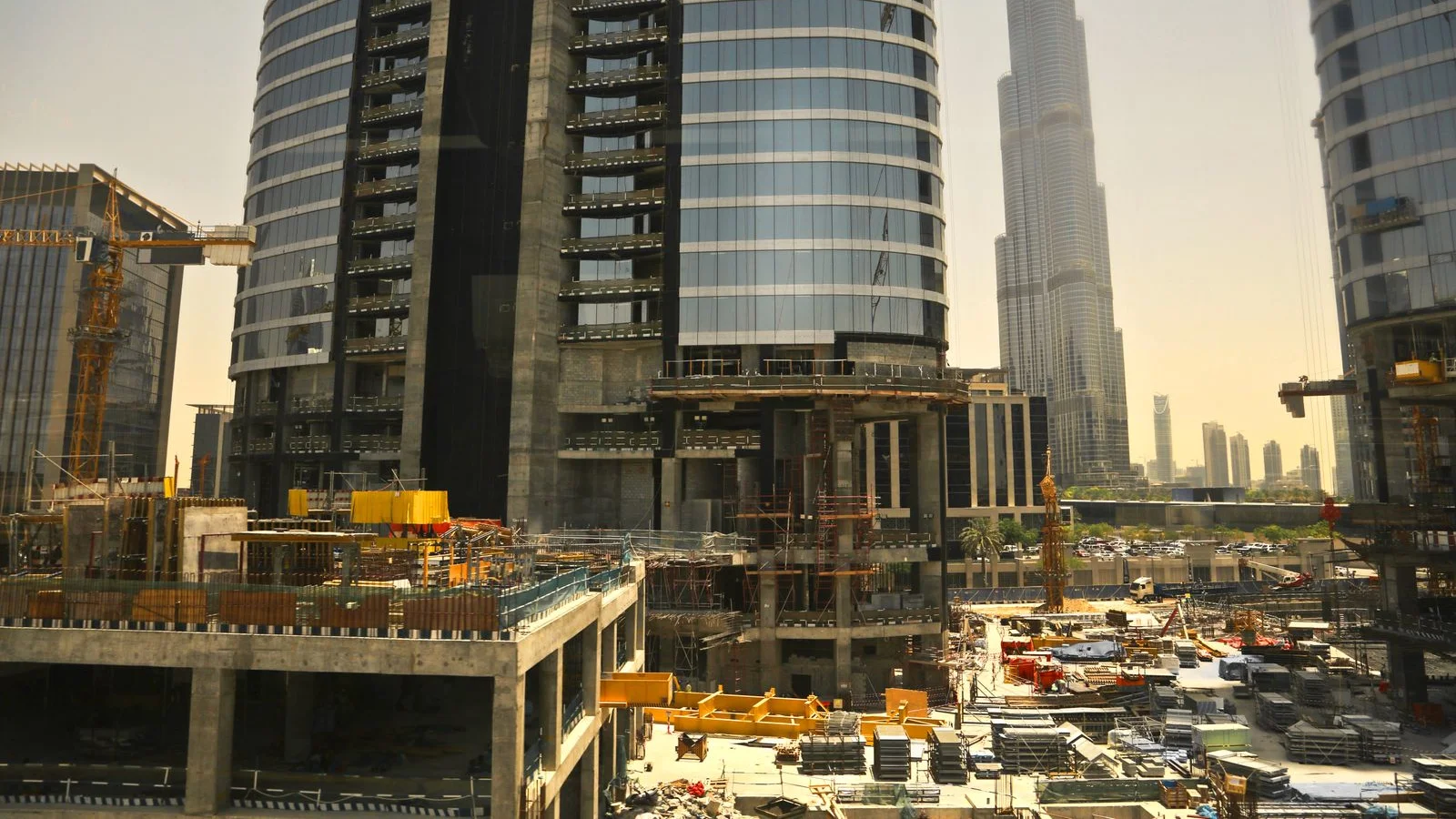
The same physical building can sit in more than one of those boxes depending on which floor, which unit, which supply and which year you are asking about. A developer selling apartments in a new tower, a business buying an office in it, and the coffee shop leasing the ground floor retail unit are all in different positions, in the same building, on the same day.
Since 2013, BusinessDubai.ae has set up companies that lease offices, warehouses, retail units and clinics across the UAE, and handled the licensing and tenancy paperwork that goes with them. This guide covers how the classification works, what it costs in real dirhams, when the 5% is recoverable and when it is a permanent cost, and the questions to ask before you sign. It is a guide, not tax advice, and the statutory detail sits in the VAT law and its Executive Regulations rather than in any article [4].
Why does the same building get three different VAT answers?
Short answer: because UAE VAT classifies the supply, not the address, and property throws up more classification categories than almost anything else in the tax.
The published position on UAE real estate breaks down into four cases [2].
| The supply | VAT treatment | Can the supplier recover input VAT on related costs? |
|---|---|---|
| Commercial property, sale or lease | Standard-rated at 5% [2] | Yes, on the normal tests |
| First supply of a residential building within 3 years of completion | Zero-rated at 0% [2] | Yes, this is the point of it |
| Residential property, subsequent sales and leases | Exempt [2] | No |
| Bare land | Its own category, generally treated as exempt | No |
Read that table twice, because rows two and three are the entire subject. Both produce an invoice with no VAT on it. To a buyer they look identical. To the seller they are financially opposite, because zero-rated is a taxable supply carrying a rate of zero, which keeps input tax recovery alive, while exempt is a different category that switches it off.
Common Mistake: Treating "no VAT charged" as a single outcome. It is two outcomes wearing the same clothes. Our guide to zero-rated exported services covers the same distinction in a services context, and it is the single most valuable idea in UAE VAT.
The other thing the table hides is that the classification attaches to the supply, not to the property. One building can generate a zero-rated supply this year, exempt supplies for the next thirty, and standard-rated supplies from its ground floor retail units throughout. The question is never "what is this building?" It is "what is this supply, of what part, by whom, and when?"
What makes a property commercial, and why is that the default?
Short answer: commercial is what everything that is not residential and not bare land falls into, and it carries 5% on both sale and lease.
Offices, retail units, warehouses, showrooms, clinics, restaurants, industrial units, labour accommodation of certain kinds, car parking, storage. If a business occupies it to do business from, the working assumption is that its sale and its lease are standard-rated at 5% [2].
That default is why founders get surprised. Residential rent in the UAE carries no VAT, and most people arrive at their first commercial lease with residential instincts. There is no equivalent to that treatment for an office. The 5% is on the rent, and in practice it lands on the other things the landlord invoices as well.
| Element of a commercial occupancy cost | Working expectation | What to do before signing |
|---|---|---|
| Base rent | 5% where the landlord is VAT-registered [2] | Confirm the quote is exclusive, in writing |
| Service charges | Generally follow the supply they relate to | Cap the charge before VAT, not after |
| Chiller and utility recharges | Follow the underlying supply | Model them at 5% too |
| Fit-out works billed by the landlord | A supply of services, not of property | Separate line, separate analysis |
| Security deposit | Not consideration for a supply | Do not budget VAT on it, and check the wording |
Real Talk: "AED 300,000" from a commercial agent almost always means exclusive of VAT, exclusive of service charges and exclusive of chiller. The number you sign up to and the number that hits your bank account are not the same number, and the gap is bigger than 5%. Get every line quoted separately and in writing before you commit. Our Dubai commercial lease guide covers the tenancy law and negotiation side that sits alongside this.
One point that matters and gets missed. The 5% is charged where the landlord is registered for VAT. A small individual landlord below the registration thresholds may not be charging it. That is not a discount you have negotiated and not a permanent feature of the property. If that landlord crosses AED 375,000 of taxable supplies, or the unit is sold to a registered owner, the position changes on the next invoice [1].
Signing your first UAE commercial lease and want the licence, activity and tenancy checked together? Talk to a setup expert→
Why does exempt residential hurt more than 5% ever could?
Short answer: because exempt supplies carry no input tax recovery, so every dirham of VAT on the costs behind them becomes a real, permanent cost that nobody can reclaim.
Take a landlord who owns residential units and lets them. The rent is exempt [2]. No VAT on the tenant's invoice, which sounds like a win, right up until you look at the cost side.
Everything that landlord buys to run those units carries VAT at 5%. Maintenance contractors. Agency fees. Furnishing. Repairs. Property management. Legal work. Because the supplies being made are exempt, that input tax is not recoverable in the way it would be for a commercial landlord.
Quick Math: A residential landlord spending AED 400,000 a year on maintenance, management and agency fees is paying AED 20,000 of VAT inside those costs. Exempt supplies mean that AED 20,000 stays a cost. The identical portfolio let commercially, with the same spend, would generally recover it. Over five years that is AED 100,000 of difference on the cost side of a business that never charged a tenant a fils of VAT either way.
That is the shape of the whole subject in one paragraph. Charging no VAT is not the good outcome. Charging no VAT while keeping your input recovery is the good outcome, and only one of the two no-VAT classifications does that.
| Position | VAT on the invoice you issue | Your own input VAT | Net effect on you |
|---|---|---|---|
| Standard-rated commercial | 5%, collected and paid over | Recoverable | The tenant or buyer bears the tax |
| Zero-rated first residential supply | None | Recoverable | The best position available |
| Exempt residential | None | Not recoverable | You absorb the VAT on your costs |
So do not assume a residential landlord is better off because "there is no VAT on residential." There is no output VAT. There is plenty of input VAT, and it has nowhere to go.
What is the three-year first supply rule, and why does it matter so much?
Short answer: the first supply of a new residential building within three years of completion is zero-rated, which lets the developer recover input VAT on construction. Miss the window or the definition and the same units become exempt, and that recovery disappears.
This is the distinction that moves the most money in UAE property, and it is the one developer content states least carefully.
The published position is that the first supply of a residential building within three years of its completion is zero-rated, and that subsequent supplies of residential property are exempt [2]. Zero-rated means the developer charges the buyer nothing, and still recovers the input VAT sitting inside construction costs, professional fees and materials. Exempt means the same nil invoice with none of that recovery.
Quick Math: On a residential project with AED 60,000,000 of construction and development costs carrying VAT, the input tax involved is AED 3,000,000. If the first supply is zero-rated, that is recoverable. If the same units are supplied outside the treatment and the supply is exempt, it is not. Same building, same buyers, same nil VAT on the sale contract, AED 3,000,000 difference to the developer.
Three things about this rule that are worth being precise on.
"First supply" means first. The benefit attaches to a supply, not to a building forever. Once the first supply has happened, later sales and leases of the same units fall to the exempt treatment [2]. A buy-to-let investor purchasing from a developer is not making a first supply when they let it out.
"Within three years of completion" is a window. It is dated from completion, and it closes. A developer holding stock for an extended period after completion should understand where the boundary sits for their project rather than assuming the treatment travels indefinitely.
"Residential building" is a defined term, not a plain-English one. This is where projects go wrong. Whether a specific building meets the definition is a legal question determined by the VAT law and its Executive Regulations [4] and the FTA's published position [2], and it turns on the facts of the building, its permitted use and how it is operated. We are not reproducing the definition here, because a summarised definition applied to a real project is how expensive mistakes get made.
Pro Tip: If you are developing residential, the VAT modelling belongs at the feasibility stage, not at handover. AED 3,000,000 of recoverable or unrecoverable input tax is not a compliance detail, it is a line in the development appraisal that changes the answer on whether the project works. Our guide to setting up a real estate development company covers the licensing, escrow and capital side of the same business.
Where does bare land sit?
Short answer: in its own category, generally treated as exempt, and the word doing all the work is "bare".
Bare land is the fourth case, and it does not follow either the residential or the commercial logic. The widely stated position is that it is exempt [2], which means no VAT charged and, following the same logic as exempt residential, no input recovery on related costs.
The interesting part is definitional. A plot with nothing on it is straightforward. A plot with partially completed structures, with infrastructure works, with foundations, or with civil works of various stages is a fact question, and the answer determines whether you are looking at an exempt supply of bare land or a standard-rated supply of something else entirely. On a large plot that difference is measured in millions.
| Situation | The question to actually ask | Who answers it |
|---|---|---|
| Genuinely undeveloped plot | Is it bare, on the facts, at the date of supply? | Your adviser, against the plot |
| Plot with partial works or structures | Does what is on it change the classification? | Your adviser, against the plot |
| Plot sold with a development obligation attached | Is this one supply of land or something more? | Your adviser, against the contract |
| Land inside a free zone | Does the zone change anything for this supply? | The zone and your adviser |
We are not going to define bare land for you, and you should not accept a definition from any article. On a land transaction the VAT question is worth a written adviser opinion on the specific plot before exchange, because it is not a percentage of the fee, it is a percentage of the price. Route the question to the Federal Tax Authority's published material and to a UAE tax adviser [2][3].
Is a lease a supply, or only a sale?
Short answer: both are supplies of the property, and the classification applies to both. A five-year office lease is not outside VAT because nothing changed hands on a title deed.
This confuses people because the mental model of VAT is buying things. Renting feels like a different kind of transaction. It is not. A lease of commercial property is a supply, standard-rated at 5%, and a sale of commercial property is a supply, standard-rated at 5% [2]. The classification travels with the type of property, not with whether ownership moved.
| Transaction | Treatment | Who typically bears it in practice |
|---|---|---|
| Sale of an office or retail unit | 5% on the price [2][3] | The buyer, on top of the price |
| Lease of an office, warehouse or retail unit | 5% on the rent [2] | The tenant, on every cheque |
| Sub-lease of commercial space | A supply in its own right | The sub-tenant |
| Sale of residential, after the first supply | Exempt [2] | Nobody pays VAT, and the seller recovers nothing |
| Lease of residential | Exempt [2] | Same |
The lease case is where the cash flow effect actually bites, because it repeats. A purchase is one 5% event. A lease is 5% on every rent cheque, every service charge and every recharge for the life of the lease, falling due on the landlord's dates rather than yours.
Quick Math: On AED 300,000 of annual rent plus AED 40,000 of service charges, the VAT is AED 17,000 a year. Across a five-year lease that is AED 85,000, none of which appears in the headline number an agent quotes. If you are VAT-registered and making taxable supplies, most of that is a timing cost rather than an absolute one. If you are not registered, it is simply a 5% increase in your occupancy cost.
If you are a tenant, can you recover the VAT on your rent?
Short answer: usually yes, where you are VAT-registered and the space is used to make taxable supplies. That single fact turns the 5% from a cost into a timing difference, and it is the reason the same lease is more expensive for some businesses than others.
This is the connection point between property classification and the rest of your VAT position. The 5% your landlord charges is input tax in your hands, and input tax is recoverable when it relates to making taxable supplies, subject to the document rules and the blocked categories. Our guide to UAE VAT input tax recovery covers those tests in full.
Which means the identical office costs different amounts to different tenants.
| Tenant | Position on the 5% on rent | Real cost of a 5% VAT charge |
|---|---|---|
| VAT-registered, all supplies taxable | Generally recoverable in full | A timing cost only |
| VAT-registered, mixed taxable and exempt supplies | Partly recoverable, subject to apportionment | Somewhere in between |
| VAT-registered, making only exempt supplies | Not recoverable on the same basis | The full 5%, permanently |
| Not registered, below the thresholds | Nothing to recover against | The full 5%, permanently |
Pro Tip: Two things have to be right before recovery works, and the second is the one that fails. First, you must be registered and making taxable supplies. Second, the tax invoice has to be in the name of the registered entity, which means the lease and the landlord's invoices must name your company, not you personally and not a related entity. Founders who signed the lease in their own name before the company existed lose the recovery on paperwork, not on principle.
A registered agency paying AED 17,000 a year of VAT on rent and service charges recovers it, so its occupancy cost is AED 340,000. An unregistered competitor in the identical unit pays AED 357,000 for the same space. Over a five-year lease that is AED 85,000 of difference produced entirely by registration status, on two businesses that look identical from the street.
That comparison is also an argument for looking at voluntary registration. It is available above AED 187,500 of taxable supplies, imports or taxable expenses [1], and for a business with a large lease and business customers the recovery can outweigh the compliance cost. Our VAT registration and compliance guide covers what registration involves.
Want the lease, the licence and the VAT registration sequenced properly? Get a free consultation→
Where do hotels and short-term accommodation sit?
Short answer: outside the residential treatment, which is why a hotel bill carries VAT and a residential lease does not.
This is the edge that catches property owners moving between models. An apartment let long-term to a family and the same apartment operated as short-stay accommodation with cleaning, linen and check-in bundled in are not the same supply, even though they are the same four walls.
Accommodation provided by hotels, serviced apartments and similar operations is excluded from the residential treatment, so it does not get the exempt outcome that an ordinary residential lease gets. The consequences run in both directions, and both matter.
Your revenue becomes a taxable supply. Which means it counts towards the AED 375,000 mandatory registration threshold, where exempt long-term residential rent from your other units does not [1]. Owners are frequently surprised by how quickly a small number of active short-stay units gets there.
Your input tax comes back to life. Furnishing, fit-out, appliances, management fees and platform commissions relate to a taxable supply, so the VAT inside them is recoverable on the normal tests. A landlord on an exempt long lease recovers none of that. This is a genuine and under-discussed advantage of the licensed short-stay route.
Our guide to setting up a holiday homes business in Dubai covers this model properly, including the platform commission and reverse charge mechanics, and our property management company setup guide covers the operator side.
One warning on how people reason about this. The licensing rules and the VAT test are two different tests that usually point the same way, and "my guest happened to stay a long time" is not an argument about a VAT classification.
Why is a mixed-use building the hardest case?
Short answer: because one building generates supplies in more than one category at once, so the owner has both a classification problem and an apportionment problem at the same time.
Picture a tower with retail units at street level, offices on floors two to six and apartments above. On any given day that owner is making standard-rated supplies from the retail and office space, exempt supplies from the residential leases, and possibly a zero-rated first supply of residential units in the same period.
Two consequences follow, and neither is optional.
Costs have to be attributed, and the leftovers apportioned. Costs that relate only to the commercial floors are one thing. Costs that relate only to the residential floors are another. The lobby, the roof, the structure, the building insurance, the management contract and the facade cleaning relate to everything, and the input tax on them cannot be recovered in full or denied in full. That is a partial exemption calculation, and the method has to fairly reflect how the costs were used. The concept is covered in our input tax recovery guide, and the method for a real building is a question for an adviser rather than for a formula from an article.
The mix changes, so the answer changes. Convert two office floors to residential and the recovery position moves. Sell the last of the new residential units and the zero-rated supplies stop while the exempt ones continue.
| Cost in a mixed-use building | Attribution | Practical implication |
|---|---|---|
| Fit-out of a retail unit | Commercial | Directly attributed, recovery on the normal tests |
| Maintenance of residential floors | Residential, exempt | Directly attributed, no recovery on the same basis |
| Lobby, structure, roof, insurance | Residual | Apportioned, and the method matters |
| Building management contract | Usually residual | Apportioned |
| Construction of new residential units | Relates to a zero-rated first supply | Recovery preserved, if the treatment holds |
Real Talk: Mixed-use is where property VAT stops being a lookup and becomes a project. If you own or are buying a mixed-use asset, the VAT position needs modelling before the acquisition, with an adviser, against the actual unit schedule. It is not a question you answer from a table, including ours.
Who pays the VAT on a commercial purchase, and how?
Short answer: the buyer bears it on top of the price, and the Federal Tax Authority publishes a dedicated user guide on how a commercial property buyer settles it.
On a commercial sale the 5% is not folded into the price and it is not the seller's problem. It sits on top, alongside the other transaction costs, and there is a specific published process for how a buyer of commercial property pays it [3].
We are not going to describe the mechanics step by step, because they are set out in the FTA's own user guide and that guide is where you should be reading them rather than a summary of them [3]. What matters at the point you are modelling a purchase is the size of the number and the fact that it is a separate cash requirement on completion.
Quick Math: On an AED 5,000,000 commercial unit, the VAT is AED 250,000, payable on top of the purchase price and separately from the registration and agency costs. On AED 12,000,000, it is AED 600,000. Where the buyer is registered and will use the property to make taxable supplies, that input tax may be recoverable, which makes it a financing and timing question rather than a permanent cost. Where the buyer is not registered, it is simply 5% more expensive.
Pro Tip: Model the VAT as a funding requirement at completion, not as a cost that nets off later. Even where it is recoverable, you pay it first and recover it through a return, and the gap between those two dates is real money that has to come from somewhere. Buyers who treated the recovery as instant have had to find several hundred thousand dirhams at short notice.
Buying through a company rather than personally does not change any of this. VAT follows the property and the type of supply, not the legal form of the buyer, and our guide to buying Dubai property through a company sets out what a corporate structure does and does not achieve.
Where does this actually go wrong?
Short answer: in five places, and four of them are settled before anyone signs anything.
The quote was exclusive and the budget was inclusive. The most common and the most avoidable. Get every element quoted separately, in writing, with the VAT position stated.
The lease is in the wrong name. The single most expensive paperwork failure in this subject. A registered company cannot recover VAT on invoices addressed to a founder personally. If the lease was signed before the company existed, fix it rather than living with it.
The classification was assumed from the marketing brochure. A brochure describes a building. The VAT rules describe a supply. A unit marketed as an office in a predominantly residential tower, or an apartment being used as a clinic, is a question rather than an answer.
The landlord's registration status was assumed to be permanent. No VAT on your rent today does not mean no VAT on your rent in year three. Ask the question rather than inferring it from the first invoice.
The mixed-use recovery position was never calculated at all. Owners of mixed assets who recover input tax in full because the commercial part feels like the main business have a problem that grows with every period.
| Failure | When it is fixable | Cost of fixing it later |
|---|---|---|
| Inclusive versus exclusive confusion | Before signing | An unbudgeted 5% for the lease term |
| Lease or invoices in the wrong name | Before the first invoice, ideally | Lost recovery, and a documentary argument |
| Classification assumed, not confirmed | Before exchange | Potentially the largest number in the deal |
| Landlord registration status assumed | Any time, by asking | A budget surprise mid-lease |
| Mixed-use recovery never calculated | Before the position accumulates | A correction across multiple periods |
Corrections to VAT already reported are not a quiet adjustment in the next return. The route depends on the nature and size of the error, and it is covered in our guide to VAT voluntary disclosure.
What should you ask before you sign or buy?
Short answer: nine questions, in writing, about the specific unit rather than about UAE property in general.
- Is this supply commercial, residential, a first supply of new residential, or bare land, and on what basis?
- Is the quoted price or rent inclusive or exclusive of VAT, and of service charges and chiller?
- Is the landlord or seller registered for VAT, and what happens to my costs if that changes?
- Which legal entity will the lease and the invoices name, and does that entity match my VAT registration?
- If I am buying, what is the total cash requirement at completion including VAT, and when can I expect to recover it?
- Do I make any exempt supplies, and does that restrict my recovery on this occupancy cost?
- If this is a mixed-use building, what is the apportionment position and who has calculated it?
- If this is land, does it meet the definition that gets it the treatment we are assuming?
- What evidence should I hold to support the treatment we adopt on this transaction?
Question four is the one that quietly decides whether the 5% is a timing cost or a real one, and it is answered by a name on a document rather than by anything technical.
Not sure your entity, licence and lease line up? Check your eligibility→
Real Client Stories
Real examples from businesses we have helped set up. Names have been changed for privacy.
Karim, the founder whose office lease was in his own name
Karim signed a three-year lease on a Dubai office while his company was still being formed, because the landlord wanted the unit committed and the licence was two weeks away. The lease named him personally. So did every rent invoice and every service charge invoice for the following two years.
The company registered for VAT and traded well, all supplies taxable. The VAT on rent and service charges ran to roughly AED 17,000 a year, and none of it was recoverable as it stood, because the documents named an individual rather than the registered entity making the claim. The landlord agreed to reissue and re-paper going forward once asked. The historic position went to an adviser.
His comment: "Two weeks of impatience at the start of a three-year lease, and it was never a tax question. It was a name on a piece of paper."
Layla, the landlord who thought no VAT meant no problem
Layla owned a small portfolio of residential units and was pleased that residential rent carried no VAT, which she read as her properties being outside the system. Her annual spend on maintenance, agency fees and management ran to about AED 400,000, carrying roughly AED 20,000 of VAT.
The point she had missed was that exempt supplies do not carry input recovery. There was no output VAT and no recovery either, so the VAT inside her costs was simply part of her costs. When she later licensed two units for short-stay letting, the position on those units changed in both directions at once: taxable revenue counting towards the registration threshold, and recovery on furnishing and management coming back to life.
Her comment: "I had understood exactly half of it. The half where I do not charge VAT is the half everybody tells you about."
Hassan, the buyer who forgot the 5% was cash
Hassan's trading company bought an AED 5,000,000 warehouse unit, funded to the dirham against the purchase price, the registration costs and the agency fee. The VAT was AED 250,000, on top, due at completion, and his model had treated it as recoverable and therefore as roughly nothing.
It was recoverable. It was also cash he did not have on the day, and it had to be found at short notice under time pressure. The recovery came through a return in the normal way, some months after the money went out.
His comment: "I was right that I would get it back. I was wrong that this meant I did not need it."
Get the classification confirmed before you sign
UAE property VAT is not difficult once you accept what it actually is. It is not a rate, it is a classification, and the classification decides everything downstream. Commercial is standard-rated at 5% on both sale and lease. The first supply of a new residential building within three years of completion is zero-rated, which preserves the developer's input recovery. Subsequent residential is exempt, which destroys it. Bare land sits in its own case [2].
The sequence that protects you is short. Establish which of those four cases your supply is in, and get it confirmed rather than assumed. Ask whether the quoted number is exclusive. Check the name on the lease and on the invoices against the entity that will be claiming. Establish whether your own supplies are taxable, because that determines whether the 5% is a timing cost or a permanent one. If the building is mixed-use, get the apportionment modelled before the position accumulates rather than after.
On a AED 300,000 lease with AED 40,000 of service charges, that is AED 17,000 a year of difference between getting it right and getting it wrong [1]. On a AED 5,000,000 commercial purchase it is AED 250,000. On a residential development it can be millions of input tax recovered or lost on a single classification.
Since 2013, BusinessDubai.ae has set up the companies that occupy this space. Our mainland company setup page prices the Dubai mainland route at AED 18,200 for the first year, where a tenancy and Ejari are part of the licensing requirement, and our free zone company setup page prices a Dubai free zone package at AED 12,800 for the first year with one visa included, where the premises requirement works differently. Our business setup in Sharjah page covers licences from around AED 5,750, our offshore company formation page covers structures that hold assets rather than trade, and our post-setup services team handles the VAT registration and returns that make the recovery work.
Frequently Asked Questions
Is VAT charged on commercial rent in the UAE?
Yes. The lease of commercial property is standard-rated at 5% where the landlord is registered for VAT [2]. It typically applies to service charges and landlord recharges as well, so budget the whole occupancy cost rather than the headline rent.
Is VAT charged on residential rent?
No. Residential leases are exempt [2]. The trade-off is that the landlord cannot recover the VAT on the costs of running those units.
What is the VAT rate on commercial property in the UAE?
5%, on both the sale and the lease of commercial property [2][3]. That is the standard UAE VAT rate [1].
What is the difference between zero-rated and exempt for property?
Both produce an invoice with no VAT. Zero-rated is a taxable supply at 0% and leaves the supplier's input tax recovery intact. Exempt is a different category that does not. For a developer that difference can be millions.
Why is the first sale of a new apartment zero-rated?
Because the first supply of a residential building within three years of completion is zero-rated [2], which lets the developer charge the buyer nothing while still recovering input VAT on construction costs. Subsequent supplies of the same units are exempt.
What happens after the three-year window?
Supplies of the residential property fall to the exempt treatment [2]. Where the boundary sits for a specific project is a question for a tax adviser against the completion date and the facts.
Does the three-year rule apply to commercial buildings?
No. Commercial property is standard-rated on sale and lease regardless of age [2]. The three-year first supply treatment relates to residential buildings.
Is bare land subject to VAT?
Bare land sits in its own category and is generally treated as exempt [2]. Whether a specific plot is bare is a fact question, particularly where there are partial works or structures, and it is worth a written adviser opinion before exchange.
Is a lease treated differently from a sale?
Both are supplies of the property and both carry the classification. A commercial lease and a commercial sale are each standard-rated at 5% [2]. The practical difference is that a lease repeats the charge on every rent cycle.
Can I recover the VAT on my office rent?
Generally yes, where you are VAT-registered and using the space to make taxable supplies, subject to the normal input tax rules. Our input tax recovery guide covers the tests and the document requirements.
My lease is in my personal name. Can my company recover the VAT?
That is the problem, not a detail. Recovery is evidenced by invoices addressed to the registered entity making the claim. Get the lease and the invoices reissued in the company's name, and take the historic position to an adviser.
What if my landlord is not registered for VAT?
Then no VAT is charged on the rent, because the landlord is not making taxable supplies at a registered level. That can change if the landlord crosses the registration thresholds or the property is sold, so do not model it as permanent [1].
Does the quoted rent usually include VAT?
Assume not. Commercial quotes in the UAE are typically exclusive of VAT, of service charges and of chiller. Ask for the position in writing before you sign.
Who pays the VAT when buying a commercial unit?
The buyer bears it on top of the price, and the Federal Tax Authority publishes a dedicated user guide for how a commercial property buyer settles it [3]. Read the process there rather than from a summary.
Can I recover the VAT I paid buying a commercial property?
Where you are registered and use the property to make taxable supplies, that input tax may be recoverable on the normal tests. Budget it as cash needed at completion regardless, because recovery comes later through a return.
Does buying through a company change the VAT position?
No. VAT follows the property and the type of supply, not the legal form of the buyer. Our guide to buying Dubai property through a company covers what a corporate structure does and does not change.
How is a mixed-use building treated?
As more than one thing at once. The owner attributes costs to the commercial and residential sides where it can, and apportions the residual costs that relate to both. The method has to fairly reflect the use, and it needs an adviser rather than a formula.
Is VAT charged on hotel and short-stay accommodation?
Accommodation in hotels, serviced apartments and similar operations does not get the residential treatment, so it is a taxable supply. Our holiday homes business guide covers the short-stay model in detail.
Does short-stay income count towards my VAT registration threshold?
Yes, because it is a taxable supply, unlike exempt long-term residential rent [1][2]. A small number of active units can reach AED 375,000 faster than owners expect.
Is VAT charged on service charges and chiller recharges?
They generally follow the supply they relate to, so on a commercial lease expect them to carry the same 5%. Negotiate any cap against the figure before VAT rather than after.
Do I pay VAT on my security deposit?
A deposit held as security is not usually consideration for a supply, but the wording of your specific lease matters. Check how the document describes it before you assume.
Does a free zone location change the property VAT position?
Free zone companies sit inside the UAE VAT system, and designated zones add a separate layer for goods rather than a general property exemption. Our designated zone VAT guide covers what that regime does and does not do.
Is this the same as corporate tax on property income?
No. VAT and Corporate Tax are separate regimes with separate registrations and returns. Corporate Tax is 0% on taxable income up to AED 375,000 and 9% above [5], and the free zone position on immovable property is covered in our real estate development guide.
What is the single biggest VAT mistake in UAE property?
Assuming that a supply with no VAT on the invoice is a good outcome. Zero-rated and exempt look identical to the person receiving the invoice and are financially opposite for the person issuing it.
Related reading: UAE VAT Input Tax Recovery, Dubai Commercial Lease Guide, Buying Dubai Property Through a Company, Dubai Office Space Options
References
[1] Federal Tax Authority. Registration for VAT, setting the standard rate at 5%, the mandatory registration threshold at AED 375,000 of taxable supplies and imports, and the voluntary threshold at AED 187,500 of taxable supplies, imports or taxable expenses. FTA VAT registration
[2] Federal Tax Authority. VAT frequently asked questions, confirming that residential property is generally exempt, that the first supply of a residential building within three years of completion is zero-rated, and that the sale and lease of commercial property are standard-rated at 5%. FTA VAT FAQ
[3] Federal Tax Authority. VAT Payment for Commercial Property Buyers, user guide, setting out how a buyer of commercial property settles the VAT on the purchase. FTA commercial property buyer user guide
[4] Federal Decree-Law No. 8 of 2017 on Value Added Tax and its Executive Regulations, Cabinet Decision No. 52 of 2017. These contain the definitions on which the property classifications turn, including what constitutes a residential building, together with the input tax recovery and apportionment provisions. This article describes their effect rather than reproducing their text. Ministry of Finance financial legislation
[5] The Official Portal of the UAE Government. Corporate tax at 0% on taxable income up to AED 375,000 and 9% above, a separate regime from VAT. u.ae corporate tax
[6] BusinessDubai.ae. Internal data from UAE company formations and post-setup work since 2013, including commercial leases signed in personal names, VAT budgeting on commercial purchases, and the recovery position of tenants with mixed supply profiles. businessdubai.ae