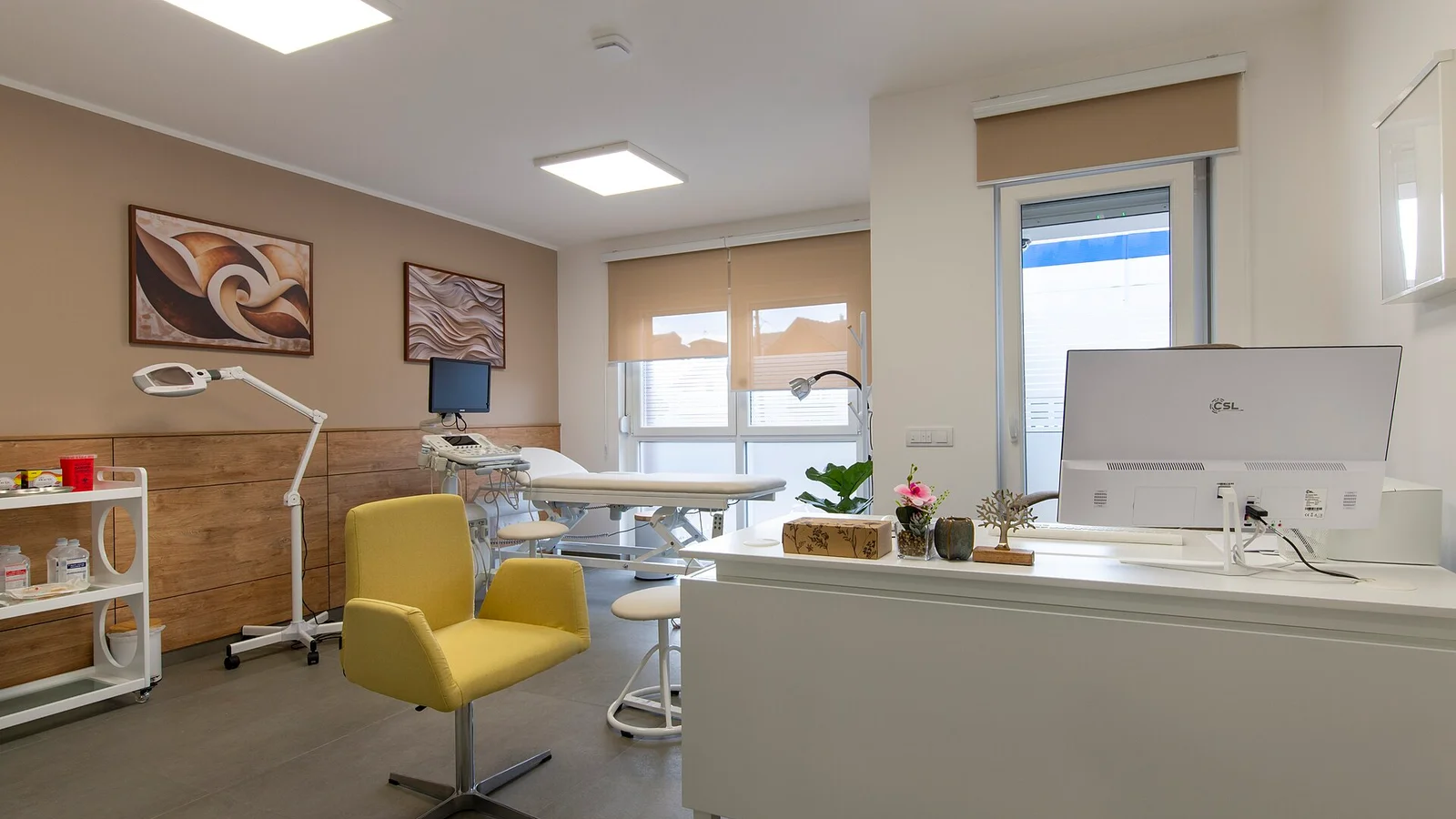
An aesthetic clinic in Dubai is a healthcare facility, not a beauty business, and getting that one classification wrong is where most plans fall apart. The Dubai Health Authority is explicit: non-surgical cosmetic services, meaning Botox, dermal fillers, mesotherapy, threads and medical lasers, must be provided in a DHA-licensed health facility that permits dermatology or plastic surgery [1]. There is no "aesthetic salon" pathway into injectables. A beauty salon licensed by Dubai Municipality cannot add them, and a clinic without the right DHA facility licence and the right doctors cannot open the doors.
That single fact reorders everything. It means two separate licences that neither substitutes for the other, a mandatory medical director, individually licensed physicians, a fit-out built to health-facility specification, and a VAT position that surprises founders who assumed "healthcare" means tax-free. The businesses that struggle here are the ones that budgeted for a salon and discovered they were opening a clinic.
This guide covers the DHA facility licensing, the exact line between what a salon may do and what needs a doctor, who is actually allowed to inject, the Dubai Healthcare City free-zone alternative, ownership, and the VAT trap on cosmetic work. Since 2013, our team has set up healthcare and regulated companies across the UAE, so the traps here come from real files. This is a guide, not medical, legal or tax advice on your specific clinic.
Why is an aesthetic clinic a health facility, not a beauty business?
Because DHA classifies it that way, and the classification decides the entire licensing route. The DHA standard states plainly that non-surgical cosmetic services must be provided in a DHA-licensed health facility permitting plastic surgery or dermatology, meaning a hospital, a day-surgical centre or an outpatient clinic [1]. It does not recognise a beauty establishment as a place where injectables or medical lasers can be delivered.
That means you are not licensing a salon with an upgrade. You are licensing a medical clinic, with everything that carries: a facility licence through DHA, individually licensed clinicians, a medical director, connection to the health-information exchange, medical-waste handling, malpractice cover and a physical inspection before you can activate services. Our general medical clinic guide covers the wider clinic-setup mechanics; this one focuses on what makes aesthetics its own regulated animal.
Common Mistake: Planning an aesthetic "studio" as a beauty business with a doctor visiting. DHA does not license it that way. The premises itself must hold a health-facility licence for dermatology or plastic surgery before any injectable or medical laser is legal on site. Budgeting for a salon fit-out and salon licence is the fastest way to a stalled launch.
What are the two licences you actually need?
A facility licence and individual professional licences, and both must be live before you treat a single patient. They run in parallel and neither replaces the other [1][2].
- The facility licence, through Sheryan. DHA's Health Regulation Sector licenses the premises through the Sheryan platform. You apply for a new facility licence, then apply for permission for each specific service you want to offer, and put internal policies in place, including a written policy defining what counts as a medical procedure. The premises must be built to the DHA Health Facility Guidelines, connect to the NABIDH health-information network, carry malpractice insurance and a medical-waste contract, hold a Civil Defence approval, and pass a physical DHA inspection before activation.
- Professional licences, per clinician. Every doctor, nurse and technician must hold an active DHA professional licence and work strictly within their scope of practice and granted privileges. A facility licence cannot be fully activated without licensed professionals on record, and each professional licence is tied to the facility.
The practical sequence is that the commercial licence and the DHA facility licence and the professional licences all have to line up. You cannot open on the trade licence alone, and you cannot treat on the facility licence without the right licensed doctors attached.
Where is the line between a salon and a clinic?
At the needle and the medical laser, and this is the single most important thing to understand before you spend a dirham. DHA's own procedure table settles it: anything that puts a drug or device under the skin, or uses a medical-grade laser, is a medical act reserved to DHA-licensed physicians in a DHA-licensed clinic. A Dubai Municipality beauty salon performing these is operating illegally [1].
On the clinic-only, physician-only side sit Botox, all dermal fillers, mesotherapy, platelet-rich plasma, thread lifts, deep chemical peels and laser tattoo removal. Several of these go further and are restricted to a consultant or specialist dermatologist or plastic surgeon specifically, including fillers and Botox in the body, and nose fillers, which not even a general practitioner may perform [1].
On the salon-permitted side, a beauty therapist may do superficial chemical peels, hydra-facials, microdermabrasion, semi-permanent makeup and microblading, external body-shaping machines and topical treatments. But DHA draws two hard carve-outs even here: a salon therapist may not perform laser hair removal or IPL, and may not perform microneedling. Laser hair removal must happen in a DHA-licensed facility, and a therapist can only assist after obtaining a specific DHA "Laser Hair Technician" title [1]. Our beauty salon guide covers the salon side; the moment you cross into injectables or medical lasers, you are in clinic territory.
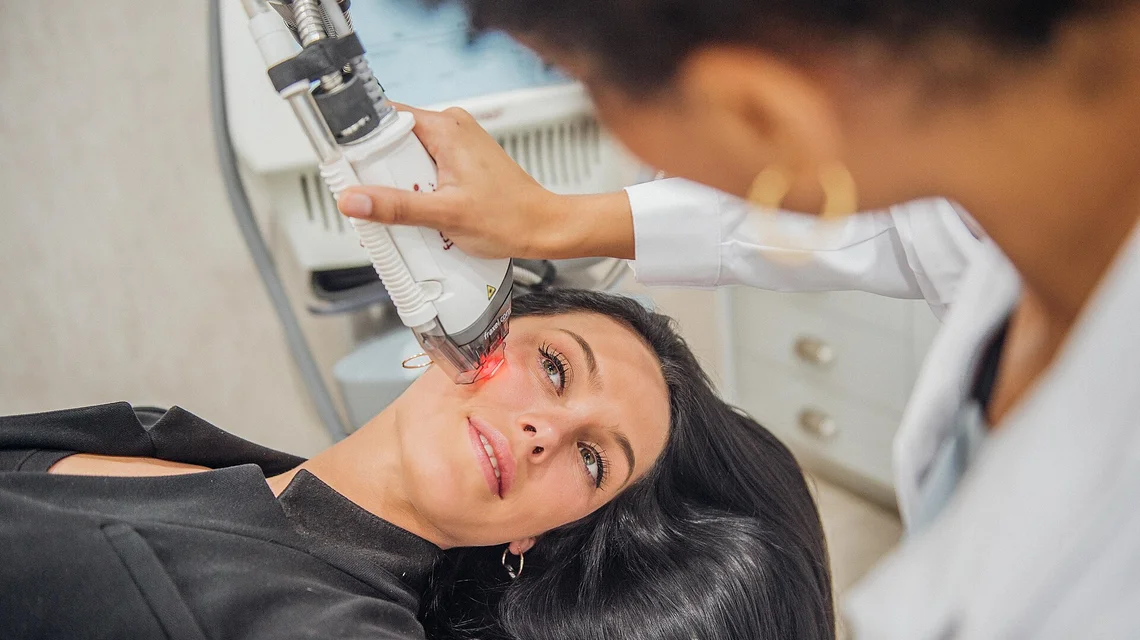
Who is actually allowed to inject?
Fewer people than founders assume, and this is where "any doctor can do Botox" falls apart. DHA ties every procedure to a professional category, and the injectable rules are strict [1].
- Dermatologists and plastic surgeons can perform the full non-surgical range within scope, and need no additional cosmetic-training certificate or separate laser licence for it.
- General practitioners may inject only after meeting a demanding bar: at least two years of clinical experience before any cosmetic training, an accredited in-person cosmetic-training certificate, and a one-year mentorship under a consultant or specialist dermatologist or plastic surgeon, plus privileging by the clinic's committee. Even then, a GP cannot do nose or body fillers or Botox, which stay consultant-only.
- Nurses, physiotherapists and beauty therapists cannot inject at all. They may perform only a limited set of procedures, and only under the written treatment plan of a consultant or specialist dermatologist or plastic surgeon.
Behind all of this sits a mandatory medical director. The facility must have at least one full-time or part-time DHA-licensed consultant or specialist plastic surgeon or dermatologist to supervise non-surgical cosmetic procedures, and that person leads the committee that privileges every provider against DHA's procedure table [1]. The clinical bottleneck, finding and retaining that specialist, is the real constraint on the business, more than the shareholding or the fit-out.
Real Talk: The scarce resource in this business is not capital or a location. It is the DHA-licensed consultant dermatologist or plastic surgeon who has to sit on your licence and supervise. Salaries for that role are the largest ongoing cost, and the licence depends on the role being filled. Line up that specialist before you sign a lease, because without them you have an expensive room you cannot legally use. Get your clinic setup and DHA licensing scoped properly→
DHA or Dubai Healthcare City: which regulator?
They are two different regimes, and it is an either-or choice, not an add-on. A mainland Dubai clinic is regulated by DHA and commercially registered with DET. A clinic inside the Dubai Healthcare City (DHCC) free zone is not regulated by DHA at all; it is licensed by DHCC's own regulator, the Centre for Healthcare Planning and Quality, under the Dubai Healthcare City Authority [1][4].
That means DHCC is a genuinely separate path: campus-based premises inside the free zone, CPQ standards instead of DHA's Sheryan process, and the free-zone commercial and tax framework. It suits operators who want the healthcare-cluster address and the free-zone structure and are willing to be inside DHCC's estate. A mainland DHA clinic gives you freedom of location across Dubai under DHA regulation. Neither is universally better; they are different jurisdictions, and you pick one at the start rather than switching later. Because that structural choice decides your ownership, cost and where the clinic can physically sit, it is worth reading both routes before you commit. A DHA-licensed clinic is commonly a mainland operation, so our mainland company setup page walks through the DET route it needs, while the free zone company setup page explains the free-zone framework the DHCC route runs on, since DHCC is itself a healthcare free zone with its own regulator. Our free zone versus mainland guide covers the structural trade-offs.
Can a foreigner own an aesthetic clinic in Dubai?
Yes, and you do not need to be a doctor to own it. Since the 2021 Commercial Companies Law reform, most mainland healthcare activities allow 100% foreign ownership through DET, with no Emirati partner required, and the DHCC free zone independently offers full foreign ownership [7]. Ownership is open.
The catch is not equity, it is the licence to operate. The clinic cannot function without employing the DHA-licensed medical director and the supervising consultant or specialist. So a non-medical investor can own the clinic outright but must build the business around the licensed clinical team that DHA requires. The constraint is clinical, not who holds the shares. Confirm with DHA whether the specific activity code you choose ties any role to a licensed professional.
How is an aesthetic clinic taxed?
Standard-rated, and this is the tax trap that catches almost every new clinic. Founders assume healthcare is VAT-free. It is not uniformly. Under the VAT executive regulations, only preventive and basic healthcare aimed at treating or preventing illness is zero-rated. Procedures that are primarily cosmetic or elective, meaning Botox, dermal fillers, elective cosmetic surgery and teeth whitening, are standard-rated at 5% [6]. Because most of an aesthetic clinic's revenue is elective cosmetic work, it is a standard-rated business, it will almost certainly cross the AED 375,000 VAT-registration threshold, and coding cosmetic work as zero-rated is one of the most common errors the tax authority flags in healthcare audits. Our VAT registration and compliance guide covers the mechanics.
On corporate tax, the clinic pays 0% on taxable income up to AED 375,000 and 9% above, with Small Business Relief available for revenue up to AED 3 million for tax periods ending on or before 31 December 2029, and a DHCC free-zone entity may access the 0% Qualifying Free Zone Person regime on qualifying income subject to conditions [7]. Our corporate tax filing guide covers the detail. The headline to hold onto: an aesthetic clinic is a standard-rated VAT business, not a zero-rated one, and pricing and compliance need to reflect that from day one.
What does it cost, and is it worth it?
Setup is meaningfully more than a salon, driven by the fit-out and the clinical team. Here is a realistic 2026 picture in AED, all figures approximate and worth confirming against current schedules.
| Item | Typical range (AED) |
|---|---|
| DET trade licence, initial approval, name | 15,000 to 30,000 |
| DHA facility licence | 5,000 to 40,000 by size |
| Fit-out to DHA / Health Facility Guidelines spec | 250,000 to 800,000+ |
| Professional licences (DataFlow, Prometric, DHA), per clinician | 3,000 to 7,000 |
| Consultant dermatologist / plastic surgeon medical director | Salary, the real ongoing cost |
| Lasers and energy devices | 100,000 to 500,000 |
An all-in setup frequently lands between AED 500,000 and 1.5 million+, depending on size, location and equipment, with the fit-out and the devices the largest variables. The market case is strong: the UAE cosmetic-procedure market is on track toward roughly USD 880 million by 2033 at high single-digit growth, medical tourism is a stated DHA strategic pillar, and Dubai already hosts around 400 aesthetic clinics [8]. That density is the honest caveat too, because it is a competitive, premium market where the winners compete on clinical reputation and the licensed specialists they retain, not on being cheap.
Is an aesthetic clinic a profitable business in Dubai?
It can be genuinely profitable, because Dubai stacks three demand drivers at once, but the market is dense and the DHA licensing barrier is both the obstacle and the moat. The city is a medical-tourism hub, cash-pay cosmetic demand is high, and the resident base skews young, high-income and majority-expat.
The demand side is strong. Dubai markets itself as a medical-tourism destination, pulling in international patients for injectables, laser work and cosmetic treatment at prices below Europe, and that sits on top of a large, high-income, majority-expat resident population that pays cash for elective cosmetic work. The UAE cosmetic-procedure market is on track toward roughly USD 880 million by 2033 at high single-digit growth, and Dubai already hosts around 400 aesthetic clinics [8].
The honest counterweight is that same density, the DHA licensing barrier, and the VAT position. Around 400 clinics means location, clinical reputation and the specialists you retain decide whether you fill appointment books or sit idle. The DHA facility licence and the mandatory medical director slow entry, but that barrier is exactly what stops the market flooding overnight and protects the clinics already trading. And unlike a therapeutic medical clinic, cosmetic revenue is standard-rated at 5% VAT rather than zero-rated, so the tax line is a real part of the pricing. Where an aesthetic clinic sits against its two closest clinic neighbours is worth seeing before you fix your licence scope.
| Feature | Aesthetic clinic | Dental clinic | General medical clinic |
|---|---|---|---|
| Primary regulator | DHA (or DHCC) | DHA (or DHCC) | DHA (or DHCC) |
| Fit-out intensity | Moderate to high (lasers, treatment rooms) | High (surgery, imaging, sterilisation) | Moderate |
| VAT profile | Standard-rated 5% (cosmetic) | Mixed: therapeutic 0%, cosmetic 5% | Mostly zero-rated therapeutic |
| Typical demand driver | Cash-pay cosmetics and medical tourism | Insured routine plus cash cosmetics | Insured primary care |
If your plan leans toward the DHCC healthcare-cluster address rather than a mainland DHA licence, read the free zone company setup route alongside this guide, and our dental clinic guide if you are weighing dentistry's mixed VAT profile against pure cosmetics. Based on our experience, the clinics that thrive here pick a clear positioning and a strong medical director, then build volume around it, rather than competing on price.
What documents and steps does it take to open an aesthetic clinic?
More paperwork than a normal company, because DHA licenses the premises, the services and every clinician, not just the entity. Assemble the documents in the right order and the pathway is predictable; leave the medical director or the clinician licensing to the end and the opening slips by weeks. Here is the core checklist.
- Company documents: shareholder passports and photos, the reserved trade name, DET initial approval (or DHCC registration for the free-zone route), the Memorandum of Association, and an Ejari tenancy for the clinic premises.
- Premises and layout: floor plans built to the DHA Health Facility Guidelines for an outpatient clinic permitting dermatology or plastic surgery, drawn by a DHA-approved consultant, with treatment rooms, a laser room and medical-waste handling.
- Equipment approvals: DHA-approved models for lasers and energy devices, with device registration and safety documentation for each unit.
- People: the DHA-licensed consultant or specialist medical director, plus DataFlow primary-source verification and Prometric results for every physician, nurse and technician, each privileged against DHA's procedure table.
- Systems and safety: NABIDH connectivity for electronic medical records, malpractice insurance, a medical-waste contract, and Civil Defence fire-safety approval.
The sequence matters as much as the list, because each step gates the next. This is the realistic order and timeline, with the clinical-licensing track running in parallel with the fit-out rather than after it.
| Step | What happens | Typical timeline |
|---|---|---|
| DET (or DHCC) licence and initial approval | Company legally exists, activity confirmed | 1 to 3 weeks |
| Sheryan facility application and DHA layout approval | Premises approved as a health facility before fit-out | 2 to 6 weeks |
| Fit-out to approved drawings | Treatment and laser rooms built to spec | 4 to 12 weeks |
| DataFlow and Prometric for clinicians | Primary-source verification and licensing exam | 4 to 8 weeks, start early |
| NABIDH connection and DHA inspection | Records exchange live, physical inspection passed | 1 to 3 weeks |
| Licence activation | Facility licence issued, clinic may treat patients | On passing inspection |
The two items founders start too late are recruiting the medical director and the clinician DataFlow verification, and either can quietly become the critical path. Start them the day the layout is approved, not after fit-out. Talk to a setup expert→ and we will map the sequence against your device list and your doctors.
What are the ongoing costs and compliance for an aesthetic clinic?
Opening the clinic is the start of the compliance work, not the end of it, and the annual stack is heavier than a normal trade business because the health regulator and the tax authority both want their filings. Budget for these from year one rather than treating them as surprises. The DHA facility licence renews annually and is tied to the clinic still meeting the Health Facility Guidelines, so a lapsed standard or an expired professional licence on staff can hold it up. Every physician, nurse and technician carries their own DHA professional licence with its own renewal cycle, and a clinician whose licence lapses cannot legally treat patients, so tracking those dates is a real operational task.
On top of the health-authority renewals, the running obligations include NABIDH connectivity kept live, malpractice and clinic insurance renewed, the medical-waste contract maintained, Civil Defence fire-safety renewal, and the privileging records kept current whenever a clinician joins or leaves. Then there is tax. The clinic registers for corporate tax and files annually, paying 0% on taxable income up to AED 375,000 and 9% above, and it charges and files 5% VAT on its standard-rated cosmetic revenue. Most mainland companies must also keep an Ultimate Beneficial Owner register current. Economic Substance Notifications no longer belong on this list, having been cancelled for financial years ending after 31 December 2022. These recurring renewals, licence tracking and VAT filings are exactly the kind of ongoing work our post-setup services handle, so the clinic stays licensed and compliant while your team focuses on patients. The clinics that get into trouble here are usually the ones that treated compliance as a one-time setup cost rather than an annual running one.
Can you open a corporate bank account for an aesthetic clinic?
Yes, and once the DHA facility licence is in hand it is a fairly normal onboarding, but expect the standard UAE process, not an instant or fully remote account. UAE banks do not open fully-remote corporate accounts for a physical, regulated healthcare operation, and a signatory generally has to attend an in-person meeting for know-your-customer checks on the shareholders, the clinical activity and the expected turnover, with the trade licence, the DHA facility licence and the Ejari tenancy in hand.
Practically, a clean file speeds it up: the licences, the tenancy, shareholder documents and a short business plan showing the clinic's services and projected patient revenue. A maintained minimum balance is normal, and because an aesthetic clinic collects mostly card and cash payments from cash-pay patients, getting the merchant and payment setup right early avoids cash-flow friction once the treatment rooms are busy.
Real Client Stories
The salon that wanted to add Botox. A beauty-salon owner planned to bring in a nurse to do injectables and treat it as a service add-on. DHA does not permit that: Botox and fillers require a licensed physician inside a DHA-licensed clinic, and a salon licence covers none of it. We set her up correctly as a licensed clinic with the right medical team, rather than risk an illegal operation and closure.
The clinic waiting on one doctor. A client built and fitted out a clinic before securing the consultant dermatologist the licence requires, and the premises sat idle, burning rent, until the specialist was in place and privileged. We now line up the medical director and supervising specialist before the lease is signed, so the room is never empty and unlicensed.
The zero-rated invoices that were not. A clinic coded its Botox and filler revenue as zero-rated healthcare and under-collected VAT, exposing it on audit. Elective cosmetic work is standard-rated at 5%. We corrected the VAT position and pricing. The clinic is a standard-rated business, and treating it as tax-free was a costly assumption.
Set up your Dubai aesthetic clinic the right way
An aesthetic clinic rewards founders who accept that it is a regulated health facility and build around the DHA rules, and it punishes those who treat it as a beauty business with injectables bolted on. Since 2013, BusinessDubai.ae has completed 700+ company registrations across the UAE, including healthcare and clinic setups. We will help you choose between the DHA mainland route and the DHCC free zone, license the facility through Sheryan to specification, recruit and license the medical director and supervising specialist, get every clinician through DataFlow and DHA licensing, build the fit-out to Health Facility Guidelines, and set up the VAT and corporate tax position correctly for cosmetic work, all with clear itemised pricing. Talk to a setup expert→ for a plan built around your clinic. Our medical clinic guide covers the wider clinic mechanics, and post-setup services covers ongoing licensing and renewals.
Frequently Asked Questions
How do I start an aesthetic clinic in Dubai?
Register a commercial licence with DET (or DHCC for the free-zone route), then license the premises as a health facility through DHA's Sheryan platform for dermatology or plastic surgery, appoint a DHA-licensed medical director, license each clinician, build the fit-out to DHA specification, and pass the DHA inspection before you treat patients [1][2].
Is an aesthetic clinic a health facility or a beauty business?
A health facility. DHA requires non-surgical cosmetic services such as Botox, fillers and medical lasers to be provided in a DHA-licensed clinic permitting dermatology or plastic surgery. A beauty salon licence does not cover any injectable or medical-laser treatment [1].
Can a beauty salon do Botox and fillers in Dubai?
No, and doing so is illegal. DHA's procedure rules reserve Botox, all fillers and mesotherapy to DHA-licensed physicians inside a DHA-licensed clinic. Nurses and beauty therapists cannot inject, and a Dubai Municipality salon licence does not authorise any of it [1].
Who is allowed to inject Botox and fillers in Dubai?
Dermatologists and plastic surgeons can do the full range within scope. GPs can inject only after two years' experience, accredited cosmetic training and a one-year mentorship, and still cannot do nose or body fillers, which are consultant or specialist only. Nurses and therapists cannot inject [1].
Do you need a medical director for an aesthetic clinic?
Yes. The facility must have at least one full-time or part-time DHA-licensed consultant or specialist plastic surgeon or dermatologist to supervise non-surgical cosmetic procedures and to privilege providers. The licence depends on the role being filled, which makes it the real constraint on the business [1].
What is the difference between DHA and Dubai Healthcare City licensing?
DHA regulates mainland Dubai clinics, registered commercially with DET. Clinics inside the DHCC free zone are regulated instead by DHCC's own Centre for Healthcare Planning and Quality, on a campus basis. It is an either-or jurisdiction choice made at the start, not an add-on [1][4].
What is Sheryan?
Sheryan is the DHA Health Regulation Sector's licensing platform for health facilities and professionals. You use it to apply for the facility licence, request permission for each service, and activate each clinician's DHA professional licence against the facility [2][3].
Can a foreigner own 100% of an aesthetic clinic in Dubai?
Yes. Most mainland healthcare activities allow 100% foreign ownership through DET with no Emirati partner, and DHCC offers full foreign ownership in the free zone. You do not need to be a doctor to own the clinic, but you must employ the DHA-licensed medical director and specialists [7].
Are aesthetic procedures VAT-exempt in Dubai?
No. Only preventive and basic healthcare is zero-rated. Elective cosmetic procedures such as Botox, fillers, cosmetic surgery and teeth whitening are standard-rated at 5%. Most aesthetic-clinic revenue is therefore standard-rated, and mis-coding it as zero-rated is a common audit error [6].
How much does it cost to open an aesthetic clinic in Dubai?
An all-in setup frequently runs AED 500,000 to 1.5 million or more, driven mainly by the fit-out to DHA specification and the laser and energy devices. Licences are a smaller part; the medical director's salary is the main ongoing cost. All figures are approximate.
How long does it take to set up an aesthetic clinic in Dubai?
Commonly around one to six months end to end, driven mainly by the fit-out to DHA specification and the inspection cycle, and by getting the clinical team through DataFlow primary-source verification and DHA licensing [5]. Confirm current DHA processing times, as they vary with premises readiness.
Can a GP do cosmetic injectables in Dubai?
Only within limits. A GP needs at least two years' clinical experience, an accredited in-person cosmetic-training certificate, a one-year mentorship under a consultant or specialist dermatologist or plastic surgeon, and privileging by the clinic committee, and still cannot perform nose or body fillers or Botox [1].
Can a nurse do laser hair removal in a salon?
No. Laser hair removal and IPL must be performed in a DHA-licensed health facility, not an ordinary salon, and a nurse or therapist can only assist after obtaining a specific DHA "Laser Hair Technician" licence title under a physician's written plan [1].
What is NABIDH and does my clinic need it?
NABIDH is Dubai's health-information exchange. A DHA-licensed facility must connect to it as part of the facility licensing requirements, alongside malpractice insurance, a medical-waste contract and Civil Defence approval, before the licence is activated [2].
Is corporate tax charged on an aesthetic clinic?
Yes, at 0% on taxable income up to AED 375,000 and 9% above. Small Business Relief can treat revenue up to AED 3 million as having no taxable income for tax periods ending on or before 31 December 2029, and a DHCC entity may access the free-zone 0% regime on qualifying income [7].
What procedures can a beauty therapist legally do in Dubai?
Superficial chemical peels, hydra-facials, microdermabrasion, semi-permanent makeup, microblading, external body-shaping machines and topical treatments. They cannot do injectables, and DHA specifically bars therapists from laser hair removal, IPL and microneedling [1].
Do I need Civil Defence approval for an aesthetic clinic?
Yes. A Civil Defence approval is part of the DHA facility licensing requirements, along with the health-facility fit-out, NABIDH connectivity, insurance and the medical-waste contract, before the clinic can be inspected and activated [2].
What is the Clinical Privileging Committee?
It is the committee, led by the medical director and including at least one consultant or specialist dermatologist or plastic surgeon, that privileges or un-privileges every provider against DHA's procedure table, deciding exactly which treatments each clinician may perform [1].
Can I run an aesthetic clinic from a Dubai free zone?
Yes, through Dubai Healthcare City, which licenses clinics under its own regulator rather than DHA, on a campus basis with the free-zone commercial and tax framework. It is a separate jurisdiction from mainland DHA licensing, chosen at the outset [4].
Is the aesthetic market in Dubai profitable?
It can be, but it is competitive. The UAE cosmetic-procedure market is on track toward roughly USD 880 million by 2033 at high single-digit growth, supported by medical tourism, but Dubai already hosts around 400 clinics, so winners compete on clinical reputation and retained specialists, not price [8].
What happens if a clinic offers procedures beyond its licensed scope?
It is operating outside DHA licensure and risks penalties and closure, because every provider is privileged only for specific procedures against DHA's table, and the facility is licensed only for approved services. Scope discipline is central to staying compliant [1].
Do lasers and energy devices need approval for an aesthetic clinic in Dubai?
Yes. Lasers and energy-based devices for cosmetic use must be DHA-approved models installed in a DHA-licensed facility, with device registration and safety documentation, and only privileged clinicians may operate them. A medical-grade laser is a medical act, not a salon service, so it cannot sit in an unlicensed beauty premises [1].
What is scope of practice for an aesthetic clinic in Dubai?
Scope of practice is the exact list of procedures each clinician is licensed and privileged to perform against DHA's procedure table. A dermatologist or plastic surgeon has the widest scope, a GP a limited one even after training, and nurses and therapists narrower still. Working outside scope risks penalties and closure [1].
Does the medical director have to work full-time at an aesthetic clinic?
The facility must have at least one full-time or part-time DHA-licensed consultant or specialist dermatologist or plastic surgeon as medical director to supervise non-surgical cosmetic procedures and chair privileging. The role can be part-time, but the licence depends on it being filled by the right specialist [1].
Can a nurse inject Botox under a doctor's supervision in Dubai?
No. Nurses, physiotherapists and beauty therapists cannot inject at all in Dubai, even under supervision. They may perform only a limited set of procedures under the written treatment plan of a consultant or specialist dermatologist or plastic surgeon, and injectables stay with licensed physicians [1].
What are the advertising rules for cosmetic procedures in Dubai?
Cosmetic and health advertising in Dubai needs DHA advertisement approval, and content must be truthful, not guarantee results, and not use misleading before-and-after claims. Promoting prescription injectables like Botox to the public and offering medical procedures as prizes or discounts is restricted, so marketing has to be cleared rather than free-form [1].
Can an aesthetic clinic offer laser hair removal in Dubai?
Yes, but only inside the DHA-licensed facility, not in a salon. Laser hair removal and IPL are reserved to a licensed health facility, and a technician can assist only after obtaining a specific DHA "Laser Hair Technician" title, working under a physician's plan [1].
Do aesthetic clinics pay VAT on Botox and fillers in Dubai?
Yes, at the standard 5% rate. Botox, dermal fillers and other elective cosmetic procedures are standard-rated because they are cosmetic rather than preventive or basic healthcare, so an aesthetic clinic charges 5% VAT and registers once taxable supplies pass the AED 375,000 threshold [6].
Can I convert my beauty salon into an aesthetic clinic in Dubai?
Not by upgrading the salon licence. An aesthetic clinic is a DHA-licensed health facility with a medical director, licensed physicians and a health-facility fit-out, none of which a Dubai Municipality salon licence covers. You license a new clinic, you do not add injectables to a salon [1].
References
[1] Dubai Health Authority, Standards for Non-Surgical Cosmetic Procedures, Version 2.1 (DHA/HRS/HPSD/ST-05, effective 18 February 2025): facility requirements, the salon-versus-clinic procedure allocations in Appendix 1, injectable and laser rules, and the medical-director and privileging requirements. DHA cosmetic procedures standard
[2] Dubai Health Authority, Manual for Licensing Health Facilities: facility licensing process, requirements, NABIDH and inspection through the Sheryan platform. DHA facility licensing manual
[3] Dubai Health Authority, Health Regulation Sector and Sheryan licensing platform: facility and professional licensing portal. DHA Health Regulation
[4] Dubai Healthcare City Authority and its Centre for Healthcare Planning and Quality (CPQ): the free-zone regulator for clinics inside DHCC, separate from DHA. Dubai Healthcare City
[5] The DataFlow Group, Primary Source Verification for DHA practitioner licensing, with the physician exam via Prometric, completed through the Sheryan process. DataFlow Group
[6] UAE Federal Tax Authority, VAT executive regulations (Cabinet Decision No. 52 of 2017), Article 41 on zero-rating of healthcare: preventive and basic healthcare is zero-rated while elective cosmetic procedures are standard-rated at 5%. Federal Tax Authority
[7] UAE Ministry of Finance and Federal Tax Authority, corporate tax (Federal Decree-Law No. 47 of 2022) and Small Business Relief (Ministerial Decision No. 73 of 2023, as amended by Ministerial Decision 131 of 2026): 0% to AED 375,000 then 9%, and revenue up to AED 3 million treated as no taxable income for periods ending on or before 31 December 2029. Ministry of Finance corporate tax
[8] Grand View Research, UAE and Middle East Cosmetic Surgery and Procedure Market: market size and growth for the UAE aesthetics sector. Grand View Research