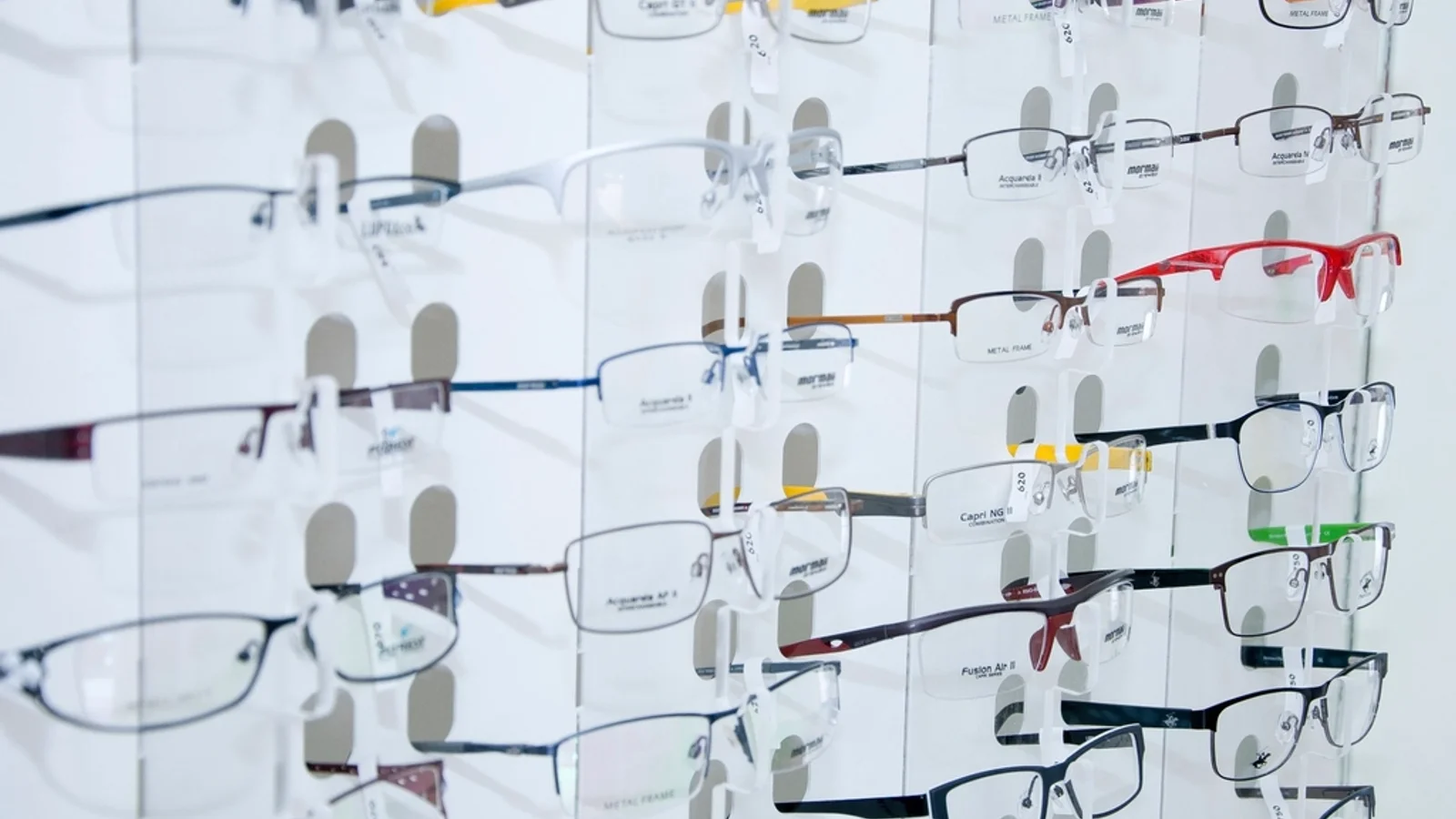
An optical shop in Dubai is not plain retail, and that is the first thing to get right. The moment the outlet does eye tests or dispenses prescription glasses or contact lenses, it becomes a DHA-licensed health facility, an Optical Centre, not just a DET-licensed store [1][2]. That two-track structure, a facility licence plus individually DHA-licensed professionals, is the real moat, and it is what separates a genuine opticians from a sunglasses kiosk.
The distinction runs through everything. A pure fashion-sunglasses retailer sits close to ordinary retail, needing product conformity on the goods but not a health-facility licence. An opticians that refracts eyes and dispenses prescription eyewear needs a DHA Optical Centre licence, a licensed optometrist to test eyes and licensed opticians to dispense, and a compliant refraction room [1][3]. Deciding which business you are, early, decides which licences you need.
This guide covers the DHA Optical Centre licensing, the optician-versus-optometrist scope, the retail-versus-clinical split, ownership, and why frames and sunglasses are standard-rated while eye tests can be zero-rated. Since 2013, our team has set up healthcare and retail companies across the UAE, so the traps here come from real files. This is a guide, not medical, legal or tax advice on your specific shop.
Why is an optical shop a DHA health facility?
Because testing eyes and dispensing prescription eyewear are health activities, and the Dubai Health Authority regulates them. An opticians on the mainland is a two-track licence: a DET trade licence with an optical activity, and a DHA health facility licence for an Optical Centre, applied for through the Sheryan platform [1][2]. DET alone is not sufficient once you test eyes or dispense prescription product.
The DHA process runs through Sheryan, with a facility application, layout and fit-out drawings, a staffing plan, a designated in-charge and a physical DHA inspection before the licence issues, and an initial approval letter valid for around six months within which fit-out and inspection must complete [1][2]. The facility licence is separate from the licences of the people inside it, so you need both the Optical Centre licence and individually DHA-licensed professionals, at minimum an optometrist if you perform sight tests and opticians for dispensing [1][3]. Our general medical clinic guide covers the wider health-facility mechanics; this one focuses on what makes opticians their own case.
Common Mistake: Treating an optical shop as ordinary retail you can run on a DET licence. The moment you do eye tests or dispense prescription eyewear or contact lenses, you are a DHA-licensed Optical Centre needing a Sheryan facility licence and licensed professionals. A trade licence alone covers a sunglasses kiosk, not an opticians.
What is the difference between an optician and an optometrist?
Different roles, different scopes, and both must be DHA-licensed. An optometrist is the clinical professional who performs eye examinations, refraction and vision assessment and issues the prescription, a higher licence tier. An optician, a dispensing optician, dispenses, fits and adjusts spectacles and contact lenses against a prescription but does not independently diagnose or prescribe [1][3]. Untrained sales staff can do neither.
That distinction shapes the staffing plan. If your centre performs sight tests, you need a DHA-licensed optometrist; if it only dispenses against prescriptions from elsewhere, you need licensed opticians. The refraction room where eye tests happen is assessed as part of the DHA facility standards, with a dedicated, appropriately lit examination space and mandated equipment such as an autorefractor and a lensmeter, and it must be present and compliant for the centre to be licensed to test eyes [1]. Confirm the exact room requirements against the current DHA Optical Centre checklist, but the principle is firm: the people and the room are both regulated.
Where is the line between retail and a clinical centre?
At the eye test and the prescription, and the regulatory weight scales with what you actually do. A pure fashion-sunglasses or non-prescription-eyewear retailer is closest to ordinary retail, still subject to product conformity, because eyewear and sunglasses fall under MoIAT and ESMA standards for UV, safety and labelling, cleared against those standards at customs, but not a health-facility regime [2]. That is a product-standards world, not a DHA one.
The moment you sell prescription spectacles, corrective or contact lenses, or do eye tests, you are in the DHA Optical Centre regime [1][3]. Contact lenses in particular are treated as health-linked products, and certain optical products may need product registration, so confirm the current contact-lens route with DHA. There is also a free-zone layer: an optical shop in a Trakhees jurisdiction follows Trakhees guidelines for optical retail on top [8]. The practical takeaway is to decide your model before you sign a lease, because a shop that also tests eyes is materially more regulated than one that only sells sunglasses.
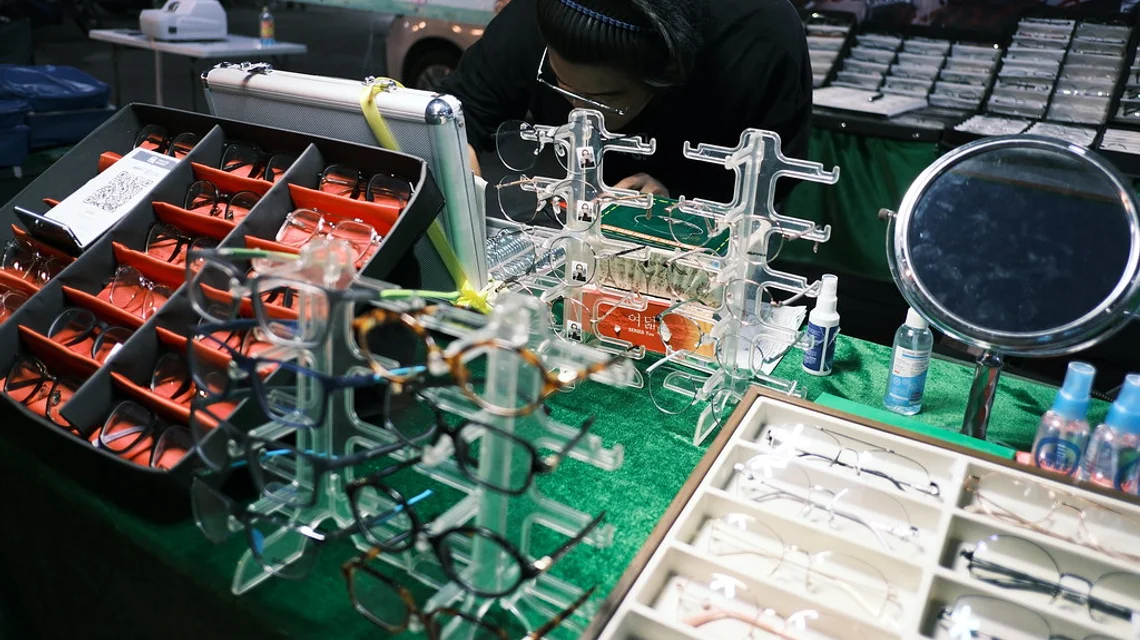
DHA or Dubai Healthcare City, and can a foreigner own it?
Two regulators to choose between, and yes, you can own it fully. A mainland opticians is regulated by DHA through Sheryan and registered commercially with DET. An opticians inside the Dubai Healthcare City (DHCC) free zone is regulated instead by DHCC's own authority, with its own facility and professional licensing, and the clinic must sit inside the zone [2][5]. It is an either-or choice made at the start based on where the premises sits. The mainland DHA route runs on a DET commercial licence, which our mainland company setup page walks through step by step, while DHCC is a free zone, so the free zone company setup page explains how a free-zone health licence works and why the centre has to sit inside the zone. Our free zone versus mainland guide covers the trade-offs.
On ownership, optical trading and retail activities generally allow 100% foreign ownership on the mainland under the post-2021 reforms, with no Emirati partner, and DHCC offers full ownership in the free zone [6]. You do not personally need to be a licensed optometrist to own the business, but the facility cannot be licensed without qualified DHA-licensed professionals and a designated in-charge on staff [1][3]. Ownership is not clinical authorisation; the licensed team is the constraint. Confirm the specific activity code's ownership eligibility with DET, as health-linked activities can carry conditions.
How is an optical shop taxed?
Standard corporate tax, and a mixed VAT profile that catches founders. On corporate tax, the shop pays 0% on taxable income up to AED 375,000 and 9% above, with Small Business Relief for revenue up to AED 3 million for tax periods ending on or before 31 December 2029, useful for an early single outlet [7]. Our corporate tax filing guide covers the mechanics.
VAT is where the mixed profile matters. The sale of spectacles, frames and sunglasses is standard-rated at 5%, because these are retail goods and are not on the UAE's zero-rated medicines and medical-equipment list [7]. Eye examinations and refraction, as basic healthcare provided by a DHA-licensed provider, can be zero-rated at 0% under the healthcare VAT rules, while prescription corrective and contact lenses are a less clear-cut middle case to confirm with the FTA per product line. So a full-service optical centre typically runs a mixed profile, zero-rated exam services alongside standard-rated product sales, requiring apportionment, while a pure sunglasses retailer is simply standard-rated at 5%. Our VAT registration and compliance guide covers the mechanics.
What does it cost, and is it worth it?
The trade licence is modest; the DHA facility, the fit-out and the equipment add up. Here is a realistic 2026 picture in AED, all figures approximate and worth confirming against current schedules.
| Item | Typical range (AED) |
|---|---|
| DET trade licence (mainland optical) | 15,000 to 25,000 |
| DHA Optical Centre facility licence and inspection | 5,000 to 15,000, confirm on Sheryan |
| Fit-out (retail floor and compliant refraction room) | 50,000 to 200,000+ |
| Clinical equipment (autorefractor, lensmeter, trial lenses, chart) | 40,000 to 150,000+ |
| Professional licence per optometrist or optician | 3,000 to 7,000 each |
An all-in launch commonly lands around AED 150,000 to 400,000 or more, driven mostly by fit-out, equipment and premises. The demand case is genuinely strong.
Quick Math: Corrective-lens use is very high in Dubai, and screen-time-driven eye strain and myopia in a young, tech-heavy population keep demand rising, while a high-income, high-sun, tourism-heavy market supports a strong fashion and premium eyewear and sunglasses trade. The recurring revenue is the real strength: contact lenses, lens replacement, annual eye tests and add-ons such as blue-light and progressive lenses bring customers back, and corporate and insurance-linked vision benefits sustain repeat clinical demand. That mix of clinical and retail is what makes a well-run optical centre resilient. Get your optical shop setup scoped properly→
Is an optical shop a good business in Dubai?
The demand side is one of the strongest of any small retail-and-service business in the city, and it rests on structural drivers rather than a passing trend. Corrective-lens use is very high across Dubai's resident population, and the screen-heavy working culture, long hours on laptops and phones, keeps eye strain and myopia climbing, especially among younger residents. A high-income, high-sun, tourism-heavy market on top of that sustains a serious fashion and premium eyewear and designer-sunglasses trade, so the same outlet can sell a modest pair of readers and a AED 2,500 branded frame from the same display.
The part founders undervalue is the recurring revenue. An optical centre is not a one-sale business. Contact lenses reorder monthly or quarterly, spectacle lenses get replaced as prescriptions change, annual eye tests bring customers back on a clock, and add-ons such as blue-light coatings, progressive lenses and prescription sunglasses lift the average ticket. Corporate and insurance-linked vision benefits feed a steady stream of covered patients, which is repeat clinical demand you do not have to win twice. That blend of clinical and retail income is exactly what makes a well-run optical centre hold up when pure fashion retail wobbles.
The catch is that "optical shop" covers two very different businesses, and the good-business question depends on which one you build. The table sets them side by side.
| Factor | Pure sunglasses retailer | Full optical centre |
|---|---|---|
| Regulator | DET only, plus MoIAT and ESMA product conformity | DET plus DHA Optical Centre licence via Sheryan |
| Licence | Retail trade licence | Trade licence plus DHA facility and professional licences |
| Staff | Retail sales staff | Licensed optometrist and opticians, designated in-charge |
| Premises | Retail floor | Retail floor plus compliant refraction room |
| VAT | Standard-rated 5% across the board | Mixed: 5% on product, potentially 0% on eye-exam services |
| Recurring revenue | Fashion repeat custom only | Lenses, exams, replacements, insurance-linked demand |
The sunglasses kiosk is faster and cheaper to open, but the full optical centre is the more defensible business, because the DHA licence, the refraction room and the licensed team are a barrier that competitors also have to clear. The recurring clinical and lens revenue is the moat a pure fashion retailer never gets. If you have the capital for the fit-out and the team, the full centre is usually the stronger long-term play. Because that decision also sets your ownership and licensing route, it is worth planning the structure before you sign a lease: our mainland company setup page walks through the DET route an optical centre uses.
What documents and steps does it take to open an optical shop?
For a full optical centre the paperwork is heavier than a normal shop, because DHA licenses the premises and the people, not just the company. A realistic document checklist for the mainland DHA route looks like this.
- Company documents: shareholder passports and photos, the reserved trade name, DET initial approval, the Memorandum of Association, and an Ejari tenancy for the premises.
- Facility documents: the DHA Optical Centre application on Sheryan, layout and fit-out drawings showing the retail floor and the refraction room, a staffing plan, and the designated in-charge details.
- Professional documents: for each optometrist and optician, attested qualification and experience certificates, DataFlow primary-source verification, the Prometric exam pass, passport and visa documents, and a good-standing certificate where required.
- Product and premises approvals: MoIAT and ESMA conformity on the eyewear range, and Civil Defence and municipality sign-off on the premises.
The steps run in a sequence where the DHA facility licence, not the trade licence, is the long pole. The table gives a realistic order and timeline, though every file differs.
| Step | What happens | Typical timeline |
|---|---|---|
| DET trade licence with optical activity | Reserve name, initial approval, MoA, Ejari, licence issued | 1 to 3 weeks |
| DHA Optical Centre application on Sheryan | Submit facility application, layout and staffing plan | Alongside fit-out |
| Layout and refraction-room fit-out | Build retail floor and compliant examination room, install equipment | Several weeks |
| Optometrist and optician DHA licensing | DataFlow verification, then Prometric exam, then facility-linked licence | Weeks to a few months |
| DHA inspection | Physical inspection of premises, room and equipment | After fit-out |
| Activation | Facility licence issued, centre opens | On passing inspection |
The initial DHA approval letter is commonly valid for around six months, and the fit-out and inspection must finish inside that window, so the sequencing matters. Start the DHA facility licence and the professional licensing in parallel with the trade licence rather than after it, because the clinical licensing is what sets your opening date. Get your optical shop setup and timeline mapped→
What are the ongoing costs and compliance for an optical shop?
An optical centre carries more recurring compliance than plain retail, because two regulators stay in the picture for the life of the business. The DET trade licence and the Ejari renew annually, and on top of that the DHA Optical Centre facility licence renews on its own cycle, as does each optometrist's and optician's professional licence. A professional who leaves has to be replaced with a DHA-licensed hire before they can test or dispense, so the licensed headcount is a running obligation rather than a one-time hire, and the designated in-charge must always be in post.
The clinical equipment brings its own duties. The autorefractor, lensmeter and other examination instruments need periodic calibration and servicing to stay within the facility standard, and DHA can check that at inspection or renewal. On the retail side, the eyewear and sunglasses you stock keep falling under MoIAT and ESMA product conformity for UV protection, safety and labelling, so imported ranges clear customs against those standards each time you bring new stock in.
On tax, the centre registers for corporate tax and files annually, paying 0% on taxable income up to AED 375,000 and 9% above. VAT is the fiddly part, because the profile is mixed: frames, spectacles and sunglasses are standard-rated at 5%, while qualifying eye-exam healthcare from a DHA-licensed provider can be zero-rated, so the return needs apportionment between the two rather than a single flat rate. Getting that split right every quarter, alongside the licence and professional-licence renewals and the equipment records, is exactly the kind of recurring work our post-setup services handle, so the centre stays compliant on both the DHA and the FTA side while you run the floor. Budget for these renewals and the mixed VAT handling from year one rather than treating them as an afterthought.
Can you open a corporate bank account for an optical shop?
Yes, though expect the standard UAE onboarding rather than an instant or fully remote account. A mainland optical company opens a corporate account with a local bank once the DET licence, and ideally the DHA Optical Centre licence, are in hand, and the bank runs full know-your-customer checks on the shareholders, the activity and the expected turnover, usually with an in-person meeting and the licence and tenancy in front of them. A health-linked activity is generally viewed as a legitimate, licensed business, which helps, but there is no fully remote account opening for a physical, licensed premises like this.
A clear picture of the business speeds things up: the DET and DHA licences, the tenancy, a short business plan showing the retail-and-clinical model and the projected mix of walk-in, contact-lens and insurance-linked revenue, and the shareholder documents. Because an optical centre takes a high volume of small card payments across frames, lenses and exam fees, a proper card-machine and payment-gateway setup matters, and any insurance-panel billing should be lined up with the account so settlements land cleanly. A maintained minimum balance is normal, and getting the banking and payment setup right early avoids cash-flow friction once the floor is busy.
Real Client Stories
The retail shop that needed a clinic licence. A client planned an opticians on a straightforward retail licence and started fitting out, then learned that doing eye tests and dispensing prescriptions makes it a DHA Optical Centre needing a Sheryan facility licence and licensed professionals. We took him through the DHA route. Once you test eyes, it is a health facility, not a shop.
The eye tests done by sales staff. A shop planned to have its retail staff run basic sight tests. Refraction and eye exams must be done by a DHA-licensed optometrist, and dispensing by licensed opticians. We built the correct staffing plan. Untrained staff cannot test or prescribe, and the licence depends on the qualified team.
The sunglasses invoiced as zero-rated. A client assumed glasses are medical and therefore VAT-free, and under-collected VAT on frames and sunglasses. Spectacles, frames and sunglasses are standard-rated at 5%; only qualifying eye-exam services are zero-rated. We set the split correctly. The centre runs a mixed profile, not a tax-free one.
Set up your Dubai optical shop the right way
An optical shop rewards founders who accept it is a health facility once it tests eyes, and it frustrates those who plan it as pure retail and discover the DHA regime late. Since 2013, BusinessDubai.ae has completed 700+ company registrations across the UAE, including healthcare and retail companies. We will help you decide between the DHA mainland route and DHCC, license the Optical Centre through Sheryan, plan the refraction room and equipment, license the optometrists and opticians, and set up the corporate tax and the mixed VAT position correctly, all with clear itemised pricing. Talk to a setup expert→ for a plan built around your shop. Our free zone versus mainland guide covers the structure choice, and post-setup services covers ongoing licensing and renewals.
Frequently Asked Questions
How do I start an optical shop in Dubai?
Register a DET trade licence with an optical activity, then, if you test eyes or dispense prescription eyewear, license the premises as a DHA Optical Centre through Sheryan, with a licensed optometrist and opticians, a compliant refraction room, and a DHA inspection. A pure sunglasses kiosk needs only the retail licence and product conformity [1][2].
Does an optical shop need a DHA licence in Dubai?
Yes, once it does eye tests or dispenses prescription glasses or contact lenses. That makes it a DHA-licensed Optical Centre needing a Sheryan facility licence and individually licensed professionals. A shop that only sells non-prescription sunglasses sits closer to ordinary retail [1][2].
What is the difference between an optician and an optometrist in Dubai?
An optometrist performs eye exams, refraction and vision assessment and issues the prescription, a higher licence tier. An optician dispenses, fits and adjusts glasses and contact lenses against a prescription but does not diagnose or prescribe. Both must be individually DHA-licensed [1][3].
Can any staff member do an eye test in an optical shop?
No. Refraction and eye examinations must be done by a DHA-licensed optometrist, and dispensing by licensed opticians. Untrained sales staff cannot test eyes or prescribe, and the Optical Centre licence depends on the qualified professionals being on staff [1][3].
Is a sunglasses shop the same as an opticians in Dubai?
No. A pure fashion-sunglasses retailer is close to ordinary retail, subject to product conformity under MoIAT and ESMA standards but not a health-facility regime. An opticians that tests eyes or dispenses prescriptions is a DHA-licensed Optical Centre. The line is the eye test and the prescription [1][2].
Do you need a licensed professional to own an optical shop in Dubai?
No, ownership does not require a clinical licence, and optical retail generally allows 100% foreign ownership. But the facility cannot be DHA-licensed without qualified licensed optometrists or opticians and a designated in-charge on staff. Ownership is not clinical authorisation [1][6].
Are glasses and sunglasses VAT-free in Dubai?
No. The sale of spectacles, frames and sunglasses is standard-rated at 5%, because they are retail goods and not on the zero-rated medical-equipment list. Only qualifying eye-exam healthcare services can be zero-rated, so an optical centre runs a mixed VAT profile [7].
Are eye tests VAT-free in Dubai?
Eye examinations and refraction, as basic healthcare provided by a DHA-licensed provider, can be zero-rated at 0%. Prescription corrective and contact lenses are a less clear-cut middle case to confirm with the FTA. Product sales such as frames and sunglasses are standard-rated at 5% [7].
What is the difference between DHA and DHCC for an optical shop?
DHA regulates mainland optical centres, registered commercially with DET. DHCC, the Dubai Healthcare City free zone, is regulated by its own authority with its own licensing, and the centre must sit inside the zone. It is an either-or jurisdiction choice made at the start [2][5].
What equipment does an optical centre need in Dubai?
A compliant refraction room with mandated equipment such as an autorefractor and a lensmeter, assessed as part of the DHA facility standards, alongside the retail fit-out. The refraction room and equipment must be present and compliant for the centre to be licensed to test eyes [1].
How much does it cost to open an optical shop in Dubai?
An all-in launch commonly lands around AED 150,000 to 400,000 or more, driven mostly by fit-out, clinical equipment and premises, on top of the DET licence and the DHA Optical Centre facility licence and professional licences. Figures are approximate; a pure sunglasses retailer is lighter.
How is an optical shop taxed in Dubai?
Corporate tax is 0% up to AED 375,000 of taxable income and 9% above, with Small Business Relief for revenue up to AED 3 million for tax periods ending on or before 31 December 2029. VAT is mixed: 5% on frames and sunglasses, potentially 0% on qualifying eye-exam services [7].
Do contact lenses need special approval in Dubai?
Contact lenses are treated as health-linked products, so dispensing them falls under the DHA Optical Centre clinical track rather than pure retail, and certain optical products may need product registration. Confirm the current contact-lens registration and dispensing route with DHA [1].
How long does it take to open an optical shop in Dubai?
The trade licence can be issued in weeks, and the DHA Optical Centre facility licence adds the layout approval, fit-out to the refraction-room standard, the DHA inspection and the professional licences, which take longer. Plan the DHA facility licence and the licensed team alongside the trade licence.
Do sunglasses and frames need product conformity in Dubai?
Yes. Eyewear and sunglasses fall under MoIAT and ESMA standards for UV protection, safety and labelling, and imported goods clear customs against those standards. This product-conformity requirement applies even to a pure retailer that never tests eyes or dispenses prescriptions [2].
Can I sell only fashion sunglasses without a DHA licence?
Yes. A pure fashion-sunglasses or non-prescription-eyewear retailer that never tests eyes or dispenses prescription product sits close to ordinary retail, needing the DET trade licence and product conformity but not a DHA Optical Centre licence. The DHA regime triggers on eye tests and prescriptions [1][2].
What is the refraction room in an optical centre?
The dedicated, appropriately lit examination space where eye tests happen, assessed as part of the DHA facility standards, with mandated equipment such as an autorefractor and lensmeter. It must be present and compliant for the centre to be licensed to perform sight tests, alongside the retail floor [1].
Is an optical shop a good business in Dubai?
The demand case is strong: high corrective-lens use, screen-time-driven eye strain, a premium eyewear and sunglasses market, and recurring revenue from lenses, replacements and annual eye tests, plus insurance-linked vision benefits. The mix of clinical and retail income is what makes a well-run optical centre resilient.
Do opticians need to pass an exam in Dubai?
Yes. Each clinical professional reaches their DHA licence through DataFlow primary-source verification of qualifications and a Prometric exam for the relevant title, then DHA licensing linked to the facility. This applies to optometrists and, per DHA's professional categories, opticians, with the verification handled through the DataFlow process [3][4].
Can I run an optical shop in a free zone in Dubai?
Yes, through Dubai Healthcare City, which licenses optical centres under its own regulator rather than DHA, with the centre inside the zone, or in a Trakhees jurisdiction under Trakhees optical guidelines. The mainland DHA route is the standard option, chosen based on premises location [5].
What happens if I dispense prescriptions without a DHA licence?
It is outside DHA licensure and exposes the business to penalties, because dispensing prescription eyewear and testing eyes are health activities reserved to a DHA-licensed Optical Centre with licensed professionals. Only a pure non-prescription retailer avoids the DHA regime [1][2].
What documents do I need to open an optical shop in Dubai?
Shareholder passports and photos, the trade name and DET initial approval, the Memorandum of Association and an Ejari tenancy, plus, for a full centre, the DHA Optical Centre application on Sheryan, layout and refraction-room drawings, a staffing plan and in-charge details, and DataFlow-verified qualifications with Prometric passes for each optometrist and optician. The DHA facility and professional licences are the gating items [1][3].
What are the ongoing costs of running an optical shop in Dubai?
The annual DET licence and Ejari renewals, the DHA Optical Centre facility-licence renewal, each optometrist's and optician's professional-licence renewal, equipment calibration and servicing, MoIAT and ESMA product conformity on new eyewear stock, staff visas and payroll, and corporate tax and mixed VAT filing. These recurring costs run for the life of the business and are best planned from year one.
Can I open a corporate bank account for an optical shop in Dubai?
Yes, with a local bank once the DET licence and ideally the DHA Optical Centre licence are in place. Expect full know-your-customer checks on the shareholders and activity, an in-person meeting, the licence and tenancy in hand, and a maintained minimum balance. There is no fully remote account opening for a licensed physical premises like this.
Is an optical shop a profitable business in Dubai?
It can be, because the income mixes retail margin on frames and premium sunglasses with recurring clinical revenue from eye tests, contact lenses and lens replacements, plus insurance-linked vision benefits. A full optical centre defends its margins better than a pure fashion retailer, since the DHA licence and clinical team are a barrier rivals must clear too. Returns reward repeat custom and a strong lens and exam pipeline.
Do I need a refraction room to open an optical shop in Dubai?
Only if you test eyes. A centre that performs sight tests needs a compliant, appropriately lit refraction room with mandated equipment such as an autorefractor and lensmeter, assessed as part of the DHA facility standards. A pure sunglasses or non-prescription retailer that never tests eyes does not need one, because it stays outside the DHA Optical Centre regime [1].
Should I choose mainland DHA or DHCC for my optical shop?
It depends on where the premises sits. The mainland DHA route uses a DET commercial licence and lets you open across Dubai's general market, while DHCC is a free zone with its own regulator and licensing, and the centre must sit inside the zone. Most optical retail chooses the mainland route; DHCC suits operators who want a healthcare-cluster address [2][5].
How much does it cost to hire an optometrist in Dubai?
A DHA-licensed optometrist is a recurring salary plus a professional-licence cost, commonly a few thousand dirhams for the licence itself on top of DataFlow and Prometric fees, and the salary reflects a clinical role rather than retail pay. Because the facility cannot test eyes without a licensed optometrist, this is a core ongoing cost of a full optical centre, not an optional one [1][3].
Should I open a sunglasses-only shop or a full optical centre in Dubai?
A sunglasses-only shop is faster and cheaper, needing just the DET trade licence and MoIAT and ESMA product conformity, but it earns only fashion retail margin. A full optical centre costs more, needing a DHA licence, refraction room and licensed team, but adds recurring exam, lens and contact-lens revenue and is harder to copy. Decide before you sign a lease, because it sets your whole licensing route [1][2].
References
[1] Dubai Health Authority, Standards for Optical Centers and Optometry Services: the Optical Centre facility standards, refraction room, and licensed optometrist and optician requirements. DHA optical centre standards
[2] Dubai Health Authority, Sheryan health-facility licensing and the Manual for Licensing Health Facilities: the New Facility Licence process and inspection. DHA facility licensing
[3] Dubai Health Authority, Manual for Licensing Healthcare Professionals: optometrist and optician professional licensing. DHA professional licensing
[4] The DataFlow Group, DHA licensing exam: primary-source verification and the Prometric process for optical professionals. DataFlow DHA licensing
[5] Dubai Healthcare City Authority, professional and facility licensing: the DHCC free-zone route. DHCC licensing
[6] Dubai Department of Economy and Tourism, business licensing: the mainland trade licence and 100% foreign ownership. Dubai Economy and Tourism licensing
[7] Federal Tax Authority, VAT and corporate tax: zero-rated healthcare services, standard-rated retail goods, and Small Business Relief. Federal Tax Authority
[8] Trakhees, PCFC, guidelines for optical shops and glasses and lenses selling: the free-zone optical retail health and safety requirements. Trakhees optical guidelines