A dental clinic in Dubai is gated by health regulation, not by the trade licence, and the first thing to understand is that a DET licence lets you exist as a company and nothing more. The binding gate is a DHA health facility licence issued through the Sheryan platform, and it is a two-track requirement: the premises must be licensed as a dental facility, and every dentist and clinical staff member must independently hold a DHA professional licence, with a DHA-licensed dentist appointed as Medical Director [1][8]. You cannot treat a single patient on the trade licence alone.
There is also a dental-specific trap that generic clinic guides miss entirely. Dental X-ray equipment, whether an intraoral unit, a panoramic OPG or a CBCT scanner, is regulated by two authorities at once: DHA on the clinical side and, because it is ionising radiation, the federal FANR for the radiation source [2][7]. Even a single intraoral unit inside a treatment room triggers a shielding assessment and FANR authorisation. Plan for one regulator and you stall at the other.
This guide covers the DHA facility licensing, the dental X-ray radiation rule, the DHCC free-zone alternative, ownership, and why therapeutic dentistry is zero-rated but cosmetic work carries 5% VAT. Since 2013, our team has set up healthcare and regulated companies across the UAE, so the traps here come from real files. This is a guide, not medical, legal or tax advice on your specific clinic.
Why is a DHA facility licence the real gate?
Because a dental clinic is a health facility, and only the Dubai Health Authority can license one to treat patients. The DET trade licence is necessary but nowhere near sufficient. The operational gate is a DHA facility licence through Sheryan, DHA's central licensing platform, and it is a two-track requirement that must both be satisfied [1][8]:
- The facility licence. The premises is licensed as a dental clinic, an outpatient facility type, with layout and fit-out approved before work begins, built to the DHA Health Facility Guidelines, connected to NABIDH, and passing a physical DHA inspection before the licence is activated.
- Individually licensed practitioners. Every dentist, hygienist and assistant must independently hold an active DHA professional licence, and staff cannot count toward the facility's staffing plan until they do.
On top of both, the clinic must appoint a DHA-licensed dentist as Medical Director, not merely any physician, who carries clinical and governance responsibility separate from the owner [1]. The sequence in practice is initial approval and trade licence, then the Sheryan facility application and DHA layout approval, then fit-out to the approved drawings, then equipment approvals, then NABIDH and inspection, then licence activation. Our general medical clinic guide covers the wider clinic mechanics; this one focuses on what makes dentistry its own regulated case.
Common Mistake: Assuming a dentist can open on a DET trade licence, or once the licence is issued. The operational gate is the DHA Sheryan facility licence plus individually licensed dentists plus a dentist Medical Director plus inspection. No patient is treated until the facility licence is activated.
What is the dental X-ray rule that guides miss?
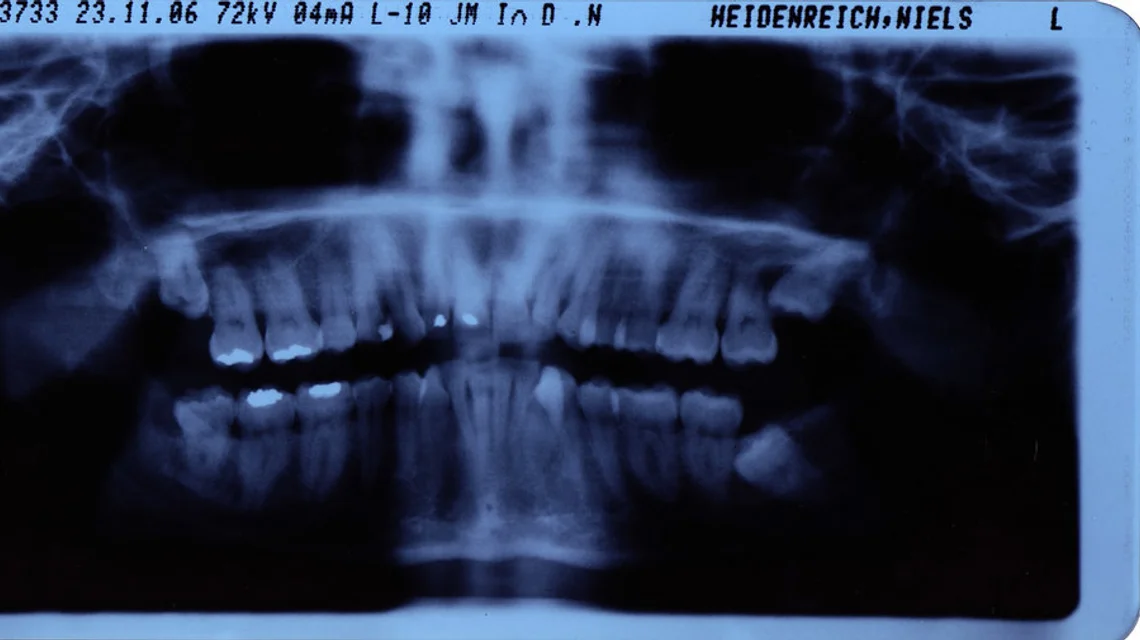
Dental radiography is regulated by two authorities, DHA and FANR, and this is the dental-specific hurdle a general clinic guide overlooks. Dental X-ray is clinical, so DHA regulates it through its dental radiology guidelines, but it is also ionising radiation, so the federal Federal Authority for Nuclear Regulation, FANR, regulates the radiation source itself [2][7]. FANR authorisation applies to intraoral, panoramic OPG and CBCT units alike.
What FANR requires is substantial and often underestimated. Expect a radiation protection programme built around the ALARA principle, a shielding and safety assessment prepared by a FANR-approved medical physicist, quality assurance procedures per unit, an emergency plan, and a designated Radiation Safety Officer [2][7]. The X-ray room needs lead shielding to a specified standard, and even a single intraoral unit inside a treatment room triggers a shielding assessment. FANR approval must generally be in place before the DHA facility inspection, so it belongs on the critical path from the start, not as a late add-on. Confirm the exact shielding specification and timeline with FANR and a medical physicist for your equipment.
Pro Tip: Map the FANR radiation approval and the DHA facility approval in parallel from day one, because the FANR shielding assessment and Radiation Safety Officer must be sorted before the DHA inspection, and only DHA-approved equipment models may be installed. A clinic that fits out first and discovers the radiation requirements later loses weeks and money reworking the X-ray room. Get your dental clinic setup scoped properly→
What are the fit-out and staffing requirements?
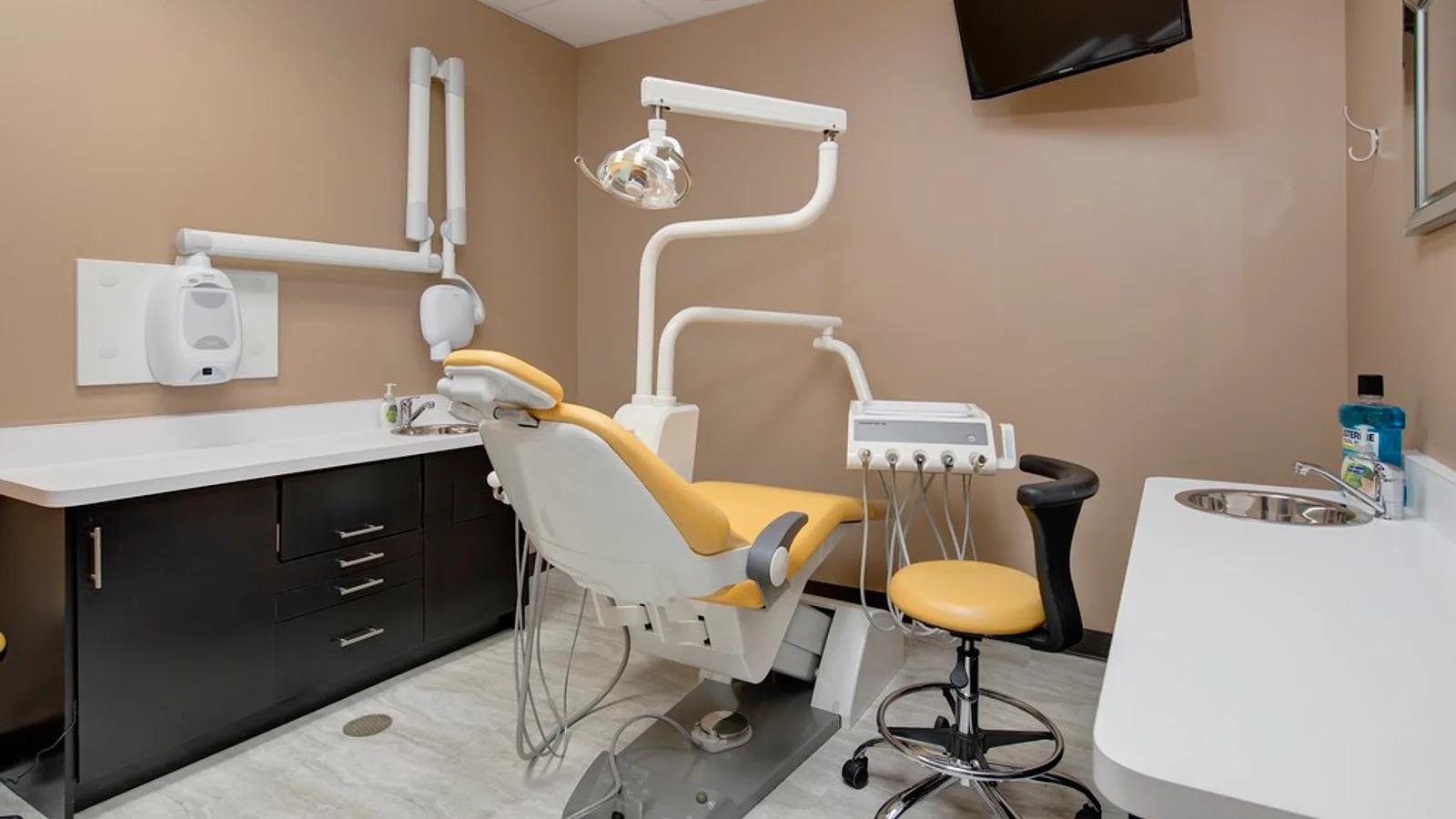
A DHA-compliant surgery layout, a dentist Medical Director, and individually licensed clinical staff. The premises must be built to the DHA Health Facility Guidelines for dental surgery, with treatment and surgery rooms, dental imaging, a sterilisation zone with correct clean-and-dirty flow, clinical waste handling, and required room relationships, drawn by a DHA-approved engineering consultant and approved before fit-out begins [1]. Infection control and sterilisation are inspected and are standing DHA obligations.
On staffing, the clinical scope is licence-specific. A general dentist performs general and restorative dentistry within scope, while specialists are separately DHA-licensed by category, an orthodontist for braces and aligners, an endodontist for complex root-canal work, an oral and maxillofacial surgeon for surgical extractions and implants, and so on, each practising only within their licensed scope [1]. A general dentist may not hold out as, or perform the reserved procedures of, a specialty they are not licensed for. Every practitioner reaches their licence through DataFlow primary-source verification and a Prometric exam, and each licence is valid only in Dubai. Confirm current specialty qualification thresholds and the Medical Director's experience requirement with DHA.
DHA or Dubai Healthcare City: which regulator?
Two parallel regulators, and you pick one. A mainland dental clinic is regulated by DHA and commercially registered with DET. A clinic inside the Dubai Healthcare City (DHCC) free zone is regulated instead by DHCC's own regulator, historically operating the Centre for Healthcare Planning and Quality, with its own facility and practitioner licensing and its own dental standards [3][4]. The two do not interchange: a DHA licence and a DHCC licence are different applications, different standards and different locations, and you license under one jurisdiction, not both.
DHA on the mainland gives freedom of location across Dubai and is generally the more cost-effective and flexible route for a standalone practice. DHCC gives the healthcare-cluster address and free-zone framework but requires the clinic to sit physically inside the zone. Neither is universally better; the choice is made at the start based on location and structure. Because that structural choice decides your ownership, cost and where the clinic can physically sit, it is worth reading both routes before you commit: our mainland company setup page walks through the DET route a DHA-regulated clinic needs, while the free zone company setup page explains the free-zone framework the DHCC route runs on, since DHCC is itself a healthcare free zone with its own regulator. Our free zone versus mainland guide covers the trade-offs.
Can a foreigner own a dental clinic in Dubai?
Yes, and the owner need not be a dentist. Dental and healthcare activities allow 100% foreign ownership on the mainland under the post-2021 reforms, with no Emirati partner required, and DHCC offers full ownership in the free zone [1]. A non-clinical investor can own the clinic outright.
The catch is clinical, not ownership. DHA deliberately separates ownership from clinical authority: the investor runs the business, but the clinic must appoint a DHA-licensed dentist as Medical Director, and all clinical staff must be individually DHA-licensed [1]. So a non-dentist can own a dental clinic, provided the licensed clinical team DHA requires is in place. The constraint that shapes the business is the licensed dentist and Medical Director, not the shareholding. Confirm with DHA whether the specific activity code ties any role to a licensed professional.
How is a dental clinic taxed?
Standard corporate tax, and a mixed VAT profile that has to be invoiced correctly. On corporate tax, the clinic pays 0% on taxable income up to AED 375,000 and 9% above, with Small Business Relief for revenue up to AED 3 million for tax periods ending on or before 31 December 2029 [6]. Our corporate tax filing guide covers the mechanics.
VAT is where dentistry differs from a purely cosmetic clinic. Under Article 41 of the VAT executive regulations, preventive and basic healthcare by a licensed provider is zero-rated, so therapeutic, medically necessary dentistry, check-ups, fillings, extractions, root canals, dentures and treatment of dental disease, is 0% [5]. But cosmetic dentistry done for appearance, teeth whitening, cosmetic veneers and purely cosmetic aligners, is standard-rated at 5%. A dental clinic therefore runs a mixed VAT profile, and a mixed appointment must be split line by line on the invoice, some at 0% and some at 5%, with misclassifying cosmetic work as zero-rated a common penalty risk. Cosmetic supplies still count toward the AED 375,000 registration threshold. Our VAT registration and compliance guide covers the mechanics, and our aesthetic clinic guide covers the cosmetic side in depth.
What does it cost, and is it worth it?
The licences are modest; the fit-out and equipment dominate. Here is a realistic 2026 picture in AED, all figures approximate and worth confirming against current schedules.
| Item | Typical range (AED) |
|---|---|
| DHA facility licence (dental band) | 5,000 to 10,000; polyclinics higher |
| DET trade licence and initial approvals | 15,000 to 30,000 |
| Fit-out to DHA dental-surgery spec | 200,000 to 600,000+ |
| Dental chair or unit, per operatory | 40,000 to 120,000+ each |
| X-ray with shielding and FANR (intraoral to CBCT) | From 15,000 to 250,000+ |
| DataFlow, Prometric and DHA licence, per dentist | 3,000 to 7,000 each |
An all-in standalone dental clinic commonly runs around AED 300,000 to 700,000, and up to about 1.5 million for larger or specialist practices, with roughly the largest share going to fit-out. The market case is strong, which sustains the density.
Quick Math: Dubai is a dental-tourism hub, drawing international patients for cosmetic and implant work at competitive prices, on top of a large, young, high-income and majority-expat population with high private-insurance penetration and mandatory health cover. That gives a well-run clinic steady demand for both routine and cosmetic dentistry. The honest caveat is that it is a high-density, competitive market, so differentiation by specialty mix, cosmetic focus and location matters, and the regulatory barrier itself is part of the moat protecting established clinics.
Is a dental clinic a good business in Dubai?
It can be a strong business, but only if you go in knowing it is a dense, competitive, regulated market where the winners differentiate rather than copy the clinic next door. The demand side is genuinely good. Dubai is a recognised dental-tourism destination, pulling in international patients for implants, veneers and full-mouth work at prices that undercut Europe, and that sits on top of a large, young, high-income and majority-expat resident population. Mandatory health insurance covers most residents for basic and therapeutic dentistry, so routine check-ups, fillings, cleaning and extractions carry a steady, insurance-funded pipeline, while cosmetic work brings the higher-margin cash-pay revenue. That mix of insured routine care and cash-pay cosmetics is what makes a well-run clinic durable rather than seasonal.
The honest counterweight is density. Certain areas of Dubai have a dental clinic on almost every block, so location, specialty mix and the strength of your dentists decide whether you fill chairs or sit idle. The regulatory barrier that makes setup slow is also part of the moat, because it stops the market flooding overnight and protects the clinics already trading. Where a dental clinic sits against its two closest neighbours in the clinic world is worth seeing clearly before you choose your licence scope, and it changes the fit-out, the regulator and the VAT you charge.
| Feature | General medical clinic | Dental clinic | Aesthetic clinic |
|---|---|---|---|
| Primary regulator | DHA (or DHCC) | DHA (or DHCC) | DHA (or DHCC) |
| Radiation approval (FANR) | Often, if it images | Yes, for any dental X-ray | Rarely |
| Fit-out intensity | Moderate | High (surgery, imaging, sterilisation) | Moderate to high |
| VAT profile | Mostly zero-rated therapeutic | Mixed: therapeutic 0%, cosmetic 5% | Mostly standard-rated 5% |
| Typical demand driver | Insured primary care | Insured routine plus cash cosmetics | Cash-pay cosmetics |
If your plan leans heavily toward whitening, veneers and cosmetic aligners rather than therapeutic dentistry, read our aesthetic clinic guide alongside this one, because the VAT and scope rules shift materially. Based on our experience, the clinics that thrive here are not the cheapest; they are the ones that pick a clear positioning, a strong Medical Director and a specialty or cosmetic edge, then build volume around it. If you want that positioning stress-tested against the licence route before you commit, our get started team scopes it with you.
What documents and steps does it take to open a dental clinic?
More paperwork than a normal company, because DHA licenses the premises, the equipment and every clinician, not just the entity. Get the documents ready in the right order and the pathway is predictable; leave the radiation approval or the dentist licensing to the end and the opening slips by weeks. Here is the core document checklist you should assemble.
- Company documents: shareholder passports and photos, the reserved trade name, DET initial approval (or DHCC registration for the free-zone route), the Memorandum of Association, and an Ejari tenancy for the clinic premises.
- Premises and layout: dental-surgery floor plans drawn by a DHA-approved engineering consultant to the DHA Health Facility Guidelines, showing treatment rooms, imaging, the sterilisation zone with clean-and-dirty flow and clinical-waste handling.
- Equipment approvals: DHA-approved dental chair and imaging models, plus the FANR radiation file for any X-ray unit, including the medical-physicist shielding assessment and the named Radiation Safety Officer.
- People: the DHA-licensed dentist Medical Director, plus DataFlow primary-source verification and Prometric exam results for every dentist, hygienist and assistant.
- Systems and safety: the NABIDH connectivity setup for electronic medical records, and Civil Defence fire-safety approval for the premises.
The sequence matters as much as the list, because each step gates the next. This is the realistic order and timeline, with the radiation and licensing tracks running in parallel rather than one after another.
| Step | What happens | Typical timeline |
|---|---|---|
| DET (or DHCC) licence and initial approval | Company legally exists, activity confirmed | 1 to 3 weeks |
| Sheryan facility application and DHA layout approval | Premises approved as a dental facility before fit-out | 2 to 6 weeks |
| Fit-out to approved drawings | Surgery, imaging and sterilisation built to spec | 4 to 12 weeks |
| FANR radiation approval | Shielding assessment, RSO, authorisation for X-ray | Runs in parallel, plan early |
| DataFlow and Prometric for dentists | Primary-source verification and licensing exam | 4 to 8 weeks, start early |
| NABIDH connection and DHA inspection | Records exchange live, physical inspection passed | 1 to 3 weeks |
| Licence activation | Facility licence issued, clinic may treat patients | On passing inspection |
The two items founders start too late are the FANR radiation file and the dentist DataFlow verification, and both can quietly become the critical path. Start them the day the layout is approved, not after fit-out. If you want the whole sequence mapped against your equipment list and your dentists before you sign a lease, talk to a setup expert→ and we will build the timeline around your clinic.
What are the ongoing costs and compliance for a dental clinic?
Opening the clinic is the start of the compliance work, not the end of it, and the annual stack is heavier than a normal trade business because two regulators and the tax authority all want their filings. Budget for these from year one rather than treating them as surprises. The DHA facility licence renews annually, and it is not a rubber stamp: renewal is tied to the clinic still meeting the Health Facility Guidelines, so lapsed infection-control standards or an expired professional licence on staff can hold it up. Every dentist, hygienist and assistant carries their own DHA professional licence with its own renewal cycle, and a clinician whose licence lapses cannot legally treat patients, so tracking those dates is a real operational task.
On top of the health-authority renewals, the running obligations include NABIDH connectivity kept live and reporting correctly, periodic FANR checks and quality-assurance on the X-ray equipment with the Radiation Safety Officer keeping the radiation records current, regular infection-control and sterilisation audits that DHA can inspect, and Civil Defence fire-safety renewal. Then there is tax. The clinic registers for corporate tax and files annually, paying 0% on taxable income up to AED 375,000 and 9% above, and it must handle its mixed VAT position on every return, with therapeutic dentistry zero-rated and cosmetic work standard-rated at 5%, split correctly line by line. You will also carry malpractice and clinic insurance, staff visas and payroll under the Wages Protection System. These recurring renewals, radiation checks, NABIDH reporting and mixed-VAT filings are exactly the kind of ongoing work our post-setup services handle, so the clinic stays licensed and compliant while your team focuses on patients. The clinics that get into trouble here are usually the ones that treated compliance as a one-time setup cost rather than an annual running one.
Can you open a corporate bank account for a dental clinic?
Yes, and once the DHA facility licence is in hand it is a fairly normal onboarding, but expect the standard UAE process, not an instant or fully remote account. A dental clinic opens a corporate account with a local bank after the trade licence and, ideally, the DHA facility licence are in place, and the bank runs full know-your-customer checks on the shareholders, the clinical activity and the expected turnover, usually requiring an in-person meeting and the licence and tenancy in hand. There is no fully-remote account opening for a physical, regulated healthcare operation like this, and a signatory generally needs to attend.
Practically, a clean file speeds it up: the licence, the Ejari tenancy, shareholder documents and a short business plan showing the clinic's services and projected patient revenue. A maintained minimum balance is normal, and because a dental clinic collects a mix of insurance settlements and card and cash payments from patients, getting the merchant and payment setup right early avoids cash-flow friction once the chairs are busy. Insurance-funded work in particular settles on a delay, so a working-capital buffer in the account matters more than founders expect in the first months.
Real Client Stories
The X-ray room that failed inspection. A client fitted out a clinic and installed an intraoral X-ray unit without arranging FANR authorisation or a medical-physicist shielding assessment, and the room failed on radiation compliance. Dental X-ray needs both DHA and FANR. We now put the FANR radiation approval on the critical path from the start, so the X-ray room is built right the first time.
The dentist who could not open on the trade licence. A dentist assumed the DET licence let him start treating patients. The operational gate is the DHA Sheryan facility licence, individual DHA licences and a dentist Medical Director, none of which he had. We took him through the full DHA pathway. The trade licence was the beginning, not the permission to treat.
The whitening invoiced as zero-rated. A clinic coded teeth-whitening and cosmetic-veneer revenue as zero-rated healthcare and under-collected VAT. Therapeutic dentistry is zero-rated, but cosmetic work is standard-rated at 5%, and mixed appointments must be split. We corrected the invoicing and VAT position. The clinic runs a mixed profile, and treating all of it as tax-free was a costly assumption.
Set up your Dubai dental clinic the right way
A dental clinic rewards founders who plan the DHA licensing, the radiation approvals and the mixed VAT position properly, and it punishes those who treat it as a shopfit with a trade licence. Since 2013, BusinessDubai.ae has completed 700+ company registrations across the UAE, including healthcare and clinic setups. We will help you choose between the DHA mainland route and DHCC, license the facility through Sheryan to the dental-surgery specification, arrange the FANR radiation approval for your X-ray equipment, license the dentists and Medical Director through DataFlow and DHA, and set up the corporate tax and the split therapeutic-and-cosmetic VAT position correctly, all with clear itemised pricing. Talk to a setup expert→ for a plan built around your clinic. Our medical clinic guide covers the wider clinic mechanics, and post-setup services covers ongoing licensing and renewals.
Related guides: Set Up an Optical Shop & Opticians in Dubai, UAE: DHA Optical Centre Licence, Opticians & Tax (2026)
Frequently Asked Questions
How do I start a dental clinic in Dubai?
Register a commercial licence with DET, or DHCC for the free-zone route, then license the premises as a dental facility through DHA's Sheryan platform, appoint a DHA-licensed dentist as Medical Director, license each clinician, arrange FANR approval for any X-ray equipment, build the fit-out to DHA spec, and pass inspection before treating patients [1][2].
Is a DHA licence required to open a dental clinic in Dubai?
Yes. A dental clinic is a health facility, and only DHA can license one to treat patients. The DET trade licence is not enough; you need a DHA facility licence through Sheryan plus individually licensed dentists and a dentist Medical Director [1].
Do dental X-ray machines need special approval in Dubai?
Yes, from two authorities. DHA regulates dental radiography clinically, and FANR, the federal nuclear regulator, regulates the radiation source. Intraoral, OPG and CBCT units all need FANR authorisation, a shielding assessment by a medical physicist, and a Radiation Safety Officer [2][7].
What is FANR and why does a dental clinic need it?
FANR is the Federal Authority for Nuclear Regulation, which licenses radiation sources. Because dental X-ray is ionising radiation, a dental clinic needs FANR authorisation for its X-ray equipment, a radiation protection programme, room shielding and a Radiation Safety Officer, alongside DHA licensing [2][7].
Does a dental clinic need a Medical Director in Dubai?
Yes. The clinic must appoint a DHA-licensed dentist as Medical Director, who carries clinical and governance responsibility separate from the owner. DHA separates ownership from clinical authority, so the Medical Director role is mandatory regardless of who owns the clinic [1].
Can a non-dentist own a dental clinic in Dubai?
Yes. Dental activities allow 100% foreign ownership on the mainland, and DHCC offers full ownership in the free zone, so a non-clinical investor can own the clinic. But the clinic must appoint a DHA-licensed dentist Medical Director and license all clinical staff [1].
Is dental treatment VAT-free in Dubai?
Only therapeutic dentistry. Preventive and basic dentistry, check-ups, fillings, extractions, root canals and dentures, is zero-rated under Article 41. Cosmetic dentistry done for appearance, such as teeth whitening and cosmetic veneers, is standard-rated at 5%, so clinics run a mixed VAT profile [5].
What dental work carries 5% VAT in Dubai?
Cosmetic procedures done for appearance, including teeth whitening, cosmetic veneers and purely cosmetic aligners, are standard-rated at 5%. Therapeutic, medically necessary dentistry is zero-rated. Mixed appointments must be split line by line on the invoice [5].
What is the difference between DHA and DHCC for a dental clinic?
DHA regulates mainland dental clinics, registered commercially with DET. DHCC, the Dubai Healthcare City free zone, is regulated by its own authority with its own licensing and dental standards, and the clinic must sit inside the zone. It is an either-or jurisdiction choice made at the start [3][4].
How much does it cost to open a dental clinic in Dubai?
An all-in standalone clinic commonly runs AED 300,000 to 700,000, and up to about 1.5 million for larger or specialist practices, with fit-out the largest share. Licences are modest; the dental chairs, X-ray and shielding, and the DHA-compliant fit-out dominate. Figures are approximate.
How long does it take to set up a dental clinic in Dubai?
Commonly around one to six months, driven by the fit-out to DHA specification, the FANR radiation approval, the DHA inspection cycle, and licensing the dentists through DataFlow and DHA. Plan the FANR and DHA approvals in parallel, as they gate the opening.
Can a general dentist do specialist work in Dubai?
Only within their licensed scope. A general dentist performs general and restorative dentistry, while orthodontics, endodontics, oral surgery and other specialties are separately DHA-licensed by category. A general dentist may not perform the reserved procedures of a specialty they are not licensed for [1].
Do dentists need to pass an exam to work in Dubai?
Yes. Each dentist reaches their DHA licence through DataFlow primary-source verification of qualifications and a Prometric exam for dentistry, then DHA eligibility and licensing, linked to the facility. The licence is valid only in Dubai [1][8].
Do I need NABIDH for a dental clinic in Dubai?
Yes. A DHA-licensed facility must connect its electronic medical records to NABIDH, Dubai's health-information exchange, as part of the facility licensing requirements. Failure to connect is a leading cause of failed pre-opening inspection [1].
Is there corporate tax on a dental clinic in Dubai?
Yes, at 0% on taxable income up to AED 375,000 and 9% above, with Small Business Relief treating revenue up to AED 3 million as no taxable income for tax periods ending on or before 31 December 2029. A mainland clinic follows the standard regime [6].
Can I run an in-house dental laboratory?
If you operate a dental lab on-site, for crowns or prosthetics, it is a distinct scope element needing its own layout provision and approval. Many clinics outsource to an off-site licensed lab to avoid the extra scope. Confirm lab permitting with DHA [1].
Why is a dental clinic a good business in Dubai?
Dubai is a dental-tourism hub with international patients seeking cosmetic and implant work, plus a large, young, high-income, majority-expat population with high insurance penetration. That gives steady demand for routine and cosmetic dentistry, though the market is dense and competitive.
Do I need Civil Defence approval for a dental clinic?
Yes. A Civil Defence fire-safety inspection runs alongside the DHA inspection before the facility licence is activated, part of the standard health-facility approvals with the fit-out, NABIDH connectivity and clinical-waste handling [1].
What is the difference between a dental clinic and an aesthetic clinic in Dubai?
A dental clinic is licensed for dentistry with a mixed zero-rated and standard-rated VAT profile. An aesthetic clinic is licensed for non-surgical cosmetic medicine, standard-rated at 5%, with different scope rules. Both are DHA facilities but with different standards and staffing.
What happens if a clinic offers procedures beyond its licensed scope?
It is operating outside DHA licensure and risks penalties and closure, because each dentist is licensed only for specific scope and the facility is licensed only for approved services. Scope discipline, for both practitioners and the facility, is central to staying compliant [1].
What documents do I need to open a dental clinic in Dubai?
Shareholder passports and photos, the reserved trade name and DET initial approval (or DHCC registration for the free-zone route), the Memorandum of Association, and an Ejari tenancy, plus dental-surgery layout drawings by a DHA-approved consultant, DHA-approved equipment models, the FANR radiation file with a shielding assessment, DataFlow and Prometric results for every dentist, the dentist Medical Director, and the NABIDH and Civil Defence approvals. The FANR file and the dentist licensing are the items to start earliest.
What are the ongoing costs of running a dental clinic in Dubai?
Annual DHA facility-licence renewal, individual professional-licence renewals for every dentist and clinical staff member, NABIDH connectivity, periodic FANR radiation checks and quality assurance, infection-control and sterilisation audits, Civil Defence renewal, corporate tax filing and mixed VAT filing, malpractice and clinic insurance, and staff visas and payroll. These run for the life of the clinic and are best budgeted from year one rather than treated as setup extras.
Can I open a corporate bank account for a dental clinic in Dubai?
Yes, with a local bank once the trade licence and ideally the DHA facility licence are in place. Expect full know-your-customer checks on the shareholders and the clinical activity, an in-person meeting, the licence and tenancy in hand, and a maintained minimum balance. There is no fully-remote account opening for a physical, regulated healthcare operation, and a signatory generally needs to attend in person.
Is a dental clinic profitable in Dubai?
It can be, because it combines steady insurance-funded routine dentistry with higher-margin cash-pay cosmetic work, on top of Dubai's dental-tourism demand and a large, young, majority-expat population with mandatory health cover. The honest caveat is that it is a dense, competitive market, so profitability depends on location, specialty mix and the strength of your dentists, and the regulatory barrier that slows setup is part of what protects an established clinic's margins.
Do I have to renew the FANR radiation approval for a dental clinic?
Yes. The FANR authorisation for your dental X-ray equipment is an ongoing regime, not a one-time sign-off, with periodic checks, quality-assurance on each unit, and a designated Radiation Safety Officer keeping the radiation-protection records current. The shielding and safety programme must stay in place for the life of the equipment, so treat FANR compliance as a recurring obligation alongside the DHA facility renewal.
Should I choose DHA mainland or DHCC free zone for a dental clinic?
It depends on location and structure, and you pick one, not both. DHA on the mainland lets the clinic sit anywhere in Dubai and is generally the more cost-effective and flexible route for a standalone practice. DHCC is a healthcare free zone with its own regulator and standards, giving a cluster address but requiring the clinic to sit physically inside the zone. The two are separate applications with separate standards, so decide at the very start.
How much does it cost to hire dentists for a Dubai clinic?
Beyond salaries, each dentist must be licensed through DataFlow primary-source verification and a Prometric exam plus DHA eligibility, commonly around AED 3,000 to 7,000 per dentist, before they can treat patients. Salaries vary widely by seniority and specialty, with specialists such as orthodontists, endodontists and oral surgeons commanding materially more than general dentists. Because a lapsed licence stops a dentist working, the licensing and renewal cost is a recurring part of your staffing budget, not a one-off.
Does a dental clinic need malpractice insurance in Dubai?
Yes. Medical malpractice cover for the clinic and its dentists is a standard requirement of practising clinical dentistry in Dubai, protecting against claims arising from treatment, and it sits alongside general clinic insurance. It is a recurring annual cost that scales with your dentists and specialty mix, and it is part of the compliance stack that keeps the clinic and its practitioners lawfully operating, so budget for it every year rather than as a setup item.
References
[1] Dubai Health Authority, Health Facility Guidelines, Part B Dental Surgery, and facility and professional licensing through Sheryan: the two-track requirement, the dentist Medical Director, fit-out and inspection. DHA dental surgery guidelines
[2] Dubai Health Authority, Guidelines for Dental Radiology, Version 1 (2021): the clinical rules for dental X-ray. DHA dental radiology guidelines
[3] Dubai Healthcare City Authority, dental professional services: the free-zone regulator for clinics inside DHCC. DHCC dental services
[4] Dubai Healthcare City, Dental Services Standards. DHCC dental standards
[5] Federal Tax Authority, Cabinet Decision No. 52 of 2017, Article 41 on zero-rating of healthcare: preventive and basic dentistry zero-rated, cosmetic dentistry standard-rated at 5%. FTA VAT legislation
[6] Federal Tax Authority, corporate tax and Small Business Relief (Ministerial Decision No. 73 of 2023, as amended by Ministerial Decision 131 of 2026): 0% to AED 375,000 then 9%, and revenue up to AED 3 million treated as no taxable income through 31 December 2029. FTA corporate tax
[7] Federal Authority for Nuclear Regulation, licensing and registration of radiation sources including dental X-ray, OPG and CBCT. FANR
[8] Dubai Health Authority, Sheryan health-facility and professional licensing portal, with the DataFlow and Prometric pathway. DHA services