Search "auto spare parts trading licence Dubai" and you get a wall of near-identical pages, all leading with the same hook: AED 12,500, 100% ownership, sixty-minute setup. That hook is true, and it is also the least important thing about the business. The licence really is cheap and fast. It is not what stops new importers.
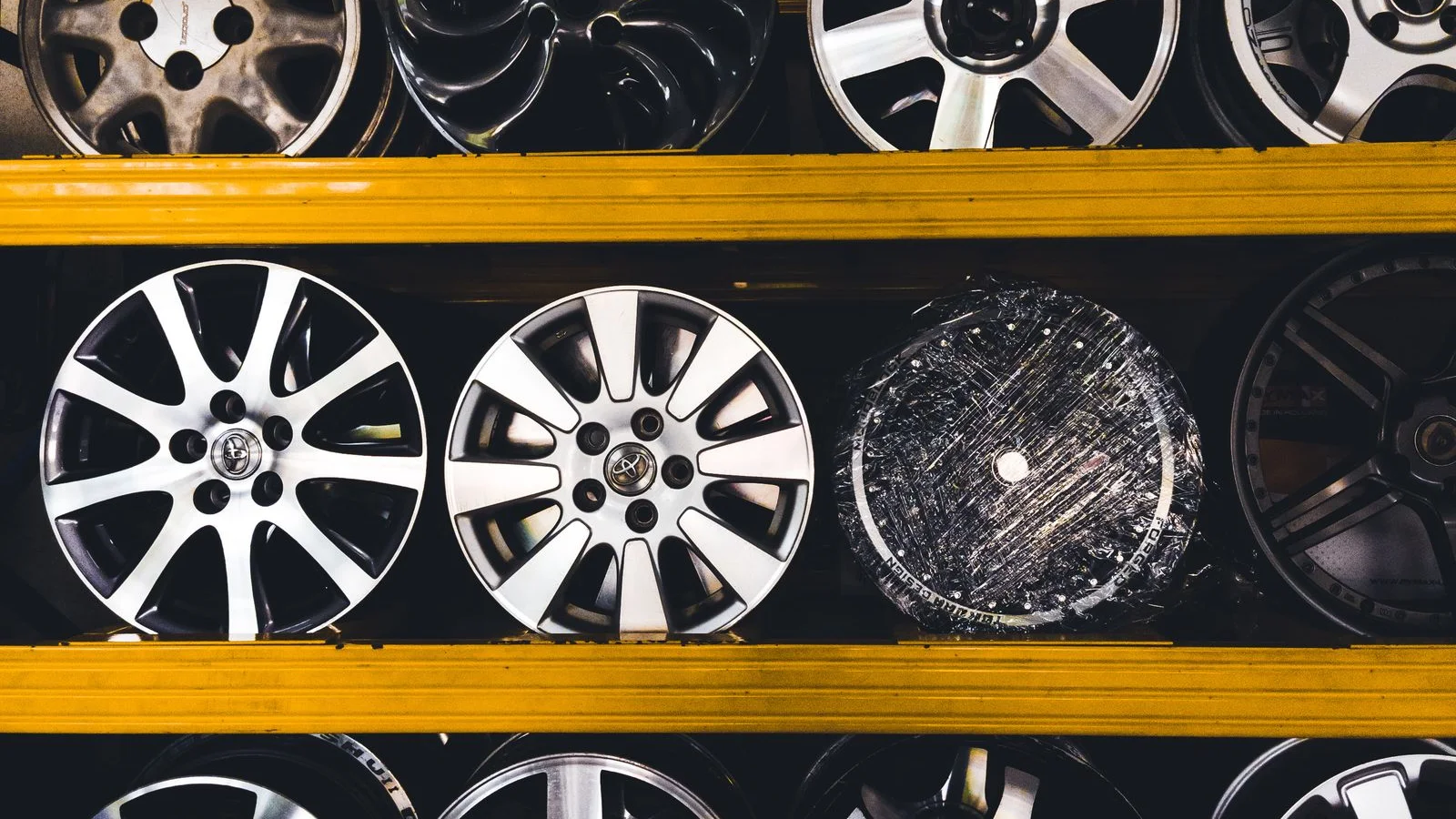
What stops them is the shipment sitting at customs because the parts inside need a conformity certificate nobody told them about. Under Cabinet Resolution No. 12 of 2018 on the control of vehicle spare parts, fourteen named categories of auto parts cannot legally be imported or sold without an ECAS conformity certificate from the regulator [1]. Brake pads, batteries, filters, safety glass, wheels and more are on that list. The licence lets you open the company. The certificate is what lets the goods move. Confuse the two, as most guides do, and you have a company that cannot trade.
This guide is about the parts that matter: which components are regulated and how to certify them, the two separate tyre age rules that a single wrong assumption turns into unsellable stock, why used tyres are banned while used parts are a legitimate licensed activity, the counterfeit-enforcement risk that is heavier here than in almost any other trade, and the free zone re-export model that is the real reason Dubai dominates regional parts. Since 2013, our team has set up trading and import companies across the UAE, so the traps here come from real files. This is a guide, not legal advice on your specific product lines.
What licence and activities do I actually need?
A commercial trade licence covering the specific auto activities you will trade, plus a customs importer code. Both are simple. The detail that costs people money is picking the right activity names, because "auto parts" is not one activity, it is several.
Auto parts trading sits under the international classification group ISIC 4530, sale of motor vehicle parts and accessories, which covers wholesale and retail of parts, components, tyres, batteries and accessories [8]. On the Dubai Department of Economy and Tourism activity list this splits into distinct activities you may need to add individually:
| Activity (as it appears on the DET list) | Covers |
|---|---|
| Auto Spare Parts and Components Trading | New mechanical and body parts |
| Cars Accessories Trading | Interior and exterior accessories |
| Tyres and Tubes Trading | New tyres and tubes |
| Used Auto Spare Parts and Requisites Trading | Second-hand parts (a separate activity) |
| Batteries Trading | Automotive batteries |
| Cars Oils and Lubricants Trading | Engine oil and lubricants |
Each activity you carry has its own conformity implications. Trading tyres, batteries and lubricants together means three different certification tracks, not one. Confirm the exact activity codes on the official Invest in Dubai portal before you file, because the numeric codes recycled across setup blogs are inconsistent and often wrong. The activity names above are reliable; treat any specific numeric suffix you read elsewhere as something to verify. If your product plans reach past vehicles into unrelated goods, our general trading guide covers the broader licence and why traders sometimes hold both.
Common Mistake: Registering only "Auto Spare Parts Trading" and then trying to sell tyres, batteries or used parts under it. Tyres and used parts are separate DET activities, and selling outside your licensed activities is a compliance breach. Decide your full product range first, then license all of it in one go, rather than paying to amend the licence later.
Which auto parts need a conformity certificate to import?
Fourteen regulated categories, and this is the single most important thing to understand before you order stock. Cabinet Resolution No. 12 of 2018 prohibits importing or selling these categories without an ECAS conformity certificate [1].
The regulated categories, with the standards they are certified against:
| Component | Standard family |
|---|---|
| Brake systems and brake pads | GSO ECE R13 series, GSO ISO 6311 to 6315 |
| Automotive batteries | GSO 34, GSO 35 |
| Laminated and safety glass | GSO 1677, GSO 3537, GSO 3538 |
| Oil filters | GSO ISO 4548 series, GSO 1605 |
| Air and cabin filters | GSO ISO 11841, 11155, 7750 series |
| Engine radiators | GSO 135, GSO 136 |
| Safety belts | GSO 96, GSO 97 |
| Rear-view mirrors | GSO 421, GSO 422 |
| Rims and wheels | GSO ISO 3894, 4000 series |
| Door locks and hinges | GSO 419, GSO 420 |
| Retro-reflective markings | ECE R104, R48 |
| Vehicle alarm systems | GSO ISO 15763 |
| Relays and flashers | GSO ISO 7588 |
| Safety glass (windscreens) | GSO 1677 |
The scheme is the Emirates Conformity Assessment Scheme (ECAS), and every regulated product model must be registered in the regulator's database before customs will release it [1]. An ECAS certificate is valid for one year and renewed annually. A higher-tier Emirates Quality Mark (EQM) runs for three years.
One naming point that dates a lot of guidance: ESMA, the old Emirates Authority for Standardization and Metrology, no longer exists as a standalone body. It merged into the Ministry of Industry and Advanced Technology (MoIAT) in 2020, and MoIAT now issues these certificates [1]. If a consultant keeps calling it "the ESMA certificate," the scheme is the same, but the source has not been updated.
Pro Tip: Before you commit to a supplier, ask whether their parts already hold GCC or ECAS conformity, or can be certified. A factory that cannot support certification for a regulated category is a factory whose stock you cannot clear. Sorting this at the sourcing stage is far cheaper than discovering it when a container is held.
What are the tyre rules, and why do people get them wrong?
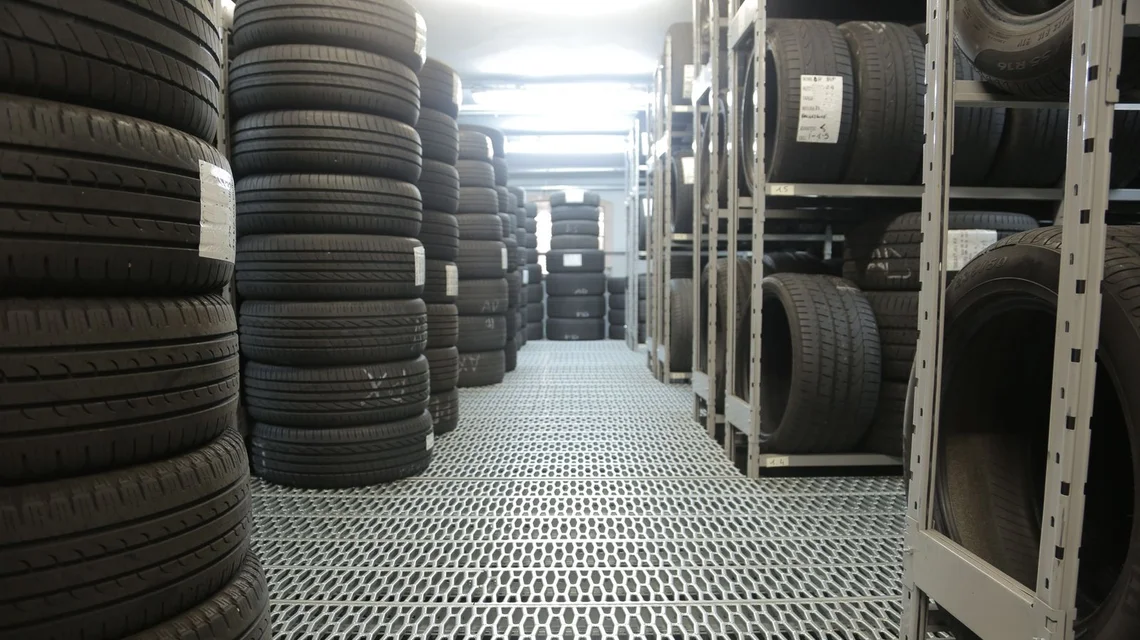
Tyres are the category where a single wrong assumption creates unsellable stock, so they deserve their own section. Two things trip people up: the certification route, and the age rules.
Tyres are certified separately. They do not use the standard vehicle-spare-parts ECAS certificate. They go through GCC type-approval and GSO conformity, against tyre standards in the GSO 51, 52 and 53 family, and must be rated for the Gulf's high ambient temperatures [3]. Guides that lump tyres in with brake pads under one certificate are simply wrong about the mechanism.
There are two different age thresholds, and confusing them is expensive:
- The point-of-sale rule. Tyres should be sold within roughly 24 months of their manufacture (DOT) date. Old-stock tyres past that window cannot be sold as new [4].
- The end-of-life rule. Any tyre that reaches five years from its manufacture date must be taken out of use and disposed of, used or unused [4].
Put those together and the trap is obvious: a distributor who buys cheap tyres that are already two or three years old is buying inventory with a very short legal sales window, or none. The DOT date on the sidewall, not the purchase price, determines whether the stock is worth anything.
Used and retreaded tyres are effectively banned. There is a blanket import ban on used and retreaded tyres for passenger cars. Retreading is permitted only for heavy commercial vehicles by a small set of approved firms. So while used auto parts are a legitimate activity, used tyres specifically are not something you can build a business on [4].
Quick Math: Say you are offered a container of tyres at 30% below market. You check the sidewalls and they were manufactured 26 months ago. Under the point-of-sale rule they are already past the window to sell as new, and they hit the five-year disposal limit in under three years. The "discount" is not a discount; it is stock you cannot legally clear at full value. Always price a tyre deal by DOT date, not by headline cost.
Do free zone companies get an advantage, and can they sell locally?
Yes and no, and the distinction decides your whole model. Free zones are excellent for one thing and blocked from another.
What free zones are for: import, warehousing and re-export. A free zone company imports parts in bulk, holds them duty-free and re-exports them without paying UAE customs duty. This is the real engine of Dubai's parts trade. The UAE is a top global re-export hub for auto parts into Africa, the wider GCC and Central Asia, and JAFZA in particular hosts the region's largest spare-parts cluster, port-adjacent for container import and re-export. If your model is buy-in-bulk-and-redistribute-regionally, a free zone is usually right.
What free zones cannot do: sell directly to the UAE mainland. A JAFZA or DAFZA company cannot sell straight to a Dubai garage or retailer. To reach a mainland customer it must appoint a mainland distributor or agent, route the goods through a mainland-licensed importer who pays the 5% customs duty, or hold a separate mainland licence. Free zone goods entering the mainland are treated as imports [1].
So the honest decision rule is about your customer:
- Selling to UAE garages, workshops, fleets and retailers? Mainland is cleaner, because your buyers are on the mainland and you avoid the distributor layer.
- Importing to re-export to Africa and the GCC? Free zone, for the duty-free re-export and the logistics ecosystem.
Auto parts is a re-export heavy trade, and Dubai is the established regional parts hub for Africa, the CIS and the wider Middle East, so a structure that suspends customs duty until goods actually enter the local market fits the model far better than a domestic-only licence: our free zone company setup page walks through the zones, warehousing and duty position a re-exporter needs. If your buyers are UAE garages, retailers and walk-in customers instead, you need the DET route, and our mainland company setup page covers the licence, the Ejari premises requirement and the activity list a mainland parts trader has to hold. Our free zone and mainland trading guide covers combining both, and our import from China guide covers the sourcing route most parts traders use.
Real Talk: The AED 12,500 free zone headline is real, but if your customers are local garages you will still need a way onto the mainland, which means a distributor margin or a mainland licence. Run the numbers on who actually pays you before you pick the structure. A cheap licence that cannot reach your customers is not cheap. Get the structure matched to your customers→
How serious is the counterfeit-parts risk?
More serious here than in almost any other trade, and it is a real licence-cancellation risk, not a theoretical one. Counterfeit auto parts are reported to make up around 70% of all counterfeit goods seized in the UAE by value, and enforcement is aggressive.
The enforcement bodies are Dubai's Department of Economy and Tourism through its Commercial Compliance and Consumer Protection arm, the Ministry of Economy, and the industry-backed Brand Owners Protection Group. In 2024 alone, raids seized more than 2.5 million counterfeit auto parts worth around AED 7.46 million, with fake oil filters and air filters making up a large share [5]. Filters and brake pads are both heavily counterfeited and heavily regulated, which is a double reason to source them cleanly.
The practical rules for staying clear:
- Aftermarket parts are legal. Counterfeit parts are not. Selling non-original parts is fine; selling parts that copy a brand's trademark or packaging is trademark infringement.
- Label aftermarket parts as aftermarket. Passing off a copy as genuine OEM exposes you to seizure, fines and licence cancellation.
- Buy from traceable suppliers. For regulated, high-counterfeit categories, insist on documentation of origin.
What about waste rules for tyres, oil and batteries?
A newer compliance layer that most guides ignore entirely, and it applies the moment you trade tyres, lubricants or batteries. Used oil and spent lead-acid batteries are classified as hazardous waste, and you cannot simply throw them out.
Under Dubai Law No. 18 of 2024 on waste management, and the federal framework of Federal Decree-Law No. 12 of 2018 on integrated waste management with its executive regulations, used oil and spent batteries may only be handed to permitted collectors, and illegal disposal carries fines that run into six figures [6]. Waste tyres must move through licensed waste-transport contractors. A formal producer-take-back fee scheme of the European kind is emerging rather than fully codified for tyres and oil, so treat "the UAE has full extended-producer-responsibility for tyres" as directionally true but not yet a settled per-product rule. The point for a trader: build a compliant disposal route for oil and batteries into your operation from day one.
How is an auto parts company taxed?
Straightforwardly, and unlike medical or some regulated sectors there is no zero-rating to chase. Auto parts are standard-rated for VAT at 5%, so once you cross the AED 375,000 mandatory VAT registration threshold you charge 5% on local sales and recover input VAT on your costs. Exports and qualifying re-exports out of the UAE are generally zero-rated, which suits the free zone re-export model. Our VAT registration and compliance guide covers the mechanics.
For corporate tax, the standard regime applies: 0% on the first AED 375,000 of profit and 9% above. Small Business Relief can treat you as having no taxable income while revenue stays at or below AED 3 million, available for periods up to the end of December 2029, which suits a first-year trading company. The free zone 0% rate is not automatic: it applies only to a Qualifying Free Zone Person earning qualifying income, which for a distributor generally means distributing goods in or from a Designated Zone under specific conditions. A free zone company that is not a QFZP is taxed under the ordinary 0%-then-9% regime, not a blanket 0%. Our corporate tax filing guide sets out the conditions.
What does it cost, and what is the real capital?
The licence is trivial; the capital is inventory and warehouse. Here is a realistic 2026 picture in AED.
| Item | Typical range (AED) |
|---|---|
| Free zone licence | 12,500 to 22,000 |
| Mainland licence | 12,000 to 45,000 |
| Warehouse or shop rental (Ejari) | Highly location-dependent |
| Customs importer code | Modest, one-off |
| ECAS conformity certificates (per product family) | Several thousand per family, annual |
| Starter inventory | The main cost, often the largest line |
| Investor and staff visas | 3,500 to 7,000 each |
The mainland route requires physical premises with an attested Ejari lease; a virtual office is not accepted for a trading company that holds stock. The lesson operators repeat is that inventory movement matters more than inventory size: the money is made on turnover and sourcing, not on sitting on a big warehouse. Budget for stock and a compliant disposal route, not just the licence.
Where do the margins and customers come from?
Your customers are independent garages and workshops, fleet operators, car dealerships and showrooms, retailers, and other traders and re-exporters buying for Africa and the GCC. The UAE automotive aftermarket is large, credibly estimated at over USD 7 billion and growing steadily, supported by a big vehicle population, a harsh climate that accelerates wear, and an aging vehicle base [7].
Margins vary by segment: new original-equipment parts commonly run 15% to 25%, while aftermarket and used parts sit higher at 25% to 40%, and specialised niches can exceed that. Re-export lifts profitability further because of the duty-free free zone route. The trade is crowded and fast-moving, and it is unforgiving of weak operations. Winners compete on speed of import, supplier reliability, inventory discipline and re-export reach, not on being the biggest.
Because those customers sit one step away from your own licence, plenty of parts traders end up owning the next link in the chain as well. Our auto repair garage guide covers the workshop side, which is a separate licence with its own municipality and location rules, and our used car dealership guide covers the showroom route that feeds a steady parts and accessories pipeline. Both are common second licences for an established parts trader, and neither is an add-on to the trading licence you already hold.
Is auto parts trading a profitable business in Dubai?
It can be, and the demand base is unusually durable, but the profit sits in inventory discipline rather than in the licence or the margin percentage. Dubai is the established regional re-export hub for parts, and the local market is fed by a very large vehicle population that wears out consumables fast. The constraint is working capital, not customers.
The demand drivers are easy to state. Dubai has been the re-export gateway for vehicle parts into Africa, the CIS and the wider Middle East for decades, and buyers from those markets come here rather than dealing with a dozen factories directly. Locally, a large vehicle population combined with extreme summer heat accelerates wear on exactly the parts that sell repeatedly: batteries, filters, brake pads, cooling components, tyres and lubricants. The used car market feeds the same demand, because older vehicles consume more parts than new ones. The physical trade clusters in Deira and around Al Aweer give a new entrant an existing buyer base that already comes looking for stock.
The counterweight is just as real, and most guides skip it. Your capital sits in stock, and the wrong SKUs sit there for years, because parts demand is model-specific and a slow-moving line does not become fast later. Counterfeit exposure is heavier in this trade than almost any other, and a supplier who sells you a copied filter has handed you the enforcement risk. Price competition in the commodity lines is brutal, and genuine parts are gated behind brand authorisation you may not be able to get. Warranty and return claims eat margin on electrical and electronic components in particular.
| Model | Brand authorisation needed | Capital intensity | Margin profile | Main customer |
|---|---|---|---|---|
| Genuine and OEM parts distribution | Yes, a distribution or authorisation agreement from the brand | High, brands set stocking commitments | Lower, commonly 15% to 25% | Dealerships, fleets, authorised workshops |
| Aftermarket parts trading | No, but trademark discipline is critical | Moderate, you control the range | Higher, commonly 25% to 40% | Independent garages, retailers, re-exporters |
| Used and recycled parts | No, but sourcing traceability matters | Lower per unit, higher sorting and grading effort | Higher but variable, 25% to 40%+ | Budget garages, older-vehicle owners, export buyers |
If your plan is to sell straight to UAE garages, retailers and walk-in trade rather than to run containers out of the country, the mainland company setup route is the one that actually reaches those buyers, and it is worth pricing that structure against the free zone before you commit to a warehouse.
Based on our experience, the traders who make money in year one are the ones who start narrow, two or three fast-moving categories they can source cleanly, and widen the range only once they know their real turnover rate per SKU. The ones who struggle bought a broad catalogue on a supplier's recommendation and financed it themselves.
What documents and steps does it take to start an auto parts trading company?
A trade licence with the right activities, premises, a Dubai Customs client code, and conformity paperwork for the regulated categories, roughly in that order. The company formation is quick. What sets your real go-live date is the customs code, the supplier agreements and the conformity certificates for anything on the regulated list.
A realistic document checklist looks like this:
- Shareholder documents: passport copies and photographs for every shareholder and the manager, plus visa or entry-stamp copies where the shareholder is already in the UAE.
- Trade name and initial approval: the reserved trade name and either DET initial approval on the mainland or the free zone authority's initial approval.
- Constitutional documents: the Memorandum of Association for a mainland LLC, or the free zone equivalent, plus the board or shareholder resolution if a corporate shareholder is involved.
- Premises: an attested Ejari for the mainland shop or warehouse, or a free zone lease, warehouse or office allocation. A trading company holding stock cannot sit on a virtual office.
- Activities: the correct trading activity names for every product line you will carry, including the separate tyre, battery, lubricant and used-parts activities.
- Dubai Customs client code: the importer registration that lets you file declarations and clear consignments in your own name.
- Brand paperwork: a distribution or authorisation agreement from the manufacturer if you intend to sell genuine or OEM-branded parts, and trademark clearance on any private label you plan to use.
- Conformity evidence: ECAS conformity certificates from MoIAT for the regulated categories, and GCC type-approval and GSO conformity for tyres, with each product model registered before shipment.
- Labelling: Arabic labelling and product information where the category requires it, plus the correct packaging and country-of-origin marking.
- Import documents per shipment: commercial invoice, packing list, bill of lading or airway bill, certificate of origin, and the conformity certificate for any regulated part.
The sequence matters more than the list, because the certification runs on the supplier's timeline, not yours.
| Step | Typical timeline |
|---|---|
| Trade name, initial approval and licence issue | 3 days to 2 weeks, free zone faster than mainland |
| Warehouse or shop lease, Ejari and fit-out | 1 to 4 weeks, location-dependent |
| Dubai Customs client code registration | About 1 week once the licence is issued |
| Supplier and brand authorisation agreements | 2 to 8 weeks, longer for genuine-parts distribution |
| ECAS or GCC conformity for regulated products | 3 to 8 weeks per product family, supplier-dependent |
| First import, customs clearance and inspection | 1 to 3 weeks after shipment arrival |
| First local sale or re-export consignment | Realistically 2 to 4 months from licence for a certified range |
Plan the conformity work in parallel with the licence rather than after it, because a certified range is what makes the licence usable. Talk to a setup expert→ if you want the activity list, the customs registration and the conformity path mapped against your actual product range.
What are the ongoing costs and compliance for an auto parts trading company?
More than the licence renewal, and most of it is per-product or per-shipment rather than annual. The trade licence, the Ejari and the establishment card renew every year, but the recurring load in this business is conformity, customs, inventory carrying cost and the tax filings, and none of those stop once the company is running.
The annual fixed items are the trade licence renewal, the Ejari or free zone lease renewal, the establishment card, staff visas and payroll under the Wages Protection System. On top of that sit the running trade costs: ECAS certificates are valid for one year and renew annually per product family, GCC type-approval for tyres carries its own cycle, and the 5% customs duty plus clearance, inspection and handling charges apply on every consignment entering the mainland. Conformity is not a one-off, and a lapsed certificate stops a shipment as effectively as never having had one.
Two compliance risks deserve separate budget lines. Counterfeit and intellectual-property enforcement is aggressive here, and DET's commercial compliance arm, the Ministry of Economy and brand owners run inspections on warehouses and shops, so your incoming-goods checks and supplier documentation are an operating cost, not a formality. Inventory carrying cost is the quieter one: rent, insurance, handling and, above all, capital tied up in stock that is not turning. A trader with AED 800,000 sitting in slow-moving lines has a real cost even if nothing goes wrong.
On tax, VAT is standard-rated at 5% on local sales with input VAT recoverable, and exports and qualifying re-exports are generally zero-rated, which means you must keep the export evidence that supports the zero rating, exit certificates and shipping documents, because that evidence is what the FTA will ask for. Corporate tax is filed annually at 0% up to AED 375,000 and 9% above, and mainland and free zone companies also carry Ultimate Beneficial Owner obligations. The federal Economic Substance Notification and Report requirement was cancelled for financial years ending after 31 December 2022, so it no longer belongs on a current compliance calendar. These renewals, filings and record-keeping cycles are exactly the recurring work our post-setup services handle, so the certificates and returns stay current while you concentrate on turnover.
Common Mistake: Zero-rating export sales in the VAT return without keeping the customs exit evidence for each consignment. The zero rating is a documentation position, not an assumption based on where the buyer is, and a re-exporter who cannot produce the proof ends up paying 5% out of a margin already spent.
Can you open a corporate bank account for an auto parts trading company?
Yes, but not remotely, and a trading company gets more questions than a services company. UAE banks require in-person know-your-customer, so the shareholder or authorised signatory must attend a branch meeting with the licence, the Memorandum of Association and passports in hand. Plan four to eight weeks from licence to a working account.
The extra scrutiny is about the goods and the counterparties, not about you personally. Banks ask trading companies where the stock comes from, who the end buyers are, and whether the shipping and invoicing pattern matches the declared activity, so expect to show supplier agreements, sample invoices, the Dubai Customs client code and a plain explanation of your product range. Genuine-parts distributors who can produce a brand authorisation letter have an easier conversation than an open-market trader with no fixed supplier list.
Re-export makes it harder rather than easier. Shipping to markets that carry higher compliance risk, several African and CIS destinations among them, invites sanctions screening and further questions about end customers and payment routes, and cash-heavy sales patterns attract the same attention. The practical answer is to arrive prepared: a clean product list, named suppliers, named markets, realistic turnover projections and bank-transfer-based collections. A well-documented file moves faster than a well-connected one.
Pro Tip: Open the account before you commit to a large first order. Traders who ship stock in while the account is still pending end up paying suppliers through personal or third-party channels, which is exactly the pattern that makes the compliance team slow the file down further.
Real Client Stories
The container held for a missing certificate. A founder set up a free zone company on the sixty-minute licence and imported a mixed load of brake pads and filters, confident the licence was all he needed. Customs would not release it, because those categories require ECAS conformity certificates his supplier had never obtained. He paid storage while the parts were certified, where they could be. Sorting conformity at the sourcing stage would have cost nothing.
The tyre bargain that could not be sold. A trader bought a discounted container of tyres without checking the DOT dates. They had been manufactured 27 months earlier, already past the point-of-sale window as new, and close to the five-year disposal limit. The "cheap" stock could not be cleared at full value. We now insist clients price tyre deals by manufacture date, not headline cost.
The free zone company that could not reach its customers. A client chose a free zone for the cheap licence and full ownership, then found he could not sell to the Dubai garages that were his entire customer base, because free zone companies cannot sell directly to the mainland. He had to add a mainland route he had not budgeted for. Matching the structure to the customer first would have saved the rework.
Set up your Dubai auto parts company with the real barriers mapped
Auto parts trading rewards operators who understand that the licence is the easy part and conformity, sourcing and structure are the real game. Since 2013, BusinessDubai.ae has completed 700+ company registrations across the UAE, including trading and import companies. We will help you license the full range of activities you actually plan to sell, choose mainland or free zone around who your customers are, understand which of your products need ECAS conformity and how to get it, avoid the tyre-age and counterfeit traps that sink new importers, set up the customs and VAT mechanics for import and re-export, and get corporate tax right, all with clear itemised pricing. Talk to a setup expert→ for a plan built around your product range and customers. Our import and export guide covers the customs layer, and post-setup services covers ongoing compliance and renewals.
Frequently Asked Questions
How much does an auto parts trading licence cost in Dubai?
The licence runs from around AED 12,500 in a free zone to AED 45,000 on the mainland. That is the easy part. The real capital is inventory, warehouse rental and, for regulated categories, ECAS conformity certificates. Budget for stock, not just the licence.
Do I need a conformity certificate to import car parts?
For fourteen named categories, yes. Under Cabinet Resolution No. 12 of 2018, parts such as brake pads, batteries, filters, safety glass and wheels cannot be imported or sold without an ECAS conformity certificate. Customs will not release regulated parts without it [1].
Is an auto parts business profitable in Dubai?
It can be. New original parts run margins of 15% to 25%, aftermarket and used parts 25% to 40%, in an aftermarket worth over USD 7 billion and growing. Re-export to Africa and the GCC lifts profit further. Success depends on sourcing and turnover, not size [7].
Can I sell used auto parts in Dubai?
Yes. Used Auto Spare Parts and Requisites Trading is a separate, legitimate DET activity. Your licence must specifically carry it. Note that used tyres are different: importing used or retreaded passenger-car tyres is banned [4].
Are used tyres banned in the UAE?
Yes, for passenger cars. There is a blanket import ban on used and retreaded tyres. Retreading is allowed only for heavy commercial vehicles by a small set of approved firms. Used parts in general are legal; used tyres specifically are not [4].
What is the tyre manufacture-date rule in Dubai?
There are two. Tyres should be sold within roughly 24 months of their manufacture (DOT) date, and any tyre reaching five years from manufacture must be taken out of use, used or unused. Always check the sidewall date before buying stock [4].
Do I need a warehouse for an auto parts licence?
For a mainland trading company holding stock, yes, with an attested Ejari lease; a virtual office is not accepted. A free zone company uses the zone's warehousing facilities. A pure agency model without stock is the exception, not the rule.
Mainland or free zone for an auto parts business?
It depends on your customer. Mainland is cleaner if you sell to UAE garages, retailers and fleets. Free zone suits import-and-re-export to Africa and the GCC, but a free zone company cannot sell directly to mainland customers without a distributor or mainland licence [1].
Can a free zone company sell auto parts to a Dubai garage?
Not directly. It must appoint a mainland distributor or agent, route the goods through a mainland-licensed importer who pays the 5% duty, or hold a mainland licence. Free zone goods entering the mainland are treated as imports [1].
Can I re-export car parts from Dubai to Africa?
Yes, and it is the core free zone model. Parts imported into a free zone can be warehoused duty-free and re-exported without UAE customs duty. The UAE is a top regional re-export hub for parts into Africa, the GCC and Central Asia.
What is the import duty on car parts in the UAE?
The standard GCC customs duty is 5% on the CIF value when parts enter the mainland. Goods held in a free zone are duty-suspended until they enter the mainland, and re-exports out of the country avoid the duty entirely.
Can a foreigner own 100% of an auto parts company in Dubai?
Yes. Free zones give full foreign ownership by default, and since the 2021 reform most mainland trading activities including auto parts allow 100% foreign ownership.
Which free zone is best for auto parts trading?
JAFZA is the dominant hub, port-adjacent with the region's largest spare-parts cluster. DAFZA suits air-freighted high-value parts, Dubai CommerCity suits e-commerce fulfilment, and Sharjah and Ajman zones are lower-cost for budget and used-parts wholesale.
Do tyres need a different certificate from other parts?
Yes. Tyres are certified through GCC type-approval and GSO conformity against the GSO 51 to 53 standards, not the standard vehicle-spare-parts ECAS certificate. They must also be rated for the Gulf's high ambient temperatures [3].
Is ESMA still the certifying authority?
No. ESMA merged into the Ministry of Industry and Advanced Technology in 2020. MoIAT now issues ECAS and EQM certificates. The scheme is the same, but "ESMA certificate" is legacy terminology [1].
How long is an ECAS certificate valid?
One year, renewed annually. The higher-tier Emirates Quality Mark is valid for three years. Every regulated product model must be registered in the regulator's database before customs will clear it [1].
What business activities cover tyres, batteries and accessories?
They are separate DET activities: Tyres and Tubes Trading, Batteries Trading, Cars Accessories Trading, and so on, each under ISIC group 4530. License every activity you plan to sell, rather than adding them later.
How do I avoid selling counterfeit auto parts?
Buy from traceable suppliers, insist on origin documentation for high-counterfeit categories such as filters and brake pads, and clearly label aftermarket parts as aftermarket. Counterfeit parts make up around 70% of UAE counterfeit seizures and enforcement is aggressive [5].
What waste rules apply to oil, tyres and batteries?
Used oil and spent lead-acid batteries are hazardous waste under Dubai Law No. 18 of 2024 and the federal framework, and may only go to permitted collectors, with heavy fines for illegal disposal. Waste tyres must move through licensed contractors [6].
How is an auto parts company taxed?
VAT is standard-rated at 5% on local sales, with input VAT recoverable and exports generally zero-rated. Corporate tax is 0% up to AED 375,000 of profit and 9% above, with Small Business Relief available up to AED 3 million of revenue through end of December 2029.
Where do auto parts traders source inventory?
Common sources are China, Japan, Korea and Europe, through authorised distributors or the open market. For regulated categories, confirm the supplier can support ECAS or GCC conformity before ordering, or the stock cannot clear customs.
What is the difference between genuine, aftermarket and counterfeit parts?
Genuine and OEM parts carry the vehicle brand and normally require a distribution or authorisation agreement. Aftermarket parts are made by independent manufacturers and sold under their own brand, which is entirely legal. Counterfeit parts copy another brand's trademark or packaging, which is trademark infringement and carries seizure, fines and licence cancellation [5].
Do I need a distribution agreement to sell branded car parts in Dubai?
To sell genuine or OEM-branded parts as an authorised source, yes: manufacturers appoint distributors under a written agreement that usually sets territory, stocking commitments and pricing. Without it you are trading in the open market, which is legal for aftermarket and independently sourced parts but not a basis for describing your stock as brand-authorised.
Which auto parts do not need a conformity certificate?
Parts outside the fourteen regulated categories of Cabinet Resolution No. 12 of 2018, such as most trim, interior accessories and many body panels, are not caught by the ECAS requirement, though customs and standards rules still apply generally. Anything on the regulated list, including brake systems, batteries, filters, safety glass and wheels, needs the certificate before it can clear [1].
Do I pay 5% customs duty on parts I re-export from Dubai?
No. The 5% GCC customs duty applies on the CIF value when goods enter the mainland. Parts held in a free zone are duty-suspended, and consignments re-exported out of the country avoid the duty entirely, which is why the free zone warehouse is the standard structure for a regional re-export trade.
Should I focus on re-export or local UAE sales?
They favour different structures, so decide before you license. Re-export to Africa, the GCC and the CIS suits a free zone company with duty suspension and port-adjacent warehousing, and the sales are generally zero-rated for VAT with export evidence. Selling to UAE garages, retailers and walk-in customers needs a mainland licence, carries 5% duty on import and 5% VAT on the sale, but avoids the distributor layer.
Can I sell auto parts online or on marketplaces in Dubai?
Yes, with the right activity on the licence and, for a mainland company, an e-commerce activity alongside the trading activity. The product rules do not change: regulated categories still need conformity certification, aftermarket parts must be described as aftermarket rather than genuine, and marketplaces themselves run brand-protection checks that will remove listings and suspend sellers over trademark complaints.
Do I need a warehouse or is a shop enough for auto parts trading?
It depends on volume and model. A retail or counter-trade business in a parts cluster can operate from a shop with an attested Ejari, while an importer moving container loads needs warehouse space for storage, sorting and order picking. Free zone companies use the zone's warehousing. Either way, a trading company that holds stock cannot run on a virtual office.
What margins can I expect by parts category?
As a working guide, new original-equipment and genuine parts commonly run 15% to 25%, aftermarket and used parts sit at 25% to 40%, and fast-moving consumables such as filters, batteries and lubricants tend to earn less per unit but turn far more often. Slow-moving model-specific parts can show high headline margins and still lose money once carrying cost is counted [7].
References
[1] Cabinet Resolution No. 12 of 2018 on the control of vehicle spare parts, and the Emirates Conformity Assessment Scheme (ECAS) operated by the Ministry of Industry and Advanced Technology, which absorbed ESMA in 2020, including certificate validity and product registration. moiat.gov.ae
[2] Standard families for the regulated vehicle spare-parts categories, summarised by an accredited conformity body. ATIC Technical Services
[3] GSO tyre standards (GSO 51 to 53) and the GCC type-approval and conformity route for tyres. gso.org.sa
[4] UAE tyre age rules (point-of-sale and five-year end-of-life) and the ban on used and retreaded passenger-car tyres. Gulf News
[5] Counterfeit auto-parts enforcement in the UAE, including 2024 seizures of over 2.5 million parts worth around AED 7.46 million. Khaleej Times
[6] Dubai Law No. 18 of 2024 on waste management and the federal framework of Federal Decree-Law No. 12 of 2018 on integrated waste management, covering hazardous waste including used oil and spent batteries. Dubai Legislation
[7] UAE automotive aftermarket market size and growth. IMARC Group
[8] ISIC group 4530, sale of motor vehicle parts and accessories, and JAFZA's automotive and spare-parts hub. siccode.com and jafza.ae