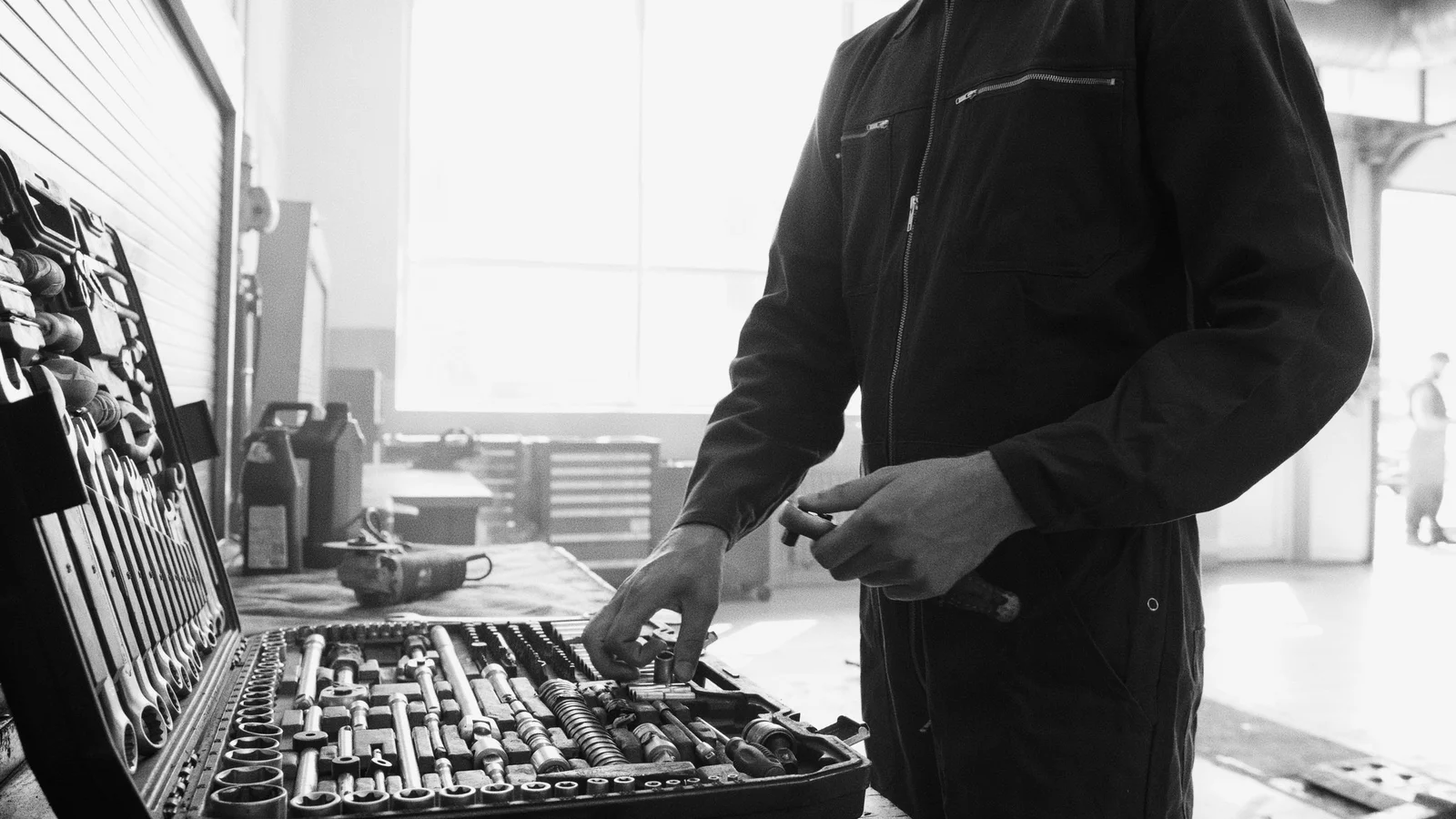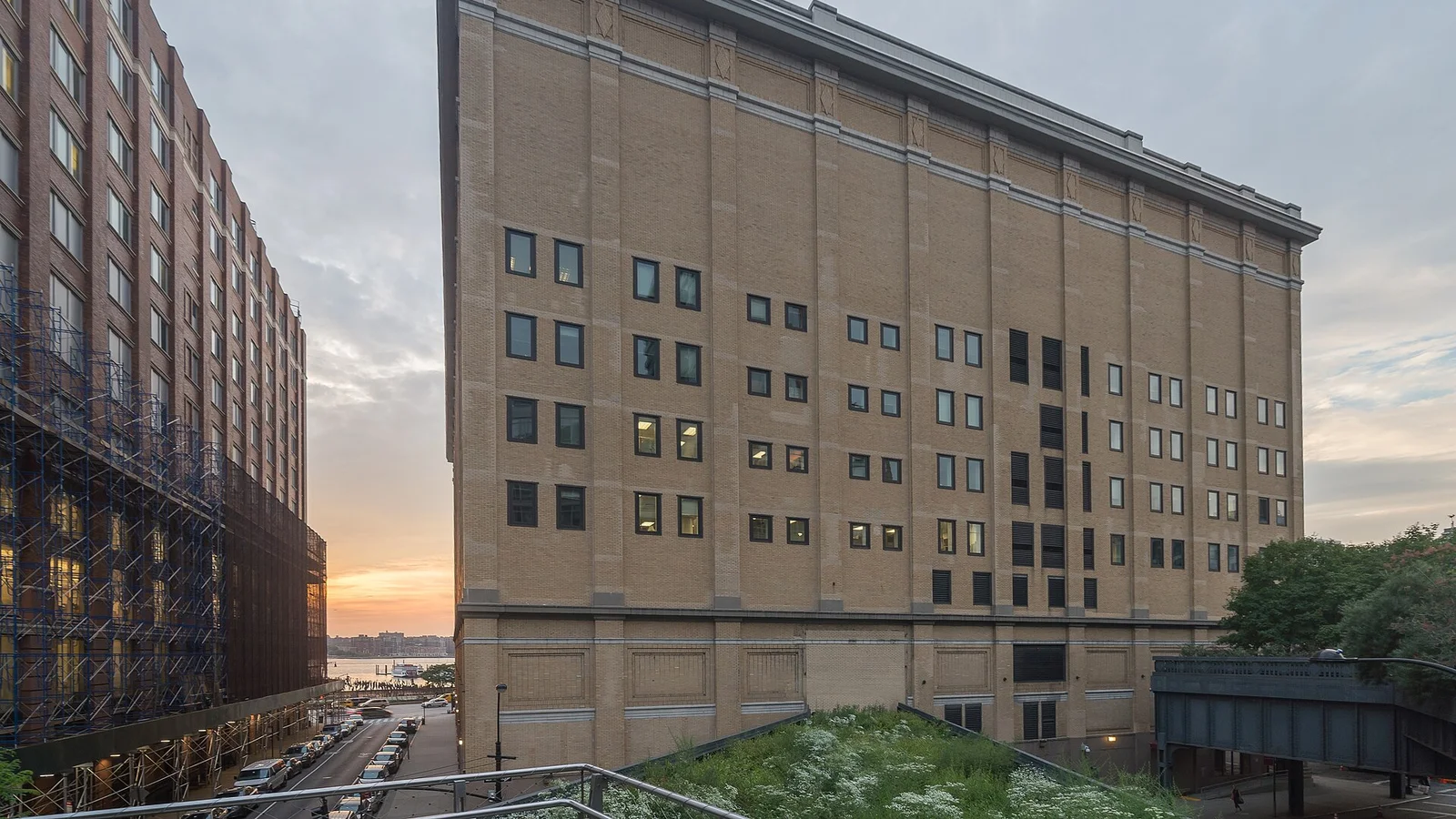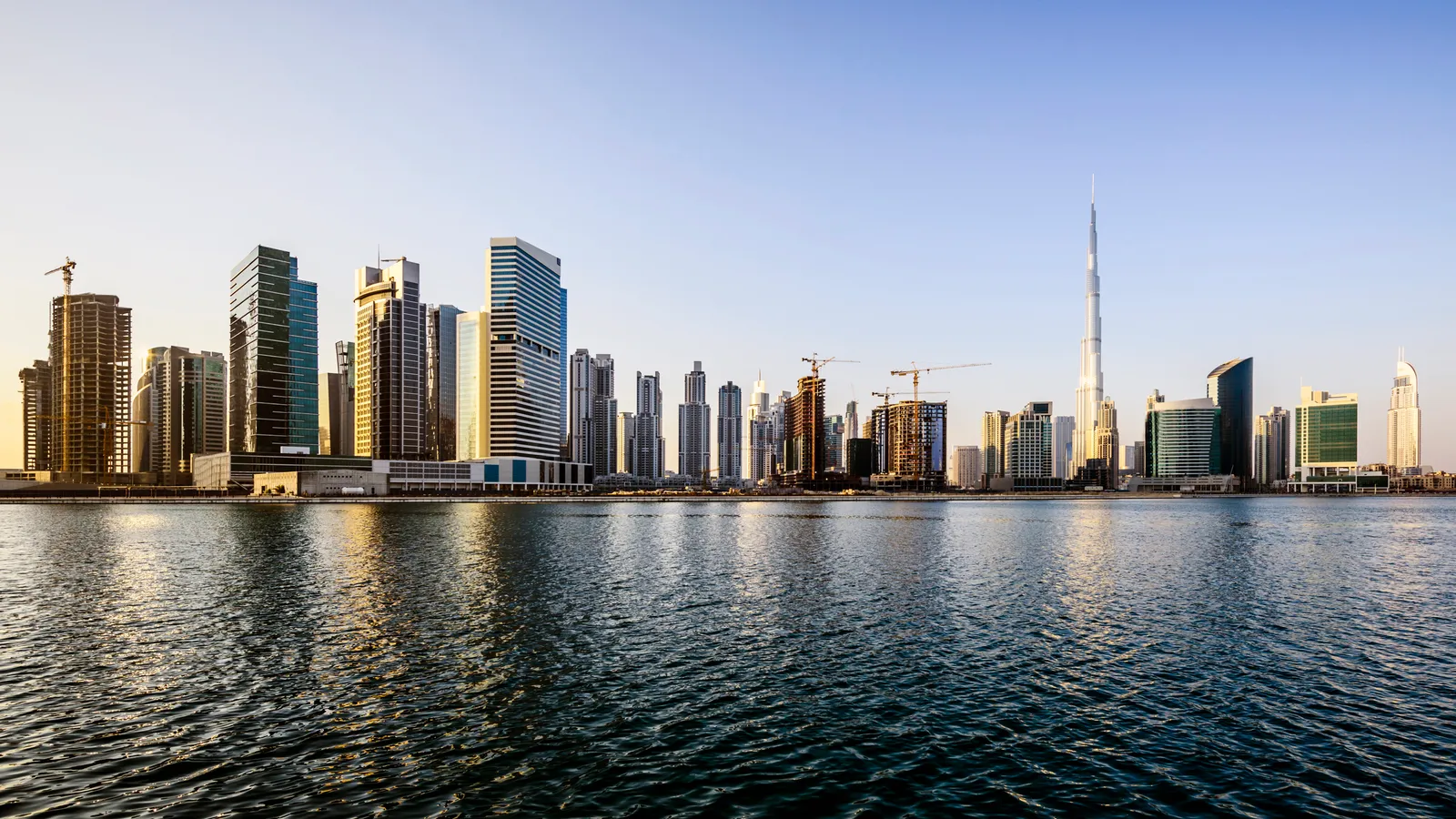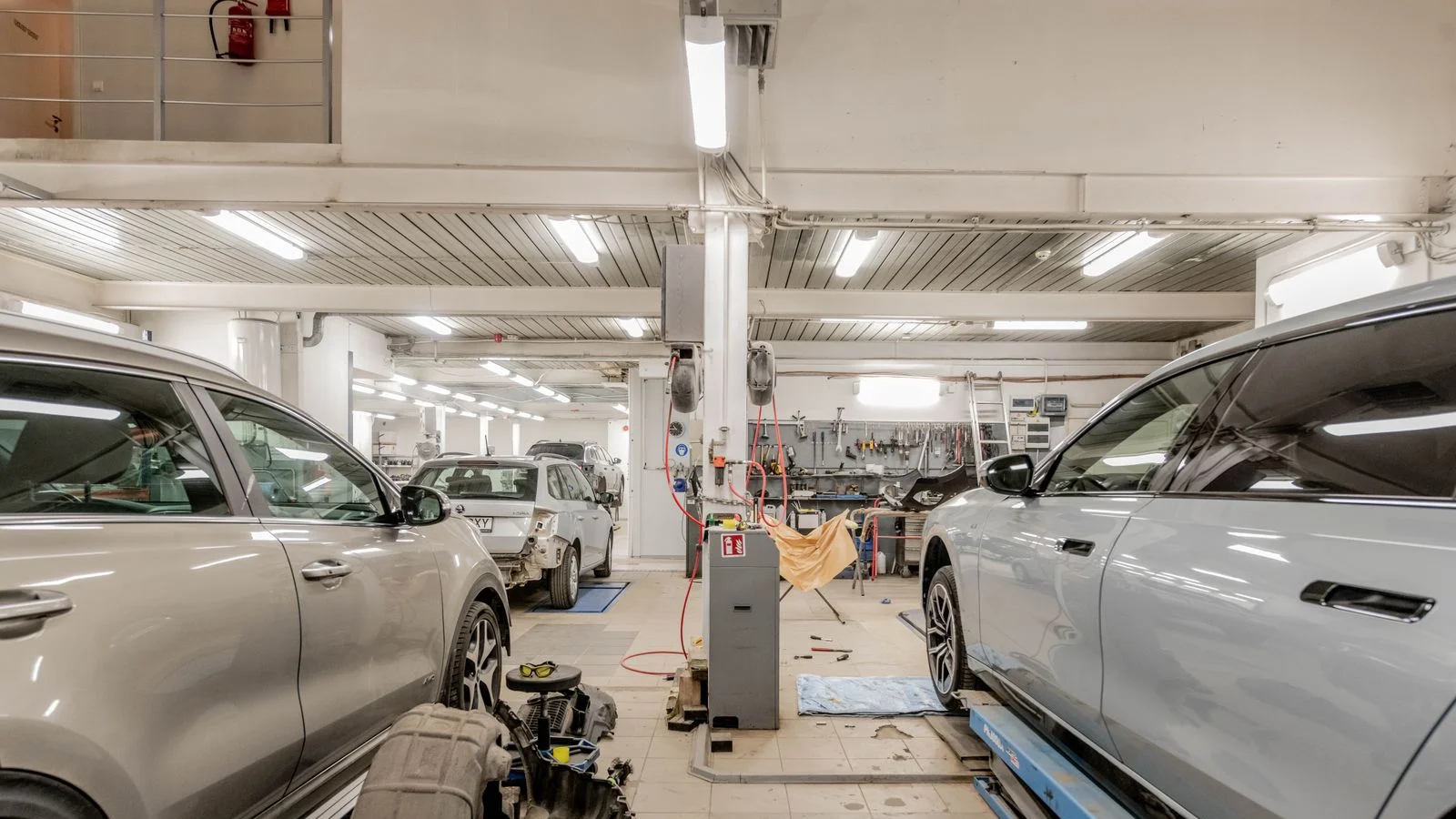
Almost every guide to opening a car repair garage in Dubai leads with the same line: "RTA approval is mandatory before you get your trade licence." For a fixed workshop, that is largely a myth. The standard fixed-garage activities on the DET list carry no third-party approval requirement to issue the trade licence. The one activity that does need RTA pre-approval is mobile auto repair. What setup firms describe as the mandatory RTA gate is usually their own service, not the statutory one [1].
The real gates are different, and they are the ones that actually stop garages opening. A garage cannot run on a plain trade licence because of the premises: it must sit in an industrial-zoned unit, and it cannot operate until Dubai Civil Defence has approved the fire safety and Dubai Municipality has cleared the environmental side. On top of that sits a compliance layer most articles do not mention at all: Dubai Law No. 18 of 2024 on waste management, which governs how you dispose of used oil, and carries fines up to AED 500,000 [1].
This guide covers the real approval stack, the zoning bottleneck, the waste rules, why denting and painting is stricter, ownership, and why a garage never gets the free-zone 0% tax rate. Since 2013, our team has set up industrial and technical companies across the UAE, so the traps here come from real files. This is a guide, not legal or tax advice on your specific licence.
Is RTA approval really mandatory before the licence?
Not for a fixed garage, and getting this straight saves you chasing the wrong approval. The DET activity data shows that the standard fixed workshop activities under the 4520 motor-vehicle-repair division require no third-party approval to issue the trade licence. The activity that does require RTA pre-approval is mobile auto repair services [1].
That does not mean RTA is irrelevant. RTA governs vehicle modification certificates and runs the vehicle testing and inspection centres, which is a separate business from a repair workshop. But the idea that every fixed garage needs an RTA sign-off before it can be licensed overstates the position. The approvals that genuinely gate a fixed garage are premises zoning, Civil Defence and Municipality environmental clearance, in that order.
Common Mistake: Spending time and money chasing an RTA approval you may not need for a fixed workshop, while underestimating the premises and Civil Defence steps that actually gate you. Confirm the requirement for your exact activity code on the Invest in Dubai list, and put your energy into the industrial unit and the fire and environmental approvals.
What approvals does a garage actually need?
Four authorities, layered, and the trade licence is only the first. A functioning garage sits behind this stack [1]:
| Authority | Role for a garage |
|---|---|
| DET (Department of Economy and Tourism) | Issues the mainland trade licence and defines the activity |
| Dubai Civil Defence | Fire and life-safety approval and inspection, mandatory before operations |
| Dubai Municipality (Environment) | Environmental permit or clearance for a facility handling oils, paints and solvents |
| RTA | Not a universal gate: pre-approval only for mobile repair; also modification certificates and vehicle testing |
The reason a plain trade licence is not enough is that the licence authorises the activity, but the premises must be an approved industrial workshop, and that unit cannot lawfully operate until the Civil Defence fire clearance and, for oils and paint, the Municipality environmental sign-off are in place. The trade licence, the Civil Defence certificate and the environmental permit are three separate documents you need before you turn a spanner.
Where can you actually open a garage?
In an industrial-zoned unit, and this is the real bottleneck, not any single permit. DET will not activate the licence against a normal commercial, retail or office unit. You need an industrial or warehouse-zoned unit with an Ejari tenancy in the company's name, in an area zoned for it, commonly Al Quoz, Al Qusais Industrial, Ras Al Khor or Jebel Ali Industrial [1].
The catch operators discover late is that these units are scarce, conditioned by Civil Defence, and not every industrial sub-area permits every activity. Some plots prohibit spray-painting or heavy repair for environmental reasons. So the sequence that works is to confirm the specific plot's permitted use with the Municipality before you sign the Ejari, not after. Reserving a name and paying the licence fee is the easy part; securing a compliant industrial unit is where garages stall.
Real Talk: The premises decide your timeline and a large part of your budget. A basic industrial unit rent runs into the tens of thousands of dirhams a year with a multi-month deposit, plus fit-out for lifts, ventilation and, for a body shop, a spray booth. Line up the unit and its approvals early, because the licence is quick and the compliant workshop is not. Get a realistic setup plan for your garage→
Why is denting and painting stricter than mechanical repair?
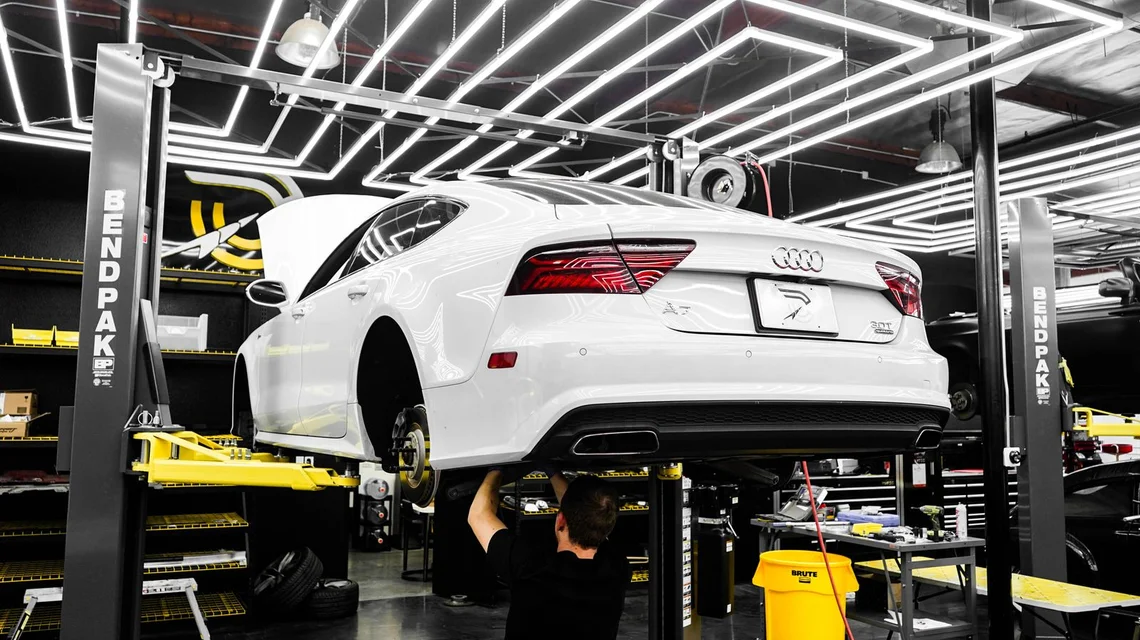
Because paint means spray booths, solvents and flammable chemicals, which trigger heavier fire and environmental rules. A body shop that sprays paint handles volatile organic compounds and flammable liquids, so it faces a tighter Dubai Municipality environmental permit and stricter Civil Defence fire engineering, covering flammable-liquid storage, spray-booth suppression and ventilation [1].
Many guides lump all auto repair into one bucket, but the body and paint activity is where the environmental and fire layers bite hardest. A purely mechanical, tyre or oil-change garage still carries an environmental obligation, but a lighter one. If denting and painting is part of your plan, budget for the stricter approvals and the spray-booth engineering from the start, and confirm the plot allows spray-painting before you lease it.
What are the waste rules for a garage?
A hard legal obligation under a new law that most articles ignore. Dubai Law No. 18 of 2024 on waste management, issued in September 2024, governs how a garage handles its waste, and it has teeth [1]:
- Prohibited discharges. You cannot pour used oil, vehicle-washing water or contaminated coolant onto pavements, roads or drains.
- Licensed collectors only. Regulated waste, used engine oil, oil filters, waste tyres, lead-acid batteries, and paint and solvent residues, must be handed to Dubai Municipality-licensed collectors, typically with a waste transfer note for each collection.
- Hazardous waste handling. Hazardous waste cannot go in ordinary containers or be mixed, and you must keep waste records.
- Penalties. Fines run up to AED 500,000, doubled for repeat violations, with possible facility closure and utility disconnection.
Practically, a garage needs an oil-water separator before its drainage, a compliant hazardous-waste storage and disposal route, and, for a paint shop, spray-booth emission controls. Build this into the fit-out and the operating routine from day one, because it is enforced and the fines are real.
Can a foreigner own a garage, and can you use a free zone?
You can own 100% on the mainland, but a garage serving the public is a mainland activity, not a free-zone one. Public-facing auto repair, taking cars from the Dubai roads, is a mainland DET activity. A free-zone licence is scoped to in-zone or international business, so a free-zone-only garage generally cannot serve the walk-in Dubai public [1]. Free-zone pages that sell "auto garage" packages tend to omit this scope limit.
On ownership, 100% foreign ownership is available on the mainland for auto repair under Federal Decree-Law No. 32 of 2021, with no Emirati partner needed, subject to confirming your exact activity is on the approved list. So the honest structure for a customer-facing garage is a mainland company in an industrial unit, fully foreign-owned, with the Civil Defence and environmental approvals in place.
Because a garage needs a physical industrial workshop and earns its money from cars driven in off Dubai roads, the mainland licence is the default structure here rather than one option among several, and our mainland company setup page walks through the DET route, the Ejari requirement and the ownership position a workshop needs. The free-zone route still has a real use in this sector, just not for the repair bays: if you plan to import and wholesale spare parts alongside the workshop, that trading arm can sit in a zone with warehousing and customs handling attached, and our free zone company setup page covers how that entity is licensed. Operators frequently widen the model after the workshop stabilises, and the two most common next steps are selling vehicles and hiring them out, which our used car dealership and car rental business guides cover, both of which pair well with an in-house workshop because you service your own stock at cost.
How is a garage taxed?
Standard rates, and the free-zone 0% pitch fails for two independent reasons. Garage repair services are standard-rated at 5% VAT, and you register once taxable turnover exceeds AED 375,000. Warranty work paid entirely by the manufacturer carries no additional VAT to the customer, and extended warranties bought from an overseas manufacturer fall under the reverse-charge mechanism, but the everyday repair is a normal 5% supply. Our VAT registration and compliance guide covers the mechanics.
For corporate tax, the standard regime is 0% on the first AED 375,000 of profit and 9% above, with Small Business Relief while revenue stays at or below AED 3 million, for periods up to the end of December 2029. The free-zone 0% rate does not apply to a garage, and here the reasons stack up under Ministerial Decision No. 229 of 2025 [2]:
- Vehicle repair is not a Qualifying Activity, so its income does not qualify.
- Even if it were, transactions with natural persons are an Excluded Activity, and a retail garage's customers are individuals.
So a Dubai garage pays 9% on profit above the threshold whether it is mainland or free zone. Our corporate tax filing guide covers the conditions.
What does it cost, and is it worth it?
Split the modest licensing from the premises and fit-out, which are the real numbers. Here is a realistic 2026 picture in AED.
| Item | Typical range (AED) |
|---|---|
| Trade name, initial approval and licence | 14,000 to 34,000 |
| RTA, Municipality and Civil Defence approvals | Several thousand each, activity-dependent |
| Industrial unit rent (Ejari) | 40,000 to 100,000+, plus deposit |
| Fit-out, lifts, diagnostics and tools | 60,000 to 200,000+ |
| Initial parts inventory and signage | 20,000 to 50,000 |
| Visas and technician salaries | Ongoing, by headcount |
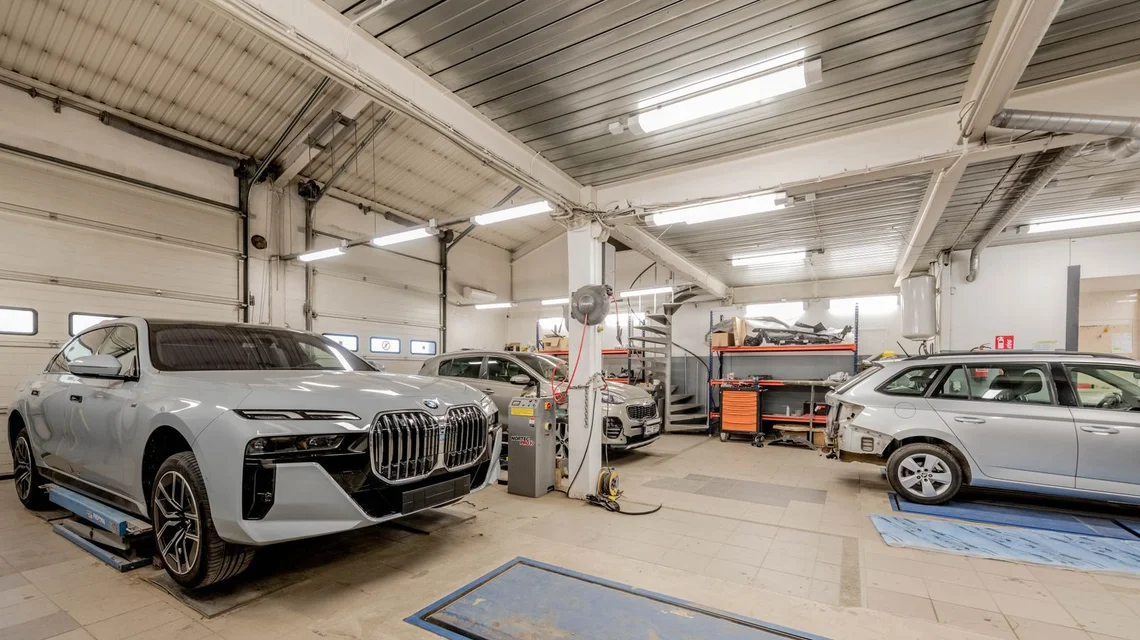
An all-in first year commonly runs AED 150,000 to 300,000 for a small workshop, more for a medium service centre or a specialised body shop. The market supports it: the UAE automotive aftermarket is worth around USD 7 billion, Dubai registered nearly half a million vehicles in a single year, and the harsh climate drives constant, recurring demand on batteries, tyres and air-conditioning [3]. The strongest niches are electric and hybrid servicing, denting and painting, and fleet-service contracts with the large rental and logistics sector. The winners compete on turnaround, specialisation and fleet relationships, not on being the cheapest.
Is an auto repair garage a profitable business in Dubai?
Yes, for operators who specialise or hold fleet contracts, and the demand base is unusually solid. Dubai has a very high rate of vehicle ownership, the climate destroys batteries, tyres and air-conditioning components on a predictable cycle, and every car must pass testing before its registration renews. Repair demand here is recurring, not seasonal.
Four drivers do most of the work. The first is sheer vehicle density: Dubai registered nearly half a million vehicles in a single year, and the resident fleet keeps growing with the population [3]. The second is heat. Summer surface temperatures shorten battery life to two or three years, cook tyre rubber, and load air-conditioning compressors and condensers hard enough that AC servicing becomes an annual line item for most owners rather than an occasional repair. The third is mandatory vehicle testing before annual registration renewal, which pushes a steady stream of cars into workshops for the brake, tyre, light and emissions work needed to pass. The fourth, and the most valuable, is fleets: Dubai's rental, leasing, delivery and logistics operators run large vehicle pools and strongly prefer a contracted workshop with agreed rates and guaranteed turnaround over ad hoc repairs.
The counterweight is worth stating plainly, because most guides skip it. Industrial unit rent runs from AED 40,000 to well over AED 100,000 a year before you have bought a single lift, and landlords in approved zones usually want a large deposit and few cheques. A skilled diagnostic technician costs considerably more than a general mechanic and comes with a visa, medical, Emirates ID and often accommodation attached. And you compete on two fronts at once: dealer service centres hold the in-warranty work and the brand diagnostic tools, while a long tail of small workshops competes on price for routine servicing. Margin comes from specialisation, turnaround time and fleet relationships, not from being the cheapest bay in Al Quoz.
Quick Math: A four-bay mechanical workshop turning around six to eight jobs a day at an average ticket of a few hundred dirhams generates a workable monthly revenue, but the fixed base of rent, technician salaries and visas has to be covered before the first dirham of profit. That is why utilisation, not price, is the number to watch. Two fleet contracts that keep two bays busy on scheduled servicing change the economics of the whole workshop, because they turn variable walk-in demand into a predictable base load.
The three routes into this sector have genuinely different shapes, and it is worth seeing them side by side before you commit to a premises and a fit-out budget.
| Model | Premises requirement | Capital intensity | Margin profile | Main customer |
|---|---|---|---|---|
| General repair garage | Industrial-zoned unit with Civil Defence and Municipality environmental approval | Moderate to high: lifts, diagnostics, compressor, tooling | Thin on routine servicing, better on mechanical and AC jobs | Individual vehicle owners and small local fleets |
| Specialist or luxury workshop | Same industrial unit, plus brand-specific diagnostic, calibration and EV-safe equipment | High: equipment cost plus trained, better-paid technicians | The strongest of the three, because few workshops can do the work | Owners of premium, performance, electric and hybrid vehicles |
| Auto parts trading | Warehouse or storage unit, mainland or free zone, no fire and environmental workshop stack | Working capital tied up in stock rather than in equipment | Thinner per unit but volume-driven and scalable | Garages, retailers and export buyers |
The parts route deserves separating in your planning, because it is a different licence and a completely different premises problem. Importing and wholesaling spare parts is a trading activity that can sit inside a free zone with warehousing and customs handling attached, which is why some operators run a mainland workshop for the repair work and a separate zone-based entity for the parts import arm, and our free zone company setup page covers how that second entity is licensed. Our auto parts trading guide covers the activity codes, customs registration and stock realities in detail.
Based on our experience, the garages that hold up over five years are the ones that picked a lane early, whether that is German marques, electric and hybrid drivetrains, gearboxes, or fleet servicing, and then bought the equipment and hired the technicians for that lane specifically. The workshops that try to be everything to everyone end up with generalist technicians, price-shopping customers and no reason for anyone to come back.
What documents and steps does it take to open a garage in Dubai?
A mainland DET company, an industrial-zoned workshop, and two technical approvals, in that order. The paperwork itself is ordinary. What catches founders is the sequencing, because the licence cannot go live against an unapproved premises, so the unit and its approvals set the real timeline rather than the trade name reservation.
Here is the document set to have ready before you start, so nothing stalls mid-file:
- Shareholder passports and photographs, plus a visa page or entry stamp for anyone already in the UAE, and a No Objection Certificate if a shareholder is on another employer's visa.
- Trade name reservation from DET, avoiding names that imply a franchise or brand affiliation you do not hold.
- DET initial approval for the specific repair activities you intend to run, confirming which of them carry a third-party approval condition.
- Memorandum of Association or the local service agent agreement, depending on the legal form you take.
- Industrial or workshop Ejari for a unit in an approved area such as Al Quoz, Al Qusais Industrial, Ras Al Khor or Jebel Ali Industrial, with the plot's permitted use confirmed before signing.
- Dubai Municipality approval for the workshop use, and Dubai Civil Defence fire and life-safety approval with the fit-out drawings, extinguisher and detection layout submitted for review.
- Environmental approval covering waste oil handling, hazardous-waste storage and the oil-water separator on your drainage, which is stricter again if spray-painting is in scope.
- Equipment list for the Civil Defence and Municipality files, listing lifts, compressors, welding equipment, chemical and flammable storage, and the spray booth if you have one.
- Technician visas, which follow the establishment card and the immigration quota tied to your leased unit area, each with a medical test and Emirates ID.
The order below is the one that actually works, and the timings are realistic rather than the best case marketing figures you see quoted.
| Step | What it involves | Realistic timeline |
|---|---|---|
| Trade name, initial approval and DET licence | Name reservation, activity selection, initial approval, MOA notarisation, licence issue | 1 to 2 weeks |
| Workshop premises and Ejari | Finding a compliant industrial unit, confirming permitted use, negotiating terms, registering Ejari | 2 to 8 weeks, entirely unit-dependent |
| Dubai Municipality and Civil Defence approval | Drawings submitted, environmental clearance for oils and solvents, fire inspection and certificate | 3 to 6 weeks |
| Fit-out and equipment | Lifts, ventilation, compressed air, oil-water separator, waste storage, spray booth if applicable | 4 to 12 weeks, longest for a body shop |
| Technician visas | Establishment card, immigration quota against the unit area, entry permits, medicals, Emirates ID | 2 to 4 weeks per batch |
| Final inspection and opening | Civil Defence sign-off, licence activation against the approved premises | 1 to 2 weeks |
Steps overlap in practice, so a straightforward mechanical workshop realistically opens three to five months after the first enquiry, and a denting and painting operation takes longer because the spray booth engineering and the tighter environmental permit both sit on the critical path. The single biggest saving available to you is confirming the plot's permitted use before signing anything, because a wrong unit costs months, not days. Talk to a setup expert→ if you want the sequence mapped against a specific unit you are considering.
What are the ongoing costs and compliance for a garage?
Renewals, waste compliance, payroll and tax filings, all recurring for the life of the workshop. The DET licence, the Ejari, the Civil Defence certificate and the Municipality environmental permit each renew on their own cycle, and the waste route has to keep producing paperwork. None of it is difficult, but all of it is enforced.
The predictable annual costs start with the trade licence renewal and the Ejari, which together are the least of it. Workshop rent is the dominant fixed cost and typically rises on renewal in the established industrial areas. The Civil Defence certificate requires the fire system to be maintained under contract and re-inspected, and the Municipality environmental permit renews against continued compliance rather than automatically. Waste oil, oil filters, used tyres, lead-acid batteries and paint residue must go to Dubai Municipality-licensed collectors, and you need to keep the waste transfer notes for each collection, because the record is what proves compliance under Law No. 18 of 2024 when an inspector arrives [1]. The oil-water separator needs periodic servicing, and that servicing itself generates regulated waste.
On people, technician visas run on a two-year cycle with medical tests and Emirates ID renewals, and salaries must be paid through the Wages Protection System, which the Ministry of Human Resources and Emiratisation monitors. Insurance is the item founders most often underestimate: alongside property and third-party liability cover, a workshop wants garage-keeper or bailee cover for customer vehicles in its custody, because a fire or a test-drive incident involving a customer's car is not covered by a standard commercial policy.
On tax, VAT registration is mandatory once taxable turnover passes AED 375,000, with returns filed on the FTA schedule and input VAT recoverable on your parts, equipment and rent, which is a genuine advantage of the standard-rated position a garage sits in. Corporate tax registration applies regardless of profit, with an annual return at 0% up to AED 375,000 of taxable income and 9% above [2]. Economic Substance Regulations do not bite on a repair workshop, because vehicle repair is not a Relevant Activity, but the ultimate beneficial owner register must be filed and kept current with DET, and any change in shareholding or manager notified. This whole layer of renewals, waste records, visa cycles and filings is exactly what our post-setup services handle, so the workshop stays compliant while you focus on throughput and turnaround.
Pro Tip: Keep the waste transfer notes filed by month from the first collection, not from the first inspection. The fines under Law No. 18 of 2024 run to six figures, and the difference between a warning and a penalty is usually whether you can produce the records on the spot [1].
Can you open a corporate bank account for a garage business?
Yes, and a garage is a straightforward file by UAE standards, but expect the normal onboarding rather than an instant account. UAE banks do not open fully remote corporate accounts. Every shareholder and authorised signatory has to attend in person for know-your-customer checks, and the bank wants the licence, the tenancy and a clear picture of where the money comes from.
What helps a garage specifically is that it has the things banks like to see in a physical trading business: a real industrial lease in a known area, visible fit-out and equipment, technician visas on the establishment card, and invoices. Bring a short business plan, your Ejari, the Civil Defence certificate, shareholder passports and Emirates IDs, proof of address, and, if you have them, signed fleet or supplier agreements. If the shareholders have run a business elsewhere, six months of that company's bank statements materially shortens the process, because the bank can see a trading history rather than taking your projections on trust.
Two practical points. First, budget six weeks from application to a funded account, and longer if the shareholding involves multiple nationalities or an offshore holding company. Second, expect a maintained minimum balance, commonly in the tens of thousands of dirhams, with a monthly fee if you fall below it. Because a workshop takes a meaningful share of payments in cash and card, apply for the card terminal at the same time as the account rather than afterwards, and bank the cash consistently instead of in irregular lumps, since erratic cash deposits are the most common reason a young account gets queried.
Real Talk: Banks are more comfortable with a garage than with most consultancy or trading companies, precisely because the business is visible and physical. The account file goes smoothest when the workshop is already fitted out and the approvals are in hand, so open the account after the premises are sorted, not while you are still hunting for a unit.
Real Client Stories
The name reserved against the wrong unit. A founder reserved his garage name and paid the licence fee, then tried to activate it against a commercial retail unit. DET will not license a garage outside an industrial-zoned workshop, so he had to find and fit out an industrial unit, with Civil Defence approval, before he could open. The premises, not the licence, set his real timeline.
The body shop on a plot that banned spraying. A client leased an industrial unit for a denting and painting business, then found the specific plot did not permit spray-painting for environmental reasons. He had to relocate. We now confirm the plot's permitted use with the Municipality before any lease is signed, especially for paint work.
The used oil that became a fine. A garage disposed of used engine oil informally rather than through a licensed collector. Under Law No. 18 of 2024 that is a prohibited discharge, and the penalty regime runs to six figures. We set up a compliant waste route with a licensed collector and an oil-water separator. Building the waste process in from the start would have avoided the exposure entirely.
Open your Dubai garage with the real approvals mapped
A repair garage rewards operators who plan for the industrial unit and the layered approvals, and it frustrates those who believe the licence is the hard part. Since 2013, BusinessDubai.ae has completed 700+ company registrations across the UAE, including industrial and technical companies. We will help you license the right repair activities, find and clear a compliant industrial unit, sequence the Civil Defence and Municipality environmental approvals, set up a Law 18 of 2024-compliant waste route, and get the VAT and corporate tax treatment right, all with clear itemised pricing. We work alongside your fit-out and technical teams. Talk to a setup expert→ for a plan built around your garage. If your model is selling parts rather than repair, see our auto parts trading setup guide, and post-setup services covers ongoing renewals and compliance.
Frequently Asked Questions
How do I start a car repair garage in Dubai?
Set up a mainland company with the right repair activity, secure an industrial-zoned unit with Ejari, and obtain Dubai Civil Defence fire approval and Dubai Municipality environmental clearance before operating. The premises and these approvals, not the licence alone, are the real steps [1].
Do I need RTA approval to open a garage in Dubai?
For a fixed workshop, largely no. The standard fixed-garage activities need no third-party approval to license; only mobile auto repair needs RTA pre-approval. RTA also handles modification certificates and vehicle testing, which are separate [1].
What approvals does a garage need in Dubai?
A DET trade licence, an industrial-zoned premises, Dubai Civil Defence fire and life-safety approval, and a Dubai Municipality environmental permit for handling oils and paints. These are separate documents you need before opening [1].
Where can I open a car workshop in Dubai?
In an industrial or warehouse-zoned unit, commonly Al Quoz, Al Qusais Industrial, Ras Al Khor or Jebel Ali Industrial, with an Ejari tenancy. You cannot run a garage in a normal commercial or retail area [1].
How much does it cost to open an auto repair garage in Dubai?
An all-in first year commonly runs AED 150,000 to 300,000 for a small workshop, more for a medium service centre or a body shop, driven mainly by the industrial unit rent, fit-out, lifts and tools rather than the licence [3].
Can I open a garage in a free zone in Dubai?
Generally not for serving the public. Public-facing auto repair is a mainland activity. A free-zone licence is scoped to in-zone or international business, so a free-zone garage cannot take walk-in cars from the Dubai roads [1].
Can a foreigner own 100% of a garage in Dubai?
Yes, on the mainland, under Federal Decree-Law No. 32 of 2021, with no Emirati partner needed, subject to confirming your exact activity is on the approved list.
Why is denting and painting stricter than mechanical repair?
Because spray booths use solvents and flammable chemicals, so a body shop faces a tighter Municipality environmental permit and stricter Civil Defence fire engineering than a purely mechanical garage. Confirm the plot allows spray-painting before leasing [1].
What waste rules apply to a garage?
Under Dubai Law No. 18 of 2024, you cannot discharge used oil or wash water to drains, and regulated waste like oil, tyres and batteries must go to licensed collectors. Fines run up to AED 500,000, doubled for repeat offences [1].
How do I dispose of used engine oil legally?
Through a Dubai Municipality-licensed waste collector, with a waste transfer note, and an oil-water separator before your drainage. Informal disposal is a prohibited discharge under Law No. 18 of 2024 with heavy penalties [1].
Is a car garage business profitable in Dubai?
It can be. The UAE aftermarket is worth around USD 7 billion, Dubai has a large and growing vehicle population, and the climate drives recurring demand. Margins are healthiest in specialisation, body work and fleet contracts [3].
Do I need an environmental permit for a garage?
Yes, a Dubai Municipality environmental clearance is required for a facility handling oils, paints and solvents, and it is stricter for a paint and body shop than for pure mechanical repair [1].
How is a garage taxed in the UAE?
Repair services are standard-rated at 5% VAT, and corporate tax is 0% up to AED 375,000 of profit and 9% above. The free-zone 0% rate does not apply to a garage [2].
Does a garage get the free-zone 0% corporate tax rate?
No, for two reasons under Ministerial Decision No. 229 of 2025: vehicle repair is not a Qualifying Activity, and transactions with natural persons are an Excluded Activity. A garage pays 9% above the threshold whether mainland or free zone [2].
How many technician visas can my garage sponsor?
Visa quota is tied to the size of your leased industrial unit and the DET and immigration rules. A larger workshop supports more technician visas. Plan headcount around the unit you take.
What is the minimum area for a garage in Dubai?
There is no single legal minimum stated as law; practical guidance ranges by scope. The binding requirement is that the unit is industrial-zoned and Civil Defence-approved for the workshop use, so confirm with DET and the Municipality rather than assuming a figure.
Do I need a qualified technical manager for a garage?
This is not clearly a licence condition for auto repair in the way it is for some professional activities, so treat it as recommended and confirm with DET. What is firm is the need for compliant premises and the fire and environmental approvals.
Is EV and hybrid repair a good niche in Dubai?
Yes. Electric and hybrid servicing has fewer competitors and higher margins as the vehicle base grows, alongside denting and painting and fleet-service contracts, which are strong, recurring niches [3].
How long does it take to open a garage in Dubai?
The licence itself is quick, but securing a compliant industrial unit and obtaining Civil Defence and Municipality approvals sets the real timeline. Plan for the premises and approvals as the critical path, not the licence.
What activities cover a full-service garage?
Activities under the 4520 motor-vehicle-repair division, such as car maintenance and repair, body repair and painting, and electromechanical repair, plus car wash, tyre and oil-change sub-activities. License every service you plan to offer [1].
Who are the customers for a Dubai garage?
Individual vehicle owners, the large rental and leasing fleet sector, corporate and logistics fleets, and insurance-referred body work. Fleet-service contracts are a valuable, recurring revenue line [3].
Which areas of Dubai are approved for auto repair workshops?
Industrial and warehouse-zoned areas, commonly Al Quoz, Al Qusais Industrial, Ras Al Khor and Jebel Ali Industrial. Zoning is decided plot by plot, and some sub-areas allow mechanical repair but prohibit spray-painting, so confirm the specific unit's permitted use with Dubai Municipality before signing the Ejari [1].
What is the difference between mechanical, electrical and bodywork activity codes?
They are separate activities under the 4520 motor-vehicle-repair division, and you license each service you intend to sell. Mechanical covers engine, gearbox and suspension work, electrical covers auto-electrical and electromechanical repair, and body repair and painting covers denting, panel work and spraying. Bodywork carries the heaviest fire and environmental conditions [1].
Where do I store used oil and hazardous waste inside the workshop?
In sealed, labelled containers in a designated bunded storage area, kept separate from general waste and never mixed. Under Dubai Law No. 18 of 2024 you must hand it to a Dubai Municipality-licensed collector and keep the waste transfer note for each collection, since those records are what an inspector asks for [1].
Do garage technicians need formal qualifications in Dubai?
There is no single mandated certificate for a general mechanic at the licensing stage, and the visa is the practical requirement. In practice, technical certificates and manufacturer training matter commercially, because insurance-approved and brand-specialist work depends on demonstrable competence. Confirm any activity-specific requirement with DET rather than assuming.
How does a garage become an insurance-approved repair centre?
By applying directly to individual insurers, who assess your equipment, spray-booth standard, technician skill, turnaround times and repair pricing before adding you to their approved network. It is a commercial arrangement with each insurer, not a government approval, and it is the main route into steady accident-repair volume for a body shop.
How do I win fleet service contracts in Dubai?
By approaching rental, leasing, delivery and logistics operators directly with fixed rates, guaranteed turnaround and capacity to handle scheduled servicing in volume. Fleets value predictability over price, so a workshop with spare bay capacity and reliable scheduling wins. Fleet work is the most recurring revenue a garage can hold [3].
Do I need approval for mobile or roadside repair in Dubai?
Yes. Mobile auto repair is the one activity in this space that requires RTA pre-approval before the trade licence is issued, unlike the standard fixed-workshop activities. If you plan to run service vans alongside the workshop, license the mobile activity separately and budget for that RTA step [1].
What does a paint booth require in Dubai?
An enclosed spray booth with mechanical ventilation, filtration and fire suppression, engineered to Dubai Civil Defence requirements, plus a Dubai Municipality environmental permit covering solvent emissions and paint waste. The plot itself must permit spray-painting, and both the booth engineering and the stricter permit should be budgeted from the start [1].
References
[1] Dubai auto-repair licensing and approvals: the DET activity structure under the 4520 motor-vehicle-repair division (fixed-garage activities requiring no third-party approval, mobile repair requiring RTA pre-approval), the Civil Defence and Dubai Municipality environmental approvals, industrial-zoning requirement, the stricter regime for denting and painting, and Dubai Law No. 18 of 2024 on waste management (prohibited discharges, licensed collectors, penalties up to AED 500,000). Dubai Legislation, Law No. 18 of 2024 and Dubai Municipality hazardous waste
[2] Ministerial Decision No. 229 of 2025 on Qualifying and Excluded Activities: vehicle repair is not a Qualifying Activity, and transactions with natural persons are an Excluded Activity, so a garage does not obtain the free-zone 0% rate. Ministry of Finance and Deloitte analysis
[3] UAE automotive aftermarket market size (around USD 7 billion), Dubai vehicle registrations, and the electric, hybrid and fleet-service niches. IMARC Group and Dubai Media Office