Most guides to importing from China to Dubai are written by freight forwarders who nail the shipping and treat everything else as an afterthought, or by tax firms who explain VAT and ignore the sourcing. So people learn about containers and never learn that they need a separate customs code before a single one clears, that there is no China trade deal cutting their duty, that import VAT can be a cash-flow wash if they set it up right, or that a Designated Zone can let re-exported goods escape UAE tax entirely.
This guide puts it all in one place: the legal setup, sourcing on Alibaba versus 1688, paying suppliers without getting scammed, the quality control that is the number one risk, realistic freight costs, customs and the two taxes done properly, product certification by category, and the honest economics of why importers actually fail. Since 2013, our team has set up trading and import companies in Dubai, so the traps here come from real files.
Two things you need before any shipment clears
Start here, because people skip the second one and their first container gets stuck [1]:
- A trade licence with a trading or import-export activity. Most importers use a General Trading Licence, which covers import, export, storage, distribution and re-export.
- A Dubai Customs importer code, registered on the Dubai Trade portal and linked to the Mirsal 2 declaration system. This is separate from the licence, and without it no import declaration can be filed.
The customs code costs roughly AED 120 in official fees (agencies bundle it into pricier packages) and needs a valid trade licence covering import [1]. You cannot import commercially in a personal capacity, because the code requires a licensed entity behind it.
Common Mistake: Assuming the trade licence is enough. It is not. The customs code is the gate, and the first thing a new importer discovers at the port if they skipped it. See our general trading company guide for the licence side. Not sure what activity and code you need? Ask us→
Where to source: Alibaba versus 1688
The two platforms are not the same, and the difference is real money [2]:
| Channel | What it is | Trade-off |
|---|---|---|
| Alibaba.com | Cross-border B2B, English, Trade Assurance escrow | Easier and safer, but suppliers quote export prices; pricier |
| 1688.com | Alibaba's domestic China wholesale site | 10 to 30% cheaper, but Chinese-language, RMB-only, needs a sourcing agent |
| Made-in-China, Global Sources | English B2B directories | Useful to cross-check suppliers and prices |
| Canton Fair (Guangzhou) | China's largest trade fair, twice yearly | Meet manufacturers in person, bulk buyers |
| Yiwu, Shenzhen, Guangzhou, Foshan | City-level specialisms | See below |
The city decides the product [2]: Yiwu for small commodities, gifts, toys and accessories; Shenzhen for electronics and components; Guangzhou for fashion and general goods; Foshan for furniture and building materials.
Pro Tip: The common pattern is to discover and vet a supplier on Alibaba (English, buyer protection), then move repeat high-volume orders to 1688 through a sourcing agent to capture the lower domestic price. But note the 30% saving shrinks fast: after the agent's 5 to 10% fee, inspection and the extra domestic-to-port leg, the real net saving is often 10 to 15%, not the sticker number.
Paying suppliers without getting scammed
This is where first-timers lose real money, so treat it carefully [3].
Standard terms are 30% deposit, 70% before shipment, usually by bank transfer (T/T) or through Alibaba Trade Assurance (escrow). The critical fact: a T/T wire is effectively irreversible once it clears the Chinese beneficiary bank, roughly 24 hours [3]. There is no chargeback.
The scam patterns are consistent [3]: shell suppliers with no verifiable factory, pressure to pay off-platform or skip Trade Assurance, sudden changes to the beneficiary bank account, and "quality fade" where the goods degrade after a good first sample order. 1688 has no escrow or dispute system for foreign buyers, which is why it needs an agent.
Real Talk: Never pay 100% upfront. Use Trade Assurance or a Letter of Credit where you can, stage the payment, verify the supplier's registration, and inspect before the balance is paid. The 30% you commit before production is at risk for 30 to 45 days of transit before the goods are even sellable, and that is on top of duty and VAT at clearance. This stacking is the real cash-flow trap.
Quality control is the number one risk
The single biggest reason imports fail is not shipping or tax; it is a container of defective goods discovered only after it lands in Dubai, with no practical recourse against a Chinese factory [4].
Roughly 30% of pre-shipment inspections fail standard sampling [4]. The tools to manage this:
- A factory audit (roughly USD 800 to 2,500) verifies the supplier is a real manufacturer, not a trading company relabelling goods.
- A pre-shipment inspection (roughly USD 300 to 700 per day, via QIMA, SGS, Bureau Veritas or Intertek) checks the goods against a sampling standard before the container is loaded.
Quick Math: A USD 300 to 500 inspection against a USD 50,000-plus container of defects is not a cost, it is insurance. The importers who skip it to save a few hundred dollars are the ones who eat the loss. Order a sample, audit a new factory, and inspect before you pay the balance.
Shipping: Incoterms, sea versus air, and cost
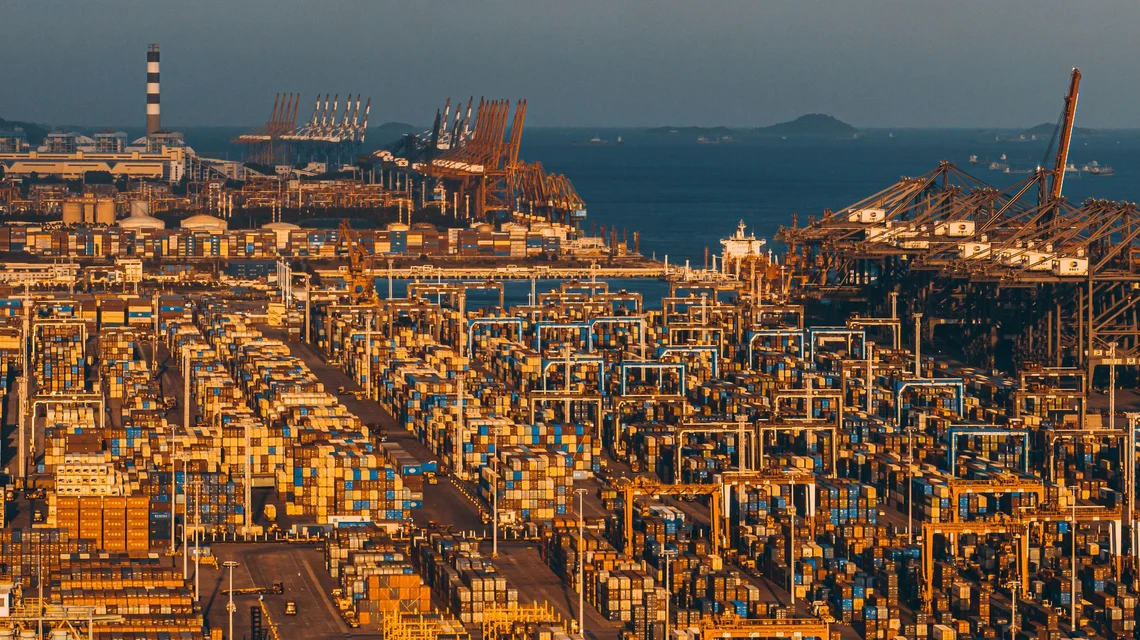
Incoterms decide who does what. For containers from China, FOB (Free On Board) is the standard: the seller delivers the goods loaded on the vessel at the Chinese port, and your own freight forwarder controls the ocean freight and routing, which is usually cheaper than letting the seller arrange it under CIF [5]. EXW puts the entire chain on you; DDP puts it all on the seller (simplest but priciest, and you must be clear on who is the importer of record).
Sea versus air [5]:
- Sea FCL (full container): roughly 18 to 30 days port to port to Jebel Ali, the entry point for most China-UAE trade.
- Sea LCL (shared container): 20 to 35 days.
- Air freight: 3 to 7 days, at a much higher per-kg rate.
On cost, we will be honest: freight rates swing 50 to 100% month to month. Indicative July 2026 snapshots put a 20ft container at roughly USD 2,800 to 4,100 and a 40ft at USD 3,800 to 6,600, with LCL around USD 30 to 60 per cubic metre and air freight USD 3.50 to 9 per kg [5]. Treat any single number, including these, as indicative, not a quote, because the sources disagree even within the same month. Get a live forwarder quote for your actual shipment. Our logistics company guide covers the freight side.
Customs clearance and the 5% duty
At Jebel Ali, the declaration is filed through Mirsal 2, with the standard documents: commercial invoice, packing list, bill of lading (or airway bill), certificate of origin, your trade licence and customs code, and any category permit [1][6].
Customs duty is 5% of CIF value (cost, insurance, freight), the standard GCC rate [6]. Some categories differ: alcohol is 50% and tobacco 100%, while basic foodstuffs and medicines are often 0%. China-origin goods get no GCC exemption (that is only for GCC-manufactured goods), and routing them through a free zone does not change their origin [6].
The China trade deal that does not exist
This is the correction almost no competitor makes, and searchers assume the opposite [7].
There is no UAE-China CEPA, and no China-GCC free trade agreement in force. The UAE has signed around 30 Comprehensive Economic Partnership Agreements (with India, Turkey, Indonesia and others), but China is not among them [7]. The China-GCC FTA has been in on-and-off negotiation since 2004, reportedly around 90% agreed but stalled repeatedly, and as of 2026 it is not signed or in force [7].
Real Talk: Chinese goods pay the standard 5% duty like everyone else, with no preferential rate. Anyone telling you a trade deal cuts your China duty is wrong; none exists yet. Do not price a shipment assuming relief that is not there. (Note the relationship is not frictionless either: the UAE applied some anti-dumping measures on certain Chinese goods in late 2025.)
Import VAT: the reverse charge that makes it a wash
Here is the mechanic that freight blogs present as a flat 5% cost and get materially wrong [8].
Import VAT is 5%, calculated on the duty-inclusive value (CIF plus duty), so the effective landed tax is about 10.25%, not a flat 10% [8]. But whether it is a real cash cost depends entirely on your registration:
- A VAT-registered importer whose TRN is linked to their customs code accounts for import VAT by reverse charge on the VAT return. It appears as output VAT in Box 6 and is recovered as input VAT in Box 10 in the same return, so for a fully-taxable trader the net cash impact is zero [8]. No cash leaves at the border.
- An importer whose TRN is not linked, or who is not registered, pays the import VAT in cash at the border via the VAT301 form before the goods release [8].
Common Mistake: Not linking your TRN to your customs code, and paying 5% in cash on every shipment that you then wait to reclaim. Linking them turns import VAT from a working-capital drag into a wash. This single step is worth real money and no freight guide explains it. Our VAT registration and compliance guide has the mechanics.
The re-export advantage: Designated Zones
If you are selling onward across the region rather than into the UAE, this is the structure that saves you the most [8].
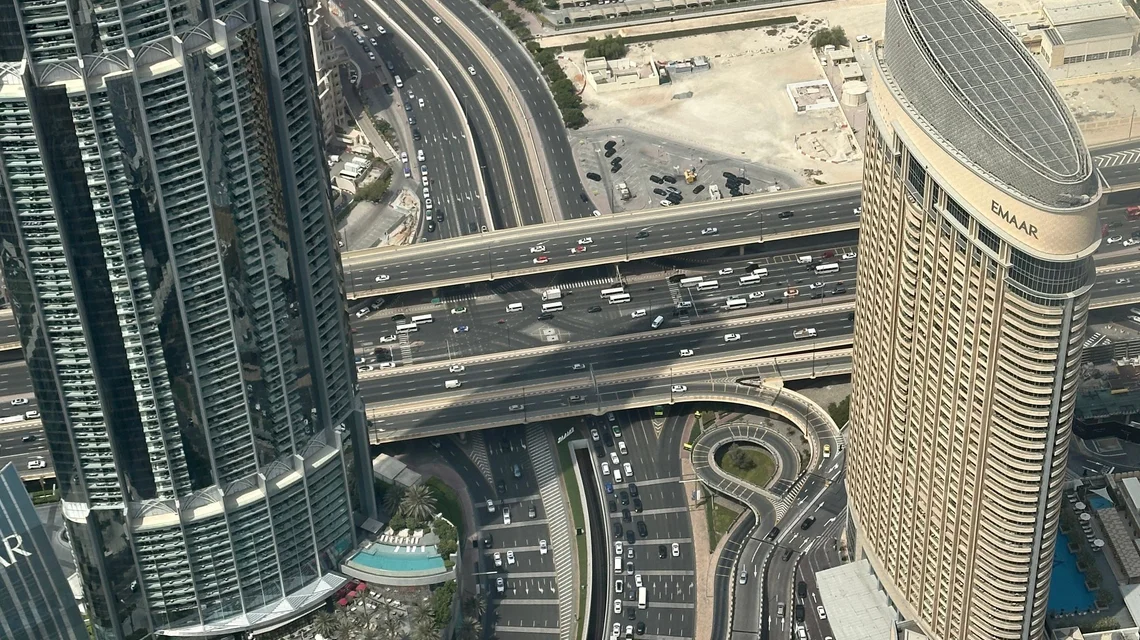
Goods imported into a Designated Zone (JAFZA, DAFZA, Dubai South and others) are outside UAE VAT territory and duty-suspended, provided they stay under customs control. Duty and VAT trigger only when goods leave the zone for the mainland [8]. And goods imported into a Designated Zone and re-exported outside the UAE never touch UAE duty or VAT at all [8].
Pro Tip: This is the classic Dubai entrepot model: import from China through JAFZA, hold, consolidate or relabel, and re-export to Africa, the CIS or the wider Middle East, with zero UAE duty or VAT leakage. If your model is significant re-export, a Designated Zone setup is a genuine advantage. If you sell mostly into the UAE, you pay the 5% regardless of where you are licensed.
And if you import to the mainland then re-export, you can lodge a duty deposit or bank guarantee instead of paying, refunded once you file proof of re-export within the tracking window [8]. Exports outside the GCC are also VAT zero-rated. See our import-export business guide.
Product certification: get this wrong and your container waits
A category-specific gate that stops shipments cold, and that most guides skip [9]:
| Product | Regulator / scheme |
|---|---|
| Electronics, electricals, chargers, appliances | MOIAT ECAS (conformity certificate) |
| Anything with radio, Wi-Fi, Bluetooth, cellular (phones, routers, smart devices) | TDRA type approval, on top of ECAS |
| Cosmetics, perfumes, supplements, detergents | Dubai Municipality Montaji registration |
| Food and beverages | Dubai Municipality FIRS (Food Import and Re-export System) |
| Medicines | MOHAP (via a licensed local agent) |
Common Mistake: Importing electronics or cosmetics without the certification and watching the container sit at port for weeks. Map every product against this table before you order, because the certification is not something you sort out after the goods land. Our electronics trading guide covers the TDRA and ECAS chain in depth.
Corporate tax for an importer
Briefly, because a 2026 guide should and competitors do not [10]. The rate is 9% above AED 375,000, 0% below. Free-zone status is not automatically 0%: only a Qualifying Free Zone Person's qualifying income gets the 0% rate, and for a trader that means "distribution of goods in or from a Designated Zone" to customers who resell them (B2B). A distributor importing through JAFZA and selling to resellers can reach 0%; a retailer selling to consumers cannot, because transactions with natural persons are excluded [10]. Small Business Relief (revenue under AED 3 million, available to tax periods ending on or before 31 December 2029) is the fallback for a small operation. Our corporate tax filing guide has the detail.
The honest economics
No competitor page tells you why importers actually fail, so we will [11].
The money is made in the landed cost, not the sale price. Importers fail because they treat the factory price as their cost and ignore the stack: freight, 5% duty, VAT cash-flow if unlinked, the sourcing agent, inspection, and defects [11].
The cash-flow sequence is the real killer [11]: you commit 30% deposit, then 70% before the goods even ship, then duty and VAT at clearance, all weeks before your first sale. Undercapitalised importers run out of money in that gap even with a profitable product. Add MOQ over-ordering (buying more than you can sell to hit a workable unit price, tying up cash in stock) and it is easy to be profitable on paper and broke in practice.
Where a new entrant wins [11]: private label (a differentiated brand on a generic product, so you are not price-compared directly), genuinely niche SKUs that Dragon Mart does not stock deeply, B2B distribution into existing retail channels, and re-export corridors using Designated Zone duty suspension. Competing on the same generic product Dragon Mart already sells near cost is how you lose.
Why Dubai, and the scale of the trade
Context [11]. China is the UAE's largest trading partner, with non-oil bilateral trade passing USD 100 billion for the first time in 2025 at about USD 111.5 billion [11]. Dragon Mart in International City is the largest concentration of Chinese goods outside China, with over 6,000 shops. And Jebel Ali Port plus the Designated Zone regime make Dubai a re-export gateway for Chinese goods into Africa, the CIS and the wider Middle East, not just an end market. That entrepot role, more than the local UAE market, is the deeper logic of the business.
What are the steps?
- Set up: trade licence with an import activity, then register the Dubai Customs code and link your TRN to it.
- Source and vet: find suppliers on Alibaba or 1688, request samples, audit new factories.
- Negotiate: price, MOQ, FOB terms, staged payment (30/70).
- Produce and inspect: book a pre-shipment inspection before the container loads.
- Ship: via a freight forwarder; get the bill of lading, invoice, packing list and certificate of origin.
- Clear customs at Jebel Ali: file via Mirsal 2, pay 5% duty and account for VAT (by reverse charge if linked), obtain any category permit.
- Deliver to your warehouse or distribution point.
Realistic first-order timeline: about 8 to 12 weeks by sea (production, inspection, transit, clearance); air compresses it to 3 to 5 weeks at higher cost [1].
What documents do you need?
- Passport and Emirates ID or visa copies for shareholders and managers, or a No Objection Certificate if resident
- Trade licence with an import or trading activity, plus the trade name
- Dubai Customs code, with TRN linked
- Per shipment: commercial invoice, packing list, bill of lading or airway bill, certificate of origin
- Product certification per category (ECAS, TDRA, Montaji, FIRS, MOHAP)
See our documents required for mainland business setup guide.
Real Client Stories
These are real examples from businesses we have helped set up. Names have been changed for privacy.
Hassan's held container (Dubai mainland)
Hassan got his trade licence and imported his first container of homeware from Yiwu, then it sat in customs. He had never registered a Dubai Customs code, so no declaration could be filed. The AED 120 registration he skipped was the gate. His advice: "The licence lets you own a company. The customs code lets you actually import. They are not the same thing, and I learned it with a container stuck at the port."
Mei's cash-flow squeeze (Dubai)
Mei found a great product on 1688 and paid 30% deposit then 70% before shipment, then hit duty and VAT at clearance, all before she sold a single unit, because she had not linked her TRN to her customs code and paid the 5% VAT in cash too. A profitable product nearly broke her on cash flow. Her tip: "Link your TRN to your customs code so VAT is a wash, and never forget you fund the whole order before the first sale."
Ravi's skipped inspection (Dubai)
Ravi saved USD 400 by skipping a pre-shipment inspection on a new supplier. The container arrived with a third of the goods defective, and he had no recourse against the factory. His takeaway: "Inspection is not a cost, it is insurance against the one thing that can wipe out a whole shipment. I never skip it now."
Start importing from China the right way
Importing from China into Dubai is a real, high-volume business in the world's great re-export hub, and it rewards people who set it up properly. Register the customs code and link your TRN. Vet suppliers and inspect before you pay. Do not price a shipment on a China trade deal that does not exist. Use a Designated Zone if you re-export. Certify your products by category. And go in capitalised for the cash-flow gap between paying the factory and making your first sale, because that gap, not the product, is what sinks importers.
Since 2013, BusinessDubai.ae has completed 700+ company registrations across the UAE, including trading and import companies, with transparent itemised pricing and no hidden fees. We will scope your activity and customs code, link your TRN, map your product certifications, and sort your visas and bank account, with a clear all-in budget before you commit. Talk to a setup expert→ for a clear plan. If you are selling the goods online, see our ecommerce store setup guide.
Ready to start importing from China to Dubai the right way? Our advisors handle the trade licence, customs code and TRN linkage, product certification and bank account end to end, with transparent, fixed fees.
Get started free→Next step: We run this end to end as part of our mainland licence and setup service.
Frequently Asked Questions
What do I need before I can import from China to Dubai?
Two things. A trade licence with a trading or import-export activity (most importers use a General Trading Licence), and a separate Dubai Customs importer code registered on the Dubai Trade portal and linked to the Mirsal 2 system. The code is separate from the licence, costs about AED 120 in official fees, and without it no import declaration can be filed. You cannot import commercially in a personal capacity.
Do I need a customs code as well as a trade licence?
Yes, and this is the step people miss. The trade licence lets your company exist; the Dubai Customs code lets it actually file import declarations through Mirsal 2. They are two separate registrations, and the customs code is the gate a new importer discovers at the port if they skipped it. Register it before your first shipment.
Where should I source from, Alibaba or 1688?
Alibaba is cross-border, English, with Trade Assurance escrow, easier and safer but pricier because suppliers quote export prices. 1688 is Alibaba's domestic China site, 10 to 30% cheaper but Chinese-language, RMB-only, and needs a sourcing agent. The common pattern is to vet a supplier on Alibaba then move repeat orders to 1688 via an agent, though after agent fees and the extra leg the real saving is often 10 to 15%, not 30%.
Which Chinese city should I buy from?
It depends on the product. Yiwu for small commodities, gifts, toys and accessories; Shenzhen for electronics and components; Guangzhou for fashion and general goods; Foshan for furniture and building materials. The Canton Fair in Guangzhou, twice a year, is where you meet manufacturers in person for bulk orders.
How do I pay a Chinese supplier safely?
Standard terms are 30% deposit and 70% before shipment, by bank transfer or Alibaba Trade Assurance escrow. Never pay 100% upfront. A bank wire is effectively irreversible once it clears the Chinese bank, roughly 24 hours, so use Trade Assurance or a Letter of Credit where you can, stage the payment, verify the supplier, and inspect before paying the balance. 1688 has no escrow for foreign buyers, which is why it needs an agent.
What are the common scams?
Shell suppliers with no verifiable factory, pressure to pay off-platform or skip Trade Assurance, sudden changes to the supplier's bank account, and quality fade where goods degrade after a good first sample. Mitigate by verifying business registration, ordering a paid sample, using escrow or a Letter of Credit, staging payments, and commissioning a third-party pre-shipment inspection.
Why is quality control the biggest risk?
Because the single most common failure is a container of defective goods discovered only after it lands in Dubai, with no practical recourse against a Chinese factory. Roughly 30% of pre-shipment inspections fail standard sampling. A factory audit (USD 800 to 2,500) confirms the supplier is a real manufacturer, and a pre-shipment inspection (USD 300 to 700 a day) checks the goods before the container loads. Against a USD 50,000 container, that inspection is insurance, not a cost.
What Incoterm should I use?
FOB (Free On Board) is the standard for containers from China: the seller loads the goods on the vessel at the Chinese port and your own freight forwarder controls the ocean freight and routing, usually cheaper than the seller arranging it under CIF. EXW puts the whole chain on you; DDP puts it all on the seller (simplest but priciest, and you must be clear who is the importer of record).
How long does shipping from China to Dubai take?
By sea, roughly 18 to 30 days port to port for a full container to Jebel Ali, or 20 to 35 days for a shared LCL container. Air freight is 3 to 7 days at a much higher per-kg rate. Adding a first order's production and clearance, a realistic sea timeline from supplier agreement to sellable goods is about 8 to 12 weeks.
How much does freight cost?
Rates swing 50 to 100% month to month, so treat any figure as indicative. Mid-2026 snapshots put a 20ft container at roughly USD 2,800 to 4,100, a 40ft at USD 3,800 to 6,600, LCL around USD 30 to 60 per cubic metre, and air freight USD 3.50 to 9 per kg. Get a live forwarder quote for your actual shipment rather than relying on any published number.
What customs duty applies to goods from China?
The standard 5% of CIF value (cost, insurance, freight), the GCC common rate. Some categories differ, such as 50% on alcohol and 100% on tobacco, while basic foodstuffs and medicines are often 0%. China-origin goods get no GCC exemption, which applies only to GCC-manufactured goods, and routing them through a free zone does not change their origin.
Is there a UAE-China trade deal that reduces duty?
No. There is no UAE-China CEPA and no China-GCC free trade agreement in force. The UAE has around 30 CEPAs with countries including India, Turkey and Indonesia, but China is not among them, and the China-GCC FTA has been in negotiation since 2004 without being signed. Chinese goods pay the standard 5% duty with no preferential rate. Anyone claiming a trade deal cuts your China duty is wrong.
How does import VAT work?
Import VAT is 5% on the duty-inclusive value, so the effective landed tax is about 10.25%. But whether it is a real cost depends on your setup: a VAT-registered importer whose TRN is linked to their customs code accounts for it by reverse charge, declaring it as output VAT and recovering it as input VAT in the same return, for a net cash impact of zero. An unlinked or unregistered importer pays it in cash at the border via the VAT301 form.
How do I make import VAT a wash instead of a cash cost?
Register for VAT and link your TRN to your Dubai Customs code. Once linked, import VAT flows to your VAT return by reverse charge, appearing as output VAT and recovered as input VAT in the same return, so no cash leaves at the border. Importers who skip this pay 5% in cash on every shipment and wait to reclaim it, which is a real working-capital drag no freight guide explains.
What is the re-export advantage of a Designated Zone?
Goods imported into a Designated Zone such as JAFZA are outside UAE VAT territory and duty-suspended while under customs control, and goods re-exported from the zone outside the UAE never incur UAE duty or VAT at all. This is the classic Dubai entrepot model: import from China through JAFZA, consolidate or relabel, and re-export to Africa, the CIS or the region with zero UAE tax leakage. If you sell mostly into the UAE, you pay the 5% regardless.
Can I reclaim duty if I import to the mainland then re-export?
Yes. Instead of paying the 5% duty in cash, you can lodge a duty deposit or bank guarantee, refunded once you file proof of re-export within the tracking window. Separately, exports of goods outside the GCC are VAT zero-rated. For significant re-export volume, though, importing directly into a Designated Zone is usually cleaner than the deposit-and-refund route.
What products need extra certification?
Electronics, electricals and chargers need MOIAT ECAS conformity certification; anything with radio, Wi-Fi, Bluetooth or cellular (phones, routers, smart devices) also needs TDRA type approval; cosmetics, perfumes and supplements need Dubai Municipality Montaji registration; food and beverages need Dubai Municipality FIRS registration; and medicines need MOHAP approval via a licensed local agent. Map every product against these before you order, or your container can sit at port for weeks.
Does a free zone give me 0% corporate tax as an importer?
Not automatically. The rate is 9% above AED 375,000, and only a Qualifying Free Zone Person's qualifying income gets 0%. For a trader that means distribution of goods in or from a Designated Zone to customers who resell them, so a B2B distributor importing through JAFZA and selling to resellers can reach 0%, but a retailer selling to consumers cannot because transactions with natural persons are excluded. Small Business Relief (under AED 3 million, available to tax periods ending on or before 31 December 2029) is the fallback for a small operation.
Why do importers fail?
They treat the factory price as their cost and ignore the landed-cost stack: freight, 5% duty, VAT cash-flow if unlinked, the agent, inspection and defects. And the cash-flow sequence is brutal: 30% deposit, then 70% before shipment, then duty and VAT at clearance, all weeks before the first sale. Undercapitalised importers run out of money in that gap even with a profitable product, especially if they over-order to hit a workable unit price.
Where does a new importer actually win?
Not by competing on the generic products Dragon Mart already sells near cost. The winnable ground is private label (a differentiated brand so you are not price-compared directly), genuinely niche SKUs that Dragon Mart does not stock deeply, B2B distribution into existing retail channels, and re-export corridors using Designated Zone duty suspension to serve Africa, the CIS and the wider region rather than the saturated UAE retail market.
How big is the China-UAE trade?
China is the UAE's largest trading partner, with non-oil bilateral trade passing USD 100 billion for the first time in 2025 at about USD 111.5 billion. Dragon Mart in International City is the largest concentration of Chinese goods outside China, and Jebel Ali plus the Designated Zone regime make Dubai a re-export gateway for Chinese goods into Africa, the CIS and the wider Middle East, which is the deeper logic of the business beyond the local UAE market.
References
[1] Trade licence and Dubai Customs importer code. Commercial import requires a UAE trade licence with a trading/import-export activity (commonly a General Trading Licence) plus a separate active Dubai Customs importer code registered on the Dubai Trade portal and linked to the Mirsal 2 declaration system; without the code no import declaration can be filed. The customs code official fee is approximately AED 120 (AED 100 plus AED 20 Knowledge/Innovation fee), triangulated from secondary sources as the Dubai Trade fee page could not be fetched directly. Commercial import in a personal (unlicensed) capacity is precluded by the licence-first registration mechanics, though no single official page states this as an explicit prohibition. Realistic first-order timeline approximately 8 to 12 weeks by sea, 3 to 5 weeks by air. dubaitrade.ae and dubaicustoms.gov.ae
[2] Sourcing channels. Alibaba.com (cross-border B2B, English, Trade Assurance escrow, export pricing) versus 1688.com (Alibaba's domestic China wholesale marketplace, 10 to 30% cheaper list prices, Chinese-language, RMB-only via Alipay, effectively requiring a sourcing agent); Made-in-China and Global Sources as alternative directories; the Canton Fair (Guangzhou, twice yearly); and city specialisms (Yiwu small commodities, Shenzhen electronics, Guangzhou fashion/general, Foshan furniture/building materials). After agent fees (5 to 10%) and the extra domestic-to-port leg, net 1688 savings are often 10 to 15% rather than the sticker 30%. credilinq.ai, cief.cantonfair.org.cn and owlsourcing.com
[3] Payment and scam risk. Standard terms of 30% deposit and 70% before shipment via T/T bank transfer or Alibaba Trade Assurance escrow; a T/T wire is effectively irreversible roughly 24 hours after it clears the Chinese beneficiary bank. Common scam patterns: shell/fake suppliers, pressure to move off-platform or skip Trade Assurance, sudden beneficiary bank-account changes, and quality fade on repeat orders. 1688 has no escrow or dispute mechanism for foreign buyers. Mitigation: verify registration, order a paid sample, use escrow or a Letter of Credit, stage payments, and use pre-shipment inspection. tradeassurance.alibaba.com and sourcing-agency sources
[4] Quality control. Approximately 30% of China pre-shipment inspections fail standard AQL sampling; factory audits cost roughly USD 800 to 2,500 and pre-shipment inspections roughly USD 300 to 700 per inspector-day (QIMA, SGS, Bureau Veritas, Intertek), with 48 to 72 hour dispatch typical for Tier-1 city factories. Defective goods discovered after landing in Dubai carry no practical recourse against a Chinese factory, making inspection effectively insurance against a container-scale loss. blog.qima.com and xilinkglobaltrade.com
[5] Incoterms and freight. FOB is the most common term for container shipments from China (seller loads goods on the vessel; buyer's forwarder controls ocean freight and routing), with EXW placing the whole chain on the buyer and DDP on the seller. Sea FCL roughly 18 to 30 days port to port to Jebel Ali, LCL 20 to 35 days, air freight 3 to 7 days. Indicative July 2026 freight snapshots: 20ft container approximately USD 2,785 to 4,086, 40ft approximately USD 3,750 to 6,563, LCL approximately USD 30 to 60 per CBM, air USD 3.50 to 9 per kg; rates are highly volatile (50 to 100% month to month) and any single figure should be treated as indicative, not a quote. cosmosourcing.com, samvertex.com and ddpchain.com
[6] Customs clearance and duty. Declaration filed via Mirsal 2 on the Dubai Trade portal with commercial invoice, packing list, bill of lading/airway bill, certificate of origin, trade licence, customs code, and any category permit; customs duty 5% of CIF value (50% alcohol, 100% tobacco, 0% for many basic foodstuffs and medicines). GCC-origin duty exemption applies only to GCC-manufactured goods (China-origin goods do not qualify), and free-zone routing does not confer GCC origin. u.ae and dubaicustoms.gov.ae
[7] Trade-agreement status. No UAE-China CEPA is signed or in force; China is absent from the UAE's roughly 30 concluded CEPAs (India, Turkey, Indonesia and others). The China-GCC FTA has been in negotiation since 2004, reportedly around 90% agreed but repeatedly stalled (Saudi industrial-protection concerns in 2024), and is not signed or in force as of 2026; do not assume any preferential China tariff. The UAE applied certain anti-dumping measures on some Chinese goods in late 2025. CEPA list corroborated via secondary sources as the primary MoET CEPA page was not directly fetchable. gulfbusiness.com, thenationalnews.com and uecn.org
[8] Import VAT, Designated Zones and re-export. Import VAT is 5% on the duty-inclusive value (CIF plus duty), approximately 10.25% effective combined with duty. A VAT-registered importer whose TRN is linked to their Customs Registration Number self-accounts via reverse charge (Article 48), declaring output VAT in Box 6 and recovering input VAT in Box 10 in the same return, for a net-zero cash impact; an unlinked or unregistered importer pays cash at the border via the VAT301 form. Designated Zones (JAFZA, DAFZA, Dubai South and others meeting Cabinet Decision criteria) are treated as outside UAE VAT territory for goods, with duty and VAT suspended until goods enter the mainland and never incurred if goods are re-exported outside the UAE. Mainland import-for-re-export allows a duty deposit or bank guarantee refunded on proof of re-export; exports outside the GCC are VAT zero-rated. FTA VAT Returns and TRN-CRN Linkage user guides; Designated Zones VAT Guide. tax.gov.ae and dubaicustoms.gov.ae
[9] Product certification by category: MOIAT ECAS conformity certification for electronics, electricals and appliances; TDRA type approval additionally for radio/Wi-Fi/Bluetooth/cellular devices; Dubai Municipality Montaji registration for cosmetics, perfumes, supplements and detergents; Dubai Municipality FIRS for food and beverages; MOHAP for medicines via a licensed local agent. Missing certification is a common cause of goods being held at port. moiat.gov.ae, tdra.gov.ae and dm.gov.ae
[10] Corporate tax for a trader. 0% up to AED 375,000 of taxable income and 9% above (Federal Decree-Law No. 47 of 2022). Free-zone status is not automatically 0%: under Ministerial Decision No. 229 of 2025, "distribution of goods or materials in or from a Designated Zone" is a Qualifying Activity only where goods enter through the Designated Zone and are sold to customers who resell, process or alter them (B2B), while transactions with natural persons (consumer retail) are Excluded; de minimis is the lower of 5% of revenue or AED 5,000,000. Small Business Relief (Ministerial Decision No. 73 of 2023, as amended by Ministerial Decision 131 of 2026): revenue under AED 3,000,000, eligible for tax periods ending on or before 31 December 2029. tax.gov.ae and mof.gov.ae
[11] Market and economics. China is the UAE's largest trading partner; non-oil bilateral trade surpassed USD 100 billion for the first time in 2025 at approximately USD 111.5 billion (up ~24.5% year on year), with a stated USD 300 billion by 2030 ambition. Dragon Mart (International City) is the largest concentration of Chinese goods outside China (two malls, 6,000+ shops, 40M+ annual visitors). Economics: the landed-cost stack (freight, 5% duty, VAT cash-flow if unlinked, agent, inspection, defects) rather than sale price is where importers fail; the cash-flow sequence (30% deposit, 70% before shipment, duty and VAT at clearance, all before first sale) is the primary working-capital trap, compounded by MOQ over-ordering. Winning niches: private label, niche SKUs, B2B distribution, and Designated Zone re-export corridors to Africa/CIS/MEA, rather than competing on generic goods Dragon Mart sells near cost. Freight, market-size and e-commerce figures are directional; freight ranges in particular vary widely by source. middleeastbriefing.com, dragonmart.ae and dubicars.com
[12] BusinessDubai.ae. Internal data from UAE import and trading company registrations since 2013, including trade licensing, Dubai Customs code registration and TRN linkage, product certification, Designated Zone structuring, VAT and corporate tax positions, banking and client case studies. businessdubai.ae