Turkey has a double taxation agreement in force with the United Arab Emirates. It appears on the UAE Ministry of Finance treaty listing, inside the network of 126 agreements that practitioner tables record as in force [1][2].
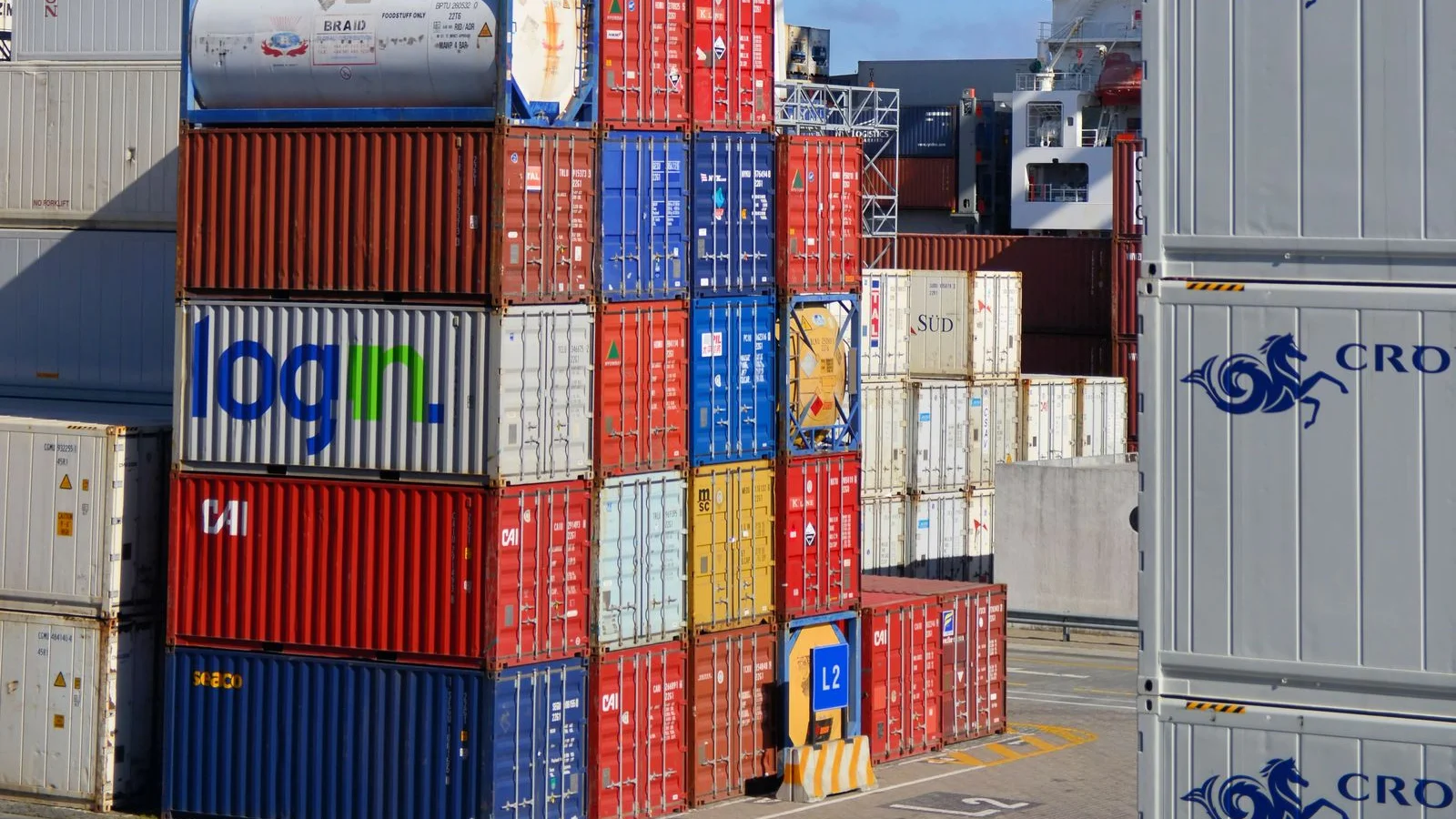
Here is the part that separates a Turkish founder from a British or German one. For most Turkish businesses arriving in Dubai, the treaty is not the point. The Turkey and UAE relationship is a goods relationship: textiles, furniture, machinery, food, building materials, automotive parts. It moves in containers, not consultancy invoices. A container business does not put an entity in Dubai for a tax outcome. It puts one there because the stock needs to sit somewhere, the customer needs to pay somewhere, and the region's buyers are easier to reach from Jebel Ali than from Istanbul.
So the questions that decide whether a Dubai company is worth having are commercial. Where does inventory sit before it sells. Which currency does the invoice go out in. How long does a buyer take to pay, and who carries that gap.
Since 2013, BusinessDubai.ae has registered UAE companies for founders trading between Turkey, the Gulf and Africa, from Sharjah licences at about AED 5,750 to Dubai mainland structures with staff visas [9]. This guide covers the trading route, what each licence costs, and the two things to confirm in Turkey before you commit capital.
Is there a tax treaty between Turkey and the UAE?
Short answer: yes, one is in force. Confirm it with the Ministry of Finance listing, then stop treating it as the reason for the structure.
The UAE Ministry of Finance publishes the states it holds double taxation agreements with, and Turkey is on that list [1]. The practitioner treaty tables recording 126 UAE agreements in force include Turkey as well [2], which puts Turkish founders ahead of nationalities with no agreement at all.
What we will not do is explain what the treaty gives you. A treaty allocates taxing rights across categories of income, and the allocation depends on facts we cannot see: where you are actually resident, what kind of income it is, and what your Turkish adviser concludes. A formation firm reading rates out of a table and calling it planning is doing you no favours.
Real Talk: A treaty does not decide where you are tax resident. It becomes relevant once two states both have a claim, and it usually has to be invoked with evidence rather than applying automatically. That evidence is normally a UAE tax residency certificate, which has its own conditions and is not automatic with a visa. Founders discover this in their first filing season rather than before it.
Confirm it two ways: check the Ministry of Finance listing yourself [1], and put the treaty in front of an adviser in Turkey who can read it against your income. Our double taxation agreements overview explains how the UAE network operates.
Why do Turkish founders actually set up in the UAE?
Short answer: because a trading business needs somewhere to hold stock, take payment and reach buyers, and Dubai is closer to the customers than Turkey is.
| Reason | What it actually solves |
|---|---|
| Re-export position | Goods arrive, sit, break into smaller orders and ship on, without a second long haul |
| Proximity to buyers | Gulf, East Africa and Central Asia buyers reachable in a working day |
| Hard-currency invoicing | Contract, receivable and bank account sit in one currency environment |
| Faster fulfilment | A buyer wanting forty units next week is served from stock, not a production slot |
| Regional credibility | A UAE entity, bank account and address change how a Gulf buyer treats you |
| Residence | Your own licence supports your residence, and family sponsorship follows |
| No personal income tax | None on salary or dividends |
Notice what is not on that list. Secrecy is not a reason: the UAE runs beneficial owner registers and information-exchange commitments, and the bank asks more questions than you expect rather than fewer. Our UBO requirements guide covers what you must disclose.
Common Mistake: Building the case for a UAE company entirely on tax and then finding the commercial case does not stand up. If your goods ship direct from Izmir to one European buyer on one contract, a Dubai entity may be an expensive extra step. The corridor works when there are many buyers, small order sizes, or a delivery expectation you cannot meet from Turkey.
Not sure whether your trade route justifies a UAE entity at all? Check your eligibility→
What does the re-export model actually look like?
Short answer: goods land in a free zone, sit under customs control, and either re-export onward or clear into the UAE market when a buyer is ready.
Understand it before choosing a licence, because the licence and location follow from it. Goods arriving into a UAE free zone can sit there while duty treatment is determined by what happens next. Re-export onward and the position differs from clearing into the domestic market, which is why so much regional distribution runs through Jebel Ali and the airport zones rather than a mainland warehouse. Our JAFZA guide and Dubai South guide cover the two locations used most, and our designated zone VAT guide covers the separate VAT treatment in certain zones, which is not the same as customs treatment and is regularly confused with it.
Do not take duty rates or exemptions from an article, ours included. What applies depends on the goods, their origin, their destination and how they move, and it changes. Confirm the treatment for your goods with Dubai Customs and your clearing agent before you price anything, because a landed-cost model built on an assumed duty position is wrong by the whole duty amount on every unit.
The commercial shape is usually this. The UAE company buys from the Turkish side, holds stock in a zone, sells across the region in smaller lots, invoices in a hard currency and collects. The Turkish side gets one large predictable customer instead of thirty, and the UAE side carries the inventory and the receivable.
Pro Tip: Model the working capital before the licence. Holding stock in Dubai means financing goods that have left Turkey and not yet been paid for, which is the real cost of this structure and bigger than the licence fee by an order of magnitude. Founders who get into trouble here are undone by three containers in a warehouse and a buyer who pays in ninety days, not by setup costs.
Our import and export guide covers the trade mechanics and our general trading company guide covers the licence underneath it.
How should you think about lira volatility?
Short answer: as a commercial reality that affects pricing and working capital, not as an investment thesis. We are a formation firm and we will not tell you what to do with currency.
Say the honest thing first: Turkish founders hold revenue outside Turkey for ordinary commercial reasons. If your costs are in lira, your inputs are partly imported and your customers pay in dollars or dirhams, the currency your receivables sit in is an operating decision, not a speculative one. In practice:
Pricing. A quote valid for thirty days is a currency position whether you intended it or not. Traders here shorten quote validity or price in the currency they will be paid in.
Working capital. If you buy in one currency and sell in another, the gap between paying your supplier and being paid is where the exposure lives. Shortening it is worth more than most people expect.
Reporting. A UAE company reports in its functional currency and your Turkish entity in lira. If the two are consolidated anywhere, the translation is an accounting exercise to raise with your accountant in advance.
Real Talk: This is where we stop. We are not currency or investment advisers, and nothing here recommends holding, converting or hedging anything. Which currency you keep money in and whether you hedge are questions for your bank, your accountant and a licensed adviser. What we can tell you is the operational half: a UAE company can hold a multi-currency account and invoice in the currency of the contract, and our bank account comparison shows what the foreign exchange lines cost.
What about Turkish exchange control and outward investment reporting?
Short answer: confirm it in Turkey before you move money. We will not state the rule, because it is not our jurisdiction and it changes.
Moving capital out of Turkey to fund a UAE company, holding shares in a foreign company as a Turkish resident, and repatriating profits later are governed by Turkish rules, not UAE ones. The UAE side is straightforward. The Turkish side has its own outward investment and reporting requirements, and those change.
We are not going to summarise them. A formation firm confidently describing another country's exchange-control regime is the most common way founders in this corridor end up with something expensive to unwind. Ask your bank and your adviser in Turkey these three questions before you transfer anything:
- What applies to sending funds abroad to capitalise a company I will own?
- What must I declare about holding shares in a foreign company?
- What applies when profits come back, and does it change with how they come back?
Sequence the advice: Turkish advice on capital movement and share ownership first, UAE structure second, transfer third. Reversing the first two creates the awkward conversations, because some choices are harder to unwind once the company exists and money has run through it. That is not a hedge on our part. It is the boundary of what a UAE formation firm can responsibly tell you.
Free zone or mainland for a trading business?
Short answer: free zone if you are re-exporting and selling regionally, mainland if you are selling to UAE customers or bidding for local contracts.
| Factor | Free zone | Mainland |
|---|---|---|
| Ownership | 100% foreign | 100% foreign for most activities |
| Sell to UAE domestic market | Restricted, generally needs a distributor, branch or permit | Yes, directly |
| Re-export and international sales | Yes, straightforwardly | Yes |
| Government and semi-government contracts | Generally not directly | Yes |
| Premises requirement | Flexi-desk upwards, warehouse where you hold stock | Tenancy and Ejari in most cases |
| Corporate Tax | 0% on qualifying income only with Qualifying Free Zone Person status | Standard regime |
For a Turkish exporter running a distribution model, the free zone is usually right, because the goods and the customs position are why you are here. For a contractor or building-materials supplier selling to UAE developers, or anyone whose buyer issues local purchase orders, the mainland is usually right despite the cost.
The expensive error here is buying a free zone licence on price and then discovering your buyers are UAE companies that need a mainland supplier. It costs you twice, once for a licence that cannot serve the market and again for the restructure. Our free zone company setup and mainland company setup pages price both routes, and our free zone versus mainland versus offshore comparison shows where the line sits.
Dubai Executive Council Resolution 11/2025 created a route to mainland market access from a free zone entity, covered in our free zone access to the mainland guide. If you are holding assets or group shares rather than trading, an offshore company formation suits that, though it gives no residence and no right to trade in the UAE.
What does it cost in year one?
Short answer: a Dubai free zone licence starts from about AED 12,800 with one investor visa included, and a Dubai mainland licence starts from about AED 18,200 before any visa.
Indicative first-year figures from our own pricing [9].
| Route | Indicative first-year cost (AED) | Visa included | Renewal (AED) |
|---|---|---|---|
| Dubai free zone package | From about 12,800 | One investor visa | About 9,920 a year |
| Dubai mainland, licence only | From about 18,200 | None | About 15,000 a year |
| Dubai mainland with one visa | About 26,355 | One | Activity dependent |
| Dubai mainland package | About 20,800 | Package dependent | Activity dependent |
| Abu Dhabi mainland | About 22,600 | Package dependent | Activity dependent |
| Sharjah mainland | About 18,400 | Package dependent | Activity dependent |
| Sharjah licence, from | From about 5,750 | Package dependent | Activity dependent |
Outside Dubai the zone packages also include a visa: Ajman Free Zone at about AED 12,800 for up to ten activities, SHAMS in Sharjah at about AED 15,200 and IFZA in Dubai at about AED 20,100 [9]. Renewals are activity dependent, so treat them as approximate. Additional Dubai free zone visas run about AED 4,000 to AED 5,000 each, and a mainland residency visa an additional AED 4,000 to AED 5,200 [9].
Quick Math: A trader comparing a Dubai free zone package at about AED 12,800 with one visa included against a Dubai mainland licence at about AED 18,200 with no visa sees a first-year gap of about AED 5,400 [9]. With the mainland visa the position is about AED 26,355, a real gap of about AED 13,555. Put that beside one forty-foot container of stock. For most trading businesses here the licence decision is a rounding error against inventory, and choosing the cheaper licence for the wrong market is the expensive mistake.
The licence price never includes warehousing, Dubai Customs registration, bank onboarding time, attestation, accounting or Corporate Tax registration. Our cost breakdown covers the full first-year picture, and our business setup in Sharjah and business setup in Ajman pages set out what those emirates give you.
What UAE tax will you pay?
Short answer: Corporate Tax at 0% up to AED 375,000 of taxable income and 9% above, VAT at 5% once you cross the threshold, and no personal income tax.
| Item | Threshold or rate | What it means |
|---|---|---|
| Corporate Tax, lower band | 0% up to AED 375,000 taxable income [4] | Covers most first-year companies |
| Corporate Tax, upper band | 9% above AED 375,000 [4] | On the excess, not the whole amount |
| Small Business Relief | Revenue at or below AED 3,000,000 [5] | Nil taxable income, on election, to periods ending on or before 31 December 2029 |
| VAT, mandatory | Above AED 375,000 of taxable supplies and imports [3] | Compulsory once crossed |
| VAT, voluntary | Above AED 187,500 of supplies, imports or expenses [3] | Optional, useful if your customers are VAT registered |
| VAT rate | 5% [3] | Standard rate |
| Corporate Tax return | Within 9 months of the period end [4] | Return and payment together |
| Personal income tax | None | On salary or dividends |
Two points matter more to a trader than to a consultant. Revenue, not profit, is the Small Business Relief test. A trading business turning over AED 8,000,000 on thin margins is past the AED 3,000,000 threshold even if its taxable income is modest [5], so do not plan on the relief being there in year three. And imports count towards the VAT registration threshold, not just sales [3], which catches importers who assumed the test was about invoices issued.
Small Business Relief must be elected on the return, is closed to Qualifying Free Zone Persons, and switches off other exemptions and deductions for any period in which you elect [5]. A loss incurred in a period where you elect is permanently lost, while unutilised losses from earlier periods where you did not elect may still carry forward into later periods where you again do not elect [5]. Our Small Business Relief guide works through the election.
Real Talk: Owing nothing and having nothing to do are not the same thing. Registration and filing exist independently of liability [5]. Splitting one trading business into three companies to stay under AED 3,000,000 each engages the anti-abuse rule in Article 50 [5]. It is a named risk, not a structuring idea.
The 0% free zone rate is conditional. It applies only to qualifying income of a Qualifying Free Zone Person, requiring substance and activity conditions and audited accounts, and selling to UAE consumers or into the mainland is generally excluded. Our Qualifying Free Zone Person guide sets out the conditions and our Corporate Tax filing guide covers the return. Economic Substance notifications were cancelled for financial years ending after 31 December 2022, with fines cancelled and refunded, though the regime still applies to 2019 to 2022 [8].
Want the tax registrations handled rather than remembered? Get a free consultation→
How do you get the trading licence and the customs code in place?
Short answer: the licence comes first, the establishment card follows, and the Dubai Customs importer code follows both. Nothing moves through a port until that chain is complete.
This sequence decides when your first container can clear, and traders most often start it too late.
| Step | What it is | Gated by |
|---|---|---|
| Trade licence | Trading activity with the right product categories | Approvals, premises, documents |
| Establishment card | The company's immigration file | A valid licence |
| Customs client code | Importer registration with Dubai Customs | A valid licence and the company file |
| Warehouse or storage | Where the stock sits | Zone or landlord agreement |
| Clearing agent | Who files entries for you | Your customs registration |
Two choices at the licence stage shape everything downstream. Get the activity right, because a licence naming the product categories you actually trade beats a broad one that sounds flexible: customs, the bank and your buyers all read it. Get the premises right, because visa quota is tied to premises, so the space decision is the headcount decision.
Our Dubai Customs registration guide covers the importer code, and our freight forwarder versus customs broker guide explains which provider does what, which matters because Turkish traders often assume one company handles both. Do not set a delivery date for a first shipment on an assumed timeline: confirm current processing with the licensing authority and Dubai Customs, and build in slack.
How do you get Turkish documents accepted in the UAE?
Short answer: through a certification and legalisation chain running through the Turkish authorities, then the UAE mission in Turkey, then the UAE Ministry of Foreign Affairs, with Arabic translation where required.
The documents that usually need attesting are degree certificates where a visa route requires one, marriage and birth certificates for family sponsorship, powers of attorney where you are not signing in person, and corporate documents where a Turkish company is the shareholder. That last case is common here, because the UAE entity is often owned by the Turkish operating company: a trade registry extract, articles and a board resolution may all go together.
The general order is certification in Turkey, attestation by the UAE embassy or consulate in Turkey, then attestation by the UAE Ministry of Foreign Affairs once the document is in the Emirates. A legal translation into Arabic is required where the receiving authority asks for one, done by a translator it accepts.
Requirements are not uniform. They differ by document type, by the issuing Turkish authority and by the receiving UAE authority, and they change. Confirm the current chain and fees directly with the UAE mission in Turkey and with the UAE Ministry of Foreign Affairs before you pay for anything, and confirm what the receiving free zone or the Department of Economy and Tourism will accept.
Pro Tip: Start attestation before the licence. It is the only part of a UAE setup where you are waiting on a queue in another country and cannot speed it up from Dubai. Corporate shareholder documents go first, because a Turkish company as shareholder multiplies the chain. Our document attestation guide covers the mechanics, and our post-setup services team handles document chains.
Which residence visa fits a Turkish founder?
Short answer: investor residence through your own licence is the default, and the Green Visa is worth checking because it removes the sponsor entirely for five years.
| Route | Duration | Sponsor | Published condition |
|---|---|---|---|
| Investor or partner through your licence | Typically 2 years | Your own company | A valid trade licence and shareholding |
| Green Visa, investor and partner | 5 years | Self-sponsored | Proof of investment or contribution plus necessary licences. No minimum amount published [6] |
| Green Visa, skilled worker | 5 years | Self-sponsored | Degree minimum, MOHRE levels 1 to 3, valid UAE contract, minimum monthly salary AED 15,000 [6] |
| Green Visa, freelance | 5 years | Self-sponsored | Degree or equivalent, a Ministry-issued freelance permit, and annual income of not less than AED 360,000 in each of the two previous years [6] |
Two details get misreported. ICP publishes no minimum investment amount for the investor and partner route [6], so if an agent quotes a figure, ask where it is published. The freelance route says each of the two previous years [6]: one strong year does not qualify.
Green, Golden and Blue permits carry a 180-day grace period after expiry or cancellation, extending to sponsored family members [7], which is worth having if a licence renewal slips behind a shipment. Family sponsorship follows the standard income and accommodation conditions, covered in our UAE family visa requirements guide.
Real Talk: Overstay fines are AED 50 per person per day, flat rather than escalating, plus an AED 100 smart services fee, and paying does not resolve the violation because ICP requires that status is adjusted or the person leaves [10]. A family of four in violation for sixty days is AED 12,000, not AED 3,000. Our overstay fines guide covers the grace periods.
What about staff and the Turkish community?
Short answer: the community is established and practical, and your staffing costs are set by a labour law with hard numbers in it rather than by negotiation.
Turkish business in the Emirates is not new. Contracting, furniture, textiles, food and machinery businesses have operated here for years, so the suppliers, freight forwarders, warehouse operators and staff who already handle Turkish goods can be found. The Turkish business associations in the Emirates are the right people to ask about membership and events rather than an article, ours included.
On staffing, know the numbers before you promise anyone anything. Federal Decree-Law No. 33 of 2021 sets working hours at a maximum of 8 per day or 48 per week, annual leave of 30 days a year, notice of 30 to 90 days as agreed under Article 43, and end of service gratuity under Article 51 at 21 days' basic wage per year for the first five years and 30 days per year after, calculated on the last basic wage rather than the package and capped at two years' wage [11].
Quick Math: An employee on a basic wage of AED 8,000 who stays six years accrues 21 days for each of the first five years and 30 days for the sixth. That is a real accruing liability on a trading business with warehouse and driver headcount, and it is calculated on basic wage rather than the package, which is why splitting a salary into basic and allowances changes the number. Budget it monthly rather than discovering it at the end.
Our UAE labour law guide for employers covers the obligations with article numbers and our WPS payroll guide covers paying people once you have them.
What should Turkish founders expect on banking?
Short answer: timelines in weeks rather than days, close attention to trade flows, and an outcome driven by documentation quality rather than passport.
Trading businesses attract more banking scrutiny than service businesses, for reasons that have nothing to do with nationality. Cross-border goods movements, third-party payments and multiple jurisdictions are the pattern compliance functions are built to examine. Expect questions and prepare for them. What moves the outcome:
- Documented source of funds, traceable and consistent across every statement you submit. The single largest determinant.
- A licence activity that matches the goods you actually trade, described identically in the licence, the plan, the website and the application form.
- Named, verifiable suppliers and buyers, and a trade cycle a compliance officer can follow: where goods come from, where they go, who pays whom and when.
A broad general trading activity chosen because it sounds flexible works against you here. Flexibility costs explicability, and explicability is what approval turns on. Do not promise a supplier a payment date that depends on an account opening in two weeks, and do not treat a first decline as final. Our guides to opening a corporate bank account in Dubai and handling a rejection cover the document set, and our AML and CFT guide explains what the bank is testing for.
What will the bank account cost once it is open?
Short answer: between AED 79 and AED 250 a month, and for a trading business the transfer and foreign exchange lines matter far more than the monthly fee.
Figures are as at August 2026 and you should confirm current pricing with the bank [12].
| Account | Monthly fee (AED) | Minimum average balance (AED) | Local transfers |
|---|---|---|---|
| Ruya Standard | 79 | None | AED 1.05 OUR, AED 0.525 SHA, free BEN |
| Wio Essential | 99, first month free | None | Included within a AED 750,000 per day overall cap |
| Mashreq NeoBiz Pro | 99 | None | AED 25 per transaction, no free quota |
| Mashreq Pro Plus | 199 | None | AED 25 per transaction, no free quota |
| Wio Grow | 249, first month free | None | Included within the same AED 750,000 per day cap |
| FAB Basic | 250 | 10,000 | Not available in this data |
Quick Math: Take a trading business paying forty suppliers a month. At AED 25 per local transfer that is AED 1,000 a month, or AED 12,000 a year, on top of the monthly fee [12]. The whole spread between the cheapest and dearest monthly fee above is AED 171 a month, about AED 2,052 a year. For a payment-heavy business the transfer line is worth roughly six times the monthly fee difference.
International transfers matter more in this corridor. Mashreq charges AED 40 per international or foreign currency transaction, while Wio includes them within the same AED 750,000 per day cap [12]. On cards, Ruya's foreign exchange markup is 3% plus scheme charges and Mashreq's is 2.5% on non-AED transactions plus roughly 1.15% scheme fee [12]. FAB Basic charges AED 100 a month below the AED 10,000 balance, the same fee at Mashreq Pro and Pro Plus is waived after six months, and Ruya charges AED 105 to close within six months. Our bank account comparison works through the full table.
What do you have to do every year?
Short answer: eight recurring obligations, chained so that a late tenancy renewal becomes a blocked visa two months later.
| Obligation | Frequency | Gated by |
|---|---|---|
| Trade licence renewal | Annual | A valid tenancy or Ejari in most cases |
| Establishment card renewal | Annual | A valid licence |
| Residence visa renewals | Typically every 2 years, per person | A valid establishment card |
| Customs code validity | Tied to the licence | A current trade licence |
| Corporate Tax return | Annual, within 9 months of the period end [4] | Your accounting records |
| VAT returns | Quarterly or monthly once registered | VAT registration |
| Audited financial statements | Annual in many free zones, required for QFZP status | Your bookkeeping |
| WPS payroll | Monthly if you employ staff | A payroll-enabled bank account |
The chain catches traders hardest, because a lapsed licence does not just stop your visas, it stops your goods. Ejari gates the licence renewal, the licence gates the establishment card, the card gates every visa, and the customs registration sits on a current licence. Diarise the tenancy ninety days ahead, because it is the only date where being early buys slack downstream. Our post-setup guide sets out the sequence and our establishment card guide covers the link most founders never hear of until it blocks them.
Want the licence, the customs code, the visas and the annual filings run for you? Talk to a setup expert→
Real Client Stories
Real examples from businesses we have helped set up. Names have been changed for privacy.
Emre, the furniture exporter who was shipping twice
Emre manufactured furniture near Bursa and sold into the Gulf, shipping direct from Turkey against each order. Small orders were unprofitable and lead times were losing him business to suppliers who could deliver in a week. He set up a Dubai free zone company at about AED 12,800 with the investor visa included [9], took warehouse space and began holding stock for regional distribution.
The change was not tax. A Riyadh buyer wanting twelve units could have them in days instead of six weeks, which let him compete on availability rather than only on price. The cost was working capital, because he now financed inventory sitting in a warehouse.
His comment: "The licence was the cheapest part. The expensive part was the two containers I had to leave sitting there to make it work."
Deniz, the trader who bought the wrong licence for her buyers
Deniz supplied building materials and her customers were UAE contractors placing local purchase orders. She took a free zone licence because it was cheaper and quicker. Within two months she had orders she could not invoice directly, because her customers needed a mainland supplier. The fix was a mainland licence at about AED 18,200 before the visa, or about AED 26,355 with one [9], on top of the free zone package she had already paid for. The lesson was not that free zones are worse. It was that she chose on price when her buyers had already decided the answer.
Her comment: "I compared licence prices for three weeks and never once asked my customers what kind of supplier they were allowed to buy from."
Kaan, the founder who moved money before he asked
Kaan capitalised his UAE company from Turkey and dealt with the Turkish reporting side afterwards, assuming it was a formality. It was not a UAE problem and we could not solve it from Dubai. It cost him time and adviser fees to put right something a single conversation in Turkey beforehand would have made straightforward. The UAE structure itself was fine and is still running. The sequence was wrong: Turkish advice on capital movement and share ownership should have come before the transfer.
His comment: "I treated the Turkish side as paperwork to catch up on. It was the part that actually needed planning."
Build the trade case first, then buy the licence
For a Turkish founder the honest summary is short.
A double taxation agreement with the UAE is in force: confirm it on the Ministry of Finance listing and put it in front of an adviser in Turkey [1][2]. Then set it aside, because it is not the reason a trading business belongs here. The reason is stock, payment and proximity to buyers. Corporate Tax is 0% up to AED 375,000 and 9% above [4], with Small Business Relief on election to periods ending on or before 31 December 2029, tested on revenue rather than profit, which traders outgrow early [5]. VAT is mandatory above AED 375,000 of taxable supplies and imports [3]. A Dubai free zone package runs from about AED 12,800 with one investor visa included, and Dubai mainland from about AED 18,200 licence only or about AED 26,355 with one visa [9].
Two things to settle in Turkey before you commit capital: what applies to sending funds abroad and holding shares in a foreign company, and what your treaty position is for your income. Neither is a question a UAE formation firm should answer.
Since 2013, BusinessDubai.ae has handled UAE formation for founders trading between Turkey, the Gulf and Africa: the licence, the customs registration, the residence route, the bank introduction and the compliance that follows. We will tell you which structure fits your buyers before you pay for a licence, and our post-setup services team runs the tax registrations, the annual return and the renewal chain.
Frequently Asked Questions
Is there a double taxation treaty between Turkey and the UAE?
Yes, one is in force. Turkey appears on the UAE Ministry of Finance treaty listing and in the practitioner tables recording 126 UAE agreements in force [1][2]. What it gives you depends on your income and residence, which is a question for an adviser in Turkey.
Does a UAE company end my Turkish tax position?
Not by itself. A company and a residence visa are evidence, not a determination, and your position under Turkish law depends on Turkish rules and where you spend your time. Take advice in Turkey before you incorporate.
Do I need a UAE tax residency certificate?
If you intend to rely on the treaty you will normally need evidence of UAE tax residence, and a certificate is that evidence. It has its own conditions and is not automatic with a visa.
Can a Turkish national own 100% of a Dubai company?
Yes, in free zones and on the mainland for most activities. Some regulated activities still involve local participation, so confirm yours.
Why would a Turkish exporter need a Dubai company at all?
Usually to hold stock closer to regional buyers, sell in smaller lots, invoice and collect in a hard currency, and deliver in days rather than weeks. If you ship direct to one buyer on one contract, you may not need one.
What is the re-export model?
Goods land in a UAE free zone, sit under customs control, and either re-export onward or clear into the UAE market when a buyer is ready. Treatment depends on the goods, origin, destination and movement, so confirm yours with Dubai Customs and your clearing agent.
Should I hold revenue outside Turkey because of the lira?
That is not a question we answer. We are a formation firm, not currency or investment advisers. A UAE company can hold a multi-currency account and invoice in the currency of the contract; anything beyond that is for your bank and a licensed adviser.
What do I need to check in Turkey before moving capital?
What applies to sending funds abroad to capitalise a company you will own, what you must declare about holding shares in a foreign company, and what applies when profits come back. Ask your bank and your adviser in Turkey.
Free zone or mainland for a trading business?
Free zone if you are re-exporting and selling regionally. Mainland if your buyers are UAE companies issuing local purchase orders, or you want government and semi-government work.
How much does a Dubai company cost for a Turkish founder?
A Dubai free zone package starts from about AED 12,800 in year one with one investor visa included, renewing at about AED 9,920. Dubai mainland starts from about AED 18,200 licence only, or about AED 26,355 with one visa [9].
What is the cheapest route if location does not matter?
Sharjah licences from about AED 5,750 and Ajman Free Zone packages from about AED 12,800 with a visa included [9]. Both are outside Dubai, which matters if your buyers or your warehouse need to be there.
Will my Dubai company pay tax in the UAE?
Corporate Tax is 0% up to AED 375,000 of taxable income and 9% above [4]. Small Business Relief can produce nil taxable income at or below AED 3,000,000 of revenue to periods ending on or before 31 December 2029, but it must be elected and excludes Qualifying Free Zone Persons [5].
Why does Small Business Relief run out early for traders?
Because the AED 3,000,000 test is on revenue, not profit [5]. A trading business on thin margins passes it long before a consultancy earning the same profit does.
When do I need to register for VAT?
Mandatory once taxable supplies and imports exceed AED 375,000, voluntary above AED 187,500, at 5% [3]. Importers are caught by the imports limb more often than they expect.
Can my free zone company get the 0% rate automatically?
No. It applies only to qualifying income of a Qualifying Free Zone Person, requiring substance and activity conditions and audited accounts, and selling to UAE consumers or into the mainland is generally excluded.
What is a customs client code and when do I get it?
It is your importer registration with Dubai Customs, and it follows the trade licence and the company file rather than coming first. Nothing clears a port until that chain is complete.
How many visas can I get?
Visa quota is tied to premises: a flexi-desk carries a lower allocation than an office or warehouse unit. Confirm the number with the zone before you plan headcount.
How do I get my Turkish documents accepted in the UAE?
Through a certification and legalisation chain running through the Turkish authorities, the UAE mission in Turkey, then the UAE Ministry of Foreign Affairs, with Arabic translation where required. Requirements vary and change, so confirm the current chain and fees first.
What does it cost to employ someone?
Beyond salary, budget end of service gratuity under Article 51 at 21 days' basic wage per year for the first five years and 30 days per year after, on the last basic wage and capped at two years' wage, plus 30 days' annual leave and notice of 30 to 90 days under Article 43 [11].
What is the biggest mistake Turkish founders make?
Choosing the licence on price before checking what kind of supplier their buyers are allowed to purchase from, and moving capital out of Turkey before asking anyone in Turkey what applies.
References
[1] UAE Ministry of Finance. Double Taxation Agreements, the official listing of the states with which the UAE has agreements, including Turkey. MoF double taxation agreements
[2] PwC Worldwide Tax Summaries, United Arab Emirates withholding tax treaty table, recording 126 UAE agreements in force and listing Turkey. Cited only to confirm an agreement exists; the allocation applying to a taxpayer is a matter for the treaty text and an adviser in Turkey.
[3] Federal Tax Authority. Registration for VAT: mandatory threshold AED 375,000, voluntary threshold AED 187,500, rate 5%. FTA VAT registration
[4] The Official Portal of the UAE Government and Federal Tax Authority. Corporate tax at 0% up to AED 375,000 and 9% above, return and payment due within nine months of the period end. u.ae corporate tax
[5] UAE Ministry of Finance and Federal Tax Authority. Ministerial Decision No. 131 of 2026 amending Ministerial Decision No. 73 of 2023 on Small Business Relief: extension to 31 December 2029, the AED 3,000,000 revenue threshold, election on the return, QFZP exclusion, losses under Articles 4 and 5, and Article 50. MoF Ministerial Decision No. 73 of 2023 (PDF)
[6] Federal Authority for Identity, Citizenship, Customs and Port Security (ICP). UAE Green Residency conditions: AED 15,000 skilled worker salary, MOHRE levels 1 to 3, AED 360,000 freelance income in each of two previous years, no published minimum. ICP Green Residency
[7] ICP. Cancellation of residency permits, including the 180-day grace period for Golden, Green and Blue holders and their families. ICP residence permit cancellation
[8] UAE Ministry of Finance. Cabinet Decision No. 98 of 2024 cancelling the Economic Substance Notification and Report requirement for financial years ending after 31 December 2022, with fines cancelled and refunded. MoF announcement on Economic Substance
[9] BusinessDubai.ae. Indicative first-year formation pricing from UAE registrations since 2013: Dubai free zone and mainland, Abu Dhabi and Sharjah mainland, Ajman, SHAMS and IFZA, with renewal and visa costs. businessdubai.ae
[10] ICP. Visa and residence violation fines: AED 50 per person per day flat, AED 100 smart services fee, AED 2,000 for misuse, and the requirement that status be adjusted or the person leave. ICP visa and residence violation fines
[11] UAE Ministry of Human Resources and Emiratisation. Federal Decree-Law No. 33 of 2021 and its amendments, in force 2 February 2022: Article 17 hours, Article 29 annual leave, Article 43 notice and Article 51 gratuity. MOHRE Federal Decree-Law No. 33 of 2021 (PDF)
[12] BusinessDubai.ae. UAE business banking comparison as at August 2026: monthly fees, balance conditions, local and international transfer pricing, WPS charges, closure fees and card FX markups. UAE business bank account comparison
This guide covers the UAE side. It is not Turkish tax, exchange-control, currency or investment advice. Take advice in Turkey on your residence position, on sending capital abroad and holding shares in a foreign company, and on how the treaty applies to your income, before you incorporate.