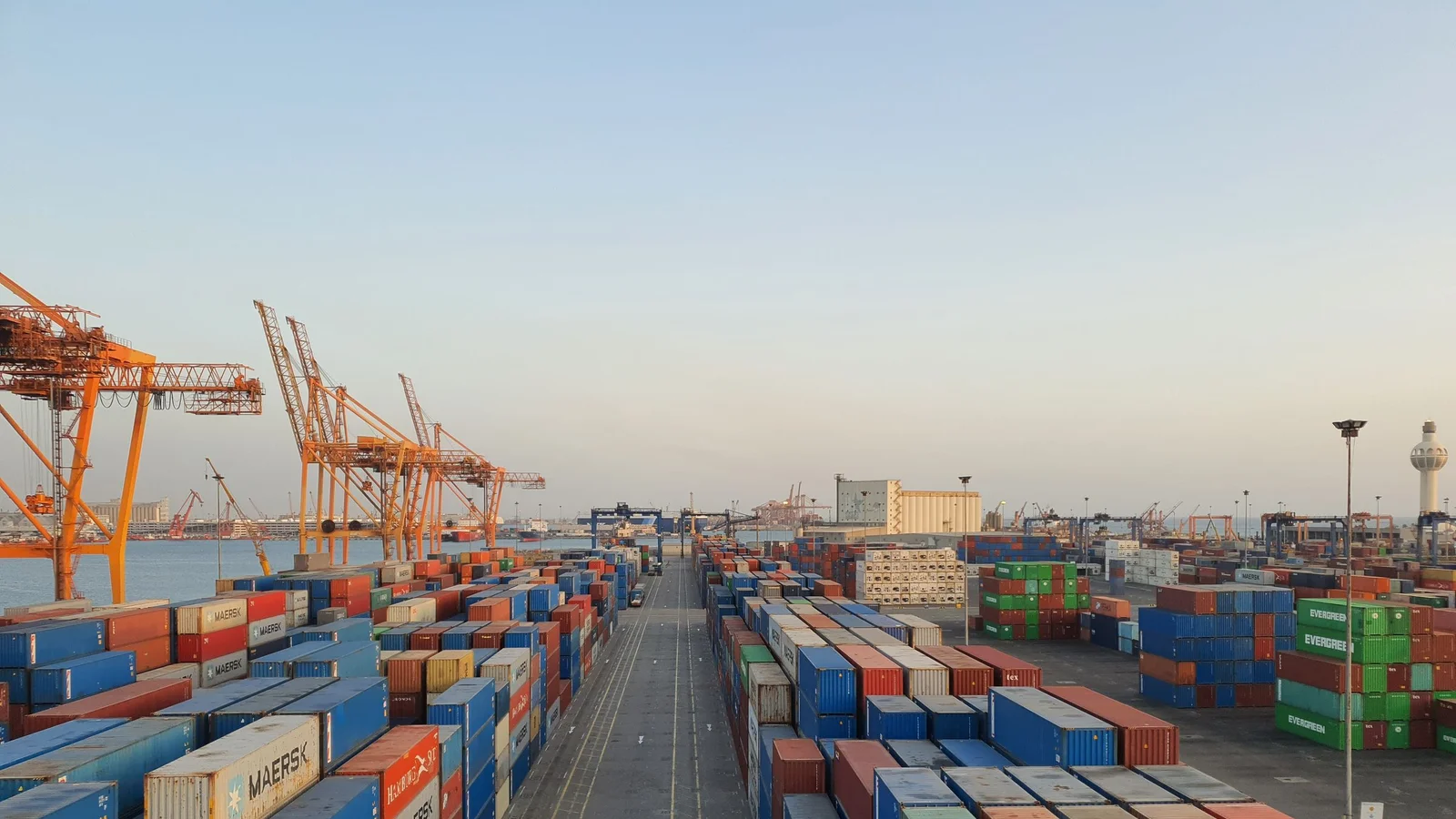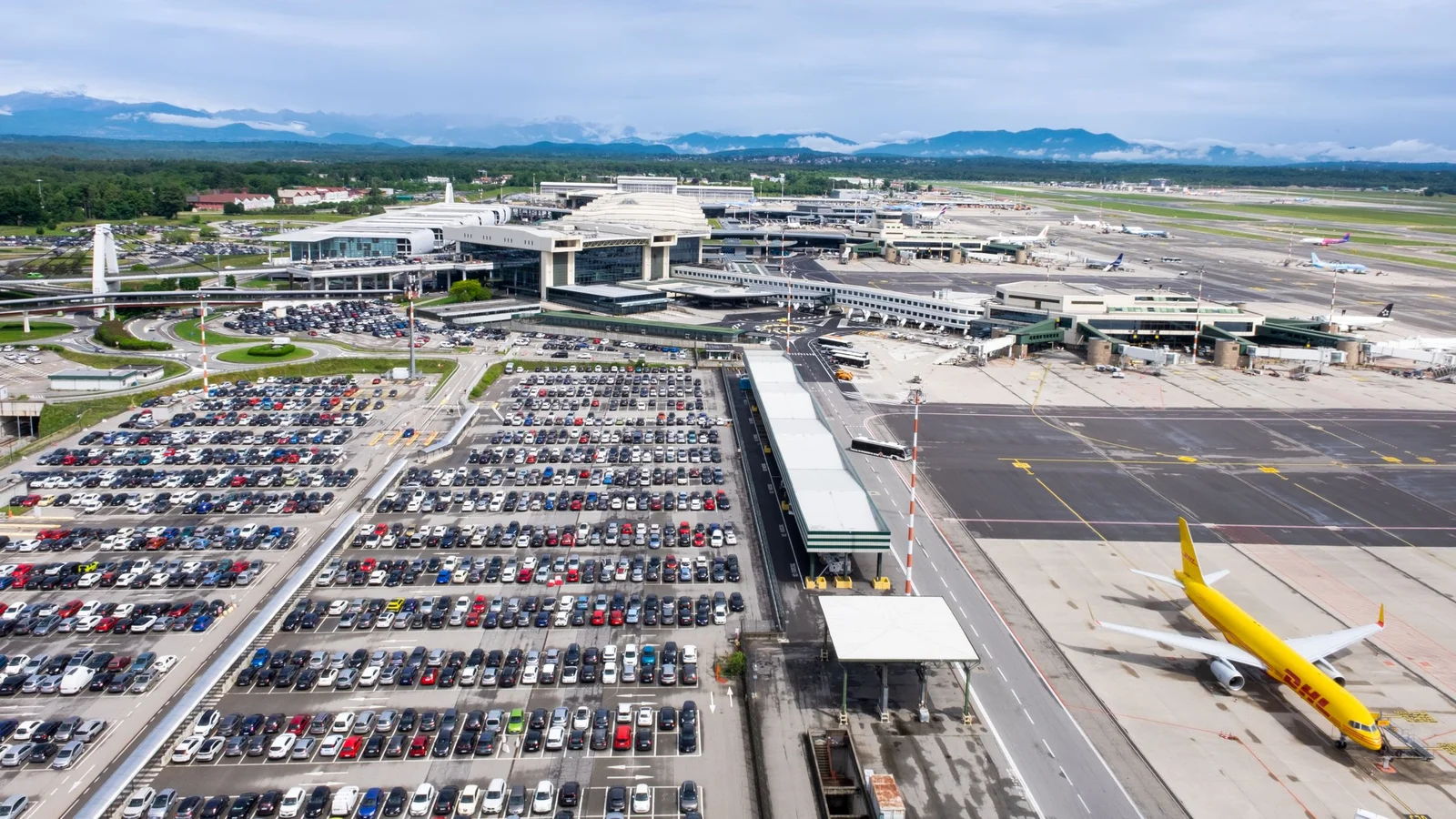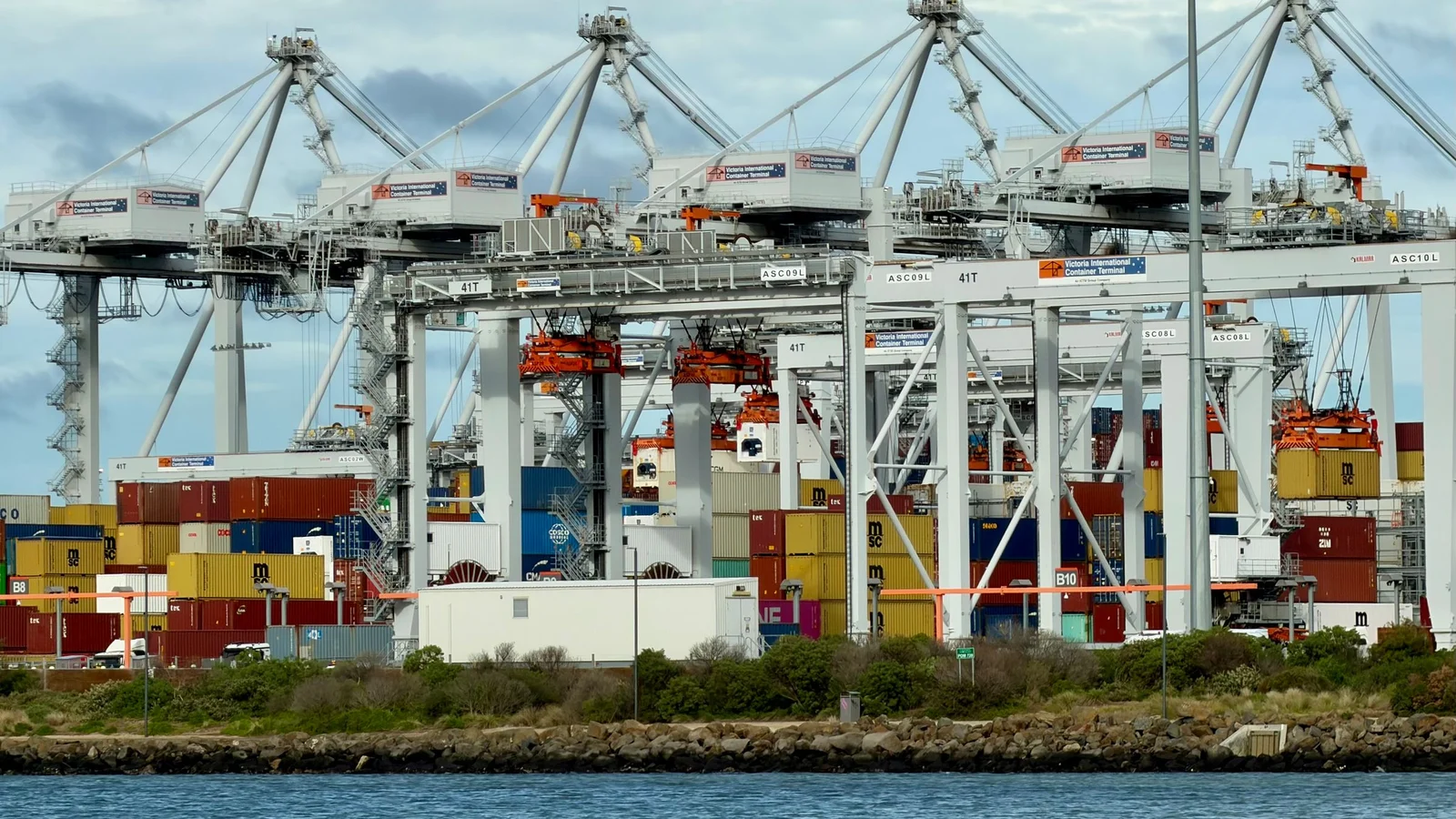
The Jebel Ali Free Zone is not a licence you buy off a menu. It is a working industrial estate and port hinterland of more than 539 million square feet next to the largest container terminal in the Middle East, operated by the Jebel Ali Free Zone Authority as part of DP World, home to 11,000+ companies from 157 countries including over 100 Fortune 500 names [1][4]. People come here to occupy land, run production lines, hold bonded stock and move containers, not to rent a desk.
That single fact explains why almost every article about JAFZA is wrong. Most present it as interchangeable with IFZA or Meydan and open with an invented "packages from AED X" line. JAFZA publishes no package pricing on jafza.ae, and no flexi-desk, office or warehouse lease rates either, because it is not selling a package. It leases real estate and issues a licence against it. The only first-party price point it states is that licences "start at AED 5,000", a floor for one line item, not an all-in figure [2].
This guide covers what JAFZA is at scale, which entity type to choose, the four licence categories, the facilities the zone actually publishes, why nobody can honestly quote you a JAFZA package, how the visa quota scales with leased space, what Designated Zone status does and does not do for VAT, which activities can hold the 0% corporate tax rate, and who should look elsewhere. Our free zone company setup page compares the routes side by side. Since 2013, our team has set up goods, warehousing and logistics companies across the UAE, so the traps below come from real files. This is a guide, not legal or tax advice.
What is JAFZA, and how big is it really?
JAFZA is Dubai's oldest and largest industrial free zone, established in 1985 next to Jebel Ali Port and operated by the Jebel Ali Free Zone Authority under DP World. It offers land, warehouses, industrial units, offices, showrooms and staff accommodation, plus Designated Zone customs and VAT treatment, to 11,000+ companies from 157 countries [1][4].
The origin story explains the scale. Sheikh Rashid bin Saeed Al Maktoum issued the first free-zone law on 6 May 1980, and the zone opened in 1985 with nineteen founding companies. The figures below come from the fortieth-anniversary disclosures by JAFZA and DP World in May 2025 [1][4].
| Headline figure | Latest published number |
|---|---|
| Companies | 11,000+ from 157 countries [4] |
| Fortune 500 companies present | 100+ [4] |
| Land bank | 539+ million square feet [1] |
| Non-oil trade (2024) | AED 713 billion, about USD 190 billion, up 15% from about USD 169 billion in 2023 [4] |
| Direct jobs in the zone | 160,000+ [4] |
| Direct and indirect jobs (2023) | 1 million+, about 27% of Dubai's employment, including around 40,000 UAE-national jobs [4] |
| Share of Dubai's 2023 FDI in manufacturing, trade and transport | 74% [4] |
| New company formations (2024) | Up 17% [4] |
JAFZA has also published environmental targets that matter on a long land lease: more than 80% landfill diversion by 2026, carbon neutrality by 2040 and net zero by 2050 [4]. Industrial tenants should read those as future obligations on waste and energy, not messaging.
Real Talk: The figure that tells you who JAFZA is for is the 1 million direct and indirect jobs, roughly 27% of Dubai's employment [4]. That is not a zone built around single-shareholder consultancies, but around factories, distribution centres and shift workforces. If your business has no goods, no stock and no staff to house, you are reading about the wrong zone.
Which JAFZA entity type should you choose?
JAFZA offers four routes: an FZE with one shareholder, an FZCO with two to fifty, a branch of an existing company, and a separate JAFZA Offshore company for non-UAE assets. The choice follows your shareholder count and whether you need an operating licence or only a holding vehicle [1].
| Structure | Shareholders | What it is | Typical use |
|---|---|---|---|
| FZE (Free Zone Establishment) | 1, individual or corporate | Limited-liability free zone company, one owner | Single-owner manufacturer, trader or logistics operator |
| FZCO (Free Zone Company) | 2 to 50, individuals, companies or a mix | Limited-liability company, liability capped at paid-in capital | Joint ventures, partner-owned distributors, group subsidiaries |
| Branch | None, 100% owned by the parent | Extension of a company established outside JAFZA, same name and same activities as the parent | Foreign manufacturers or freight groups placing an arm in the zone |
| JAFZA Offshore | Per the offshore regime | Non-resident vehicle for assets outside the UAE, not an operating licence | Asset and share holding, not trading in the zone |
The branch rule catches people out. A branch cannot invent activities: it mirrors the parent's name and activities [1]. If your UAE plan is broader than what the parent is licensed to do at home, you need an FZE or FZCO. And a JAFZA Offshore company is a different animal: it holds assets outside the UAE and gives you no warehouse, no visa quota and no Designated Zone goods treatment.
The AED 1,000,000 share capital myth
Common Mistake: Budgeting AED 1,000,000 for an FZE because a guide told you to. JAFZA states there is no prescribed minimum share capital, only that capital must be sufficient for the licensed activities [1]. The old rule, an FZE at AED 1,000,000 and an FZCO at AED 500,000 per shareholder, was removed in 2017. Any 2026 article still quoting AED 1m has not been updated in nine years, so ask what else on that page is stale.
Two requirements do still bite. You need an active lease agreement in place at setup, so the facility decision comes before the licence, and registration runs 3 to 14 business days once documents are complete [1]. The licence then renews annually, and renewal is mandatory.
Which JAFZA licence do you need?
JAFZA publishes four licence categories: Trading, Service, Industrial and Logistics. The trading licence carries three classifications based on how many activities you hold and which groups they fall into. JAFZA states licences start at AED 5,000, which is the licence line only [2].
| Licence category | What it authorises | Facility implication |
|---|---|---|
| Trading | Import, export, distribution and storage of specified goods | Needs storage capacity matched to the goods you hold |
| Service | Services listed on the licence, delivered inside and from the zone | Explicitly excludes holding physical stock |
| Industrial | Manufacturing, processing, assembly and packaging | Requires a production facility or warehouse inside the zone plus periodic HSE audits |
| Logistics | Freight, warehousing, distribution and supply-chain services | Built around warehouse or yard space |
Two rules decide whether your plan works. A service licence cannot hold physical stock, so a service company that quietly wants to warehouse goods is mis-licensed from day one. An industrial licence requires a real production facility or warehouse inside the zone and brings periodic health, safety and environment audits [2]. That is an operating discipline, not a formality, and it is why an industrial setup here takes longer to plan than a desk licence.
Pro Tip: Match the licence to the physical reality of your goods flow before you look at price. If you take title to stock, you are trading. If you hold and move other people's goods without taking title, you are logistics, and that distinction later decides whether you hold the 0% rate. Getting it wrong is expensive to unwind. Talk to a setup expert→
What we could not verify
Be sceptical of licence labels you cannot find on jafza.ae. The "Type 1, Type 2 up to twelve activities, Type 3 General Trading unlimited" classification, the National Industrial Licence said to require 51% GCC-national ownership and 40% local value addition, and the Innovation Licence all circulate on consultancy sites but do not appear on JAFZA's licence page [2]. Treat them as unverified. If unlimited trading lines matter, our general trading company setup guide explains that route.
What facilities does JAFZA actually offer?
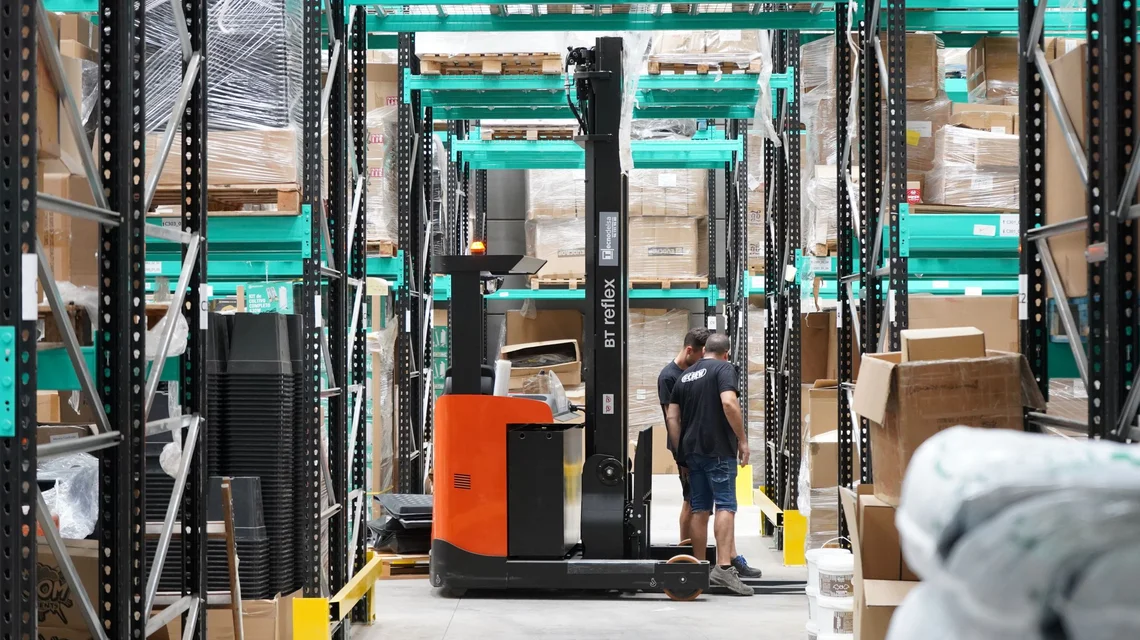
This is the part of JAFZA no other Dubai free zone matches, and it is the real product. JAFZA leases land plots on short and long terms, pre-built warehouses, light industrial units, 11,400+ offices, showrooms, co-working workstations, accommodation for thousands of workers, and build-to-suit facilities [3].
| Facility type | What JAFZA publishes |
|---|---|
| Land plots | Short and long leases, including National Industries Park, for own-build industrial and logistics development [3] |
| Pre-built warehouses | Storage and light manufacturing units, JAFZA Gateway units from 325 to 2,475 square metres [3] |
| Light industrial units | Smaller production and assembly space [3] |
| Offices | 11,400+ offices across Jafza One, Jafza Views 18 and 19, and the Series 14, 15 and 16 buildings [3] |
| Co-working and workstations | Ready-to-use furnished offices with no setup costs [3] |
| Showrooms | Combined warehouse, multi-floor office and showroom frontage [3] |
| Staff accommodation | 4,850+ rooms in Jafza North and 4,600+ in Jafza South, junior rooms to executive apartments, minimum occupancy 500+ spaces [3] |
| Food and amenities | Around 490 restaurants and cafes [3] |
| Build-to-suit | Bespoke development for specific facility requirements [3] |
Read the staff accommodation line carefully, because it is the clearest signal of who JAFZA is for. A zone publishing nearly 9,500 worker rooms with a minimum occupancy of 500+ spaces is speaking to employers with hundreds of staff on site [3]. So is the 490-outlet food estate. These are the amenities of an industrial city, not a coworking floor.
Build-to-suit suits manufacturers with specific requirements on floor loading, ceiling height, power, cold chain or hazardous goods. It also sets the timeline: it is a construction project with a construction project's lead time, and the licence follows the lease.
What does JAFZA cost, and why can nobody honestly quote you a package?
Because JAFZA does not publish one. The only price on its own site is that licences start at AED 5,000 [2]. It publishes no flexi-desk rate, no workstation rate, no office rate and no warehouse or land lease rate [1][2][3]. Any "JAFZA package from AED X" is somebody's estimate, not a JAFZA figure.
This is the single most useful thing in this article. The figures circulating online, roughly AED 15,000 a year for a flexi-desk, around AED 3,495 a month for a serviced office, warehouse rent of AED 48,000 to over AED 200,000 a year, are broker quotes. None are published JAFZA rates, and we will not reprint them as though they were.
| Cost component | What JAFZA publishes | What it does not |
|---|---|---|
| Licence | Licences start at AED 5,000 [2] | Your final fee by activity mix and classification |
| Registration | 3 to 14 business days, active lease required [1] | An all-in setup fee schedule |
| Land lease | Short and long leases, National Industries Park [3] | Any rate per square foot or metre |
| Warehouse lease | Unit sizes, JAFZA Gateway 325 to 2,475 square metres [3] | Any annual rent |
| Office and co-working | Buildings, unit counts, no setup costs on furnished offices [3] | Any monthly or annual price |
| Staff accommodation | Room counts and types, 500+ space minimum [3] | Any per-room rate |
| Visas | Quota tied to facility type and size [1] | A flat per-visa figure |
Quick Math: You cannot compute a JAFZA budget from a licence price, because here the licence is the smallest line on the invoice. The facility lease dominates, staffing and accommodation follow, then customs and compliance, then the licence. A founder who budgeted AED 5,000 plus a bit has budgeted for the wrong zone. A founder pricing 1,200 square metres of warehouse, forty visas, a customs code and an annual audit is having the right conversation.
So the route reverses how people shop for a desk licence. Specify the facility first, square metres, power, loading, storage type, headcount, request a JAFZA quotation against it, then price the licence and visas on top. Anyone quoting a total before the facility is specified is guessing.
Based on our experience, the tenants who end up happy here specified the facility first and treated the licence as an output. The unhappy ones chose JAFZA on the AED 5,000 headline, then found the lease they had to sign at setup was the real cost of entry. If you want licence-and-desk economics instead, our free zone company setup page and DMCC free zone setup guide will help more than any JAFZA estimate.
Need a JAFZA facility specification and a real cost picture rather than a headline price? Our advisors scope the lease, licence, visa quota and customs setup together.
Get a free consultation→How does the JAFZA visa quota work?
It scales with the space you lease, not a package tier. JAFZA ties visa eligibility to facility type and size, so a workstation supports a handful of visas while a leased land plot starts with an allocation that expands on approval [1]. There is no flat "up to six visas" number as in the desk zones.
The ratios below are the ones in circulation. Treat them as indicative. We could not re-confirm the multipliers word for word on the live JAFZA guidance, so confirm your quota with JAFZA's Visa and Operations team before planning a headcount around them.
| Facility type | Indicative visa quota (confirm with JAFZA) |
|---|---|
| Office space | About 1 visa per 9 square metres |
| Co-working workstation | About 2 visas per workstation |
| Warehouse | Scales with area, no fixed cap reported |
| Light industrial unit | Scales with area, no fixed cap reported |
| Showroom | Capped at 5 visas regardless of size |
| Leased land plot | Initial quota of 20 visas, expandable on approval |
Two lines change decisions. The showroom cap of 5 visas is the trap, because a showroom looks like the natural choice for a distributor wanting trade frontage, and then the headcount ceiling arrives. The land plot starting at 20 visas is the opposite: the only route that begins with a workforce allocation rather than earning it square metre by square metre.
Because quota follows leased area, growing the team means leasing more space, a cost decision rather than a form. Plan the facility around your year-three headcount. Our guide to how free zone visa quotas work compares the mechanics across zones.
Is JAFZA a Designated Zone, and what does that change for VAT?
Yes. JAFZA North and JAFZA South are both named on the Federal Tax Authority's own list of Designated Zones, effective 1 January 2018 [5]. That puts certain goods transactions outside the scope of UAE VAT and suspends customs duty on goods held in the zone. It is not a blanket exemption, and that difference is where founders get burned.
Movement by movement is the only way to understand Designated Zone VAT [5][8].
| Movement or supply | VAT treatment |
|---|---|
| Goods supplied within a Designated Zone, for producing or reselling other goods | Can fall outside the scope of UAE VAT |
| Goods moved from one Designated Zone to another | Can be outside scope where the conditions and controls are met |
| Goods leaving the zone into the UAE mainland | An import into the UAE, so import VAT applies |
| Goods moved from the Dubai mainland into the zone | A local supply, not an export, so normal VAT applies |
| Services supplied in a Designated Zone | Standard-rated at 5%, the place of supply being inside the UAE |
| Goods consumed inside the zone | Within scope rather than relieved |
Read the services line twice. Services supplied in a Designated Zone are standard-rated at 5% [8]. Designated Zone status is a goods relief. It does nothing for a consultancy, an agency or a software business, which is the first reason a service company gains nothing from JAFZA real estate.
The mainland-into-zone line is the second thing competitors get backwards. Moving goods from Dubai mainland into JAFZA is a local supply, not an export, so the supplier charges VAT normally [8]. Founders who assume they can buy locally VAT-free because the destination is a free zone price on that assumption, then find the input tax on their books.
The registration point surprises people most: a JAFZA company is still deemed resident in the UAE for VAT. It registers on the normal thresholds, mandatory at AED 375,000 and voluntary at AED 187,500 of taxable supplies, and files returns like any other UAE business [5][8]. Designated Zone status changes how certain supplies are treated; it does not remove you from the VAT system. Our Designated Zones and VAT guide works through the movements in detail.
One note on sourcing. The FTA's most recent consolidated Designated Zones list is dated September 2021 [5], and zones are added and removed by Cabinet Decision, so we will not publish a current total count, and nor should any article without a dated source. What is verifiable is that JAFZA North and South are on it.
Can a JAFZA company get the 0% corporate tax rate?
It can, if it qualifies as a Qualifying Free Zone Person and meets every condition in Article 18 of Federal Decree-Law 47/2022. Qualifying Income is then taxed at 0% and non-qualifying income at 9%. The conditions are cumulative and failing one costs the status, so it is a position you maintain, not a benefit you receive.
What makes JAFZA unusually well suited to the regime is that several Qualifying Activities under Ministerial Decision No. 229 of 2025 describe what its tenants already do [6].
| Qualifying Activity relevant to JAFZA | Why it fits the zone |
|---|---|
| Manufacturing of goods or materials | Industrial licence with a production facility inside the zone |
| Processing of goods or materials | Processing lines, packing, treatment and assembly |
| Distribution of goods or materials in or from a Designated Zone | Only available because JAFZA is a Designated Zone |
| Logistics services | Warehousing, freight and handling on behalf of others |
| Trading of Qualifying Commodities | Commodity trade on recognised terms |
This is the real reason a goods business considers JAFZA over a cheaper zone. A service company in a desk zone has to work hard to find a Qualifying Activity that fits. A JAFZA manufacturer or 3PL is doing something named in the decision.
Two points need stating precisely, because they are widely garbled.
Distribution has a condition attached. Under Article 2(1)(l), distribution of goods or materials in or from a Designated Zone requires the goods to enter the State through that Designated Zone, and to be supplied only to a customer who resells them, or who processes or alters them for sale or resale, or to a public benefit entity [6]. Distribution to an end consumer is not covered, so a JAFZA company selling retail quantities to the public is not doing Qualifying distribution, whatever its licence says.
The 51% test is not where people think it is
Common Mistake: Believing a JAFZA logistics or warehousing company must earn more than 51% of revenue from a particular source to keep the 0% rate. That condition does not live in logistics or distribution. The 51% revenue concentration test sits inside the definition of Trading of Qualifying Commodities at Article 2(3)(c) of Ministerial Decision No. 229 of 2025 [6], where it stops a warehousing-heavy business dressing itself up as a commodities trader.
Logistics services at Article 2(3)(m) carries no 51% condition at all. It is defined broadly as storing and transporting goods on behalf of another person without taking title, including cargo handling, warehousing, container storage, freight forwarding and customs brokerage [6]. If a consultant says your JAFZA 3PL must hit a 51% threshold, they have read the wrong article. Our logistics company setup guide covers the operational side.
Three more conditions decide whether the 0% survives contact with reality:
- De minimis. Non-qualifying revenue must not exceed 5% of total revenue or AED 5,000,000, whichever is lower. On a large turnover, the AED 5m cap binds long before the percentage does.
- Audited financial statements. Under Ministerial Decision No. 84 of 2025, every Qualifying Free Zone Person must prepare and maintain audited financial statements regardless of revenue size [7]. No small-company exemption.
- Losing it costs five years. A breach costs the status for the current tax period and the following four.
Our qualifying free zone person and the 0% rate guide sets out the full conditions, including adequate substance, transfer pricing and the election mechanics. The annual audit, corporate tax filing and licence renewal hanging off this position are the recurring work our post-setup services team handles, best planned in year one rather than discovered in year two.
What is the port and customs advantage worth?
It is the reason the zone exists. Jebel Ali Port, DP World operated and directly adjacent to JAFZA, handled 15.536 million TEU in 2024, ninth globally on Lloyd's List, and 15.6 million TEU in 2025 [4]. It is the largest container port in the Middle East by a wide margin, with the next largest, Jeddah, at roughly a third of the volume.
The capacity behind that is what a serious importer is buying: around 19.4 million TEU a year across four terminals, more than 100 berths and 25 kilometres of quay [4]. For a business moving containers at volume, sitting inside the fence removes trucking legs, customs handoffs and dwell time that no paperwork elsewhere recovers.
Two mechanics compound it. Customs duty is suspended on goods held inside the Designated Zone, becoming payable only when goods enter the UAE mainland market, with re-export facilitation for goods that leave again [5][8]. For a re-exporter, that is working capital that never leaves your account. And proximity to Al Maktoum International Airport makes sea-air transhipment practical out of the same zone.
Pro Tip: If your model is buy in Asia, hold in Dubai, sell across the Gulf, Africa and the subcontinent, the duty suspension plus port adjacency is usually worth more than any licence saving in a cheaper zone. Model the duty and freight, not the licence fee. That calculation decides whether JAFZA pays for itself. Talk to a setup expert→
Who is JAFZA right for, and who should look elsewhere?
JAFZA is right for businesses whose economics are driven by goods, space and staff, and wrong for those driven by a licence and a laptop. That is the whole verdict, and both halves deserve bluntness.
| JAFZA is right for | JAFZA is wrong for |
|---|---|
| Manufacturers and processing companies needing production space | Solo consultants and freelancers |
| Warehousing and third-party logistics operators | Digital, software and agency businesses with no goods |
| Distributors and re-exporters needing bonded storage | Service businesses that need no storage |
| Large-workforce operations, since quota scales with real estate | Founders shopping on headline licence price |
| Port-adjacent bulk import and export at container volumes | Businesses wanting a cheap Dubai address for banking |
| Businesses that want Designated Zone goods treatment | Anyone who cannot commit to a lease at setup |
The right-hand column is firm because of arithmetic, not snobbery. JAFZA's cost structure and both of its advantages, Designated Zone goods treatment and the goods-based Qualifying Activities, are built around occupying real estate. A service business here gets 5% VAT on its services anyway [8], has no realistic goods-based Qualifying Activity under Ministerial Decision No. 229 of 2025 [6], and signs a lease it does not need. It pays the industrial-zone price for benefits it cannot use.
If that describes you, the honest answer is a different structure. A service business selling to UAE clients is often better off on a mainland licence, because a mainland company invoices UAE customers directly without a distributor or branch, and our mainland company setup page covers what that costs. If your clients sit outside the UAE and you want a low-cost licence and a residence visa, a desk-based free zone beats a JAFZA lease.
Real Talk: We turn business away from JAFZA regularly, always the same conversation. Somebody read that JAFZA is Dubai's biggest and oldest free zone and concluded biggest means best. For a consultancy, biggest means paying for a port you will never use. The zone is superb at one thing, making and moving physical goods at scale, and indifferent to everything else.
How does the JAFZA setup process run, and how long does it take?
Registration takes 3 to 14 business days once documentation is complete, and an active lease must be in place at setup, so the facility sets the real timeline, not the licence [1]. The order below is the reverse of a desk-zone setup.
| Stage | What happens | Typical timing |
|---|---|---|
| 1. Specify the facility | Space, storage type, power, loading, headcount, growth path | Days to weeks, your own planning |
| 2. Select the facility | Plot, warehouse, industrial unit, office or showroom, and request a JAFZA quotation | Weeks, longer for build-to-suit |
| 3. Choose entity and licence | FZE, FZCO or branch; trading, service, industrial or logistics | Alongside stage 2 |
| 4. Submit the application | Shareholder and corporate documents, activity list, business plan if required | Days |
| 5. Sign the lease | An active lease is required at setup [1] | Before registration completes |
| 6. Registration and licence | JAFZA registration and licence issuance | 3 to 14 business days [1] |
| 7. Establishment card and visas | Quota confirmed against the lease, then entry permits, medicals, Emirates ID | Weeks, scaling with headcount |
| 8. Customs code and operations | Customs registration, HSE approvals, bank account | Weeks, in parallel |
Documents follow the usual free zone pattern: passports and photographs for individual shareholders, and for a corporate shareholder or branch, an attested certificate of incorporation, memorandum and articles, board resolution and power of attorney. An industrial licence adds facility drawings and HSE documentation [1][2].
Then it repeats. The licence renews annually, the lease on its own cycle, the establishment card and visas renew, industrial tenants face periodic HSE audits, and a Qualifying Free Zone Person owes audited financial statements every year [7]. Keeping those cycles aligned so a lapsed lease never strands a licence renewal is what our post-setup services team is for.
Can a JAFZA company open a corporate bank account?
Yes, and JAFZA companies are generally easier to bank than lighter free zone structures, because the business is visible. A bank sees a lease, a warehouse, staff, inventory and shipping documents, which answers the substance questions that stall desk-based applications. Expect full know-your-customer checks and a few weeks rather than days.
What helps most is what the business already has: the lease, the customs code, supplier and customer contracts, bills of lading or airway bills, and a clear description of the goods flow. Friction comes from the same places as anywhere in the UAE: high-risk jurisdictions in the supply chain, dual-use or controlled goods, and a vague account of who pays whom for what. Prepare the trade documentation before the first bank meeting.
Setting up a goods, warehousing or manufacturing business in Dubai? We scope the zone, facility, licence, visa quota, customs and tax position together.
Talk to an expert→Real Client Stories
These are real examples from businesses we have helped set up. Names and details have been changed for privacy.
The food importer who priced the licence and forgot the lease. A food distributor had budgeted a JAFZA setup off a "from AED 5,000" licence line found online, with no facility in mind. Their goods needed temperature-controlled storage and a customs code, and JAFZA requires an active lease at setup, so the licence was never the binding number. We rebuilt the budget from the cold-storage specification upward. Their commercial director: "We were shopping like it was a desk licence. The warehouse was the business."
The 3PL that was told it had to hit 51%. A logistics operator handling warehousing and freight forwarding for overseas clients had been told its JAFZA company needed more than 51% of revenue from one category to keep the 0% rate, and had begun restructuring contracts around it. The 51% test sits inside Trading of Qualifying Commodities, and logistics services carries no such condition [6]. We stopped the restructuring and documented the logistics position instead. Their finance lead: "We were about to reshape a working business around a rule that did not apply to us."
The packaging manufacturer that used the plot quota. A packaging producer needed a production line, a warehouse and around sixty staff on site within two years. A showroom would have capped them at five visas, and an office footing would have rationed quota by square metre. We took the land-plot route, which begins at an indicative twenty visas and expands on approval. Their operations manager: "Choosing the facility for the team we would have, not the team we had, was the decision that mattered."
Set up in JAFZA for the right reasons
JAFZA is the best free zone in the UAE for making, storing and moving physical goods at scale, and an expensive mistake for anything else. Judge it on the facility, the port, the duty suspension and the goods-based Qualifying Activities, not a headline licence price nobody publishes in full. If your model is containers, production lines and shift workforces, little else competes. If it is a laptop and a client list, the answer is a mainland licence or a desk zone.
Since 2013, BusinessDubai.ae has completed 700+ company registrations across the UAE, including goods, warehousing and logistics businesses. We specify the facility first, price the licence and visa quota against it, set the Designated Zone VAT and Qualifying Free Zone Person positions correctly, and tell you honestly if a mainland company setup or a lighter free zone is the better call. Talk to a setup expert→ for a plan built around what you actually move.
Related guides:
- Qualifying Free Zone Person and the 0% Rate
- Designated Zones and VAT in the UAE
- DMCC Free Zone Setup
- Logistics Company Setup in Dubai
- How Free Zone Visa Quotas Work
Worth reading next: Dubai South Free Zone Setup: Real Licence Fees from DACC's Own Tariff, the Al Maktoum Airport Timeline, and the Designated Zone Question (2026)
Frequently Asked Questions
What is JAFZA?
JAFZA is the Jebel Ali Free Zone, Dubai's oldest and largest industrial free zone, established in 1985 and operated by the Jebel Ali Free Zone Authority as part of DP World. It sits next to Jebel Ali Port on a land bank of 539+ million square feet and hosts 11,000+ companies from 157 countries [1][4].
How much does it cost to set up in JAFZA?
JAFZA publishes no all-in package price. The only first-party figure is that licences start at AED 5,000, covering the licence line only [2]. Because an active lease is required at setup, your real cost is the facility you occupy, and JAFZA publishes no office, warehouse or land lease rates. Specify the facility, then request a quotation [1][3].
Why can nobody give me a JAFZA package price?
Because JAFZA is not a package product. It leases land, warehouses, industrial units, offices and accommodation, and issues a licence against that lease. Any "JAFZA from AED X all in" figure online is a third-party estimate, not a published JAFZA rate [1][2][3].
Is the AED 15,000 flexi-desk price for JAFZA real?
It is not a JAFZA-published figure. JAFZA publishes no flexi-desk, workstation, serviced office or warehouse pricing on jafza.ae [3]. Figures around AED 15,000 a year for a desk, or monthly serviced-office rates, come from brokers. Treat them as somebody's quote, not the zone's price list.
What is the minimum share capital for a JAFZA company?
There is no prescribed minimum. JAFZA states only that capital must be sufficient for the licensed activities [1]. The old requirement of AED 1,000,000 for an FZE and AED 500,000 per shareholder for an FZCO was removed in 2017, so any guide quoting AED 1m is out of date.
What is the difference between a JAFZA FZE and an FZCO?
An FZE has one shareholder, individual or corporate. An FZCO has two to fifty shareholders, individuals, companies or a mix, with liability capped at paid-in capital. Both are limited-liability free zone companies; the difference is shareholder count [1].
Can I open a branch in JAFZA?
Yes. A JAFZA branch is 100% owned by a parent established outside JAFZA and must carry the same name and same activities as that parent [1]. If your intended UAE activities are broader than the parent's, you need an FZE or FZCO.
What is a JAFZA Offshore company?
A non-resident vehicle for holding assets outside the UAE. It is distinct from a free zone operating licence, so it brings no warehouse, no visa quota, no Designated Zone goods treatment and no right to trade inside the zone [1]. It is a holding structure, not an operating one.
What licence types does JAFZA offer?
Four categories are confirmed on JAFZA's own site: Trading, Service, Industrial and Logistics. The trading licence carries three classifications based on the number of activities and the activity groups involved [2].
Do the JAFZA Type 1, Type 2 and Type 3 trading licences exist?
Those labels, along with the National Industrial Licence and the Innovation Licence, circulate on consultancy sites but do not appear on JAFZA's own licence page, so we treat them as unverified [2]. Confirm the classification and its activity limits with JAFZA before building a structure around it.
Does a JAFZA industrial licence require a warehouse?
Yes. An industrial licence requires a production facility or warehouse inside the zone and brings periodic health, safety and environment audits [2]. You cannot hold one without physical production or storage space in the zone.
Can a JAFZA service licence hold stock?
No. The service licence explicitly excludes holding physical stock [2]. A business that plans to warehouse goods needs a trading, logistics or industrial licence, and a service company quietly storing inventory is mis-licensed.
How many visas can a JAFZA company get?
The quota follows facility type and size, not a package tier. Indicative ratios are about 1 visa per 9 square metres of office or warehouse, about 2 per co-working workstation, a cap of 5 for a showroom, and an initial 20 for a land plot, expandable on approval. Confirm with JAFZA's Visa and Operations team [1].
How long does JAFZA registration take?
JAFZA states 3 to 14 business days once documentation is complete [1]. The practical timeline is longer, because an active lease must be in place at setup and negotiating a warehouse, plot or build-to-suit facility takes far longer than registration itself.
Is JAFZA a Designated Zone for VAT?
Yes. Both JAFZA North and JAFZA South are named on the Federal Tax Authority's list of Designated Zones, effective from 1 January 2018 [5]. That gives certain goods transactions treatment outside the scope of VAT and suspends customs duty on goods held in the zone.
Does Designated Zone status mean a JAFZA company pays no VAT?
No. It is a goods relief, not a blanket exemption. Services supplied in a Designated Zone are standard-rated at 5%, the place of supply being inside the UAE, and goods consumed inside the zone are within scope [8]. A JAFZA company stays inside the UAE VAT system.
Does a JAFZA company have to register for VAT?
Yes, on the normal thresholds, because it is deemed resident in the UAE for VAT. Registration is mandatory once taxable supplies pass AED 375,000 and voluntary from AED 187,500, and returns must be filed like any other UAE business [5][8].
Is moving goods from Dubai mainland into JAFZA an export?
No, and the error is costly. A movement from the Dubai mainland into a Designated Zone is a local supply, not an export, so normal VAT applies [8]. Goods travelling the other way, from the zone into the mainland, are treated as an import.
Can a JAFZA company get 0% corporate tax?
Yes, if it qualifies as a Qualifying Free Zone Person and satisfies every condition of Article 18 of Federal Decree-Law 47/2022. Qualifying Income is taxed at 0% and non-qualifying income at 9%. The conditions are cumulative, so the 0% is maintained through compliance, not granted by the licence.
Which activities qualify for the 0% rate in JAFZA?
The Qualifying Activities under Ministerial Decision No. 229 of 2025 that fit JAFZA tenants are manufacturing of goods or materials, processing of goods or materials, distribution of goods or materials in or from a Designated Zone, logistics services, and trading of Qualifying Commodities [6].
Does a JAFZA logistics company need 51% of revenue from one source?
No. The 51% revenue concentration test sits inside the definition of Trading of Qualifying Commodities at Article 2(3)(c) of Ministerial Decision No. 229 of 2025, where it stops a warehousing-heavy business claiming the commodities category. Logistics services at Article 2(3)(m) carries no 51% condition [6].
What counts as logistics services for the 0% rate?
Storing and transporting goods on behalf of another person without taking title, including cargo handling, warehousing, container storage, freight forwarding and customs brokerage [6]. Taking title moves you into trading or distribution, which carry different conditions.
What are the conditions on Qualifying distribution in JAFZA?
Under Article 2(1)(l), the goods must enter the State through the Designated Zone, and be supplied only to a customer who resells them, or processes or alters them for sale or resale, or to a public benefit entity [6]. Distribution to an end consumer is not covered.
Does a JAFZA company need an audit?
If it wants Qualifying Free Zone Person status, yes. Ministerial Decision No. 84 of 2025 requires every Qualifying Free Zone Person to prepare and maintain audited financial statements regardless of revenue size [7]. There is no small-company exemption.
What happens if a JAFZA company loses Qualifying Free Zone Person status?
It loses the status for the current tax period and the following four, so one breach carries a five-year cost. Non-qualifying revenue must also stay within the de minimis threshold of 5% of total revenue or AED 5,000,000, whichever is lower.
How big is Jebel Ali Port?
It handled 15.536 million TEU in 2024, ninth globally on Lloyd's List, and 15.6 million TEU in 2025. It is the largest container port in the Middle East, with capacity of about 19.4 million TEU a year across four terminals, 100+ berths and 25km of quay [4].
Who should not set up in JAFZA?
Solo consultants, freelancers, digital and service businesses with no goods or storage need, and anyone choosing a zone on headline licence price. JAFZA's cost structure and both its VAT and corporate tax advantages are built around occupying real estate, so a service business pays industrial-zone costs for benefits it cannot use.
Can a JAFZA company open a corporate bank account?
Yes, and often more easily than a desk-based free zone company, because the lease, warehouse, staff, stock and shipping documents answer the substance questions banks ask. Expect full know-your-customer checks and a few weeks. Have the trade documents and customs code ready first.
References
[1] Jebel Ali Free Zone Authority. Company formation: FZE, FZCO, branch and offshore structures, share capital, lease requirement, registration timeline. JAFZA company formation
[2] Jebel Ali Free Zone Authority. Business licence: trading, service, industrial and logistics categories, trading classifications, licences from AED 5,000. JAFZA business licence
[3] Jebel Ali Free Zone Authority. Solutions and facilities: land, warehouses, JAFZA Gateway unit sizes, offices, co-working, showrooms, accommodation, build-to-suit. JAFZA solutions
[4] DP World. JAFZA turns 40 with record USD 190bn in trade: company and country counts, land bank, 2024 trade, employment, FDI share, port volumes, sustainability targets. DP World, JAFZA at 40
[5] Federal Tax Authority. List of Designated Zones, dated September 2021, naming Jebel Ali Free Zone North and South from 1 January 2018. FTA Designated Zones list
[6] Ministry of Finance. Ministerial Decision No. 229 of 2025 on Qualifying and Excluded Activities: distribution at Article 2(1)(l), the 51% commodities test at Article 2(3)(c), logistics services at Article 2(3)(m). MOF Ministerial Decision 229 of 2025
[7] Ministry of Finance. Ministerial Decision No. 84 of 2025 on audited financial statements, including for Qualifying Free Zone Persons. MOF Ministerial Decision 84 of 2025
[8] Federal Tax Authority. Designated Zones VAT Guide (VATGDZ1): goods and services in Designated Zones, movements to and from the mainland, standard rating of services. FTA Designated Zones VAT Guide