A fire and safety company in Dubai sells something the law makes compulsory in every building, which is why the market is steady. But the trade licence that most guides fixate on is the easy part. The real barrier, the one that decides whether you can lawfully touch a single sprinkler or alarm panel, is a separate approval from Dubai Civil Defence (DCD). Without it, your DET licence lets you exist as a company and nothing more. You cannot design, install, test, maintain, inspect or refill fire-protection systems on the strength of a trade licence alone [1][6].
Behind that approval sits a person, not just a payment. DCD registers the company, but it does so on the back of a qualified fire-protection engineer and trained safety officers who have passed the authority's own exams. That registered engineer is effectively your technical licence-holder, and losing them can freeze the business. Miss this, and you join the founders who rent an office, print a licence, and then discover they legally cannot start work.
This guide covers the DCD approval that is the real gate, the registered engineer requirement, the product listing rule, the correct edition of the fire code, ownership, and why the free-zone "0% tax" pitch fails for on-site work. Since 2013, our team has set up contracting and regulated companies across the UAE, so the traps here come from real files. This is a guide, not legal or tax advice on your specific licence.
Why is a trade licence only the first step?
Because fire protection is a life-safety activity, and the permission to actually do the work comes from Dubai Civil Defence, not the economic department. A DET trade licence with a fire-fighting or fire-alarm activity incorporates the company. But before you can lawfully carry out any fire works, the company must be separately registered and approved by the General Command of Dubai Civil Defence as an approved fire-safety contractor [1][6].
That approval is not a rubber stamp bundled into the licence. It runs through DCD's preventive-safety function, it requires the company's technical credentials, and the work itself has to be executed by the approved company under DCD supervision, with shop drawings submitted and approved before anything is installed on site [3][6]. The licence is the paperwork. The DCD approval is what makes you a lawful operator.
Common Mistake: Treating "get a fire and safety licence" as one step. It is at least two, the DET licence and the separate DCD company approval, and the DCD approval is category-specific on top of that. Budgeting time and money for only the trade licence is the single biggest reason new fire companies find they cannot legally start.
What is the Dubai Civil Defence company approval?
It is a company-level registration granted by the type of fire activity, and it is the moat. DCD does not hand out one approval that covers everything. Approvals are granted per category, broadly for installation of fire-protection systems, maintenance of those systems, inspection and testing, fire-extinguisher refilling and servicing, and trading or distribution of fire products, with local manufacturing licensed separately [3][6]. A company holds only the categories it is approved for, so a maintenance approval does not let you install, and an installation approval does not let you refill extinguishers.
Applications and drawing submissions go through the DCD Smart Services portal, the authority's own e-services system, which is where you request licensing as a fire-products installation and maintenance company, a distributor, or a factory [3]. Confirm the exact current category names and fees directly with DCD, because the schedule is not cleanly published and the categories are periodically restructured. But the principle is firm: your approval is scoped to what you actually do, and doing work outside your category is unlawful.
Pro Tip: Decide your exact scope before you apply, because the DCD category you hold defines the work you can sell. A founder who wants both installation and annual maintenance contracts needs both categories, and adding one later is a fresh application. Map the categories to your business plan first. Get your fire and safety setup scoped properly→
Who actually holds the licence: the registered engineer
The approval turns on people, because DCD approves the company through a qualified engineer, not just a paid-up entity. To register, the company must present a valid trade licence plus the credentials of a qualified fire-protection engineer and fire-safety and first-aid officers who have passed the relevant DCD examinations, courses and training [1][6]. In practice the approved engineer is the technical anchor of the whole licence.
That has two consequences founders underestimate. First, the engineer is a recurring cost and a structural dependency, not a one-off hire, and if the registered engineer leaves, the approval can stall until a replacement is registered. Second, this is the real reason you cannot simply hire general labour and start spraying foam or wiring panels. The competency sits with certified individuals, and DCD checks it. Line the engineer up before you commit to premises and contracts, the same way a pest control or medical business lines up its carded staff first.
Which fire products can you actually install or sell?
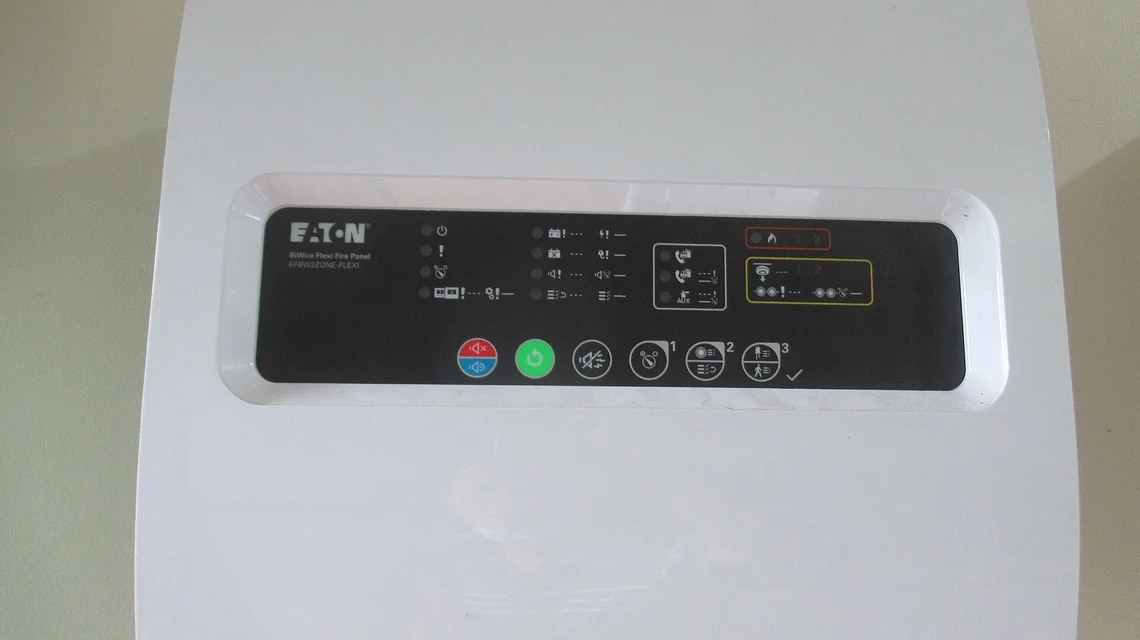
Only DCD-approved ones, and this is a second gate guides skip. Fire products, meaning extinguishers, alarm panels, detectors, sprinkler heads, pumps, fire-rated doors, suppression agents and fire cabling, must be DCD-approved and listed before they can be sold or installed in Dubai. DCD issues a certificate of conformity for fire products and maintains approved-product listings, and a product that is not listed fails inspection, which means the system it is part of cannot be signed off [1][7].
There is a federal layer on top. Regulated products entering the UAE market generally need an ECAS certificate of conformity from MoIAT, the Ministry of Industry and Advanced Technology, before customs clearance [4][7]. So a fire-equipment trader faces two product regimes at once, the federal ECAS conformity for market access and the DCD listing for use in Dubai buildings. A product being certified in another country means nothing here if it is not on the UAE and DCD registers. Our import and export guide covers the customs mechanics that apply on top.
Which edition of the fire code applies?
The UAE Fire and Life Safety Code of Practice, 2018 Edition, as amended, and getting the edition right is a quiet credibility test. The code is administered and enforced in Dubai by the General Command of Dubai Civil Defence under the Ministry of Interior, and it applies across the UAE [2][8]. It is a living document: the authorities issue amendments and annexures over time rather than republishing the whole thing.
Here is the trap. There is no superseding "2022" or "2024" full re-issue of the code. The current base remains the 2018 Edition plus its published amendments. A guide, or a consultant, that cites a brand-new edition that does not exist, or that ignores the amendments layered onto the 2018 base, has not checked the source. Always work from the 2018 Edition as amended, and re-check the DCD portal for the latest annexures before you rely on a clause, because the details do move.
Real Talk: The compliance burden here is a feature, not a bug, for a serious operator. The DCD approval, the registered engineer and the product listings are exactly what stop every general contractor from undercutting you on fire works. The barrier that makes setup slow is the same barrier that protects your margins once you are through it. Treat the approvals as the moat, not the nuisance.
Can a foreigner own a fire and safety company?
Yes, on the mainland, for the activities that matter here. Since the 2021 Commercial Companies Law amendment, Dubai mainland allows 100% foreign ownership across the large majority of commercial, industrial and contracting activities on DET's positive list, and fire-fighting installation, maintenance and equipment trading are the type of activities generally eligible [5]. No Emirati partner is required for eligible activities.
The one caution is that ownership eligibility is set per activity code, so confirm the specific fire activity you are registering against the current DET positive list before you commit. Installation and commissioning of fire-alarm and fire-detection systems sits under the specialised contracting activity group, while pure buying and selling of extinguishers and equipment is a trading activity, and the two have different codes. Our company setup structure guide covers the choice in more detail.
Can you run a fire company from a free zone?
Only if you are purely trading. On-site fire works are inherently a mainland activity, because the work is performed inside Dubai buildings, requires DCD contractor approval, and is subject to DCD site inspections and completion sign-off. A generic free-zone licence does not by itself entitle a company to carry out installation, maintenance or inspection across Dubai mainland [1][6]. The DCD approval and the mainland scope are the operative constraints, not the free-zone flag. Because fire protection is a Civil-Defence-regulated contracting activity carried out on customer premises, the default, and usually the only workable, structure for an operating firm is a mainland licence, and our mainland company setup page walks through the DET route a fire contractor needs.
A free zone can suit a pure import, wholesale and distribution fire-equipment business, goods in and goods out, and the free zone company setup route fits exactly that trading and supply arm for extinguishers, alarms and system components, while Trakhees within its own jurisdiction licenses fire works in areas like Jebel Ali and the ports. But the moment the business does on-site contracting or servicing in mainland Dubai, it needs mainland registration and DCD approval. For an operating installation and maintenance firm, plan for a mainland company from the start. Fire works also dovetail with facility management, construction and interior fit-out, which is where much of the demand originates.
How is a fire and safety company taxed?
Standard rates, and the free-zone 0% does not rescue on-site work. On corporate tax, a Dubai fire company pays 0% on taxable income up to AED 375,000 and 9% above that under the federal corporate tax law. A resident company with revenue at or under AED 3 million can elect Small Business Relief and be treated as having no taxable income, but that relief only applies to tax periods ending on or before 31 December 2029, and it is not available to a Qualifying Free Zone Person [5]. Our corporate tax filing guide covers the mechanics.
On VAT, fire installation and maintenance services are standard-rated at 5%, with registration mandatory once taxable turnover passes AED 375,000. Our VAT registration and compliance guide covers the detail.
The point that matters most: a free-zone fire company generally does not get the 0% corporate tax rate on its core revenue. Qualifying Free Zone Person status gives 0% only on qualifying income, and a fire company's money comes from on-site contracting, installation, inspection and maintenance performed at customer premises in mainland Dubai [7]. That is service and contracting income sourced to the mainland, income from a mainland customer for non-qualifying services, taxed at 9%. Work on immovable property is treated as non-qualifying for free-zone purposes, and running through a mainland branch carves that income out at 9% anyway. A pure free-zone wholesaler selling equipment to other free-zone companies might have some qualifying income, but the contracting and service side cannot be 0%. Structure this with a tax adviser rather than assume the free-zone address does the work.
What does it cost, and is it worth it?
The licence is affordable; the approval, the engineer and the office are the real spend. Here is a realistic 2026 picture in AED, all figures approximate and worth confirming with live quotes.
| Item | Typical range (AED) |
|---|---|
| DET mainland trade licence (initial) | 15,000 to 30,000 per year |
| Immigration and establishment card | 2,000 to 5,000 |
| Office and Ejari (mandatory for mainland) | 15,000 to 40,000+ per year |
| DCD company approval (categories + engineer registration) | 5,000 to 20,000 |
| Registered fire engineer and safety officer | Recurring salary or retainer |
| Product approvals (ECAS + DCD listing, if trading) | Per product, budget separately |
A small mainland fire firm with one to three visas, a basic office and DCD approval realistically lands around AED 45,000 to 100,000+ all-in for the first year, driven mainly by office rent, visa count and the DCD approval and engineer requirement. The market case is durable, because demand is regulatory, not discretionary.
Quick Math: Every occupied building in Dubai must carry compliant fire-detection and fire-fighting systems, and those systems require periodic DCD-mandated maintenance and inspection under contract with an approved firm. That turns the model from one-off installs into annual maintenance contract income, an annuity, on top of Dubai's continuous construction and fit-out pipeline. The regulatory floor under demand is the reason this sector rewards the operators who get through the DCD approval.
Is a fire safety company a profitable business in Dubai?
It can be a steady, margin-protected business, because demand is written into law rather than driven by fashion. Every occupied building must carry compliant fire systems, and those systems need contracted annual maintenance, so the model earns recurring income on top of new installs. The honest counterweight is real competition and a slow approval barrier.
Three forces sit under the demand. The Civil Defence mandate puts fire-detection and fire-fighting systems in every building by law, so the customer base is the whole built environment, not a niche. Dubai's construction and fit-out pipeline keeps feeding new installs. And the code's requirement that buildings hold a maintenance contract with an approved firm turns one-off jobs into annual maintenance contract income that renews on a fixed schedule [2][6]. The counterweight is that the same rules that create demand also create competition among approved firms, and pricing on plain maintenance can be thin. The saving grace is the approval barrier itself: the DCD registration, the registered engineer and the product listings keep general contractors out, so the moat that slows your setup also protects your margin once you are through it.
The table below frames the three routes into this sector so you can see where each one earns and how much stock it ties up.
| Route | Primary regulator | Capital intensity | Recurring revenue | VAT profile |
|---|---|---|---|---|
| Fire-safety contracting | Dubai Civil Defence, plus DET licence | Moderate (engineer, tools, vehicle) | High (annual maintenance contracts) | 5% standard-rated |
| Fire-equipment trading | DCD listing plus MoIAT ECAS | Higher (stock and warehousing) | Moderate (reorders and refills) | 5% standard-rated |
| Facilities maintenance | Dubai Municipality and DET | Low to moderate | High (facilities contracts) | 5% standard-rated |
If your plan leans toward the supply side, importing and wholesaling extinguishers, alarm panels and system components rather than climbing on site, the trading route can sit in a free zone, and our free zone company setup page covers that structure for the equipment arm. Based on our experience, the operators who do best pair a contracting licence with a book of maintenance contracts, so the recurring revenue smooths the lumpiness of project installs.
What documents and steps does it take to start a fire safety company?
More paperwork than an ordinary licence, because Dubai Civil Defence approves the company, the engineer and, for traders, the products, not just the entity. You assemble the standard company file, then layer the DCD contractor registration and the certified staff on top before you can quote a single job.
The document checklist for a mainland fire firm looks like this.
- Shareholder passport copies and photos, and the reserved trade name.
- DET initial approval for the chosen fire activity.
- The Memorandum of Association, and for a mainland firm an Ejari tenancy for the office.
- DCD contractor registration and the category approval that matches your scope.
- Certifications for the qualified fire-protection engineer and the trained safety and first-aid officers who sit behind the approval.
- Insurance appropriate to the works, and for traders, the ECAS and DCD product listings for the equipment you sell.
The timeline is where founders misjudge the project, because the trade licence is quick and the DCD approval is not.
| Step | Typical timeline |
|---|---|
| DET trade licence and initial approval | 1 to 2 weeks |
| Dubai Civil Defence contractor registration and category approval | 3 to 8 weeks, the gating step |
| Registering the fire engineer and certifying safety officers | Alongside the DCD approval |
| First tender, contract award and shop-drawing approval | Deal-dependent, weeks per project |
| Operate and invoice under DCD supervision | Once approvals and drawings clear |
The order matters more than the raw speed, because a licence with no DCD approval cannot lawfully bill for fire works, so sequence the approval and the engineer first. Talk to a setup expert→
What are the ongoing costs and compliance for a fire safety company?
The approvals and filings renew for the life of the business, and most of them are annual. Budget for the Civil Defence renewal, the engineer and officer recertification, insurance, VAT filing, and the corporate compliance stack, because these recurring items, not the setup fee, are what keep the firm lawful year after year.
The DCD contractor approval and the trade licence renew on their own cycles, and the fire engineer and safety officers must keep their certifications current, so the certified-headcount is a running obligation rather than a one-time hire. Insurance renews annually. On tax, the company files corporate tax each year, paying 0% up to AED 375,000 of taxable income and 9% above, and files VAT once turnover passes the AED 375,000 threshold, charging 5% on fire services [5]. Layered on top is the Ultimate Beneficial Owner filing, which the mainland registry expects kept up to date. Economic Substance notifications no longer belong here, having been cancelled for financial years ending after 31 December 2022.
These renewals, recertifications, PRO tasks and filings are exactly the recurring work our post-setup services handle, so the DCD approval and the tax position stay current while you run projects. Plan the renewals into year-one cash flow rather than treating them as a later surprise.
Can you open a corporate bank account for a fire safety company?
Yes, with a UAE bank once the DET licence and ideally the DCD approval are in place, but not remotely and not instantly. Banks run full in-person know-your-customer checks on the shareholders and the activity, and a fire contractor with signed contracts and a clean approval trail clears onboarding faster.
UAE banks do not open fully-remote corporate accounts for a physical, regulated contracting business, so expect an in-person meeting, the licence and tenancy in hand, and questions about the shareholders, the expected turnover and the source of funds. A fire company that can show its DCD categories, a registered engineer and early tender or contract history gives the bank a clear picture and moves through onboarding with less friction. A maintained minimum balance is normal. Because contracting income often settles on payment terms, getting the account and any project-finance line right early keeps cash flow steady once jobs run.
Real Client Stories
The founder who could not start. A client set up a fire-fighting trade licence, rented an office, and lined up a first installation job, then learned he could not lawfully do the work because the company had no Dubai Civil Defence approval and no registered engineer. He had budgeted for the licence and nothing else. We now sequence the DCD approval and the engineer first, so the licence is not a dead end.
The engineer who walked. An installation company lost its DCD-registered fire engineer, and with him the technical basis of its approval, stalling live projects until a replacement was registered. The lesson was that the registered engineer is a structural dependency, not just a hire. We help clients plan cover for the role so the approval does not hinge on one person.
The 0% that never applied. A client set up in a free zone expecting 0% corporate tax on his fire maintenance contracts. The income was on-site service work at mainland premises, non-qualifying, taxed at 9%, and work on buildings is carved out of the free-zone benefit regardless. We restructured him onto the right footing. The free-zone address was never going to make contracting income tax-free.
Set up your Dubai fire and safety company the right way
Fire and safety rewards operators who treat the Dubai Civil Defence approval, the registered engineer and the product listings as the real business, and it traps those who stop at the trade licence. Since 2013, BusinessDubai.ae has completed 700+ company registrations across the UAE, including contracting and regulated companies. We will help you scope the right DCD categories for installation, maintenance, inspection or trading, line up the registered fire engineer and safety officers, plan the ECAS and DCD product approvals for any equipment you sell, choose the mainland structure that fits on-site work, and handle the corporate tax and VAT position, all with clear itemised pricing. Talk to a setup expert→ for a plan built around your scope. Our free zone versus mainland guide covers the structure choice, and post-setup services covers ongoing approvals and renewals.
Frequently Asked Questions
How do I start a fire and safety company in Dubai?
Register a DET trade licence with the right fire activity, then obtain the separate Dubai Civil Defence company approval through the DCD Smart Services portal, backed by a qualified registered fire engineer and trained safety officers. The DCD approval, not the licence, is what lets you lawfully do fire works [1][6].
Do you need Dubai Civil Defence approval for a fire company?
Yes. A trade licence alone does not authorise fire works. The company must be separately registered and approved by the General Command of Dubai Civil Defence as an approved fire-safety contractor before it can design, install, maintain, inspect or refill fire-protection systems [1][6].
Is a trade licence enough to do fire installation work in Dubai?
No. The DET licence lets you exist as a business. Lawful installation, maintenance and inspection require DCD company approval plus a DCD-registered fire engineer. This is the single biggest error in generic setup guides [1][6].
What are the Dubai Civil Defence approval categories?
DCD approves companies by activity, broadly installation of fire-protection systems, maintenance, inspection and testing, fire-extinguisher refilling and servicing, and trading or distribution, with manufacturing licensed separately. A company holds only the categories it is approved for. Confirm the current list with DCD [3][6].
Do you need a fire engineer to register a fire company in Dubai?
Yes. DCD approves the company on the back of a qualified fire-protection engineer and safety officers who have passed its examinations. The registered engineer is the technical anchor of the approval and a recurring, structural requirement, not a one-off hire [1][6].
Which fire code applies in Dubai?
The UAE Fire and Life Safety Code of Practice, 2018 Edition, as amended, administered and enforced in Dubai by Dubai Civil Defence under the Ministry of Interior. It is a living document with published amendments over time; there is no superseding 2022 or 2024 full re-issue [2][8].
Do fire products need approval before you can install them?
Yes. Extinguishers, alarm panels, detectors, sprinkler heads, pumps, fire-rated doors and suppression agents must be DCD-approved and listed before sale or installation, and regulated products generally need an ECAS certificate from MoIAT for market entry. Unlisted products fail inspection [4][7].
What is DCD Smart Services?
It is Dubai Civil Defence's e-services portal, where fire companies apply for licensing as installation and maintenance companies, distributors or factories, and submit fire-protection shop drawings for approval before on-site work begins [3].
Can a foreigner own 100% of a fire and safety company in Dubai?
Yes, on the mainland for the eligible activities, following the 2021 Commercial Companies Law amendment. Fire installation, maintenance and equipment trading are generally eligible, but ownership is set per activity code, so confirm the specific activity on the current DET positive list [5].
Can you run a fire and safety company from a free zone?
Only as a pure trading, import and distribution business. On-site fire works across Dubai are inherently a mainland activity requiring DCD approval and DCD site inspections, so an installation and maintenance firm needs a mainland company. A free-zone licence does not authorise on-site works in mainland Dubai [1][6].
How much does it cost to set up a fire and safety company in Dubai?
A realistic first year for a small mainland firm with one to three visas, a basic office and DCD approval is around AED 45,000 to 100,000+ all-in, driven mainly by office rent, visas and the DCD approval and engineer requirement. All figures are approximate; confirm live quotes.
How is a fire and safety company taxed in Dubai?
Corporate tax is 0% up to AED 375,000 of taxable income and 9% above, with Small Business Relief available for revenue up to AED 3 million for tax periods ending on or before 31 December 2029. VAT on fire services is 5% once turnover passes AED 375,000 [5].
Does a free-zone fire company get the 0% corporate tax rate?
Generally no on its core revenue. On-site contracting, installation, inspection and maintenance at mainland premises is non-qualifying income taxed at 9%, and work on immovable property is carved out of the free-zone benefit. Only a pure free-zone equipment wholesaler might have some qualifying income [7].
What is the difference between installation and maintenance approval?
They are separate DCD categories. An installation approval lets you design and install systems; a maintenance approval lets you service them under contract. A company that wants both revenue streams needs both categories, and each is a distinct application [3][6].
What activities cover a fire and safety company in Dubai?
Fire-fighting and fire-alarm systems installation and maintenance sit under the specialised contracting activity group, while buying and selling extinguishers and equipment is a trading activity, and they carry different DET codes. Confirm the exact activity names and codes with DET.
Why is demand for fire services steady in Dubai?
Because it is mandatory. Every occupied building must have compliant fire-detection and fire-fighting systems under the UAE Fire and Life Safety Code, and those systems require periodic DCD-mandated maintenance under contract with an approved firm, producing recurring annual maintenance contract income [2][8].
What is an annual maintenance contract in fire safety?
A recurring contract under which an approved fire company services, tests and certifies a building's fire systems on a fixed schedule, as the code requires. These AMCs turn the business from one-off installations into annuity-style income and are the attractive part of the model [6].
Do I need MoIAT approval for imported fire equipment?
Generally yes. Regulated products entering the UAE market need an ECAS certificate of conformity from MoIAT before customs clearance, on top of the DCD product listing needed for use in Dubai buildings. Fire equipment therefore faces two product regimes at once [4][7].
How long does it take to set up a fire and safety company in Dubai?
The DET trade licence can be issued in days to a couple of weeks. The Dubai Civil Defence company approval, including registering the engineer and safety officers, takes longer and is the real gating step, so plan the DCD approval alongside, not after, the licence.
Can I do fire works with a Trakhees or free-zone licence?
Within that authority's own jurisdiction, such as Jebel Ali or the ports for Trakhees, yes for works there. For on-site fire works across mainland Dubai, you need a mainland company and Dubai Civil Defence approval. A general free-zone licence does not authorise mainland fire works [1][6].
What happens if I use non-approved fire products?
The system fails DCD inspection and cannot be signed off, which can hold up a building's completion or a maintenance certificate and expose the company to penalties. Only DCD-listed products, generally also ECAS-certified for import, should be installed [4][7].
How often must fire systems be serviced in Dubai?
Under the UAE Fire and Life Safety Code, a building's fire-detection and fire-fighting systems must be inspected, tested and maintained on a fixed periodic schedule by a DCD-approved firm, usually under an annual maintenance contract, with some equipment checked more frequently. Confirm the current intervals for each system with DCD [2][6].
How often do fire extinguishers need servicing in Dubai?
Portable extinguishers are inspected and serviced periodically, generally with an annual service and a longer-interval hydrostatic pressure test, and refilling and servicing may only be done by a DCD-approved extinguisher firm. Servicing is one of DCD's distinct approval categories, separate from installation [3][6].
Who can certify a fire alarm or sprinkler system in Dubai?
Only a Dubai Civil Defence-approved contractor with the matching category and a registered fire engineer can install, test and certify fire alarm and sprinkler systems, and the shop drawings must be approved by DCD before installation. A system built by an unapproved firm cannot be signed off [1][3].
What is third-party inspection in fire safety?
It is an independent check of a building's fire and life-safety systems against the code, used at handover and during operation to confirm the systems perform as certified. It sits alongside the DCD approval regime, so buildings often need both approved-contractor maintenance and periodic independent verification [2][6].
Does the UAE follow NFPA standards for fire safety?
The UAE Fire and Life Safety Code of Practice draws on international standards, including NFPA references, but the binding document in Dubai is the UAE Code as administered by Dubai Civil Defence. Designs and products are assessed against the UAE Code and DCD listings, not NFPA alone [2][8].
Can one company do both fire installation and extinguisher refilling in Dubai?
Only if it holds both DCD categories. Installation and extinguisher refilling and servicing are separate approvals, so a firm that wants both revenue lines must apply for each. Holding one category does not authorise work in another [3][6].
Do I need Civil Defence approval to import fire extinguishers into Dubai?
Fire products generally need a MoIAT ECAS certificate of conformity for market entry and a DCD listing before they can be sold or installed in Dubai buildings, so an importer faces both regimes at once. A product certified abroad still needs the UAE and DCD registrations [4][7].
What happens if a building fails its fire inspection in Dubai?
Unlisted products or non-compliant work fail DCD inspection, which can block a building's completion certificate or maintenance sign-off and expose the responsible firm to penalties. Rectification through an approved contractor using listed products is required before the system is certified [1][7].
References
[1] Dubai Civil Defence approved-contractor requirement: fire safety installation and maintenance must be carried out by DCD-approved companies, registered on the back of a qualified fire-protection engineer and trained officers. TÜV, UAE Civil Defence approval / Certificate of Compliance
[2] UAE Fire and Life Safety Code of Practice, administered and enforced in Dubai by the General Command of Dubai Civil Defence under the Ministry of Interior, applied UAE-wide. Dubai Civil Defence, Rules and Regulations
[3] DCD Smart Services e-services portal: licensing of fire-products installation and maintenance companies, distributors and factories, and submission of fire-protection shop drawings for approval before works. Dubai Civil Defence, Smart Services
[4] MoIAT (Ministry of Industry and Advanced Technology) issues ECAS conformity certificates for regulated products, required for market access before customs clearance. MoIAT, Issue Conformity Certificates for Regulated Products
[5] UAE Ministry of Finance Small Business Relief for corporate tax: election for resident businesses with revenue up to AED 3 million, for tax periods ending on or before 31 December 2029, not available to Qualifying Free Zone Persons; standard corporate tax is 0% to AED 375,000 then 9%. Ministry of Finance, Small Business Relief
[6] Dubai Civil Defence FAQ on the UAE Fire and Life Safety Code of Practice: approved-contractor and maintenance obligations, and the requirement for buildings to hold maintenance contracts with approved firms. Dubai Civil Defence, Code FAQ
[7] UAE Federal Tax Authority Corporate Tax Guide on Free Zone Persons: Qualifying vs Excluded Activities and why mainland-sourced contracting and service income is taxed at 9% rather than the 0% free-zone rate. Federal Tax Authority, Free Zone Persons guide
[8] UAE Fire and Life Safety Code of Practice, 2018 Edition, hosted on the Dubai Civil Defence portal as a living document updated through published amendments rather than full re-issues. Dubai Civil Defence, Code of Practice item page