The UAE is the world's second-largest gold hub after Switzerland, roughly 15% of the world's gold trade moves through Dubai, and the sector now spans 6,213 companies and 53 licensed refineries [1][2]. That is the pitch. Here is what the pitch leaves out: precious metals is the single most-fined sector in the UAE's anti-money-laundering regime, ahead of real estate, and in the first half of 2025 alone the Ministry of Economy and Tourism recorded 473 violations and AED 20 million in fines against precious metals and gemstones traders [3]. Gold in Dubai is not a light-touch business. It is one of the most heavily supervised businesses in the country.
This guide is built on the actual instruments, Federal Law No. 11 of 2015 on hallmarking, Cabinet Decision No. 127 of 2024 on the precious metals reverse charge, and Ministerial Decision No. 229 of 2025 on free-zone qualifying activities, rather than on the cost tables that dominate search results [4][5][6]. You will get the split between bullion trading and jewellery retail that runs through every part of this business, why hallmarking is mandatory and what it costs to get wrong, the DNFBP burden that defines the sector, the VAT reverse charge that was replaced in 2025 (most guides still cite the old one), why investment-grade bullion is zero-rated while a necklace is not, and the free-zone 0% corporate tax rate that genuinely works for bullion and is unavailable for retail. Since 2013, our team has set up trading companies in Dubai, so the traps here come from real files.
Why Dubai for gold?
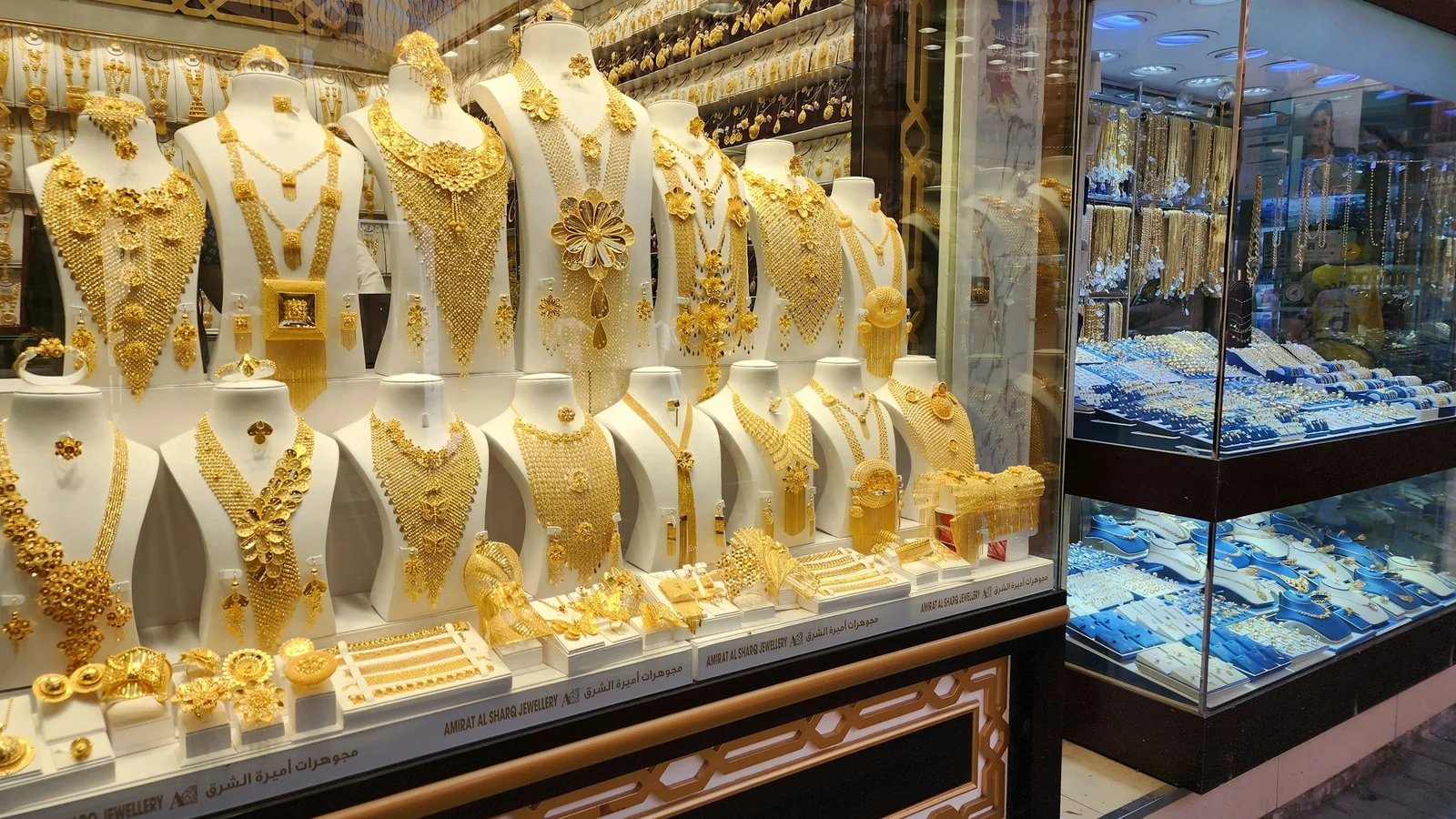
Dubai earned "City of Gold" honestly. It sits between the producing regions of Africa and Asia and the consuming markets of India, China and Europe; it has the refining capacity, the vaults, the exchange and the airport to move metal at scale; and it built a free zone, DMCC, specifically around commodities.
The 2026 picture:
- The UAE is the world's second-largest gold hub, and roughly 15% of the world's gold trade passes through Dubai, the majority via DMCC [1].
- The sector is large and formalised: 6,213 companies and 53 licensed refineries as of May 2026 [2].
- Trade value is enormous but reported inconsistently. UAE precious metals foreign trade was reported at roughly AED 625 billion (about USD 170 billion) for 2024, up 27% year on year; the Minister of Economy and Tourism cited AED 683 billion (about USD 186 billion) for the gold sector in the same period [2][7]. The figures differ by what they count, so treat the range rather than any single number as the honest answer.
- The infrastructure is unusually complete: DMCC's vault at Almas Tower (operated by Brink's) is described as the largest non-sovereign vault in the Middle East, DMCC Tradeflow turns stored metal into financeable warrants, and DGCX provides regulated derivatives [1][8].
Real Talk: Every one of those numbers is about volume, not margin. Wholesale bullion trades on spreads measured in fractions of a percent, and the market is deep, liquid and priced to the second. Dubai is a great place to run a gold business at scale. It is a poor place to discover that you do not have scale.
Which gold licence do you actually need?
This is the first fork, and it governs everything downstream: your tax, your VAT, your security obligations and your premises. Dubai licenses gold by what you do with it, not by the metal itself.
| Model | What it is | Key consequence |
|---|---|---|
| Bullion / precious metals wholesale | Trading bars, ingots and unset metal with other licensed businesses, banks and institutions. B2B | Can potentially access the free-zone 0% corporate tax rate. Investment-grade bullion is zero-rated for VAT |
| Jewellery trading (wholesale) | Selling finished pieces to other dealers and retailers. B2B | The precious metals reverse charge can apply between registered dealers |
| Jewellery retail | A shopfront selling finished pieces to consumers | Standard 5% VAT, no reverse charge, and no free-zone 0%. SIRA and hallmarking bite hardest here |
| Manufacturing | Casting, fabrication, refining | Industrial premises, plus Dubai Municipality and hallmarking sign-off |
The distinction that catches people: a wholesale or bullion activity is B2B and does not by itself let you sell to a walk-in customer. Running a Gold Souk shop needs a retail activity, or a licence carrying both [9].
Common Mistake: Assuming one "gold trading licence" covers bullion and a shop. It does not, and the difference is not cosmetic. As the tax sections below show, bullion wholesale and jewellery retail sit on opposite sides of both the VAT and the corporate tax line. Decide which business you are actually in before you pick an activity. Not sure which fits your model? Ask us→
A note on the activity codes themselves. The commonly cited DET codes are 4662.04 for wholesale of gold and precious metals, 4773.11 for jewellery retail, and 4669.07 and 4773.12 for precious stones. Those are consistent across multiple setup sources, but DET's own portal blocks automated checks and we could not verify them against the primary system, so confirm the exact code against DET's live activity search before you file [9].
Where should you set up: DMCC, mainland, or the Gold and Diamond Park?
| Jurisdiction | Best for | Notes |
|---|---|---|
| DMCC | International bullion and B2B wholesale | The centre of gravity: vault, Tradeflow, DGCX, refiners, banking reputation. Premium pricing. Gold sits behind an approved category with enhanced due diligence |
| Mainland (DET), including the Gold Souk | Retail shopfront selling to consumers and tourists | Physical shop and Ejari mandatory, SIRA approval and inspection required. Sells UAE-wide without a workaround |
| Gold and Diamond Park (Jebel Ali) | Vertically integrated manufacturing plus retail | Purpose-built fabrication blocks with gas distribution, extraction and acid disposal. Built for making things, not paper trading |
| Sharjah / RAK zones | Lower-cost entry | Cheaper, less banking prestige. We could not find gold-specific fee schedules for either, so get a written quote |
DMCC reportedly requires the shareholder or an employee to have prior gold-trade experience for the non-manufactured precious metals category, and applies enhanced due diligence on beneficial owners given the sector's risk profile. That is consistently reported but is not published on DMCC's own site, so treat it as a reported requirement and confirm with DMCC directly [8].
On the old free-zone-cannot-sell-to-the-mainland problem: Executive Council Resolution No. 11 of 2025 now lets Dubai free-zone companies operate on the mainland through a branch licence or remote branch permit without forming a second legal entity, and DMCC supports dual licensing [10]. That removes the corporate-structure barrier. It does not remove the regulatory one: SIRA, hallmarking and AML apply the same either way. Compare routes on our mainland company setup and free zone company setup pages.
Common Mistake: Confusing DMCC with DGCX. They are not the same thing and several guides blur them. DMCC is a free zone that issues your company licence. DGCX is a derivatives exchange, regulated by the Securities and Commodities Authority, where gold futures and spot contracts trade. A physical gold trading licence does not authorise you to trade derivatives, and exchange membership is a separate regime with its own requirements. If someone tells you your DMCC gold licence lets you trade gold futures, they are wrong.
Can a foreigner own 100% of a gold trading company?
Yes. Free zone companies at DMCC, JAFZA and the Gold and Diamond Park have always been 100% foreign-owned. On the mainland, the Commercial Companies Law reform (Federal Decree-Law No. 26 of 2020, consolidated by No. 32 of 2021) opened full foreign ownership to most activities, and trading, including gold and jewellery, is among them [36]. You do not need an Emirati partner, and you do not need a local service agent for a commercial trading LLC.
What you do need, which is a much higher bar than ownership, is to clear enhanced due diligence on your beneficial owners and satisfy a bank. In this sector, that is the real gate.
Is hallmarking mandatory?
Yes, and this is federal law rather than a trade convention. Federal Law No. 11 of 2015 governs trade in precious stones and metals and their stamping, and it applies across all seven emirates [4].
Every wrought precious metal article sold in the UAE must carry either an official UAE hallmark or a recognised foreign hallmark before it can legally be sold. Pieces too small or intricate to stamp must instead carry an identification card giving the equivalent purity information [4].
The purity standards codified in the law:
| Karat | Millesimal fineness |
|---|---|
| 24K | 999 |
| 22K | 916 |
| 21K | 875 |
| 18K | 750 |
The penalty for dealing in jewellery without proper hallmarking or certification runs to imprisonment of up to one year and a fine between AED 250,000 and AED 500,000 [4]. In Dubai, the Dubai Central Laboratory, part of Dubai Municipality, does the oversight and inspects retailers a minimum of three times a year; its Bareeq certification is a voluntary trust signal on top of that mandatory inspection [11].
Common Mistake: Buying stock on trust and worrying about hallmarking later. The obligation sits on the seller, and the penalty band starts at a quarter of a million dirhams. Source hallmarked stock, or get articles assayed by an accredited lab before they hit your display case.
The part nobody sells you: you are a DNFBP
If you take one section seriously, take this one. Gold and jewellery dealers are not lightly regulated traders. They are Designated Non-Financial Businesses and Professions, supervised by the Ministry of Economy and Tourism, and the compliance load is the defining feature of the sector.
The framework changed recently, and most guides have not caught up. Federal Decree-Law No. 20 of 2018 and Cabinet Decision No. 10 of 2019 were the old rules. They have been replaced by Federal Decree-Law No. 10 of 2025 (effective 14 October 2025) and Cabinet Resolution No. 134 of 2025 (effective 14 December 2025), the latter running to 71 articles and described by practitioners as the most detailed AML framework the UAE has produced [12][13]. If a guide is still citing the 2018 and 2019 instruments as current, it is out of date.
What you must actually do:
- Register on goAML, the Financial Intelligence Unit's portal. This is mandatory for every dealer in precious metals and stones, regardless of volume, and you appoint a compliance officer as part of it [14].
- Know the AED 55,000 line. You become a regulated dealer the moment you do a single transaction, or several linked transactions, at or above AED 55,000 in cash. That figure survived the 2025 overhaul and now sits in Article 3(3) of Cabinet Resolution 134/2025 [12][14].
- File the DPMSR (Dealers in Precious Metals and Stones Report) within two weeks of a triggering transaction. Triggers include cash at or above AED 55,000, international wires at or above AED 55,000, wire transfers via exchange houses at any amount, and instalment payments once they reach the threshold. Local UAE bank wires, cheques and intra-company transfers are exempt [14].
- File STRs on suspicion. The statutory standard is without delay. Operational guidance points at 24 to 48 hours, though sources differ on the exact expectation, so do not treat any single number as the rule; document your decision trail [14].
- Keep records for five years, and screen counterparties against sanctions and terror lists.
Real Talk: Regulators know DNFBPs under-report. Dealers have historically been the lowest STR-filing group despite being the largest population of registered entities, and inspections now actively challenge the claim that a dealer simply never saw anything suspicious. "We had nothing to report" is not a compliance position, it is a finding waiting to happen. Our UAE AML and CFT compliance guide covers the mechanics.
What does enforcement actually look like?
Not theoretical. This is the part that should shape your budget and your hiring.
- August 2024: the UAE suspended the licences of 32 gold refineries, roughly 5% of Dubai's refineries, after inspections found 256 violations: inadequate customer due diligence, failure to file suspicious transaction reports, and gaps in watchlist screening [15].
- First half of 2025: the Ministry of Economy and Tourism recorded 1,063 violations and over AED 42 million in fines across DNFBP sectors. Precious metals and gemstones traders accounted for 473 violations and AED 20 million, the largest single sector by both count and value, ahead of real estate [3].
- The fine schedule under Cabinet Resolution No. 71 of 2024 sets 41 distinct violations at AED 50,000 to AED 1,000,000 each [3].
- 12 May 2026: the Minister of Economy and Tourism personally toured the Dubai Gold Souq to assess compliance, stating that "there is no tolerance for money laundering in the UAE." The visit came with a package: a federal gold sector policy, a UAE Good Delivery Standard for gold, an Emirates Bullion Market Committee, a national trader database, a federal gold trading platform, and a dedicated AML task force for jewellers [2].
- The timing is not accidental. The UAE was on the FATF grey list from March 2022 until 23 February 2024, and a FATF follow-up review is scheduled for June 2026 [16].
Based on our experience, founders budget for the licence and forget that a compliance officer, a screening tool and a documented AML programme are the actual cost of entry in this sector. A sitting minister walking the Gold Souk a month before a FATF review is not a photo opportunity, it is a signal about where inspection attention is going.
Why is the scrutiny this heavy?
Because of where the metal has historically come from, and it is worth being straight about it rather than pretending the compliance regime is arbitrary.
Dubai's position as the leading refining and re-export hub has repeatedly drawn scrutiny over gold from conflict-affected and sanctioned origins. SWISSAID, a Swiss NGO, reports that the UAE imported 1,392 tonnes of gold in 2024, of which 748 tonnes came from Africa, up 18% year on year [17]. The Sentry, a US investigative NGO, has linked Dubai-based companies to laundering illicit Sudanese gold [18]. These are NGO and journalistic findings rather than court judgments, and they should be read that way. But they explain precisely why the regime described above exists, why it has tightened sharply since 2024, and why your bank will ask you questions a furniture importer never gets asked.
The formal answer to this is responsible sourcing. The Ministry of Economy's Due Diligence Regulations for Responsible Sourcing of Gold make OECD-aligned due diligence mandatory for UAE refiners, and Ministerial Decree No. 68 of 2024 (29 March 2024) extended a gold-specific due diligence policy across the supply chain, built on the OECD five-step framework, with refiners additionally required to appoint an independent third-party auditor [19]. DMCC layers its own Rules for Risk-Based Due Diligence on top, mandatory for DMCC-accredited members [8]. Note for balance that an OECD-linked alignment assessment has previously found DMCC's programme not aligned with the OECD guidance, so accreditation is not the same as a clean bill of health [20].
Only three refiners currently hold UAE Good Delivery accreditation: Al Etihad Gold Refinery DMCC, Emirates Gold DMCC, and SAM Precious Metals FZ-LLC [21]. For a new trader without mine relationships, buying refined bars from an accredited refiner that has already run due diligence on its own supply chain is the cleanest sourcing route available.
How does VAT work? The reverse charge that changed in 2025
Here is the first correction, and it is a big one. Most guides still describe the gold VAT reverse charge by reference to Cabinet Decision No. 25 of 2018. That decision has been repealed and replaced [5].
Cabinet Decision No. 127 of 2024 on the reverse charge mechanism for precious metals was gazetted on 27 December 2024 and took effect in late February 2025 (sources differ by a day on the exact date, so confirm if it matters to a specific supply) [5]. It widened the scope considerably:
| Old (CD 25/2018) | Current (CD 127/2024) | |
|---|---|---|
| Precious metals | Gold | Gold, silver, palladium, platinum |
| Precious stones | Diamonds | Natural and synthetic diamonds, pearls, rubies, sapphires, emeralds |
| Jewellery | Products where gold/diamonds are the principal component | Items where the value of the precious metal or stone component exceeds the value of the other components |
The conditions for the reverse charge to apply between two registered businesses [5]:
- The recipient holds a valid UAE VAT registration.
- The recipient intends to resell the goods, or use them to produce or manufacture further precious metals, stones or jewellery.
- The recipient gives the supplier a written declaration to that effect before the date of supply.
- The supplier verifies the recipient's registration and retains the declaration as evidence.
If any condition fails, the reverse charge does not apply and the supplier must charge 5% in the normal way. The change is not retrospective: supplies before the effective date are governed by the old gold-and-diamonds-only rules [5].
Real Talk: The reverse charge is not an exemption, and guides that call it one are misleading you. The VAT does not vanish. The obligation moves: the buyer self-accounts, declaring the output tax and recovering it as input tax in the same return, so the cash effect is usually nil but the disclosure is not optional. Your invoice must show the supply with VAT at nil and state that the reverse charge applies. "Exempt" and "reverse-charged" are different words with different consequences, and an auditor knows the difference even if your bookkeeper does not.
Pro Tip: The written declaration is not paperwork you can back-fill. It has to exist before the supply, and the supplier has to have verified the buyer's registration. If you are the supplier and you skipped it, you owe the 5% regardless of what the buyer intended. Build the declaration and the registration check into your sales process, not into your year-end tidy-up.
Does the reverse charge apply to a retail customer?
No, and this is where the whole business splits in two.
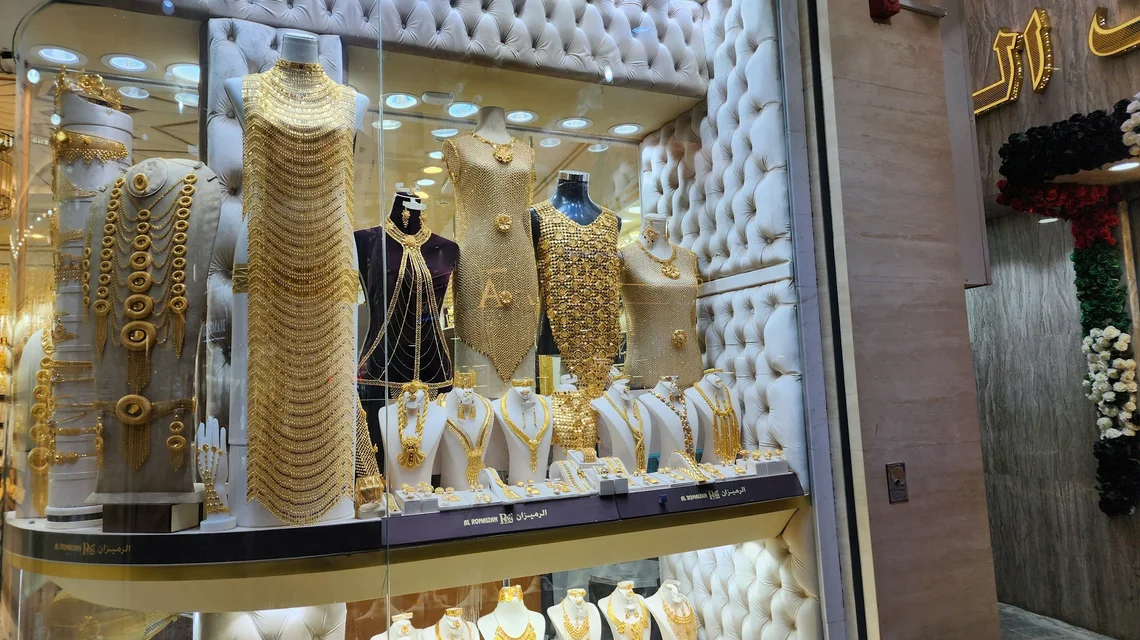
The reverse charge works only between VAT-registered businesses. A tourist buying a necklace in the Gold Souk is not VAT-registered, so the conditions cannot be met. Retail sales to consumers are standard-rated at 5% on the full invoice, full stop [5].
That single fact is why a bullion desk and a jewellery shop are, in tax terms, two different businesses that happen to handle the same metal.
The making charge trap: how you write the invoice changes the tax
This is the most technical point in the guide and the one competitors miss entirely. The FTA has revised its position three times, which tells you how easy it is to get wrong.
| Clarification | Position |
|---|---|
| VATP029 (June 2022) | The reverse charge applies to goods, not services. A separately charged making fee is a supply of services and is always standard-rated |
| VATP032 (November 2022, replaced VATP029) | Where the supplier charges a single all-inclusive price for the item and the making service, it is a single composite supply of goods and the whole amount can be reverse-charged |
| VATP043 (issued with the 2024 decision taking effect) | Restates the composite-versus-multiple-supply test for the new wider regime |
The practical rule that falls out of it [5][22]:
- Single all-inclusive price, B2B conditions met → the reverse charge applies to the whole amount.
- Making charge itemised separately → only the goods portion is reverse-charged; the making charge is standard-rated 5% charged by you in the normal way.
- Selling to a consumer → none of this matters. It is 5% on everything.
Quick Math: Two jewellers sell an identical AED 100,000 piece to the same VAT-registered dealer. One invoices a single price and reverse-charges the lot. The other itemises AED 85,000 of gold and AED 15,000 of making, and must charge 5% on the making line. Same piece, same buyer, different VAT outcome, decided purely by invoice format. Get your invoice template reviewed before you issue a thousand of them. Note also that VATP032 does not apply to gold that already qualifies for zero-rating as investment metal, which brings us to the next section.
Investment-grade bullion is zero-rated. Jewellery is not.
The single cleanest tax advantage in this sector, and it is narrow by design.
Article 45 of the VAT Decree-Law zero-rates investment precious metals. To qualify, metal must meet both conditions [23]:
- It is gold, silver or platinum, and
- it has a purity of 99% or greater, and
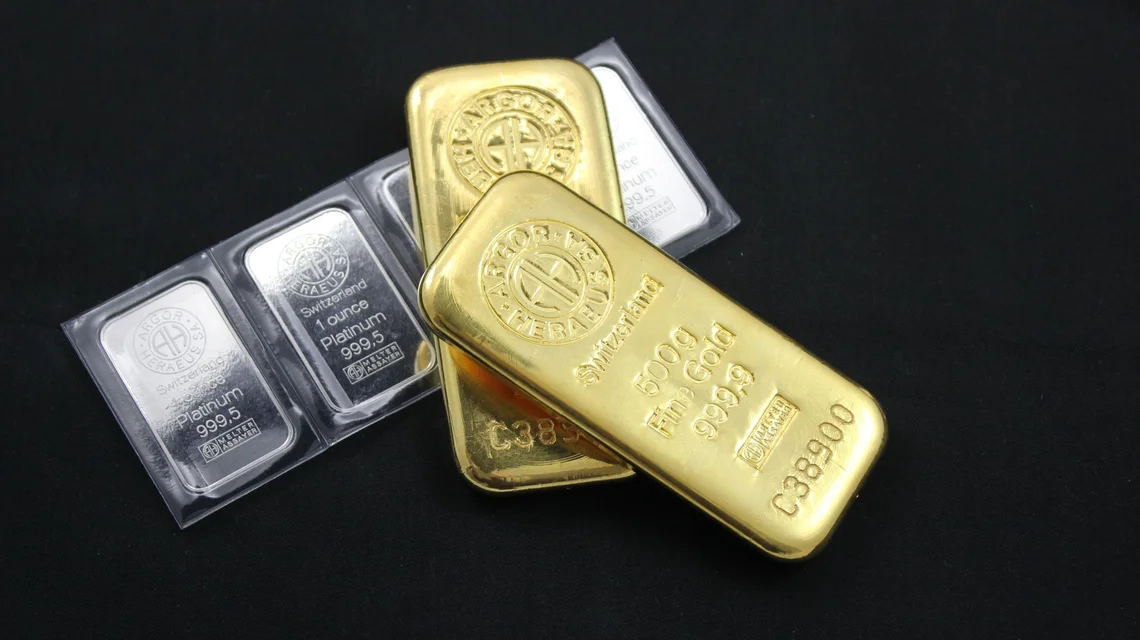
- it is in a form tradeable on global bullion markets (bars, ingots, wafers, qualifying coins).
Get both right and the supply is genuinely 0%, not exempt, so you keep full input tax recovery on related costs.
Two contrasts worth internalising:
- Palladium can be reverse-charged but can never be zero-rated. It is in the widened reverse-charge scope under CD 127/2024, but it is not in the investment-metals definition [5][23].
- Jewellery is nowhere near the line. 22K is 916 fine and 18K is 750 fine. Both are far below 99%, and a necklace is not a bullion-market form. Jewellery is 5%, always.
Common Mistake: Confusing 99% with 99.5%. Several guides state the zero-rating threshold as 99.5%, and it is not. 99% is the tax threshold in the Executive Regulations. 99.5% (995 fine) is the Good Delivery bar standard, a physical quality benchmark for 1kg bars, which is a completely different thing serving a completely different purpose. One decides your VAT treatment; the other decides whether a refinery's bars are accepted as deliverable. Do not let an adviser merge them, and do not assume a bar that fails Good Delivery therefore fails zero-rating.
Pro Tip: The zero-rating is about purity and form, not intent. You cannot make a ring zero-rated by calling it an investment. If your model is genuinely investment bullion, that is a real and material tax advantage; if it is jewellery, build your pricing around 5% and stop looking for a way out of it.
The free-zone 0% corporate tax rate: this time it actually works
We have written recently that free-zone 0% does not work for travel agencies or holiday homes. Gold is the exception, on one side of the business, and it is worth understanding exactly where the line falls.
The baseline first: a Dubai gold company pays 9% corporate tax on taxable income above AED 375,000, and 0% below [24]. Small Business Relief can zero that out for a business under AED 3 million of revenue for tax periods ending on or before 31 December 2029, and honestly, a real gold trader will blow past AED 3 million of revenue almost immediately at current metal prices [25].
Now the interesting part. "Trading of Qualifying Commodities" is one of the Qualifying Activities for a Qualifying Free Zone Person under Ministerial Decision No. 229 of 2025 [6]. Qualifying Commodities covers metals, minerals, energy and agricultural commodities and their by-products, provided a Quoted Price exists for them. MD 229 dropped the old requirement that commodities be "in raw form," which widened things, but it added a decisive exclusion:
Qualifying Commodities exclude products packaged for retail sale.
Put that together with the other rule, that transactions with natural persons are an Excluded Activity, and the split is stark:
| Activity | Free-zone 0%? | Why |
|---|---|---|
| Bullion and unset metal, B2B wholesale, priced off a quoted benchmark | Potentially yes | Trading of Qualifying Commodities |
| Finished jewellery sold to consumers | No, twice over | Retail-packaged goods are excluded, and selling to natural persons is an Excluded Activity in its own right |
Real Talk: This is why serious Dubai gold groups run bullion trading and retail jewellery as separate legal entities. It is not tax avoidance, it is structural: one revenue stream qualifies and the other cannot, and mixing them in one entity puts the qualifying income at risk (see the de minimis cliff below). If you plan to do both, plan the structure on day one, because unpicking it later is expensive. Our UAE corporate tax filing guide has the wider regime, and our general trading company guide covers the commodity-trading route more broadly.
One caveat we will state plainly: MD 229's text names "metals" generically rather than listing gold by name. Every advisory reading treats gold as covered and the industry operates on that basis, which we think is right, but it is an inference from the category rather than a verbatim citation. Get a written eligibility view from a tax adviser against your actual model before you rely on it.
How do you evidence the "Quoted Price"? An honest open question
Here is something we could not resolve, and we would rather flag it than paper over it, because it is a live compliance question for anyone chasing the 0%.
Qualifying Commodities status depends on a Quoted Price existing. Ministerial Decision No. 230 of 2025 names the Recognised Price Reporting Agencies whose published prices count: S&P Global Commodity Insights (Platts and Fertecon), Argus Media, ICIS, OPIS, RIM Intelligence, CRU Group, Quantum Commodity Intelligence, Fastmarkets, General Index, ICE, MONTEL, Spark Commodities and Expana [26].
Look at that list. It is dominated by energy and industrial-commodity reporters. There is no gold or bullion benchmark on it, and no LBMA. The alternative route in the rules is a Recognised Commodity Exchange Market, which would plausibly cover an exchange such as DGCX, but we could not find a definitive named list equivalent to MD 230's.
Common Mistake: Assuming the 0% is automatic because you trade gold. The qualifying test runs through a Quoted Price, and how a gold trader formally evidences that is genuinely not obvious from the published decisions. Ask your adviser this specific question, in writing, before you file on the basis of the 0%.
The de minimis cliff
Whatever you do, respect this one, because it is unforgiving.
A Qualifying Free Zone Person may have non-qualifying revenue up to the lower of 5% of total revenue or AED 5 million. Breach it, or fail any other QFZP condition, and you lose the status entirely: you are taxed at 9% on your whole income, not just the offending slice, for that tax period and the following four [6].
That is five years at 9% on everything. For a bullion trader with a legitimately qualifying core business, letting a modest retail jewellery line creep over the cap is a way to lose the 0% on the entire desk. This is the mechanical reason for the separate-entities structure above.
Do you pay customs duty on gold?
Generally reported as: raw and unwrought gold (HS heading 7108) is exempt from the 5% GCC customs duty, while finished jewellery attracts the standard 5% on import, plus VAT on the duty-inclusive value [27].
We are flagging this one as weaker than the rest of this guide. We could not confirm it against Dubai Customs' own tariff schedule or the GCC Unified Customs Tariff directly, and the sourcing is secondary. Treat it as the working position and confirm the specific HS code with your customs broker before you build a landed-cost model on it. Our import and export business guide covers the general customs mechanics.
How much does it cost to set up?
Honest health warning first: nearly every figure published for this sector comes from setup consultancies rather than from DMCC's or DET's own fee schedules, which are not openly accessible, and the sources disagree by wide margins. Treat the itemised numbers below as indicative and get a written quote.
| Route | Indicative Year 1 (AED) | Notes |
|---|---|---|
| DMCC (bullion, flexi-desk, 1 visa) | ~55,000 – 70,000 | Government fees alone run ~34,000 to 36,000 (application, registration, MOA, licence, establishment card). Excludes share capital and bank balance |
| Gold and Diamond Park / JAFZA | ~40,000 – 55,000 | Licence from ~5,000 (Type 1) to ~8,500 (Type 2); bundle includes registration, lease and one visa |
| Mainland (DET) retail shop | ~25,000 – 70,000+ | Wide range, driven by shop fit-out. Ejari mandatory, SIRA approval and inspection required |
| Sharjah / RAK | Not reliably itemised | No gold-specific fee schedule found. Get a quote |
DMCC also has a minimum share capital of AED 50,000, plus a separate bank minimum balance. One source claims the capital is withdrawable straight after deposit; we could not confirm that, and since it materially changes your effective cost, ask DMCC directly rather than assuming.
Things we could not price, and neither can anyone else publicly: vault and storage fees (DMCC Vault, Brink's, Transguard all quote on enquiry only), the SIRA application fee itself, and retail shop fit-out. If a guide gives you a confident number for vault storage, ask where it came from.
Quick Math: The licence is the small number. Your real capital is inventory. Gold is the most expensive stock you can hold per square metre, it has to be insured, vaulted and secured, and it has to be hedged. A jewellery counter might start at tens of thousands of dollars of stock; a bullion desk needs millions. Budget the metal and the compliance function first, then the licence. Get a free setup quote→
Security: SIRA and what a shop actually needs
SIRA approval is required before a gold or jewellery licence is finalised, and it involves a physical inspection of the premises. A DMCC flexi-desk company holding no physical stock may fall outside it in practice, but anything handling metal on site does not [8].
Commonly cited requirements include CCTV covering entrances, exits, display areas, registers and the safe, on SIRA-approved hardware with defined resolution and retention; a high-security safe with controlled access; panic buttons accessible to staff but not visible to customers; and forced-entry-resistant shopfront glass. Those specifics come from security integrators rather than from SIRA's published text, so treat the exact numbers as reported rather than as regulation, and get your spec from a SIRA-approved provider [28].
Banking: the hardest part
Be realistic. Gold is among the hardest sectors to bank in the UAE, and this is the failure mode that kills businesses independent of whether they can trade.
The UAE's own risk assessment places the precious metals dealer sector among the highest inherent money-laundering vulnerabilities of any sector, because metal is high-value, liquid, portable and easy to move [29]. Banks respond with enhanced due diligence as standard, and de-risking is real: accounts do get closed.
What banks want: your trade licence, tenancy, shareholder identification, a documented AML programme, a named compliance officer, source-of-funds evidence, a clear description of your trading model, and often sample invoices or contracts. Expect 10 to 30 working days and minimum balances reported in the AED 100,000 to 500,000 range, though that is indicative rather than published policy [29].
The useful news is that a few banks actively court the sector precisely because most avoid it. RAKBank markets itself as a full-service bank for gold products with dedicated wholesale solutions, and Emirates NBD has launched a physical cross-border bullion service aligned to UAE Good Delivery [30]. Picking the right bank relationship early is a genuine competitive advantage here. If you have been rejected before, our guide on overcoming bank account rejection walks through the fixes.
Common Mistake: Treating the bank as a formality to sort out after the licence. In this sector it is the binding constraint. Prepare the AML programme and the source-of-funds file before you apply, and assume you will be asked harder questions than any other trading business would face.
Where does the money actually come from?
Thin margins, honestly stated.
Bullion is a spread business. Wholesale and interbank gold trades on spreads of roughly 0.10% to 0.20%; retail-scale coins and small bars run wider, roughly 2% to 4% [31]. That is closer to market-making than to commerce. It rewards volume, funding and execution, and it punishes anyone who thinks they will make money on the metal itself.
Retail makes money on making charges, not on gold. The gold component is close to a pass-through: the Dubai Gold and Jewellery Group publishes the rate three times a day (09:00, 13:30 and 18:00), and consumer protection rules require the rate to be displayed and the making charge itemised separately on the receipt [32]. Your margin is the making charge:
| Piece | Making charge |
|---|---|
| Simple machine-made chains and bangles | ~AED 15 – 25 per gram, or ~3% – 8% of gold value |
| Handcrafted and traditional designs | ~AED 30 – 60 per gram, or ~8% – 15% |
| Complex, antique or branded designs | ~AED 60+ per gram, or ~15% – 35% |
Those ranges come from consumer-facing sources rather than an official schedule, and making charges are negotiable, so treat them as directional [32].
Demand is shifting, and the direction matters. World Gold Council data shows UAE gold jewellery demand fell from 34.7 tonnes in 2024 to 29.4 tonnes in 2025, down 15%, as record prices deterred buyers, while bar and coin investment demand rose 24% to 14.8 tonnes [33]. Total UAE demand was 44.2 tonnes, down 4%. High prices are moving money out of adornment and into investment. If you are choosing which side of this business to enter, that is a real signal.
How do you manage price risk?
You hedge, or you are running a directional bet you did not intend to make. Gold has moved roughly 30% in a single year in both directions historically, and unhedged inventory turns a trading business into a speculation.
The tools are forwards, futures and options, and locally the Dubai Gold and Commodities Exchange (DGCX), regulated by the Securities and Commodities Authority, is the venue. A genuinely new 2026 development: on 22 June 2026 DGCX launched the GCC's first same-day (T+0) spot gold contract, based on 1kg UAE Good Delivery gold and settled in dirhams, which lets local traders hedge without taking on dollar exposure [34].
Pro Tip: If your business plan does not have a hedging line in it, it is not a gold trading plan. Decide before you buy inventory whether you are taking price risk deliberately or accidentally. The traders who blow up are rarely wrong about gold; they are usually just unhedged and undercapitalised when it moves against them.
Why do gold businesses fail in Dubai?
The specific ways this ends:
- Compliance failure. Losing your licence or getting suspended, as 32 refineries did in 2024, ends the business regardless of how well you trade [15].
- Banking de-risking. An account freeze or closure over AML concerns is a real, common way to die here [29].
- Undercapitalisation. Bullion at a 0.15% spread needs volume that needs funding. Most entrants have neither.
- Unhedged inventory in a volatile metal.
- Assuming the free-zone 0% applies to everything, then losing QFZP status for five years by breaching de minimis with retail income.
- Invoice and VAT errors on making charges compounding quietly across a year of sales.
- Buying unhallmarked stock and meeting the AED 250,000 to 500,000 penalty band [4].
- Competing with the Gold Souk on price. You will not out-price a market with hundreds of shops, transparent daily rates and generational supplier relationships.
What are the steps and timeline?
- Decide bullion or retail (or plan both as separate entities from the start).
- Choose jurisdiction and reserve the trade name.
- Get the gold category approved and clear enhanced due diligence on your beneficial owners.
- Secure premises: DMCC office or flexi-desk, or an Ejari-registered shop for mainland retail.
- Complete SIRA approval and inspection if you handle physical stock.
- Issue the licence, then register with Dubai Chambers.
- Open the bank account. Start early, this is the bottleneck at 2 to 6 weeks or longer.
- Register on goAML as a DPMS, appoint your compliance officer, and stand up CDD and screening before you transact.
- Arrange vaulting and insurance if you hold metal.
Realistic timeline: roughly 30 to 60 days end to end for DMCC including the bank account, with the licence itself much faster than that. The Gold and Diamond Park route issues a licence in 7 to 10 business days with full setup in 6 to 8 weeks. We could not find a reliable itemised figure for mainland retail, since shop fit-out and SIRA scheduling dominate. Our post-setup services team runs the licence, SIRA, banking and goAML steps in parallel.
What documents do you need?
- Passport and Emirates ID or visa copies for shareholders, and a No Objection Certificate if resident
- Trade name reservation and initial approval
- Evidence of gold-trade experience for the shareholder or a named employee, where the category requires it
- Notarised Memorandum of Association, and Ejari-registered tenancy for mainland
- SIRA approval and a security provider certificate, where physical stock is handled
- A documented AML programme, a named compliance officer, and goAML registration
- Source-of-funds evidence and a clear business model description for the bank
See our documents required for mainland business setup guide for the general pack.
Real Client Stories
These are real examples from businesses we have helped set up. Names have been changed for privacy.
Rakesh's one entity, two businesses (DMCC and Dubai mainland)
Rakesh set up a single DMCC company intending to trade bullion wholesale and open a retail counter under the same licence. His adviser flagged that the retail income was both retail-packaged and sold to natural persons, so it could not qualify, and that letting it grow past the de minimis cap risked the 0% on his bullion desk for five years. We restructured into two entities before he traded. His tip: "One licence looked simpler and would have cost me the zero percent on the whole business. Ask which of your revenue lines actually qualifies before you incorporate."
Fatima's invoice template (Dubai mainland)
Fatima sold finished pieces wholesale to other registered dealers and itemised gold and making charges separately on every invoice, out of habit from her old market. She had been reverse-charging the whole amount. Because the making charge was separately priced, it was a service and should have carried 5%. We corrected the template and her position with her adviser. Her advice: "Nobody told me the layout of my invoice decided the tax. Get the template reviewed before you issue a thousand of them."
Hassan's bank account (DMCC)
Hassan had his DMCC licence and his stock lined up, and could not open a bank account for four months. He had treated AML as something to do once trading started. We built the programme first, appointed a compliance officer, documented his sourcing from an accredited refiner, and moved him to a bank that actively serves the sector. His takeaway: "The licence took days. The bank took months, and it only moved once I could show a real compliance file. In gold, that file is the business."
Start your Dubai gold trading company the right way
Gold in Dubai is a genuinely good business in the world's second-largest hub, but it is a supervised one, and it rewards operators who respect that. Decide whether you are in bullion or retail, because the tax, the VAT and the security rules split at that line. Source hallmarked stock. Build the AML function before you trade, not after your bank asks. Get your invoice template right. Hedge your inventory. And if you plan to do both bullion and retail, structure it as two entities on day one.
Since 2013, BusinessDubai.ae has completed 700+ company registrations across the UAE, including gold, jewellery and precious metals traders, with transparent itemised pricing and no hidden fees. We will confirm which activity and jurisdiction fit your model, handle DMCC or DET licensing, SIRA and hallmarking compliance, get your goAML registration and AML programme in place, and open a bank account with a bank that actually serves this sector. Talk to a setup expert→ for a clear plan. For the neighbouring trade, see our diamond trading business guide.
Ready to set up your gold or jewellery trading company in Dubai the right way? Our licensed advisors handle the licence, SIRA approval, hallmarking, goAML registration, AML programme, visas and bank account end to end, with transparent, fixed fees.
Get started free→Worth reading next: Set Up a Gold Refinery in Dubai, UAE: Good Delivery Accreditation, Responsible-Sourcing Audits & Tax (2026)
Frequently Asked Questions
How much does it cost to set up a gold trading company in Dubai?
Indicatively AED 55,000 to 70,000 in year one for a lean DMCC bullion setup on a flexi-desk with one visa, of which roughly AED 34,000 to 36,000 is government fees, excluding the AED 50,000 share capital and bank balance. Gold and Diamond Park runs roughly AED 40,000 to 55,000, and a mainland retail shop AED 25,000 to 70,000-plus depending on fit-out. Inventory and compliance cost far more than the licence.
Do I need a special licence to trade gold in Dubai?
Yes, and which one depends on your model. Bullion and precious metals wholesale is a B2B activity and does not let you sell to walk-in customers; jewellery retail needs a retail activity; manufacturing needs industrial premises. DMCC gates gold behind an approved category with enhanced due diligence on beneficial owners.
Is DMCC the best free zone for gold trading?
For international bullion and B2B wholesale, yes, because the vault, Tradeflow, DGCX, the refiners and the banking relationships are all there. It is the premium option on price. Gold and Diamond Park suits manufacturing plus retail, and mainland suits a Gold Souk shopfront selling directly to consumers.
Can a free zone gold company sell jewellery retail to UAE consumers?
Structurally yes since Executive Council Resolution No. 11 of 2025, which lets Dubai free-zone companies operate on the mainland via a branch licence or remote branch permit without a second entity, and DMCC supports dual licensing. But the regulatory obligations do not change, and retail income cannot access the free-zone 0% corporate tax rate.
Can a foreigner own 100% of a gold trading company in Dubai?
Yes. Free zone companies at DMCC, JAFZA and the Gold and Diamond Park are 100% foreign-owned by design, and since the 2020/2021 Commercial Companies Law reform a mainland trading LLC, including gold and jewellery, can be wholly foreign-owned with no Emirati partner and no local service agent. Ownership is the easy part; clearing enhanced due diligence and a bank is the real gate.
Is DGCX the same as DMCC?
No, and conflating them is a common error. DMCC is a free zone that issues your company licence. DGCX is a derivatives exchange regulated by the Securities and Commodities Authority where gold futures and spot contracts trade. A physical gold trading licence does not authorise you to trade derivatives, and exchange membership is a separate regime with its own requirements.
Is hallmarking mandatory in the UAE?
Yes. Federal Law No. 11 of 2015 requires every wrought precious metal article sold in the UAE to carry an official UAE hallmark or a recognised foreign hallmark, with an identification card for pieces too small to stamp. Penalties run to imprisonment of up to one year and fines of AED 250,000 to AED 500,000.
What are the UAE gold purity standards?
The law codifies millesimal fineness: 999 for 24K, 916 for 22K, 875 for 21K and 750 for 18K. In Dubai the Dubai Central Laboratory oversees hallmarking and inspects retailers at least three times a year; its Bareeq certification is a voluntary trust signal on top of that mandatory inspection.
Is gold tax free in Dubai?
No, and this is the most common myth in the sector. Investment-grade bullion (gold, silver or platinum at 99%-plus purity in a tradeable form) is zero-rated, and B2B supplies between registered dealers can be reverse-charged, but retail jewellery sales to consumers are standard-rated at 5% VAT, and corporate tax is 9% above AED 375,000 unless you qualify for a free-zone exemption.
What is the gold VAT reverse charge in the UAE?
A mechanism where a VAT-registered supplier does not charge VAT and the VAT-registered buyer self-accounts instead. It applies only between registered businesses where the buyer intends to resell or manufacture, gives a written declaration before the supply, and the supplier verifies the buyer's registration and keeps the declaration.
Has the gold reverse charge changed?
Yes. Cabinet Decision No. 25 of 2018 was repealed and replaced by Cabinet Decision No. 127 of 2024, gazetted 27 December 2024 and effective in late February 2025. Scope widened from gold and diamonds to gold, silver, palladium and platinum, plus natural and synthetic diamonds, pearls, rubies, sapphires and emeralds, and jewellery where the precious component exceeds the value of the other components. Guides citing only the 2018 decision are out of date.
Does the reverse charge apply to retail customers?
No. It works only between VAT-registered businesses. A consumer is not registered, so the conditions cannot be met and the retailer charges 5% VAT on the full invoice. This is why bullion wholesale and jewellery retail behave like two different businesses.
How are making charges taxed?
It depends on how you invoice. If you charge a single all-inclusive price and the B2B conditions are met, the whole supply can be reverse-charged. If the making charge is itemised separately, it is a supply of services and carries standard 5% VAT that you charge in the normal way. To a retail customer it is 5% either way.
What is investment precious metal for VAT?
Gold, silver or platinum with a purity of 99% or greater that is in a form tradeable on global bullion markets, such as bars, ingots, wafers or qualifying coins. Both conditions must be met. Qualifying supplies are zero-rated, so you keep full input tax recovery.
Is the VAT zero-rating threshold 99% or 99.5%?
99%. Several guides state 99.5% and are wrong. The Executive Regulations set investment precious metals at 99% purity or greater in a form tradeable on global bullion markets. 99.5% (995 fine) is the Good Delivery bar standard, a physical quality benchmark for 1kg bars serving an entirely different purpose. One decides your VAT treatment, the other decides whether a refiner's bars are accepted as deliverable.
Is reverse charge the same as being exempt from VAT?
No. The VAT does not disappear; the obligation moves to the buyer, who self-accounts by declaring output tax and recovering it as input tax in the same return. The cash effect is usually nil, but the disclosure is mandatory and the invoice must show VAT at nil and state that the reverse charge applies. Exempt and reverse-charged are materially different positions.
Is palladium zero-rated?
No. Palladium is inside the widened reverse-charge scope under Cabinet Decision No. 127 of 2024, but it is not in the investment precious metals definition, which covers only gold, silver and platinum. So palladium can be reverse-charged B2B but never zero-rated.
Is gold jewellery zero-rated for VAT?
No. Zero-rating needs 99%-plus purity and a bullion-market form. 22K is 916 fine and 18K is 750 fine, both far below the threshold, and a necklace is not a tradeable bullion form. Jewellery is standard-rated at 5%.
Can a gold trading company get 0% corporate tax in a free zone?
For bullion, potentially yes. Trading of Qualifying Commodities is a Qualifying Activity under Ministerial Decision No. 229 of 2025, so B2B wholesale of metal priced off a quoted benchmark can qualify. For retail jewellery, no: Qualifying Commodities exclude products packaged for retail sale, and transactions with natural persons are an Excluded Activity.
Why do gold groups use separate companies for bullion and retail?
Because one revenue stream can qualify for the free-zone 0% and the other cannot, and mixing them risks the qualifying income. Non-qualifying revenue is capped at the lower of 5% of revenue or AED 5 million; breach it and you lose Qualifying Free Zone Person status, paying 9% on your entire income for that year and the next four.
How does a gold trader evidence the Quoted Price for the 0%?
This is genuinely unclear and worth asking your adviser directly. Ministerial Decision No. 230 of 2025 lists the Recognised Price Reporting Agencies, and that list is dominated by energy and industrial commodity reporters with no gold or bullion benchmark on it. The alternative is a Recognised Commodity Exchange Market, which would plausibly cover DGCX, but no definitive named list equivalent to MD 230's was found.
Do I pay customs duty on importing gold?
Raw and unwrought gold is generally reported as exempt from the 5% GCC customs duty, while finished jewellery attracts the standard 5% plus VAT on the duty-inclusive value. We could not confirm this against Dubai Customs' own tariff schedule, so confirm your specific HS code with a customs broker before modelling landed cost.
Am I a DNFBP as a gold trader?
Yes. Dealers in precious metals and stones are a designated non-financial business supervised by the Ministry of Economy and Tourism. You must register on goAML regardless of volume, appoint a compliance officer, run customer due diligence, screen against sanctions lists, file reports and keep records for five years.
What is the AED 55,000 rule?
You become a regulated dealer the moment you conduct a single transaction, or several linked transactions, at or above AED 55,000 in cash. That triggers full customer due diligence, and the figure is now in Article 3(3) of Cabinet Resolution No. 134 of 2025. It did not change in the 2025 overhaul.
What is a DPMSR and when do I file it?
The Dealers in Precious Metals and Stones Report, filed through goAML within two weeks of a triggering transaction. Triggers include cash at or above AED 55,000, international wires at or above AED 55,000, wire transfers via exchange houses at any amount, and instalments reaching the threshold. Local UAE bank wires, cheques and intra-company transfers are exempt.
Did the UAE AML law change recently?
Yes, and most guides have not caught up. Federal Decree-Law No. 20 of 2018 and Cabinet Decision No. 10 of 2019 were replaced by Federal Decree-Law No. 10 of 2025, effective 14 October 2025, and Cabinet Resolution No. 134 of 2025, effective 14 December 2025. The new executive regulation runs to 71 articles and is the most detailed AML framework the UAE has issued.
How serious is AML enforcement for gold traders?
Very. In August 2024 the UAE suspended 32 gold refinery licences after 256 violations. In the first half of 2025 the Ministry recorded 473 violations and AED 20 million in fines against precious metals and gemstones traders, the largest of any DNFBP sector, ahead of real estate. Fines run AED 50,000 to AED 1,000,000 per violation.
What happened in May 2026?
On 12 May 2026 the Minister of Economy and Tourism toured the Dubai Gold Souq to assess compliance and said there is no tolerance for money laundering in the UAE. The visit came with a federal gold sector policy, a UAE Good Delivery Standard, an Emirates Bullion Market Committee, a national trader database, a federal gold trading platform and an AML task force for jewellers, ahead of a FATF follow-up review scheduled for June 2026.
Is it hard to open a bank account for a gold trading company?
Yes, it is among the hardest sectors to bank in the UAE. The country's own risk assessment places precious metals dealers among the highest inherent money-laundering vulnerabilities of any sector, so enhanced due diligence is standard and de-risking is real. Expect 10 to 30 working days, and prepare an AML programme and source-of-funds file before applying. RAKBank and Emirates NBD are among the banks that actively serve the sector.
What margin does gold trading actually make?
Thin. Wholesale and interbank bullion trades on spreads of roughly 0.10% to 0.20%; retail coins and small bars run 2% to 4%. Retail jewellers make money on making charges, not gold, which is close to a pass-through at the rate the Dubai Gold and Jewellery Group publishes three times daily. Volume, funding and execution matter more than the metal.
What are making charges in Dubai?
The craftsmanship fee added to the gold value. Roughly AED 15 to 25 per gram (about 3% to 8%) for simple machine-made pieces, AED 30 to 60 per gram (8% to 15%) for handcrafted designs, and AED 60-plus per gram (15% to 35%) for complex or branded work. They are negotiable, and consumer rules require them itemised separately with the daily gold rate displayed.
How do gold traders hedge price risk?
With forwards, futures and options, locally through the Dubai Gold and Commodities Exchange, regulated by the Securities and Commodities Authority. On 22 June 2026 DGCX launched the GCC's first same-day (T+0) spot gold contract, based on 1kg UAE Good Delivery gold and settled in dirhams, letting local traders hedge without dollar exposure. Unhedged inventory is a directional bet, not a trading business.
Which refiners hold UAE Good Delivery accreditation?
Three at present: Al Etihad Gold Refinery DMCC, Emirates Gold DMCC and SAM Precious Metals FZ-LLC. For a new trader without mine relationships, buying refined bars from an accredited refiner that has already done due diligence on its own supply chain is the cleanest sourcing route.
Is UAE gold demand growing?
It is shifting rather than growing. World Gold Council data shows UAE gold jewellery demand fell from 34.7 tonnes in 2024 to 29.4 tonnes in 2025, down 15% as record prices deterred buyers, while bar and coin investment demand rose 24% to 14.8 tonnes. Total demand was 44.2 tonnes, down 4%. High prices are moving money from adornment into investment.
What are the ongoing costs and obligations?
Annual licence renewal, office or shop rent, vault and insurance if you hold metal, the compliance function (officer, screening tool, audits), corporate tax registration and annual filing (required even at 0%), VAT returns with careful reverse-charge treatment, goAML reporting, UBO filings, and SIRA and hallmarking compliance. Note that Economic Substance Regulations no longer apply for financial years ending after 31 December 2022.
References
[1] DMCC. Dubai's share of the world gold trade (approximately 15%), the DMCC gold ecosystem, the DMCC Vault at Almas Tower operated by Brink's, DMCC Tradeflow warrants, and DMCC member numbers. dmcc.ae
[2] Ministry of Economy and Tourism and UAE media coverage (May 2026). The Minister's inspection of the Dubai Gold Souq on 12 May 2026, the "no tolerance for money laundering" statement, sector scale of 6,213 companies and 53 licensed refineries, 2024 gold trade value cited at AED 683 billion, and the announced federal gold sector policy, UAE Good Delivery Standard, Emirates Bullion Market Committee, national trader database, federal gold trading platform and jewellers' AML task force. moet.gov.ae and wam.ae
[3] Ministry of Economy and Tourism. H1 2025 inspection results: 1,063 violations and over AED 42 million in fines across DNFBP sectors, of which precious metals and gemstones traders accounted for 473 violations and AED 20 million. Penalty schedule under Cabinet Resolution No. 71 of 2024 (41 violations, AED 50,000 to AED 1,000,000 each). moet.gov.ae
[4] UAE Government. Federal Law No. 11 of 2015 concerning monitoring trade in precious stones and precious metals and their stamping, and its Executive Regulations: mandatory hallmarking, recognised foreign hallmarks, identification cards for small articles, the millesimal fineness standards (999 / 916 / 875 / 750), and penalties of imprisonment up to one year and fines of AED 250,000 to AED 500,000. uaelegislation.gov.ae
[5] UAE Cabinet and Federal Tax Authority. Cabinet Decision No. 127 of 2024 on the Reverse Charge Mechanism for Precious Metals, gazetted 27 December 2024 and effective in late February 2025 (sources differ by one day), repealing Cabinet Decision No. 25 of 2018; the widened scope of precious metals, precious stones and jewellery; the conditions including the written declaration before the date of supply; and FTA Public Clarification VATP043 on application between registrants and the composite-supply test. tax.gov.ae and uaelegislation.gov.ae
[6] Ministry of Finance. Ministerial Decision No. 229 of 2025 regarding Qualifying Activities and Excluded Activities (issued 28 August 2025, repealing Ministerial Decision No. 265 of 2023, retroactive to 1 June 2023): Trading of Qualifying Commodities as a Qualifying Activity, the Quoted Price requirement, the exclusion of products packaged for retail sale, transactions with natural persons as an Excluded Activity, the de minimis threshold of the lower of 5% of revenue or AED 5,000,000, and loss of Qualifying Free Zone Person status for the period plus four subsequent tax periods. Note that the decision names "metals" generically rather than naming gold, so gold's inclusion is a well-supported inference from the category. mof.gov.ae
[7] Trade press analysis of UAE precious metals foreign trade, reported at approximately AED 625 billion (about USD 170 billion) for 2024, up 27% year on year, and UAE gold trade at USD 129 billion. Figures vary by what is counted (gold only versus all precious metals, imports versus imports plus exports and re-exports), so a range is more honest than a single number.
[8] DMCC. The gold ecosystem, the DMCC Vault, Tradeflow, and the DMCC Rules for Risk-Based Due Diligence in the Gold and Precious Metals Supply Chain (mandatory for DMCC-accredited members, based on the OECD five-step framework). Reported requirements for the gold category, including prior trade experience and enhanced due diligence on beneficial owners, are consistently described by setup sources but are not published on DMCC's own site; confirm directly. dmcc.ae
[9] DET activity classification for gold and jewellery (commonly cited as 4662.04 wholesale of gold and precious metals, 4773.11 jewellery retail, 4669.07 and 4773.12 precious stones). Cross-confirmed across multiple setup sources but not verified against DET's own activity search, which blocks automated access. Confirm the exact code with DET before filing. dubaidet.gov.ae
[10] Government of Dubai. Executive Council Resolution No. 11 of 2025, permitting Dubai free zone companies to operate on the mainland via a branch licence, remote branch permit or temporary operating permit without establishing a second legal entity.
[11] Dubai Municipality and Dubai Central Laboratory. Hallmarking oversight in Dubai, minimum three inspections of retailers per year, and the voluntary Bareeq certification scheme supplementing mandatory inspection. Reported via UAE trade press. dm.gov.ae
[12] UAE Government. Federal Decree-Law No. 10 of 2025 on anti-money laundering, countering the financing of terrorism and countering proliferation financing (issued 30 September 2025, effective 14 October 2025), replacing Federal Decree-Law No. 20 of 2018; and Cabinet Resolution No. 134 of 2025 (effective 14 December 2025), replacing Cabinet Decision No. 10 of 2019, comprising 71 articles, including the AED 55,000 dealer threshold at Article 3(3). uaelegislation.gov.ae
[13] Legal analysis of Cabinet Resolution No. 134 of 2025 as the UAE's most detailed AML, CFT and counter-proliferation framework to date, broadening DNFBP scope and adding a virtual asset service provider regime.
[14] UAE Financial Intelligence Unit and Ministry of Economy and Tourism. Dealers in Precious Metals and Stones classification, mandatory goAML registration regardless of volume, the AED 55,000 threshold, the DPMSR triggers and the two-week filing deadline, exemptions for local bank wires, cheques and intra-company transfers, suspicious transaction reporting on a "without delay" standard, and five-year record retention. Operational guidance on STR timing varies by source. uaefiu.gov.ae and moet.gov.ae
[15] International and UAE press reporting (August 2024). The suspension of 32 gold refinery licences, approximately 5% of Dubai's refineries, following 256 documented violations including inadequate customer due diligence, failure to file suspicious transaction reports and gaps in watchlist screening.
[16] FATF and legal analysis. The UAE's placement on the FATF grey list in March 2022 and removal on 23 February 2024, and the FATF follow-up review scheduled for June 2026. fatf-gafi.org
[17] SWISSAID. African Gold Report and subsequent reporting: UAE gold imports of 1,392 tonnes in 2024, of which 748 tonnes originated in Africa, up 18% year on year, plus reported Russian-origin volumes. These are non-governmental organisation findings, not judicial determinations. swissaid.ch
[18] The Sentry. Investigative reporting linking Dubai-based companies to the laundering of illicit Sudanese gold, and commentary on the UAE's FATF grey-list removal. Attributed as an NGO investigation rather than an established legal finding. thesentry.org
[19] Ministry of Economy and Tourism. Due Diligence Regulations for Responsible Sourcing of Gold (August 2022) and Ministerial Decree No. 68 of 2024 (29 March 2024), applying an OECD-aligned five-step due diligence policy across the UAE gold supply chain, with refiners and recyclers additionally required to appoint an independent third-party auditor and report within 90 days of a review cycle. moet.gov.ae
[20] OECD. Due Diligence Guidance for Responsible Supply Chains of Minerals from Conflict-Affected and High-Risk Areas, and the alignment assessment of industry programmes against that guidance. oecd.org
[21] UAE Good Delivery accreditation. Al Etihad Gold Refinery DMCC, Emirates Gold DMCC and SAM Precious Metals FZ-LLC are the refiners reported as currently accredited.
[22] Federal Tax Authority. Public Clarifications VATP029 (Gold, Making Charge, June 2022), VATP032 (Gold and Diamonds, Amendment to Tax Treatment of Making Service, November 2022, replacing VATP029) and VATP043 (Application of the Reverse Charge Mechanism on Precious Metals and Precious Stones between Registrants). The composite versus multiple supply test determines whether a making charge can be reverse-charged. VATP032 does not apply to gold already zero-rated as investment precious metal. tax.gov.ae
[23] Federal Tax Authority. Article 45 of Federal Decree-Law No. 8 of 2017 on VAT and the Executive Regulations (Cabinet Decision No. 52 of 2017, as amended): zero-rating of investment precious metals, defined as gold, silver or platinum of 99% or greater purity in a form tradeable on global bullion markets. Palladium is not included in this definition. tax.gov.ae
[24] Federal Tax Authority and Ministry of Finance. UAE Corporate Tax (Federal Decree-Law No. 47 of 2022): 0% on taxable income up to AED 375,000 and 9% above. tax.gov.ae and mof.gov.ae
[25] Ministry of Finance. Small Business Relief (Ministerial Decision No. 73 of 2023, as amended by Ministerial Decision 131 of 2026): AED 3,000,000 revenue threshold, available only for tax periods ending on or before 31 December 2029, and not available to Qualifying Free Zone Persons. mof.gov.ae
[26] Ministry of Finance. Ministerial Decision No. 230 of 2025 on the specification of Recognised Price Reporting Agencies: S&P Global Commodity Insights (Platts and Fertecon), Argus Media, ICIS, OPIS, RIM Intelligence, CRU Group, Quantum Commodity Intelligence, Fastmarkets, General Index, ICE, MONTEL, Spark Commodities and Expana. No gold or bullion-specific benchmark appears on the list, and no equivalent named list of Recognised Commodity Exchange Markets was located. mof.gov.ae
[27] GCC Common Customs Tariff and secondary customs analysis. Raw and unwrought gold (HS heading 7108) is generally reported as exempt from the 5% duty, with finished jewellery at the standard 5% plus VAT on the duty-inclusive value. This could not be confirmed against Dubai Customs' own tariff schedule; confirm the specific HS code with a customs broker. dubaicustoms.gov.ae
[28] Security Industry Regulatory Agency (SIRA) requirements for gold and jewellery premises, including CCTV coverage and specification, safes, panic buttons, forced-entry-resistant glass, an approved security provider certificate and a physical inspection. Specifications are drawn from security integrators rather than SIRA's published text; obtain your specification from a SIRA-approved provider. sira.gov.ae
[29] UAE National Risk Assessment and Financial Intelligence Unit typology work placing dealers in precious metals among the highest inherent money-laundering vulnerabilities, plus banking practice for gold traders: enhanced due diligence, de-risking, documentation requirements, 10 to 30 working day timelines and indicative minimum balances of AED 100,000 to 500,000.
[30] RAKBank and Emirates NBD. RAKBank's wholesale gold and precious metals proposition, and Emirates NBD's physical cross-border bullion service aligned to UAE Good Delivery. rakbank.ae and emiratesnbd.com
[31] Bullion market pricing analysis. Wholesale and interbank gold spreads of roughly 0.10% to 0.20%, and retail coin and small-bar spreads of roughly 2% to 4%. General bullion-market data rather than UAE-specific figures.
[32] Dubai Gold and Jewellery Group and consumer guidance. The gold rate published three times daily (09:00, 13:30 and 18:00), the requirement that the rate be displayed and making charges itemised separately on the receipt, and indicative making-charge ranges by piece type. Ranges are from consumer-facing sources rather than an official schedule and are negotiable.
[33] World Gold Council. Gold Demand Trends, full year 2025: UAE gold jewellery demand of 29.4 tonnes in 2025 against 34.7 tonnes in 2024 (down 15%), UAE bar and coin demand of 14.8 tonnes (up 24%), and total UAE gold demand of 44.2 tonnes (down 4%). gold.org
[34] Dubai Gold and Commodities Exchange. Regulation by the Securities and Commodities Authority, gold derivatives products, and the launch on 22 June 2026 of the GCC's first same-day (T+0) spot gold contract based on 1kg UAE Good Delivery gold and settled in dirhams. dgcx.ae
[35] BusinessDubai.ae. Internal data from UAE gold, jewellery and precious metals company registrations since 2013, including DMCC and DET licensing, SIRA, hallmarking, goAML and AML programmes, banking and client case studies. businessdubai.ae
[36] UAE Government Portal. Full foreign ownership of mainland companies under Federal Decree-Law No. 26 of 2020, consolidated by Federal Law No. 32 of 2021. Trading activities, including gold and jewellery, are open to 100% foreign ownership. u.ae