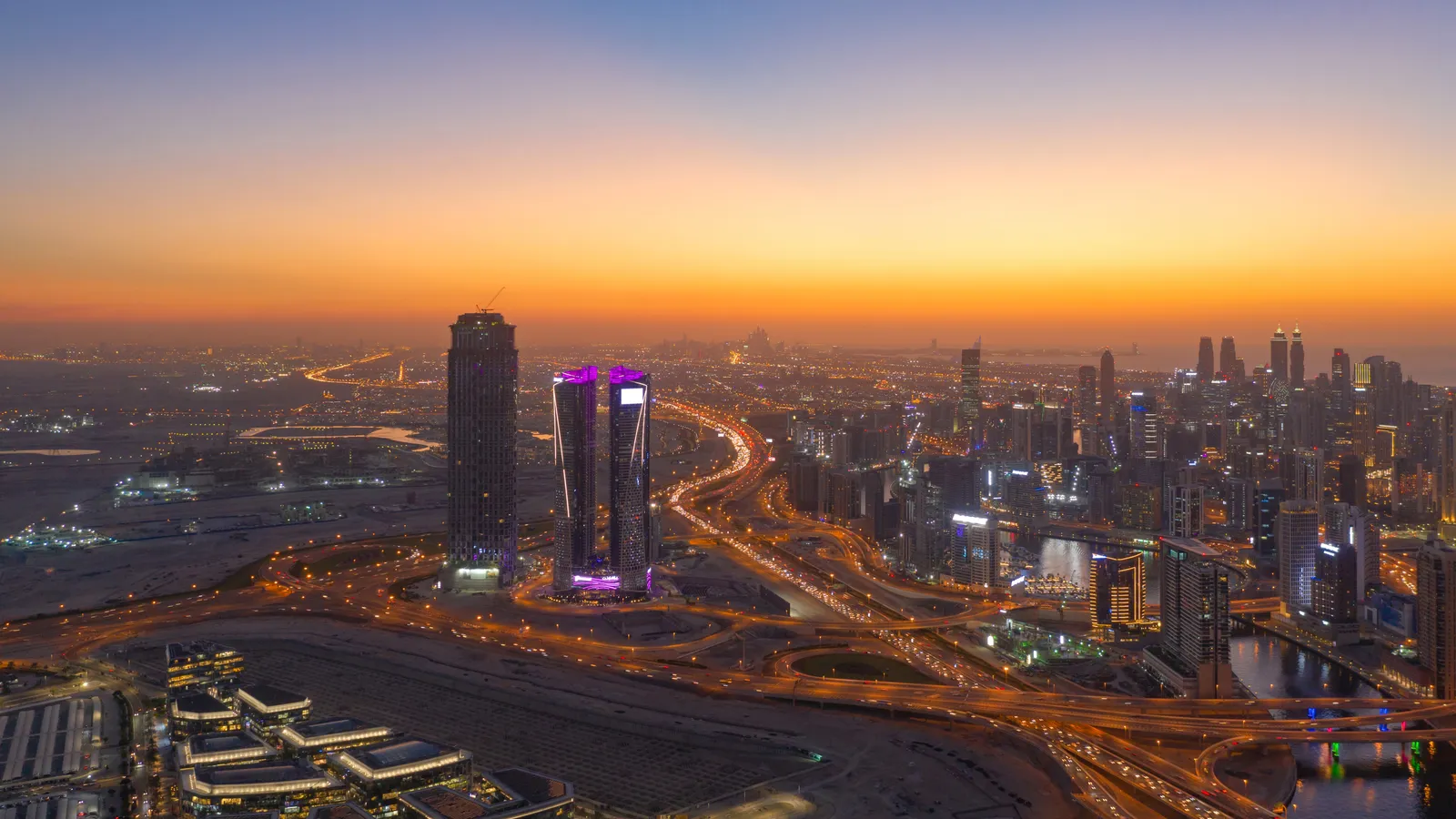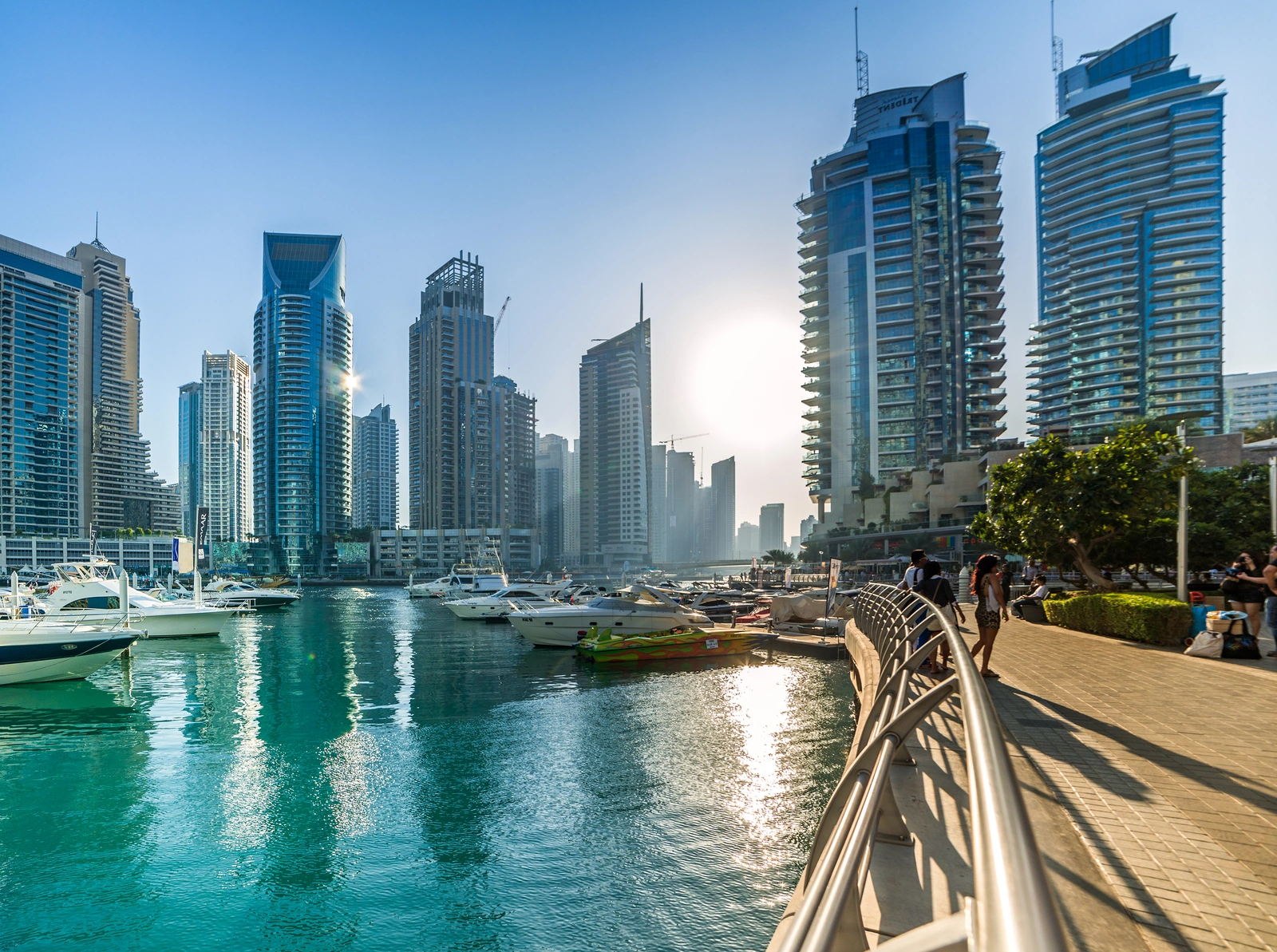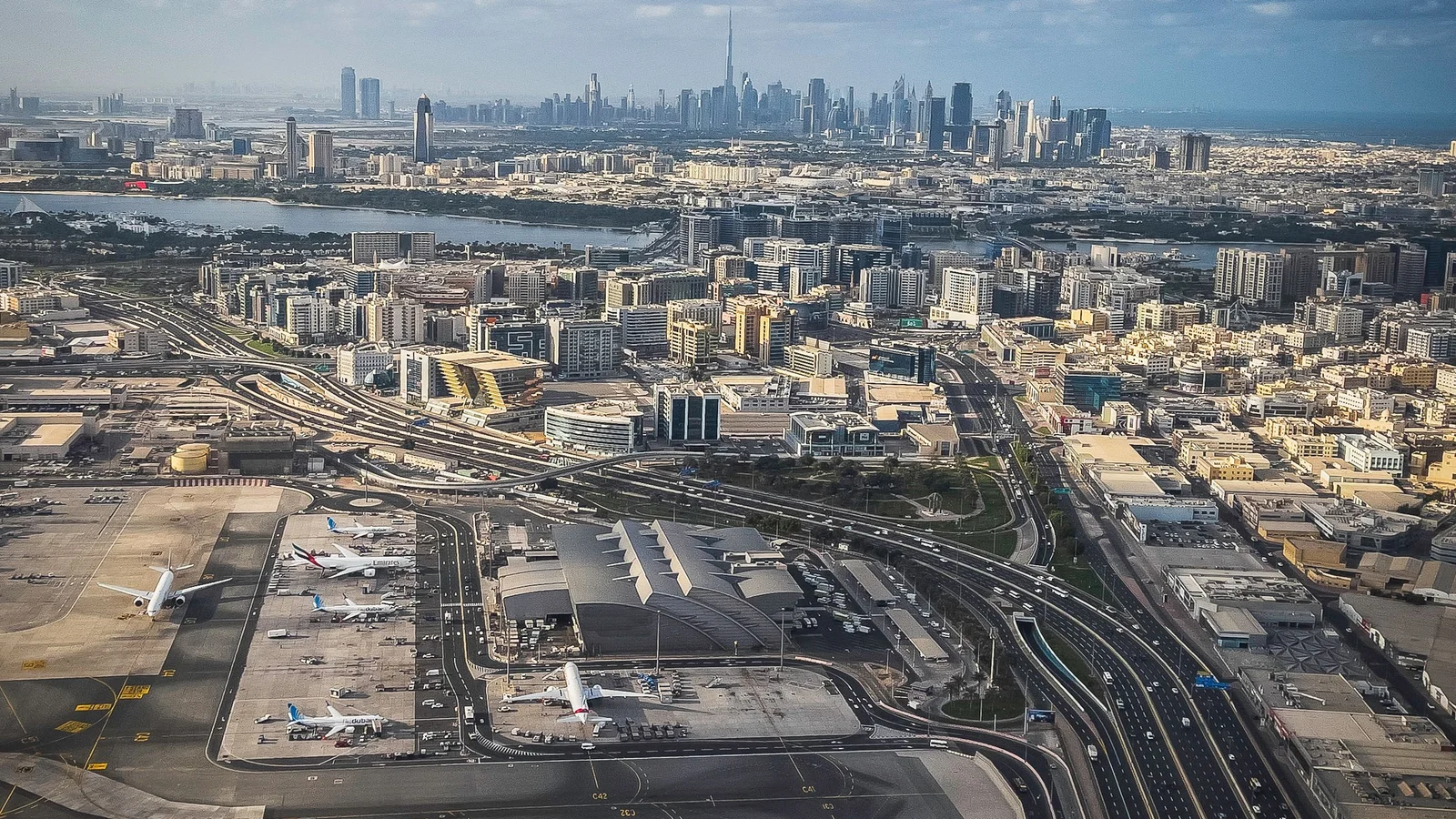
Dubai welcomed 19.59 million international overnight visitors in 2025, up 5% on 2024 and a third consecutive record, with hotel occupancy at 80.7% and an average daily rate of AED 579 [1]. The city wants 40 million annual visitors by the early 2030s under its D33 agenda [2]. If you want to build a business on that traffic, a travel and tourism agency is the obvious route. But the licensing reality is stricter than almost every guide online admits, and two facts decide whether your plan survives contact with the regulator: a trade licence alone does not let you sell a single tour, and a free zone cannot issue you a Dubai tourism licence at all [3][4].
This guide is built on the actual law, Regulation No. 6 of 2006 and its 2009 amendment, rather than on the copied cost tables that dominate search results [3][5]. You will get the four licence types and which one fits your model, the bank guarantee that most 2026 articles wrongly claim was abolished, the manager qualification and office rules that catch solo founders, whether you need IATA, the honest reason a free-zone travel licence will not do what you think, why the free-zone 0% corporate tax rate does not apply to a travel agency, and the VAT distinction that decides whether you are taxed on your commission or on your full booking value. Since 2013, our team has set up travel and tourism companies in Dubai, so the traps here come from real files.
Why start a travel agency in Dubai?
Dubai is one of the world's most concentrated travel markets. It is a hub airport city, a leisure destination, a business and events destination, and home to a large expatriate population that flies constantly. That gives an agency here three separate demand pools rather than one: inbound visitors who need ground services, outbound residents who need holidays and tickets, and corporate clients who need managed travel.
The numbers that matter for 2026:
- 19.59 million international overnight visitors in 2025, up 5% year on year, with 154,264 hotel rooms across 827 establishments and occupancy at 80.7% [1].
- A diverse source-market mix, led by Western Europe (4.1 million, 21%), then the GCC, CIS and Eastern Europe, and South Asia at roughly 15% each [1]. No single market dominates, which cushions demand.
- A large outbound market too. UAE residents made an estimated 5.5 million outbound trips in 2025, worth roughly USD 23.9 billion in spend [6]. Most guides ignore this and write only about inbound tourism.
- A stated target of 40 million annual visitors by the early 2030s under the D33 economic agenda [2].
Real Talk: Dubai's tourism volume is real, but volume is not margin. Selling flights in 2026 earns close to nothing because airlines pay almost no commission (covered below). The agencies that make money here are the ones that build packages, run inbound ground services, or manage corporate travel. Do not confuse a big market with an easy one.
Which travel licence do you actually need?
Dubai does not have one generic "travel agency licence." Regulation No. 6 of 2006 defines exactly four regulated tourist activities, and your business model decides which one you need [3]. This is the single most useful table in this guide, because picking the wrong activity means you cannot legally do the thing you built the business to do.
| Licence type | What it lets you do | What it does not cover |
|---|---|---|
| Travel and Tourism Agent | Sell air tickets to destinations outside the UAE, process visas, arrange transport, resell tour packages created by outbound operators | Creating and organising your own outbound tour programmes |
| Outbound Tour Operator | Design and package holidays outside the UAE and sell them through travel agents | Direct retail distribution in the way an agent does |
| Inbound Tour Operator | Organise and run tours inside the UAE, desert safaris, city tours, incentives, conferences and exhibitions, inbound visas, transport, hotels | Selling outbound international packages |
| Appointed General Agent for Airlines | Act as commercial agent for one or more named airlines, sell their tickets, run their outbound programmes | Acting for airlines that have not appointed you |
Two activities that people assume are included are not:
- Tourist transport (buses, limousines, sightseeing vehicles) is a separate regulated activity under Executive Council Resolution No. 107 of 2023, jointly overseen by the RTA and DET, and it applies inside free zones too [7].
- Hajj and Umrah operations are not a DET category at all. They sit with the General Authority of Islamic Affairs, Endowments and Zakat, and you should confirm the current criteria directly with Awqaf, since the published detail is thin [8].
Common Mistake: Assuming one licence covers inbound, outbound and ticketing. It does not. Each tourist activity is licensed separately, and as we cover below, each one carries its own office space, its own staffing minimum, and its own bank guarantee. A founder who wants to do all three is buying three sets of requirements, not one. Not sure which activity fits your plan? Ask us→
Do you need a DET tourism permit as well as a trade licence?
Yes, and this is where most guides mislead by presenting setup as one linear step. Regulation No. 6 of 2006 is explicit: an establishment may not conduct any tourist activity in the emirate without obtaining the relevant licence from the tourism regulator [3]. The Department of Economy and Tourism (DET) absorbed the old Department of Tourism and Commerce Marketing (DTCM) under Law No. 20 of 2021, so DET is now both the economic-licensing body and the tourism regulator [9].
In practice that means a normal commercial trade licence does not authorise you to organise tours, sell packages, or arrange excursions. You need the tourism activity licensed by DET, with its own conditions, on top of company formation. The order runs roughly: trade name and initial approval, then premises and Ejari, then the tourism document package (manager credentials, good-conduct certificates, guarantee, insurance, feasibility study for inbound and outbound), then DET review and licence issuance, then Chamber registration and visas.
Pro Tip: If a guide still calls the regulator "DTCM" as if it were a live, separate authority, treat the rest of that page with caution. DTCM was merged into DET back in 2021 [9]. It is a quick way to spot content that has been copied forward without being checked.

What is the bank guarantee, and was it really abolished?
Here is the most important correction in this guide, and the reason we went to the primary legislation rather than trusting the search results.
Dozens of 2026 setup-consultancy pages state confidently that DET "abolished" or "eliminated" the travel agency bank guarantee, some crediting an unnamed circular. We could not find a single primary citation for that claim: no circular number, no gazette reference, no DET announcement. Meanwhile, Regulation No. 1 of 2009, which amended the 2006 regulation and is published on Dubai's official legislation portal, states the requirement plainly [5]:
| Activity | Bank guarantee (per activity) |
|---|---|
| Appointed General Agent for Airlines | AED 200,000 |
| Outbound Tour Operator | AED 200,000 |
| Travel and Tourism Agent | AED 100,000 |
| Inbound Tour Operator | AED 100,000 |
The guarantee must be irrevocable, issued by a bank operating in the emirate, in favour of the regulator, and it must stay valid for as long as the licence exists [5]. Because it is set per activity, a company licensed for inbound, outbound and ticketing could in principle face guarantees stacking toward AED 400,000 [4].
Note what a guarantee is and is not. It is not a fee. It is blocked collateral, so it hits your working capital without ever being "spent," and cost tables that quietly fold it in as an expense are overstating your burn while ones that omit it entirely are understating the cash you need to find.
Real Talk: Our honest position is that the guarantee remains the legal requirement, because that is what the current published law says and a legally-cited 2026 industry source agrees it is still enforced [4][5]. But licensing practice can move faster than the portal, and we could not reach DET's own tourism pages directly to confirm. So treat AED 100,000 to 200,000 per activity as your planning assumption, and confirm the live position with DET or your adviser at application. Do not budget on the strength of a blog post that cannot cite a circular.
Can you run a travel agency from a free zone?
This is the second big honest answer, and it is the one free zones themselves have the least incentive to give you.
A free zone authority cannot issue a Dubai tourism licence. DET's tourism jurisdiction is emirate-wide and activity-specific, and the regulated tourist activities (organising tours, selling packages, tour guiding, tourist visa processing) require the DET licence [3][4]. Free zones can register tourism-adjacent businesses such as travel technology platforms, online booking systems, travel marketing agencies, and regional representation offices. Those are legitimate businesses. They are not a licence to operate as a tour operator or travel agent in Dubai.
| What you want to do | Mainland + DET tourism licence | Free zone licence alone |
|---|---|---|
| Organise and run tours in the UAE | Yes | No |
| Sell holiday packages directly to UAE customers | Yes | No |
| Process tourist visas | Yes | No |
| Issue air tickets (with GCAA NOC and IATA or a consolidator) | Yes | No |
| Run a booking platform or travel tech product | Yes | Yes |
| Act as a regional representation or marketing office | Yes | Yes |
There are partial routes. DMCC offers a dual licence that pairs a free-zone entity with mainland permission, which is the most credible free-zone path to actually conducting DET-regulated activity, and some zones market "travel agency" activity codes that in practice still require you to hold a DET permit or work through a mainland partner. Both routes mean you end up paying for the mainland requirement anyway, on top of the free-zone licence.
Common Mistake: Buying a cheap free-zone "travel agency licence" and assuming you can start selling tours. You cannot. If your model involves organising tours, processing tourist visas, or selling packages to people in Dubai, budget for the mainland DET route from day one. We could not find a DET-published list of which zones may co-hold a tourism permit, so confirm zone by zone and activity by activity rather than trusting a package price. Compare the routes on our mainland company setup and free zone company setup pages, and see our free zone vs mainland vs offshore guide.
Can a foreigner own 100% of a Dubai travel agency?
Yes. Travel and tourism activities are not on Dubai's foreign-ownership restricted list, which covers security and defence, telecommunications, and banking, exchange, financing and insurance [10]. Since the Commercial Companies Law reform (Federal Decree-Law No. 26 of 2020, consolidated by No. 32 of 2021), a foreign national can own 100% of a mainland travel agency with no Emirati partner [10][11].
You also do not need a Local Service Agent for a normal travel agency LLC. An LSA is a feature of sole-proprietorship and civil-company structures carrying professional activities, not of a commercial tourism LLC [12]. If someone quotes you an annual "local sponsor" fee for a travel agency LLC, ask exactly which legal provision they are relying on. See our local sponsor requirements guide.
Who can be your manager, and what office do you need?
These two conditions are set in the regulation, they are strict, and they are where solo founders most often discover their plan does not work.
The manager qualification (Regulation No. 1 of 2009) [5]:
- 3 years of tourism work experience if the manager holds a university degree or certificate majoring in tourism and travel, or
- 5 years of tourism work experience if the manager holds a general secondary school certificate.
In both cases the academic qualification must be properly attested. If you personally do not meet that bar, you are not blocked, but you must hire a manager who does, and that salary belongs in your first-year budget rather than in a footnote.
The premises (Regulation No. 1 of 2009, which reduced the original 40 sqm rule) [5]:
- A minimum of 30 square metres of independent space for each tourist activity. Two activities means 60 sqm.
- Ejari-registered tenancy. Virtual offices and flexi-desks do not satisfy the DET tourism licence, and IATA separately rejects virtual offices [13].
The staffing minimum: the original 2006 regulation requires a manager plus three employees per tourist activity [3]. Read together with the space rule, that is the real floor on your fixed costs.
Quick Math: A founder planning inbound plus outbound needs 60 sqm of Ejari-registered office, a qualified manager, potentially six staff, and guarantees toward AED 300,000. That is a materially different business from the "AED 20,000 travel licence" some pages advertise. Size the plan honestly before you sign a lease. Our post-setup services team maps the space, staffing and visa quota to your activities first.
Do you need IATA accreditation?
Not legally. IATA accreditation is optional and is not a DET or UAE requirement [13]. It is, however, the only way to issue airline tickets directly in your own name through the Billing and Settlement Plan. Without it, you can still sell tickets legally by routing through an IATA-accredited consolidator, which is what most new agencies actually do, at the cost of some margin and inventory control.
If you do want it, sequence matters: your trade licence and DET tourism permit must exist first, and ticketing also needs a General Civil Aviation Authority (GCAA) no-objection certificate before the IATA application [13]. The tiers:
- Full accreditation for established agencies with trading history and financial standing.
- GoLite, aimed at newer and smaller agencies, which uses an insurance-based security instead of a traditional cash guarantee and so lowers the capital barrier.
- TIDS, for tour operators and travel management companies that do not issue tickets. It gives industry recognition, not ticketing authority.
Costs commonly quoted for the whole registration process cluster around AED 8,000 to 25,000, plus a separate IATA financial guarantee sized to your sales volume [13][14]. Treat those as indicative: IATA's actual financial criteria sit behind its application guide rather than on a public page, so confirm them directly.
Pro Tip: Do not chase IATA on day one. Start through a consolidator, prove your volumes and your cash discipline, then apply once the numbers support the guarantee. Full accreditation rewards a trading history you do not have yet, and GoLite exists precisely because IATA knows that.
How much does it cost to set up?
Cost figures for Dubai travel agencies vary by a factor of two to four across sources, and the reason is almost always that nobody says what is inside the number. Some fold the refundable bank guarantee in as a cost, others leave it out; some include office and visas, others quote the government fee alone. Here is the honest structure, with what is included stated plainly. Figures are indicative for 2026 and should be confirmed with live quotes.
| Item | Indicative (AED) | Notes |
|---|---|---|
| Initial approval and trade name | 300 – 800 | Official fees are small |
| Tourism trade licence (all-in government and registration fees) | 14,000 – 20,000 | Varies by activity count |
| Office lease, 30 sqm per activity, plus Ejari | 25,000 – 60,000+ per year | The biggest recurring line |
| Tourist and public liability insurance | from ~3,800 per year | Mandatory for inbound and outbound [3] |
| Manager and staff visas | ~5,000 – 7,000 per visa | Minimum manager plus 3 staff per activity |
| Bank guarantee (blocked collateral, not a fee) | 100,000 – 200,000 per activity | See the section above |
| IATA accreditation (optional) | 8,000 – 25,000 one-off, plus annual BSP fee | Only if issuing tickets directly |
Realistic first-year spend for a single mainland activity, excluding the guarantee: roughly AED 45,000 to 90,000. Add the guarantee as blocked cash on top. Add a second activity and you repeat the office, staffing and guarantee, not just the licence line.
Quick Math: The licence is not the expensive part. The office you must lease, the staff you must sponsor, and the guarantee you must block are. A founder who budgets AED 25,000 because a listicle said so will be short by an order of magnitude once the guarantee is counted. For an itemised quote sized to your activities, our team can price it exactly. Get a free setup quote→
Do you pay corporate tax, and does the free-zone 0% apply?
A Dubai travel agency pays 9% corporate tax on taxable income above AED 375,000 and 0% below it [15]. Small Business Relief can treat a business with revenue under AED 3 million as having no taxable income for tax periods ending on or before 31 December 2029, and it cannot be combined with the free-zone regime [16].
Now the correction that matters, because several ranking pages imply the opposite. A travel agency cannot access the free-zone 0% rate. The Qualifying Activities list for a Qualifying Free Zone Person is exhaustive, and travel, tourism, ticketing and tour operation appear nowhere on it. The list runs to manufacturing, processing, trading of qualifying commodities, holding shares and securities, ship operation, reinsurance, fund management, wealth and investment management, headquarter services, treasury and financing to related parties, aircraft financing and leasing, distribution of goods in or from a designated zone, and logistics services [17][18]. There is no catch-all services category.
That leaves only the de minimis basket, which covers "any other income" up to the lower of 5% of revenue or AED 5 million. For a travel agency, the non-qualifying income is not a small side line, it is essentially 100% of the business, so the 5% test is blown as soon as you trade at all [17]. Two further gates close the door: transactions with natural persons are an Excluded Activity, so B2C sales are disqualified anyway, and losing Qualifying Free Zone Person status costs you the 0% for that year plus the following four tax periods [17].
Common Mistake: Choosing a free zone to save tax on a travel agency. It does not work. Between the activity list, the B2C exclusion, and the de minimis rule, a free-zone travel agency ends up facing essentially the same 9% exposure as a mainland one, while also being unable to hold the DET tourism licence it needs to operate. Pick your jurisdiction on licensing grounds, not on a 0% headline. Our UAE corporate tax filing guide has the detail.
How does VAT work for a travel agency?
This is the section nobody in the search results writes properly, and it is worth more to your margin than the licence choice.
Everything turns on whether you act as a disclosed agent or as a principal, under Article 9 of the VAT Decree-Law [19]:
- Disclosed agent. You book a flight or hotel in the name of, and on behalf of, the airline or hotel, and the customer can see that the airline or hotel is the supplier. The flight is legally the airline's supply, not yours. Your supply is a separate service, the agency service, and only your commission is subject to VAT [19][20].
- Principal, or undisclosed agent. You buy the travel product and resell it in your own name. That is two supplies, and you must charge VAT on the full value of what you sell [19].
The practical consequences are large, and they run all the way to whether you must register at all.
| Question | Disclosed agent | Principal / tour operator |
|---|---|---|
| VAT charged on | Your commission only | The full package price |
| Registration threshold measured on | Your commission | Gross booking value |
| A business with AED 6m of bookings and AED 300k commission | Not required to register (may register voluntarily above AED 187,500) | Must register |
Based on our experience, this single distinction decides more travel-agency VAT bills than anything else, and founders routinely get it wrong in both directions: some register far too early because they counted gross bookings when they were acting as an agent, and others fail to register when they should because they were operating as a principal on thin margins and only looked at their profit.
Is your commission on an international ticket zero-rated?
Not automatically, and this is the trap inside the trap.
International passenger transport is zero-rated under Article 45 of the VAT Decree-Law and Article 33 of the Executive Regulations [21]. That zero-rating attaches to the transport itself, which is the airline's supply. It does not flow through to your commission, because your commission is a different supply: agency services. Whether that is zero-rated is tested under the export-of-services rules in Article 31 instead [19][21].
The result is counterintuitive but consistent:
- Commission from a UAE-resident airline or supplier (Emirates, flydubai, a UAE DMC) is a domestic service between two UAE parties and is standard-rated at 5%, even though the underlying Dubai to London flight is zero-rated.
- Commission from a principal based outside the UAE can be zero-rated as an export of services, but only if the Article 31 conditions are met, principally that the recipient has no place of residence in the UAE and is outside the UAE when the service is performed [19].
- Hotel bookings follow the same logic: commission from a UAE hotel is standard-rated, commission from an overseas hotel or DMC generally falls outside the scope or is zero-rated on the same Article 31 test.
Note that the Executive Regulations were substantially amended with effect from 15 November 2024 (Cabinet Decision No. 100 of 2024), and the FTA's Public Clarification VATP040 narrowed some of the transport and export zero-rating conditions [21]. This is an area of recent change, so get your specific supply chain reviewed rather than relying on a general rule.
Common Mistake: Assuming "the ticket is zero-rated, so my commission is too." It is not, when the airline paying you is UAE-based. That is a 5% error repeated across a whole year of commission income, and it is exactly the kind of thing that surfaces in an audit rather than in your own books. Read our VAT registration and compliance guide alongside this.
Is there a tour operator margin scheme in the UAE?
No, and this is another point where competitor guides are wrong. The UAE has no equivalent of the EU and UK Tour Operators' Margin Scheme (TOMS).
There is a Profit Margin Scheme in UAE VAT, but it is narrow and structural: it applies to tangible second-hand goods, antiques over 50 years old, and collectors' items that have already borne VAT [22]. It cannot apply to travel services, which are intangible. Some UAE advisory blogs loosely use the phrase "profit margin scheme" when describing how a tour operator is taxed, which is imprecise borrowing of a goods-only scheme's name.
What actually applies is the ordinary agent-versus-principal analysis above. A tour operator acting as principal accounts for VAT on its sales under normal mechanics, with input tax recovery on its costs. There is no bespoke sector calculation and no simplified margin return.
Pro Tip: If your adviser tells you the UAE has TOMS, or quotes you UK-style margin-scheme mechanics, get a second opinion. The correct framework is Article 9 agency rules plus Article 31 export rules, and the difference is not academic: TOMS would deny you input tax recovery on the services you buy in, which UAE mechanics do not.
Does the Tourism Dirham apply to you?
No, not as an agency. The Tourism Dirham is charged per room per night by hotels, hotel apartments, holiday homes and guesthouses, at AED 7 to 20 depending on classification, capped at 30 consecutive nights, and it is collected and remitted by the accommodation provider [23]. It is not something a travel agency owes or collects on its own account.
It still matters to you in one way: it must be itemised correctly on your quotes and invoices, not marked up or incorrectly subjected to VAT as if it were part of your own supply. If you run accommodation as well, our holiday homes business guide covers the Tourism Dirham from the operator's side.

Can you sponsor tourist visas for your clients?
Yes, and it is a real revenue line. Non-resident travellers generally cannot sponsor their own UAE visit visa, so licensed travel agencies, hotels and airlines act as sponsor and submit the application on the traveller's behalf, typically through the ICP channel using the agency's trade licence as the sponsoring entity [24].
Fees run from roughly AED 252 for a 30-day visa up to AED 2,050 to 2,500 for 90-day multiple entry, and agencies commonly add a service fee of AED 100 to 500 on top [24].
Real Talk: Be honest with yourself about this line. A traveller who goes direct through ICP pays the government fee plus a small processing charge, so you are not the cheapest channel and you should not pretend to be. Your value is bundling the visa with a hotel and package, moving fast, and handling documentation for source markets that genuinely struggle with the portal. Sold that way it is a solid ancillary. Sold as a standalone profit centre it gets undercut.
Do not confuse this with the 2025 ICP rules that set minimum sponsor salary thresholds for individuals sponsoring personal visitors. Those apply to UAE residents sponsoring friends and family, not to licensed agencies acting as commercial sponsors [24].
What do the economics actually look like?
Thin, and thinner than the market's glamour suggests. This is the honest section.
Airline ticket commission is close to dead. Most airlines pay 0% base commission. A minority of carriers still pay roughly 1% to 2%, sometimes with volume-based overrides, and budget carriers pay nothing [25]. Agencies increasingly monetise ticketing through a service fee charged to the customer rather than through supplier commission. Pure ticketing is at best breakeven, and it is usually a loss-leader that justifies the licence and the client relationship.
Where the margin actually is:
| Revenue line | Indicative margin | Why |
|---|---|---|
| Air ticketing | 0 – 2% commission, plus your own service fee | Airline-dictated, GDS costs eat it |
| Hotel bookings | 10 – 15% commission | Standard industry band |
| Packages and tours | 10 – 25% | You control bundling and markup |
| Inbound and DMC ground services | Highest of the four | Access to net rates well below retail |
| Visa services | Service fee over a fixed government cost | Controllable, but not a standalone business |
The costs that surprise people: GDS segment fees rose again for 2026, with Amadeus at roughly EUR 18 and Sabre at roughly EUR 22 to 22.50 per segment, and an average ticket runs two to three segments [26]. A pseudo city code setup can require a deposit of its own.
The real risk is cash, not demand. IATA's Billing and Settlement Plan in this region settles weekly, and reconciliation is expected within days of each report [27]. You collect the customer's money for a trip that may be months away, then owe the airline on a short fixed cycle regardless. That mismatch, and not a lack of customers, is what kills travel agencies: client money funds supplier payments until the day refunds and chargebacks land at the same time as a settlement run.
Common Mistake: Treating money in the bank as revenue. For a travel agency it is very often someone else's deposit for a trip that has not happened. Agencies that spend it fund this month's costs out of next month's obligations, and the first shock exposes the gap. Tourism is cyclical and shock-exposed by nature, so hold a reserve rather than assuming a smooth year.
Why do travel agencies fail in Dubai?
The repeated, specific failure modes:
- The client-money and settlement mismatch described above, which is the single biggest killer.
- Depending on ticketing for margin that airlines stopped paying years ago.
- Undercapitalising against the guarantee and the weekly BSP cycle, then scaling sales faster than working capital.
- Buying a free-zone licence and only then discovering it cannot hold a DET tourism permit.
- The manager qualification wall, where the founder does not qualify and no budget was set aside to hire someone who does.
- Licence conditions slipping: lapsed insurance, an office that no longer meets the space rule, or a website advertising activities the licence does not cover. Regulation 6/2006 carries a penalty schedule for exactly this [3].
- Competing with online travel agents on price, which is unwinnable.
- AML exposure. Travel sits in a higher-scrutiny category because of cross-border flows, and the 2025 AML framework carries penalties from AED 1 million to AED 10 million [28]. See our UAE AML and CFT compliance guide.
How do you compete with Booking.com and Skyscanner?
Not on price or inventory breadth. Booking Holdings and Expedia dominate distribution at a scale you cannot match, and metasearch engines aggregate everything and route the booking onward [29]. An independent Dubai agency that tries to out-discount them loses.
What actually works:
- Inbound and DMC access. Contracted net rates on hotels and ground services sit well below retail, and that spread is yours to package. This is structurally higher margin than anything on the outbound retail side.
- Corporate travel and MICE. Relationship-based, fee-based rather than commission-based, and sticky. Dubai's events pipeline is a real, growing demand pool.
- Visa and documentation handling for source markets that need it.
- Human curation for complex, multi-stop or high-value itineraries that a platform cannot assemble.
Pro Tip: Pick the pool where you have an unfair advantage, usually a supplier network, a language, or a source market you know personally, and go deep. The agencies that survive in Dubai are specialists with a network, not generalists with a website.
What about banking, payments and staffing?
Banking. Expect more scrutiny than a generic trading licence, not automatic rejection. Travel involves cross-border flows and sits adjacent to higher-risk categories, so plan for enhanced due diligence, a clear source-of-funds file, and a specific description of your model [28]. If you have been rejected before, our guide on overcoming bank account rejection walks through the fixes.
Payments. Travel is a recognised high-risk merchant category because you collect money long before the service is delivered, so the processor carries the exposure. Expect elevated fees and, more importantly, a rolling reserve of roughly 5% to 15% of gross sales held for 90 to 180 days [30]. That is working capital you cannot touch, and almost nobody budgets for it.
Staffing. Ticketing agents start around AED 3,500 to 4,000 a month, and experienced travel consultants run to roughly AED 8,000, with management above that [31]. Remember the regulation's own floor of a manager plus three employees per activity [3].
Emiratisation. Quotas apply to mainland companies with 20 or more employees. Under 20 employees, you are outside the regime entirely [32], which covers most new agencies in year one. See our Emiratisation 2026 guide.
What documents do you need?
For the company and the licence:
- Passport and Emirates ID or visa copies for shareholders and the manager, or a No Objection Certificate if resident
- Trade name reservation and initial approval
- Attested academic qualification and experience evidence for the qualified manager
- Dubai Police good-conduct certificates for the owner and manager
- Notarised Memorandum of Association and Ejari-registered tenancy meeting 30 sqm per activity
- The irrevocable bank guarantee and the tourist or public liability insurance policy
- A feasibility study for inbound and outbound activities
- GCAA no-objection certificate if you intend to issue tickets
See our documents required for mainland business setup guide for the general pack.
What are the steps and timeline?
- Choose your DET activity or activities and reserve the trade name.
- Get initial approval for the tourism activity. It is valid three months and renewable once [3].
- Complete company formation, including MOA notarisation.
- Lease premises meeting 30 sqm per activity and register Ejari. DET may inspect.
- Submit the tourism package: manager credentials, good-conduct certificates, guarantee, insurance, feasibility study.
- DET review and licence issuance.
- Register with Dubai Chambers, then establishment card and visas.
- Optional: apply for IATA once everything above exists, with the GCAA NOC if ticketing.
Realistic timeline: about 3 to 4 weeks for a straightforward single-activity mainland tourism licence with documents ready, extending to six weeks or more with IATA. Our post-setup services team runs the licence, visa and banking steps in parallel.
Real Client Stories
These are real examples from businesses we have helped set up. Names have been changed for privacy.
Priya's free-zone false start (Dubai mainland)
Priya bought a low-cost free-zone licence marketed as a travel agency package and spent two months building an inbound desert-safari product before discovering she could not legally sell it or process her clients' visas. We moved her to a mainland inbound tour operator licence with the DET permit and a 30 sqm office. Her advice: "The free-zone package was cheaper because it was not the thing I needed. Ask whether the licence you are buying actually permits the activity, not what it is called."
Ahmed's commission shock (Dubai mainland)
Ahmed built his plan around ticketing volume, assuming airline commission would carry the business. It did not, because most of his carriers paid nothing. He rebuilt around outbound packages for the Indian expatriate market plus a per-ticket service fee, and the margin appeared. His tip: "I budgeted a commission rate that stopped existing years ago. Check what airlines actually pay today before you model anything."
Nadia's VAT correction (Dubai mainland)
Nadia registered for VAT the moment her gross bookings passed AED 375,000 and began charging 5% on full booking values, which made her uncompetitive overnight. She was a disclosed agent, so only her commission counted, and she was nowhere near the threshold. We corrected the position with her adviser. Her takeaway: "I taxed myself on money that was never mine. Get the agent-versus-principal question answered before you register, not after."
Start your Dubai travel agency the right way
A Dubai travel agency is a genuinely good business in a genuinely large market, but it is a regulated one, and the regulation is stricter and more specific than the search results suggest. Get the activity right, budget for the guarantee and the office rather than the licence, put a qualified manager in place, choose mainland because the tourism permit requires it, settle your agent-versus-principal position before you register for VAT, and hold enough cash to survive the settlement cycle. Do those and the market does the rest.
Since 2013, BusinessDubai.ae has completed 700+ company registrations across the UAE, including travel and tourism agencies, with transparent itemised pricing and no hidden fees. We will confirm which DET activity you need, handle the tourism permit, guarantee and insurance, place a qualifying manager if you need one, and get your visas and bank account open, with a clear all-in budget before you commit. Talk to a setup expert→ for a clear plan for your agency. For the wider sector, see our hospitality business guide.
Ready to set up your travel and tourism agency in Dubai the right way? Our licensed advisors handle the DET activity, tourism permit, bank guarantee, office, visas and bank account end to end, with transparent, fixed fees.
Get started free→Frequently Asked Questions
How much does it cost to set up a travel agency in Dubai?
Realistically AED 45,000 to 90,000 of spent costs in year one for a single mainland tourism activity, covering licence, office, insurance and visas, plus a bank guarantee of AED 100,000 to 200,000 per activity blocked as collateral. Free-zone packages advertise from around AED 12,900 but cannot hold the DET tourism permit that regulated travel activity requires.
Do I need a bank guarantee for a Dubai travel agency in 2026?
Dubai's published law (Regulation No. 1 of 2009) still requires an irrevocable bank guarantee of AED 200,000 for outbound tour operators and appointed airline agents, and AED 100,000 for travel and tourism agents and inbound tour operators, per activity. Many 2026 articles claim it was abolished but none cite a circular or announcement. Plan for it and confirm the live position with DET at application.
What are the four travel licence types in Dubai?
Travel and Tourism Agent (ticketing, visas, reselling packages), Outbound Tour Operator (creating international packages sold through agents), Inbound Tour Operator (UAE tours, safaris, MICE, inbound visas), and Appointed General Agent for Airlines. Each is licensed separately with its own office, staffing and guarantee.
Can I get a travel agency licence in a free zone?
Not one that lets you operate as a tour operator or travel agent in Dubai. Free zones cannot issue the DET tourism licence that regulated tourist activities require. A free-zone entity can run travel technology, booking platforms, marketing or a representation office, and DMCC's dual licence pairs a free-zone entity with mainland permission.
Do I need a DET permit as well as a trade licence?
Yes. Regulation No. 6 of 2006 states that no establishment may conduct a tourist activity in Dubai without the tourism regulator's licence. A normal commercial trade licence does not authorise you to organise tours, sell packages or arrange excursions.
Is DTCM still the regulator?
No. DTCM was merged into the Department of Economy and Tourism (DET) under Law No. 20 of 2021. DET is now both the economic-licensing body and the tourism regulator. Guides still describing DTCM as a separate live authority are out of date.
Can a foreigner own 100% of a travel agency in Dubai?
Yes. Travel and tourism is not on Dubai's foreign-ownership restricted list, which covers security and defence, telecommunications, and banking, exchange, financing and insurance. Since the 2020/2021 Commercial Companies Law reform you can own a mainland travel agency outright with no Emirati partner.
Do I need a local sponsor or service agent?
No, not for a normal travel agency LLC. A Local Service Agent applies to sole-proprietorship and civil-company structures carrying professional activities, not to a commercial tourism LLC. If someone quotes an annual sponsor fee, ask which provision requires it.
What qualifications does my manager need?
Three years of tourism work experience with an attested university degree or certificate majoring in tourism and travel, or five years with a general secondary school certificate. If you do not qualify personally, you must hire a manager who does, and that salary belongs in your first-year budget.
How much office space do I need?
A minimum of 30 square metres of independent space per tourist activity, on an Ejari-registered tenancy. Two activities means 60 sqm. Virtual offices and flexi-desks do not satisfy the DET tourism licence, and IATA also rejects virtual offices.
Do I need IATA accreditation to sell flights?
No. IATA is optional and is not a UAE legal requirement. It is the only route to issuing tickets directly in your own name, but you can sell tickets legally through an IATA-accredited consolidator, which is what most new agencies do. Direct ticketing also needs a GCAA no-objection certificate.
What is the difference between IATA Full, GoLite and TIDS?
Full accreditation suits established agencies with trading history and financial standing. GoLite targets newer and smaller agencies and uses an insurance-based security instead of a cash guarantee. TIDS is for tour operators and travel management companies that do not issue tickets, giving industry recognition but no ticketing authority.
Can a free zone travel agency get 0% corporate tax?
No. The Qualifying Activities list for a Qualifying Free Zone Person is exhaustive and travel, tourism, ticketing and tour operation are not on it, and there is no catch-all services category. Core agency income falls into the de minimis basket, which is capped at the lower of 5% of revenue or AED 5 million and is blown immediately. Sales to individuals are separately excluded.
Do travel agencies pay VAT in the UAE?
Yes, at 5%, but what it applies to depends on your role. A disclosed agent charges VAT on its commission only, because the flight or room is legally the airline's or hotel's supply. A principal or tour operator reselling in its own name charges VAT on the full value of what it sells.
Is my VAT registration threshold based on gross bookings or commission?
On your own taxable supplies. For a disclosed agent that means commission only, so an agency with AED 6 million of bookings and AED 300,000 of commission is not required to register. For a principal it means gross value, so a tour operator reselling AED 2 million of packages must register even on a thin margin.
Is my commission on an international flight zero-rated?
Not automatically. Article 45 zero-rates the international transport itself, which is the airline's supply, not your commission. Your agency service is tested separately under the export-of-services rules. Commission from a UAE-based airline is standard-rated at 5%; commission from a principal outside the UAE can be zero-rated if the Article 31 conditions are met.
Does the UAE have a Tour Operator Margin Scheme (TOMS)?
No. The UAE has no TOMS equivalent. The Profit Margin Scheme that does exist applies only to tangible second-hand goods, antiques over 50 years old and collectors' items, so it cannot apply to travel services. Tour operators account for VAT under ordinary agent-versus-principal mechanics.
Do travel agencies pay the Tourism Dirham?
No, not as an agency. The Tourism Dirham is charged per room per night by hotels, hotel apartments, holiday homes and guesthouses at AED 7 to 20, collected and remitted by the accommodation provider. Agencies must itemise it correctly on quotes rather than marking it up or taxing it as their own supply.
Can my travel agency sponsor tourist visas for clients?
Yes. Non-resident travellers generally cannot sponsor their own visit visa, so licensed agencies, hotels and airlines act as sponsor through the ICP channel using the agency's trade licence. Government fees run from about AED 252 to AED 2,500, and agencies typically add AED 100 to 500. Note that going direct through ICP is cheaper for the traveller.
How much commission do airlines actually pay?
Most pay 0% base commission. Some carriers still pay roughly 1% to 2%, occasionally with volume overrides, and budget carriers pay nothing. Ticketing today is monetised through a service fee charged to the customer, not through supplier commission, which is why pure ticketing is close to a breakeven activity.
Where does a Dubai travel agency actually make money?
Packages and tours at roughly 10% to 25%, inbound and DMC ground services (the highest margin, because contracted net rates sit well below retail), corporate travel on a fee basis, and hotel commission at roughly 10% to 15%. Visa services add a controllable service fee. Air ticketing alone does not sustain a business.
Why is cash flow the biggest risk for a travel agency?
Because you collect the customer's money for a trip months ahead but owe suppliers on a much shorter cycle. IATA's Billing and Settlement Plan settles weekly in this region. Agencies that treat client deposits as revenue get caught when refunds and chargebacks arrive at the same time as a settlement run.
Is there client money protection like ATOL in the UAE?
We found no evidence of a UAE equivalent to the UK's ATOL bonding scheme or an EU-style mandatory travel-insolvency trust. Protection runs through general consumer-protection law, DET complaint channels, and the licence bank guarantee, which is a licensing condition rather than a ring-fenced client-money trust. Do not describe your business as ATOL-style protected.
How long does it take to set up a travel agency in Dubai?
About three to four weeks for a straightforward single-activity mainland tourism licence with documents ready. Add several weeks for IATA accreditation, which can only be applied for once the trade licence and DET tourism permit exist. A free-zone shell entity can be issued in days but cannot hold the tourism permit.
Does Emiratisation apply to a small travel agency?
Only at 20 or more employees on a mainland licence. Below 20 employees you are outside the regime entirely, which covers most new agencies in year one. Above that, quotas and penalties apply, so plan headcount growth with the threshold in mind.
Do I need a separate licence for tourist transport?
Yes. Tourist transport (buses, limousines, sightseeing vehicles) is a separate regulated activity under Executive Council Resolution No. 107 of 2023, jointly overseen by the RTA and DET, and it applies inside free zones too. It is not included in a travel agency or tour operator licence.
Who licenses Hajj and Umrah operators?
Not DET. Hajj and Umrah operations sit with the General Authority of Islamic Affairs, Endowments and Zakat (Awqaf), which licenses and relicenses operators and requires an Awqaf-drafted pilgrim contract. Confirm the current criteria directly with Awqaf, as published detail is limited.
What are the ongoing costs of a Dubai travel agency?
Annual licence and tourism permit renewal, office rent, insurance renewal, the bank guarantee kept in place for the life of the licence, corporate tax registration and filing, VAT returns (usually quarterly), the UBO register kept current, visa renewals, tour-guide card renewals if applicable, GDS segment fees, and any IATA annual fees. Late licence renewal carries a monthly penalty.
References
[1] Dubai Department of Economy and Tourism and Dubai Media Office. Dubai tourism performance 2025: 19.59 million international overnight visitors (+5%), 80.7% hotel occupancy, ADR AED 579, 154,264 rooms across 827 establishments, and source-market split. mediaoffice.ae and dubaidet.gov.ae
[2] Government of Dubai. Dubai Economic Agenda (D33) and the long-term target of 40 million annual visitors. Figures for 2026 targets are not published as a single headline number, so this guide uses the 2025 actual and the D33 horizon. dubaidet.gov.ae
[3] Government of Dubai. Regulation No. (6) of 2006 Concerning the Licensing of Tourist Establishments and Travel Agencies: the four tourist activities (Article 3), the requirement to hold a tourism licence (Article 4), staffing and premises conditions (Article 5), insurance (Article 8), initial approval validity (Article 10), and the penalty schedule. dlp.dubai.gov.ae
[4] Industry legal analysis of Dubai tour operator and travel agency licensing (2026), corroborating the bank guarantee amounts, the per-activity structure, the 30 sqm rule and the free-zone limitation. Indicative where fee figures are quoted.
[5] Government of Dubai. Regulation No. (1) of 2009 amending Regulation No. (6) of 2006: bank guarantee of AED 200,000 (appointed airline agent, outbound tour operator) and AED 100,000 (travel and tourism agent, inbound tour operator) per activity; manager qualification (3 years with an attested tourism degree, 5 years with a secondary certificate); minimum 30 sqm per tourist activity. dlp.dubai.gov.ae
[6] Market research on UAE outbound tourism. Approximately 5.5 million outbound trips by UAE residents in 2025 and roughly USD 23.9 billion in outbound tourism expenditure. Figures are third-party estimates, not government data.
[7] Government of Dubai. Executive Council Resolution No. (107) of 2023 regulating tourist transport, and Administrative Resolution No. (97) of 2025, jointly administered with the RTA and applying in free zones and special development zones. dlp.dubai.gov.ae
[8] General Authority of Islamic Affairs, Endowments and Zakat (Awqaf). Licensing and relicensing of Hajj and Umrah operators. Published criteria are limited; confirm directly. awqaf.gov.ae
[9] Government of Dubai. Law No. (20) of 2021, under which the Department of Tourism and Commerce Marketing (DTCM) was merged into the Department of Economy and Tourism (DET). dubaidet.gov.ae
[10] Invest in Dubai. Foreign ownership restrictions list (security and defence, telecommunications, banking/exchange/financing/insurance). Travel and tourism activities do not appear on the restricted list. investindubai.gov.ae
[11] UAE Government Portal. Full foreign ownership of mainland companies under Federal Decree-Law No. 26 of 2020, consolidated by Federal Law No. 32 of 2021. u.ae
[12] Analysis of Local Service Agent requirements: applicable to sole-proprietorship and civil-company professional structures rather than commercial tourism LLCs. Confirm your structure with an adviser.
[13] IATA. Travel agent accreditation, UAE country requirements, and the Full, GoLite and TIDS programmes; GCAA no-objection certificate required before ticketing. Financial criteria sit behind IATA's application guide and are not published openly, so cost figures here are indicative. iata.org
[14] Industry sources on IATA registration in Dubai. Indicative registration cost of AED 8,000 to 25,000 plus an annual BSP fee and a volume-scaled financial guarantee. Not official IATA pricing.
[15] Federal Tax Authority and Ministry of Finance. UAE Corporate Tax (Federal Decree-Law No. 47 of 2022): 0% up to AED 375,000 of taxable income, 9% above. tax.gov.ae and mof.gov.ae
[16] Ministry of Finance. Small Business Relief (Ministerial Decision No. 73 of 2023, as amended by Ministerial Decision 131 of 2026): AED 3 million revenue threshold, applicable to tax periods ending on or before 31 December 2029, not available to Qualifying Free Zone Persons. mof.gov.ae
[17] Federal Tax Authority. Basic Tax Information Bulletin, Free Zone Persons: the exhaustive Qualifying Activities list, the Excluded Activity covering transactions with natural persons, the de minimis requirement (lower of 5% of revenue or AED 5 million), and loss of Qualifying Free Zone Person status for the year plus four subsequent tax periods. tax.gov.ae
[18] Ministry of Finance. Ministerial Decision No. 229 of 2025 regarding Qualifying Activities and Excluded Activities for the Qualifying Free Zone Person regime. mof.gov.ae
[19] Federal Tax Authority. VAT (Federal Decree-Law No. 8 of 2017), Article 9 on supply via agent (disclosed agent versus principal), Article 31 on zero-rating the export of services, and registration thresholds of AED 375,000 mandatory and AED 187,500 voluntary. tax.gov.ae
[20] Professional analysis of UAE VAT agency mechanics: where agent and principal are both in the UAE the agency service is taxable at 5%; where the principal is outside the UAE it may be zero-rated subject to the Executive Regulations conditions.
[21] Federal Tax Authority. Article 45 of the VAT Decree-Law and Article 33 of the Executive Regulations on zero-rated international transport; Cabinet Decision No. 100 of 2024 amending the Executive Regulations with effect from 15 November 2024; Public Clarification VATP040 (2025). tax.gov.ae
[22] Federal Tax Authority. Profit Margin Scheme (Article 29 of the Executive Regulations) and the VATGPM1 guide: limited to eligible second-hand goods, antiques over 50 years old and collectors' items. The UAE has no Tour Operators' Margin Scheme. tax.gov.ae
[23] Government of Dubai. Tourism Dirham fee: Executive Council Resolution No. 2 of 2014 and DTCM Administrative Resolution No. 2 of 2020, charged per room per night by accommodation providers at AED 7 to 20 by classification, capped at 30 consecutive nights. dlp.dubai.gov.ae
[24] Federal Authority for Identity, Citizenship, Customs and Port Security (ICP) and UAE visa guidance. Agency sponsorship of visit visas, government fee bands, and the separate 2025 individual-sponsor salary thresholds that do not apply to commercial sponsors. icp.gov.ae
[25] Travel trade sources on airline commission structures. Most carriers pay 0% base commission, a minority pay roughly 1% to 2% with possible volume overrides, and low-cost carriers pay none. Margin bands for hotels, packages and tours are industry estimates rather than UAE-specific published data.
[26] Global distribution system pricing for 2026. Amadeus segment fee approximately EUR 18.00 and Sabre approximately EUR 22.00 to 22.50 from 1 January 2026; typical ticket of two to three segments.
[27] IATA. Billing and Settlement Plan (BSP) mechanics, including the weekly remittance cycle applicable in this region and reconciliation expectations. iata.org
[28] UAE Central Bank and AML framework. Anti-money-laundering supervision, enhanced due diligence for cross-border sectors, and penalties under the 2025 AML framework (Federal Decree-Law No. 10 of 2025 and Cabinet Resolution No. 134 of 2025). centralbank.ae
[29] Travel distribution analysis. Online travel agent and metasearch market structure, and the DMC net-rate spread that underpins inbound margin.
[30] Payments industry sources. Travel as a high-risk merchant category (MCC 4722), elevated chargeback rates, and rolling reserves of roughly 5% to 15% held for 90 to 180 days.
[31] Dubai salary sources for travel roles (2025-2026). Ticketing agents from roughly AED 3,500 to 4,000 a month and experienced travel consultants to roughly AED 8,000. Indicative, and management salaries were not consistently published.
[32] UAE Ministry of Human Resources and Emiratisation. Emiratisation targets for mainland companies with 20 to 49 employees and the associated penalties; companies under 20 employees are outside the regime. mohre.gov.ae
[33] BusinessDubai.ae. Internal data from UAE travel and tourism company registrations since 2013, including DET licensing, tourism permits, guarantees, visas, banking and client case studies. businessdubai.ae