A pharmaceutical distribution company in Dubai imports, warehouses and wholesales medicines to pharmacies, hospitals and clinics, and it is one of the most tightly gated businesses in the country. A commercial trade licence buys you nothing here. Every step is controlled by the federal drug regulator, the Emirates Drug Establishment (EDE), which took over the pharmaceutical licensing, product-registration, pricing and import functions previously run by MOHAP, under the 2024 medical-products law [1][2][6]. This is a licensed drug warehouse, not general trading, and it is not a retail pharmacy.
There are two facts that reset most business plans. First, every single medicine must be individually registered and price-approved before it can be imported or sold, so the barrier is not one licence but a portfolio of product registrations, each taking many months [3][4]. Second, and the point most guides get wrong: pharmaceutical import and distribution is not open to 100% foreign ownership. Because it runs through the Commercial Agencies Law, it generally requires UAE-national participation, unlike ordinary trading [8].
This guide covers the EDE licensing, the per-product registration and pricing, the responsible pharmacist and the warehouse, the ownership exception, and why listed medicines are zero-rated. Since 2013, our team has set up regulated and trading companies across the UAE, so the traps here come from real files. This is a guide, not legal, medical or tax advice on your specific licence.
Why is this not general trading, or a pharmacy?
Because medicines are federally regulated, and a drug warehouse is a different animal from both general trading and a retail pharmacy. A general trading licence imports nothing medicinal, and a pharmacy dispenses to the public, while a drug store or medical warehouse is a B2B wholesaler licensed to receive, store, import and distribute medicines to pharmacies, hospitals and clinics [1][3]. Different premises, different regulator touchpoints, different economics.
The regulator is now the Emirates Drug Establishment, the federal drug authority that assumed the pharmaceutical-facility licensing, marketing-authorisation, import-permit and pricing functions previously with MOHAP, under Federal Decree-Law No. 38 of 2024 on medical products in force from January 2025, with MOHAP retaining narcotics and controlled-drug control [1][2][6]. In practice you deal with EDE for the establishment and products, MOHAP for controlled drugs, DET for the commercial licence and the local health authority as relevant. The licence is the smallest piece of that stack.
Common Mistake: Setting up a general trading or even a general medical licence and assuming you can import medicines. Medicines require an EDE-licensed pharmaceutical establishment, a drug store or warehouse, plus per-product registration and per-shipment import permits. A trading licence imports nothing medicinal, and a pharmacy is a different, retail licence.
What are the four locks on a drug warehouse?
An establishment licence, per-product registration and pricing, a responsible pharmacist, and a GDP warehouse, and all four are mandatory [1][3][4]. They stack on top of each other.
- A licensed pharmaceutical establishment. The company itself must be licensed by EDE as a drug store or medical warehouse, with facility licensing, oversight and inspection.
- Per-product registration and price approval. Every medicine must be individually registered as a marketing authorisation and price-approved before it can be imported or sold, with a full dossier, a valid GMP certificate for the manufacturing site, and bilingual labelling, and a regulated ceiling price you cannot exceed. Import permits are then issued per shipment, only for registered products.
- A responsible pharmacist. A licensed pharmacist must be employed and named as the responsible person, and the pharmacist's licence is submitted as part of the establishment application, not after approval.
- A GDP warehouse. The physical warehouse must pass a Good Distribution Practice inspection, with validated temperature control, cold-chain capability for thermolabile products, continuous temperature logging, traceability, and quarantine and recall procedures.
The point that reshapes the budget: the per-product registration is the real, recurring cost driver, because a portfolio of dozens of products means dozens of registrations, each taking months and carrying its own fee. Our pharmacy guide covers the retail side, which is a separate licence and regulator entirely.
What is the difference between a scientific office, a drug store and an agent?
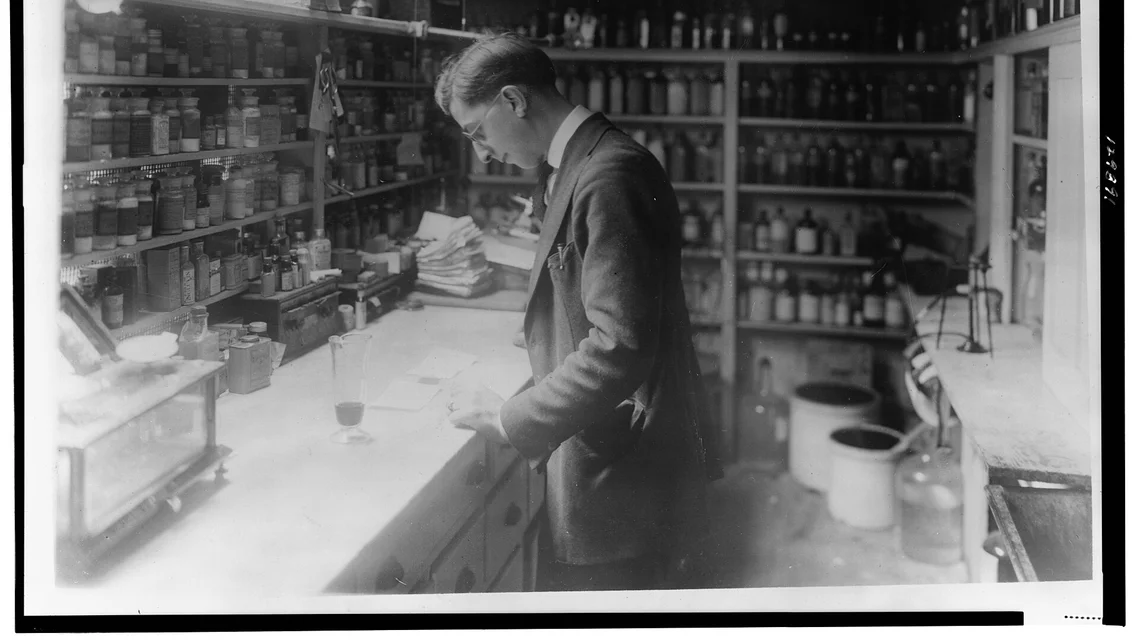
Three different licences with three different sets of rights, and conflating them is a common failure [3]. A scientific office is the promotional and regulatory-representation arm of a manufacturer: it can register products and promote them to prescribers, but it cannot buy, stock, sell or wholesale medicines. A drug store or medical warehouse is the B2B wholesale distributor licensed to receive, store, import and distribute, which is the business this guide is about. And a local agent is the entity a foreign manufacturer's product names in its marketing authorisation, backed by an agency contract, and only that named agent can import that product.
So the structure decides what you can do. If you plan to represent a foreign manufacturer and register its drugs, that is a scientific office or an agent role; if you plan to import and wholesale, that is a drug store. Many operations combine them, but each right attaches to a specific licence, and you cannot wholesale on a scientific-office licence. Confirm the exact activity scope of a drug-store licence with EDE, because whether it includes import and distribution rights or only storage is a fine distinction that matters.
Pro Tip: Decide early whether you are importing and wholesaling, or representing and registering a manufacturer's products, because they are different licences. A common stall is a company that registers products on a scientific-office footing and then finds it cannot legally sell them, or a would-be importer without the local-agent appointment a foreign product's registration requires. Map the roles first. Get your pharmaceutical setup scoped properly→
What about controlled and narcotic drugs?
A separate, stricter regime under MOHAP, not EDE. Controlled substances sit under a tighter control layer that narcotics control was explicitly kept with MOHAP rather than moved to EDE, classified as controlled Class A narcotics and psychotropics and controlled Class B semi-controlled substances [5]. These are not freely importable.
Each movement of a controlled drug needs prior MOHAP permits, secured storage, separate registers, tighter quantity control and dedicated responsible-person accountability, and a drug store intending to handle them must obtain the specific controlled-medicines authorisations on top of its base establishment licence [5]. Treat controlled-drug distribution as a distinct, higher-barrier line of business, not a routine extension of a general drug warehouse. Confirm the current controlled-drug permit requirements with MOHAP.
Can a foreigner own a pharmaceutical distribution company?
Generally not fully, and this is the ownership exception most guides miss. Although the 2021 reforms opened most mainland activities to 100% foreign ownership, pharmaceutical import and distribution is a documented exception [8]. A wholly foreign-owned company generally cannot hold a medical-product importation licence; import licences are tied to companies with UAE-national participation, and some sources go further and require the warehouse owner to be a UAE national.
The reason is the Commercial Agencies Law: distribution and agency of pharmaceutical products has historically required registration as a commercial agent, and commercial agencies have been reserved for UAE nationals or UAE-national-owned companies [8]. So for a medicine importer or distributor, plan on UAE-national participation, an Emirati partner or a UAE-national-owned agent structure, not the flat full foreign ownership available to ordinary trading. This is a genuine moat and the single most important myth to correct. Confirm the exact current shareholding requirement and any liberalisation with EDE and the Ministry of Economy, and see our commercial agency law guide for the agency framework.
Where can the warehouse be, and how is distribution structured?
A GDP-compliant warehouse, mainland for domestic wholesale, with free zones suited to storage and re-export. A commercial trade licence does not authorise importing medicines, so you need the EDE establishment licence and a GDP-compliant warehouse passing inspection [1][3]. The free zone company setup route through zones such as Dubai Science Park and JAFZA is excellent for storage, warehousing and regional re-export, and pharma storage there still must meet EDE GDP standards.
But selling into the UAE mainland, to UAE pharmacies, hospitals and clinics, generally requires a mainland-licensed distributor or local agent clearing goods through customs with EDE import permits, and a pure free-zone entity typically cannot wholesale directly into the domestic market without that mainland route [3]. So free zones suit a re-export and storage hub, while domestic distribution points back to a mainland company setup with a drug-store licence. Confirm the current free-zone-to-mainland pharma distribution mechanics with EDE, because this is where many plans break. Our import and export guide covers the customs mechanics.
How is a pharmaceutical distributor taxed?
Standard corporate tax, and listed medicines are zero-rated for VAT. On corporate tax, the company pays 0% on taxable income up to AED 375,000 and 9% above, with Small Business Relief for revenue up to AED 3 million for tax periods ending on or before 31 December 2029, though a real distributor far exceeds that [7]. Our corporate tax filing guide covers the mechanics.
VAT is favourable and specific. Medications and medical equipment on the approved list are zero-rated at 0% under Cabinet Decision No. 56 of 2017, where the products are registered with the health authority or imported with its approval and appear on the Cabinet-approved list, while products not on the list are standard-rated at 5% [7]. Zero-rated is not exempt, so a distributor still registers for VAT and recovers input VAT, which is favourable, but you must verify each SKU's status against the approved list. Our VAT registration and compliance guide covers the mechanics.
What does it cost, and is it worth it?
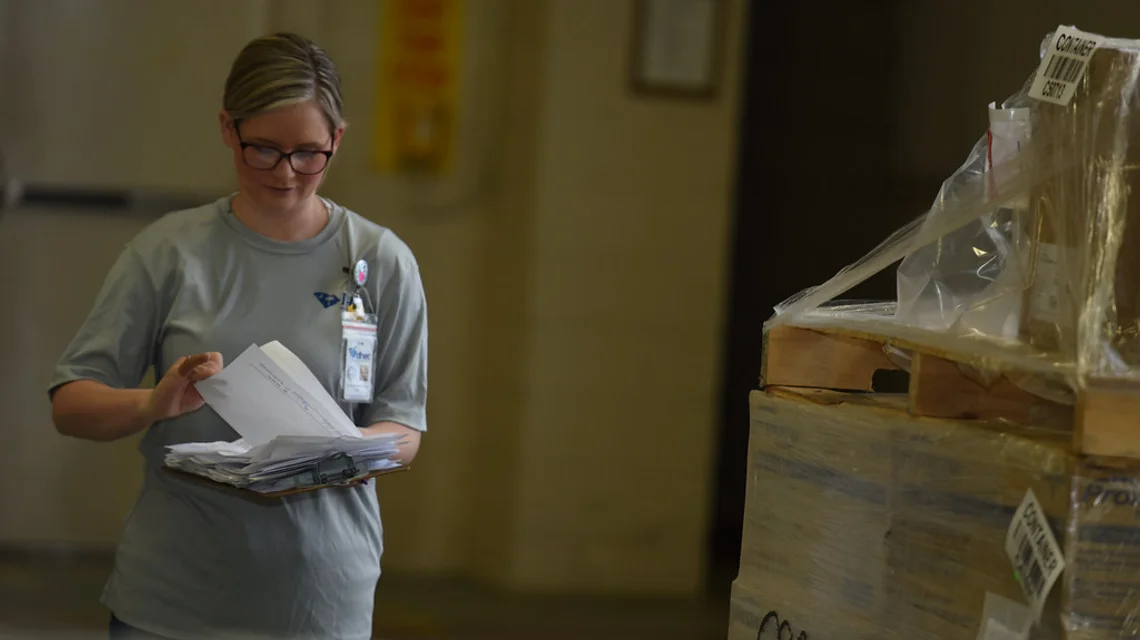
The licence is minor; the warehouse, the registrations and the inventory dominate. Here is a realistic 2026 picture in AED, all figures approximate and worth confirming with EDE and DET.
| Item | Typical range (AED) |
|---|---|
| DET trade licence | 15,000 to 25,000 per year |
| EDE establishment licence and inspections | Confirm with EDE; pharmacy-band figures are indicative |
| Per-product registration and pricing, per SKU | ~7,000+ each, multiplied across the portfolio |
| GDP warehouse (climate-controlled, cold-chain, validation) | Major recurring cost |
| Responsible pharmacist | Salary plus professional licence, a permanent overhead |
A realistic first-year all-in, including the licence, the GDP warehouse, the cold chain, initial inventory, the pharmacist and the product registrations, commonly runs AED 800,000 to 3 million or more, scaling with the product count. This is a capital-heavy, inventory-heavy business, not a light trading play. The demand case, though, is strong and structural.
Quick Math: The UAE healthcare market is large and growing, mandatory health insurance drives sustained pharmaceutical consumption, and the chronic-disease burden supports steady demand for maintenance medicines and cold-chain biologics. On top of the domestic market, Dubai is a premier re-export and regional distribution hub through JAFZA, Dubai South and Dubai Science Park, serving the GCC, wider MENA, Africa and the CIS. A distributor can build both domestic supply and re-export volume, which is what makes the capital intensity worthwhile at scale.
Is pharmaceutical distribution a good business in Dubai?
Yes for a well-capitalised operator who plans around the registration and ownership rules, and no for anyone hoping to run a light import venture. The demand side is genuinely strong. The UAE pharmaceutical market is one of the largest in the region and growing steadily, mandatory health insurance in Dubai and Abu Dhabi keeps prescription volumes high, and an ageing, chronic-disease-heavy patient base drives steady repeat demand for maintenance medicines, insulin, oncology treatments and other cold-chain biologics. On top of the domestic market, Dubai is a first-tier re-export hub, so a distributor with the right warehouse can serve the GCC, wider MENA, Africa and the CIS from a single Dubai base, not just UAE pharmacies and hospitals.
The catch is that the money and the risk both sit in the structure you pick. Before you weigh the market, decide which of the three pharmaceutical roles you are actually building, because each carries different rights, and choosing the wrong one is the fastest way to stall a launch.
| Role | Can register products | Can import | Can stock and wholesale | Typical use |
|---|---|---|---|---|
| Scientific office | Yes | No | No | Promote and represent a manufacturer to prescribers |
| Drug store / medical warehouse | Yes, via agent | Yes | Yes | B2B import, storage and distribution to pharmacies, hospitals, clinics |
| Local agent | Yes | Yes, named product only | With a drug-store licence | Named importer for a foreign manufacturer's registered product |
The honest verdict is that pharmaceutical distribution is a good business at scale and a poor one on a shoestring. The per-product registration timeline, the cold-chain warehouse, the responsible pharmacist and the UAE-national participation the activity requires all mean real capital and real patience, and the first-year all-in commonly runs from AED 800,000 into the millions. If you can fund a portfolio of registrations and a GDP warehouse and wait out the approval timeline, the recurring, insurance-backed demand and the re-export upside make it worthwhile. Our mainland company setup page covers the DET route a domestic distributor needs.
Real Talk: The barrier is the business. The per-product registration, the ownership restriction and the GDP warehouse that make this hard to enter are exactly what keep casual competitors out once you are in. A registered portfolio, a licensed warehouse and a signed agency line are assets that take years to replicate, which is why established distributors hold their positions for a long time and why this is a serious, patient game rather than a quick trading flip.
What documents and steps does it take to start a drug warehouse?
More paperwork than a normal licence, because EDE approves the company, the warehouse, the pharmacist and every product, not just the entity. The document set falls into four groups.
- Company and ownership documents: shareholder passports and photos, the reserved trade name, DET initial approval, the Memorandum of Association reflecting the UAE-national participation the activity requires, and, where a foreign manufacturer is involved, the agency or distribution contract that names your company as local agent.
- Premises documents: an Ejari tenancy for a warehouse that can meet Good Distribution Practice, with layout drawings, temperature-mapping and cold-chain validation records for EDE review.
- People documents: the responsible pharmacist's UAE professional licence and contract, submitted as part of the establishment application rather than after it.
- Product documents: for each medicine, a full registration dossier, a valid GMP certificate for the manufacturing site, bilingual labelling and the pricing submission.
The sequence matters as much as the list, because founders routinely underestimate how long the registrations take compared with the licence. Here is a realistic order and timeline, all figures approximate and worth confirming with EDE and DET.
| Step | What happens | Typical timeline |
|---|---|---|
| Structure the company with UAE-national participation | Shareholding, MOA, agency contract | 1 to 3 weeks |
| DET trade licence | Commercial licence for the entity | 1 to 3 weeks |
| EDE establishment licence | Drug store or medical warehouse facility licensing | Weeks to months |
| GDP warehouse fit-out and cold chain | Lease, fit-out, temperature mapping, validation, GDP inspection | Months, premises-dependent |
| Responsible pharmacist appointment | Named and licensed, part of the application | Alongside licensing |
| Per-product registration and pricing | Dossier, GMP, marketing authorisation, price approval, per product | 9 to 18 months each, often longer |
| Per-shipment import permits | Issued per consignment, only for registered products | Ongoing, once products are registered |
Plan the establishment licence, the GDP warehouse and the first product registrations in parallel, because the registration timeline, not the licence, sets your real launch date. A licence and an empty, unregistered warehouse cannot sell a single box. Get your pharmaceutical distribution setup and timeline mapped→
What are the ongoing costs and compliance for a drug distributor?
The setup is only the entry fee, because a drug warehouse carries heavier running obligations than almost any trading business. The recurring load falls into several strands that all continue for the life of the company.
- Product registration renewals and pricing. Marketing authorisations are not permanent. Each registered medicine carries renewal cycles and its regulated ceiling price, and any pricing change goes back through the regulator, so a large portfolio means a continuous stream of renewals and price submissions.
- GDP audits and cold-chain monitoring. The warehouse stays under Good Distribution Practice, so expect periodic re-inspection, continuous temperature logging, calibration of monitoring equipment, and documented quarantine, traceability and recall procedures. A cold-chain failure is not only a compliance risk, it destroys stock.
- Responsible pharmacist. The named pharmacist is a permanent salaried overhead, and the licence is conditional on the role being filled, so a departure must be covered before it lapses.
- Controlled-drug permits. If you handle controlled or narcotic lines, the separate MOHAP authorisations, secured storage, separate registers and per-movement permits are a standing, higher-cost obligation on top of the base licence.
- Corporate tax and VAT. The company registers for corporate tax and files annually at 0% up to AED 375,000 and 9% above, and registers for VAT. Listed medicines are zero-rated, so you charge 0% but still recover input VAT, while products not on the list are standard-rated at 5%, which makes accurate SKU-by-SKU VAT coding a running task rather than a one-off.
These renewals, audits, registration cycles and filings are exactly the kind of ongoing work that sinks under-resourced distributors, and they are where our post-setup services keep the licensing, renewals and tax filings on track while you run the commercial side. Budget for the compliance load from year one, because it never stops.
Based on our experience, the distributors who stay profitable treat compliance as a staffed function, not an afterthought. The cost of a lapsed registration, a failed GDP audit or a cold-chain breach dwarfs the cost of the pharmacist and the quality systems that prevent them.
Can you open a corporate bank account for a drug distributor?
Yes, but expect thorough, unhurried UAE onboarding, not an instant or fully remote account. A mainland pharmaceutical distributor opens a corporate account with a local bank once the DET licence and, ideally, the EDE establishment licence are in place, and the bank runs full know-your-customer checks on the shareholders, the UAE-national participation, the regulated activity and the expected turnover, usually with an in-person meeting and the licence and tenancy in hand. There is no fully-remote account opening for a regulated, inventory-heavy operation like this.
A few things make the account move faster. Banks are more comfortable with a clear picture of the regulated structure, so a business plan that shows the EDE licence, the agency contracts, the product portfolio and the projected import and distribution volumes helps. Because the business carries significant inventory and often settles with hospitals and pharmacy chains on credit terms, expect questions about working capital, trade finance and letters of credit for imports, and plan for a maintained minimum balance.
Pro Tip: Start the banking conversation after the DET licence but do not wait for every product registration, because you will usually need the account and often import letters of credit to fund the first registered shipments. Getting the banking and trade-finance setup documented early, with the regulated structure in hand, keeps financing ready when your first products clear registration and stock starts moving.
Real Client Stories
The general trading licence that could not import a tablet. A client set up a general trading company expecting to import medicines, then found he needed an EDE-licensed drug warehouse, per-product registrations and a responsible pharmacist. We rebuilt the setup on a pharmaceutical footing. A trading licence imports nothing medicinal, and discovering that after signing supplier contracts is expensive.
The ownership that could not be 100% foreign. A foreign investor planned to own the distributor outright, as he would an ordinary trading company. Pharmaceutical import and distribution runs through the Commercial Agencies Law and generally needs UAE-national participation. We structured the shareholding correctly. The full-foreign-ownership rule that applies to most activities does not apply here.
The products that were not registered. A distributor imported stock before completing product registration and pricing, and the goods could not clear or be sold, because every medicine must be registered and price-approved first. We sequenced the registrations ahead of import. Unregistered medicines are illegal to sell, and the registration timeline is the real project schedule.
Set up your Dubai pharmaceutical distribution company the right way
Pharmaceutical distribution rewards operators who treat the EDE licensing, the product registration and the ownership rules as the real business, and it traps those who mistake it for general trading. Since 2013, BusinessDubai.ae has completed 700+ company registrations across the UAE, including regulated and trading companies. We will help you structure the company with the UAE-national participation the activity requires, plan the EDE establishment licence and the GDP warehouse, sequence the per-product registrations and pricing, appoint the responsible pharmacist, and set up the corporate tax and the zero-rated medicines VAT position correctly, all with clear itemised pricing. Talk to a setup expert→ for a plan built around your product portfolio. Our pharmacy guide covers the retail side, and post-setup services covers ongoing licensing and renewals.
Frequently Asked Questions
How do I start a pharmaceutical distribution company in Dubai?
Structure the company with the UAE-national participation the activity requires, obtain a DET trade licence, then license the establishment as a drug store or medical warehouse with the Emirates Drug Establishment, fit a GDP-compliant warehouse, appoint a responsible pharmacist, and register and price each medicine before importing. A trade licence alone does not authorise it [1][3].
Who regulates pharmaceutical distribution in Dubai?
The Emirates Drug Establishment, the federal drug authority that took over the pharmaceutical licensing, registration, pricing and import functions from MOHAP under Federal Decree-Law No. 38 of 2024, with MOHAP retaining narcotics and controlled-drug control. You also deal with DET and the local health authority [1][2][6].
Is a drug warehouse the same as a pharmacy?
No. A drug store or medical warehouse is a B2B wholesaler that imports, stores and distributes medicines to pharmacies, hospitals and clinics. A pharmacy dispenses medicines to the public at retail under a different licence. They have different premises, regulators and economics [3].
Do I have to register every medicine separately in Dubai?
Yes. Every medicine must be individually registered as a marketing authorisation and price-approved before it can be imported or sold, with a full dossier and a GMP certificate for the manufacturing site. Import permits are then issued per shipment, only for registered products [3][4].
Do I need a pharmacist to run a drug warehouse in Dubai?
Yes. A licensed responsible pharmacist must be employed and named, and the pharmacist's licence is submitted as part of the establishment application, not added after approval. The responsible pharmacist is a condition of the licence, not an optional hire [3].
Can a foreigner own 100% of a pharmaceutical distribution company in Dubai?
Generally no. Pharmaceutical import and distribution is a documented exception to full foreign ownership, running through the Commercial Agencies Law, which generally requires UAE-national participation. This is the biggest myth to correct; confirm the current shareholding requirement with EDE and the Ministry of Economy [8].
What is a GDP warehouse for pharma?
A warehouse that passes a Good Distribution Practice inspection, with validated temperature control, cold-chain capability for thermolabile products, continuous temperature logging, traceability, and quarantine and recall procedures. Ordinary warehousing does not meet the standard, and the GDP warehouse is a core cost [3].
What is the difference between a scientific office and a drug store?
A scientific office promotes and can register a manufacturer's products but cannot buy, stock, sell or wholesale medicines. A drug store or medical warehouse is the B2B wholesale distributor licensed to import, store and distribute. They are different licences with different rights [3].
Are medicines zero-rated for VAT in Dubai?
Medications and medical equipment on the Cabinet-approved list are zero-rated at 0% under Cabinet Decision No. 56 of 2017, where registered with the health authority or imported with approval. Products not on the list are standard-rated at 5%. Zero-rated is not exempt, so input VAT is recoverable [7].
How do controlled and narcotic drugs work in Dubai?
Controlled substances sit under a stricter MOHAP regime, classified as controlled Class A and Class B, needing prior MOHAP permits per movement, secured storage, separate registers and specific authorisations on top of the base establishment licence. Treat controlled-drug distribution as a distinct, higher-barrier line [5].
Can I distribute medicines from a free zone in Dubai?
Free zones such as Dubai Science Park and JAFZA suit storage and regional re-export, with pharma storage still meeting EDE GDP standards. But selling into the UAE mainland generally requires a mainland-licensed distributor or local agent, so domestic distribution points back to a mainland drug-store licence [3].
How much does it cost to start a pharmaceutical distribution company in Dubai?
A realistic first year commonly runs AED 800,000 to 3 million or more, including the licence, the GDP warehouse, the cold chain, initial inventory, the responsible pharmacist and the per-product registrations, which are the real cost driver. It is capital-heavy and inventory-heavy. Figures are approximate.
How long does it take to register a medicine in Dubai?
Product registration is a lengthy process, commonly many months and up to well over a year for a new product, involving a full dossier, the GMP certificate, and technical and pricing committees. The registration timeline, not the licence, is the real project schedule for launching a portfolio [3][4].
What is a local agent in pharmaceutical distribution?
The entity a foreign manufacturer's product names in its marketing authorisation, backed by an agency contract, and the only entity that can import that product. Registering a foreign manufacturer and its products flows through the appointed local agent, which ties into the Commercial Agencies Law [3][8].
Is a pharmaceutical distribution business profitable in Dubai?
The demand case is strong, with a large healthcare market, mandatory insurance, a chronic-disease burden and Dubai's role as a re-export hub. But the capital intensity, the ownership rules and the long registration timelines mean it is a serious, well-capitalised undertaking, not a quick trading play.
Do I need to price-approve medicines in Dubai?
Yes. Every medicine carries a regulated ceiling price approved by the regulator, and you cannot freely price registered medicines. Price approval is part of registration, so both the marketing authorisation and the price must be in place before a product can be imported or sold [3][4].
What is the difference from a general trading company?
A general trading company cannot import or sell medicines at all. Pharmaceutical distribution needs an EDE-licensed drug warehouse, per-product registration and pricing, a responsible pharmacist, a GDP warehouse and, generally, UAE-national participation. It is a distinct, heavily regulated activity, not a trading variant [1][8].
Do imported medicines need permits per shipment in Dubai?
Yes. Beyond the establishment licence and product registration, import permits are issued per shipment, only for already-registered products, to the named local agent. So each consignment is cleared against its permit, on top of the underlying registration and pricing [3].
What law governs pharmaceutical establishments in Dubai?
Federal Decree-Law No. 38 of 2024 on medical products, the pharmacy profession and pharmaceutical establishments, in force from January 2025, under which the Emirates Drug Establishment administers licensing, registration, pricing and import, with MOHAP retaining controlled drugs [1][6].
Do I need a warehouse before I get the licence?
You need a GDP-compliant warehouse as part of the establishment licensing, because the facility must pass a GDP inspection to be licensed. So the warehouse lease and fit-out, with cold-chain and monitoring, are part of the licensing path, not a later step [3].
What happens if I sell an unregistered medicine in Dubai?
It is illegal. Every medicine must be registered and price-approved before import or sale, and unregistered products cannot clear customs or be sold, exposing the company to penalties. This is why the registration portfolio, not the licence, is the operative barrier to launching [3][4].
What documents do I need to start a drug warehouse in Dubai?
Shareholder passports and photos, the trade name and DET initial approval, a Memorandum of Association reflecting UAE-national participation, any agency contract naming you as local agent, an Ejari for a GDP-capable warehouse with layout and validation records, the responsible pharmacist's licence and contract, and, per medicine, a registration dossier, GMP certificate, bilingual labelling and pricing submission. The registrations are the long pole.
What are the ongoing costs of a pharmaceutical distribution company in Dubai?
Product registration renewals and price submissions, periodic GDP re-inspection and cold-chain monitoring, the responsible pharmacist's salary, any controlled-drug permits and secured storage, the annual DET licence and Ejari, staff visas and payroll, and corporate tax and VAT filings. The compliance load is heavier than a normal trading business and runs for the life of the company.
Can I open a corporate bank account for a pharmaceutical distributor in Dubai?
Yes, with a local bank once the DET licence and ideally the EDE establishment licence are in place. Expect full know-your-customer checks on the shareholders and the regulated activity, an in-person meeting, the licence and tenancy in hand, questions about import trade finance and working capital, and a maintained minimum balance. There is no fully-remote account opening.
Do I need an Emirati partner for a drug distribution company in Dubai?
Generally yes in substance. Pharmaceutical import and distribution runs through the Commercial Agencies Law, which reserves commercial agencies for UAE nationals or UAE-national-owned companies, so plan on UAE-national participation, an Emirati partner or a UAE-national-owned agent structure rather than the full foreign ownership available to ordinary trading. Confirm the current requirement with EDE and the Ministry of Economy [8].
Can I import medicines while product registration is still pending in Dubai?
No. Import permits are issued per shipment and only for products that are already registered and price-approved, so medicines cannot clear customs or be sold until their marketing authorisation is complete. This is why the registration timeline, which commonly runs many months per product, sets the real launch date rather than the licence [3][4].
How much does a responsible pharmacist cost for a drug warehouse in Dubai?
The responsible pharmacist is a permanent salaried role plus the cost of the UAE professional licence, so it is a standing overhead, not a one-off. The licence is conditional on the role being filled, and the pharmacist's licence is submitted as part of the establishment application, so a departure must be covered before it lapses to keep the warehouse compliant [3].
Do I need a separate permit to distribute controlled drugs in Dubai?
Yes. Controlled and narcotic medicines sit under a stricter MOHAP regime that was deliberately kept out of the EDE transfer, so handling them needs specific controlled-medicines authorisations on top of the base establishment licence, plus secured storage, separate registers and prior MOHAP permits for each movement. Treat controlled-drug distribution as a distinct, higher-barrier line of business [5].
What makes a pharmaceutical distributor profitable in Dubai?
Scale, a registered product portfolio and utilisation of the warehouse across both domestic supply and re-export. Recurring, insurance-backed prescription demand, chronic-disease maintenance medicines and Dubai's role as a regional re-export hub support strong volumes, but the capital intensity, the registration timeline and the ownership rules mean returns come from a serious, well-run operation, not a light trading play.
References
[1] Emirates Drug Establishment, the federal drug authority: pharmaceutical-establishment licensing, registration, pricing and import. Emirates Drug Establishment
[2] MOHAP, transfer of selected services to the Emirates Drug Establishment, with narcotics and community pharmacies retained. MOHAP transfer to EDE
[3] MOHAP, licensing of a pharmaceutical facility: facility types, the responsible-pharmacist requirement, and documents. MOHAP pharmaceutical facility licensing
[4] MOHAP, issue of a permit to import medicines from a local agent: the local-agent and medical-store licence and per-shipment import permit. MOHAP import permit
[5] UAE Government portal, drugs and controlled medicines: the controlled Class A and Class B classification and controlled-import permits. u.ae controlled medicines
[6] UAE Legislation, Federal Decree-Law No. 38 of 2024 governing medical products, pharmacists and pharmaceutical establishments. Federal Decree-Law 38 of 2024
[7] Federal Tax Authority, VAT on medications and medical equipment zero-rated under Cabinet Decision No. 56 of 2017, and corporate tax and Small Business Relief. Federal Tax Authority
[8] UAE Government portal, full foreign ownership of commercial companies and the Commercial Agencies Law exceptions relevant to pharmaceutical distribution. u.ae foreign ownership