A chemical trading company in Dubai is one of the most heavily gated trading activities in the country, and the trade licence is the least of it. A licence from DET or a free zone grants the commercial right to trade, but whether you can actually import, store and move a given chemical is decided by a stack of authorities sitting on top of the licence [1][2][3][4]. The chemical type dictates the approvals: an inert lab reagent, a cleaning detergent, a refrigerant gas and a precursor chemical are four completely different regulatory pathways under the same "chemical trading" licence.
The real barrier is not the licence, which anyone with capital can get in days. It is the Dubai Civil Defence hazmat storage approval and the per-chemical permit web across Dubai Municipality, MoCCAE and the non-proliferation authority [1][2][3][4]. Building a compliant hazmat warehouse and clearing controlled and precursor chemicals is what actually keeps entrants out.
This guide covers the four control layers, the classification and safety-data-sheet rules, the import and storage mechanics, ownership, and how the tax works. Since 2013, our team has set up trading and regulated-goods companies across the UAE, so the traps here come from real files. This is a guide, not legal or tax advice on your specific chemicals.
What are the four control layers?
Dubai Municipality, Civil Defence, MoCCAE and the non-proliferation authority, and the chemical type decides which apply [1][2][3][4]. They stack on top of the licence.
- Dubai Municipality, for chemical product registration. DM regulates the import, sale and registration of many chemical products, notably disinfectants, detergents and cleaning chemicals, which must be registered before being placed on the Dubai market, with correct classification, a GHS-compliant safety data sheet and bilingual labelling.
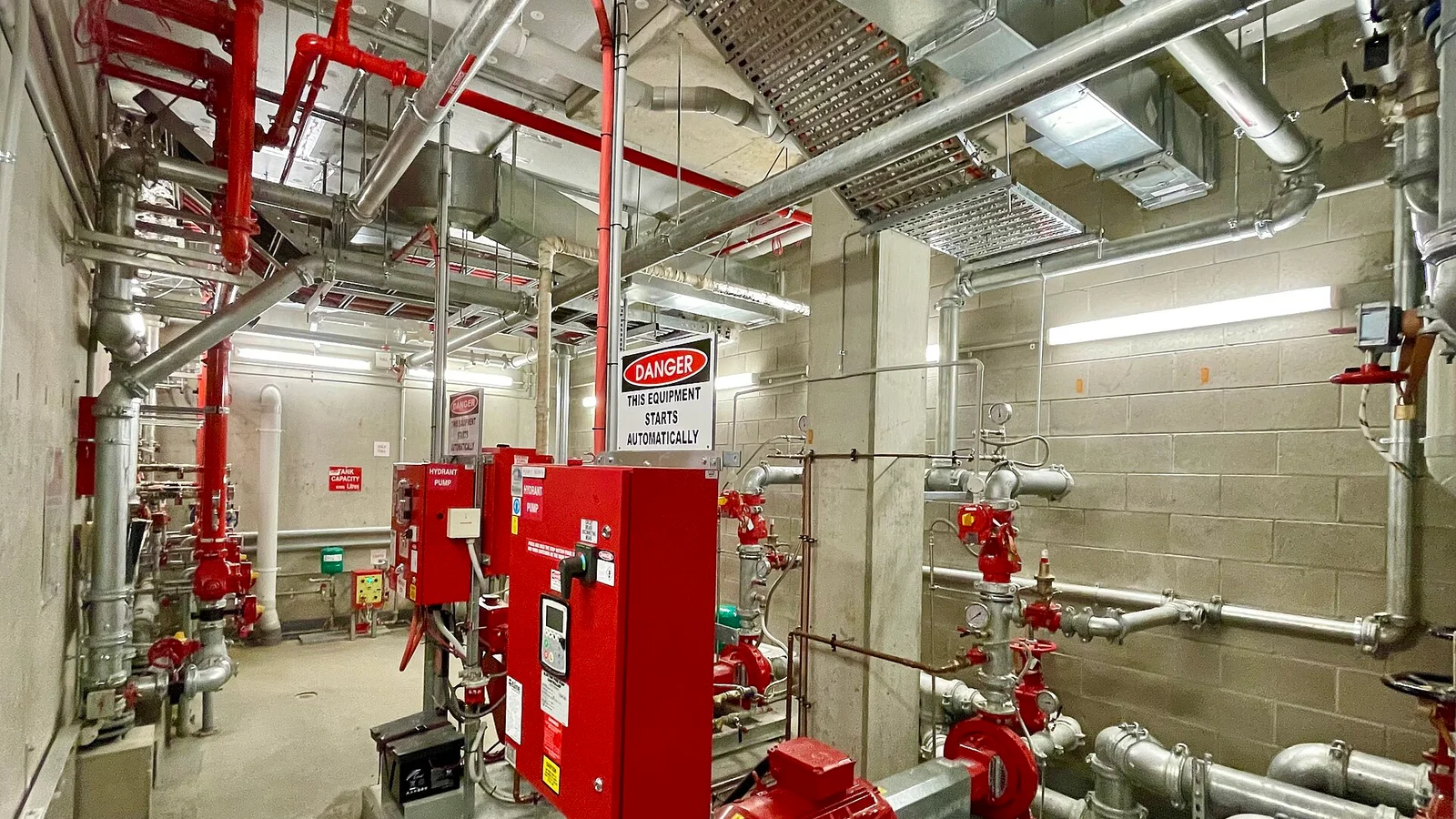
- Dubai Civil Defence, for hazardous-materials storage, the hardest physical gate. You cannot store hazardous chemicals in an ordinary warehouse. DCD approves a hazmat warehouse only after the premises meet UN-classification-based construction with fire suppression, ventilation, spill containment and segregation by hazard class, safety data sheets for every stored substance are submitted, and an on-site inspection is passed.
- MoCCAE, for import control. Under the federal environment law and its rules, MoCCAE issues import permits for controlled and hazardous chemicals, most concretely ozone-depleting substances and HFCs, and maintains the National List of Chemicals Banned and Restricted, the registry that decides whether a chemical is freely importable, restricted or prohibited.
- The non-proliferation authority, for dual-use and precursor chemicals. Chemicals with dual civilian and military use, aligned to the international controlled lists, need an import and export permit under the commodities non-proliferation law, and chemicals usable as explosives or drug precursors attract security-authority permitting.
So the licence is the commercial permission, and the chemical type determines the approval stack. Our general trading guide covers ordinary trading, which is a far lighter world.
Common Mistake: Assuming a chemical trading licence lets you trade any chemical. The licence is only the commercial permission. Each chemical's type dictates a separate approval stack, Dubai Municipality registration, Civil Defence storage approval, MoCCAE import permit, or non-proliferation and security clearance, and many chemicals are restricted or prohibited outright on the national list.
Why is the Civil Defence storage approval the hardest gate?
Because hazardous chemicals cannot go in an ordinary warehouse, and building a compliant one is the real barrier to entry. Dubai Civil Defence's hazardous-control function approves a hazmat warehouse only after the company submits its licence and premises documents, the warehouse meets UN-classification-based construction requirements with fire suppression, ventilation, spill containment and segregation by hazard class, safety data sheets for every stored substance are on file, and the facility passes an on-site inspection, after which DCD issues a certificate permitting storage of the specific material types [1]. This is separate from, and additional to, ordinary Civil Defence fire-safety approval.
The point that separates serious operators from hopefuls is that this is a purpose-built facility, not a shelf in a shared warehouse. Storing hazmat in an ordinary warehouse is illegal and uninsurable, and the DCD warehouse compliance, the suppression, containment, segregation and inspection, is the dominant and most variable setup cost [1]. Competitors with capital can get a licence quickly; building a DCD-compliant hazmat warehouse and getting it approved for the right hazard classes is what actually keeps the field small. Confirm the current DCD hazmat storage requirements and whether your chosen premises or zone is approved for your hazard classes.
What are the classification, safety-data-sheet and import rules?
GHS classification, bilingual safety data sheets, and a per-chemical import NOC. The baseline is the Globally Harmonised System: Dubai Municipality requires a current, GHS-compliant sixteen-section safety data sheet in English and Arabic for chemical products submitted for registration, with GHS-compliant bilingual labels on every container [1]. The importer must correctly classify each substance by hazard class and UN number, and that classification drives the storage class, the customs treatment and the transport rules.
On import, chemicals are treated by Dubai Customs as restricted goods, released only with the competent authority's approval, so each shipment needs the safety data sheet, a certificate of analysis and, critically, the NOC or clearance from the relevant authority for that chemical, MoCCAE for environmental and hazardous substances, the non-proliferation authority for dual-use, and Dubai Municipality for regulated products [5]. Port-level dangerous-goods control adds a further layer at Jebel Ali, with dangerous-goods declarations and, for some classes, a port NOC before the vessel arrives. The recurring theme is the per-chemical NOC: customs will not release a restricted chemical without the sponsoring authority's clearance. Check every product against the MoCCAE national list before ordering. Our import and export guide covers the customs mechanics.
What about dual-use and precursor chemicals?
A separate security gate that most traders miss, and skipping it is a serious offence. Under the commodities non-proliferation law, chemicals that have dual civilian and military use, or that can contribute to weapons of mass destruction, aligned to the international controlled lists, require an import, export and re-export permit from the non-proliferation authority, with an invoice, a goods safety certificate and, where applicable, an end-use certificate [4]. Separately, chemicals usable as explosives or drug precursors attract security-authority and Ministry of Interior scrutiny and permitting.
This is not a customs formality; it is a security control, and it applies regardless of your trade licence. If any product you plan to trade is on the dual-use or precursor lists, the non-proliferation or security clearance is mandatory, and trading such chemicals without it is a serious offence [4]. So before you build a product list, screen each chemical against the controlled and precursor lists, because a single controlled substance changes the entire compliance picture. Confirm each product's status against the non-proliferation control list and the relevant security rules.
Real Talk: The compliance stack, the DCD hazmat warehouse and the per-chemical permit web across Dubai Municipality, MoCCAE and the non-proliferation authority, is exactly what makes this a defensible business rather than a commodity trade. The barriers that make setup slow and expensive are the same barriers that keep the field small and protect margins for the operators who get through them. Treat the approvals as the moat, and screen every chemical before you commit to it. Get your chemical trading setup scoped properly→
Can a foreigner own it, and where should it be?
You can generally own it fully, activity-code depending, and the zone depends on your market. On ownership, 100% foreign ownership is available on the mainland for most trading activities and always in free zones, but eligibility is activity-code specific and certain controlled-chemical activities may attract additional security conditions, so confirm the exact DET chemical activity code's ownership status with DET [7]. The chemical activity is granular, with separate codes for industrial, laboratory, agricultural and construction chemicals, so pick the codes matching your exact product list.
On location, a mainland licence lets you sell directly to the UAE domestic market and industrial and government buyers, best for a domestic distributor, and our mainland company setup page covers the DET route a domestic chemical distributor needs. A free zone such as JAFZA or Dubai South gives full ownership and import and re-export efficiency, though selling into the UAE mainland then requires a mainland distributor or agent and clearing goods with the 5% import duty [6], and our free zone company setup page walks through that route. Not all free zones permit all hazard classes, so confirm which zone is DCD-approved for your chemicals. A holding structure is a separate question: an offshore company cannot itself import or store chemicals, but it can sit above the licensed trader as a clean holding vehicle, which some groups use to hold the shares and any intellectual property. Our free zone versus mainland guide covers the trade-off.
How is a chemical trading company taxed?
Standard rates, with a possible free-zone 0% for a designated-zone distributor. On corporate tax, the company pays 0% on taxable income up to AED 375,000 and 9% above, with Small Business Relief for revenue up to AED 3 million for tax periods ending on or before 31 December 2029 [8]. On VAT, chemical sales are standard-rated at 5%, with special treatment for goods inside a VAT designated zone. Our corporate tax filing and VAT registration and compliance guides cover the mechanics.
The free-zone 0% is genuinely possible here, unlike for on-site services. Distribution of goods in or from a designated zone to a reselling customer is a qualifying activity, so a free-zone B2B chemical distributor operating from a designated zone such as DMCC may reach 0% on qualifying income, provided it is a genuine free-zone person with adequate substance, meets transfer-pricing and documentation rules, and stays within the de-minimis limit on non-qualifying revenue [8]. Two cautions: sales to mainland customers are generally non-qualifying and taxed at 9%, and the VAT designated-zone list is not the same as the corporate-tax qualifying universe, so verify your zone. Confirm the qualifying-income position with a tax adviser for your structure.
What does it cost, and is it worth it?
The licence is minor; the hazmat warehouse dominates. Here is a realistic 2026 picture in AED, all figures approximate and worth confirming with the authorities.
| Item | Typical range (AED) |
|---|---|
| DET or free-zone chemical trading licence | 12,000 to 30,000+ per year |
| Civil Defence hazmat warehouse approval and fit-out | 50,000 to 250,000+ |
| DM product registration, per product | ~1,000 to 5,000+ per SKU |
| MoCCAE permits and ODS registration | Per permit, several hundred to a few thousand |
| Non-proliferation dual-use permit | ~150 per permit |
| Safety-data-sheet authoring, per product | ~500 to 2,000 per SKU |
The dominant and most variable line is the DCD hazmat warehouse, which drives the real budget, while the licence is minor. The market case, though, is strong.
Quick Math: Dubai is a global re-export and trading hub, anchored by Jebel Ali Port, the largest container port in the Middle East, and by Al Maktoum International Airport for air freight, enabling efficient import and re-export to the GCC, Africa and South Asia. Domestic demand comes from manufacturing, construction chemicals, oil and gas, water treatment, cleaning and hygiene, paints and agriculture. The re-export model pairs naturally with a free-zone or designated-zone structure, which is where the possible 0% corporate tax on qualifying distribution comes in.
Is chemical trading a good business in Dubai?
The demand case is strong, and it rests on two pillars: Dubai as a re-export gateway, and steady domestic industrial demand. On the re-export side, Dubai sits at the centre of one of the world's busiest trade corridors, anchored by Jebel Ali Port and DP World's terminals, the largest container port in the Middle East, with Al Maktoum International Airport handling air freight. That position lets a well-run trader import in bulk and re-export to the GCC, East Africa, the Levant and South Asia, often without the goods ever entering the UAE mainland market. On the domestic side, the pull comes from construction and construction chemicals, oil and gas, water treatment, cleaning and hygiene, paints and coatings, food processing and agriculture, all of which consume industrial chemicals continuously.
The honest picture is that the opportunity is real but uneven across products, because the approval path, not the demand, decides how quickly you can actually trade a given chemical. The table below sets four representative products against the control layer each triggers, so you can see why two chemicals under the same licence can be worlds apart.
| Product | Primary control | Approval path | Difficulty |
|---|---|---|---|
| Inert laboratory reagent | Light | Licence and standard SDS, no special permit for most | Low |
| Cleaning detergent | Dubai Municipality | DM product registration, GHS SDS, bilingual label | Moderate |
| Refrigerant gas (HFC/ODS) | MoCCAE | Registration plus per-consignment import permit | High |
| Dual-use precursor | Non-proliferation and security | EOCN import and export permit, end-use certificate, security clearance | Very high |
Real Talk: The best product mix for a new entrant is often the boring middle, industrial and cleaning chemicals with a clear DM and MoCCAE path, rather than the controlled precursors that carry the heaviest security scrutiny. The margin on compliant, regulated products is protected precisely because the approval work keeps casual competitors out. If a re-export model suits your plan, pair it with the right structure early, because the free zone company setup decision shapes both your duty position and your access to the possible designated-zone 0% corporate tax.
What documents and steps does it take to start a chemical trading company?
A licence, a screened product list, a hazmat warehouse and a stack of per-chemical permits, roughly in that order. The paperwork is heavier than ordinary trading because several authorities approve the products and the premises, not just the company. A realistic document checklist looks like this.
- Company documents: shareholder passports and photos, the reserved trade name, DET or free-zone initial approval, the Memorandum of Association, and an Ejari or free-zone lease for the office and the warehouse.
- Activity and product list: the exact DET chemical activity codes for your products, whether industrial, laboratory, agricultural or construction chemicals, and a full product list screened against the MoCCAE National List of Chemicals Banned and Restricted.
- Warehouse: premises documents and drawings for the Dubai Civil Defence hazmat warehouse approval, with UN-classification-based construction, fire suppression, ventilation, spill containment and segregation by hazard class.
- Product safety: a GHS-compliant sixteen-section safety data sheet in English and Arabic for each product, with GHS-compliant bilingual labels on every container.
- Permits: Dubai Municipality product registration for regulated products, MoCCAE import permits for controlled and hazardous substances, and non-proliferation and Ministry of Interior permits for any dual-use, explosive or drug-precursor chemicals.
The sequence matters, because the warehouse and the permits, not the licence, set the real timeline.
| Step | Typical timeline |
|---|---|
| DET or free-zone licence and initial approval | Days to 2 weeks |
| Screening products against the MoCCAE national list | Alongside the licence |
| Civil Defence hazmat warehouse approval and inspection | The main gating step, weeks to months |
| Dubai Municipality product registration per regulated product | Weeks per product |
| MoCCAE import permits and EOCN dual-use permits | Per chemical, before each import |
| GHS safety data sheets and bilingual labelling | Alongside registration |
Plan the warehouse and the permits from day one, because a licence with no approved hazmat storage and no per-chemical clearances cannot legally import or move a single controlled product. Get your chemical trading setup and permit path mapped→
What are the ongoing costs and compliance for a chemical trading company?
The compliance does not stop at setup, and much of it recurs per shipment. The Dubai Civil Defence hazmat warehouse carries the heaviest running load: the storage certificate is renewed, the facility is re-inspected, and the suppression, containment and segregation systems must stay maintained and within their approved hazard classes, so a lapse can suspend your ability to store legally [1]. On top of that, each import of a restricted chemical needs its own NOC or clearance for that consignment, so the per-chemical permit web is a recurring cost of doing business, not a one-time gate [5].
The product-level obligations continue too. Safety data sheets must be kept current and re-issued when a formulation or classification changes, GHS labels must stay compliant, Dubai Municipality product registrations renew, and MoCCAE import permits and ODS or HFC registrations carry their own renewal cycles [1][3]. On tax, the company registers for corporate tax and files annually at 0% up to AED 375,000 and 9% above, and registers for VAT once taxable supplies pass AED 375,000, charging 5% on domestic chemical sales, while a genuine designated-zone distributor may hold a 0% corporate-tax position on qualifying income that still has to be evidenced and filed each year [8]. These renewals, re-inspections, safety-data-sheet updates and filings are exactly the recurring work our post-setup services handle, so the compliance stack stays current while you trade. Budget for the warehouse re-inspection and the per-shipment permits from year one rather than treating them as afterthoughts.
Can you open a corporate bank account for a chemical trading company?
Yes, but expect closer scrutiny than an ordinary trading company, and standard UAE onboarding rather than an instant or fully remote account. A chemical trader opens a corporate account with a local bank once the licence and, ideally, the Civil Defence hazmat approval and key permits are in place, and the bank runs full know-your-customer checks on the shareholders, the activity and the expected turnover, usually requiring an in-person meeting with the licence and tenancy in hand. There is no fully-remote account opening for a physical, regulated-goods operation like this.
The extra layer is the nature of the goods. Banks apply enhanced due diligence to hazardous and controlled products, and they will ask what you trade, where it ships and whether any of it touches dual-use, precursor or sanctioned categories, because a single controlled substance raises their compliance and sanctions exposure. A clear product list showing the DM registrations, MoCCAE permits and, where relevant, the non-proliferation clearances helps the account move faster and signals that the controlled-goods risk is handled. Trade-finance lines for import letters of credit are a separate, later conversation once the account and a trading history exist. Getting the banking right early, with clean documentation on the goods, avoids the delays that catch chemical traders who treat it as a formality.
Real Client Stories
The licence that could not import. A client got a chemical trading licence and ordered a controlled chemical, then found it needed a MoCCAE permit and was on the restricted list, and the shipment could not clear. We screened his product list against the national list and arranged the permits. The licence is the commercial permission, not the import authorisation.
The chemicals in an ordinary warehouse. A trader stored acids in a standard warehouse and could not get insurance or a clearance, because hazardous chemicals need a Dubai Civil Defence hazmat storage approval on a purpose-built warehouse. We built the compliant facility. Ordinary warehousing cannot legally hold hazmat.
The precursor that needed a security permit. A client planned to trade a solvent that turned out to be a controlled precursor, needing a non-proliferation permit and security clearance he had not budgeted for. We put the permits in place before import. Controlled and precursor chemicals are a security gate, not a paperwork step.
Set up your Dubai chemical trading company the right way
Chemical trading rewards operators who treat the hazmat warehouse and the per-chemical permit web as the real business, and it traps those who think a trade licence lets them trade anything. Since 2013, BusinessDubai.ae has completed 700+ company registrations across the UAE, including trading and regulated-goods companies. We will help you pick the right chemical activity codes, screen your product list against the restricted and controlled lists, plan the Civil Defence hazmat warehouse, the DM registrations and the MoCCAE and non-proliferation permits, and set up the corporate tax and VAT position, including the possible designated-zone 0%, all with clear itemised pricing. Talk to a setup expert→ for a plan built around your products. Our general trading guide covers ordinary trading, and post-setup services covers ongoing compliance and renewals.
Frequently Asked Questions
How do I start a chemical trading company in Dubai?
Register a DET or free-zone chemical trading licence with the right activity codes, screen every chemical against the MoCCAE restricted list, build a Dubai Civil Defence hazmat storage warehouse, register regulated products with Dubai Municipality, and obtain the per-chemical import permits from MoCCAE and the non-proliferation authority. The licence alone does not authorise import or storage [1][3][4].
Can I trade any chemical on a chemical trading licence in Dubai?
No. The licence is only the commercial permission. Each chemical's type dictates a separate approval stack, Dubai Municipality registration, Civil Defence storage approval, MoCCAE import permit, or non-proliferation and security clearance, and many chemicals are restricted or prohibited outright on the national list [1][3][4].
Do I need Civil Defence approval to store chemicals in Dubai?
Yes, for hazardous chemicals. Dubai Civil Defence approves a hazmat warehouse only after it meets UN-classification-based construction with fire suppression, ventilation, containment and segregation, safety data sheets are on file, and it passes inspection. Storing hazmat in an ordinary warehouse is illegal and uninsurable [1].
What are dual-use and precursor chemicals?
Chemicals with dual civilian and military use, aligned to international controlled lists, which need a permit from the non-proliferation authority, and chemicals usable as explosives or drug precursors, which attract security-authority and Ministry of Interior permitting. This is a security gate, not a customs formality, and applies regardless of the trade licence [4].
Do chemicals need a safety data sheet in Dubai?
Yes. Dubai Municipality requires a current, GHS-compliant sixteen-section safety data sheet in English and Arabic for chemical products, with GHS-compliant bilingual labels on every container. The importer must classify each substance by hazard class and UN number, which drives storage, customs and transport [1].
How does chemical import work in Dubai?
Chemicals are treated by Dubai Customs as restricted goods, released only with the competent authority's approval, so each shipment needs the safety data sheet, a certificate of analysis and the NOC from the relevant authority, MoCCAE, the non-proliferation authority or Dubai Municipality, for that chemical. Customs will not release without the clearance [5].
What is the MoCCAE national list of chemicals?
The National List of Chemicals Banned and Restricted for Use in the Country, the MoCCAE registry that determines whether a given chemical is freely importable, restricted and NOC-gated, or prohibited outright. Every product should be checked against the current version of the list before ordering [3].
Can a foreigner own a chemical trading company in Dubai?
Generally yes, with 100% foreign ownership available on the mainland for most trading activities and always in free zones, but eligibility is activity-code specific and controlled-chemical activities may carry additional security conditions. Confirm the exact chemical activity code's ownership status with DET [7].
Should a chemical trading company be mainland or free zone?
A mainland licence lets you sell directly to the UAE domestic market, best for a domestic distributor, while a free zone such as JAFZA gives full ownership and re-export efficiency but requires a mainland distributor or duty payment to sell into the mainland. Not all zones permit all hazard classes, so confirm the zone's DCD approval [6].
Is chemical trading taxed for VAT in Dubai?
Yes, at the standard 5%, with special treatment for goods inside a VAT designated zone. Domestic sales are standard-rated. A free-zone distributor may access the 0% corporate tax rate on qualifying distribution from a designated zone, but that is separate from VAT [8].
Can a free-zone chemical distributor get 0% corporate tax?
Possibly. Distribution of goods in or from a designated zone to a reselling customer is a qualifying activity, so a free-zone distributor may earn 0% on qualifying income with adequate substance and within the de-minimis limit. But sales to mainland customers are non-qualifying and taxed at 9%. Confirm with a tax adviser [8].
How much does it cost to start a chemical trading company in Dubai?
The licence is around AED 12,000 to 30,000, but the dominant cost is the Dubai Civil Defence hazmat warehouse approval and fit-out, from around AED 50,000 to well over 250,000, plus per-product DM registrations, MoCCAE permits and safety-data-sheet authoring. The warehouse is the real budget. Figures are approximate.
What products need Dubai Municipality registration?
Many chemical products, notably disinfectants, detergents and cleaning chemicals, must be registered with Dubai Municipality before being placed on the market, with correct classification, a GHS safety data sheet and bilingual labelling. Confirm the exact product categories requiring DM registration with Dubai Municipality [1].
How are chemicals transported in Dubai?
Under UN and ADR-aligned dangerous-goods rules, with proper packaging, placarding, dangerous-goods declarations, and trained drivers and compliant vehicles, and hazardous-materials road movement needs the relevant transport permits. Port movement follows the port authority's dangerous-goods control. Confirm hazmat road-transport requirements with the RTA and Dubai Municipality [5].
What happens if I import a restricted chemical without a permit?
It cannot clear customs, because chemicals are restricted goods released only with the competent authority's approval, and importing a controlled or precursor chemical without the required permit is a serious offence, especially for dual-use and precursor substances under the non-proliferation and security regimes [4][5].
Do refrigerant gases need special permits in Dubai?
Yes. Ozone-depleting substances and HFCs are controlled by MoCCAE, needing registration and per-consignment import permits, with used equipment banned and no trade with non-Montreal-Protocol states. Refrigerant trading is one of the concrete cases where MoCCAE permitting applies on top of the licence [3].
Is chemical trading a good business in Dubai?
The demand case is strong, with Dubai a global re-export hub anchored by Jebel Ali Port and domestic demand from manufacturing, construction, oil and gas, water treatment and cleaning. The barriers, the hazmat warehouse and the permit web, are high, but they are also what protect margins for compliant operators.
What is GHS classification for chemicals?
The Globally Harmonised System of classification and labelling, the baseline Dubai Municipality requires, with hazard classes, pictograms, signal words and a sixteen-section safety data sheet in English and Arabic. The classification drives the storage class, the customs treatment and the transport rules for each chemical [1].
Do I need different licences for different chemicals?
The chemical activity is granular, with separate DET codes for industrial, laboratory, agricultural and construction chemicals among others, so you pick the codes matching your exact product list, and different chemical types trigger different approval stacks. The wrong or too-broad code triggers rejected approvals [6].
How long does it take to start a chemical trading company in Dubai?
The licence can be issued in days to a couple of weeks, but the Dubai Civil Defence hazmat warehouse approval, the product registrations and the per-chemical permits take considerably longer and are the real timeline. Plan the warehouse and the permits alongside the licence.
Can I trade agricultural chemicals or pesticides in Dubai?
Agricultural chemicals and pesticides carry extra MoCCAE approval and registration on top of the chemical activity, tying into the pesticide-registration regime. It is a distinct sub-category with its own controls, so confirm the specific requirements, and see our pest control guide for the applicator side [3].
What documents do I need to start a chemical trading company in Dubai?
Shareholder passports and photos, the reserved trade name and DET or free-zone initial approval, the Memorandum of Association, an office and warehouse lease, the exact chemical activity codes, and a product list screened against the MoCCAE national list. On top of that, the Civil Defence hazmat warehouse drawings and approval, GHS safety data sheets, and the Dubai Municipality, MoCCAE and non-proliferation permits your products require. The warehouse and permits are the gating items.
What are the ongoing costs of a chemical trading company in Dubai?
The Dubai Civil Defence hazmat warehouse upkeep and re-inspection, per-chemical NOCs for each restricted shipment, safety-data-sheet and label maintenance, Dubai Municipality and MoCCAE permit renewals, the annual DET or free-zone licence and lease, staff visas and payroll, and corporate tax and VAT filings. Much of the compliance recurs per shipment, so it is a running cost, not a one-time gate [1][5].
Can I open a corporate bank account for a chemical trading company in Dubai?
Yes, with a local bank once the licence and ideally the hazmat approval and permits are in place, but expect enhanced due diligence. Banks scrutinise hazardous and controlled goods closely and will ask whether any product touches dual-use, precursor or sanctioned categories. A clear product list with the DM, MoCCAE and non-proliferation clearances helps, and there is no fully-remote account opening for a regulated-goods operation.
How much does a hazmat warehouse cost for a chemical trading company in Dubai?
It is the dominant and most variable setup cost, commonly from around AED 50,000 to well over AED 250,000 depending on the hazard classes, the fit-out and the fire suppression, containment and segregation the Civil Defence approval requires. It also carries ongoing upkeep and re-inspection. The warehouse, not the licence, is the real budget line [1].
How do I get a dual-use or precursor chemical permit in Dubai?
For chemicals with dual civilian and military use, aligned to the international controlled lists, you apply to the Executive Office for Control and Non-Proliferation for an import, export and re-export permit, with an invoice, a goods safety certificate and, where applicable, an end-use certificate. Explosive and drug-precursor chemicals additionally attract Ministry of Interior security permitting. Trading them without clearance is a serious offence [4].
Is mainland or a designated free zone better for a chemical trading company in Dubai?
It depends on your market. A mainland licence sells directly to UAE domestic and industrial buyers, best for a domestic distributor. A designated free zone gives full ownership, re-export efficiency and a possible 0% corporate tax on qualifying B2B distribution, but selling into the mainland needs a distributor or duty payment. Some groups sit the trader under an offshore holding vehicle. Confirm the zone is DCD-approved for your hazard classes [6][8].
Is a chemical trading company profitable in Dubai?
It can be genuinely profitable, because the same approval barriers that make setup slow, the hazmat warehouse and the per-chemical permit web, also keep competition thin and protect margins on compliant, regulated products. Returns come from a steady product mix and re-export volume rather than one-off deals, and the controlled products with the heaviest compliance often carry the best margins for operators who clear the gates.
How do I check if a chemical is restricted in Dubai?
Screen every product against the MoCCAE National List of Chemicals Banned and Restricted before ordering, which classifies a chemical as freely importable, restricted and NOC-gated, or prohibited outright. Separately check the non-proliferation controlled list for dual-use and precursor status. A single controlled or restricted substance changes the entire import and permit picture, so screen the full list first [3][4].
References
[1] Dubai Civil Defence, hazardous control: the hazmat storage approval, UN-class warehouse construction, safety data sheets and inspection. Dubai Civil Defence hazardous control
[2] MoCCAE, permit to import ozone-depleting substances: the import-permit service for controlled refrigerants. MoCCAE ODS import permit
[3] MoCCAE, National List of Chemicals Banned and Restricted for Use in the Country: the registry of prohibited and restricted chemicals. MoCCAE national chemicals list
[4] UAE Executive Office for Control and Non-Proliferation, chemical goods: the dual-use import and export permits under the commodities non-proliferation law. EOCN chemical goods
[5] Dubai Customs, prohibited and restricted goods: the restricted-goods regime and per-chemical NOC requirement. Dubai Customs restricted goods
[6] MoCCAE, Federal Law No. 24 of 1999 on the protection and development of the environment: the hazardous-substances regime. Federal Law 24 of 1999
[7] UAE Government portal, customs clearance and paying customs duty, and foreign ownership context. u.ae customs clearance
[8] UAE Ministry of Finance, Small Business Relief and the free-zone qualifying-activity rules: 0% to AED 375,000 then 9%, relief through 31 December 2029, and designated-zone distribution as a qualifying activity. Ministry of Finance Small Business Relief