Most of our recent guides warn that the free-zone "0% corporate tax" pitch does not apply once you actually run a real business. Oil and gas trading is the exception that proves the rule. Trading of qualifying commodities, which includes energy, is one of the few activities that genuinely earns the 0% qualifying rate for a properly structured free-zone trader [1]. If you are a B2B crude, gasoil or jet-fuel trading desk, the free-zone tax story finally works in your favour, not against you.
But two things trip people up. First, the rule changed in September 2025, and most articles are quoting the dead version. The old test said a qualifying commodity had to be in "raw form" and traded on a "recognised exchange." Ministerial Decision No. 229 of 2025 removed both requirements and replaced them with a "quoted price" test, while widening the list of qualifying commodities [1]. If a guide still says "raw form, on a recognised exchange," it is out of date. Second, the licence is the easy part. For a new oil trader, the real barrier is the bank, not the trade licence, because trade finance and compliance are where new entrants stall.
This guide covers the qualifying-commodity 0% moat and its conditions, paper versus physical versus bunkering, the DSCE petroleum permit, export controls, and the banking reality. Since 2013, our team has set up trading and commodity companies across the UAE, so the traps here come from real files. This is a guide, not legal, tax or trade-compliance advice on your specific business.
Does an oil trading company really get the free-zone 0% tax rate?
Yes, if it is a genuine B2B trading business structured correctly, and this is the headline that sets oil trading apart. Under the corporate tax rules, a free zone company gets 0% only on income from a Qualifying Activity, and "Trading of Qualifying Commodities" is expressly a Qualifying Activity under Ministerial Decision No. 229 of 2025 [1]. Energy sits squarely inside that.
The 2025 change matters, so get it right:
- The old rule (MD 265 of 2023) required the commodity to be in raw form and traded on a recognised commodities exchange.
- MD 229 of 2025 repealed both conditions. Now a commodity qualifies if a "quoted price" exists for it, sourced from a recognised exchange or a recognised price-reporting agency listed in the companion Ministerial Decision No. 230 of 2025 [1].
- The list of qualifying commodities was widened beyond metals, minerals, energy and agriculture to add industrial chemicals, associated by-products and environmental commodities such as carbon credits.
The activity was also broadened to cover the hedging derivatives and structured trade-finance arrangements associated with the physical trade. So a modern oil-trading desk, physical title trades plus the hedges and financing around them, fits the qualifying activity as rewritten.
Common Mistake: Repeating the "raw form, on a recognised exchange" test from older articles. That rule was replaced in September 2025 by the quoted-price test. Planning your structure around the dead rule can lead you to wrongly conclude your trade does not qualify, or to miss the wider commodity list.
What kills the 0%, and what conditions must you meet?
The 0% is real but conditional, and three traps end it, so understand them before you assume the rate. To keep the Qualifying Free Zone Person status and its 0% [1]:
- Do not sell retail. Goods packaged for retail sale are excluded from qualifying commodities, and transactions with natural persons do not generate qualifying income for a commodity trader. A bulk B2B crude or gasoil trader qualifies; a retail fuel station or a branded-lubricant-to-consumers business does not.
- Do not become a logistics company by revenue. If 51% or more of your revenue comes from distribution, warehousing, logistics or inventory management, the activity is re-characterised and stops being commodity trading. This is the exact line between a trading house, which qualifies, and a storage or terminal operator, which does not.
- Meet the substance and de-minimis conditions. You need real substance in the free zone, staff, assets and expenditure, audited accounts and transfer-pricing compliance, and your non-qualifying revenue must stay under the lower of 5% of total revenue or AED 5 million. Breach the de-minimis and you lose 0% status for the entire period, not just the excess.
Pro Tip: Structure the trading desk and any physical storage as separate considerations from the start. A pure paper or title-trading house in a free zone is the cleanest path to 0%. The moment storage and logistics dominate your revenue, you risk the 51% re-characterisation, so if you need tanks, plan the structure so the trading margin, not the storage fee, is your income. Get the structure scoped for the 0% rate→
Paper, physical or bunkering: which oil business are you setting up?
Three very different businesses hide behind "oil trading," and they cost and regulate completely differently. Naming yours first avoids budgeting for the wrong one.
- Paper or title trading. You buy and sell cargoes on paper, hedge and finance them, but never physically handle product on your own account. Light setup, a free-zone commercial licence, and the cleanest route to the 0% rate. This is the DMCC sweet spot.
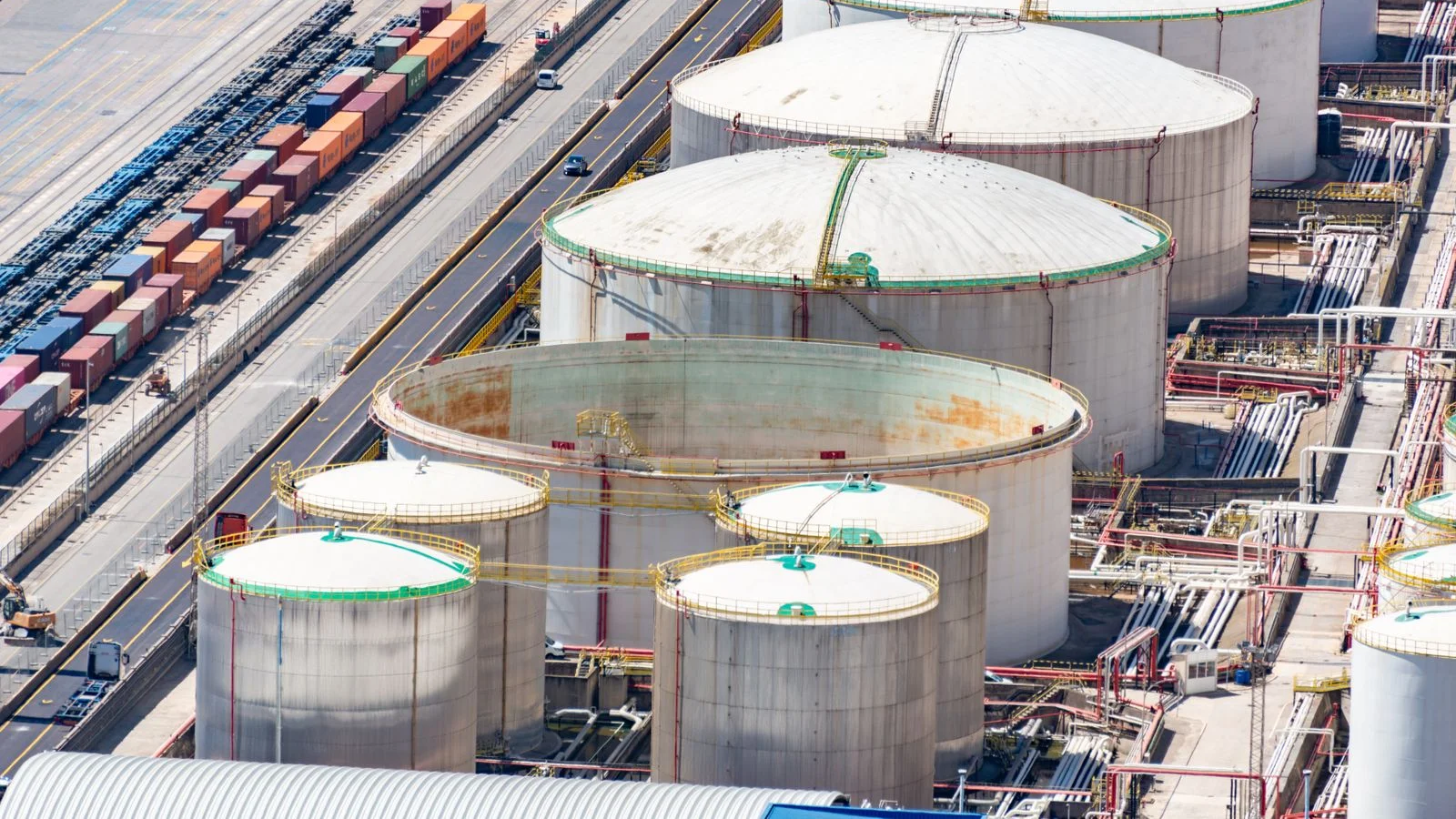
- Physical trading with storage. You own or rent tank capacity, blend, and move product. Much heavier: you need storage, port access, and DSCE, Municipality and Civil Defence approvals, and you risk the 51% logistics-revenue trap.
- Bunkering. Supplying marine fuel to ships, centred on Fujairah, the world's second-largest bunkering hub. This is a terminal and logistics business with its own heavy licensing, separate from a Dubai trading desk [7].
Many operators pair a Dubai or DMCC trading and finance domicile with Fujairah or Hamriyah storage for the physical execution, keeping the trading margin in the qualifying entity.
Which free zone is best for oil trading?
It depends on whether you trade on paper or handle physical product. The main options:
- DMCC (Dubai Multi Commodities Centre) is the flagship, with energy as a core vertical alongside precious metals and other commodities, and tens of thousands of member companies. It gives 100% foreign ownership, though oil and gas activities are regulated and need additional pre-approval rather than instant licensing. Best for paper and physical trading houses.
- JAFZA suits trading tied to physical logistics through Jebel Ali Port, with bonded storage and re-export.
- Hamriyah Free Zone (Sharjah) is the go-to for physical fuel and base-oil storage and blending, with multiple operating tank terminals.
- Fujairah and the Fujairah Oil Industry Zone (FOIZ) are the physical storage and bunkering capital, home to the Middle East's largest commercial oil-storage cluster [7].
The region's benchmark exchange, the Gulf Mercantile Exchange (formerly the Dubai Mercantile Exchange), sits in the DIFC and runs the Oman crude futures contract, a useful UAE-domiciled price reference. Our DMCC free zone setup guide covers the flagship in detail.
What approvals does physical oil trading need?
More than a trade licence, and the DSCE permit is the one guides miss. Paper trading needs the trade licence and little else. Physical petroleum-products trading in Dubai is a layered, permitted regime [2]:
- Dubai Supreme Council of Energy (DSCE) is the sole authority issuing permits for petroleum-products trading in Dubai. A commercial licence plus a DSCE permit are both required before any regulated petroleum activity, importing, distributing, transporting, storing or selling. Generic articles miss this entirely.
- Dubai Civil Defence must approve flammable and hazardous storage, tanks and warehouses for fire and safety.
- Dubai Municipality covers zoning, environmental and storage-facility standards.
- Road fuel transport brings in the RTA and a multi-agency regulatory committee.
Two product categories carry their own rules. Lubricants and base oils must hold a MoIAT Certificate of Conformity under the ECAS scheme before they can be imported and cleared through customs [3]. LPG is governed by DSCE Directive No. 3 of 2021: distribution needs DSCE approval plus a MoIAT certificate and a contract with an approved bottling plant, and cylinders may only be filled at DSCE-approved plants [4]. Our general trading setup guide covers the customs and conformity mechanics that apply on top.
What about export controls and sanctions?
A real compliance layer, because oil trading sits close to sanctioned crude and dual-use goods. UAE export controls under Federal Decree-Law No. 43 of 2021 require permits to export, re-export or transit controlled commodities, administered by the Executive Office for Control and Non-Proliferation [5]. Most crude and refined-fuel trades sit outside the strategic-goods list, but certain petrochemicals and precursor chemicals can fall in scope, and the classification turns on technical specification, not the label, so you need a compliance screen.
Sanctions and crude-origin screening matter just as much. Verifying cargo origin, vessel ownership and counterparties is standard, and the UAE treats trade-based money laundering as a priority risk. This is not optional paperwork; it is what your bank and your counterparties will demand.
Why is the bank the real barrier?
Because a DMCC energy licence can be issued in weeks, but a bank account with trade-finance lines for a new oil trader is where the months go. Oil trading runs on letters of credit and bank guarantees, and banks apply enhanced due diligence to commodity flows: source of funds, beneficial ownership, and goods and origin verification. The Central Bank tightened AML and due-diligence guidance again in 2026.
For a new entrant this is the true bottleneck. The licence proves you can trade; the banking relationship is what lets you actually settle a cargo. Budget months, and a complete compliance file, for banking, not just for the licence. Realistically, most new entrants start as paper traders or brokers, or niche product specialists in lubricants, bitumen or LPG, and build the banking and credit relationships before moving into large physical cargoes.
Is oil trading subject to VAT?
Yes, and the treatment splits by product in a way most guides get wrong. Refined petroleum products, petrol, diesel, jet fuel and lubricants, are standard-rated at 5% domestically. But crude oil and natural gas are zero-rated under the UAE VAT rules, a nuance often missed, and exports outside the GCC VAT states are zero-rated too, which suits the re-export trading model [6]. Note that zero-rated supplies still count toward the AED 375,000 VAT registration threshold, and goods moving within a Designated Zone can fall outside VAT scope. Our VAT registration and compliance guide covers the mechanics.
What does it cost, and is it worth it?
Cost depends entirely on which of the three businesses you are building. Here is a realistic 2026 picture in AED.
| Model | Typical first-year all-in (AED) |
|---|---|
| Paper or title trading (free-zone licence, flexi-desk, visa) | 30,000 to 60,000 |
| Physical trading (licence, DSCE permit, tank rental, operations) | 650,000 to 850,000+ |
| Bunkering or terminal storage (FOIZ, port approvals, capital) | Hundreds of thousands to millions |
The licence for a paper trader is genuinely cheap; the physical and bunkering models are capital businesses. The market backs the effort: the UAE exported around USD 114 billion of crude in 2024, ranking among the world's largest crude exporters, and Dubai is a major commodity re-export and finance hub with a deep energy-trading ecosystem [8]. The honest note on margins: physical trading margins are thin, often under 1% to 3% per cargo, on very large notionals, so profitability comes from volume, logistics arbitrage and financing, not from a fat markup. The global majors dominate, and new entrants win by starting focused, as a broker or a niche product specialist, and building the banking relationships that are the real moat.
Real Client Stories
The trader who assumed the free zone meant no tax. A founder set up a DMCC energy desk expecting 0% and was pleasantly right, but for the wrong reason. He assumed all free-zone income is tax-free. In fact his B2B crude trades qualified because commodity trading is a Qualifying Activity, while a side line selling packaged lubricants to retail customers did not. We separated the two so the qualifying trading income kept its 0% and the retail line was accounted for correctly. The activity, not the address, decides the rate.
The licence that outran the bank. A client got his oil-trading licence issued in under a month and lined up his first cargo, then could not open a bank account with the letters of credit he needed, because his compliance and source-of-funds file was thin. The deal fell through. We rebuilt the compliance documentation and set realistic expectations: the bank, not the licence, sets the timeline for a new oil trader.
The storage that broke the 0%. A trader added tank capacity and, within a year, more than half his revenue came from storage and logistics fees rather than trading margin. That tipped him over the 51% line, re-characterised the activity, and put his qualifying status at risk. We restructured so the trading margin drove the qualifying entity's income and the storage sat appropriately. Where your revenue comes from decides whether you keep the 0%.
Set up your Dubai oil trading company with the tax and the barriers mapped
Oil and gas trading rewards operators who structure for the qualifying-commodity 0% and respect the banking and compliance reality, and it punishes those who copy the dead tax rule or underestimate the bank. Since 2013, BusinessDubai.ae has completed 700+ company registrations across the UAE, including commodity and trading companies. We will help you choose the free zone and structure for your model, protect the qualifying-commodity 0% against the retail, natural-persons and 51% traps, line up the DSCE and product approvals for physical trade, and prepare the compliance file your bank will demand, all with clear itemised pricing. We work alongside your tax and trade-finance advisers. Talk to a setup expert→ for a plan built around your trading model. Our DMCC free zone setup and general trading setup guides cover the neighbouring ground, and post-setup services covers ongoing compliance.
Frequently Asked Questions
How do I start an oil trading company in Dubai?
Choose your model, paper, physical or bunkering, set up a company in a suitable free zone such as DMCC with the energy activity, obtain the DSCE petroleum permit and product approvals if you handle physical product, and build the banking and compliance file. The licence is quick; banking is the real step [2].
Does an oil trading company get the free-zone 0% corporate tax rate?
Yes, if it is a genuine B2B trader of qualifying commodities. Trading of qualifying commodities, including energy, is a Qualifying Activity under Ministerial Decision No. 229 of 2025, so a properly structured free-zone trader can earn 0% on qualifying income [1].
What changed in the 2025 qualifying-commodity rules?
Ministerial Decision No. 229 of 2025 removed the old "raw form" and "recognised exchange" requirements, replacing them with a quoted-price test based on a recognised exchange or price-reporting agency, and widened the list of qualifying commodities. Guides citing the old test are out of date [1].
What can make an oil trader lose the 0% rate?
Selling retail or to natural persons (excluded), letting distribution, warehousing or logistics make up 51% or more of revenue (re-characterisation), or breaching the substance and de-minimis conditions. Any of these can end the qualifying status [1].
What is the difference between paper and physical oil trading?
A paper or title trader buys and sells cargoes and hedges and finances them without handling product, needing only a light free-zone licence. A physical trader owns or rents storage and moves product, needing DSCE, Civil Defence and Municipality approvals and much more capital.
Which free zone is best for oil trading in Dubai?
DMCC is the flagship for trading houses with an energy vertical and 100% ownership. JAFZA suits logistics-linked trading, Hamriyah suits physical storage and blending, and Fujairah and FOIZ are the storage and bunkering hubs. Choose by paper versus physical [7].
Do I need a DSCE permit to trade petroleum products in Dubai?
For physical petroleum-products trading, yes. The Dubai Supreme Council of Energy is the sole authority issuing petroleum-products trading permits in Dubai, required on top of the commercial licence before any regulated activity [2].
How much does an oil trading licence cost in Dubai?
A paper-trading free-zone setup runs roughly AED 30,000 to 60,000 all-in first year. A physical trader with storage is realistically AED 650,000 to 850,000 or more, and bunkering or terminal storage runs into the millions.
Can I trade oil from Dubai without storage or physical delivery?
Yes. Paper or title trading, buying and selling cargoes on paper with hedging and finance, is a recognised model, needs only a free-zone commercial licence, and is the cleanest route to the 0% qualifying rate.
Why is opening a bank account the hardest part?
Oil trading runs on letters of credit and bank guarantees, and banks apply enhanced due diligence to commodity flows, source of funds, beneficial ownership and origin verification. For a new trader, banking, not the licence, sets the real timeline.
Is oil trading subject to VAT in the UAE?
Refined products like petrol, diesel, jet fuel and lubricants are standard-rated at 5%. Crude oil and natural gas are zero-rated, and exports outside the GCC VAT states are zero-rated. Zero-rated supplies still count toward the registration threshold [6].
Do lubricants need special approval to trade?
Yes. Lubricants and base oils must hold a MoIAT Certificate of Conformity under the ECAS scheme before they can be imported and cleared through customs, registered per product model [3].
What are the rules for trading LPG in Dubai?
LPG is governed by DSCE Directive No. 3 of 2021. Distribution needs DSCE approval, a MoIAT certificate and a contract with an approved bottling plant, and cylinders may only be filled at DSCE-approved plants [4].
Can a foreigner own 100% of an oil trading company in Dubai?
Yes. Free zones such as DMCC give 100% foreign ownership by default, and most mainland trading activities also allow full foreign ownership since the 2021 Companies Law reform.
What export controls apply to oil and gas trading?
Federal Decree-Law No. 43 of 2021 requires permits for controlled commodities, administered by the Executive Office for Control and Non-Proliferation. Most fuel trades sit outside the list, but some petrochemicals and precursors are controlled by technical specification [5].
Is oil trading profitable in Dubai?
It can be, but physical trading margins are thin, often under 1% to 3% per cargo, on large notionals. Profit comes from volume, logistics arbitrage and financing. New entrants usually start as brokers or niche specialists and scale with banking relationships [8].
What is bunkering and where is it done?
Bunkering is supplying marine fuel to ships. Fujairah is the world's second-largest bunkering hub, and it is a terminal and logistics business with its own heavy licensing through FOIZ and the Port of Fujairah, separate from a Dubai trading desk [7].
What is the Gulf Mercantile Exchange?
It is the region's benchmark energy exchange, formerly the Dubai Mercantile Exchange, based in the DIFC, running the Oman crude futures contract. It provides a UAE-domiciled crude price reference relevant to trading and to the quoted-price commodity test.
Do I need physical storage to qualify for the 0% rate?
No, and in fact heavy storage can threaten it. If storage and logistics make up 51% or more of your revenue, the activity is re-characterised away from trading. A paper trader with no storage is the cleanest qualifying structure [1].
How long does it take to set up an oil trading company?
The free-zone licence can be issued in a few weeks, and physical-trade permits add time. But the banking and trade-finance setup, with its compliance requirements, is the longest and most uncertain step for a new trader.
Who are the customers for an oil trading company?
Refiners, national oil companies, shipping lines for bunkers, regional distributors, and industrial buyers across Africa and South Asia. Counterparty relationships and credit lines are as important as the product itself.
References
[1] Ministerial Decision No. 229 of 2025 on Qualifying and Excluded Activities (trading of qualifying commodities as a Qualifying Activity, the repeal of the raw-form and recognised-exchange test in favour of a quoted-price test, the widened commodity list, retail-packaging and natural-persons exclusions, and the 51% logistics re-characterisation), with the recognised price-reporting agencies in Ministerial Decision No. 230 of 2025. Ministry of Finance and KPMG
[2] Dubai Supreme Council of Energy (DSCE) as the sole authority for petroleum-products trading permits in Dubai, required alongside the commercial licence. Dubai Supreme Council of Energy and Oil & Gas Middle East
[3] MoIAT Emirates Conformity Assessment Scheme (ECAS) Certificate of Conformity for regulated products including lubricants and petroleum products. MoIAT
[4] DSCE Directive No. 3 of 2021 regulating LPG trading, storage and distribution in Dubai, including approved bottling plants. Dubai Supreme Council of Energy
[5] Federal Decree-Law No. 43 of 2021 on export controls for goods subject to non-proliferation, administered by the Executive Office for Control and Non-Proliferation. Executive Office / overview
[6] VAT on petroleum products under Federal Decree-Law No. 8 of 2017: refined products standard-rated at 5%, crude oil and natural gas zero-rated, exports outside the GCC VAT states zero-rated. PwC other taxes and FTA Oil and Gas VAT guidance
[7] Fujairah as the world's second-largest bunkering hub and the Fujairah Oil Industry Zone (FOIZ) and Port of Fujairah storage cluster. Port of Fujairah and FOIZ
[8] UAE crude oil export values (around USD 114 billion in 2024) and Dubai's DMCC energy trading ecosystem and the Gulf Mercantile Exchange. OEC UAE crude petroleum and DMCC